List of national parks in Canada by province and territory
How many national parks does Canada have?
Parks Canada counts 48 national parks and national park reserves, spread across all 13 provinces and territories. Banff (1885) is the oldest, Wood Buffalo the largest, and the busiest parks sit in Alberta and British Columbia.
Canada protects some of the wildest country on Earth, and most of it sits inside a single federal system run by Parks Canada. The official count is 48 national parks and national park reserves, and every province and territory has at least one. Some are household names that draw millions of visitors a year. Others, in the Arctic, see fewer visitors in a whole season than Lake Louise sees in a summer morning.
This page lists every one of them, province by province, with a short note on what each park is known for and how hard it is to reach. Use it to see what lies along your route, to pick a park that matches your trip, or simply to understand why “national park” means very different things in Alberta and in Nunavut.
| At a glance | |
|---|---|
| Total | 48 national parks and national park reserves |
| Oldest | Banff, created in 1885 |
| Largest | Wood Buffalo, on the Alberta and Northwest Territories border |
| Busiest | Banff, then Jasper, Pacific Rim and the Bruce Peninsula area |
| Entry | daily admission per person, or one annual pass for every park, see the Parks Canada Discovery Pass |
| Easiest to reach | Banff, Jasper, Point Pelee, Bruce Peninsula, Fundy, Prince Edward Island |
How the national park system works
A national park in Canada is a federal protected area managed by Parks Canada. A national park reserve works the same way on the ground, with trails, campgrounds and fees, but the land is subject to an Indigenous land claim that has not yet been settled. That is why names like Pacific Rim, Gwaii Haanas or Nahanni carry the word “reserve”. For a visitor, the difference is mostly invisible: the same rules, the same passes and often a co-management arrangement with the local First Nation or Inuit organisation.
Two other kinds of places are easy to confuse with national parks. Provinces run their own park systems, and Quebec calls its provincial parks “parcs nationaux”, which is why Mont-Tremblant or Jacques-Cartier appear on maps as national parks even though Parks Canada does not manage them. Our Quebec national parks guide explains that split. Parks Canada also manages national marine conservation areas, national historic sites and Rouge National Urban Park in Toronto. They are worth visiting, but they are not on the list below.
Fees and passes
Most national parks charge a daily admission fee per person, and children and teenagers under 18 enter free. If you plan to visit several parks, or stay in the Rockies for more than a week, the annual Discovery Pass usually pays for itself. Campgrounds, backcountry permits and some shuttles are booked separately, often months in advance, through the Parks Canada reservation system.
British Columbia: 7 national parks
British Columbia mixes Pacific rainforest on the coast with high mountain parks along the Alberta border.
| Park | Known for | Access |
|---|---|---|
| Pacific Rim (reserve) | Long Beach, surf, storm watching, the West Coast Trail | Easy by road to Tofino and Ucluelet |
| Gulf Islands (reserve) | Islands, kayaking, orcas in the Salish Sea | Ferry from Vancouver or Victoria |
| Gwaii Haanas (reserve) | Haida village sites, old-growth rainforest | Remote, by boat or floatplane, permit and orientation required |
| Glacier | Rogers Pass, steep hikes, deep winter snow | On the Trans-Canada Highway |
| Mount Revelstoke | Summit road, alpine meadows in late summer | Next to Revelstoke town |
| Yoho | Emerald Lake, Takakkaw Falls, Lake O’Hara | 30 minutes from Lake Louise |
| Kootenay | Marble Canyon, Paint Pots, Radium Hot Springs | Highway 93 South from Castle Junction |
Yoho and Kootenay border Banff, so most travellers see them from an Alberta base. Glacier and Mount Revelstoke sit a few hours west, which makes them easy stops on the drive between Vancouver and the Rockies.
Alberta: 5 national parks
Alberta holds Canada’s two most famous parks and accounts for a large share of all national park visits.
| Park | Known for | Access |
|---|---|---|
| Banff | Lake Louise, Moraine Lake, the town of Banff, the Icefields Parkway | 90 minutes from Calgary |
| Jasper | Maligne Lake, Athabasca Glacier, dark-sky preserve | About 4 hours north of Lake Louise |
| Waterton Lakes | Where the prairie meets the mountains, Prince of Wales Hotel | 3 hours south of Calgary |
| Elk Island | Plains and wood bison, easy lakeside trails | 45 minutes from Edmonton |
| Wood Buffalo (shared with NWT) | Largest park in Canada, wild bison, whooping cranes | Remote, via Fort Smith or Fort Chipewyan |
Banff and Jasper are connected by the Icefields Parkway, one of the great mountain drives anywhere. If you only see one part of Canada’s park system, this is usually it. Our Banff vs Jasper guide helps decide where to base yourself, and you can browse guided tours in Banff National Park if you would rather not drive the mountain roads yourself.
Saskatchewan and Manitoba: 4 national parks
The prairie parks are quieter and less known, but each one has a clear reason to visit.
| Park | Province | Known for |
|---|---|---|
| Prince Albert | Saskatchewan | Boreal lakes, canoe routes, Grey Owl’s cabin |
| Grasslands | Saskatchewan | Mixed-grass prairie, bison, black-tailed prairie dogs, dark skies |
| Riding Mountain | Manitoba | Forested escarpment rising above farmland, Clear Lake, bison enclosure |
| Wapusk | Manitoba | Polar bear denning area near Churchill |
Wapusk is not a park you hike in on your own: access is by licensed operator only, and most visitors see polar bears from Churchill itself in October and November.
Ontario: 5 national parks
Ontario’s national parks are smaller than the western giants, but several of them are within a few hours of Toronto.
| Park | Known for | From Toronto |
|---|---|---|
| Bruce Peninsula | The Grotto, turquoise Georgian Bay water, limestone cliffs | About 4 hours |
| Georgian Bay Islands | Small islands reached by boat, Canadian Shield granite | About 2 hours to the dock |
| Thousand Islands | Island-hopping by kayak on the St. Lawrence | About 3 hours |
| Point Pelee | Southern tip of mainland Canada, spring bird and fall monarch migrations | About 4 hours |
| Pukaskwa | Wild Lake Superior coastline, the Coastal Hiking Trail | About 12 hours |
Popular summer slots at the Bruce Peninsula, especially Grotto parking, sell out quickly, so book as soon as your dates are fixed.
Quebec: 3 national parks
Parks Canada manages three national parks in Quebec, plus a marine park it shares with the province.
| Park | Known for |
|---|---|
| La Mauricie | Lakes, canoe-camping and fall colours between Montreal and Quebec City |
| Forillon | The very tip of the Gaspé Peninsula, sea cliffs, whale watching |
| Mingan Archipelago (reserve) | Limestone monoliths shaped by the sea, puffins |
The Saguenay–St. Lawrence Marine Park around Tadoussac is one of the best whale watching areas in the country, but it is a marine park rather than a national park. The provincial Sépaq parks cover far more of Quebec than the federal ones.
Atlantic Canada: 10 national parks
The four Atlantic provinces hold ten national parks between them, many of them on the sea.
| Park | Province | Known for |
|---|---|---|
| Fundy | New Brunswick | Highest tides in the world, waterfalls, coastal trails |
| Kouchibouguac | New Brunswick | Warm-water beaches, salt marshes, cycling paths |
| Cape Breton Highlands | Nova Scotia | The Cabot Trail, the Skyline Trail, moose and pilot whales |
| Kejimkujik | Nova Scotia | Canoe lakes, Mi’kmaw petroglyphs, a separate seaside section |
| Sable Island (reserve) | Nova Scotia | Wild horses on a remote sandbar, visited by permit only |
| Prince Edward Island | Prince Edward Island | Red cliffs, dunes, beaches, Green Gables Heritage Place |
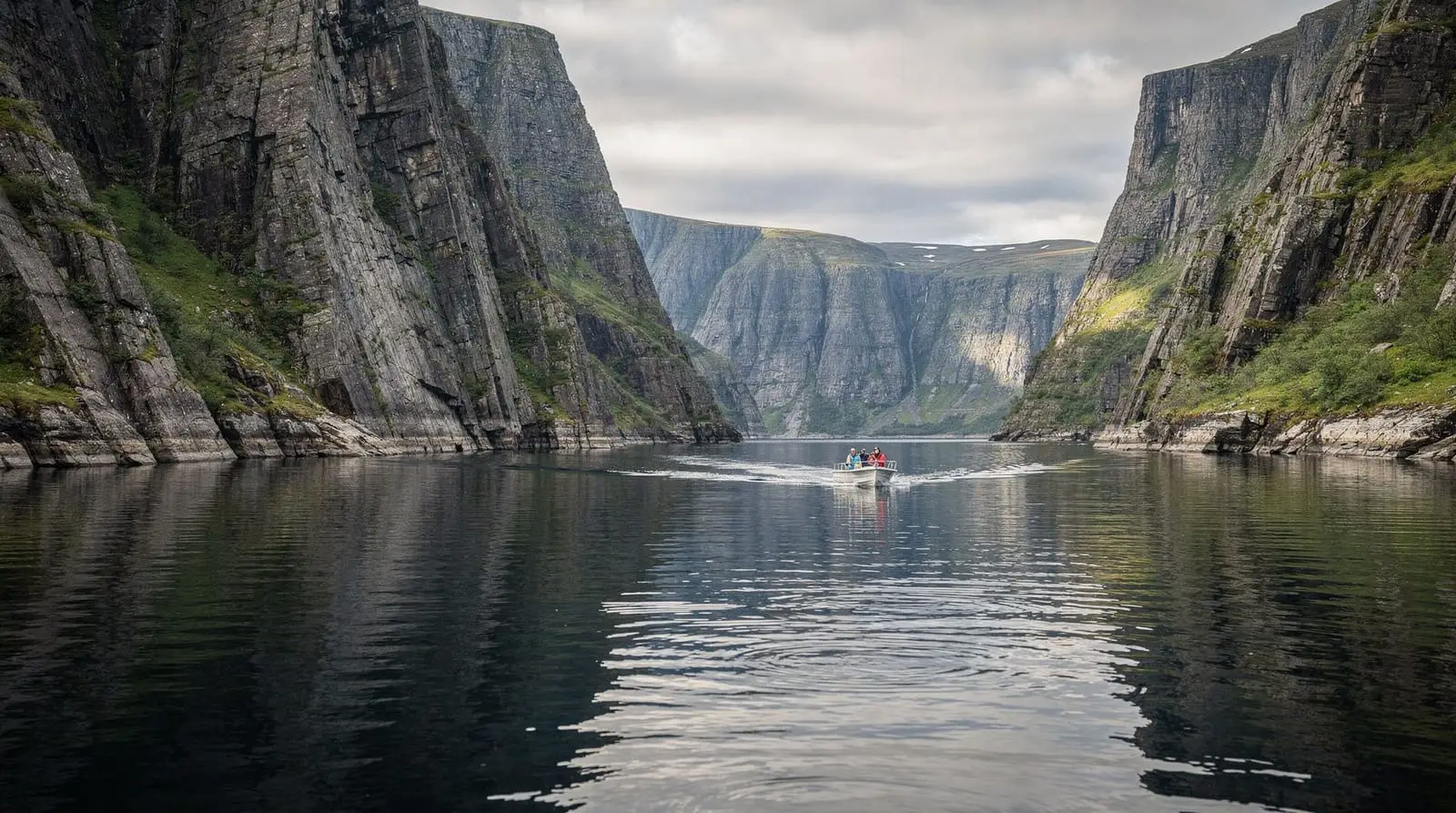
| Gros Morne | Newfoundland and Labrador | Western Brook Pond fjord, the Tablelands, UNESCO site |
| Terra Nova | Newfoundland and Labrador | Sheltered sounds and boreal forest on the east coast |
| Torngat Mountains | Newfoundland and Labrador | Northern Labrador fjords and peaks, Inuit homeland |
| Akami-Uapishkᵁ-KakKasuak-Mealy Mountains (reserve) | Newfoundland and Labrador | Subarctic wilderness and coast in central Labrador |
Fundy, Cape Breton Highlands, Prince Edward Island and Gros Morne fit easily into a road trip. Torngat and the Mealy Mountains are expedition territory.
The North: 13 national parks
Yukon, the Northwest Territories and Nunavut hold most of the system’s land area and very few of its visitors.
| Park | Territory | Known for |
|---|---|---|
| Kluane (park and reserve) | Yukon | Mount Logan, Canada’s highest peak, huge icefields |
| Ivvavik | Yukon | Firth River rafting, Porcupine caribou herd |
| Vuntut | Yukon | Old Crow Flats wetlands, Vuntut Gwitchin homeland |
| Nahanni (reserve) | Northwest Territories | Virginia Falls, canyon river trips, early UNESCO site |
| Nááts’ihch’oh (reserve) | Northwest Territories | Headwaters of the South Nahanni River |
| Thaidene Nëné (reserve) | Northwest Territories | East arm of Great Slave Lake |
| Tuktut Nogait | Northwest Territories | Tundra river canyons, caribou calving grounds |
| Aulavik | Northwest Territories | Banks Island, muskoxen |
| Auyuittuq | Nunavut | Akshayuk Pass, Mount Thor, Baffin Island glaciers |
| Sirmilik | Nunavut | Bylot Island bird cliffs, sea ice edge |
| Quttinirpaaq | Nunavut | Ellesmere Island, among the most northerly parks on Earth |
| Ukkusiksalik | Nunavut | Wager Bay, polar bears, Inuit archaeological sites |
| Qausuittuq | Nunavut | Bathurst Island, Peary caribou |
Kluane is made of a national park and a national park reserve, which is how the official count reaches 48 even though 47 park names appear on this page. Almost every northern park requires a charter flight or a guided expedition. Kluane is the exception: the Alaska Highway runs along its edge near Haines Junction.
Which parks to choose for a first trip
If this is your first trip to Canada, the honest answer is that most travellers do best with one well-chosen park region rather than a tour of many. Three combinations work particularly well.
- The Rockies: Banff, Yoho, Kootenay and Jasper, all linked by scenic highways. Allow at least a week. Our 14-day Banff and Rockies itinerary covers all four at a relaxed pace.
- The Pacific coast: Pacific Rim from Vancouver, with a ferry crossing to Vancouver Island and time in Tofino.
- The Atlantic loop: Fundy, Prince Edward Island and Cape Breton Highlands in a single road trip of 10 to 14 days.
For wildlife, Jasper and the northern Banff valleys are best for elk, sheep and bears, while Riding Mountain and Elk Island are reliable for bison. For quiet, pick Waterton, Kootenay or Terra Nova over Banff in July. For something unique, Grasslands and Gros Morne have no real equivalent anywhere else in the country.
When to go
Most parks are at their best between mid-June and mid-September, when trails are snow-free and services are open. September is often the sweet spot: fewer crowds, autumn colours and active wildlife. Winter brings skiing and frozen-lake skating to Banff and Jasper, but many campgrounds and some park roads close. In the Arctic parks, the visitor season is short, usually July and early August.
Frequently asked questions about Canada’s national parks
How many national parks are there in Canada? Parks Canada counts 48 national parks and national park reserves. Kluane counts twice because it is both a park and a reserve, so 47 names appear in the lists above.
Which province has the most national parks? British Columbia, with seven. Alberta, Ontario, the Northwest Territories and Nunavut follow with five each, and the Northwest Territories also share Wood Buffalo with Alberta.
What is the most visited national park in Canada? Banff, by a wide margin. It receives several million visits a year, more than any other park in the system.
Do I need a pass for every national park? You need admission for each day you spend in a park that charges a fee. One Discovery Pass covers all of them for a year, which is simpler if you visit more than a handful of days.
Can I visit Canada’s national parks without a car? Some, yes. Banff has local buses and shuttles, and guided day tours run from Calgary, Vancouver and Halifax. Most other parks are much easier with a rental car, see our Canada car rental guide. You can also look at guided tours across Canada that include park visits.