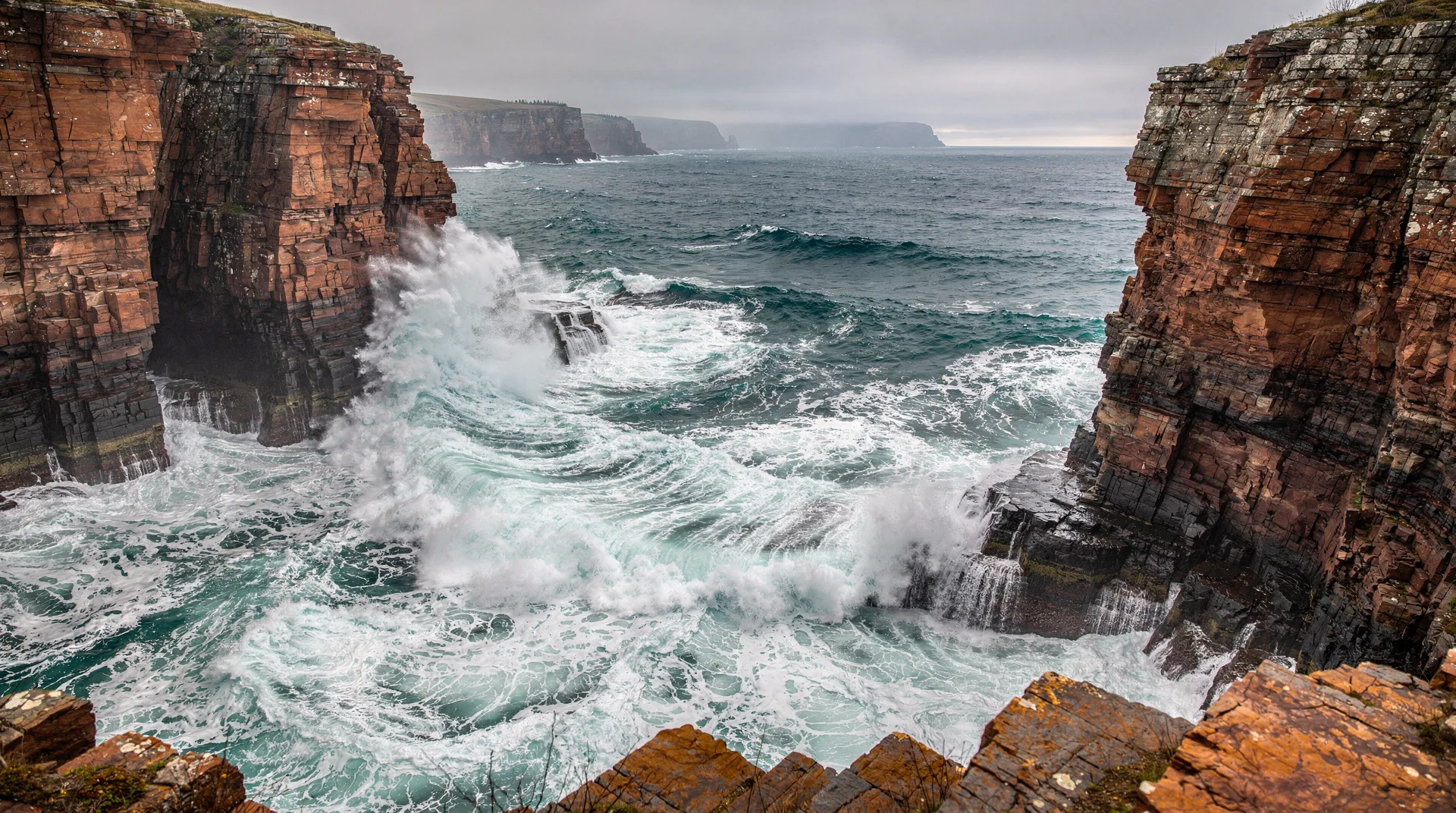
Fundy National Park guide: tides, trails and the Bay of Fundy
What makes Fundy National Park special?
Fundy National Park sits on the shore of the Bay of Fundy, home to the highest tides in the world — up to 12 metres in the park itself. Visitors can walk on the ocean floor at low tide, kayak among sea caves, hike 120 kilometres of trails, and watch the water rise at extraordinary speed. The park also features Acadian forest, waterfalls, and warm-water pools.
| At a glance | |
|---|---|
| Where | Southern New Brunswick, Bay of Fundy coast, around 170 km southwest of Moncton |
| Cost | Around CA$9.50/adult day pass, or CA$167.50/adult for a 12-month Parks Canada Discovery Pass — see the Parks Canada Discovery Pass guide |
| Time needed | 2-3 days for tidal walks, Dickson Falls and a kayaking tour; a half-day extra for Hopewell Rocks |
| Getting there | Car essential — around 2 hours from Moncton, no bus service to the park |
| Best time | June-September for full services; September for the best balance of colour, salmon and lighter crowds |
The Bay of Fundy has a claim that no other body of water on Earth can make: it produces the highest tides in the world. At the head of the bay, in the upper reaches of Chignecto Bay and Minas Basin, tides can exceed 16 metres. Within Fundy National Park on New Brunswick’s southern coast, tidal ranges of 10 to 12 metres are typical — enough to expose vast mudflats and rocky seabed twice a day, transforming the coastline every six hours. Walking across the ocean floor, examining tide pools, and watching the sea return as a fast-moving wall of brown water is one of the most compelling natural spectacles in Atlantic Canada.
Established in 1948, Fundy National Park protects 207 square kilometres of the Caledonian Highlands where they drop to the bay. The park interior is a landscape of Acadian forest — yellow birch, sugar maple, red spruce, and balsam fir — cut through by more than 25 river systems and punctuated by waterfalls, beaver ponds, and wildlife corridors. The coast is a dramatic sequence of sea cliffs, sea caves, and tidal flats. Together, interior forest and tidal shore make Fundy one of the most ecologically varied parks in eastern Canada.
The park is compact and well-developed by Canadian standards. The village of Alma at the park’s eastern entrance provides accommodation and services; a golf course, heated saltwater pools, tennis courts, and a full campground network make Fundy unusually accessible for families. But the tides are the reason you come, and the tides are unforgiving of poor timing — planning your visit around the tide chart is not optional.
Why the Bay of Fundy tides are worth your time
The Fundy tides are not just extreme in scale — they are extreme in drama. Because the bay acts as a resonance chamber, its natural oscillation period matching the tidal cycle, water energy amplifies as it funnels into the narrowing upper bay. At the park’s Alma Beach, the entire foreshore — mudflats, rockweed beds, barnacle-covered boulders — is exposed at low tide, stretching hundreds of metres to the water’s edge.
Walk out across it, examine the tide pools, watch the oystercatchers and sandpipers feeding, then find a good vantage point and watch the tide return. The water comes back at walking pace, rising 30 centimetres or more per hour, turning the exposed flats into swirling channels and then a full tidal bay in the space of a few hours.
The Hopewell Rocks, 40 kilometres west of the park at the head of the bay (technically just outside park boundaries in Hopewell Cape Provincial Park), are the most famous expression of the Fundy tides. Enormous sea stacks capped with trees stand isolated at low tide, surrounded by water at high. The tidal range here reaches 16 metres. The Hopewell Rocks are a separate admission site operated by the province, but they pair naturally with a Fundy National Park visit.
Within the park, the Alma Beach boardwalk provides the best tidal viewing platform. Posted tide tables tell you exactly when the tides turn. Arrival one to two hours before high tide gives the best opportunity to walk the flats and then watch the water rise — but stay aware of your position at all times, as the channels fill quickly and can cut off retreat routes.
Top things to do in Fundy National Park
Walk the ocean floor at low tide
This is the experience that defines Fundy. At low tide, 6 to 8 hours after the previous high, Alma Beach exposes an enormous apron of mudflats, sand, and barnacle-covered boulders. Remove your shoes, walk out over the tide pools, and examine the rich intertidal ecology — periwinkles, mussels, hermit crabs, rock crabs, and the rockweed forests that are exposed only twice daily. Flounder and sculpin inhabit the shallow channels. The mud is sticky but otherwise harmless.
The key rules: check the tide table before venturing out, keep the shoreline visible, and start moving back toward shore at least 45 minutes before the tide turns. The returning tide moves fast and channels fill surprisingly quickly. Parks Canada staff at the Alma Beach boardwalk can provide guidance.
Sea kayaking among sea caves
The sea cliffs between Alma and Point Wolfe contain caves and sea arches accessible only by water, carved by the relentless tidal action over thousands of years. Several outfitters based in Alma offer guided sea kayaking tours that time departures to coincide with stable mid-tide conditions for exploring the cliff base. The red sedimentary rock cliffs rise 50-100 metres above the kayaks, studded with barnacles to the high-tide mark. At low tide the cave floors are accessible; at mid-tide you can paddle through some arches.
Browse Atlantic Canada outdoor adventure toursHike to Dickson Falls
Dickson Falls (4.4 km return, easy) is the park’s most popular trail and one of the finest short hikes in New Brunswick. The route follows a gorge through old-growth Acadian forest — towering yellow birch and hemlock with mossy floors — to a series of tiered cascades falling over red sandstone ledges. The lower falls are easily reached; a further loop extends the walk through the forest interior. The trail is accessible year-round; in winter the frozen falls create an ice sculpture in the gorge.
Fishing and river walks
Fundy’s river system — particularly the Upper Salmon River and Point Wolfe River — provides excellent fly fishing for Atlantic salmon and sea-run brook trout in late summer. Parks Canada issues fishing permits at the visitor centre. Even non-anglers enjoy walking the river trails in late August and September when salmon can be seen holding in the pools before their upstream migration. The Goose River Trail (15 km return) follows the coast to the Goose River valley and is one of the park’s great wilderness walks.
Swimming in heated outdoor pools
One of Fundy’s unexpected amenities is a pair of heated outdoor pools at the Fundy Highlands and Headquarters area — filled with seawater warmed to comfortable temperatures. The Bay of Fundy itself is too cold for comfortable swimming, making these pools a popular summer amenity for families. An 18-hole golf course adjacent to park headquarters provides a further recreational option unusual in a national park setting.
Explore guided tours across Atlantic CanadaVisit the Hopewell Rocks
While technically outside the park, the Hopewell Rocks Provincial Park 40 kilometres west of Alma is an essential companion stop. The flowerpot sea stacks — enormous columns of conglomerate rock capped with fir trees — are accessible on foot at low tide and by kayak at high tide. The tidal range here is the largest on Earth, typically around 16 metres. Guided kayaking tours around the bases of the rocks are offered by outfitters in the village of Hopewell Cape.
Best hikes and trails
Fundy Circuit — 48 km, strenuous multi-day loop. The park’s signature backcountry route connects the interior plateau with the coast, using primitive backcountry campsites at Marven Lake, Laverty Lake, and Goose River. Requires a backcountry permit.
Goose River Trail — 15 km return, moderate. One of the park’s finest coastal walks, dropping from the park plateau through forest to a remote coastal valley. Outstanding tide views from the shore.
Coppermine Trail — 8.8 km loop, moderate. Interior forest loop connecting several backcountry lakes with good moose habitat and wildflower meadows.
Upper Salmon River Trail — 12 km one way (point-to-point), moderate. Follows the river through Acadian forest with multiple stream crossings. Good for Atlantic salmon viewing in September.
Dickson Falls Trail — 4.4 km return, easy. The park’s most popular trail to the tiered waterfall in an old-growth gorge. Year-round accessibility.
Third Vault Falls Trail — 7.5 km return, moderate. The park’s highest waterfall at 16 metres. A worthwhile half-day hike through deciduous forest.
Point Wolfe Beach Trail — 1 km return, easy. Short coastal walk to a tucked-away cove beach at the mouth of the Point Wolfe River.
Wildlife you might see
Fundy’s Acadian forest is excellent habitat for white-tailed deer, which are abundant throughout the park. Moose are present but less commonly encountered than in more northern parks — they favour the interior bogs and lakeshores. Black bears patrol the berry patches in late summer; exercise standard bear safety precautions.
The intertidal zone is the wildlife highlight. Bald eagles are a daily sight along the coast, hunting the exposed flats at low tide. Great blue herons wade the tidal channels. Semipalmated sandpipers gather in extraordinary concentrations on the upper bay mudflats (outside the park near Evangeline Beach) during their August migration — gatherings of up to one million birds have been recorded.
The river system supports Atlantic salmon, brook trout, American eels, and in summer, great blue herons, kingfishers, and the occasional osprey. Beaver are active on most ponds in the park’s interior.
Marine mammals visible from the Fundy coastline include harbour porpoise, Atlantic white-sided dolphins, and occasionally minke whales in deeper water offshore.
Combining Fundy with the rest of the Bay of Fundy
Fundy National Park is one stop on a much bigger tidal story. For a wilder, kinetic take on the same phenomenon, tidal bore rafting on the Shubenacadie River near Moncton rides the incoming wave directly rather than just watching it. For whale watching timed to the bay’s summer feeding season, see the Bay of Fundy whale watching guide.
Travellers building a longer loop should look at the 7-day Bay of Fundy itinerary, which sequences the park, Hopewell Rocks, and the Nova Scotia side of the bay into a realistic driving route. For getting here without your own car, check the getting around Canada guide — a rental picked up in Moncton is the practical answer, since there is no bus service to Alma.
Planning the wider trip around the park
Fundy works best as one chapter in a longer Maritime journey. The Bay of Fundy destination page gives the regional overview, and the Hopewell Rocks destination page covers the best-known tidal site next door. If you are comparing provinces before committing to a route, the Nova Scotia vs New Brunswick guide helps you decide how to split your time.
Most visitors arrive via Moncton, which makes a sensible gateway, while Saint John and St. Andrews by-the-Sea add coastal character on the western side of the bay. A rental car ties these stops together, and the Canada car rental guide explains how to book one without surprises. For the bigger picture of road conditions and regional routes, read the driving Atlantic Canada guide.
If your plans stretch beyond New Brunswick, the Maritimes loop 10-day itinerary shows how the park fits into a longer circuit. Paddlers who enjoyed the sea caves will find more ideas in the kayaking in Canada guide, and hikers can compare Fundy’s trails with other regions in the best hikes in Canada guide. Because bears and moose share the park with visitors, the Canada wildlife safety guide is worth a read before you head into the interior.
Getting there
Fundy National Park is located on New Brunswick’s Bay of Fundy coast, approximately 170 kilometres southwest of Moncton and 150 kilometres southeast of Fredericton. The nearest major city is Moncton, served by the Greater Moncton Roméo LeBlanc International Airport (YQM) with connections to Toronto, Montreal, Halifax, and Ottawa.
From Moncton, take the Trans-Canada Highway (Highway 1) west to Highway 114, then south through the village of Hillsborough and along the bay shore to Alma and the park’s east gate. The drive takes approximately 2 hours. A car is essential — there is no bus service to the park.
From Saint John (90 km west), take Highway 1 east to Highway 114. The ferry from Digby, Nova Scotia to Saint John (Bay Ferries, approximately 2.5 hours) provides access from the Maritimes and Nova Scotia’s South Shore.
Where to stay
Alma village (at the park gate) is the main base, with a handful of motels, cottages, and B&Bs along the main street, plus the famous Alma Lobster Shop for takeaway seafood. The village is small but has everything needed for a 2-3 night park visit.
Inside the park: Parks Canada operates the Headquarters Campground with full hookup sites, and Chignecto North and South campgrounds in the interior. The Point Wolfe Campground near the coast provides a more rustic experience. Backcountry campsites on the Fundy Circuit require advance permits.
Nearby: Moncton (170 km) and Sussex (60 km northwest of Alma) provide broader accommodation options for those combining Fundy with wider Maritime itineraries.
Best time to visit
July and August are peak season. Warm temperatures (highs of 22-26°C), full services, and the saltwater pools in operation. Weekends in August can be busy at Alma Beach — arrive early or on weekdays for a quieter tidal experience.
June is excellent: wildflowers bloom in the forest, Atlantic salmon begin returning to rivers, and crowds are manageable. Some campground hookup services may not yet be open.
September is arguably the finest month: comfortable temperatures, spectacular Acadian forest fall colours beginning in late September, and Atlantic salmon in the rivers. The tidal experience is year-round.
October brings peak fall foliage — the sugar maples and yellow birch in the park interior turn brilliant orange and yellow. Many services close after Thanksgiving (second Monday of October in Canada), but day use is possible well into the month.
Winter (November–March) brings a quieter park with snowshoe trails and the ghostly sight of ice forming in the tidal zone. Dickson Falls is a dramatic ice sculpture. Only limited services remain open.
Practical info
Park entry fee (2026): Adult CA$10.00/day, family/group CA$19.50/day. The Parks Canada Discovery Pass (CA$83.50/adult, CA$167.50/family) covers all national parks for 12 months and is worthwhile for multi-park itineraries.
Tide tables: Posted at the Alma Beach boardwalk and available from the park visitor centre and the Parks Canada website. Plan all coastal activities around the tide schedule — this is non-negotiable.
Visitor centre hours: Open daily from mid-May to mid-October. Seasonal hours apply; check Parks Canada before arriving.
Bear safety: Black bears are active in the park. Carry bear spray on backcountry hikes, store food properly at campgrounds, and follow posted guidelines.
Cell coverage: Reasonable in Alma and along the main park road; limited in the backcountry and interior trails.
Frequently asked questions about Fundy National Park guide: tides, trails and the Bay of Fundy
How dangerous are the Fundy tides?
Tidal flats can be dangerous if you lose track of time and distance. The tide rises quickly once it turns — up to 12 metres over six hours, or roughly 30 centimetres every 15 minutes. Channels fill from both sides and can cut off return routes. Always check the tide table, keep the shoreline in sight, and begin returning at least 45 minutes before high tide. Follow the guidance posted at Alma Beach and heed Parks Canada advice. Each year, visitors require rescue after being cut off on the flats; most incidents involve underestimating the speed of the incoming tide.
Can I kayak in the Bay of Fundy on my own?
The Bay of Fundy is not suitable for independent kayaking without significant sea kayaking experience. Tidal currents are strong and unpredictable, water temperature is cold (hypothermia within minutes of immersion in early season), and offshore fog can reduce visibility to near zero. Book a guided tour with a qualified outfitter. Sea caves and cliff base kayaking are operated at specific tidal windows by guides who understand local conditions.
What is the best time of day to see the tides?
The optimal viewing experience is the two to three hours around high tide, when you can first observe the full exposed flats at low tide and then watch the water return rapidly. The difference between low and high tide in the park can be up to 12 metres, and watching that transformation in real time is the park’s defining spectacle. Tide times shift by roughly 50 minutes each day, so check the posted tables on arrival and plan accordingly.
How long should I spend in Fundy National Park?
Two to three days is ideal for a first visit, covering Alma Beach tidal walks, the Dickson Falls hike, the sea kayaking tour, and one or two longer inland trails. Day trips from Moncton are possible but leave little time for the full tidal experience. If adding the Hopewell Rocks, budget half a day extra for that site.
Are the heated pools open year-round?
No. The outdoor heated saltwater pools at Fundy operate during summer season only, typically late June to Labour Day weekend (first Monday in September). Hours are posted at the pool gates and on the Parks Canada website.
Is Fundy National Park good for families?
Fundy is one of the most family-friendly national parks in Canada. The tidal walk is a child-magnet activity; the heated pools provide a safe swimming option; the golf course and recreational facilities cater to mixed-interest groups; and short, accessible trails like Dickson Falls are suitable for children of all ages. The park visitor centre in Alma has well-designed children’s programming during summer.
Can I see the Northern Gannet or shorebird migration at Fundy?
The Bay of Fundy and its mudflats are a globally important staging area for migratory shorebirds — particularly in late July and August, when semipalmated sandpipers gather on the upper bay mudflats (at Evangeline Beach and Mary’s Point, both east of the park) in concentrations of hundreds of thousands. These are not within the park itself, but a side trip to Mary’s Point Shorebird Reserve (Ramsar Wetland site) is well worth combining with a Fundy visit during the peak August migration window.
Is Fundy National Park worth it compared to Hopewell Rocks alone?
Yes, for anyone with more than a day. Hopewell Rocks delivers the single best photograph, but Fundy National Park adds hiking, kayaking, wildlife, and a genuine sense of the Acadian forest interior that Hopewell Rocks alone cannot. Most visitors combine both — a Fundy park pass plus a separate Hopewell Rocks admission makes the fullest Bay of Fundy day.
Do I need a park pass just to drive through Fundy?
Yes. Parks Canada requires a valid day pass or Discovery Pass for anyone entering Fundy National Park, whether stopping to hike or simply driving through on Highway 114. Passes are sold at the park gates and visitor centre.