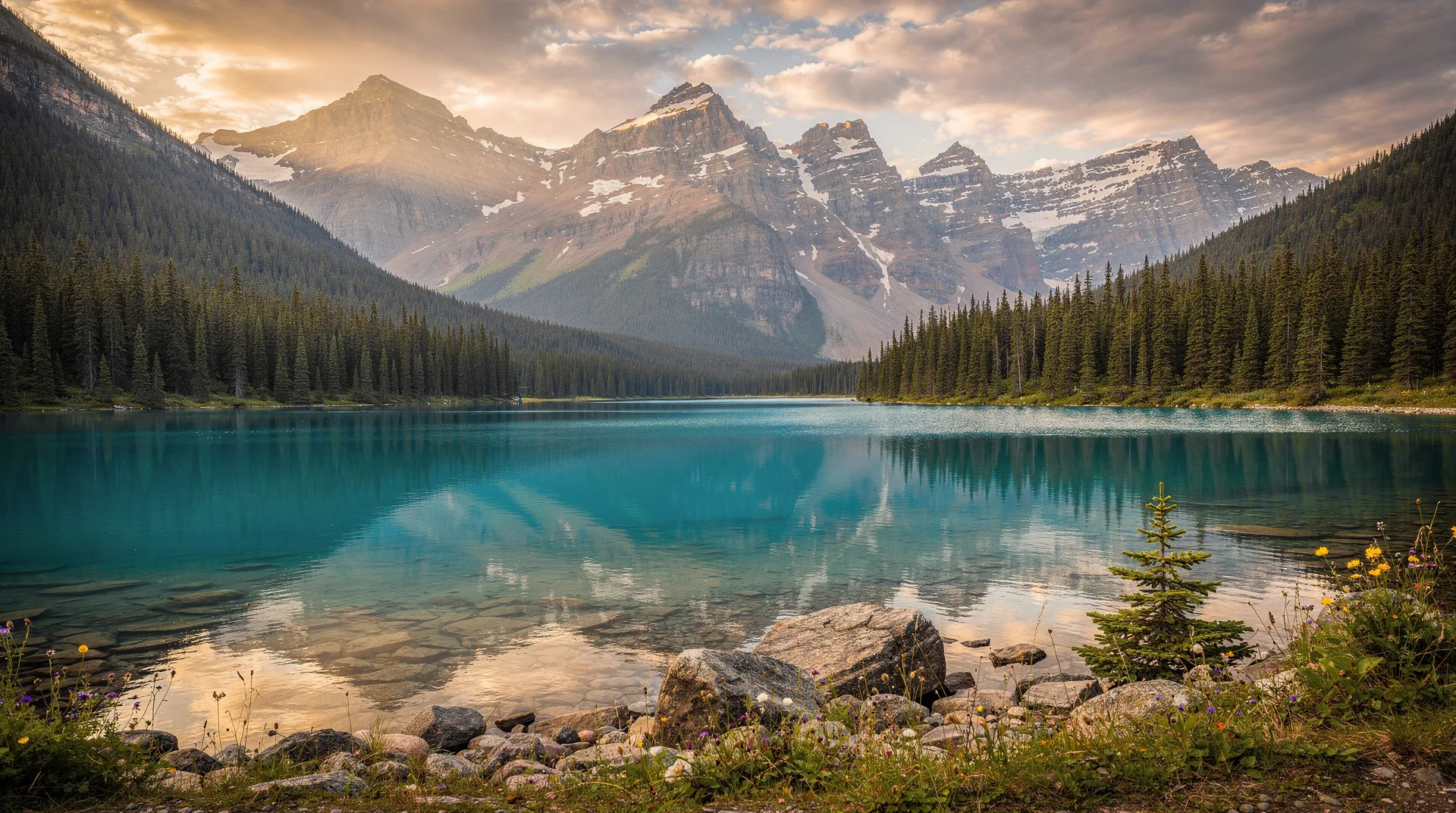
A province built on mountains, rivers and big skies
Some places require no embellishment. Alberta is one of them. The western third of the province is taken up by the Canadian Rockies — a 500-kilometre wall of grey limestone, glacial ice and turquoise water that forms the defining landscape of Canada itself. Two national parks, Banff and Jasper, protect the heart of that country.
Between them stretches the Icefields Parkway, a road so consistently spectacular that most travel writers run out of adjectives before the halfway point. Framing it all are iconic lakes whose colours — the electric turquoise of Lake Louise, the impossible blue of Moraine Lake — have convinced generations of visitors that the images they had seen in photographs must have been retouched. They were not.
| At a glance | |
|---|---|
| Where | Southwestern Canada, sharing the Rockies with British Columbia; main gateways Calgary and Edmonton |
| Cost | Park pass required for Banff/Jasper (around CAD $12.25/day, or CAD $83.50/year); mid-range hotel roughly CAD $200-350/night in summer, less in Canmore or Edmonton |
| Time needed | 5 days minimum for a Banff taster; 10-14 days for the full Rockies-to-prairies picture |
| Getting there | Fly into Calgary (YYC) for the southern Rockies, or Edmonton (YEG) for the north; a rental car is effectively mandatory |
| Best time | Late June to September for hiking; late September for larch colour; December to March for skiing |
Alberta is a province of contrasts. East of the mountains the land falls away into prairie and badlands, producing the hoodoo-strewn dinosaur country around Drumheller and, eventually, the wheat and canola plains that feed much of North America. South towards the Montana border, the Rockies meet the prairie abruptly at Waterton, one of the most underrated national parks on the continent. Two modern cities anchor the province — Calgary in the south, brash and cosmopolitan; Edmonton further north, greener and more civic-minded — and between them runs a highway corridor that feels, from the car window, like an exercise in open space.
What unites the whole place is a kind of outdoor seriousness. Albertans take their wilderness personally. Campfire bans are respected. Bear spray is standard kit. Winter tires are non-negotiable from November. The province holds a quiet confidence that comes from living next to mountains that genuinely do not care whether you are having a good time. For a traveller, this translates into a trip that rewards a little preparation and punishes improvisation in October storms. Done well, it is one of the great mountain experiences on earth.
The Canadian Rockies heart: Banff, Lake Louise, Canmore, Kananaskis
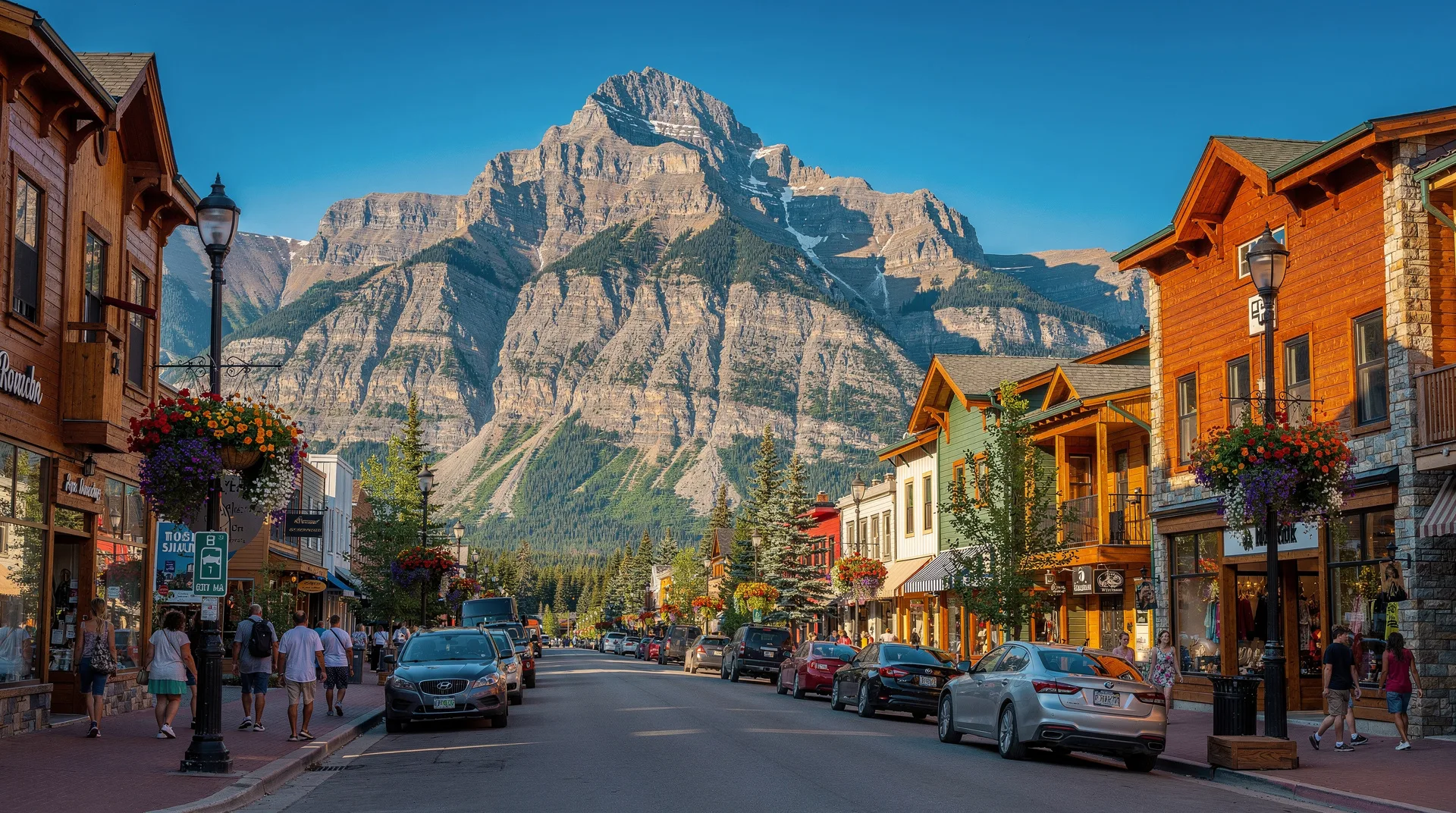
The Bow Valley is the centre of gravity of any Alberta trip. It runs west from Calgary into the mountains along the Trans-Canada Highway, climbing steadily from prairie into a corridor of vertical stone and glacial lakes. At its eastern threshold sits Canmore, a former coal-mining town that has quietly become the sophisticated local alternative to Banff — excellent restaurants, a Saturday farmers’ market, a working population of climbers and ski guides rather than tourists, and property prices to match. Canmore is where Calgarians keep their weekend condos; for visitors, it is often the better base, 25 minutes from Banff townsite and inside a more honest mountain community.
Push west through the park gates and the valley narrows into Banff itself, a town of 8,000 permanent residents hemmed in on every side by peaks rising to over 3,000 metres. Banff was Canada’s first national park — established in 1885 after three railway workers stumbled upon the hot springs now preserved at Cave and Basin, a national historic site whose cave still exhales the same warm, sulphur-scented mist that started the whole idea of public parkland in this country.
Above the town, the Sulphur Mountain gondola lifts you 698 metres in eight minutes to a summit ridge with 360-degree views and a boardwalk to the old meteorological station at Sanson Peak. On the mountain’s flank, the Banff Upper Hot Springs deliver the classic reward for a day of walking: 38°C mineral water with peaks in every direction from a 1932 heritage pool.
North of town, Lake Minnewanka is the largest lake in the park and the one most visitors miss — 28 kilometres long, hemmed in by ridges, reachable by boat cruise or on foot along shore trails where bighorn sheep pose on the cliffs above the water.
West along the Bow Valley Parkway (Highway 1A, the slow, wildlife-rich alternative to the Trans-Canada), Johnston Canyon is the park’s most walked trail — a limestone slot with steel catwalks bolted to the cliffs, delivering hikers to the Lower Falls in 1.1 kilometres and the Upper Falls in 2.7. Beyond the falls lie the Ink Pots, seven cold mineral springs that bubble through a subalpine meadow in shades of blue-green. In winter the canyon freezes and ice-walk tours crampon their way along the frozen streambed past cathedral-scale icicles.
Book the Lake Louise, Moraine Lake, gondola and hot springs day tourFifty-six kilometres up the valley, Lake Louise is the image that most travellers carry with them before they arrive and that still manages to exceed it. The turquoise water is backed by the Victoria Glacier; the Fairmont Chateau sits on the north shore in baronial stone, and the lakeshore path delivers you, in six flat kilometres, to a teahouse below six glaciers. Fourteen kilometres beyond, in the Valley of the Ten Peaks, Moraine Lake does something that Lake Louise does not quite manage: it stuns you.
The Wenkchemna Range walls in the south side of the lake in a continuous limestone barrier, and in late September the larches in the valley above turn gold. Private vehicles have been banned from Moraine Lake Road since 2023 — access is by Parks Canada shuttle from the Lake Louise Park and Ride, by commercial tour, or by bicycle. Shuttle tickets for July Saturdays sell out within hours of release in April.
Browse Moraine Lake guided tours with guaranteed vehicle accessSouth of the Bow Valley, reached by a quieter side road from Canmore, Kananaskis Country is where locals go when Banff fills up. It is provincial parkland rather than national, which means fewer regulations and significantly fewer visitors. The scenery rivals Banff’s — the Spray Lakes, Highwood Pass (the highest paved road in Canada), and the Upper Kananaskis Lakes — and the trailheads are typically half-empty on summer weekends. For travellers willing to trade a little infrastructure for a lot of solitude, Kananaskis is Alberta’s open secret.
The Icefields Parkway: 230 kilometres of concentrated wilderness
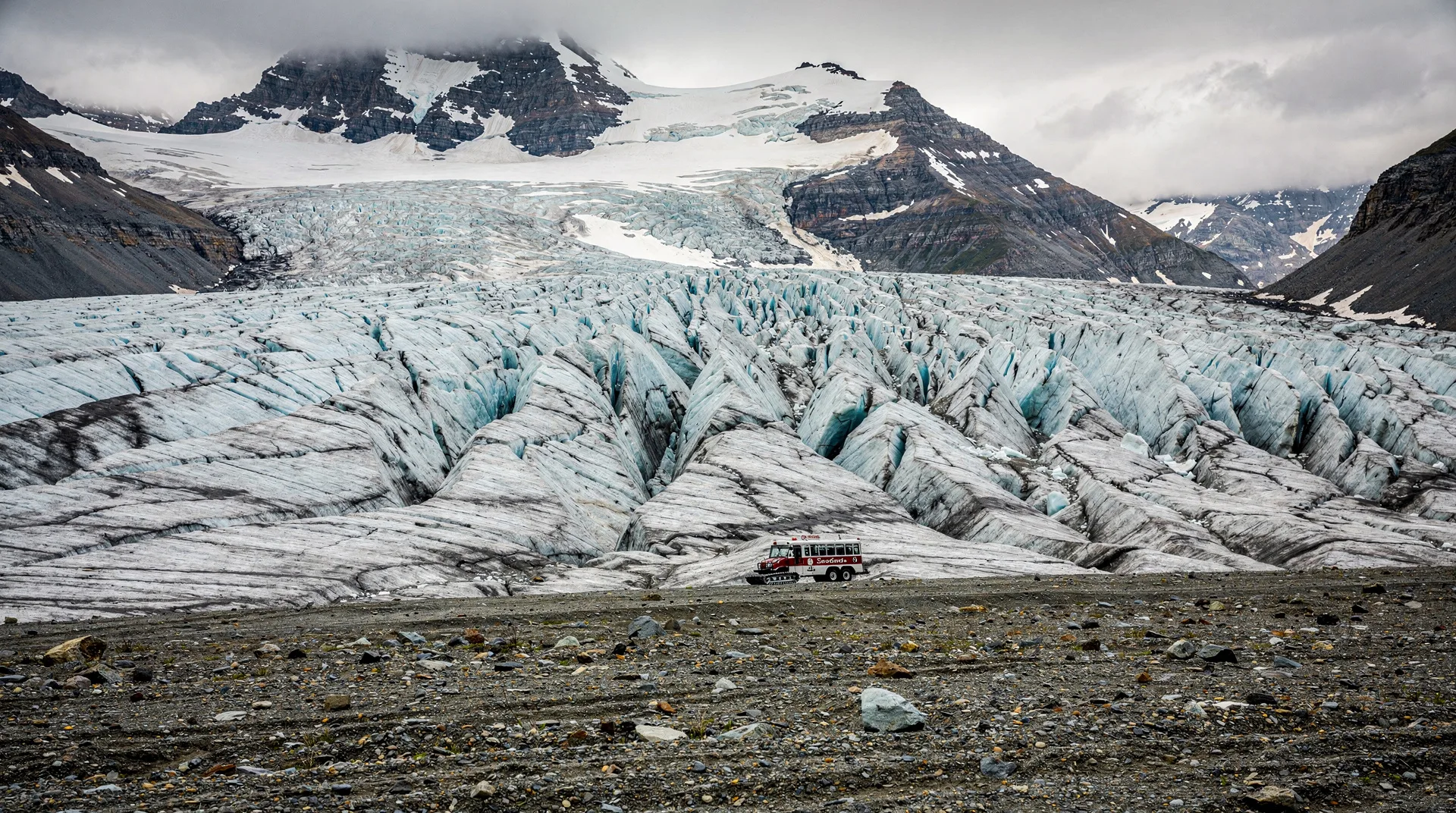
Highway 93 North begins just outside Lake Louise and delivers you to Jasper 230 kilometres later. In between, it passes beneath eleven major glaciers, alongside dozens of lakes, and through wildlife habitat where grizzly bears, wolves and mountain caribou are not hypotheticals but regular roadside sightings. The Parkway is routinely named the most beautiful drive in the world, and the claim holds up across repeated visits.
An hour and a half from Lake Louise, Bow Lake is the first showcase stop. The lake sits at the foot of the Bow Glacier, which feeds it through a cascade on the cliff above; on the northern shore, Num-Ti-Jah Lodge — a rust-red, octagonal log building from the 1930s — is one of the most photographed structures in the Rockies. A short walk along the lakeshore delivers a framing of turquoise water, rust-red roof and snow-streaked cliffs that is close to the definition of the Canadian mountain aesthetic.
Ten minutes further, a signposted lay-by marks the short uphill walk to Peyto Lake, whose viewpoint is the single most photographed scene on the entire Parkway. The lake sits 200 metres below the viewpoint in a U-shaped valley; its colour — a startling, almost milky cerulean — comes from glacial rock flour carried down by the Peyto Glacier above. In July and early August the colour reaches its peak intensity. Arrive before 8am or after 6pm to avoid the tour-bus waves.
The central section of the Parkway is glacier country. The road climbs to Sunwapta Pass at 2,035 metres, the boundary between Banff and Jasper national parks, and immediately descends to the Columbia Icefield — the largest non-polar icefield in North America, feeding eight major glaciers and forming the hydrographic apex of the continent. Water melted from these ice fields flows to three oceans: the Atlantic, Pacific and Arctic. The Icefield Centre houses interpretation, restaurants, and the departure point for Ice Explorer snowcoach tours onto the ice.
The most accessible tongue of the icefield is the Athabasca Glacier, which flows down to within walking distance of the highway. A marked interpretive trail lets you walk to the glacier’s toe; guided ice walks go further, roping visitors together and leading them onto the glacier itself. The glacier has retreated more than 1.5 kilometres in the last century, and the markers along the approach trail showing the ice’s historical positions are a stark, on-the-ground climate-change record. A few minutes further, the Columbia Icefield Skywalk cantilevers a glass-floored platform 280 metres above the Sunwapta Valley — unnervingly theatrical, and worth the stop if you can handle the exposure.
The northern section of the Parkway runs down the Athabasca Valley to Jasper, passing Sunwapta Falls and the more powerful Athabasca Falls, where the Athabasca River compresses into a quartzite gorge and detonates through it in spray and noise. The volume of water — fed by the entire Columbia Icefield drainage — is much more impressive than the modest 23-metre drop suggests. Allow a full day for the Parkway drive with meaningful stops; two days, with an overnight near the Icefield, is better.
Jasper country: wilder, darker, more spacious
Jasper is what Banff used to feel like. The town is smaller (around 5,000 residents), the tourist infrastructure lighter, and the park itself dramatically larger — Jasper National Park covers nearly 11,000 square kilometres, almost twice the size of Banff, with a correspondingly smaller visitor density. The town sits at the confluence of the Athabasca and Miette rivers in a broad, open valley, with peaks rising on every horizon and the quiet, unhurried atmosphere of a place that has not been optimised for day-trippers.
The 2024 wildfire that swept through Jasper destroyed portions of the townsite and is still being rebuilt in 2026. Visitors should check current Parks Canada advisories, but the major attractions — the lakes, the canyons, the Icefields Parkway, the SkyTram — were not directly affected, and the town remains open for business while reconstruction continues.
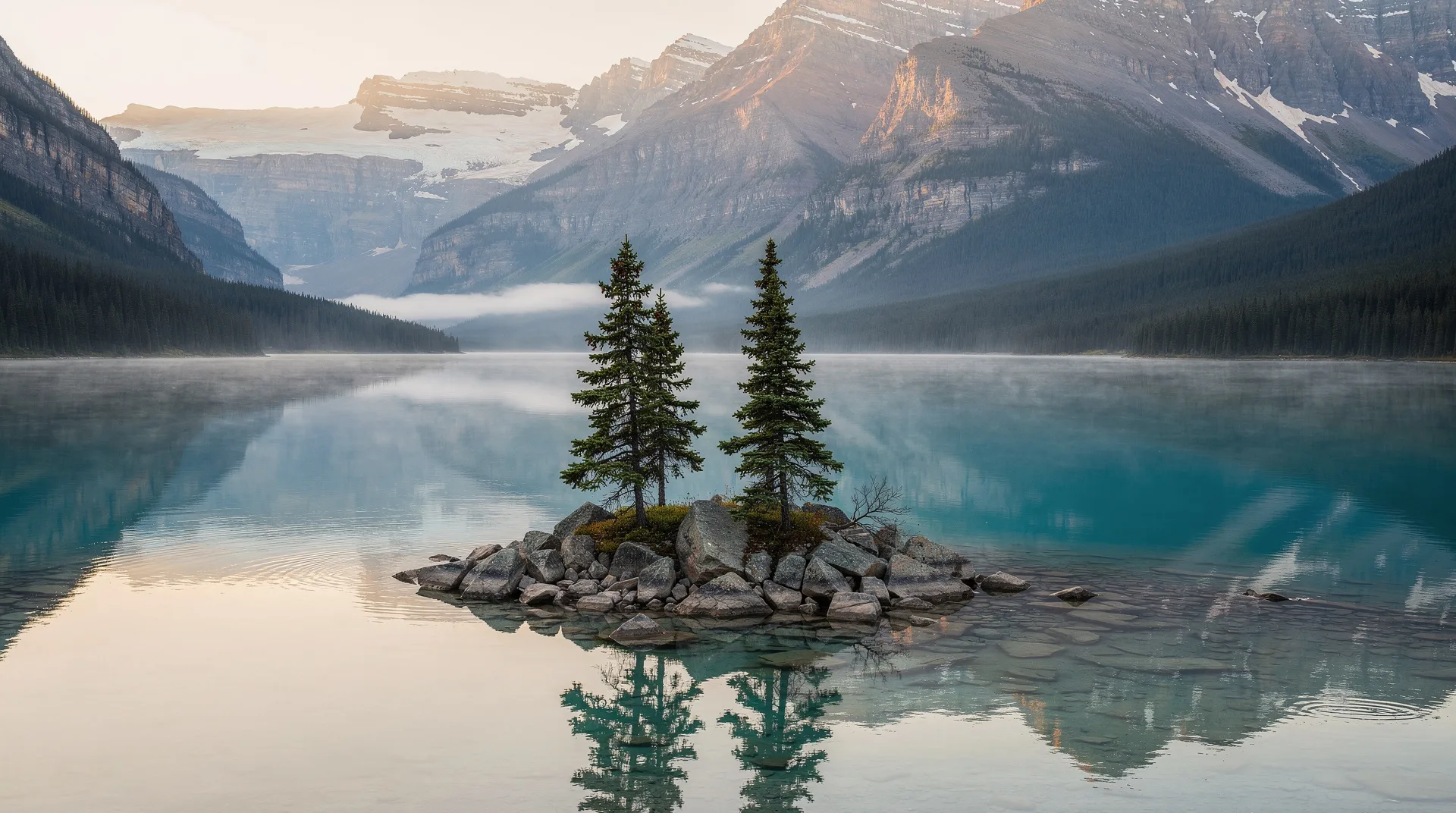
The great destination of the park is Maligne Lake, fifty kilometres southeast of the townsite at the end of a dead-end valley road. At 22 kilometres long and 97 metres deep, Maligne is the largest glacially fed lake in the Canadian Rockies. The classic visit is the boat cruise to Spirit Island — a tiny forested islet in the lake’s middle section that is, by a considerable margin, the most photographed scene in Jasper National Park.
The road to Maligne Lake is an experience in itself: grizzly bears browse the berry slopes in late summer, wolves hunt elk on the flats, and Maligne Canyon — a 50-metre-deep limestone slot carved by the Maligne River — sits near the valley’s mouth. Summer visitors walk the bridges over the gorge; February visitors crampon down into the frozen streambed on guided ice walks, a signature Jasper winter experience.
Four kilometres northwest of town, Pyramid Lake is the townsite’s closest lake and one of the two best dark-sky viewing locations inside the park (the other being the summit of Whistlers Mountain, reached by the Jasper SkyTram).
In 2011 Jasper was designated the largest accessible dark sky preserve in the world — a UNESCO-adjacent status that is not ceremonial: the absence of artificial light for hundreds of kilometres in most directions produces night skies of a clarity most urban visitors will never have experienced. The Milky Way is not a vague smear but a three-dimensional architecture of dust lanes and star clouds. The annual Jasper Dark Sky Festival each October, timed around a new moon, is worth organising a trip around.
Browse all Jasper tours and guided experiencesThe broader park delivers some of the great backcountry hiking in North America. The Skyline Trail (44 kilometres, 3 to 4 days) traces an alpine ridge above the Maligne Valley. The Tonquin Valley, reached on foot or horseback, sits beneath the Ramparts — a fortress wall of quartzite peaks that is one of the most dramatic backcountry views in Canada. Even without committing to overnight trips, day hikes like the Bald Hills above Maligne Lake or the Valley of the Five Lakes along the Icefields Parkway deliver the concentrated Jasper experience: scale, silence, and wildlife that has not yet learned to be afraid of people.
The southern Rockies and the prairies: Waterton and Drumheller
Four hours south of Calgary, where the Rockies meet the prairie abruptly at the Montana border, Waterton Lakes National Park is an anomaly. The park is tiny by Canadian standards — 505 square kilometres, a fraction of Banff or Jasper — but it conceals a density of beauty that rewards a detour. The transition between mountain and prairie happens over a distance of metres rather than kilometres; the Prince of Wales Hotel sits on a windswept bluff above Upper Waterton Lake in a photograph that has sold decades of calendars.
In 1932 Waterton was formally joined to Glacier National Park across the US border to form Waterton-Glacier International Peace Park, the world’s first such designation. Wildflower meadows in July, bighorn sheep on the Akamina Parkway, and the Red Rock Canyon are highlights. Crowds are a fraction of Banff’s even in peak season.
Ninety minutes northeast of Calgary, the land drops into the Red Deer River valley and into Canada’s most important dinosaur country. Drumheller sits in the Alberta badlands — a surreal landscape of eroded hoodoos, striped sedimentary cliffs and bone-bed exposures that have yielded more complete dinosaur skeletons than almost anywhere on earth.
The Royal Tyrrell Museum of Palaeontology, just outside the town, is one of the finest dinosaur museums in the world — its galleries display more than 40 mounted dinosaur skeletons alongside active palaeontological labs where you can watch fossil preparators at work. The surrounding badlands can be driven through on the Dinosaur Trail or hiked at Horseshoe Canyon and Horsethief Canyon. Allow a full day from Calgary; two days if you are travelling with children, who will never forget this place.
The cities: Calgary and Edmonton
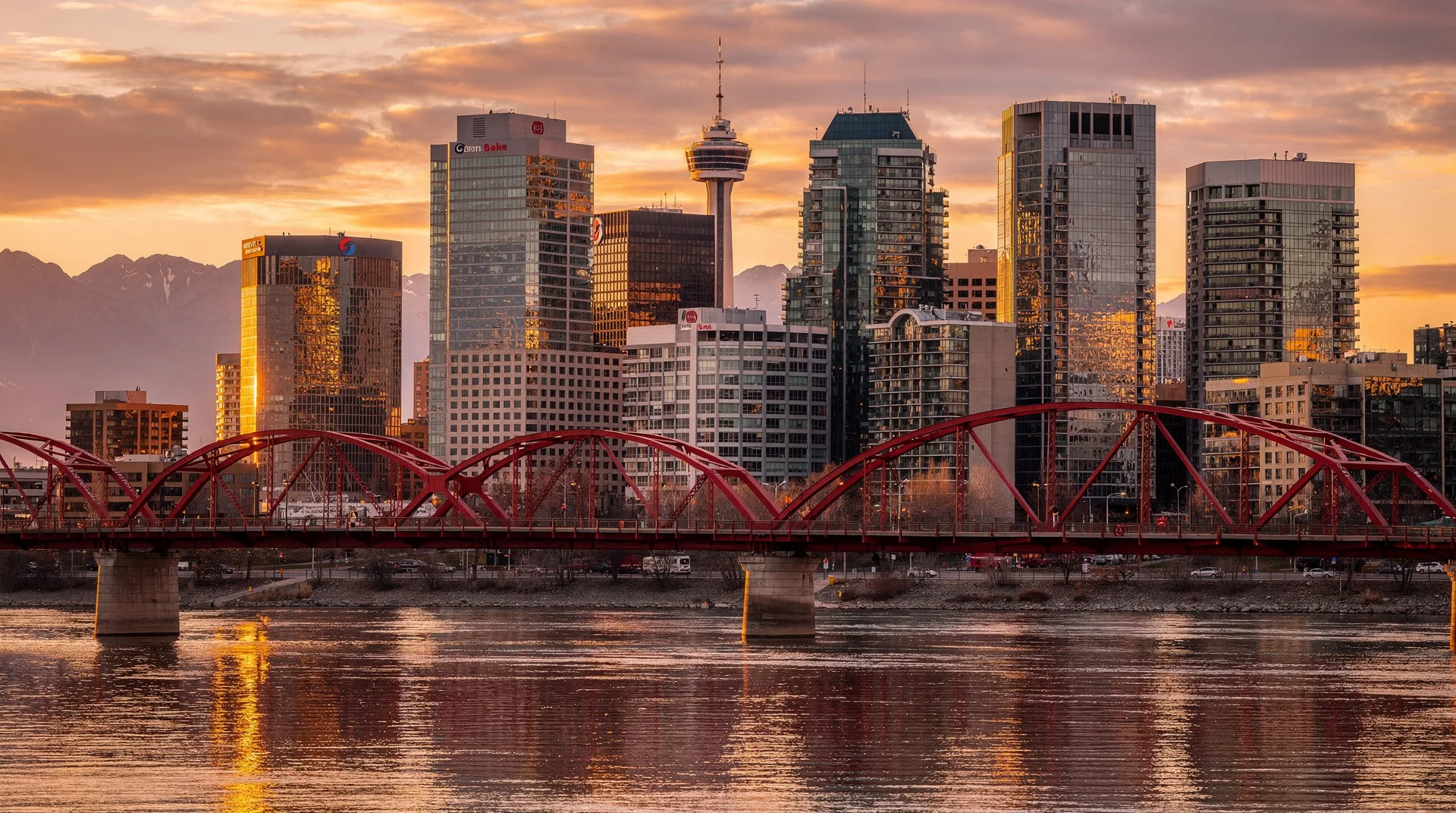
Alberta’s two main cities anchor the province’s cultural and economic life and are often underestimated by visitors focused on the mountains. Calgary sits at the confluence of the Bow and Elbow rivers on the prairie plateau, 130 kilometres east of Banff. Built on oil, cattle and — more recently — technology, Calgary is Canada’s fastest-growing major city and a genuinely interesting cultural destination.
The Calgary Tower delivers 360-degree views from 190 metres above downtown; on a clear day the front ranges of the Rockies fill the western horizon. The Bow River pathway is one of the finest urban cycling networks in North America (nearly 1,000 kilometres of paved pathways across the city). Kensington, Inglewood and the 17th Avenue district concentrate the independent restaurants, craft breweries and boutique shopping that have transformed Calgary from oil town to cosmopolitan metropolis.
The Calgary Stampede, running ten days each July, is the world’s largest outdoor rodeo and one of Canada’s signature festivals. The chuck wagon races, the grandstand show and the downtown pancake breakfasts transform the city into something halfway between state fair and cultural happening. Booking accommodation six months in advance is essential for Stampede visitors.
Browse Calgary tours, Stampede experiences and day trips to BanffEdmonton, three hours north of Calgary on Highway 2, is the provincial capital and, for most visitors, the gateway to northern Alberta. The city wraps around the dramatic North Saskatchewan River valley — a 7,400-hectare urban parkland system that is the largest stretch of connected urban green space in North America, with trails, river access and cross-country skiing in winter.
The Royal Alberta Museum is one of Canada’s finest natural history museums. West Edmonton Mall, once the world’s largest shopping centre, retains its absurdist charm — an indoor waterpark, skating rink, amusement park and aquarium all under one roof. Old Strathcona, on the river’s south bank, is the historic arts and restaurants district and hosts the Edmonton Fringe Festival each August, the largest fringe theatre festival in North America.
Edmonton is also the most practical base for journeys further north — into the boreal forest, to Elk Island National Park (bison and dark-sky viewing 45 minutes east of the city), or onwards to Fort McMurray, the Athabasca oil sands and the Mackenzie Valley highway into the Northwest Territories.
Best things to do in Alberta
Drive the Icefields Parkway end to end. One day minimum, two days ideal, with the classic stops at Bow Lake, Peyto Lake, the Columbia Icefield and the Athabasca Glacier. Fuel up before you start — there is one petrol station between Lake Louise and Jasper, and it is unreliable.
Sunrise at Moraine Lake. The logistics have become complex, but the experience remains singular. Book shuttle tickets in April, arrive at the Moraine Lake Rockpile 60 minutes before sunrise, and watch the Valley of the Ten Peaks light up as the Wenkchemna Range catches the first sun of the day. This is the most celebrated single view in the Canadian Rockies.
Ride a gondola, then soak in a hot spring. The Sulphur Mountain gondola up from Banff pairs naturally with the Banff Upper Hot Springs on the way down. In Jasper the SkyTram delivers the equivalent alpine view. Both are achievable in a single afternoon; both are essential.
Walk an ice canyon in winter. Maligne Canyon in February is unlike anywhere else in North America — 50 metres of frozen limestone gorge explored on crampons with a guide, past cathedral-scale ice formations. Johnston Canyon offers a gentler version closer to Banff.
Paddle a glacial lake. Canoe rentals at Lake Louise, Moraine Lake and Maligne Lake put you on water whose colour is best appreciated at surface level. Early morning for calm conditions; afternoon winds pick up reliably by noon.
Watch wildlife on the Bow Valley Parkway. The slow route between Banff and Lake Louise (Highway 1A, not the Trans-Canada) is closed to traffic at night in wildlife-critical seasons for a reason: bears, wolves and elk use the corridor heavily. Dawn and dusk drives routinely produce sightings that organised safaris on other continents would charge a small fortune for.
Chase larch season in late September. For ten days around the equinox, the subalpine larches above Moraine Lake, Lake Louise and the Valley of the Five Lakes turn brilliant gold. The Larch Valley hike is world-famous; Sentinel Pass above it is one of the great autumn walks anywhere.
Stand at the Rockpile before the crowds arrive. Or watch Spirit Island emerge from mist on a Maligne Lake boat cruise. Or sit on the deck of Num-Ti-Jah Lodge at Bow Lake as cloud drifts past Mount Jimmy Simpson. These are the quiet moments that define an Alberta trip more than any single attraction.
When to visit
Summer (mid-June to mid-September) is peak season and the most reliable period for seeing Alberta at full saturation. Hiking trails at altitude are snow-free by late June in most years. Lakes reach their most vivid colours in July. Wildlife is active across the entire valley. The downsides are crowds, prices and reservation pressure: Banff and Lake Louise accommodation books six months in advance for July; Moraine Lake shuttle tickets sell out in hours; road traffic on summer Saturdays becomes its own weather system. Book early and travel mid-week where possible.
Autumn (mid-September to mid-October) is, by quiet consensus among people who have seen all four seasons, the best time to visit Alberta. Larches turn gold in the last ten days of September. Elk rut through Banff townsite with cinematic intensity. The first snow dusts the high peaks without closing the roads. Crowds thin noticeably once Canadian schools resume. Accommodation prices drop by a third after Labour Day. Dark sky conditions in Jasper improve as nights lengthen.
Winter (December to March) is a different trip entirely. Three major ski resorts — Banff Sunshine, Lake Louise and Mount Norquay — operate in Banff, with Marmot Basin in Jasper as a quieter alternative. Lake Louise freezes solid and supports one of Canada’s most photogenic outdoor skating rinks. The Banff Upper Hot Springs and Miette Hot Springs are at their most restorative with snow falling on the pool surrounds. Maligne Canyon ice walks are the signature winter excursion. Temperatures can drop to minus 30°C in January — pack accordingly, and consider a week in January or February rather than the chaotic last days of December.
Spring (April to May) is the shoulder no-person’s-land. Lower-elevation hiking opens; higher trails remain snow-choked until well into June. Moraine Lake Road typically does not open until late May or early June. Bears emerge from hibernation and are visible at roadsides. It is not the ideal window for a first visit, but it is the cheapest, and travellers with flexibility can find remarkable value and near-empty trails.
Getting around
Calgary International Airport (YYC) is the main point of arrival for southern Alberta and the Rockies. Car rental is straightforward and essentially mandatory for exploring Banff and Jasper: public transit within the national parks is limited to seasonal shuttles. Edmonton International Airport (YEG) is the better arrival point for travellers focused on northern Alberta, or for one-way itineraries that end in Jasper (Edmonton is 360 kilometres from Jasper, Calgary is 414 kilometres — both long, but Edmonton is marginally closer).
The Trans-Canada Highway (Highway 1) links Calgary, Canmore, Banff and Lake Louise; the Icefields Parkway (Highway 93 North) continues from Lake Louise to Jasper. Both are paved, well-maintained and driveable in a standard vehicle year-round, though winter tires (mandatory November to April on Parkway) and caution during snow events are essential. The drive from Calgary to Banff is 90 minutes; Banff to Lake Louise is 45 minutes; Lake Louise to Jasper via the Parkway is a minimum of 3.5 hours driving time, but plan for a full day with stops.
Parks Canada operates mandatory shuttles to Moraine Lake and recommended shuttles to Lake Louise from the Lake Louise Park and Ride — these must be reserved in advance at reservation.pc.gc.ca and July weekend tickets sell out within hours. Roam Transit runs local routes in Banff townsite and between Banff and Canmore. VIA Rail’s Canadian service stops at Jasper station and provides a scenic but slow alternative — roughly 17 hours from Vancouver, 5 hours from Edmonton. Greyhound no longer operates inter-city buses in Alberta; Brewster Express and Sun Dog Tours run private shuttles between Calgary, Banff and Jasper for travellers without a car.
Suggested itineraries
5 days: Banff Rockies highlights
Day 1 — Arrive Calgary, collect rental car, drive to Banff (90 minutes). Late afternoon walk along the Bow River; dinner on Banff Avenue. Day 2 — Pre-dawn departure for Moraine Lake sunrise (shuttle booked in April). Morning at Lake Louise and the Plain of Six Glaciers trail. Afternoon return to Banff; evening at the Banff Upper Hot Springs. Day 3 — Morning at Johnston Canyon via the Bow Valley Parkway (early to beat the crowds).
Afternoon Sulphur Mountain gondola and Cave and Basin national historic site. Day 4 — Day trip to the Icefields Parkway: Bow Lake, Peyto Lake, Columbia Icefield and Athabasca Glacier. Return to Banff. Day 5 — Morning at Lake Minnewanka or a short walk in Kananaskis. Drive back to Calgary; fly home.
10 days: Full Alberta Rockies
Days 1-2 — Calgary. City orientation, Calgary Tower, Bow River pathway. Day trip to Drumheller and the Royal Tyrrell Museum on Day 2. Days 3-5 — Based in Banff or Canmore. Lake Louise, Moraine Lake (shuttle pre-booked), Johnston Canyon, Sulphur Mountain, Lake Minnewanka, Cave and Basin.
Day 6 — Drive the Icefields Parkway from Lake Louise to Jasper with all major stops: Bow Lake, Peyto Lake, Columbia Icefield, Athabasca Glacier, Athabasca Falls.
Days 7-9 — Based in Jasper. Maligne Lake and the Spirit Island boat cruise, Maligne Canyon, Pyramid Lake for dark-sky viewing, Jasper SkyTram, Miette Hot Springs. Day 10 — Drive to Edmonton (3.5 hours) and fly home, or drive back south to Calgary via Highway 2.
14 days: Alberta in depth
Days 1-2 — Calgary, including a day in Drumheller. Day 3 — Drive south to Waterton (3.5 hours). Afternoon at Upper Waterton Lake and the Prince of Wales Hotel. Day 4 — Full day in Waterton — Red Rock Canyon, Bear’s Hump, Akamina Parkway wildflower meadows. Day 5 — Drive north into Kananaskis (4 hours). Overnight at Kananaskis Mountain Lodge.
Day 6 — Kananaskis hiking: Upper Kananaskis Lakes, Ptarmigan Cirque or Highwood Pass. Late afternoon to Canmore. Days 7-9 — Banff / Lake Louise area: Moraine Lake sunrise, Lake Minnewanka, Johnston Canyon, Sulphur Mountain, Cave and Basin.
Day 10 — Icefields Parkway drive to Jasper, with time at Bow Lake, Peyto Lake, Columbia Icefield and Athabasca Glacier.
Days 11-13 — Jasper: Maligne Lake full day with Spirit Island cruise, Maligne Canyon, Pyramid Lake dark-sky viewing, SkyTram, backcountry day hike. Day 14 — Drive to Edmonton for flight home, with a morning stop at Miette Hot Springs.
Book a Jasper National Park guided experiencePacking and practical preparation
Alberta punishes improvisation more than most Canadian provinces, mostly because of scale and weather swings. A few practical notes that do not fit neatly elsewhere: bear spray is sold (not rented, in most shops) in Banff, Canmore and Jasper for around CAD $50, and it cannot be carried on a plane — buy it locally and either use it up or gift it before flying home.
Fuel stops on the Icefields Parkway are limited to the Saskatchewan River Crossing roughly halfway between Lake Louise and Jasper, and it is not unusual for the pumps there to be temporarily out of order; top up before leaving either town. Mobile signal disappears for long stretches of the Parkway and in Waterton and Kananaskis — download offline maps in advance. Layered clothing matters even in July: a sunny 25°C morning at valley level can turn into sleet at a mountain pass by early afternoon.
Frequently asked questions about Alberta
Do I need a Parks Canada pass to enter Banff and Jasper?
Yes. A Parks Canada Discovery Pass is required for all vehicles entering Banff, Jasper and other national parks. A daily adult pass costs CAD $12.25 per person and a family/group daily pass CAD $24.50. If you are visiting for more than about seven days, or combining multiple national parks on the same trip, the annual Discovery Pass (CAD $83.50 per adult, CAD $167.50 per family) is the better value. Passes are sold at the park gates, the visitor centres in Banff and Jasper, and online through the Parks Canada website.
How do I book the Moraine Lake shuttle for 2026?
Parks Canada shuttle tickets go on sale through reservation.pc.gc.ca in April each year. High-demand dates — particularly July Saturdays and the larch-season weekends in late September — sell out within hours. Create a Parks Canada account in advance, have your credit card ready, and be logged in at the moment booking opens. If you miss the release, commercial guided tours hold separate vehicle allocations and remain available when shuttles are gone. Outside peak season (roughly before late May and after mid-October), the road opens to private vehicles and you can drive directly to Moraine Lake.
Is it safe to hike in bear country?
Yes, with standard precautions. Carry bear spray at all times (rent or buy from gear shops in Banff, Canmore, Jasper or Calgary — it cannot be flown on commercial aircraft). Hike in groups of three or more where possible. Make noise on the trail, particularly in dense forest or near running water where bears cannot hear you approach. Keep food sealed and cached properly at campsites. Give any bear a wide berth — minimum 100 metres for a grizzly, 30 metres for most other wildlife. Parks Canada publishes daily trail-condition reports listing closures and active bear warnings; check these before heading out.
When can I see the northern lights in Alberta?
Jasper is Canada’s largest dark sky preserve and one of the best aurora-viewing destinations outside the territories. The aurora is theoretically visible year-round, but practically requires dark nights — so June and July (when summer twilight persists until midnight at this latitude) are the weakest months. September through March offers the strongest combination of dark skies, clear weather and tolerable temperatures for standing outdoors. Pyramid Lake and the meadows near the townsite are the most accessible viewing spots. The annual Jasper Dark Sky Festival in October is organised around new-moon conditions and draws astrophotographers from around the world.
How far is Banff from Calgary, and can I do Banff as a day trip?
Banff is 130 kilometres west of Calgary on the Trans-Canada Highway — about 90 minutes driving in normal conditions. A day trip is possible but rushed: most travellers who attempt it regret not having stayed overnight. If you have only one day, consider basing yourself in Canmore or Banff and treating Calgary as a bookend rather than a base. If Calgary is genuinely your only option, a guided day tour from Calgary to Banff and Lake Louise is the most efficient use of the time.
What is the difference between Banff and Jasper?
Banff is smaller in area but has the iconic lakes (Lake Louise, Moraine Lake), more developed infrastructure, better skiing, and significantly larger crowds. Jasper is nearly twice Banff’s size, has a more authentic small-town atmosphere, superior dark-sky viewing, and quieter trails.
Wildlife density is roughly comparable, though grizzlies and caribou are more commonly encountered in Jasper. If you have time, do both — the Icefields Parkway drive between them is one of the reasons to visit the Canadian Rockies in the first place. If forced to choose, Banff suits first-time visitors and families with limited time; Jasper rewards hikers, photographers and travellers who prefer space to spectacle.
Can I visit Moraine Lake without a car?
Yes — in fact, the car option has largely disappeared. Private vehicles have been banned from Moraine Lake Road during peak season since 2023. Access is now by Parks Canada shuttle from the Lake Louise Park and Ride (book at reservation.pc.gc.ca), by commercial guided tour (which hold separate vehicle access allocations), or by bicycle (the 14-kilometre road is open to cyclists throughout the season and the ride is a rewarding two hours each way for fit cyclists).
Is winter in Alberta worth the extreme cold?
For the right traveller, absolutely. Banff and Jasper in winter are arguably more beautiful than in summer — snow-covered peaks, frozen lakes, dramatically reduced crowds, and reliable dark-sky viewing. The hot springs are at their most restorative when it is minus 20°C at the pool edge. Ski terrain at Lake Louise, Sunshine and Marmot Basin is world-class. The catch is genuine cold: January and February can drop to minus 30°C, and proper layering (down parka, insulated boots, gloves, hat) is not optional. Late December through early January is also Alberta’s most expensive travel window due to holiday demand; mid-January to early March offers better value with similar conditions.
How many days do I really need for Alberta?
A minimum of 5 days for Banff and the Icefields Parkway as a taster. 10 days delivers a genuine Rockies experience with meaningful time in both Banff and Jasper. 14 days opens the province beyond the main corridor — Waterton, Drumheller, Kananaskis and the cities — and is the length that most people who have done the trip recommend to friends planning their first visit. Anything less than 5 days and you are choosing between Banff and Jasper; anything more than 14 days invites an extension into British Columbia (Yoho, Revelstoke, Glacier National Park) or north into the boreal forest beyond Edmonton.
Do I need a car in Alberta, or can I get by on tours and shuttles?
A car is strongly recommended. Roam Transit and Parks Canada shuttles cover the Banff-Lake Louise-Moraine Lake corridor reasonably well in summer, and Brewster Express and Sun Dog Tours run private coaches between Calgary, Banff and Jasper, but Kananaskis, Waterton, Drumheller and the Icefields Parkway side stops are difficult without your own vehicle. Travellers who don’t want to drive can build a workable trip around guided day tours from Calgary or Banff, but it will see less than a self-driven itinerary in the same number of days.
Is Alberta expensive compared to the rest of Canada?
Yes, particularly in and around Banff and Lake Louise, where accommodation, food and parking carry a premium driven by limited supply and high demand. Canmore and Edmonton offer noticeably better value for similar quality. Camping, cooking your own meals and travelling in the shoulder seasons (May or late September) are the most effective ways to bring the cost of an Alberta trip down.
Explore destinations in Alberta
21 places to discover across the region — from headline cities to hidden villages. Tap a card to dive in.
Banff & Lake Louise8
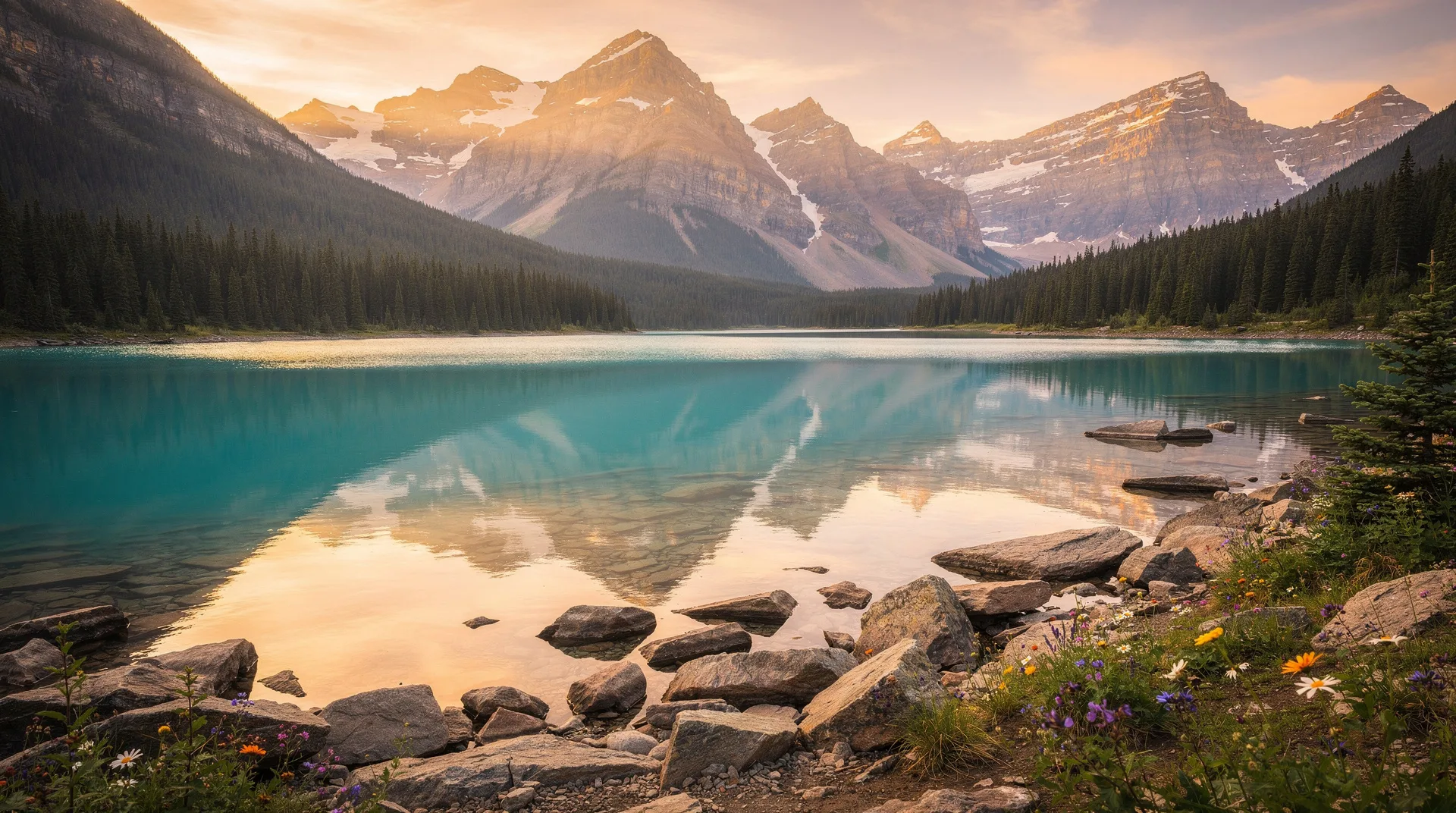
Lake Louise
Discover Lake Louise in Banff National Park: the iconic turquoise lake, Chateau Lake Louise, world-class hikes, and access to stunning Moraine Lake.
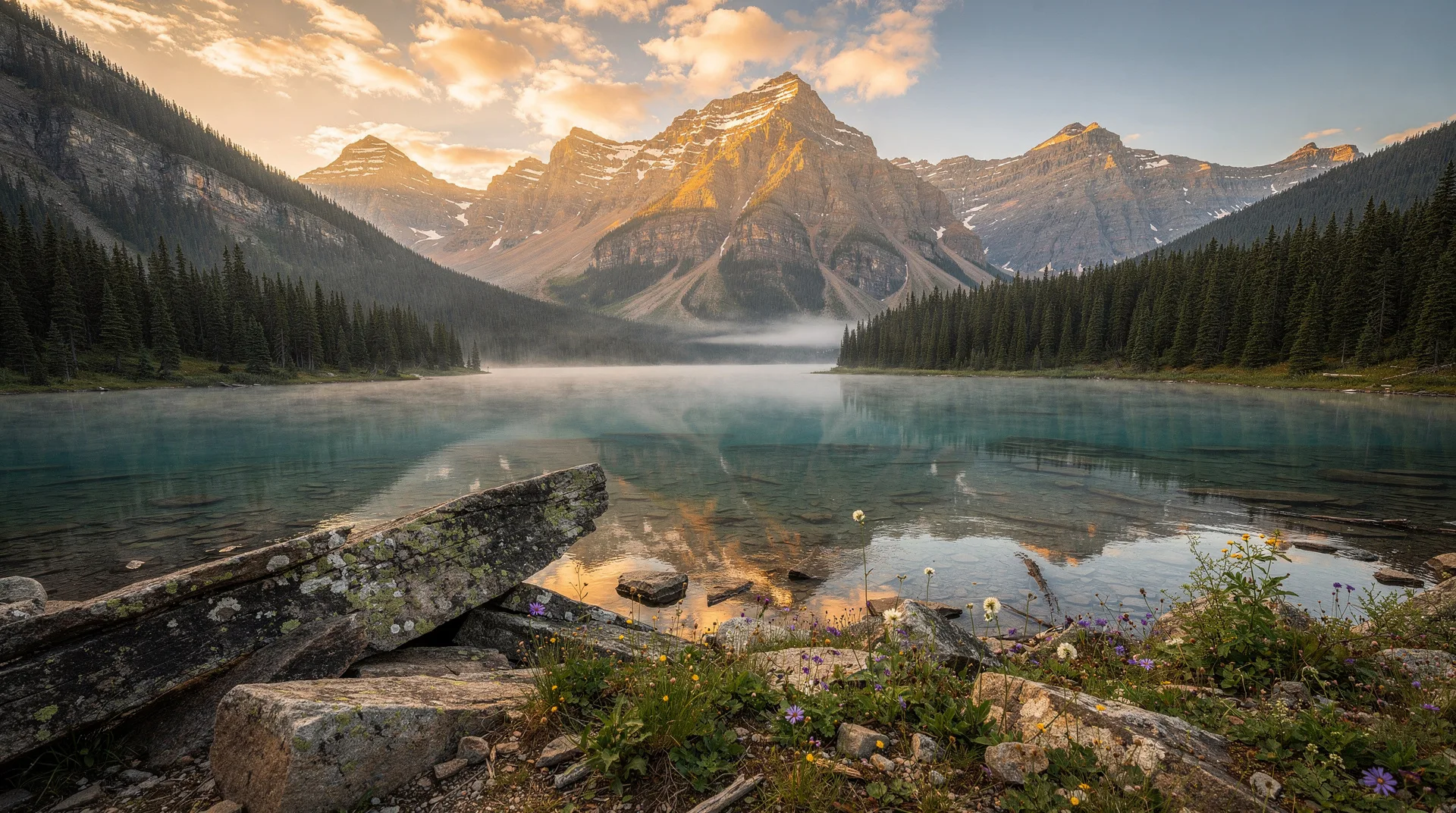
Moraine Lake: everything you need to know for 2026
The complete 2026 Moraine Lake guide — how to book the Parks Canada shuttle, the best hikes, Larch Valley season, photography tips
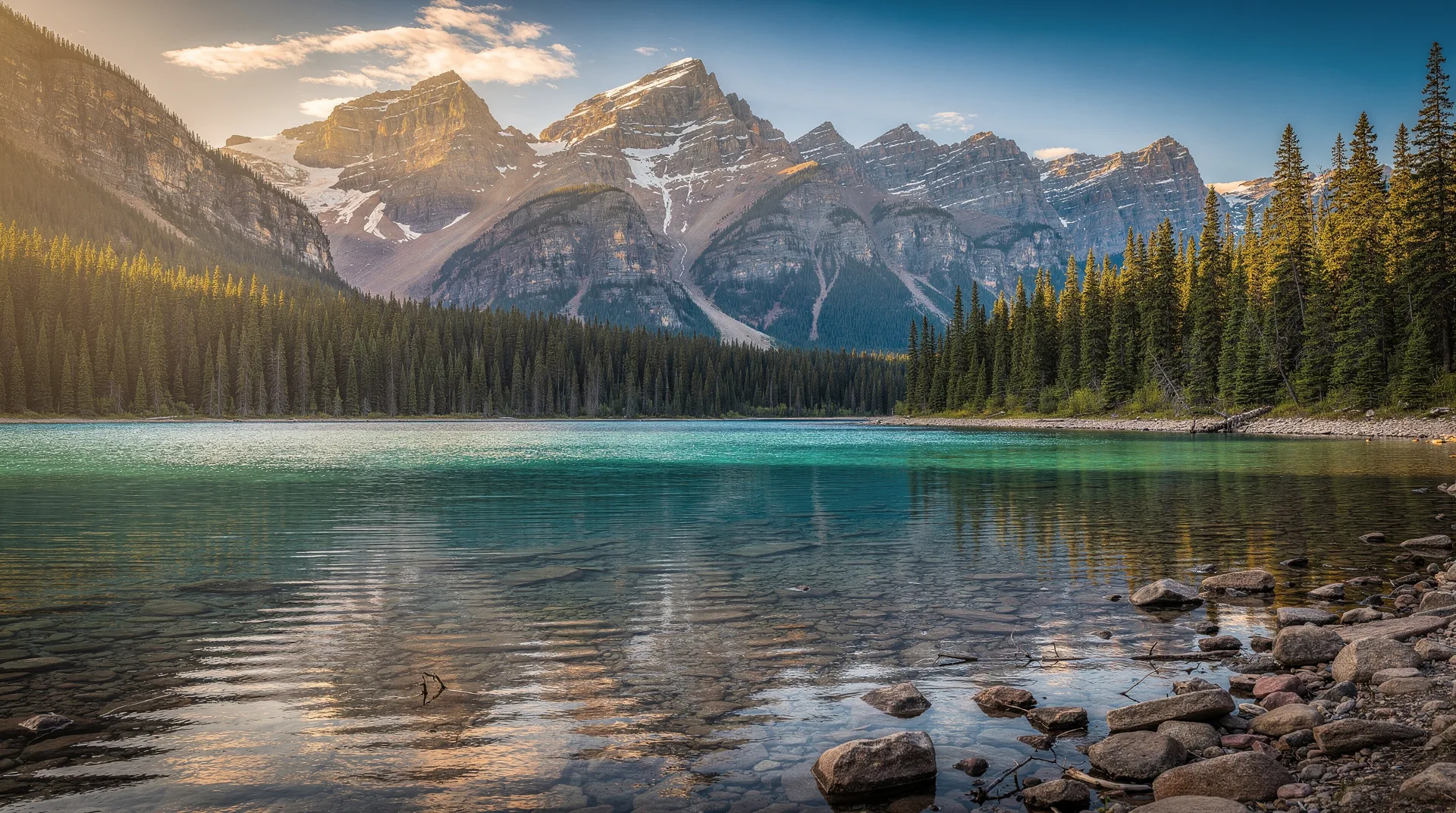
Canmore
Explore Canmore, Alberta's mountain gem: gateway to Banff, world-class hiking, Nordic skiing, Three Sisters views, and a thriving arts and food scene.
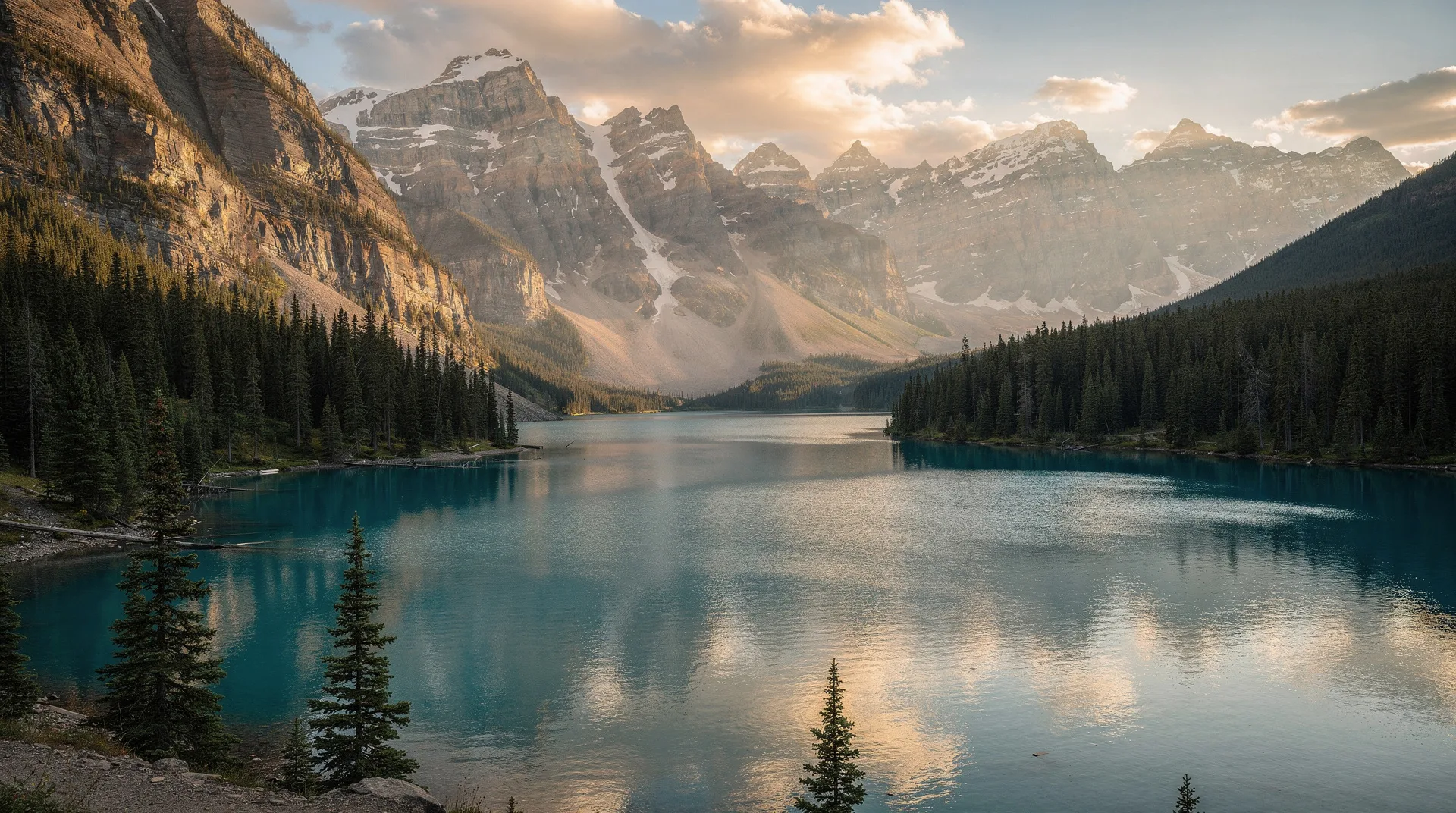
Kananaskis Country: the insider's guide
Kananaskis Country — Alberta's most underrated mountain destination
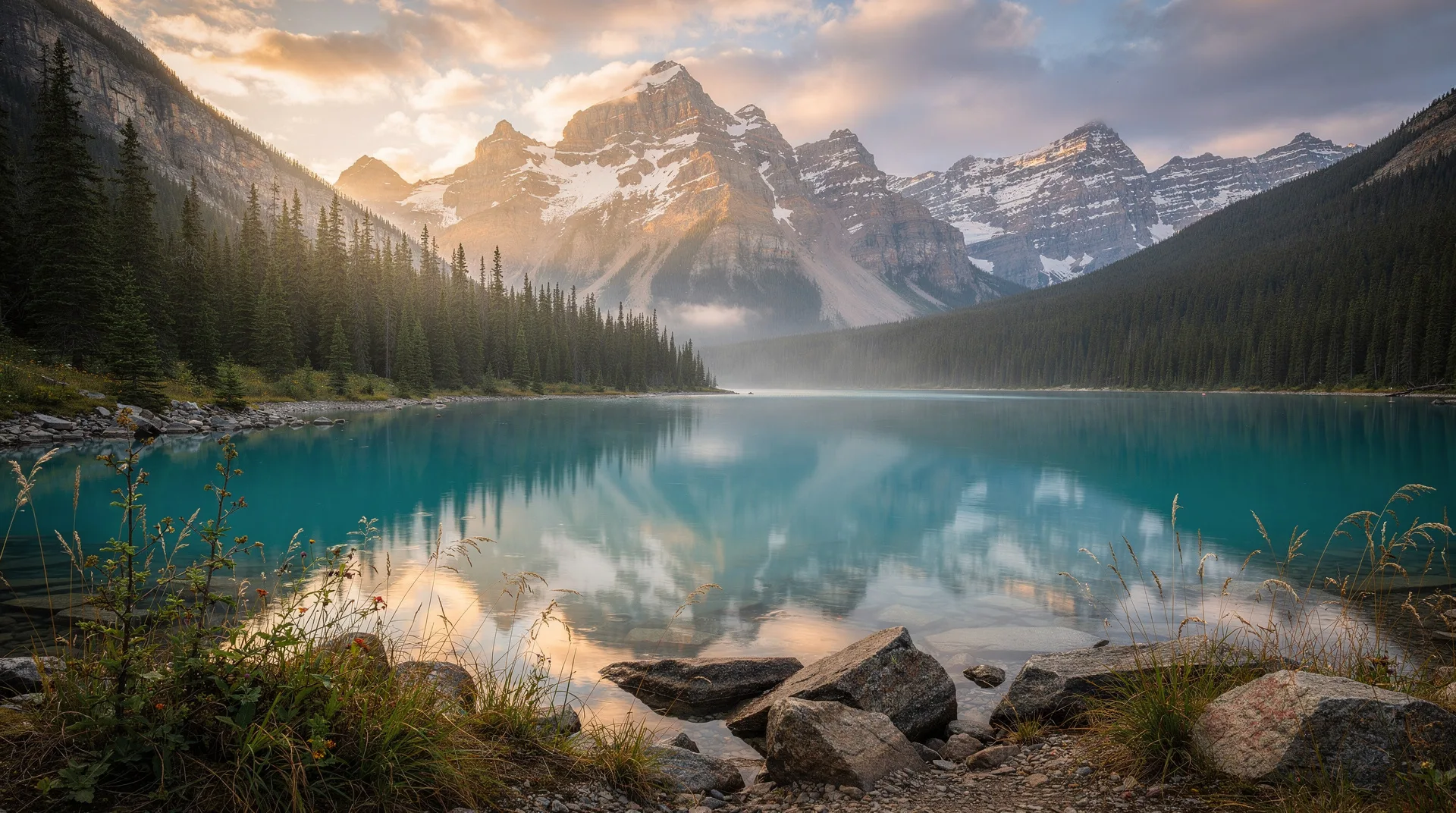
Johnston Canyon: hike, ice walk & visitor guide
Everything about Johnston Canyon in Banff — the catwalk summer hike to the Upper and Lower Falls, the winter ice walk experience
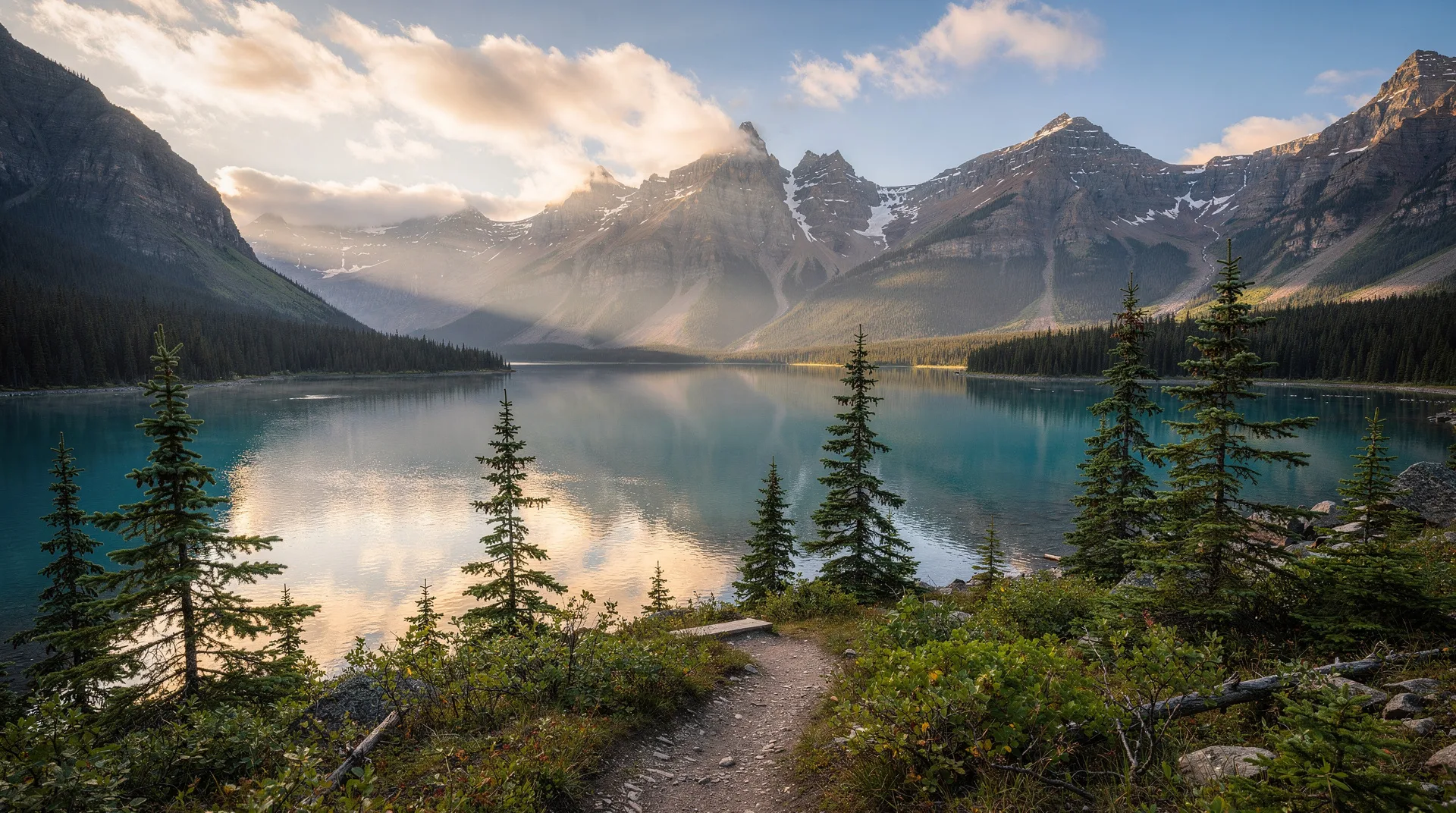
Lake Minnewanka: Cruises, Hiking & Swimming Guide
Lake Minnewanka: the largest lake in Banff National Park. Boat cruises, hiking trails, the Devil's Gap, swimming and practical visitor tips.
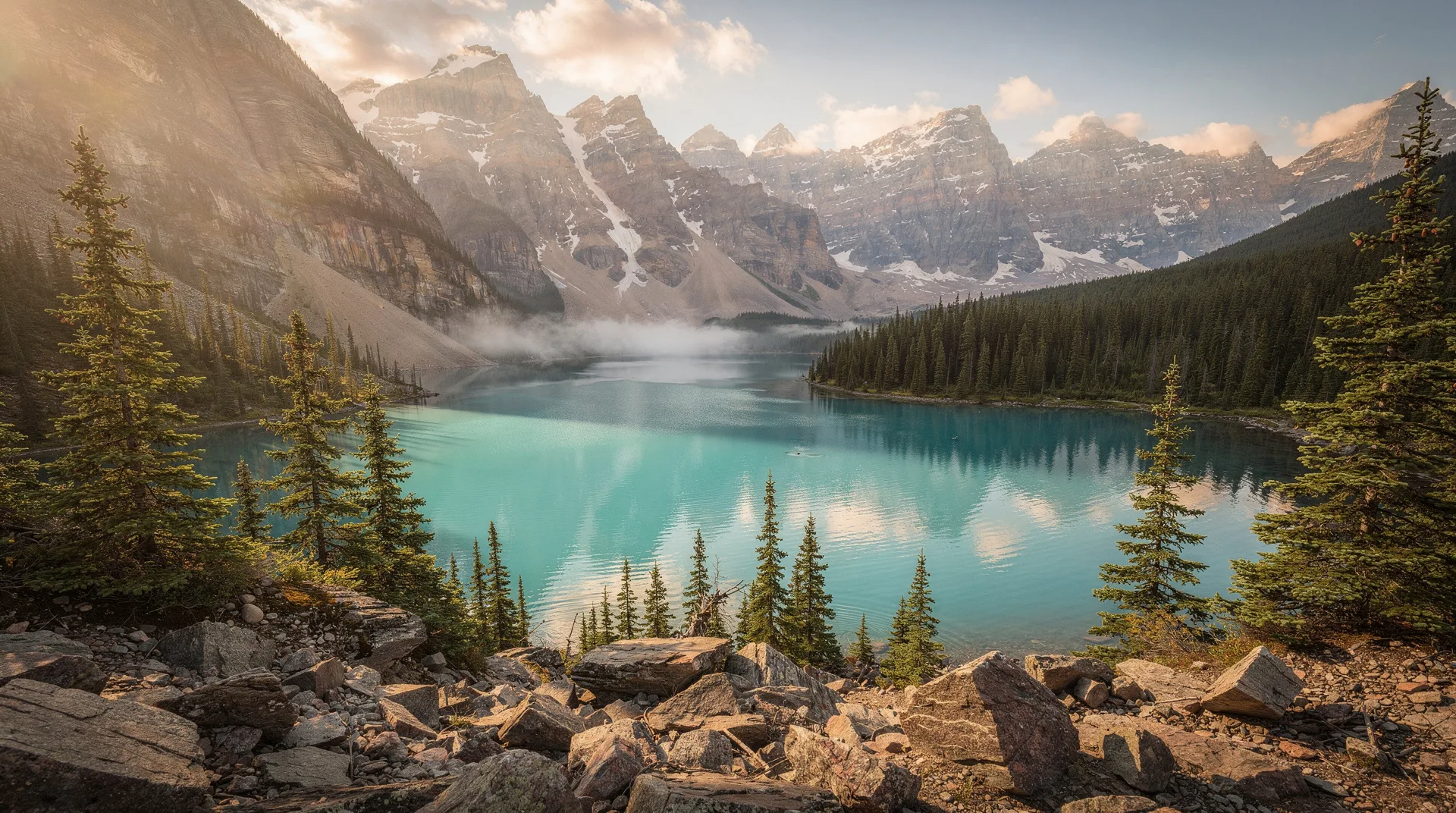
Sulphur Mountain & Banff Gondola: full visitor guide
Complete guide to Sulphur Mountain and the Banff Gondola — gondola ticket tips, the ridge boardwalk, hiking up instead
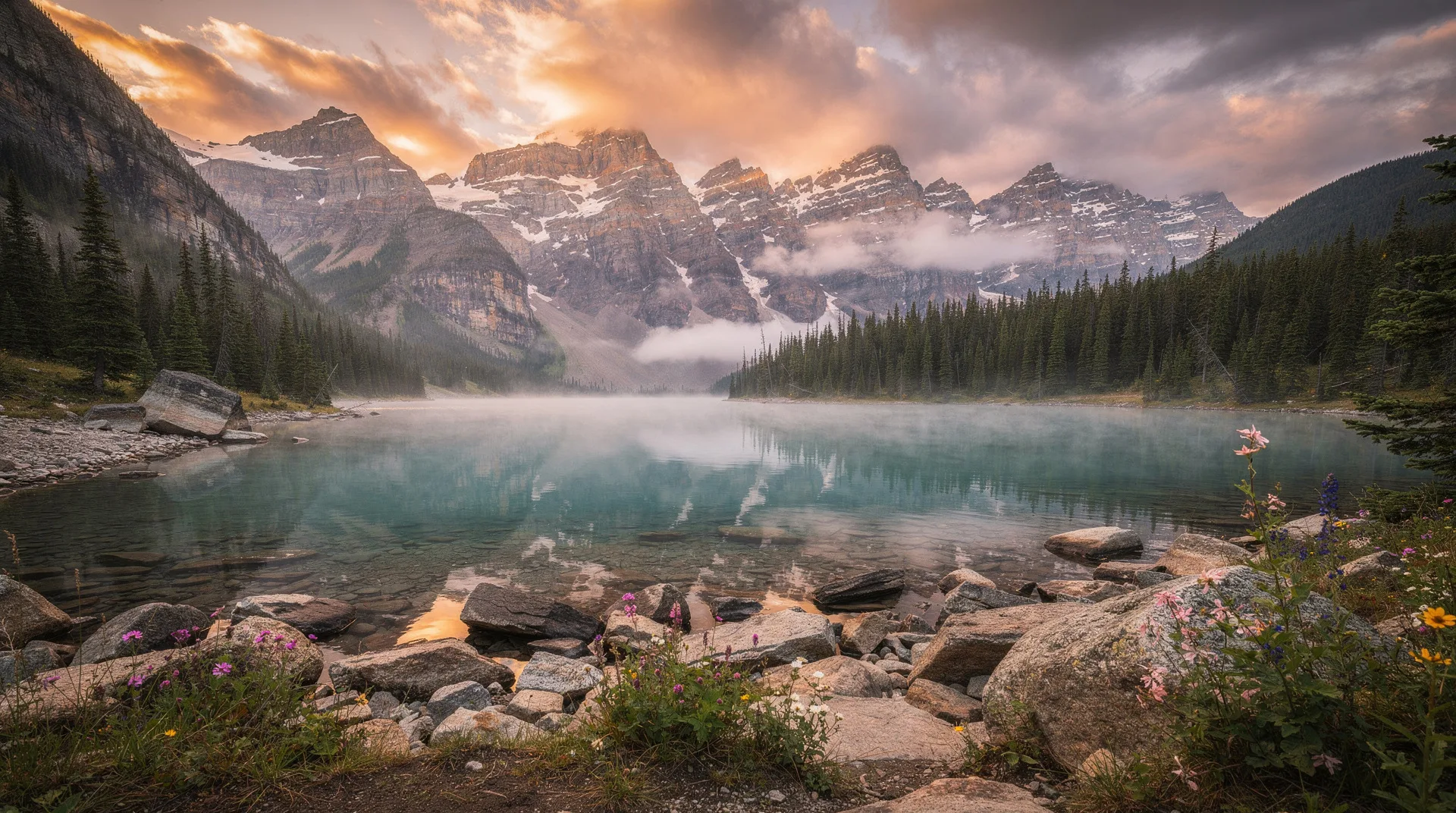
Cave and Basin National Historic Site: Visitor Guide
Cave and Basin in Banff: the hot spring that started Canada's national parks system. What to see, hot spring history, trails and visiting tips.
Jasper country4
Jasper
Explore Jasper, Alberta: Maligne Lake, Athabasca Falls, Icefields Parkway, Canada's largest dark sky preserve, and authentic Rocky Mountain wilderness.
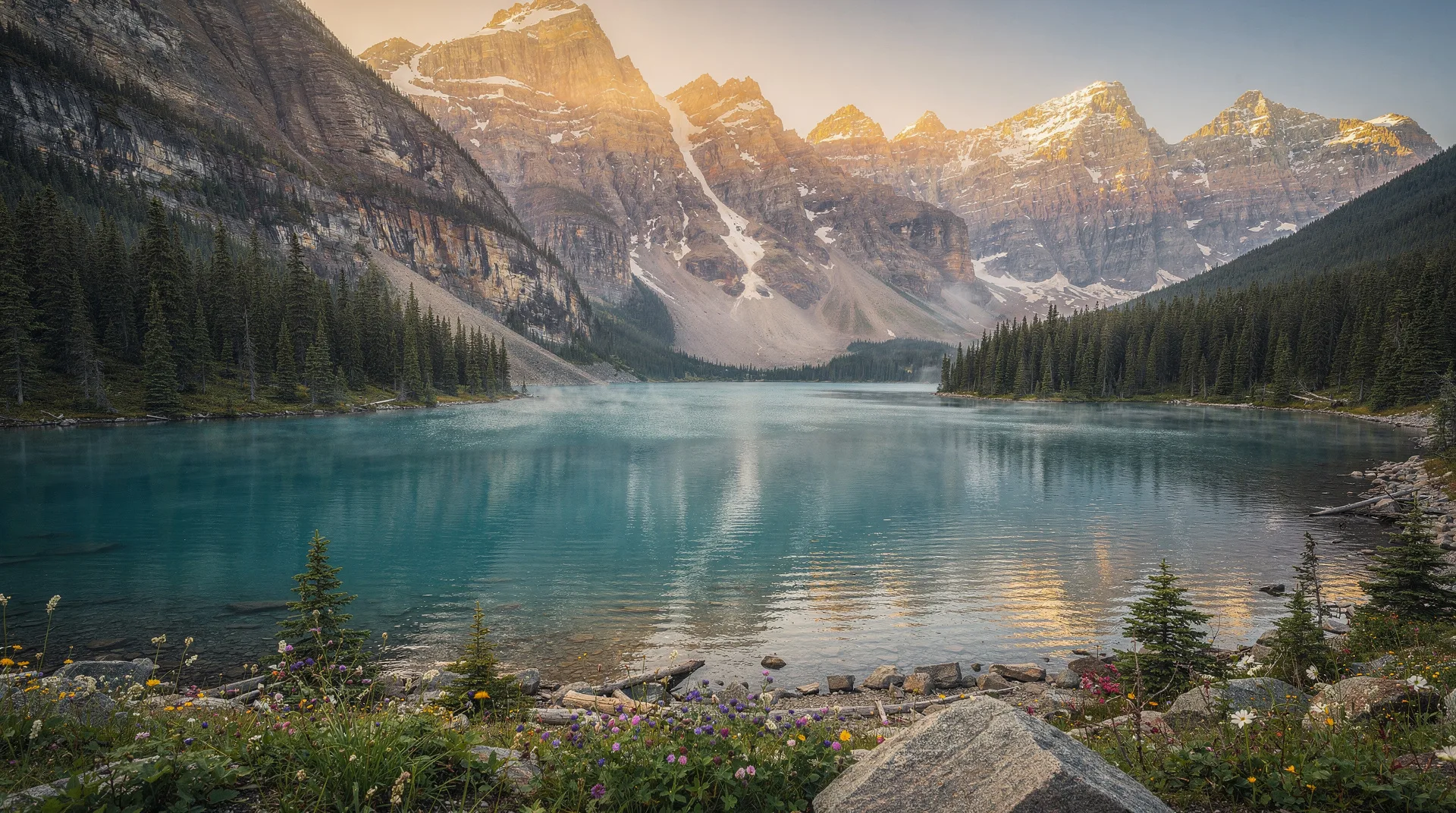
Maligne Lake & Spirit Island: complete visitor guide
Complete guide to Maligne Lake in Jasper — how to book the Spirit Island cruise, the best hikes, when to visit, and what makes this lake unmissable.
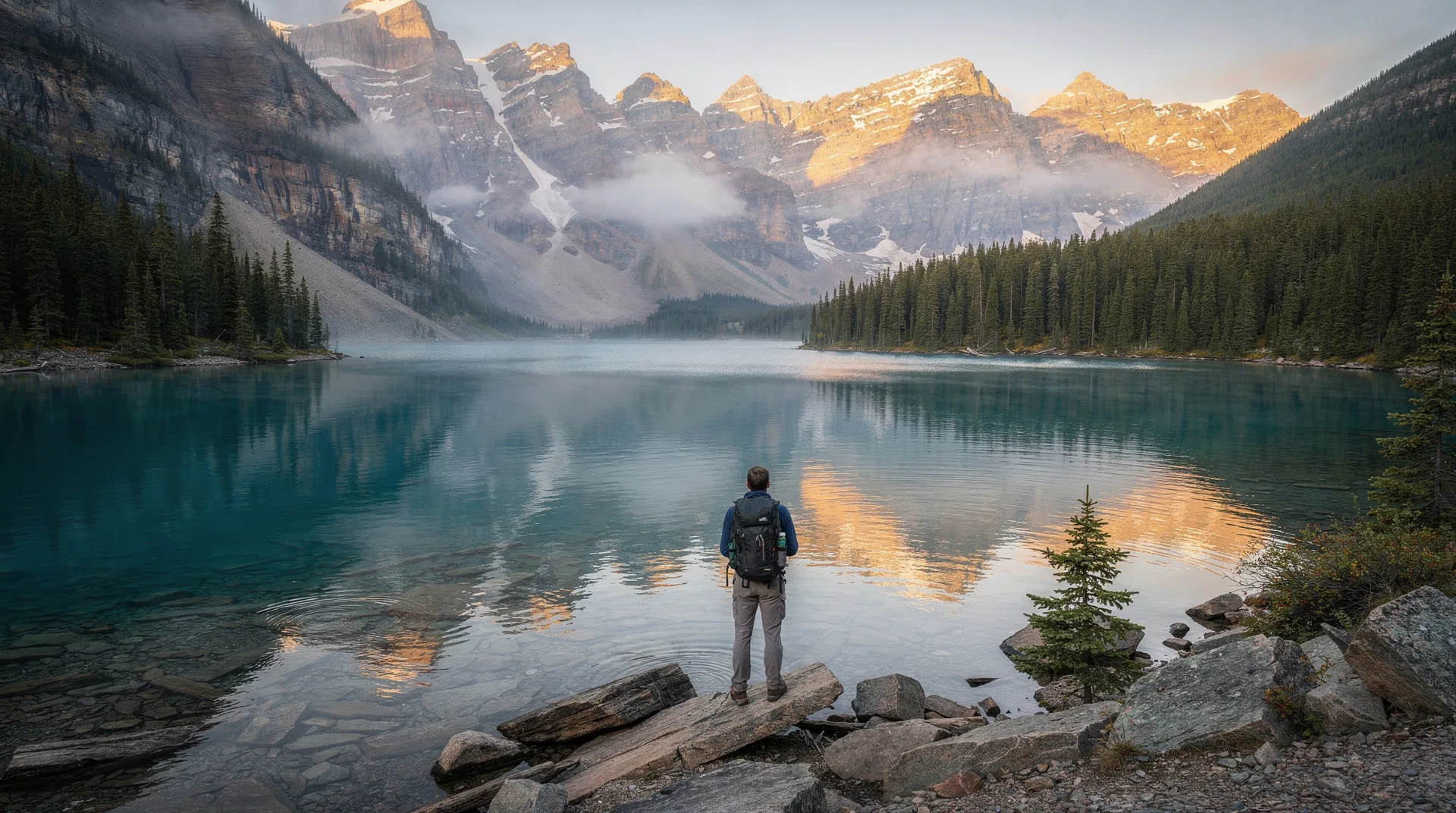
Maligne Canyon: summer hike & winter ice walk guide
Everything about Maligne Canyon near Jasper — the summer canyon hike across six bridges, the winter ice walk deep into the frozen gorge
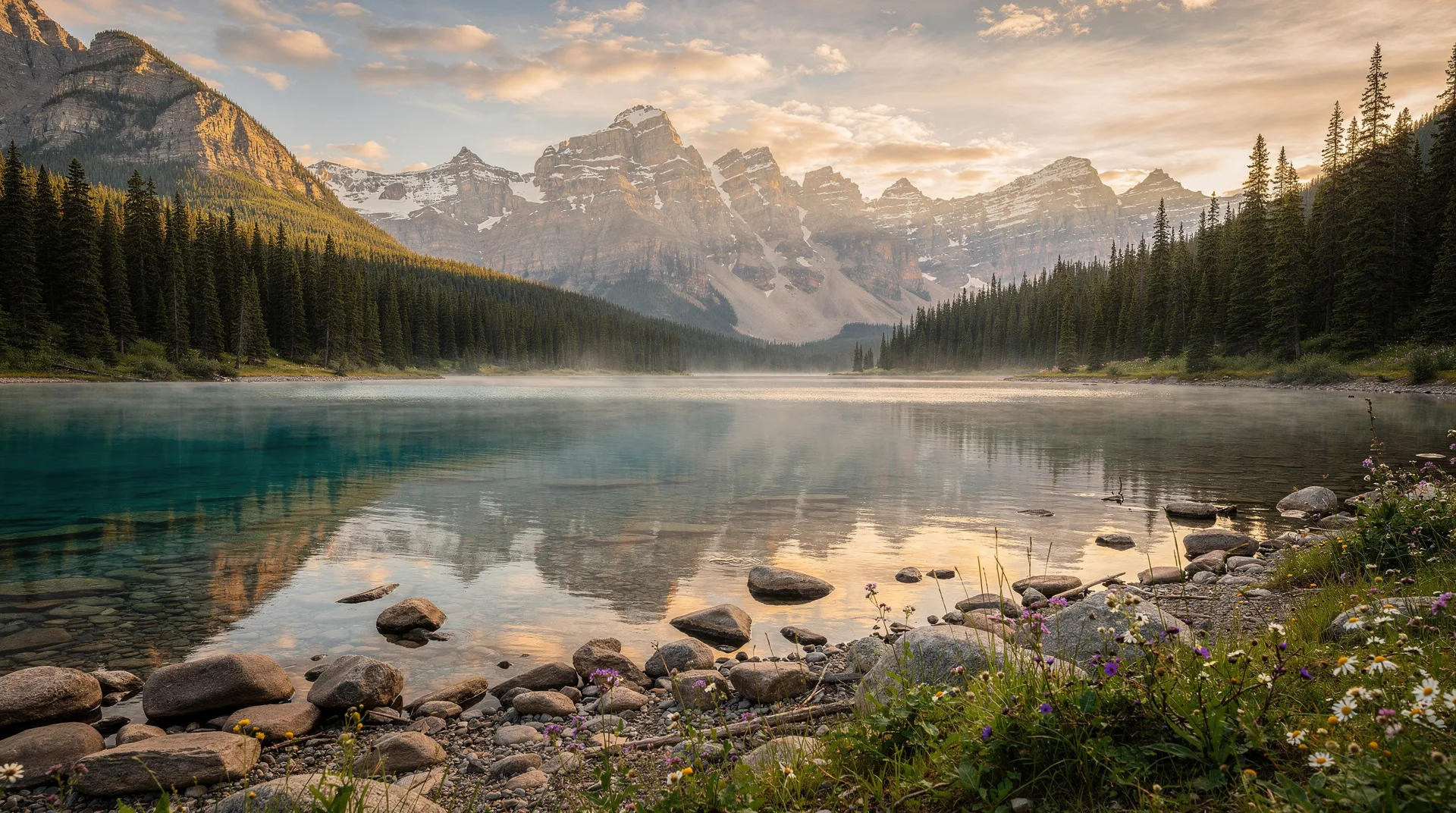
Pyramid Lake & Pyramid Island Visitor Guide
Pyramid Lake in Jasper: the famous wooden footbridge to Pyramid Island, canoeing, sunrise reflections and why it's Jasper's most accessible photo stop.
Icefields Parkway4
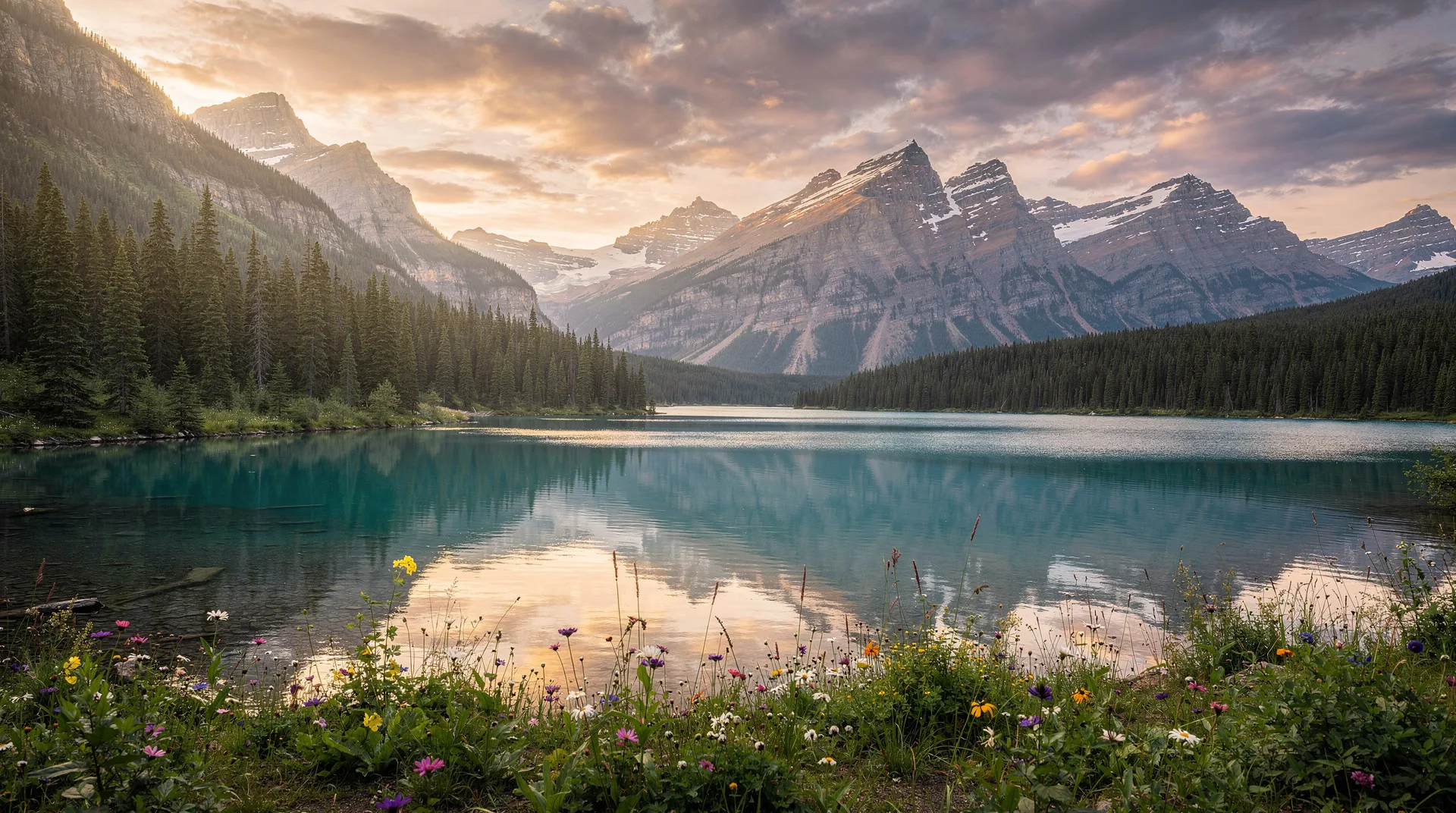
Bow Lake & Bow Glacier Falls Visitor Guide
Bow Lake on the Icefields Parkway: Num-Ti-Jah Lodge, Bow Glacier Falls hike, stargazing and why it's the most underrated stop between Banff and Jasper.
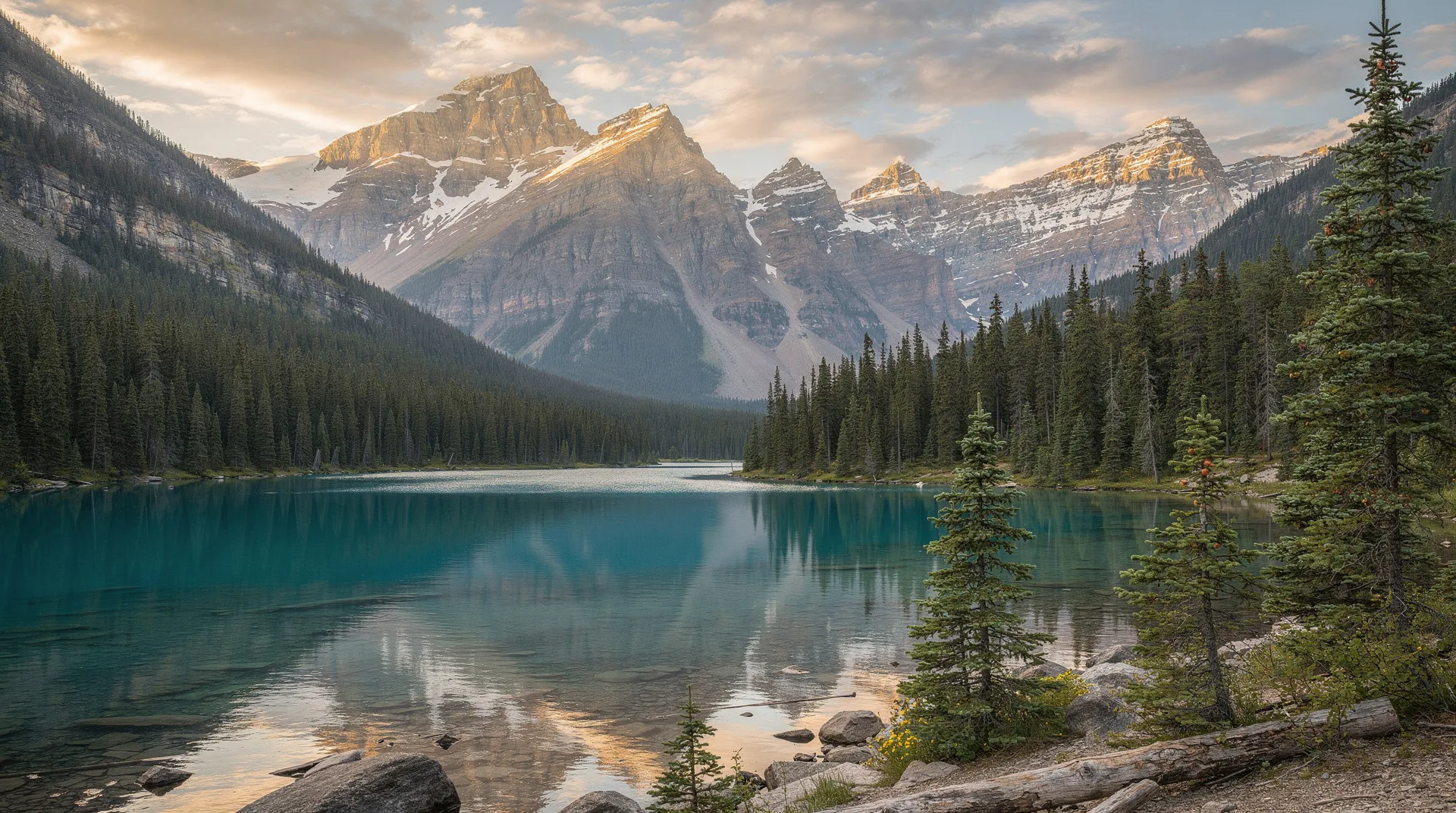
Peyto Lake: how to visit the Rockies' most famous vista
How to visit Peyto Lake at Bow Summit on the Icefields Parkway — the viewpoint hike, when the colour peaks, photography tips
Columbia Icefield & Discovery Centre: complete guide
Complete guide to the Columbia Icefield — the Ice Explorer glacier tour, Glacier Skywalk, what to expect, booking tips
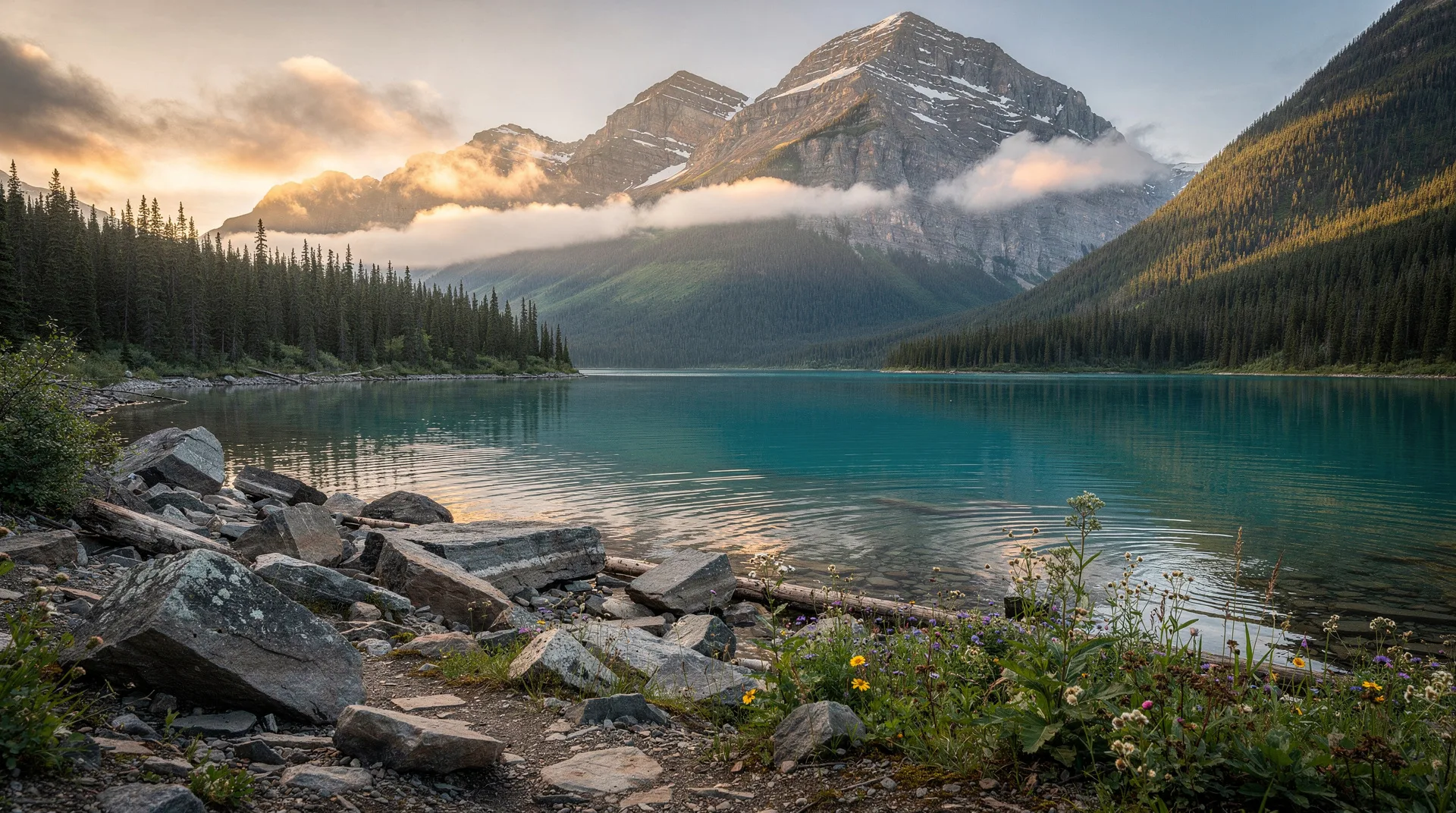
Athabasca Glacier: what to know before you visit
Everything about visiting the Athabasca Glacier — free glacier walk to the toe, Ice Explorer costs, what glacier ice looks like up close
The cities2
Calgary
Discover Calgary: the Calgary Stampede, Studio Bell, Heritage Park, Prince's Island, and the perfect gateway to Banff and the Canadian Rockies.
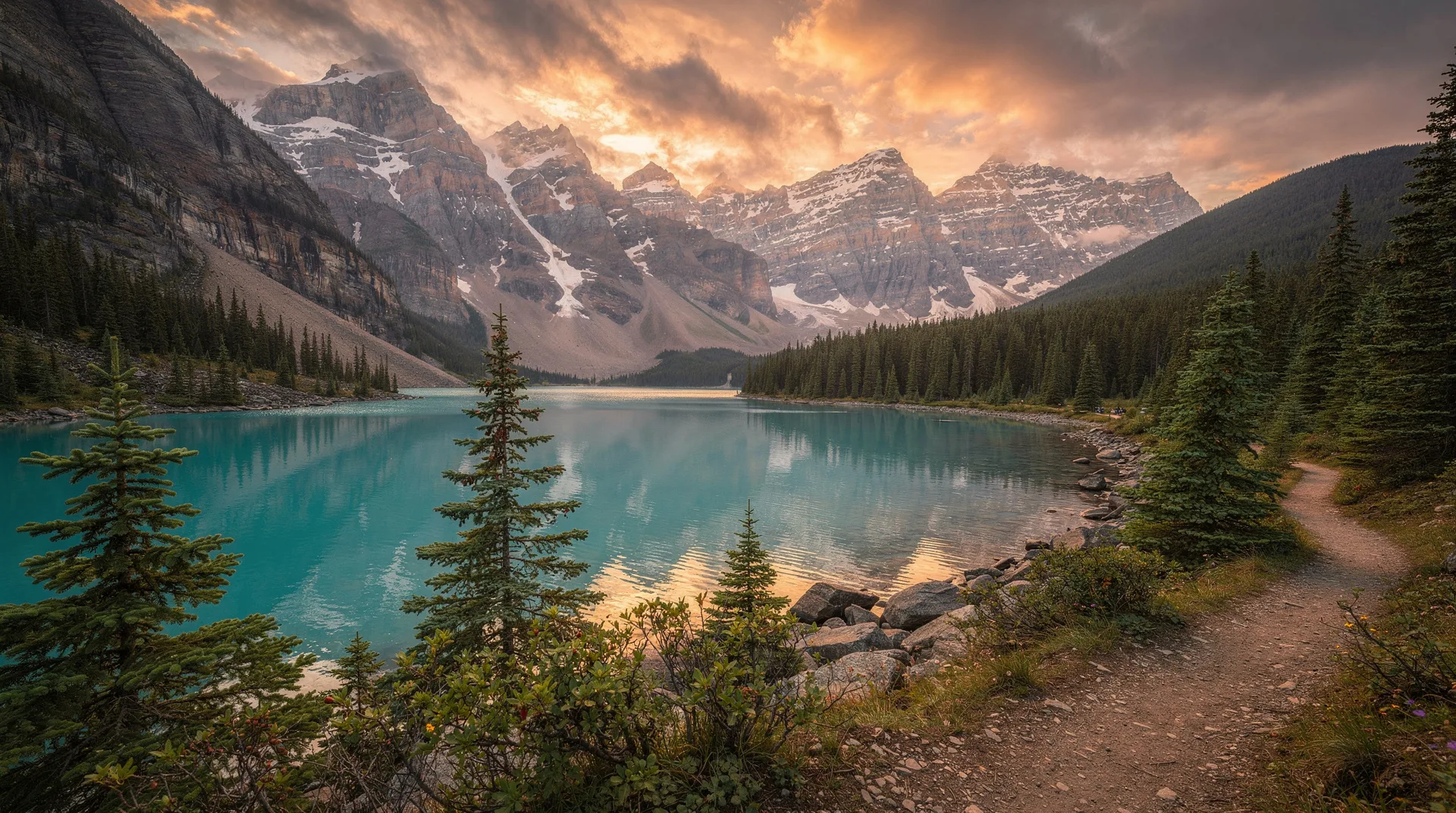
Edmonton
Discover Edmonton: West Edmonton Mall, the magnificent North Saskatchewan River Valley, Old Strathcona arts district, and Canada's festival capital.
South & the badlands2
Waterton Lakes
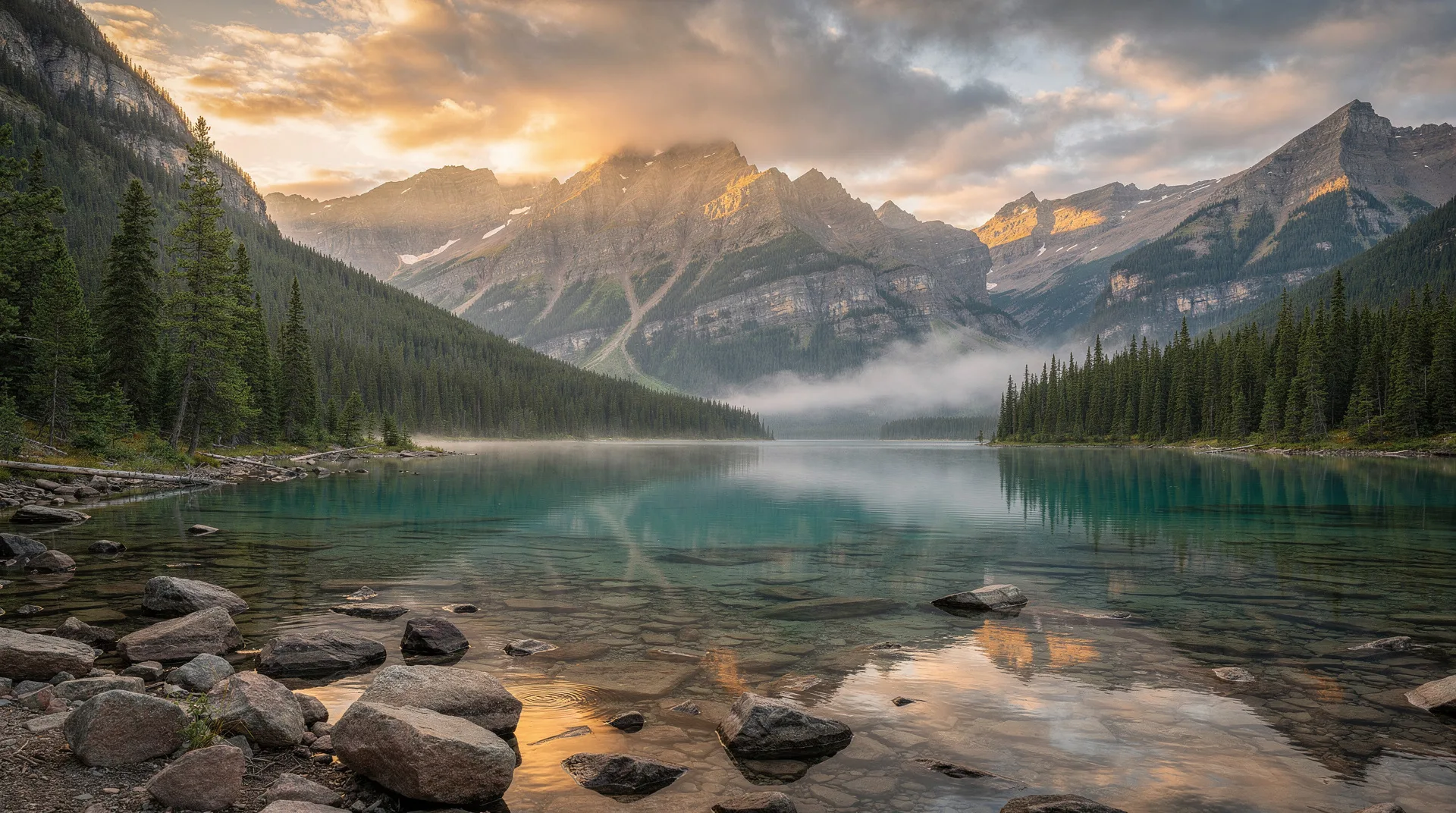
Discover Waterton Lakes National Park: dramatic Rocky Mountain scenery, international peace park, world-class hiking, prolific wildlife, and wildflowers.
Drumheller
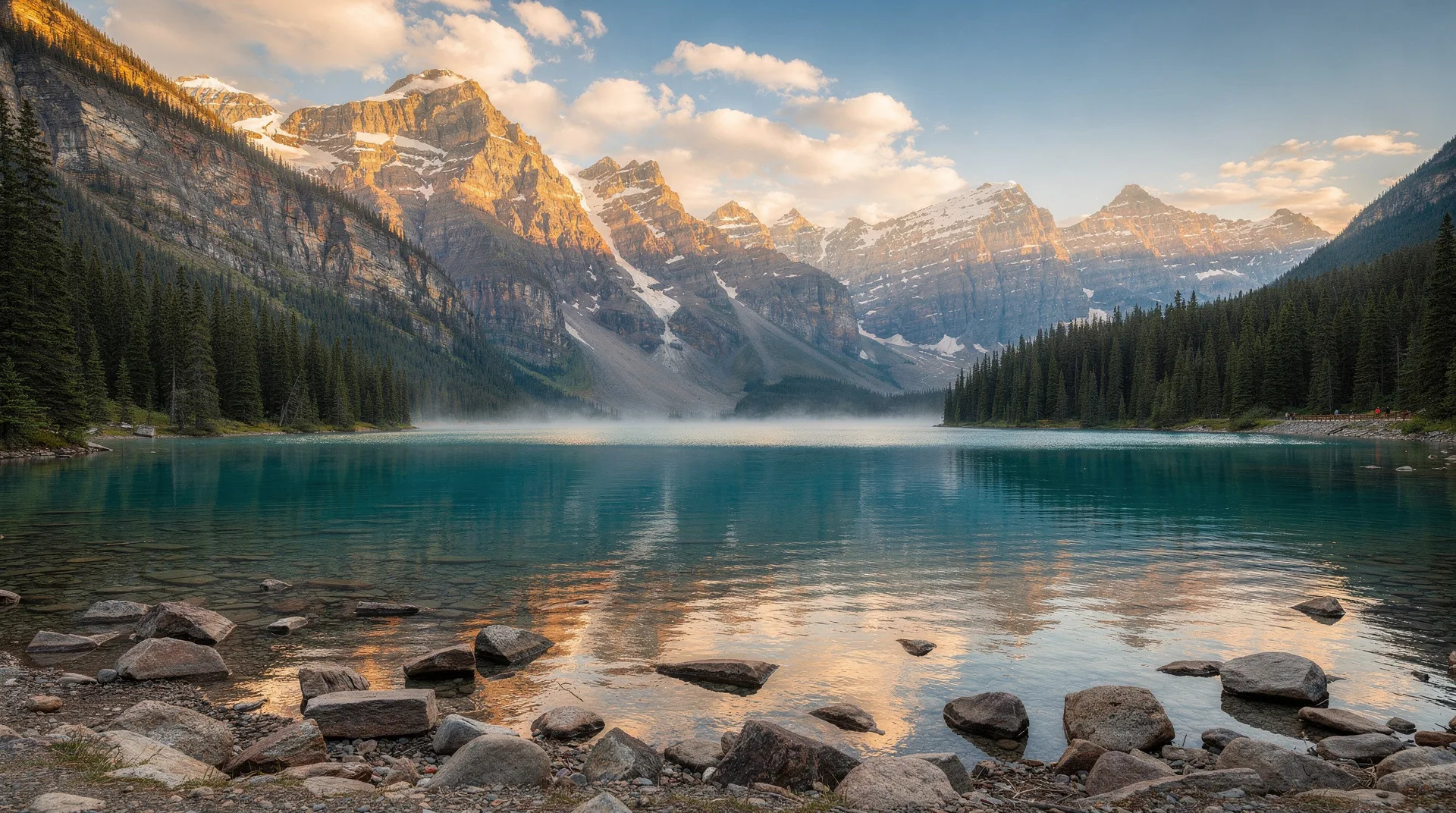
Drumheller sits at the heart of Alberta's Badlands: dinosaur fossils, the world-class Royal Tyrrell Museum, and sculpted hoodoos await.