10 days in Canada: east or west coast
Overview
Ten days gives you room to breathe in Canada — enough time to experience the full arc of a region without feeling permanently rushed. This page presents two distinct loops, each self-contained and equally rewarding. Option A is the Ontario-Quebec city loop: Toronto, Niagara Falls, Montreal, and Quebec City — a journey through French-English Canada with world-class food, extraordinary architecture, and one of the planet’s most famous waterfalls.
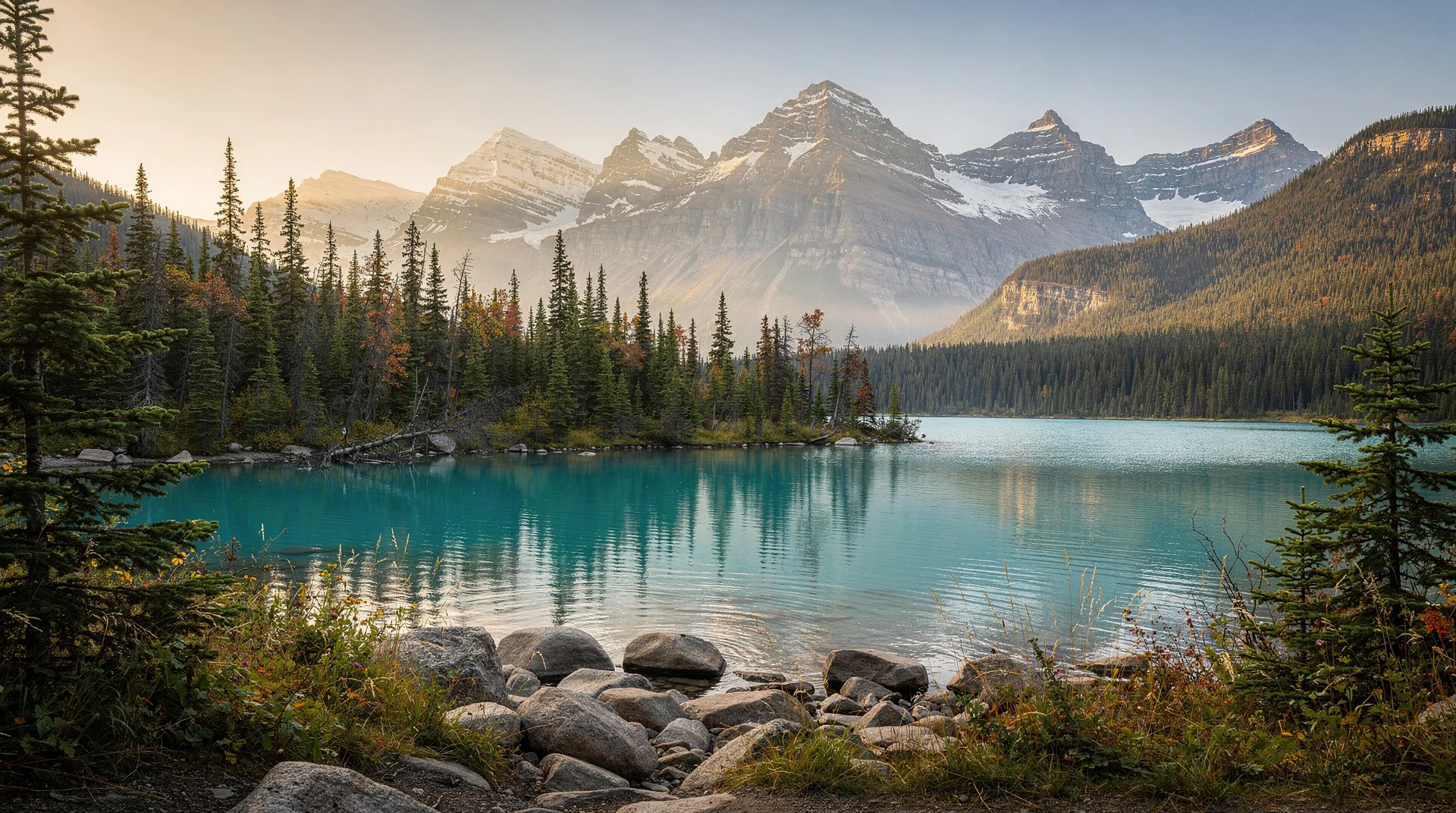
Option B is the BC-Alberta wilderness loop: Vancouver, the Sea-to-Sky corridor, Banff National Park, and the Canadian Rockies — a route of mountains, glaciers, and emerald lakes. Both options are available as round-trips (fly in and out of the same city) or one-way (fly into one gateway and out of another).
At a glance
| Where | Option A: Toronto, Niagara Falls, Montreal, Quebec City. Option B: Vancouver, Whistler, Banff, Jasper, Calgary |
| Cost per person (2 sharing) | around CAD 3,500-5,900 (Option A) or CAD 4,400-7,000 (Option B) |
| Time needed | 10 days minimum for either loop; extend to 14 to combine elements of both |
| Getting there | Option A flies into Toronto Pearson; Option B flies into Vancouver International |
| Best time | June-September for Option B (mountain access); year-round for Option A, with winter and summer both strong |
Option A: the Ontario-Quebec loop (Toronto to Quebec City)
| Days | Destination | Highlights |
|---|---|---|
| 1–2 | Toronto | CN Tower, Kensington Market, ROM, St Lawrence Market |
| 3 | Niagara Falls | Falls, Niagara-on-the-Lake winery |
| 4–6 | Montreal | Old Montreal, Jean-Talon Market, Mount Royal, Plateau |
| 7–10 | Quebec City | Old City, Plains of Abraham, Île d’Orléans, Charlevoix |
Day 1–2: Toronto
Toronto is Canada’s largest city — cosmopolitan, multi-layered, and frequently underestimated by visitors who expect a smaller version of New York. It is not. Toronto has its own distinct identity, built across successive waves of immigration that have made it one of the world’s most diverse cities.
Spend Day 1 downtown: the CN Tower (still a thrill, even knowing the statistics — 553 metres, the glass floor at Level 342, the EdgeWalk harness tour for the brave), then walk along the waterfront toward the Distillery District, a preserved Victorian industrial complex now filled with galleries, restaurants, and independent boutiques. The atmospheric cobblestones and red-brick warehouses make it one of the most photogenic spots in the city.
Day 2 goes deeper: the Royal Ontario Museum on Bloor Street has 13 million objects across natural history, geology, and world culture — the dinosaur galleries and the Chinese collection are standouts. Kensington Market in the afternoon for its eclectic blend of vintage clothing, West Indian bakeries, and independent coffee shops. St Lawrence Market, one of the finest food markets in Canada, is best visited Saturday morning when the farmers’ market occupies the upper floor.
Book a Toronto and Niagara Falls day tour with optional boat cruise for Day 3 — it handles all the logistics and includes the Maid of the Mist or Niagara City Cruises boat ride as an add-on.
Day 3: Niagara Falls
Niagara Falls is 130 kilometres from Toronto by highway — roughly 1.5 hours by car or GO Bus. The falls themselves (actually three separate cascades: Horseshoe Falls, American Falls, and Bridal Veil Falls) are legitimately awe-inspiring at close range: 168,000 cubic metres of water per minute thunder over the edge in a sustained roar that you feel in your chest. The Canadian side has the better view by far.
The Niagara City Cruises boat (the Canadian equivalent of the famous Maid of the Mist) takes you into the spray at the base of Horseshoe Falls — wear the provided poncho or expect to be drenched. Journey Behind the Falls lets you walk through tunnels to observation platforms directly behind the curtain of water.
If time allows, drive or take a taxi 15 minutes north to Niagara-on-the-Lake, one of Canada’s best-preserved 19th-century towns and the heart of Ontario’s wine country. The Shaw Festival theatre company is based here; wineries like Peller Estates and Inniskillin open for tastings.
Return to Toronto for the night, then take an early morning train to Montreal.
Days 4–6: Montreal
The VIA Rail train from Toronto’s Union Station to Montreal’s Gare Centrale takes approximately 5 hours and runs multiple times daily. Book in advance for the best fares; the trip through rural Ontario and the St Lawrence River corridor is scenic and comfortable.
Montreal is one of the great North American cities — a bilingual, unapologetically French metropolis with the most restaurant seats per capita in Canada, a ferociously creative arts scene, and a street energy unlike anywhere else in the country. Three days barely scratches the surface.
Day 4: Arrive midday and walk Old Montreal (Vieux-Montréal) along the St Lawrence waterfront. Notre-Dame Basilica, completed in 1829, is one of the most beautiful interiors in North America — the amont sculpted wood altar, the deep blue ceiling studded with gold stars, the extraordinary stained glass. The Aura sound-and-light experience inside the basilica runs evenings and is worth booking.
Day 5: Take the Metro to Plateau-Mont-Royal, Montreal’s most distinctive neighbourhood — Victorian duplexes with exterior spiral staircases, independent restaurants along Rue Saint-Laurent and Rue Saint-Denis, bagel shops (St-Viateur and Fairmount remain the great debate), and a cafe culture that takes coffee as seriously as Paris. Hike or take the Metro to Mont Royal, the 232-metre hill at the city’s centre, for the view over downtown from the Kondiaronk Belvedere terrace. Bring a picnic.
Day 6: Jean-Talon Market in the morning — the largest open-air market in North America when in season (April through November), stacked with Quebec cheeses, local maple products, and heritage vegetable varieties. The Mile End neighbourhood just below the market is home to some of the city’s best restaurants (Joe Beef, Au Pied de Cochon, Dépanneur Le Pick-up for the perfect breakfast sandwich).
Book the 3-day tour from Toronto through Montreal to Quebec City if you prefer a guided experience covering all three cities.
Days 7–10: Quebec City
Quebec City is a four-hour train or three-hour bus ride east of Montreal along the St Lawrence. It is the only walled city north of Mexico and the most thoroughly European city in North America. Old Quebec is a UNESCO World Heritage Site; the cobblestoned streets of the Lower Town (Basse-Ville) and the cliff-top ramparts of the Upper Town (Haute-Ville) could be transplanted to Burgundy without anyone noticing.
Day 7: Arrive, check in to your hotel (the Fairmont Le Château Frontenac, which crowns the cliff above the St Lawrence, is one of the most photographed buildings in Canada — even if you do not stay here, take coffee on the terrace), and walk the ramparts at dusk.
Day 8: The Plains of Abraham, where the Battle of Quebec in 1759 decided the fate of French and British North America, is a sprawling park above the St Lawrence with an excellent museum. The Citadelle, still an active military garrison, runs changing of the guard ceremonies in summer. Rue Saint-Louis in the Upper Town is lined with 17th and 18th-century stone buildings now occupied by restaurants and hotels.
Day 9: Cross the river by ferry to Lévis for the best views back over the Château Frontenac and the walled city. Alternatively, spend the day on Île d’Orléans, 15 minutes east of the city — a river island of farms, orchards, and sugar shacks that supplies much of Quebec’s maple syrup and heritage produce. The Circuit du Patrimoine drives the perimeter (67 km) and passes historic stone churches and farm stands.
Day 10: Return to Montreal for your international flight, or fly directly from Quebec City Jean Lesage International Airport to major Canadian hubs.
Option B: the BC-Alberta wilderness loop (Vancouver to Calgary)
| Days | Destination | Highlights |
|---|---|---|
| 1–2 | Vancouver | Stanley Park, Granville Island, North Shore |
| 3 | Whistler or Squamish | Sea-to-Sky Highway, Peak 2 Peak or Stawamus Chief |
| 4–5 | Kamloops or Kelowna | Thompson Valley, Okanagan wine country (optional) |
| 5–7 | Banff National Park | Lake Louise, Moraine Lake, town of Banff |
| 8–9 | Icefields Parkway to Jasper | Columbia Icefield, Athabasca Falls |
| 10 | Calgary | Calgary Tower, Stephen Avenue, fly home |
Days 1–2: Vancouver
Start in Vancouver with two days covering the essentials: Stanley Park’s seawall and totem poles, Granville Island Public Market, the Museum of Anthropology at UBC, and the North Shore mountains. For a detailed day-by-day breakdown of Vancouver, see the 7-day BC itinerary.
Day 3: Sea-to-Sky Highway and Whistler or Squamish
Pick up your rental car — you will need one for the rest of this itinerary. Drive north on Highway 99 along the Sea-to-Sky corridor: the road hugs the cliffs above Howe Sound, one of the most scenic drives in Canada. Stop at Shannon Falls Provincial Park (a 5-minute walk from the highway to an 84-metre waterfall) and consider the Stawamus Chief trail in Squamish if you are comfortable with sustained elevation.
Continue to Whistler for lunch or a night stop. The full-day Whistler tour from Vancouver with gondola access is available if you prefer not to drive. In summer, the Peak 2 Peak Gondola across to Blackcomb Mountain is unmissable.
Days 4–7: Banff National Park via Kamloops
From Whistler, continue inland on the Coquihalla Highway (Highway 5) to Kamloops — about 5.5 hours. This is a drive-through day; Kamloops itself is a pleasant stopping point. From Kamloops, drive east on the Trans-Canada Highway (Highway 1) through the Thompson River canyon, passing Golden, and enter Banff National Park via the park east gate. Total driving time Kamloops to Banff: approximately 6 hours.
Spend two nights in the town of Banff. The main priorities are Lake Louise (the turquoise glacial lake backed by the Victoria Glacier is even more spectacular in reality than in photos — arrive before 8:00am to beat the shuttle queues) and Moraine Lake in the Valley of the Ten Peaks, arguably Canada’s single most beautiful scene. The Banff Gondola ascends Sulphur Mountain for views over the Bow Valley. Hot springs at the Cave and Basin National Historic Site and the Banff Upper Hot Springs are excellent for tired legs after hiking.
Book the if you prefer a guided trip that covers the highlights without driving stress.
Days 8–9: Icefields Parkway to Jasper
The Icefields Parkway (Highway 93) from Lake Louise to Jasper covers 232 kilometres and is widely considered one of the greatest drives on earth. Allow a full day, with multiple stops: Bow Lake (a perfect turquoise mirror under the Crowfoot Glacier), Peyto Lake Viewpoint (the panoramic view over the glacier-fed blue lake is staggering), and the Columbia Icefield, where the Athabasca Glacier reaches the roadside — one of the largest non-polar icefields in the world.
The Columbia Icefield Skywalk is a glass-floored observation platform over the Sunwapta Valley — not essential, but dramatic. The Ice Explorer bus ride onto the Athabasca Glacier gives a genuine sense of the ice’s scale.
Overnight in Jasper town, the quieter and more relaxed twin to Banff. Jasper National Park feels less developed; the wildlife viewing (elk in town at dusk, black bears along the highway, and the occasional grizzly near Maligne Lake) is arguably better than Banff.
Day 10: Jasper to Calgary — fly home
Drive southeast from Jasper to Calgary on Highway 93/1 (approximately 4 hours via Lake Louise). Alternatively, take the Rocky Mountaineer scenic train — though this requires advance booking weeks ahead. Drop the rental car at Calgary International Airport and fly home.
Getting around (both options)
Option A (East): VIA Rail connects Toronto–Montreal in 5 hours and Montreal–Quebec City in about 3.5 hours. Book the Business class coach for wider seats and a table. Within cities, metro systems in Montreal and Toronto are excellent. A car is not needed.
Option B (West): A rental car is essential from Whistler onward. Book in advance from Vancouver Airport. Roads in BC and Alberta are well-maintained; the Trans-Canada Highway and Icefields Parkway are sealed throughout. A standard car is fine in summer; winter driving requires snow-tire-equipped vehicles (mandatory in BC October–March).
Choosing between the two options
Both loops are self-contained, but the choice matters for how the trip feels. Option A is a car-free city itinerary built around VIA Rail — you never rent a vehicle, and the pace is set by trains and walking. It suits travellers whose priority is food, architecture, and bilingual culture, and it works comfortably in any season, including winter when Quebec City’s Winter Carnival and Montreal’s Christmas markets are in full swing (see our Quebec Christmas markets guide).
Option B is a driving-and-hiking itinerary that peaks in summer: mountain passes, glacier viewpoints, and wildlife roads that are meaningfully better between June and September, and considerably reduced outside that window. If you cannot decide, our Toronto vs Montreal guide and Banff vs Jasper guide go deeper into what each half of the country actually feels like day to day.
Entry requirements are the same for both: most visa-exempt air travellers need an eTA before flying. Tipping runs 15-20% across restaurants and tours in both options — see our tipping in Canada guide if this is a first Canada trip.
Where to stay
Option A:
- Toronto: Kimpton Saint George Hotel or Graduate Toronto (mid-range), Four Seasons (luxury)
- Montreal: Hôtel Le St-James (boutique luxury), William Gray (design hotel, Old Montreal), YWCA Montreal (budget)
- Quebec City: Fairmont Le Château Frontenac (iconic), Auberge Saint-Antoine (boutique)
Option B:
- Vancouver: Loden Hotel, Rosewood Hotel Georgia
- Whistler: Summit Lodge Boutique Hotel, Fairmont Chateau Whistler
- Banff: Fairmont Banff Springs (iconic), Moose Hotel and Suites (mid-range)
- Jasper: Fairmont Jasper Park Lodge (lakeshore setting), Maligne Lodge (comfortable mid-range)
Total budget estimate
Per person, two sharing, in Canadian dollars:
| Category | Option A | Option B |
|---|---|---|
| Accommodation (10 nights) | CAD 2,000–3,500 | CAD 2,500–4,000 |
| Food and drink | CAD 800–1,200 | CAD 700–1,100 |
| Transport (trains / car rental + fuel) | CAD 400–700 | CAD 800–1,200 |
| Activities and entry fees | CAD 300–500 | CAD 400–700 |
| Total | ~CAD 3,500–5,900 | ~CAD 4,400–7,000 |
Best time to do this itinerary
Option A (Ontario-Quebec): Year-round, with strong peak periods. Montreal and Quebec City in winter (December–February) are magical — the Winter Carnival in Quebec City runs early February and is one of the world’s great winter festivals. Summer (June–September) is warm, outdoor-friendly, and festival-heavy; Montreal Jazz Festival (late June) and Just for Laughs (July) fill the streets.
Option B (BC-Alberta): June to September is ideal. The Icefields Parkway is snow-free from May, Moraine Lake opens mid-June, and the long days give ample time for driving and hiking. October is spectacular for fall foliage, especially around Jasper. Winter limits access to some trails but opens ski resorts at Banff Sunshine and Lake Louise.
Frequently asked questions about this itinerary
Which option is better for first-timers to Canada?
Both work for first-timers. Option A (east) gives a stronger cultural and culinary experience — Quebec City and Montreal are uniquely Canadian in ways that have no parallel elsewhere in the country. Option B (west) offers more dramatic natural scenery and the mountains. If this is a once-in-a-lifetime trip, most people who have done both say the Rockies leave a stronger visual impression. For those more interested in cities and food, the east is unbeatable.
Can I do parts of both options in 10 days?
Not comfortably. The country is too large for a meaningful Canada coast-to-coast trip in 10 days without spending most of your time in airports. If you want to see both coasts, consider a 14-day itinerary instead, which makes a genuine cross-country journey possible with time to breathe at each stop.
Is Niagara Falls worth including?
Yes, unreservedly. Even knowing the crowds and the kitsch of Clifton Hill’s tourist strip, the falls themselves are genuinely extraordinary at close range. Arrive early (before 9:00am) to beat tour groups and get the morning light on Horseshoe Falls from the Canadian side walkway. A half-day visit is enough; a full day allows Niagara-on-the-Lake and wine country too.
Do I need to book VIA Rail trains in advance?
Strongly recommended, particularly in summer. The Corridor trains between Toronto, Montreal, and Quebec City operate several times daily, but Business class and lower-price economy fares sell out weeks ahead. Book on the VIA Rail website. The Escape fares (cheapest) are non-refundable but excellent value if your dates are fixed.
How strenuous is Option B for non-hikers?
Not at all strenuous. Every major highlight — Lake Louise, Moraine Lake, the Columbia Icefield, the Banff Gondola — is either reached by car or requires only short, flat walks. There are world-class trails if you want to hike, but they are all optional. The Icefields Parkway is a driving experience at its core; you can stop at every viewpoint and barely leave the car park.
What is the best way to get from Option A’s end (Quebec City) back to Toronto or a flight home?
Fly from Quebec City Jean Lesage Airport (YQB) directly to Toronto Pearson or Montreal Trudeau, both with onward international connections. VIA Rail also connects Quebec City to Montreal in 3.5 hours (connecting to Toronto from Montreal in a further 5 hours). If your international flight is from Montreal, consider ending the trip there rather than Quebec City to save the extra transit.
Do I need travel insurance for either option?
Yes, as with any international trip — see our Canada travel insurance guide. It matters more for Option B, where weather can affect mountain-road driving and Parks Canada shuttle schedules; Option A’s train-based itinerary has fewer weather-dependent links.
Is Option B suitable if I have never driven on the right side of the road?
It requires some adjustment but is entirely manageable — most Rockies visitors are driving Canada for the first time. See our driving in Canada guide before you go, and consider sticking to daylight driving for the mountain sections if you are especially nervous.