Quick facts
- Population
- 2.9 million
- Best time
- May to October
- Languages
- English
- Days needed
- 4-5 days
| At a glance | |
|---|---|
| Where | North shore of Lake Ontario, Ontario |
| Cost | Attraction tickets add up fast (CAD $40-50+ per major sight); TTC day pass is a good value alternative |
| Time needed | 4-5 days |
| Getting there | Toronto Pearson (YYZ) is the main airport; Union Station connects VIA Rail from Ottawa, Montreal, and beyond |
| Best time | May to October for warm weather; December for Christmas markets |
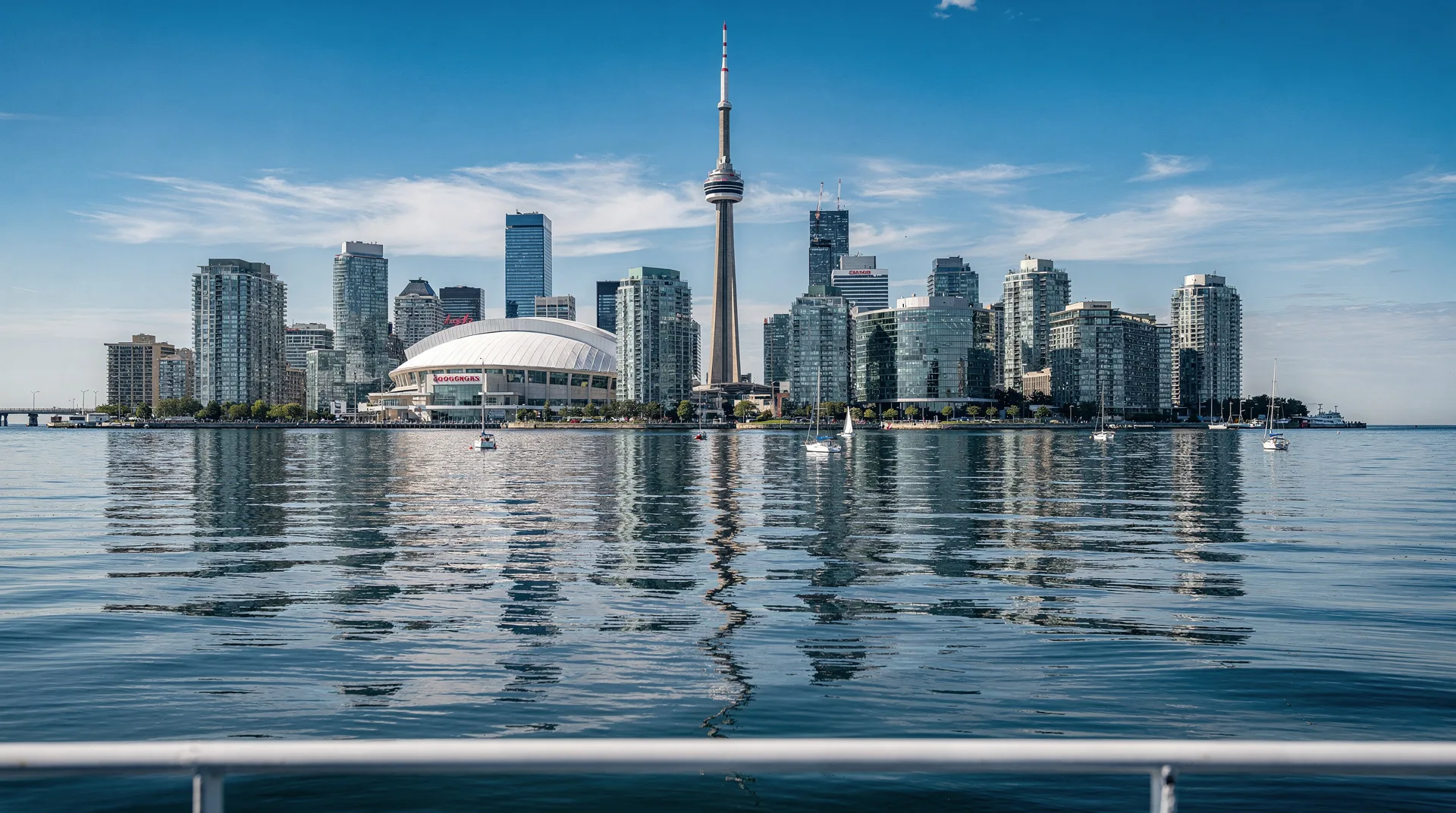
Toronto is a city that rewards curiosity. Canada’s largest metropolis sits on the northwestern shore of Lake Ontario, spreading across a patchwork of neighbourhoods that each feel like a different city within the same skyline. On any given afternoon you might wander through the Victorian lanes of Kensington Market, stare up at the glass and steel shaft of the CN Tower, and finish the day eating dim sum in one of the most authentic Chinatowns outside of Asia. With more than 200 spoken languages and a culinary scene that rivals New York and London, Toronto is one of North America’s most genuinely cosmopolitan destinations.
Why Toronto belongs on your Canada itinerary
Beyond the obvious icons, Toronto delivers what many Canadian cities cannot: the energy of a true global metropolis combined with a relaxed, liveable pace that keeps first-time visitors extending their stays. The waterfront has been transformed in recent decades into a web of trails, markets, and green space. The arts scene punches well above the city’s weight class, with the Toronto International Film Festival drawing industry heavyweights every September. The food scene is extraordinary — Toronto regularly appears in lists of the world’s top dining cities, fuelled by wave after wave of immigration from South Asia, East Asia, the Caribbean, and beyond.
For travellers exploring Ontario or planning a broader eastern Canada itinerary, Toronto makes an outstanding base. It sits within a few hours of Niagara Falls, Muskoka cottage country, and the scenic shores of the Bruce Peninsula. You can arrive by plane, train, or car and be standing in the heart of the city within minutes of your arrival point.
Top things to do in Toronto
CN Tower
Toronto’s defining landmark needs no introduction, but the experience still delivers a visceral thrill. At 553 metres the CN Tower held the title of world’s tallest free-standing structure for over three decades, and the views from the main observation deck and the glass floor 342 metres above street level remain genuinely breathtaking. The EdgeWalk — a hands-free stroll around the outside of the tower on a ledge — is one of the most memorable activities in all of Canada for those who can stomach heights.
Book CN Tower tickets and skip the lineRoyal Ontario Museum
The ROM, as locals call it, is Canada’s largest museum and one of the top ten natural history and world culture museums in North America. The crystalline Michael Lee-Chin Crystal addition that punctures the original Edwardian facade has become an architectural landmark in its own right. Inside, the collections span 40 million years of natural history, ancient Egypt, Indigenous Canadian cultures, and European decorative arts. The dinosaur galleries alone justify a half-day visit.
Book Royal Ontario Museum admission ticketsCasa Loma
Toronto’s fairy-tale castle sits on a hill above Davenport Road and remains one of Canada’s most visited historic sites. Sir Henry Pellatt, an early electricity magnate, built the 98-room Gothic Revival mansion between 1911 and 1914. The stables, servant’s quarters, secret passages, and sweeping garden terraces make for a fascinating few hours of exploration. Themed experiences and seasonal events add a layer of entertainment beyond the house tour.
Book Casa Loma entry with multimedia audio guideSt. Lawrence Market
Consistently voted one of the world’s best food markets, St. Lawrence Market has anchored Toronto’s food culture since 1803. The South Market building houses over 120 vendors selling everything from dry-aged beef and artisan cheese to peameal bacon sandwiches — the quintessential Toronto street food that you must try before leaving. Saturday morning is the peak experience, when the Farmers’ Market takes over the North Market with seasonal produce and local artisans.
Toronto Islands
A 10-minute ferry ride from the downtown waterfront drops you into a world of lagoons, beaches, cycling paths, and manicured parkland that makes the city skyline look like a theatrical backdrop. Centre Island is the main hub with Centreville Amusement Park for families, while Ward’s Island has a quiet residential community and some of the best picnic spots in Ontario. Swimming beaches on the south side of the islands are genuinely good in summer.
Ripley’s Aquarium of Canada
Opened in 2013 in the shadow of the CN Tower, Ripley’s has quickly become one of Toronto’s top family attractions. The Dangerous Lagoon tunnel, where guests walk on a moving walkway beneath sharks and sawfish, is the signature experience. More than 1.5 million visitors pass through annually, so booking tickets in advance is strongly advised.
Distillery Historic District
Once North America’s largest distillery, the Gooderham and Worts complex has been transformed into a pedestrian-only village of galleries, boutiques, restaurants, and performance spaces set among beautifully preserved Victorian industrial architecture. The cobblestone lanes are among the most photographed streets in Toronto and host the beloved Toronto Christmas Market each December.
Kensington Market and Chinatown
Adjacent to each other west of downtown, these two neighbourhoods represent the organic, grassroots side of Toronto’s multiculturalism. Kensington is a riot of vintage clothing shops, independent cafes, fishmongers, and world food stalls squeezed into Victorian rowhouses. The neighbouring Chinatown stretches along Spadina Avenue with bubble tea shops, roast duck restaurants, and produce markets spilling onto the pavement.
Best neighbourhoods in Toronto
Downtown Core and the Entertainment District anchor the city around Union Station, the CN Tower, and the Rogers Centre. Hotels cluster here and everything is walkable or accessible by the TTC subway.
Yorkville was once Toronto’s bohemian village and is now the city’s most upscale retail and dining destination. Bloor Street West here is lined with luxury boutiques, and the neighbourhood’s Victorian lanes hide exceptional restaurants and art galleries.
The Annex runs west of Yorkville along Bloor Street and is the city’s quintessential university neighbourhood — bookshops, independent coffee bars, and lively pub patios define the character here.
Queen Street West stretches from downtown toward Trinity Bellwoods Park and is where Toronto’s creative class lives and works. The stretch between University Avenue and Bathurst Street is particularly dense with indie fashion, galleries, and some of the city’s best brunch spots.
Leslieville in the east end has become one of Toronto’s most desirable neighbourhoods for food, coffee, and weekend browsing. The antique shops, farm-to-table restaurants, and craft cocktail bars attract a sophisticated local crowd.
When to visit Toronto
Spring (April to May) brings the city back to life after a grey winter. Cherry blossoms peak in High Park in late April, drawing enormous crowds for good reason. Temperatures are mild and crowds are manageable.
Summer (June to August) is peak season. Long daylight hours, warm Lake Ontario breezes, and a packed festival calendar make this the most popular time to visit. NXNE in June, Pride in late June, and the Toronto Caribbean Carnival in July and August are highlights. Expect the warmest weather and the highest hotel prices.
Fall (September to October) is many locals’ favourite season. The Toronto International Film Festival transforms the city in September. Autumn foliage in the Don Valley and on the Toronto Islands is genuinely beautiful, and shoulder-season prices make hotels more accessible.
Winter (November to March) is cold and occasionally snowy, but the city does not shut down. The Toronto Christmas Market at the Distillery Historic District runs through December, and the indoor food hall and cultural calendar keep energy levels high. Hotel prices drop significantly.
Where to stay in Toronto
Downtown and the Entertainment District is the most convenient base for first-time visitors. The Fairmont Royal York directly across from Union Station is Toronto’s grande dame of hotels, with a storied history dating to 1929. The Shangri-La Toronto on University Avenue offers contemporary luxury with exceptional service. For a more boutique feel, the Hotel X Toronto near the waterfront has impressive sports facilities and lake views.
Yorkville suits travellers who prioritise upscale dining and shopping within walking distance. The Four Seasons Toronto and the Park Hyatt Toronto are the neighbourhood anchors, both positioned perfectly for the ROM and Bloor Street boutiques.
Queen Street West offers a more creative, local atmosphere. Several boutique hotels here allow you to walk to the best coffee and brunch spots in the city.
Food and drink in Toronto
Toronto’s culinary identity defies a single narrative. Peameal bacon sandwiches at St. Lawrence Market are the closest thing to a city-defining dish — the back bacon rolled in ground yellow peas is a uniquely Toronto creation. From there, the options expand dramatically.
Chinatown and Spadina Avenue offer some of the best Cantonese roast duck, dim sum, and Vietnamese pho outside of Asia. The line at Rol San on Spadina for weekend dim sum is always worth the wait.
Kensington Market is the place for global street food on a budget — Jamaican patties, Brazilian cheese bread, Ethiopian injera, and Venezuelan arepas all compete for attention within a few blocks.
King Street West has become the most concentrated corridor of serious dining in the city. Restaurants like Canoe (Canadian fine dining with a view of the lake), Alo (French-influenced tasting menus), and Bar Isabel (Spanish-inspired plates) represent the top tier of the scene.
Craft beer and cocktails have exploded in Toronto. Steam Whistle Brewery operates from a beautiful Romanesque roundhouse near the CN Tower and offers excellent tours. The craft cocktail bar scene along Ossington Avenue and in the Leslieville neighbourhood is world-class.
The St. Lawrence Market Farmers’ Market on Saturday morning is essential for fresh Ontario produce, artisan bread, and local honey.
Getting around Toronto
The TTC (Toronto Transit Commission) operates the subway, streetcars, and buses. A day pass represents excellent value and the four subway lines connect most major attractions. The Yonge-University line is the backbone, running in a U-shape through downtown.
Streetcars serve the downtown core and waterfront areas that the subway misses. The 501 Queen streetcar is the longest streetcar route in North America and traverses the city east to west through some of its most interesting neighbourhoods.
Biking is practical between April and October. The city has invested heavily in cycling infrastructure, and the Martin Goodman Trail along the waterfront is a beautiful route. Bike share stations are everywhere downtown.
Walking is viable for the downtown core. The PATH system — a 30-kilometre network of underground walkways connecting hotels, office towers, and the subway — is invaluable in winter and peak summer heat.
Uber and taxis are plentiful and reasonably priced compared to most major cities. For the airport, the Union Pearson Express train connects Pearson International to Union Station in 25 minutes and is the most efficient option.
Day trips from Toronto
Toronto’s position in southern Ontario makes it an outstanding hub for day trips. Niagara Falls is the most popular, reachable in under two hours by car or coach, and a guided tour typically includes the Maid of the Mist boat experience.
The Muskoka Lakes district to the north offers a quintessential Ontario cottage experience, with pristine lakes, rocky shorelines, and charming towns like Gravenhurst and Bracebridge. Drive time is about two hours.
Prince Edward County to the east has emerged as one of Ontario’s premier wine regions, with a growing number of wineries, excellent restaurants, and Sandbanks Provincial Park’s enormous freshwater sand dunes.
Hamilton to the southwest is a former industrial city reinventing itself with excellent waterfalls — over 100 within city limits — and a thriving arts and food scene. Just an hour by car.
For a full Toronto city tour that covers the key sights efficiently before you venture further afield:
You can also explore Toronto’s waterfront by boat:
Browse Toronto Harbourfront cruises and boat toursToronto vs Montreal vs Ottawa
| Toronto | Montreal | Ottawa | |
|---|---|---|---|
| Character | Global, business-driven, diverse | European-flavoured, bilingual, arts-focused | Government capital, quieter, museum-heavy |
| Food scene | Broadest range of world cuisines | Strongest French and deli traditions | Smaller but solid, good markets |
| Best for | First-time Canada visitors, families, festivals | Nightlife, architecture, food lovers | Politics/history buffs, Rideau Canal in winter |
| Days needed | 4-5 | 3-4 | 2-3 |
For travellers deciding between the three, the guide comparing Toronto vs Montreal and the one comparing Toronto vs Ottawa go into more detail on which suits different trip styles.
Extending your stay: nearby trips from Toronto
Toronto’s rail and highway links make it a strong base for short add-on trips rather than just day trips. Ottawa, the national capital, is a comfortable VIA Rail journey away and pairs well with a Toronto stay — see the guide on getting from Toronto to Ottawa for the options. The Thousand Islands near Gananoque make an excellent two- or three-day extension for boat tours among the islands; the Toronto to Thousand Islands guide covers logistics.
Wine lovers should consider a night in Niagara-on-the-Lake rather than a rushed Niagara Falls day trip, since the town itself and its wineries reward a slower pace. For a full breakdown of the city’s dining landscape beyond what fits in a guide, the dedicated Toronto food scene guide is worth reading before you land, and summer visitors planning around festivals should check the Toronto in summer guide for a month-by-month rundown of what’s on.
Frequently asked questions about Toronto
How many days do you need in Toronto?
Four to five days allows you to cover the major landmarks — CN Tower, ROM, Casa Loma, St. Lawrence Market, the Toronto Islands — while leaving time to explore a few different neighbourhoods and day trip to Niagara Falls. Three days is the minimum for a meaningful visit. If you have a week, you can go deeper into the arts scene, explore more distant neighbourhoods, and take multiple day trips.
Is Toronto safe for tourists?
Toronto consistently ranks among the safest major cities in North America. The downtown core, tourist areas, and most neighbourhoods are very safe day and night. Like any large city, some peripheral areas warrant the usual urban common sense, but the tourist experience is essentially hassle-free.
What is the best way to get from Toronto Pearson Airport to downtown?
The Union Pearson Express train is the fastest option, running every 15 minutes and taking 25 minutes to reach Union Station in the heart of downtown. A single ticket costs around CAD $9.25 with a PRESTO card or CAD $12.35 without. Taxis and rideshares take 30–60 minutes depending on traffic and cost CAD $55–$75.
When is the best time to see cherry blossoms in Toronto?
Cherry blossoms in High Park typically peak between late April and early May, depending on the year. The spectacle draws large crowds, particularly on weekends. Weekday mornings or the first light of dawn on weekends offer the best experience.
What food should you try in Toronto?
Start with a peameal bacon sandwich from St. Lawrence Market. Follow that with dim sum in Chinatown, a butter chicken roti from any Kensington Market vendor, and a meal at one of the King Street West restaurants. The Portuguese egg tarts on Dundas Street West in Little Portugal are also not to be missed.
Is Toronto expensive?
Toronto is one of Canada’s most expensive cities, on par with Vancouver. Budget travellers can manage on CAD $100–$150 per day sharing accommodation and eating at markets and casual restaurants. Mid-range travellers should budget CAD $200–$350 per day including a hotel, two sit-down meals, and attraction tickets. Luxury travellers will find excellent options for CAD $500 and above.
Do you need a car in Toronto?
No. Toronto’s TTC transit system, combined with biking and walking, covers everything tourists want to see. A car is only useful if you are planning day trips to destinations like Muskoka or Prince Edward County that are not well-served by public transit.
What is the TIFF and when does it happen?
The Toronto International Film Festival is one of the most important film festivals in the world and a major Oscar campaign launch pad. It runs for 11 days in early September. The city fills with film industry professionals, celebrities, and cinephiles. Many screenings are open to the public, and the red carpets at the major venues along King Street West attract large crowds even for those without tickets.
Is Toronto or Montreal better for a first Canada trip?
Both work well, and many itineraries include both. Toronto has the edge for diversity of food and attractions and easier onward flight connections; Montreal has the edge for atmosphere, architecture, and a distinctly different, French-influenced culture within the same country. See the Toronto vs Montreal guide for a fuller comparison.
Can I day-trip to Ottawa from Toronto?
It is possible but not ideal — VIA Rail takes around 4-4.5 hours each way, so a day trip leaves very little time in the capital. An overnight or two-night stay is a much better use of the trip; see Toronto to Ottawa for train and drive options.