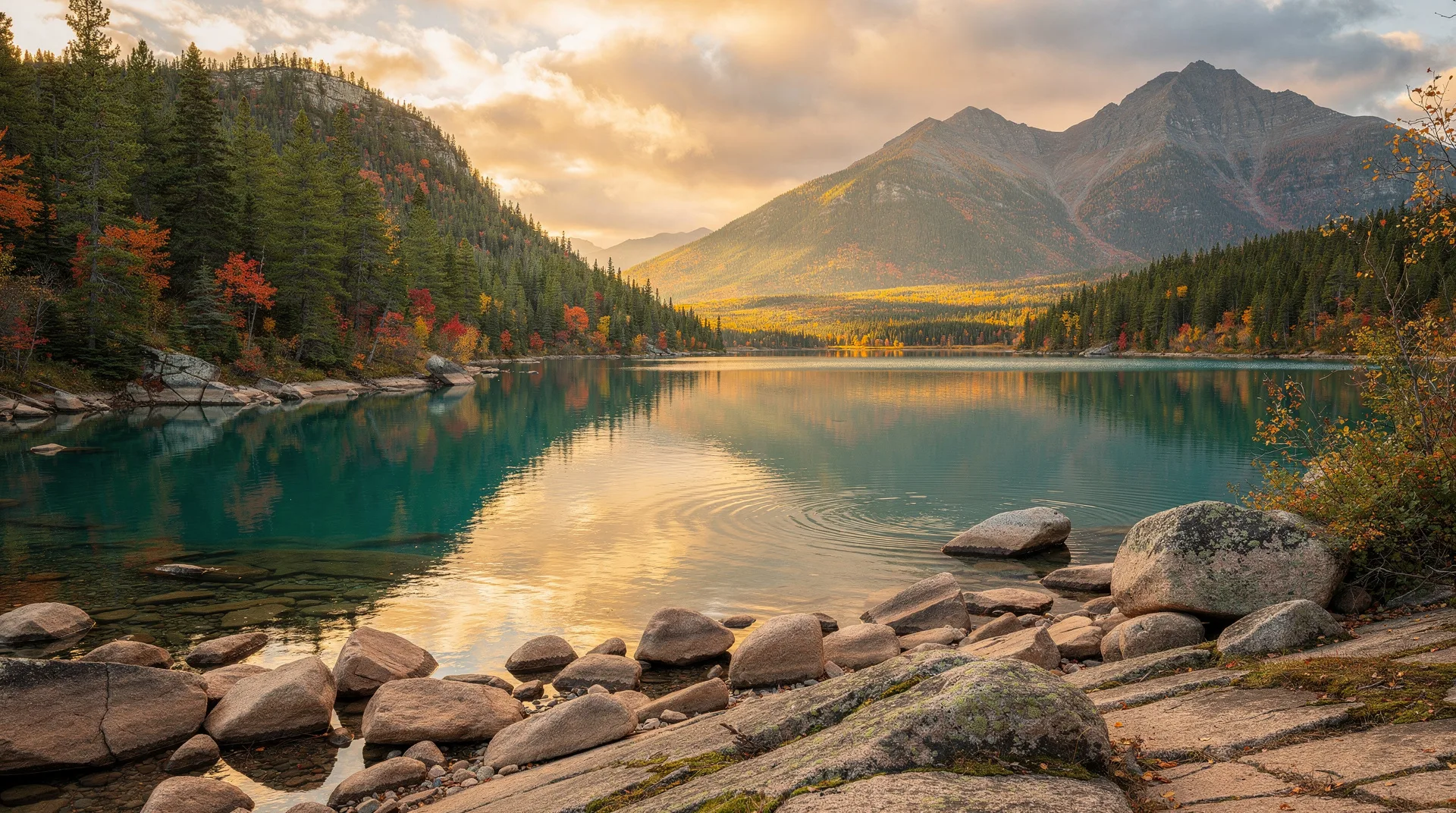
Quebec national parks: the complete guide to Sépaq and federal parks
Quebec has one of the most comprehensive national park networks in North America, organised across two distinct systems that most visitors never clearly separate. The provincial Société des établissements de plein air du Québec (Sépaq) manages 28 “national parks” under Quebec law, plus 13 wildlife reserves and additional historical sites. The federal Parks Canada separately manages four national parks within Quebec (La Mauricie, Forillon, Mingan Archipelago, and parts of Saguenay–Saint-Laurent Marine Park). Together these protect more than 50,000 square kilometres of Quebec wilderness, and navigating which park to visit — and which pass to buy — benefits from a clear map.
This guide covers the overall system, the most important parks by region, and how to plan a multi-park visit economically.
| At a glance | |
|---|---|
| Where | Sépaq parks scattered province-wide; federal Parks Canada parks concentrated in La Mauricie, the Gaspésie and the Côte-Nord |
| Cost | around $10-13 CAD/day per park, or an annual pass (Sépaq ~$85, Parks Canada Discovery Pass ~$75) if visiting several |
| Time needed | half a day for a single park stop, 2-4 days to combine 2-3 parks in one region |
| Getting there | a rental car is close to essential — most parks are a 45 min to 3+ hour drive from Montreal or Quebec City, see Canada car rental |
| Best time | June-September for full trail and service access; winter (roughly December-March) for snowshoeing and cross-country skiing in select parks, see Quebec in winter |
Sépaq (Quebec provincial “national parks”) vs Parks Canada (federal)
The naming is confusing because both use “national park.” Quebec’s Sépaq parks are legally provincial but branded “parcs nationaux.” The two systems are fully separate:
| System | Parks in Quebec | Operator | Pass |
|---|---|---|---|
| Sépaq | 28 national parks | Provincial (Quebec) | Sépaq Annual Card or daily pass |
| Parks Canada | 4 national parks + 1 marine park | Federal | Parks Canada Discovery Pass or daily |
Your pass only works on its own system: a Parks Canada pass does not admit to Sépaq parks and vice versa. Plan accordingly.
Sépaq fees (2026)
- Daily access: $10.25 adult (18-64), free under 18.
- Sépaq Annual Access Card: ~$85 adult, $130 family — pays off at 8-9 visits.
- Backcountry camping, cabins, huts: separate fees per night.
Parks Canada fees (2026)
- Daily access: ~$9.25-$12.50 adult depending on park, free under 18.
- Discovery Pass (annual, all Canadian federal parks): ~$75 adult, $150 family — pays off at 7-8 visits.
Which to buy?
For a week in Quebec with 2-3 park visits, daily passes are most economical. For a 2+ week trip or dedicated park-focused travel, the Sépaq Annual Card pays off quickly if your visits are mostly within Quebec. If combining Quebec with Banff or Maritime national parks in the same year, the Parks Canada Discovery Pass is the better buy.
Choosing between parks when time is short
Most visitors try to see too many parks and end up seeing mostly the road. A better habit is to pick one landscape you care about and let the park follow. If you want water and forest, think canoe country and lake-edge parks. If you want drama, think fjords, gorges and sea cliffs. If you want wildlife, think the northern and eastern parks where the forest is thicker and the crowds thinner. Once you know the landscape, the region narrows quickly, and the pass question answers itself: stay within one system and a daily ticket is usually enough.
It also helps to decide early whether the park is the whole point of the day or just one stop. A park that is the main event deserves a full day, an early start and a packed lunch. A park that is a stop on a longer drive, for example on the way to the coast, works better as a short walk to a viewpoint, followed by a coffee in the nearest village. Both are valid, but mixing the two expectations is how a day goes wrong. If you would rather not drive yourself, guided day tours from Quebec City can cover the nearer parks.
The four Parks Canada national parks in Quebec
La Mauricie National Park
The canoe-country park of Quebec — 536 km² of Canadian Shield lakes, mixed hardwood forest, and old-growth stands. One of the best canoe-camping destinations in eastern Canada. 2 hours from Montreal, 1h30 from Trois-Rivières.
- Best for: canoeing, family camping, fall foliage scenic drive (the 63 km Promenade).
- See Parc national de la Mauricie.
Forillon National Park
The first federal national park in Quebec (1970), on the tip of the Gaspé Peninsula where the Appalachians meet the Atlantic. Dramatic limestone cliffs, whales visible from shore, Cap-Gaspé “land’s end” lighthouse.
- Best for: whale watching (shore + zodiac), coastal hiking, dramatic scenery.
- See Forillon Park.
Mingan Archipelago National Park Reserve
A remote archipelago of ~1,000 limestone islands off Quebec’s Côte-Nord, famous for dramatic sea stacks (monoliths) eroded into cathedral shapes. Accessible only by boat from Havre-Saint-Pierre.
- Best for: geology and photography, serious road-trippers who reach the Côte-Nord.
- See Mingan Archipelago.
Saguenay–Saint-Laurent Marine Park
Co-managed federal/provincial marine park protecting the confluence of the Saguenay Fjord and St. Lawrence — prime whale watching territory from Tadoussac. Not a walk-in park; experienced via boat tours.
- Best for: whale watching out of Tadoussac. Tadoussac whale watching.
Top Sépaq national parks by region
Near Montreal
- Parc national du Mont-Tremblant: Quebec’s largest Sépaq park (1,500 km²), 1h45 from Montreal. Lakes, moose, winter activities.
- Parc national d’Oka: smaller but beloved; beach and Calvary hill; 45 min from Montreal.
Near Quebec City
- Parc national de la Jacques-Cartier: a dramatic glacial valley 45 min from downtown Quebec City. Cliffs rise 550 m above the river; paddle-and-picnic country.
- Parc national de la Chute-Montmorency (technically Sépaq urban park): the famous falls taller than Niagara.
Charlevoix
- Parc national des Hautes-Gorges-de-la-Rivière-Malbaie: “the deepest canyon east of the Rockies.” Via ferrata, Acropole des Draveurs hike, Malbaie River cruise. See park guide.
- Parc national des Grands-Jardins: arctic-boreal landscape with alpine tundra. See park guide.
Saguenay
- Parc national du Fjord-du-Saguenay: the Saguenay Fjord with 300 m cliffs. Kayaking, hiking, the Sentier de la Statue. See park guide.
- Parc national de la Pointe-Taillon: lake-edge cycling paradise on Lac Saint-Jean.
Gaspésie
- Parc national de la Gaspésie: the Chic-Chocs mountains, highest peaks in Quebec outside the Laurentians. Moose and caribou. See park guide.
- Parc national de l’Île-Bonaventure-et-du-Rocher-Percé: Percé Rock and the gannet colony on Bonaventure Island. See park guide.
- Parc national de Miguasha: UNESCO World Heritage for Devonian fossils. See park guide.
- Parc national de Forillon (federal — see above).
Bas-Saint-Laurent
- Parc national du Bic: dramatic coastal cliffs, seal colonies. See park guide.
Laurentians and Outaouais
- Parc national du Mont-Tremblant (see above).
- Parc de la Gatineau (Commission de la capitale nationale — not Sépaq or federal, but effectively a national park). See park guide.
Far north and remote
- Parc national de la Gaspésie (see above).
- Parc national des Pingualuit (Nunavik): meteorite crater lake in the Arctic. Very remote, fly-in.
- Parc national Kuururjuaq (Nunavik): Arctic tundra park.
- Parc national Tursujuq (Nunavik): rocky cliffs on Hudson Bay, Inuit heritage.
Booking and reservations
- Day use: walk-in is fine for most Sépaq parks; Parc national du Mont-Tremblant in peak summer sometimes requires daytime reservation for Lac Monroe access.
- Camping: book 6-12 months ahead through the Sépaq website for peak dates.
- Cabins, chalets, yourts: extremely popular; some sites open bookings a year in advance.
- Wildlife sightings: no guarantees, but the Chic-Chocs for moose, Hautes-Gorges for peregrine falcons, the Côte-Nord for seabirds.
Shaping a good park day
A park day goes best when it has a simple spine: one main walk or paddle, one proper meal, and plenty of slack for weather. Start early, because parking areas near the most photographed viewpoints fill first and the light is gentler in the morning. Keep the hardest or most exposed activity for the first half of the day, and leave the afternoon for something flexible, such as a lakeside stop or a short loop near the service centre.
Weather in the mountains and along the coast changes faster than the forecast for the nearest city suggests, so carry a waterproof layer and an extra warm layer even in summer. Check the park’s own trail report before you set out rather than relying on an old guidebook, since trails close for maintenance, thaw or wildlife reasons. If you are travelling with children or less experienced walkers, the shorter interpretive trails near the entrance are often the most rewarding part of the visit, and they keep the day relaxed. For more route ideas, the Quebec hiking guide sorts trails by difficulty, and Canada with kids has pointers for family pacing.
Making the most of parks beyond summer
Quebec’s parks change character completely with the seasons, and some of the most memorable visits happen outside July and August. Autumn brings colour to the hardwood forests and calmer trails during the week. Winter turns many parks into quiet snowshoe and cross-country ski territory, which suits visitors who enjoy silence over services; see snowshoeing in Canada and cross-country skiing in Canada for how to prepare. Spring is the least predictable season, but it rewards patient travellers with empty paths and low prices. Whatever the season, dress for the conditions you will meet at the trailhead, not the ones you left in town, and tell someone where you are heading before you go. For wildlife outings and cruises, you can browse tours and activities across Canada before you travel.
If you are building a larger trip around the parks, the Quebec 7-day itinerary shows how outdoor days can sit alongside city time without turning the week into a series of long drives.
Practical tips
- Off-season visits: many Sépaq parks are open year-round, though services (rentals, restaurants) are summer-seasonal.
- Dog rules: dogs are permitted on some trails in some parks and prohibited in others. Check the specific park website.
- Services: most Sépaq parks have a service centre with rentals, small shop, showers. Parks Canada parks are similar but typically larger.
- Respect for wildlife: bear-proof food storage is required in the wilderness campgrounds.
Visiting by season
| Season | Conditions | Crowds | Notes |
|---|---|---|---|
| Summer (Jun-Aug) | Warm, full trail network open | Busiest, book camping months ahead | Peak for canoeing, hiking, service centres fully staffed |
| Fall (Sep-early Oct) | Cool, foliage colour peaks late Sep-mid Oct | Busy on weekends, especially Mont-Tremblant and Jacques-Cartier | See Quebec fall foliage where to go |
| Winter (Dec-Mar) | Cold, snow-covered, many trails become ski/snowshoe routes | Quiet outside a handful of ski-adjacent parks | Not all facilities open; check the specific park before driving out, and see driving Quebec in winter |
| Spring (Apr-May) | Muddy shoulder season, some trails closed for thaw | Quietest overall | Good value but check trail status before committing a day |
Planning a multi-park road trip
Because Quebec’s parks are spread across a huge territory, the most efficient trips cluster 2-3 parks in the same region rather than criss-crossing the province. A Charlevoix loop pairing Hautes-Gorges and Grands-Jardins works well over 3-4 days and pairs naturally with Charlevoix in 4 days.
A Gaspésie trip can combine the Gaspésie park’s Chic-Chocs peaks with Forillon and Bonaventure Island on the coast, best absorbed as part of a longer Quebec 10-day itinerary or the more ambitious Quebec 21-day itinerary. Near Montreal, Mont-Tremblant and Oka can realistically be combined with a stop at Mont-Tremblant itself for dining and lodging outside the park gates.
If a trip is Quebec-only, the Sépaq Annual Card is the more relevant purchase; if the itinerary also touches Banff, Jasper or the Maritime national parks, the federal Discovery Pass earns its keep across both legs — see Banff park pass for how that federal pass works elsewhere in the country.
Frequently asked questions about Quebec national parks
Do Sépaq annual cards work in federal parks like La Mauricie or Forillon? No. A Sépaq Annual Access Card only covers Sépaq’s 28 provincial parks; La Mauricie, Forillon, Mingan Archipelago and the Saguenay–Saint-Laurent Marine Park are federal Parks Canada sites and require a separate Discovery Pass or daily fee.
Which Quebec national park is best for a first visit with limited time? Parc national de la Jacques-Cartier is the easiest high-impact choice near Quebec City (45 minutes out, dramatic glacial valley), while Parc national du Mont-Tremblant is the most convenient large park near Montreal.
Pair with
- Quebec hiking guide for the best trails across parks.
- Best time to visit Quebec for seasonal framing.
- Quebec fall foliage where to go for autumn-specific park advice.
- Individual park pages linked above for specific trip planning.