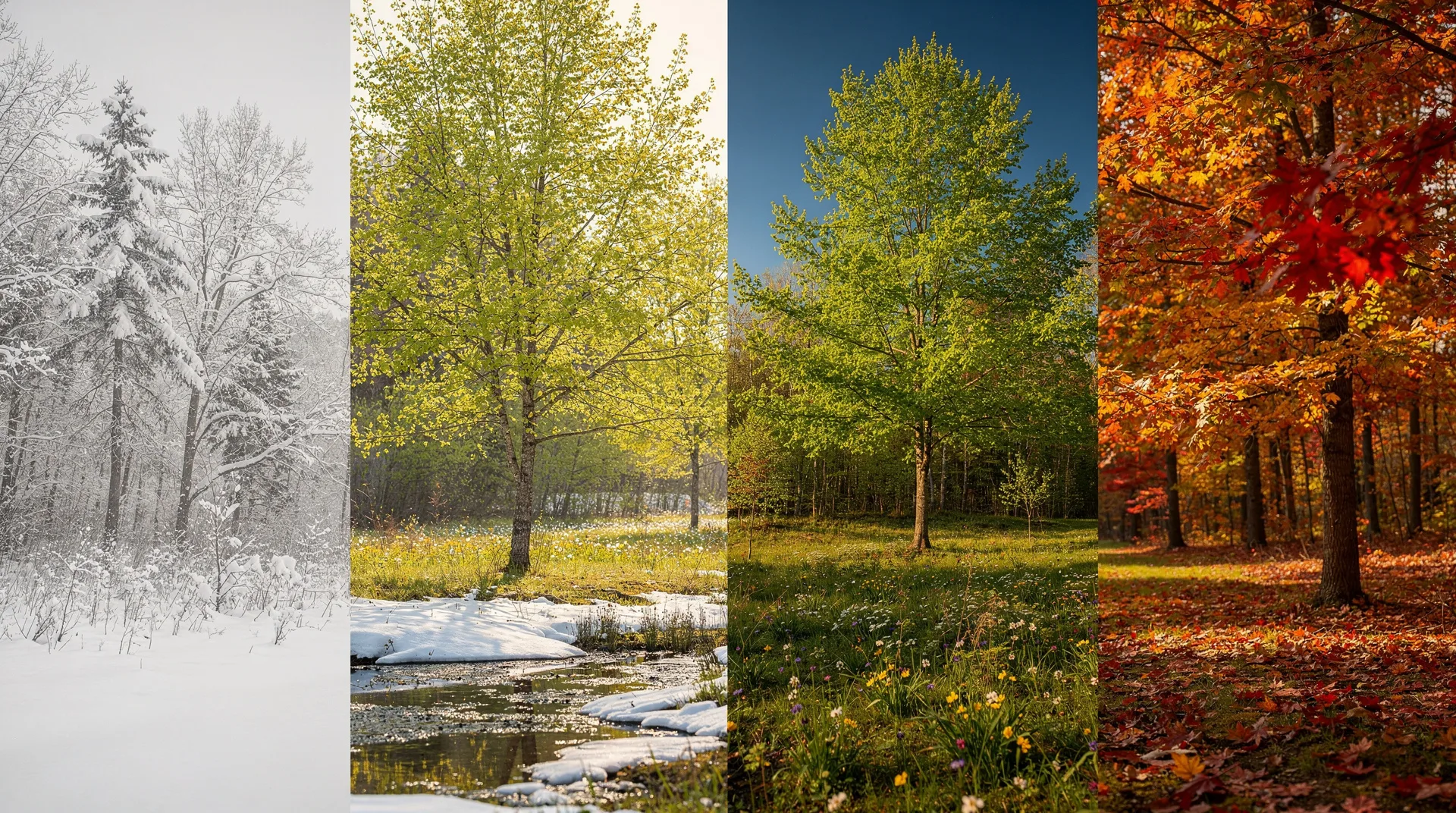
Best time to visit Canada: month-by-month guide
What's the best time to visit Canada?
July and August are the best all-round months for most regions — long days, warm weather, all parks and trails open. For skiing, January-March is peak. For northern lights, October-March in the Yukon or NWT.
Canada does not have one best time to visit — it has several, depending entirely on where you want to go and what you want to do. A ski trip to Whistler peaks in February. A hike to Moraine Lake in Banff peaks in late July. A chase for polar bears in Churchill peaks in October. Autumn foliage in Quebec peaks in early October.
This guide breaks it all down by region and month so you can match your travel dates to your goals.
At a glance
| Best overall window | July-August (all regions open), or June/September for better value |
| Best for skiing | January-March, peak conditions at Whistler and Banff resorts |
| Best for northern lights | Roughly late September to March, Yukon or NWT for the darkest skies |
| Park pass needed | Yes for any national park (Banff, Jasper, and the rest) — a day pass or a Discovery Pass, never free |
| Booking lead time | 4-6 months ahead for Rockies accommodation in July-August; 1-2 weeks for shoulder season |
How Canada’s seasons work
Canada spans more than 9,500 km from east to west and reaches from the US border to well above the Arctic Circle. Its climate varies as dramatically as its geography.
Four broad climate zones:
| Zone | Key areas | Character |
|---|---|---|
| Pacific coast | Vancouver, Victoria, BC coast | Mild, wet winters; warm, dry summers |
| Continental interior | Alberta, Ontario, Quebec, Prairies | Extreme range: -30C winters, +35C summers |
| Atlantic | Nova Scotia, NB, PEI, Newfoundland | Cool, wet, oceanic — four real seasons |
| Subarctic/Arctic | Yukon, NWT, Nunavut | Harsh winters, brief but vivid summers |
High vs. low season:
- Peak: July-August everywhere. Prices at maximum, crowds at maximum, experiences at maximum.
- Shoulder: May-June and September-October. Better value, thinner crowds, still excellent.
- Off-season: November to April in most regions (except ski resorts where this is their peak).
Month-by-month breakdown
January
Weather: Canada’s coldest month. Toronto averages -6C, Montreal -10C, Winnipeg -17C, Vancouver +4C. Snow is reliable across the country except the BC coast.
Best for:
- Skiing in Whistler, Banff, and Mont-Tremblant (peak ski season)
- Northern lights viewing in Whitehorse and Yellowknife
- Winterlude festival in Ottawa (late January to mid-February) — ice sculptures, skating on the Rideau Canal
- Budget travel to cities (hotels 30-40% cheaper than summer)
Avoid if: You have limited cold-weather gear or dislike short days (cities get 8-9 hours of daylight).
February
Weather: Still deep winter almost everywhere. Vancouver’s cherry blossoms start appearing late in the month — often the first sign of spring in Canada.
Best for:
- Peak ski season across all resorts
- Quebec Winter Carnival (early February) — one of the world’s largest winter festivals, held in Quebec City
- Arctic wildlife tours: wolves, muskox, and caribou in NWT
- Northern lights (still prime season)
Highlight event: Quebec Winter Carnival is one of the most atmospheric events in North America. Book accommodation months ahead.
March
Weather: Transition month. Still cold inland (-5 to -15C), but days noticeably lengthen. Vancouver hits double digits by mid-month.
Best for:
- Skiing with better weather and longer daylight
- Northern lights (season winds down by late March)
- Maple syrup season begins in Ontario and Quebec — sugar shack visits are a uniquely Canadian experience
- Shoulder prices start to take effect
April
Weather: Warming up but unpredictable. Snow possible anywhere in Canada. Rockies roads may still be closed. Cities hit 10-15C by late April.
Best for:
- City breaks in Toronto, Montreal, Vancouver (fewer crowds, lower hotel prices)
- Spring wildflowers in BC (Okanagan Valley, Victoria’s Butchart Gardens)
- Niagara Falls without summer crowds
Avoid: Banff and Jasper backcountry trails — avalanche risk and snow still present.
May
Weather: Spring arrives properly across most of Canada. Rockies trails begin to open from mid-May. Cities warm to 15-22C.
Best for:
- Banff and Jasper — trails opening, snowmelt rivers, dramatically fewer crowds than summer
- Victoria Day long weekend (third Monday in May) — national holiday, many festivals
- Tulip Festival in Ottawa — 300,000+ tulips in bloom
- Atlantic Canada coastal scenery
Value note: May is arguably the best value month in the Rockies — everything is open but summer crowds haven’t arrived.
June
Weather: Warm and long-days across Canada. Days reach 15-17 hours of daylight in the Rockies. Atlantic Canada warms up. The North has near-constant daylight.
Best for:
- Hiking begins in earnest everywhere
- Whale watching on the Atlantic coast (humpbacks off Newfoundland)
- Vancouver in bloom, excellent cycling and kayaking
- Montreal Jazz Festival (late June into July) — free outdoor stages across the city
- Pre-peak pricing holds for most of June
July
Weather: Peak summer. Toronto 27C, Vancouver 22C, Banff 22C (cooler at altitude), Montreal 27C. Long days everywhere.
Best for:
- Everything. July is the single best month if you can only choose one.
- Canada Day (July 1) — national holiday, fireworks and celebrations coast to coast
- Hiking Moraine Lake and Lake Louise in Banff (iconic turquoise water)
- Whale watching off Vancouver Island
- Cavendish Beach, Prince Edward Island
- Calgary Stampede (first-second week of July) — the world’s largest outdoor rodeo
Watch out for: Prices peak in July. Book 4-6 months ahead for Rockies accommodation and campgrounds.
August
Weather: Summer continues. Warm and dry in BC interior; humid in Ontario/Quebec. Atlantic Canada at its warmest.
Best for:
- Pacific Rim National Park — surfing and storm-watching season starts
- Last hiking weeks before autumn colours arrive
- Edinburgh of North — Nova Scotia’s Celtic Colours festival approaches
- Fringe festivals in Edmonton and Winnipeg
Note: Peak season extends fully through August. Prices remain high, but the Rockies are at their absolute best for hiking.
September
Weather: Shoulder season begins. Temperatures drop but days remain warm and clear. Arguably the most beautiful month in Quebec and Ontario for foliage.
Best for:
- Autumn foliage in Quebec and Ontario (peak usually mid-to-late October)
- Banff and Jasper without summer crowds (elk rut begins — dramatic wildlife viewing)
- Cycling the Cabot Trail in Cape Breton
- Northern lights begin again in the Yukon and NWT
Value: Prices drop 15-25% after Labour Day (first Monday of September). One of the best value months in Canada.
October
Weather: Autumn in full swing. First snows possible in the Rockies. Cities still mild. Atlantic Canada can be stormy.
Best for:
- Polar bear watching in Churchill, Manitoba — the world’s best polar bear destination, peak season mid-October to mid-November
- Autumn foliage peak in Quebec (Laurentians, Eastern Townships) and Ontario (Algonquin Park)
- Whistler pre-ski season — fewer people, mountain biking still open
- Northern lights prime season begins
Don’t miss: Churchill’s polar bears are a world-class experience. Book a Churchill tundra buggy day trip to see bears up close safely.
November
Weather: Winter sets in. First serious snowfalls in the Rockies and Prairie provinces. Cities grey and cold. Ski resorts begin opening.
Best for:
- Early ski season (Banff resorts often open first week of November)
- Northern lights in full swing
- Low-season city prices — hotel rates at their annual lowest
- Christmas market season begins (late November in most cities)
Avoid: Atlantic Canada — typically the most unsettled month weather-wise.
December
Weather: Full winter. Short days (7-8 hours in most of Canada). Cold everywhere except BC coast. White Christmas virtually guaranteed inland.
Best for:
- Christmas markets in Montreal, Quebec City, Toronto, and Vancouver
- Ski trips (Christmas week is peak, shoulder weeks either side are better value)
- Cozy lodge stays in Banff or Whistler
- Northern lights — winter solstice nights are the longest of the year
Peak Christmas week: December 22-January 2 is the second most expensive period of the year (after July-August). Book well ahead.
Regional quick reference
Canadian Rockies (Banff, Jasper, Yoho)
| Month | Rating | Notes |
|---|---|---|
| Jan-Mar | Excellent (ski) | Ski season peak, frozen lakes, northern lights possible |
| Apr-May | Good | Quieter, trails opening, snow possible |
| Jun-Aug | Excellent (hiking) | Peak hiking, iconic lake colours, crowded |
| Sep-Oct | Very good | Foliage, elk rut, fewer people |
| Nov-Dec | Good (ski) | Ski season opens, very cold |
Best overall: July-August for hiking, January-March for skiing.
Atlantic Canada
| Month | Rating | Notes |
|---|---|---|
| Jan-Mar | Quiet | Cold, limited tourist infrastructure |
| Apr-May | Shoulder | Wildflowers, whale migrations begin |
| Jun-Aug | Peak | Warmest waters, lobster season, festivals |
| Sep-Oct | Very good | Foliage, Celtic Colours festival, fewer crowds |
| Nov-Dec | Off-season | Stormy, many seasonal businesses closed |
Best overall: July-August, with September a strong runner-up.
Cities (Toronto, Montreal, Vancouver, Quebec City)
| Season | Rating | Notes |
|---|---|---|
| Summer (Jun-Aug) | Excellent | Warm, festivals, long days — but expensive |
| Autumn (Sep-Oct) | Very good | Foliage, cultural season, good prices |
| Winter (Nov-Mar) | Good for culture | Cheap, quiet, cold — great food and arts scenes |
| Spring (Apr-May) | Good | Blooms, fewer crowds, value pricing |
Vancouver is the exception — mild year-round but rainy November-March.
The North (Yukon, NWT, Nunavut)
| Season | Rating | Notes |
|---|---|---|
| Oct-Mar | Excellent (aurora) | Northern lights prime season |
| Jun-Aug | Excellent (midnight sun) | Wildlife, hiking, 24-hour daylight |
| Apr-May | Good | Transition, fewer crowds |
| Sep | Very good | Aurora begins, autumn colours, shoulder prices |
For northern lights in the Yukon, book a Yukon aurora viewing tour from Whitehorse for a guided late-night experience away from city light pollution.
Weather vs. price vs. crowds matrix
| Month | Crowd level | Price | Weather (Rockies) | Weather (East) |
|---|---|---|---|---|
| January | Low | Low | Cold, ski excellent | Cold, quiet |
| February | Low-Medium | Low | Peak ski | Cold, Carnival |
| March | Medium | Low-Medium | Late ski, warming | Improving |
| April | Low | Low | Unpredictable | Mild |
| May | Medium | Medium | Opening season | Warming |
| June | Medium-High | Medium-High | Excellent | Good |
| July | Peak | Peak | Excellent | Excellent |
| August | Peak | Peak | Excellent | Excellent |
| September | Medium | Medium | Very good | Very good |
| October | Low-Medium | Medium-Low | Foliage, cooling | Foliage, stormy |
| November | Low | Low | Early ski | Difficult |
| December | Medium (Xmas) | Medium-High (Xmas) | Ski opens | Cold |
Planning around a single-purpose trip
If your trip has one specific goal, let that goal set your dates rather than defaulting to summer. A polar bear trip to Churchill only makes sense in the mid-October to mid-November window — outside those weeks the bears simply are not concentrated on the coast. An aurora-focused trip works best December-January for the longest, darkest nights, ideally paired with a base in Whitehorse or Yellowknife rather than further south.
A foliage trip to Quebec or Ontario needs a tight late-September to mid-October window, and the peak week shifts year to year with the weather, so building in 2-3 flexible days improves your odds. A ski trip should target January-February for reliable snowpack rather than the shoulder weeks of November or April, when resorts sometimes rely on early or late-season snowmaking.
For visitors combining several goals in one trip — cities, the Rockies, and a coastal stop, for example — late June or early September thread the needle best: most attractions and trails are open, crowds and prices have not yet peaked (or have already eased), and the weather is reliably good across most regions.
Practical planning notes
Canada requires most visa-exempt air travellers to hold an eTA before boarding, and it is worth applying for well before your season of choice rather than at the airport. Distances between regions are large enough that combining, say, the Rockies and Atlantic Canada in one trip usually means a domestic flight rather than a drive — factor that into your calendar as much as the weather. Tipping of roughly 15-20% is standard in restaurants and for tour guides year-round, regardless of season.
Frequently asked questions about when to visit Canada
When is the cheapest time to visit Canada?
January through April (excluding school holidays) offers the lowest prices across cities. You can save 30-40% on hotels compared to peak summer. The exception is ski resort towns, where January-February is their own peak season.
When do the Rockies parks get too crowded?
July and August are peak season in Banff and Jasper. Parking lots at Moraine Lake fill by 5am on summer weekends — Parks Canada now runs mandatory shuttle services. To avoid the worst crowds, visit in late September or early June.
When is the best time to see the northern lights in Canada?
The aurora borealis is visible from late September through late March in northern Canada. The peak months are December and January (longest nights). Whitehorse, Yukon and Yellowknife, NWT are the best bases. You need clear skies and darkness — full moon periods reduce visibility.
What is the best month to visit Montreal?
June through August for outdoor festivals (Jazz Festival, Just for Laughs, Osheaga music festival), warmth, and the city’s famous terrace culture. February for the pure cultural event of the Quebec Winter Carnival (a day trip from Montreal). October for autumn foliage and the festival season transition.
Does it snow in Vancouver?
Occasionally, but rarely in the city itself. Vancouver has one of Canada’s mildest climates. Snow in the city happens once or twice a decade on average. However, the mountains above the city (Grouse, Cypress, Seymour) have reliable snow from December to March — you can ski in the morning and sit on a sunny downtown patio in the afternoon.
When should I visit Prince Edward Island?
July and August are peak season — warm water, lobster festivals, Anne of Green Gables season. The water temperature reaches 21-23C in August, making it the warmest ocean swimming in Atlantic Canada. September is excellent for lower prices and fewer families with children.
Is Canada good to visit in winter?
Absolutely, with the right expectations. Cities have excellent indoor food, arts, and culture scenes year-round. Ski resorts are buzzing. The Rockies are hauntingly beautiful under snow. The northern lights are only visible in winter. You need proper gear and mental preparation for cold — but Canada in winter is a genuinely rewarding experience.
How many days do I need to see Canada properly?
It depends entirely on scope. A single region — the Rockies, or Ontario, or Quebec — deserves at least 7-10 days given the driving distances involved. Trying to combine multiple regions (say, the Rockies and Atlantic Canada) in under two weeks means accepting a domestic flight and a rushed pace. See how long to spend in Canada for a fuller breakdown by itinerary type.
Do I need a visa to visit Canada?
Most visa-exempt air travellers (including the US, UK, EU, and many other nationalities) need an Electronic Travel Authorization (eTA) rather than a full visa, applied for online before departure. Requirements vary by nationality and mode of entry, so check the official criteria for your passport well ahead of your travel dates — see the Canada eTA and visa guide for details.