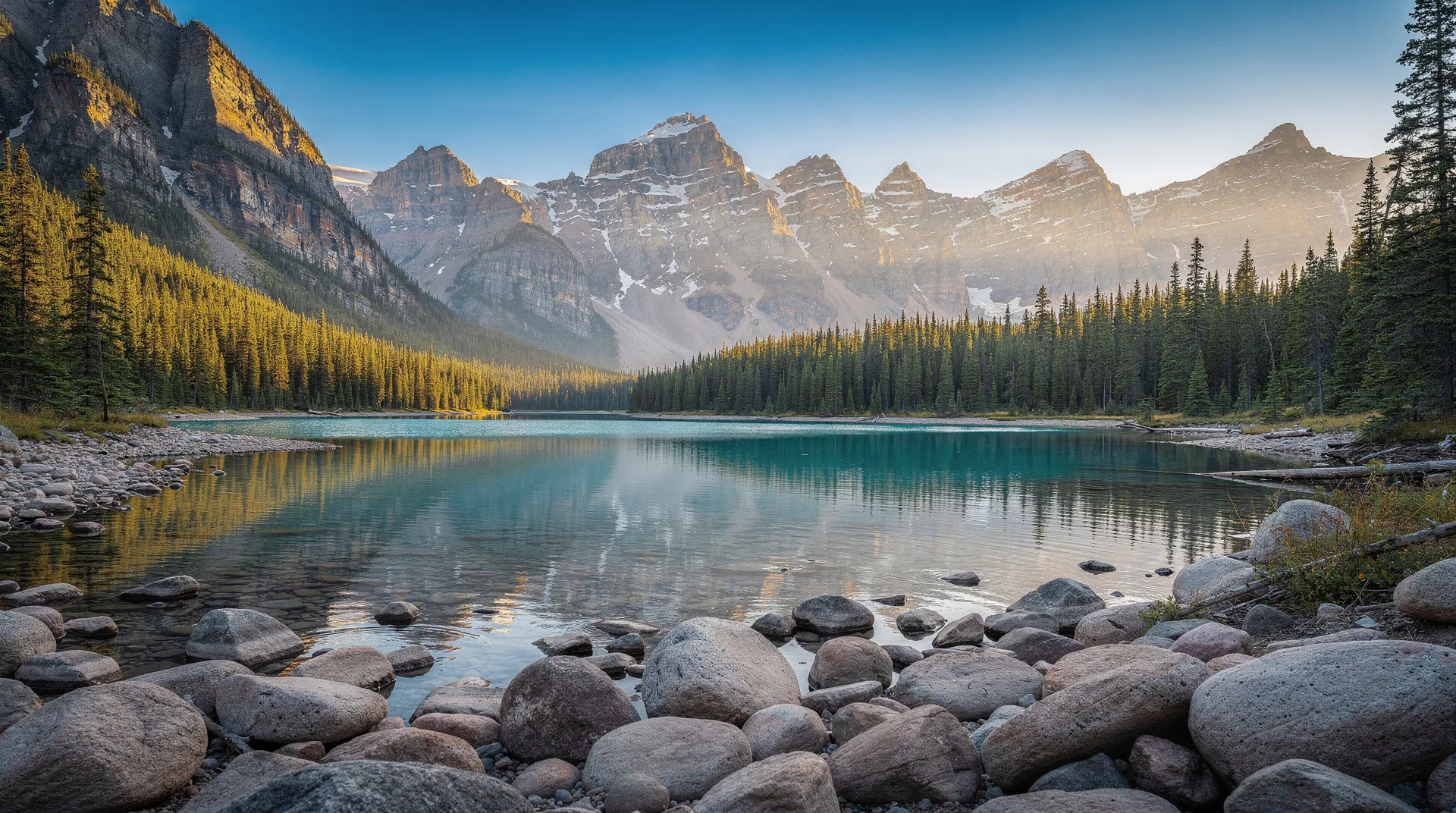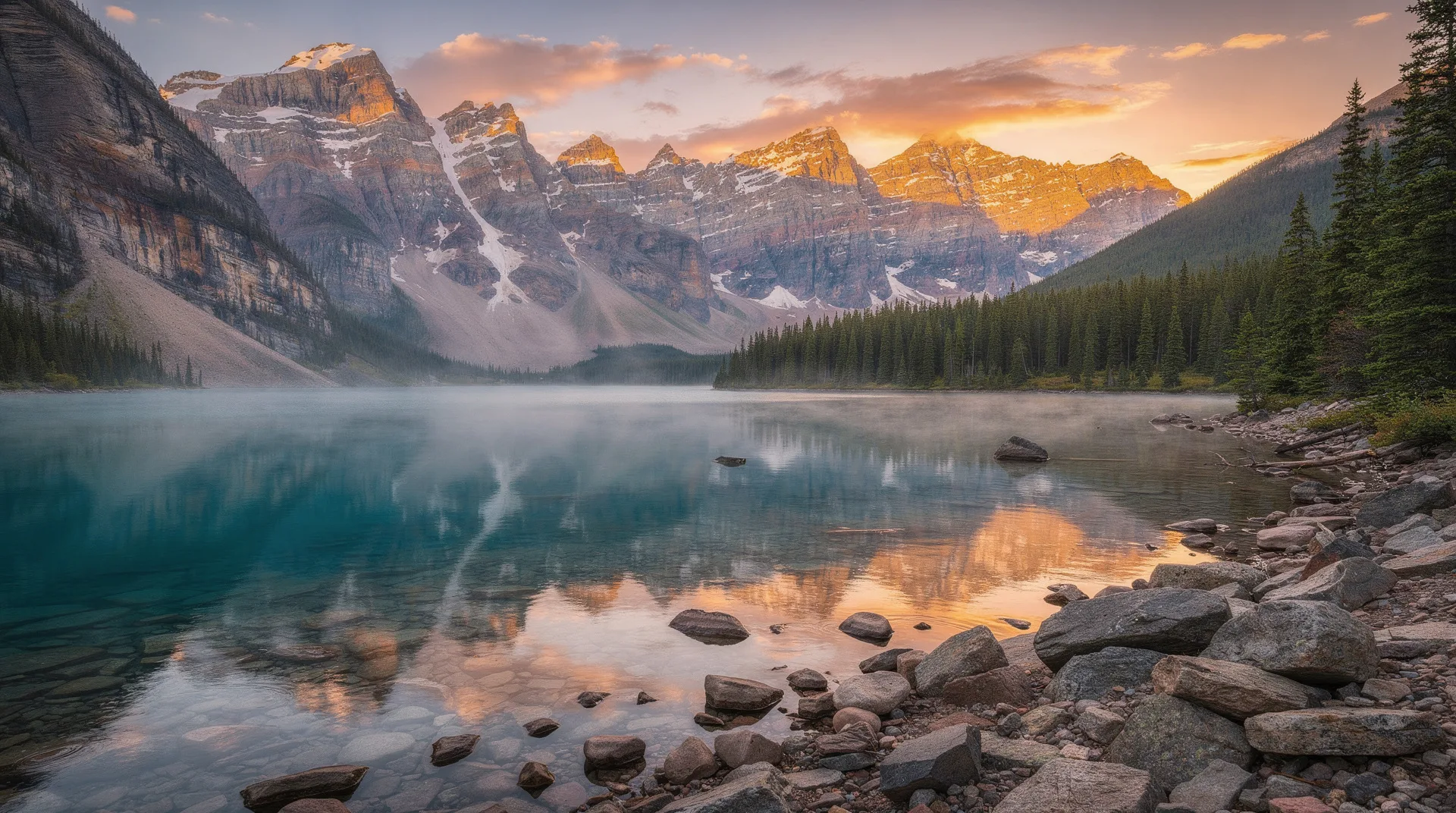
La Belle Province
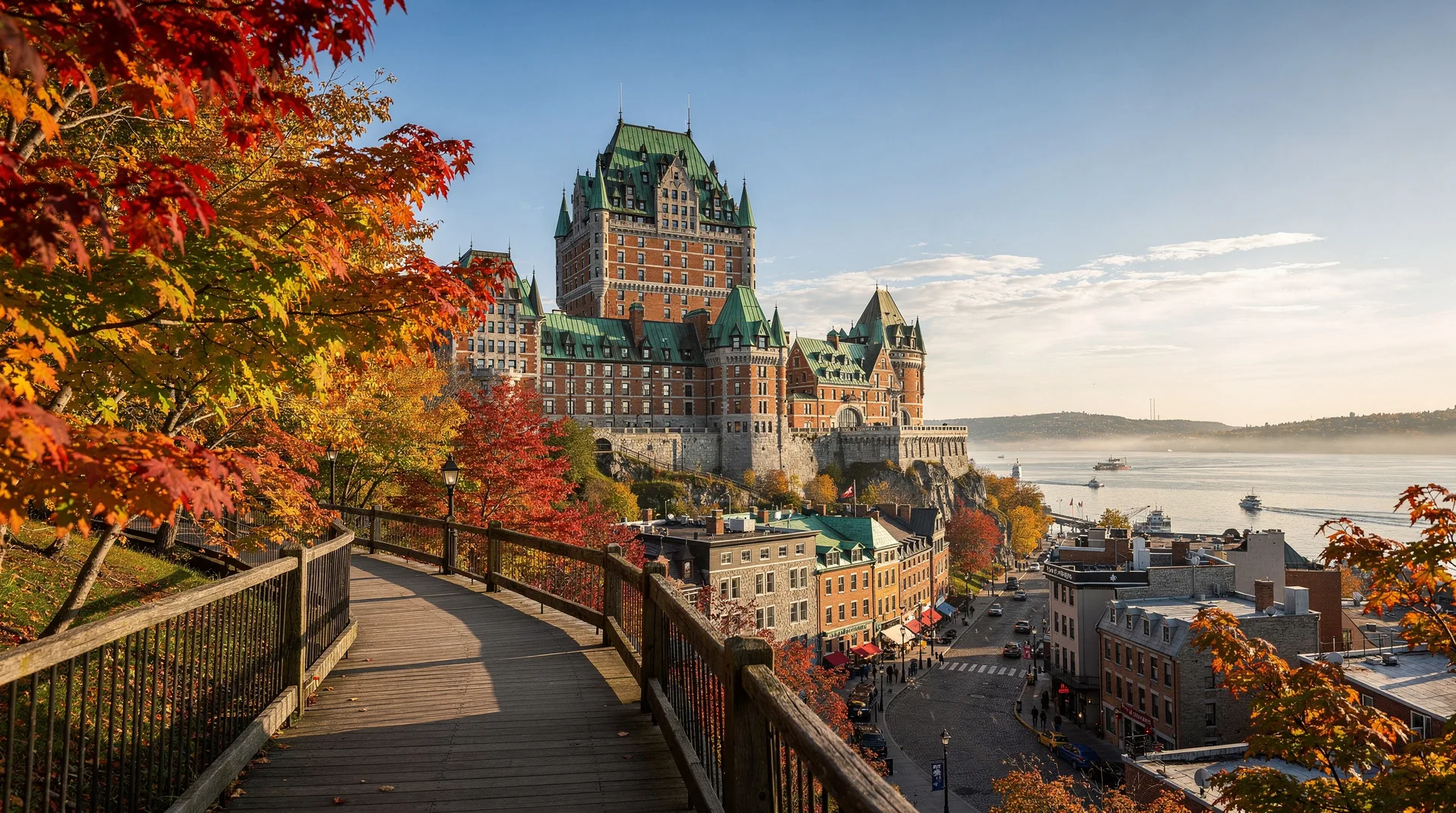
Stand on the terrace of the Chateau Frontenac at sunset, watch the St. Lawrence turn copper beneath you, and you understand within a minute why Quebec is unlike anywhere else in North America. The river below is 800 metres wide and still has another 700 kilometres to run before it empties into the Gulf. The stone ramparts behind you are the only surviving fortified city walls north of Mexico.
The language drifting up from the cafes in the Lower Town has been spoken here continuously since Samuel de Champlain planted the French flag on this cliff in 1608 — longer than any European language anywhere else on the continent, English included. Quebec is not a European theme park and not a Canadian afterthought. It is its own place, its own culture, with its own four centuries of accumulated character.
That character reveals itself most obviously in the two anchor cities — Montreal, the bilingual metropolis on the island, and Quebec City, the walled capital on the cliff — but those two together cover maybe a tenth of what Quebec actually is. East of the capital the St. Lawrence widens into an inland sea and the cliffs of Charlevoix fall straight into the water; beyond that the fjord at Tadoussac cuts inland for a hundred kilometres and blue whales feed at its mouth.
North of Montreal the Laurentian Mountains begin, and they run unbroken for a thousand kilometres up toward the tundra. Eastward, past the great bend where the river becomes the Gulf, the Gaspesie peninsula juts into the Atlantic like a fist, ending at a six-hundred-metre limestone rock pierced by an arch the sea is slowly carving wider.
Most first-time visitors do Montreal and Quebec City over five to seven days and leave dazzled. They should. But the province rewards more time the way few places in Canada do, and a second week — spent on the river, in the mountains, or out on the peninsula — tends to be the one travellers remember longest.
| Where | Eastern Canada, along the St. Lawrence River |
| Cost | Mid-range; Montreal and Quebec City hotels roughly CAD 150-300/night in summer, considerably less in shoulder season |
| Time needed | 5-7 days for the two cities; 10-14 days to add the mountains, Charlevoix, and Gaspesie |
| Getting there | Fly into Montreal-Trudeau (YUL) or Quebec City (YQB); VIA Rail links Montreal and Quebec City in around 3 hours |
| Best time | June to September for outdoor activity and festivals; February for winter carnival; late September to mid-October for fall colour |
Language planning matters more here than anywhere else in Canada. A little French — even a handful of phrases — changes the texture of a visit, and it is worth reading up on the essentials of Canadian food culture before diving into Quebec’s own distinct table, which runs well beyond poutine into cheese, cider, and maple traditions found nowhere else in the country.
The cities
Montreal
Montreal occupies an island in the St. Lawrence and climbs around the wooded hill — Mont Royal — from which it takes its name. From the observation chalet at the summit, on a clear day, the metropolitan sprawl unfolds to the horizon: the grid of the downtown, the industrial docklands along the river, the green ribbon of the Plateau with its iron staircases curling up the facades of the duplex houses, and beyond that the South Shore and the low hills of the Eastern Townships on the horizon line.
The city’s genius lies in the way its neighbourhoods layer together without dissolving into each other. Old Montreal (Vieux-Montreal), built around the fortified town of New France, is the architectural set-piece — cobblestone streets radiating from the Place d’Armes, the neo-Gothic interior of Notre-Dame Basilica with its deep-blue ceiling studded with gold stars, the harbour-side Marche Bonsecours with its silver dome.
Ten minutes north, the Plateau-Mont-Royal is the bohemian heart of the city, a grid of low-rise brick streets where the best cafes, independent restaurants, and bookstores concentrate and where the exterior staircases mean every summer evening becomes a kind of shared neighbourhood life. Further east, the Gay Village and Hochelaga; west, Mile End and Outremont with their Jewish bakeries and Hasidic enclaves; downtown, the French and English retail arteries of Sainte-Catherine Street.
Montreal’s festival calendar is unmatched in North America. The International Jazz Festival in late June and early July closes central streets and brings in over two million spectators across ten days. Just for Laughs in July is the world’s largest comedy festival. Osheaga in early August headlines international pop acts in Parc Jean-Drapeau on the island in the river. In winter the festival season shifts indoors but never stops — Montreal en Lumiere in February, the Igloofest electronic-music festival in the Old Port with parkas over rave gear, Nuit Blanche drawing tens of thousands through subzero nights.
Book Montreal tours and experiencesFood is the city’s other obsession. Poutine was born in rural Quebec but found its urban apotheosis here — La Banquise on the Plateau runs 24 hours with three dozen variations; Au Pied de Cochon elevates Quebec soul food to something bordering on the absurd, with foie-gras poutine and entire duck-fat-roasted suckling pig. The Jean-Talon Market in Little Italy is one of the great open-air produce markets of North America, and between May and October its aisles are the clearest possible introduction to what Quebec’s farms, cheesemakers, orchardists, and charcutiers are doing.
Book Old Montreal walking tours and boat cruisesQuebec City
Quebec City, 270 kilometres upriver, is the most European city in North America and makes the case visually within the first ten minutes of arrival. The walled upper town (Haute-Ville) sits atop Cap Diamant, a 100-metre cliff falling straight to the river; the lower town (Basse-Ville) occupies the narrow strip of flat land along the water, its streets so tight between the cliff and the harbour that the connecting stairways (the famous Breakneck Steps) are genuinely steep. The funicular links the two for those less inclined to climb.
The Chateau Frontenac crowns the skyline from the Plains of Abraham above the river — a copper-roofed confection that began in 1893 as a CPR railway hotel and has quietly become, by some accounts, the most photographed hotel on earth. Its terrace, Dufferin Terrace, runs the length of the cliff edge and is the single best free viewpoint in the city; in winter a toboggan run operates from its upper end, a tradition older than the hotel itself. Old Quebec was added to the UNESCO World Heritage list in 1985, and forty years on the designation has meaningfully protected the urban fabric — paint colours, storefront signage, the cobblestones themselves are governed by preservation standards that keep the city from sliding into pastiche.
Book Quebec City walking tours, day trips and experiencesThe seasonal calendar shapes a visit here more than in Montreal. Summer means the Festival d’ete de Quebec in July, when the Plains of Abraham become a stadium for international pop acts — Paul McCartney, Metallica, the Rolling Stones have all played the Plains. Autumn brings the fall colour and the quieter shoulder-season weeks that are arguably the best time of all to be here. Winter is the city’s signature season: the Quebec Winter Carnival in late January and February is the world’s largest winter festival, and the Old Town is dressed in lights and snow through December and January for the Christmas markets. Spring is short, muddy, and redeemed by the sugar-shack season in the surrounding countryside.
The mountain playgrounds
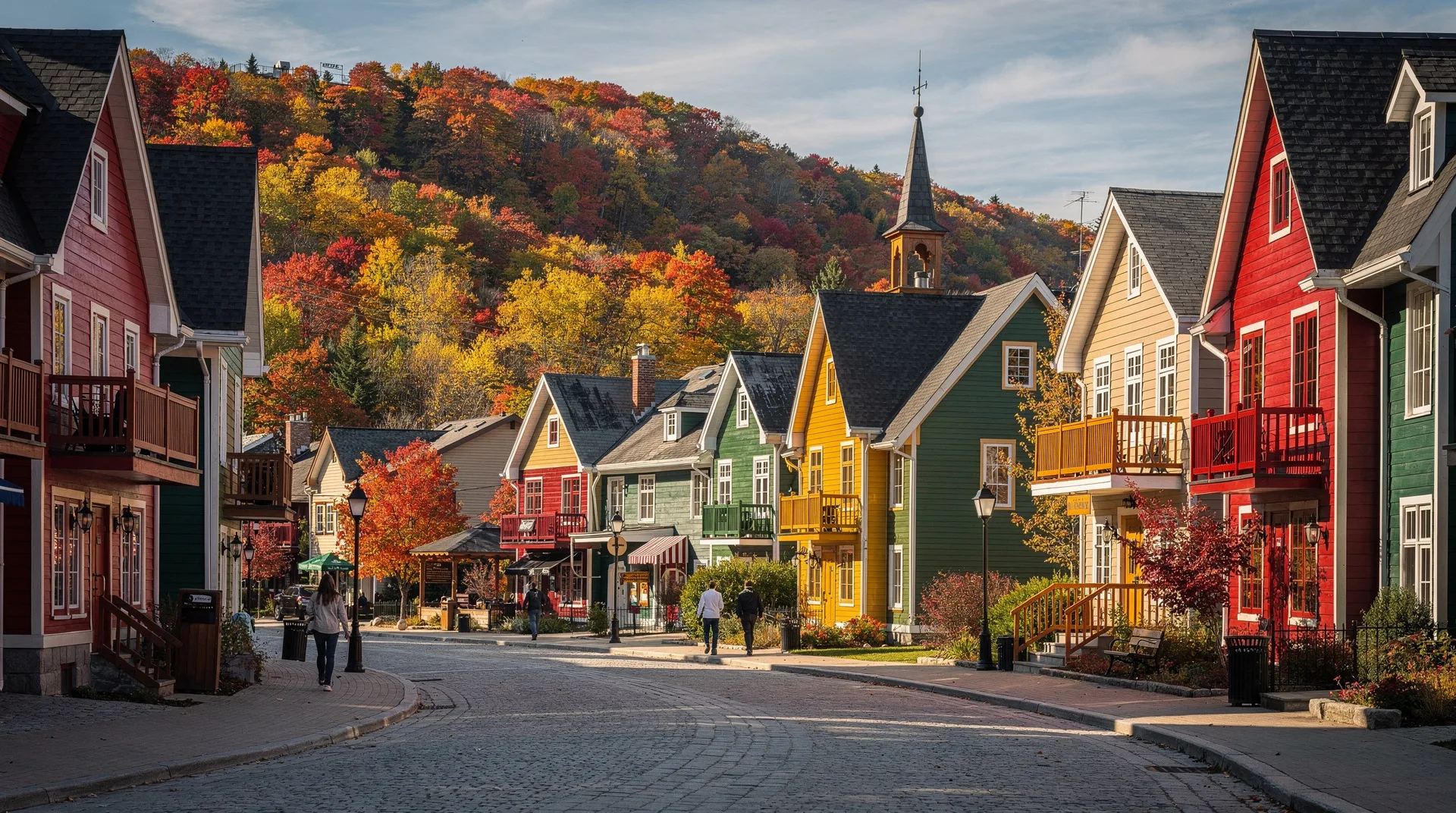
North and east of Montreal, Quebec’s mountain country opens out in three distinct directions, and all three are within easy reach of the metropolis for a weekend or a week.
The Laurentians (Les Laurentides) begin an hour north of Montreal and rise into a range of low forested peaks riddled with lakes. The region functions as greater Montreal’s playground — cottages, ski hills, cycling trails, summer camps — and does so gracefully.
The P’tit Train du Nord, a 234-kilometre linear rail-trail from Bois-des-Filion to Mont-Laurier, runs the spine of the region and is one of the finest long-distance cycling routes in Quebec; accommodations and cafes at stations along the way make multi-day trips easy. Villages like Saint-Sauveur, Sainte-Adele, and Val-David anchor the lower Laurentians, each with its own weekend character — Saint-Sauveur for outlet shopping and nightlife, Val-David for artisans and climbers.
The star of the Laurentians is Mont-Tremblant, a purpose-built ski village at the base of the highest peak in the range. It is, without much competition, the best-designed ski resort in eastern North America — a pedestrian village of painted facades and covered walkways styled after a Quebec town, with the mountain rising directly behind and gondola access from the main square.
The mountain itself has 102 trails over two faces, 14 lifts, and averages five metres of snow a season between late November and early April. In summer the same infrastructure pivots to mountain biking, an 18-hole championship golf course, kayaking on Lac Tremblant, and the lift-served hiking that ends at the summit observatory with 360-degree views to the horizon. The shoulder weeks in late September and early October, when the maple and birch forests on the mountain turn scarlet and gold, are as beautiful as any landscape in the province.
Book Mont-Tremblant tours and outdoor experiencesSoutheast of Montreal, the Eastern Townships (Cantons-de-l’Est) spread across the rolling country between the St. Lawrence plain and the Vermont border — a softer, more pastoral landscape than the Laurentians, with vineyards, apple orchards, covered bridges, and a string of lake towns (North Hatley, Magog, Sutton) that were originally colonized by Loyalists fleeing the American Revolution.
The region has the province’s highest concentration of wineries and cideries, a serious cheese-making tradition (the Abbaye de Saint-Benoit-du-Lac produces some of Canada’s most respected blues), and ski mountains like Bromont, Owl’s Head, and Mont-Orford that are smaller than Tremblant but less crowded and often more character-full. Autumn in the Townships is spectacular — the microclimates around the lakes slow the foliage and stretch the season a full three weeks longer than at higher elevation.
Along the St. Lawrence
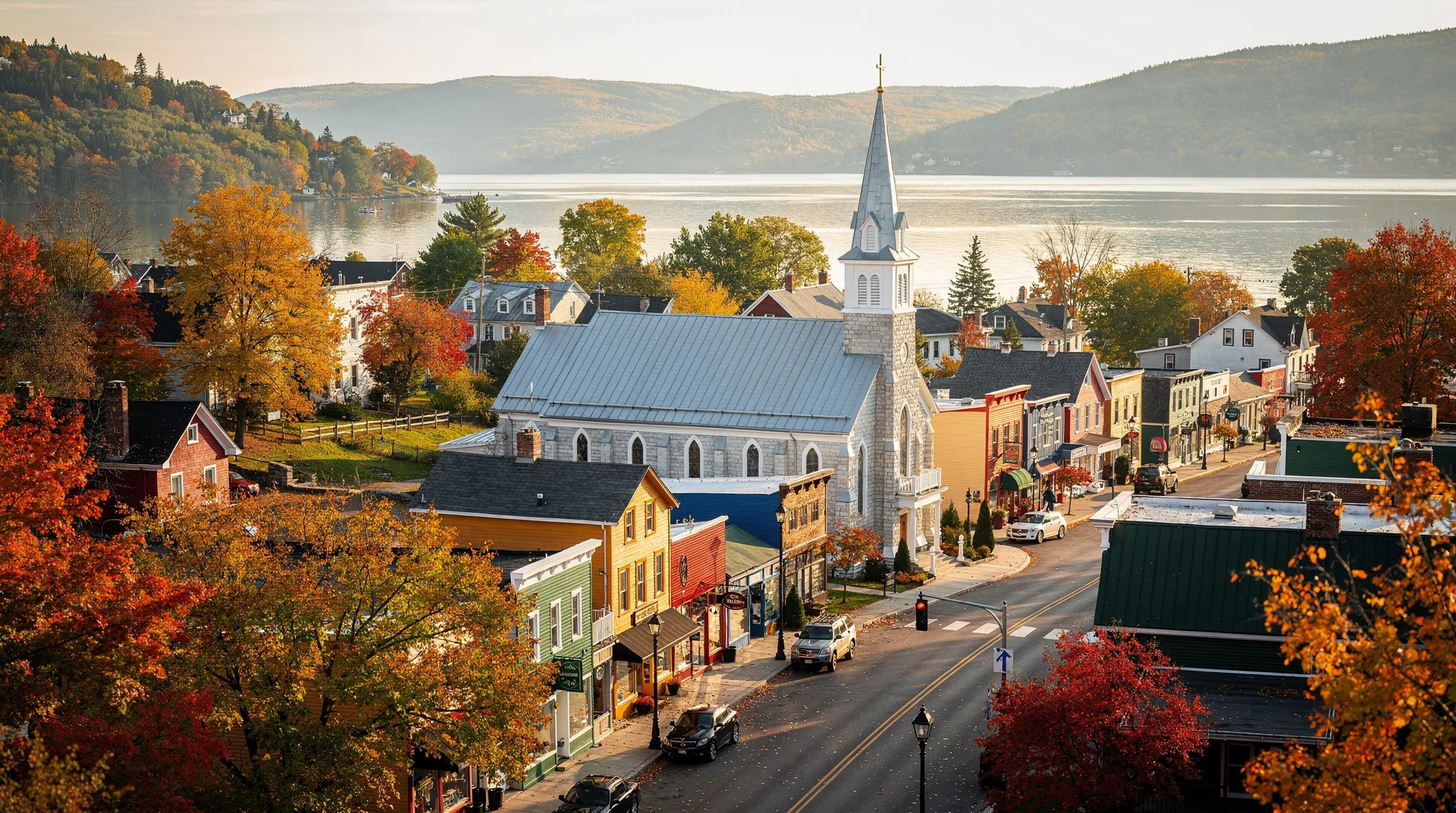
The river east of Quebec City is where Quebec gets genuinely dramatic. The highway narrows, the cliffs rise, and the landscape that unfolds over the next three hundred kilometres is some of the most spectacular in eastern Canada.
Charlevoix begins ninety minutes north of Quebec City and runs for about 200 kilometres along the north shore. It is a region of remarkable geological and cultural coherence — the whole thing sits inside a 56-kilometre-wide meteorite impact crater, the Charlevoix Astrobleme, created 350 million years ago. The minerals from that impact produced unusual soils that support the distinctive Charlevoix agriculture: rocky-hillside lamb, small-batch cheeses (Migneron, Victor et Berthold), cider, grains.
The light here has drawn painters since the 19th century — the Group of Seven worked here, Clarence Gagnon spent decades here — and the region’s artistic identity survives in the galleries of Baie-Saint-Paul, where more art dealers per capita concentrate than almost anywhere in Quebec. The Route des Saveurs, an official agri-tourism circuit, connects farms, cheesemakers, boulangeries, and restaurants through the whole region; the Train de Charlevoix runs a tourist railway along the cliff edge from Quebec City to La Malbaie, one of the most dramatically positioned rail journeys in the province.
Book Charlevoix tours and experiencesAt the eastern end of Charlevoix, the Saguenay River enters the St. Lawrence through a fjord of extraordinary proportions, and the village of Tadoussac sits on the sandy headland at the confluence. The underwater topography here — deep channels, cold nutrient-rich upwellings — creates one of the richest marine feeding environments in the world.
Beluga whales, the resident white whales of the St. Lawrence, are present year-round and often visible from the beach. In summer the larger species arrive: minke, fin, humpback, and blue whales (the largest animals ever to have lived) all feed at the fjord mouth from June through October. Tadoussac itself is a small, wooden village dominated by the red-roofed Hotel Tadoussac, and a visit organises itself effortlessly around morning and afternoon Zodiac excursions.
Book Tadoussac whale-watching cruisesFollow the Saguenay upstream from Tadoussac and you enter Saguenay-Lac-Saint-Jean, one of the least-visited corners of Quebec by international travellers and one of the most rewarding. The fjord runs a hundred kilometres inland with 270-metre-deep water and rock walls rising 300 metres sheer from the surface — the Parc National du Fjord-du-Saguenay protects both banks and has trails along the cliff-edge tops with views that compete credibly with Norway.
Past the fjord the river opens into Lac-Saint-Jean itself, a vast, shallow, nearly perfectly round lake ringed by farmland and the cycling circuit called the Veloroute des Bleuets — 256 kilometres around the lake through blueberry country, served by gites and country inns and comfortably done in five to seven days. The region’s cultural identity is unusually distinct even within Quebec: the Saguenay accent is recognisable anywhere in the province, and the bleuet — the wild blueberry that grows in profusion on the Canadian Shield here — is the regional symbol, worked into everything from pies to wine to beer.
Book Saguenay tours and fjord cruisesPast Tadoussac the St. Lawrence becomes the Cote-Nord — the North Shore — and the scale shifts again. The coast from Tadoussac east to Blanc-Sablon on the Labrador border stretches more than 1,200 kilometres, much of it accessible only by the Route des Baleines (Highway 138) that runs its length, and beyond Natashquan by boat or plane.
This is Quebec at its most remote: a coastline of salmon rivers, Innu First Nations communities, old fishing villages, and the vast boreal forest running north into the tundra. The Mingan Archipelago National Park Reserve protects a cluster of limestone islands sculpted by the sea into mushroom-shaped monoliths. The road trip from Quebec City to Natashquan, at the end of the paved highway, takes three days each way and passes through landscapes most visitors to Quebec never imagine exist.
The Gaspesie peninsula
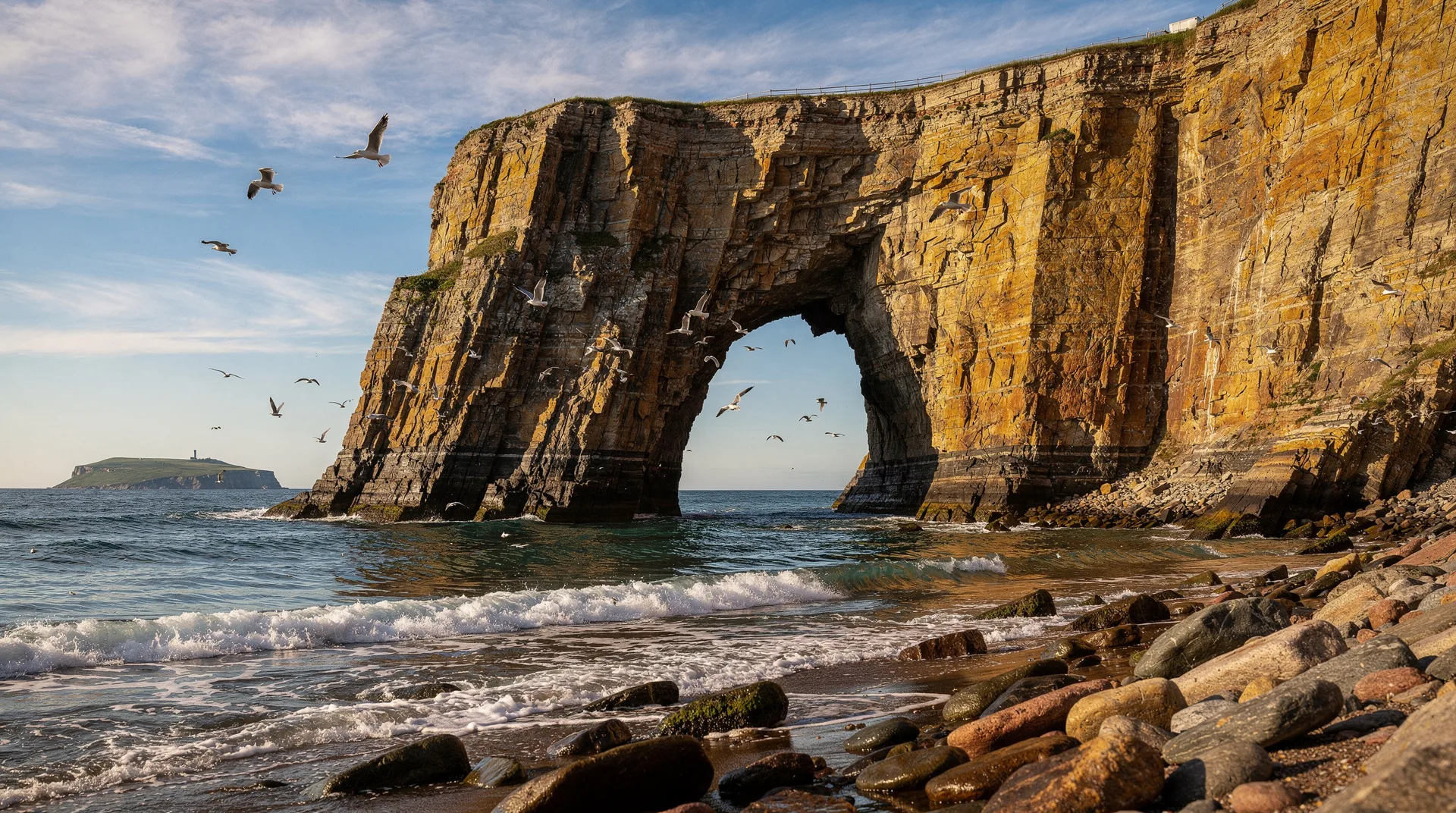
Gaspesie is the great Quebec road trip and arguably the greatest road trip in eastern Canada. The peninsula juts 300 kilometres into the Gulf of St. Lawrence from the eastern end of the province, with the St. Lawrence forming its northern shore, the Baie des Chaleurs its southern, and the Chic-Choc Mountains rising up its spine — the highest peaks in the Appalachian range east of the Rockies, with alpine tundra above the treeline on Mont Jacques-Cartier (1,268 metres) and one of the southernmost woodland caribou herds in Canada on the highland plateau.
The full peninsula circuit runs roughly 800 kilometres of coastline plus the inland highland loop, and nobody who drives it in fewer than five days feels they did it justice. Seven to ten days is the honest recommendation.
The peninsula’s visual climax is Perce Rock at the eastern tip — a limestone monolith 500 metres long and 88 metres high, pierced by a natural sea arch thirty metres tall and slowly being widened by the waves. At low tide you can walk across the sand bar to the base of the rock; at high tide the passage is under two metres of water. Offshore, Ile Bonaventure hosts one of the largest northern gannet colonies on earth — 110,000 birds nesting on the cliff faces from April through October, and a boat crossing plus a 4-kilometre hike puts you within metres of the outermost nests.
The sight, sound, and smell of it is one of the great wildlife experiences in eastern Canada. Forillon National Park, just before Perce on the approach, protects the peninsula’s easternmost headland with vertical cliffs dropping 200 metres to the Gulf and the restored historic fishing village of Grande-Grave at its heart. The International Appalachian Trail ends (or begins) at Forillon’s Cap-Gaspe, the continental terminus of the long chain.
Book Gaspesie tours and peninsula experiencesOn the way to and from the peninsula, Bas-Saint-Laurent — the lower St. Lawrence — is the 200-kilometre stretch of south-shore coastline between Quebec City and Sainte-Flavie, where the peninsula circuit begins. It is gentler country than Charlevoix across the river, with long agricultural flats, marine terraces, and the string of islands called the Iles de Kamouraska that produce some of Quebec’s most dramatic sunsets over the river.
Kamouraska village itself is one of the province’s prettiest. Rivière-du-Loup is the main town and the ferry port for crossings to the north shore. The region has a strong agri-tourism scene — salt-marsh lamb, seaweed products, artisanal smoked fish — and makes either a pleasant two-day stop on the way to Gaspesie or a worthwhile long-weekend destination in its own right.
Far out in the Gulf of St. Lawrence, 215 kilometres east of the peninsula, the Iles-de-la-Madeleine are a chain of sandy-red islands connected by causeways and accessible by ferry from Souris (Prince Edward Island) or by flight from Quebec City, Montreal, and Gaspe. The Madelinots have their own strong cultural identity, a distinctive Acadian-derived French, some of the best beaches in Canada (white and red sand, kilometres long, often empty), and a seafood culture dominated by lobster, snow crab, and the smoked herring the islands have been producing for a century. Visitors typically allocate five to seven days — the pace out here is deliberately unhurried, and the islands reward slowness.
Inland and less-visited
Three Quebec regions off the main tourist axis deserve more attention than they get.
Mauricie, halfway between Montreal and Quebec City along the St. Lawrence, is the region around the city of Trois-Rivieres and the vast forested park country to its north. Parc National de la Mauricie is one of the finest hiking and canoeing parks in southern Quebec — a network of 150 lakes connected by portage routes, autumn foliage that competes with anything in the Laurentians, and genuinely accessible wilderness within a two-hour drive of either major city.
Trois-Rivieres itself is the second-oldest city in Quebec after Quebec City (founded 1634), with a compact old town along the river and a growing food scene. The region is an easy overnight stop between the cities for travellers who want a taste of Quebec beyond the urban tourist circuits.
Outaouais, in the western corner of the province directly across the river from Ottawa, is the bilingual Quebec that most visitors never see. The city of Gatineau is effectively part of the national capital region but remains distinctly Quebecois in character. The Gatineau Park, just minutes from downtown, is 360 square kilometres of hills, lakes, and hiking trails with some of the most accessible fall foliage in the province. Further north, the region extends into the vast Laurentian forest — the same range as the ski country north of Montreal, but wilder and less developed here — with lodges, canoe routes, and the moose-rich backcountry that is a weekend staple for Ottawa residents.
Chaudiere-Appalaches, on the south shore opposite Quebec City, is the rolling agricultural country that supplied Quebec City with food for four centuries and still does.
Ile d’Orleans, just downstream from the capital and connected by a bridge, is the cultural heart of this agricultural tradition — a 34-kilometre loop road winds past strawberry farms, vineyards, cider producers, artisan cheese and chocolate shops, and the stone farmhouses of families who have farmed the same parcels since the 17th century. Further south, the Beauce region and the foothills of the Appalachians offer the quieter Quebec of sugar shacks, maple forests, and small farm-to-table restaurants well away from the tourist circuits.
Best things to do in Quebec
Walk Old Montreal and end at the basilica
A slow afternoon in Vieux-Montreal, starting from the Place d’Armes and working through the cobblestone grid to the Marche Bonsecours on the harbour, is the single best introduction to the city. The climax, for most visitors, is the interior of Notre-Dame Basilica — the neo-Gothic vaulting, the gilded altarpiece, and the deep-blue ceiling studded with thousands of gold stars. The nightly “AURA” sound-and-light show inside the basilica has become one of the city’s most popular evening attractions.
Explore the Old Town of Quebec City on foot
The compact Old Town of Quebec City is walkable in its entirety in a single day but rewards two. Start on the Dufferin Terrace, take the funicular (or the Breakneck Steps) down to Place Royale and the Petit-Champlain district in the Lower Town, work slowly back up through the Upper Town to the Citadelle and the Plains of Abraham. Stop for lunch at one of the restaurants on Rue Saint-Louis and dinner in the Lower Town after dark, when the lighting turns the stone facades gold.
Watch whales at the mouth of the fjord
A Zodiac tour out of Tadoussac into the confluence where the Saguenay meets the St. Lawrence is one of the great wildlife experiences in eastern Canada. Three-hour excursions typically encounter minkes, belugas (the resident population), and fin whales; mid-summer adds humpbacks; late summer brings the blue whales that most visitors have only read about. Bergeronnes, 25 kilometres east, offers smaller operators and sometimes better close encounters with the residents.
Drive the Gaspesie circuit
The Gaspesie peninsula circuit — Quebec City out along the north shore through Sainte-Anne-des-Monts, across to Perce and Forillon at the tip, back along the Baie des Chaleurs south shore — is one of the great Canadian road trips. Seven to ten days, 1,200 kilometres, and the combination of Perce Rock, the gannet colony on Ile Bonaventure, the alpine tundra of Mont Jacques-Cartier, and the old fishing villages along the coast adds up to something no other Canadian province can quite match.
Experience Quebec Winter Carnival
The Quebec Winter Carnival (Carnaval de Quebec), held each February, is the world’s largest winter festival and transforms Quebec City for three weeks into an open-air celebration of cold weather. The ice palace on the Plains of Abraham is rebuilt each year; the night parade led by Bonhomme, the snowman mascot, runs twice through the festival; the canoe race across the ice-floe-choked St. Lawrence is genuinely astonishing to watch. Bundle up, book early, and embrace the temperature.
Ski Mont-Tremblant or Le Massif
Quebec’s two premier ski destinations offer very different experiences. Mont-Tremblant is the full resort village — pedestrian base, 102 trails, high-speed gondola, a five-metre average annual snowfall and a season from late November to early April. Le Massif de Charlevoix, by contrast, has fewer trails (52) but drops from 770 metres directly to the St. Lawrence shoreline — the river fills the entire horizon from the upper runs, and no other ski area in North America has the view.
Cycle the Veloroute des Bleuets
The 256-kilometre loop around Lac-Saint-Jean in Saguenay-Lac-Saint-Jean is, by general consensus, the best multi-day cycling route in Quebec. Flat, well-signed, served by gites and inns along its length, and best done in July or August when the blueberry harvest is on and the roadside stands are selling pies, preserves, and fresh fruit by the basket. Five to seven days of riding, with rest days for the Zoo Sauvage at Saint-Felicien and the ghost town of Val-Jalbert.
Visit Ile d’Orleans and the Charlevoix food circuit
For food-focused travellers, the combination of Ile d’Orleans (in Chaudiere-Appalaches, just downstream from Quebec City) and the Route des Saveurs in Charlevoix is the most concentrated introduction to Quebec’s regional food culture anywhere in the province. Allow two days: one for the Ile d’Orleans loop with its strawberries, wineries, and cider houses; one for the Charlevoix farms, cheese producers, and Baie-Saint-Paul restaurants.
When to visit
Summer (June to September) is the high season and the season that shows Quebec at its most exuberant. Montreal’s festivals run continuously from mid-June through early September — Jazz, Just for Laughs, Osheaga, the Grand Prix — and outdoor terrasses colonise every street in the Plateau and Mile End. Quebec City fills with visitors in July and August; accommodation needs to be booked months ahead for the peak summer weeks and the Festival d’ete.
Whale-watching season is in full swing at Tadoussac from June; blue whales are most reliably sighted in late June and July. Gaspesie is open for business from late June through early October. Temperatures in the south of the province reach 25-30°C in July and occasional humidity that surprises first-time visitors. The north and the peninsula are cooler — expect 18-22°C and occasional chilly evenings.
Autumn (mid-September to late October) is many residents’ favourite season and with reason. The foliage in Mauricie, the Laurentians, the Eastern Townships, and especially Charlevoix and the Chic-Chocs of Gaspesie turns the forest scarlet, orange, and gold for about three weeks.
Higher elevations turn first (late September), valleys last (mid-October). The air is clear, the tourist crowds thin out sharply after Canadian Thanksgiving in early October, and the restaurants and accommodation shift into a quieter rhythm that many travellers find more rewarding than the summer intensity. Whale watching continues through early October; the last tours run the first week of October most years.
Winter (December to March) is a season to embrace rather than endure, and Quebec does this better than almost anywhere. Quebec City is dressed in lights through December and January; the Winter Carnival runs three weeks in late January and February; Montreal en Lumiere takes over the city for ten days in mid-February. The ski season at Mont-Tremblant, Le Massif in Charlevoix, and the Eastern Townships mountains runs late November to early April, with the best conditions typically January through March.
Cross-country skiing, snowshoeing, ice fishing on Lac-Saint-Jean, dog-sledding — these are part of daily Quebecois winter life, not tourist novelties. Temperatures are cold (-10 to -20°C is normal in January; extreme cold snaps reach -30°C) but the infrastructure for dealing with them is better than anywhere in the country.
Spring (April to mid-May) is the shortest and least glamorous of Quebec’s seasons — the snow melts, the ground thaws muddily, the trees stay bare until surprisingly late — but it has its own redeeming features. Sugar shack (cabane a sucre) season peaks in late March and April across rural Quebec, when the maple sap runs and families gather at converted farms for meals of pea soup, maple-glazed ham, and taffy poured over snow. It is one of the defining cultural experiences of the province and happens nowhere else in the world with this intensity. By mid-May the ice is off the lakes and the first cycling and hiking routes are opening.
Getting around
Montreal-Trudeau International Airport (YUL) is the main gateway for international arrivals, with direct connections across the Atlantic to Europe and North Africa, the US hub system, and the whole Canadian network. Quebec City (YQB) handles mostly domestic flights plus some seasonal charters. The Iles-de-la-Madeleine, Sept-Iles, Gaspe, and Mont-Tremblant all have regional airports served by Pascan Aviation or Air Canada Jazz.
VIA Rail operates the Quebec City-Windsor corridor, which covers the two main cities and the population spine of central Canada. The Montreal-Quebec City run is three hours in comfortable seats alongside the St. Lawrence — the most popular way for visitors to make the link between the two cities. Connections west go to Ottawa (2 hours), Kingston, Toronto (5 hours), and beyond. Twice weekly, the Chaleur service runs from Montreal through Bas-Saint-Laurent and along the south shore of the Gaspesie peninsula to Gaspe — an 18-hour journey that is itself a scenic experience.
Driving is the practical way to explore beyond the main cities. Rental car rates are reasonable; highways are well-maintained and well-signed (though signage is French-only outside the major tourist corridors); winter driving requires legally-mandated snow tires between December 1 and March 15. The Gaspesie circuit, Charlevoix, the Laurentians, the Eastern Townships, and the Cote-Nord all need a car.
Within Montreal, the STM Metro covers most of the tourist core, the BIXI bike-share operates from April through November with an extensive network of dedicated cycling lanes, and walking is a genuinely viable way to get around the downtown-Old Montreal-Plateau triangle. Within Quebec City, the Old Town is compact enough that a car becomes an inconvenience; save driving for day trips to Charlevoix or Ile d’Orleans.
Long-distance bus service via Orleans Express and Intercar covers the regional centres (Trois-Rivieres, Saguenay, Sept-Iles, Gaspe) at reasonable frequency but is best treated as a backup option rather than a primary travel mode.
Suggested itineraries
5 days: Montreal and Quebec City classic
Day 1 Arrive Montreal. Afternoon in Old Montreal: Place d’Armes, Notre-Dame Basilica, cobblestone streets to the Marche Bonsecours on the harbour. Dinner in Old Montreal or the Plateau.
Day 2 Morning at the summit of Mont Royal for the panorama. Afternoon in the Plateau-Mont-Royal with a stop at the Jean-Talon Market in Little Italy. Evening at a jazz club or whatever festival is running.
Day 3 Travel to Quebec City on the VIA Rail morning train (3 hours alongside the St. Lawrence). Check in, walk the Dufferin Terrace and the Plains of Abraham in the afternoon.
Day 4 Full day in Old Quebec: Upper Town in the morning, funicular down to the Lower Town for lunch, Petit-Champlain district and the Place Royale in the afternoon, dinner along Rue Saint-Jean.
Day 5 Day trip to Montmorency Falls and Ile d’Orleans (or Baie-Saint-Paul in Charlevoix if the weather cooperates). Evening return to Quebec City or Montreal for departure.
10 days: La Belle Province in depth
Days 1-3 Montreal, as above — the Old Town, Mont Royal, the Plateau, Jean-Talon Market, and at least one festival evening.
Day 4 Drive north to Mont-Tremblant (2 hours). Afternoon in the pedestrian village, gondola to the summit for views.
Day 5 Hiking or cycling in the Laurentians — a section of the P’tit Train du Nord or a day in Parc du Mont-Tremblant.
Day 6 Drive to Quebec City via Trois-Rivieres in Mauricie (4 hours total). Afternoon arrival and evening walk in the Old Town.
Days 7-8 Quebec City — full exploration of the Upper and Lower Towns, the Plains of Abraham, the Citadelle, and a meal in the Lower Town after dark.
Day 9 Drive to Tadoussac via the Charlevoix route (3.5 hours with stops). Afternoon whale-watching tour at the fjord mouth.
Day 10 Morning in Charlevoix — Baie-Saint-Paul galleries, a stop at Le Massif — return to Quebec City or Montreal for departure.
2 weeks: the full loop including Gaspesie
Days 1-3 Montreal.
Days 4-5 Mont-Tremblant and the Laurentians.
Day 6 Drive to Quebec City via the Mauricie.
Days 7-8 Quebec City.
Day 9 Charlevoix drive — Baie-Saint-Paul, Isle-aux-Coudres, La Malbaie, overnight at the Manoir Richelieu or at the Germain Charlevoix at Le Massif.
Day 10 Continue east along the north shore to Tadoussac. Afternoon whale-watching Zodiac. Overnight at the Hotel Tadoussac.
Day 11 Ferry across the St. Lawrence to the south shore and drive east through Bas-Saint-Laurent. Overnight at Kamouraska or Rivière-du-Loup.
Days 12-13 Into Gaspesie. North-shore route through Sainte-Anne-des-Monts with a day in Parc de la Gaspesie, overnight near Perce, full day at the rock and Ile Bonaventure gannet colony.
Day 14 Forillon National Park in the morning, long drive back along the south-shore route (or fly out of Gaspe for travellers on a tight schedule). For those with more time, add three days for the Iles-de-la-Madeleine by ferry from PEI or direct flight.
Planning the Montreal-Quebec City link
Travellers weighing options between the two anchor cities have more choice than the province’s reputation for VIA Rail suggests. A dedicated Montreal to Quebec City comparison lays out the train-versus-drive-versus-bus trade-offs in detail, and for visitors debating which city deserves more days, Quebec City vs Montreal and the first-timer-focused Quebec City vs Montreal for first-timers both go deeper than the overview above.
Rail enthusiasts extending a Quebec trip into a wider Canadian rail journey should also read Rocky Mountaineer vs VIA Rail and the province-specific VIA Rail within Quebec guide before booking, since the Corridor service and the scenic long-distance routes are priced and scheduled very differently.
For visitors building a longer itinerary, From Montreal and From Quebec City cover the best day trips and multi-day extensions from each base, including the Laurentians, Eastern Townships, and Charlevoix routes described above.
Frequently asked questions about Quebec
Do I need to speak French to visit Quebec?
No, though a few words go a genuinely long way. In Montreal, essentially all service workers in tourist areas speak functional English, and many are fully bilingual. Quebec City’s Old Town is also comfortably bilingual. Charlevoix, Saguenay-Lac-Saint-Jean, the north shore, and rural areas generally are more francophone, and while English is usually understood in tourism-facing businesses, everyday interactions default to French. Learning the basic pleasantries — bonjour, merci, s’il vous plait, parlez-vous anglais, au revoir — is warmly appreciated everywhere and genuinely useful in the smaller communities.
When is the best time to see the fall colours?
Peak foliage arrives in a predictable wave from north to south and from high elevation to low. The Chic-Chocs of Gaspesie and the interior of Saguenay-Lac-Saint-Jean turn first, typically in mid-to-late September. Charlevoix, the Laurentians, and the higher Eastern Townships peak late September to early October. The lower Eastern Townships and Ile d’Orleans peak mid-October. Plan for a five-to-seven-day window within which conditions are reliable and the landscape is genuinely transformed.
How do I get between Montreal and Quebec City without a car?
VIA Rail’s Corridor service runs multiple daily trains in each direction, takes three hours, and costs roughly C$50-120 one-way depending on how far ahead you book. Business class includes a meal. The train is preferred over the equivalent bus service (Orleans Express, 3-3.5 hours, slightly cheaper) for both comfort and the river views on the eastern portion of the route.
Is the Gaspesie circuit worth the drive?
Yes, with an important caveat: budget enough time. Gaspesie rewards slowness. Five days is the minimum to drive the full circuit without feeling rushed; seven days is the honest recommendation; ten days allows serious time in Parc de la Gaspesie, Forillon, and the Baie des Chaleurs south shore. Travellers who try to do the peninsula in three or four days tend to leave exhausted and underwhelmed. Travellers who give it a full week leave converted.
Can I do Quebec City as a day trip from Montreal?
Technically yes, but it is a poor use of the destination. Three hours each way on the train (six hours round-trip) for a few hours in the Old Town does not do the city justice, and the evening — when the lighting on the stone facades is at its best and the restaurant scene comes alive — is arguably the most memorable part of a visit. Plan on at least one overnight, ideally two.
What is poutine and where should I try it?
Poutine is french fries topped with fresh cheese curds and brown gravy, invented in rural Quebec in the late 1950s and now the province’s defining comfort food. In Montreal, La Banquise on Rue Rachel is the classic (open 24 hours, dozens of variations); Au Pied de Cochon elevates it to a fine-dining level, including a famous foie-gras version. In Quebec City, Chez Ashton is the local chain with a cult following. Rural Quebec, especially in the Saguenay and the Beauce, has a tradition of poutine that city versions can only approximate — anywhere serving the fresh curds that still squeak is a good starting point.
Is winter travel in Quebec actually feasible for visitors?
Very much so, and increasingly popular. Quebec has the best winter infrastructure in Canada — heated Metro stations, heated underground pedestrian networks in both major cities, legally-mandated winter tires on all vehicles, and a cultural embrace of the season that other Canadian provinces lack. Dress for it (proper insulated boots and a real winter coat are non-negotiable; temperatures of -15 to -20°C are routine in January), book accommodation around the Winter Carnival well ahead, and consider pairing city time with a few days of cross-country skiing in the Laurentians or downhill at Mont-Tremblant. Winter is arguably when Quebec is most itself.
How does Quebec compare to Ontario for a first-time visit to Canada?
Different countries, essentially. Ontario (Toronto, Niagara, Ottawa) gives a classic Anglo-Canadian urban experience with world-class museums, major league sports, and the iconic Niagara Falls. Quebec gives European-flavoured urbanism, a distinct francophone culture, older architecture, more dramatic landscapes within a shorter drive, and a winter tradition no other province matches.
For travellers choosing between them on a single trip: Ontario for a first-time classic Canadian sampler, Quebec for something genuinely different from anywhere else on the continent. Travellers with ten days or more can combine both comfortably via the Montreal-Ottawa-Toronto train corridor. See Toronto vs Montreal for a direct comparison.
Should I book VIA Rail or the Rocky Mountaineer for a Quebec-to-Rockies trip?
They serve different purposes and are not really comparable on price. VIA Rail’s Quebec Corridor and long-distance trains (the Canadian) are practical, reasonably priced transport; the Rocky Mountaineer is a separate, much more expensive, daytime-only sightseeing operator that runs in Western Canada, not Quebec. Travellers combining a Quebec trip with the Rockies should read Rocky Mountaineer vs VIA Rail before budgeting, since the two are easy to confuse but cost very differently.
Is Montreal or Quebec City better for a first visit if I can only pick one?
Montreal for travellers who want festivals, food diversity, and a bigger bilingual city; Quebec City for travellers who want the walled-town atmosphere and a more compact, walkable historic core in a shorter visit. Most first-timers with five or more days do both via the three-hour train link rather than choosing; see Quebec City vs Montreal for first-timers for a fuller breakdown.
Explore destinations in Quebec
15 places to discover across the region — from headline cities to hidden villages. Tap a card to dive in.
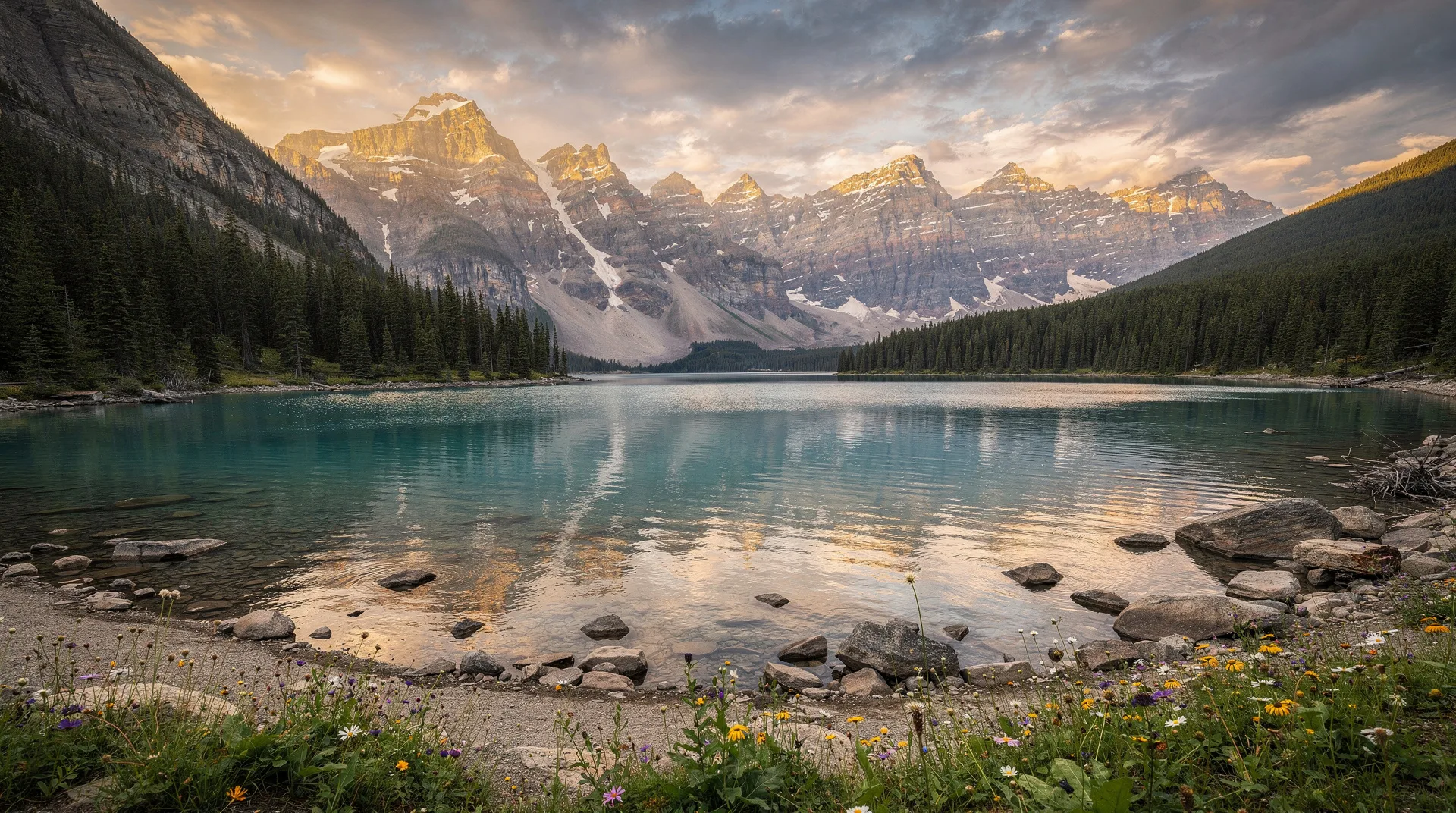
Montreal
Guide to Montreal: Old Montreal, Mont Royal, Jean-Talon market, poutine, festivals, and where to stay in Quebec's cultural capital.
Explore MontrealQuebec City
Complete guide to Quebec City: UNESCO Old Quebec, Château Frontenac, Plains of Abraham, Montmorency Falls, Winter Carnival, and where to stay.
Explore Quebec CityMontréal & the Laurentians4
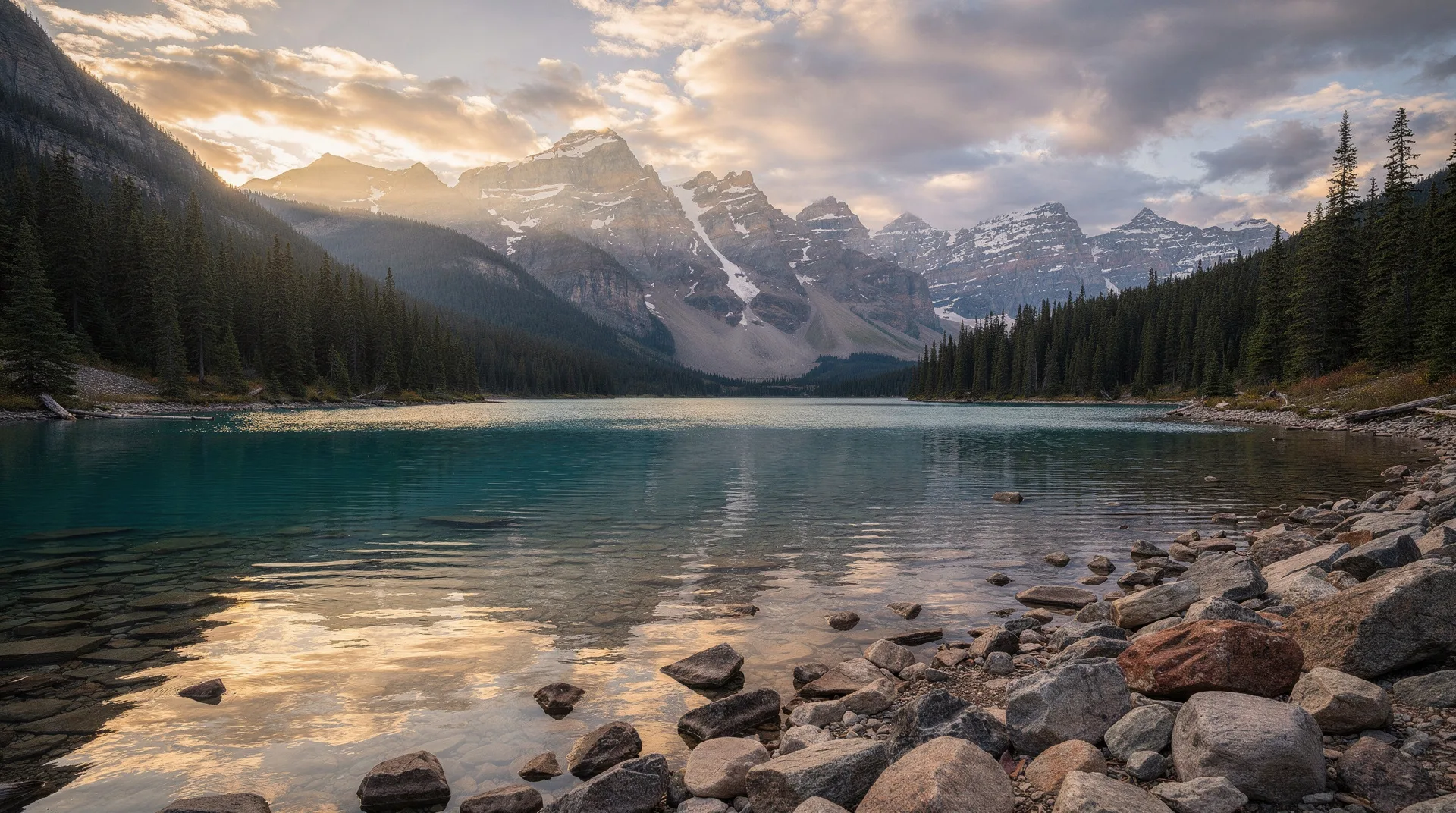
Laurentians
Discover the Laurentians north of Montreal: ski resorts, Mont-Tremblant village, the P'tit Train du Nord trail, and spectacular fall foliage.
Mont-Tremblant
Discover Mont-Tremblant: Quebec's premier ski resort in the Laurentians, a charming pedestrian village, world-class outdoor activities year-round.
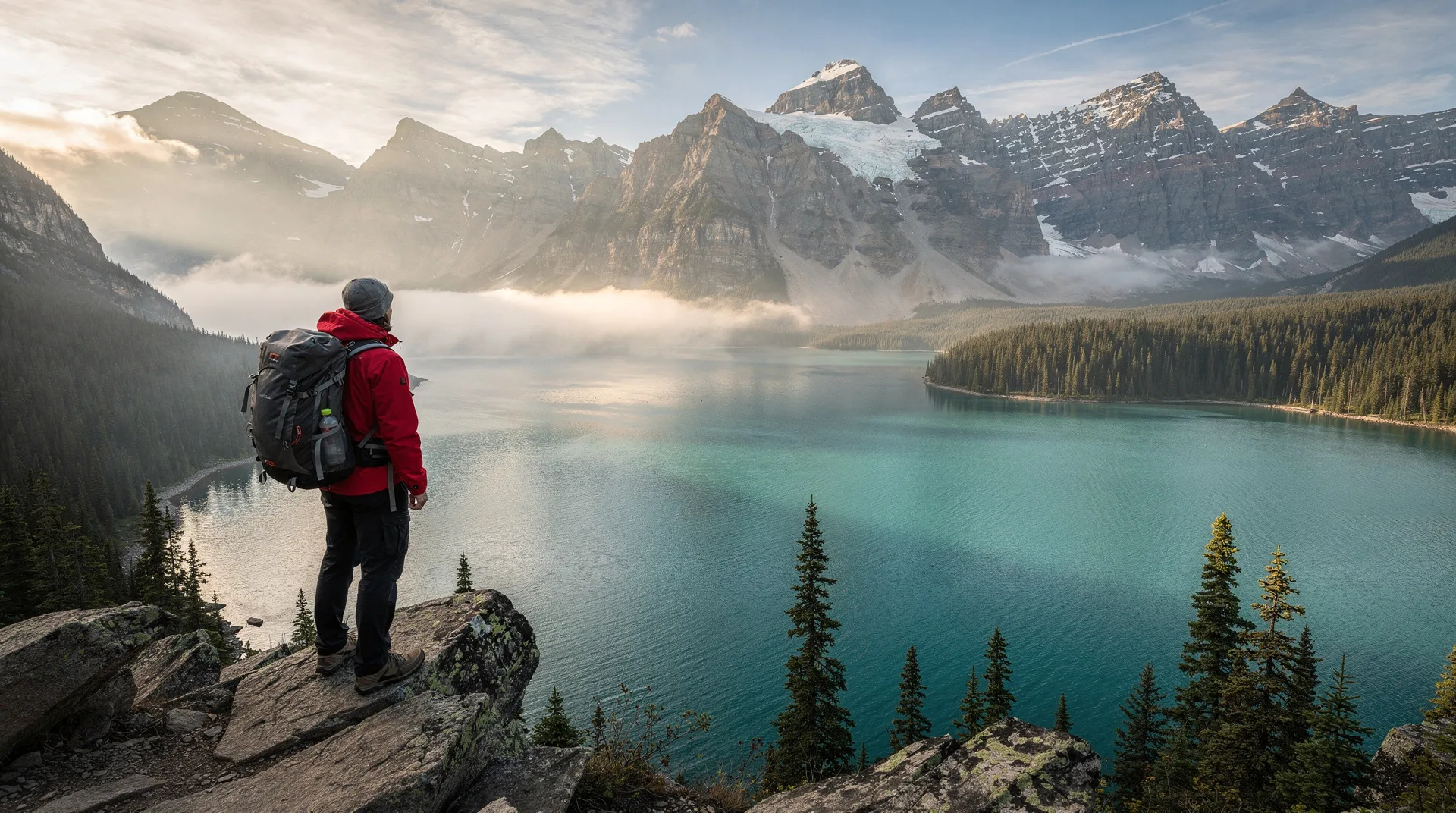
Outaouais
Outaouais is Quebec's gateway to Canada's capital — Gatineau Park, the Canadian Museum of History, Nordik Spa-Nature, and the Gatineau Hills.
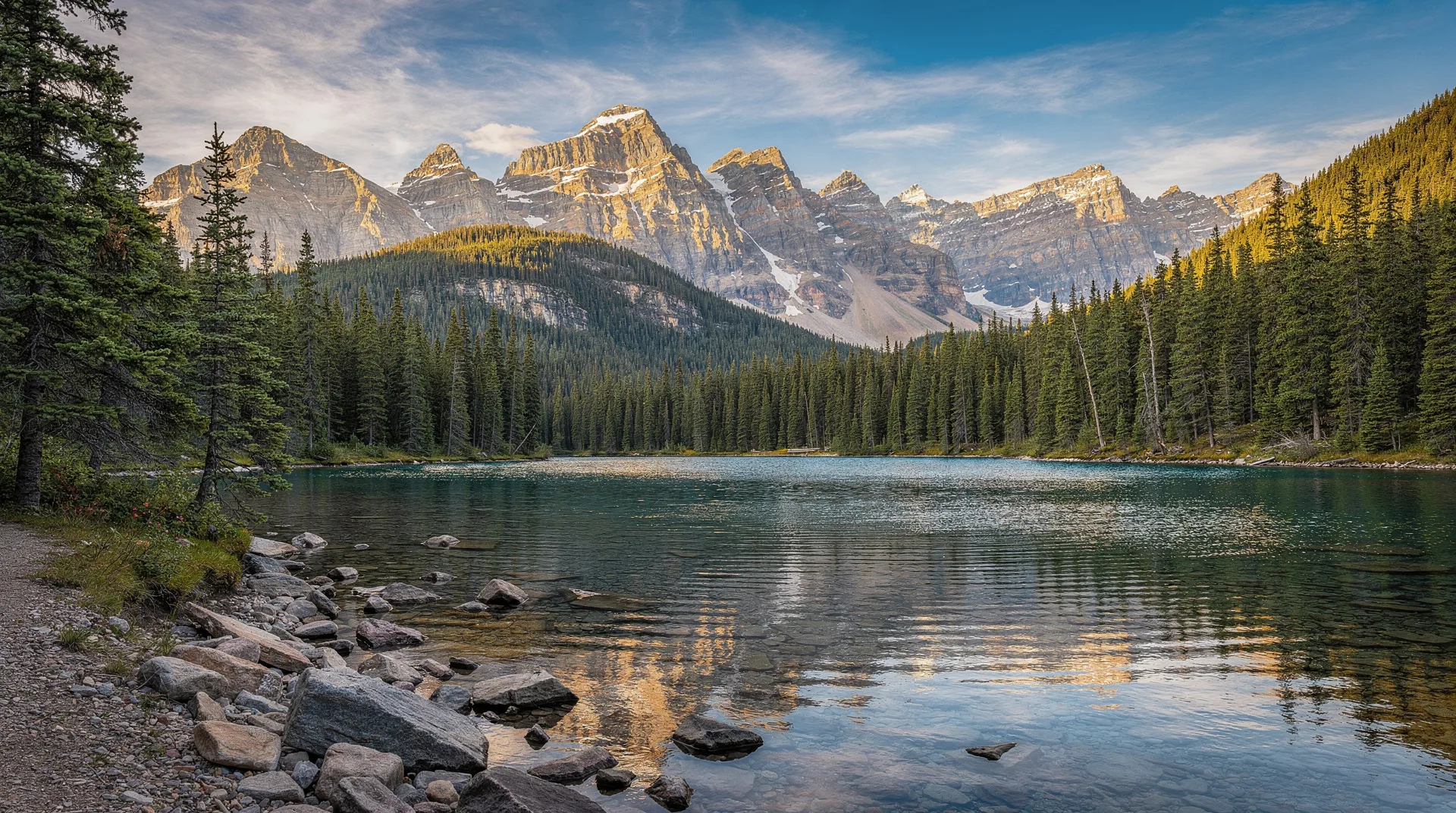
Eastern Townships
Explore the Eastern Townships: Quebec's wine country with Lake Memphremagog, Bromont, Sutton, artisan cheese, and Loyalist heritage villages.
Québec City & Charlevoix2
Charlevoix
Explore Charlevoix, Quebec: the St Lawrence River UNESCO biosphere reserve, Baie-Saint-Paul arts scene, whale watching, and renowned local cuisine.
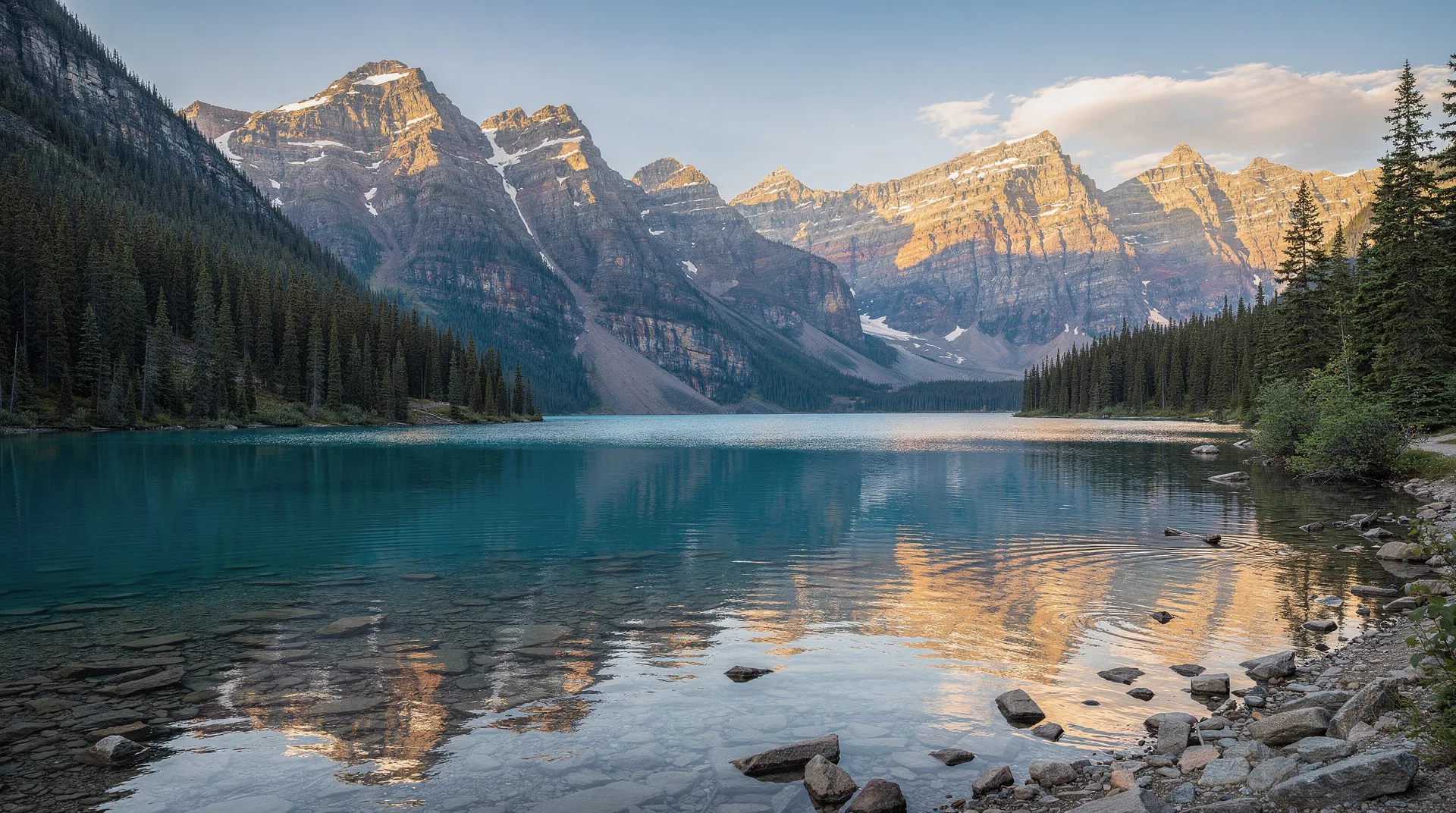
Chaudière-Appalaches
Chaudière-Appalaches is Quebec's hidden south-shore region — ferry views of Old Quebec, the Grosse-Île memorial, maple Beauce
St. Lawrence & Saguenay4
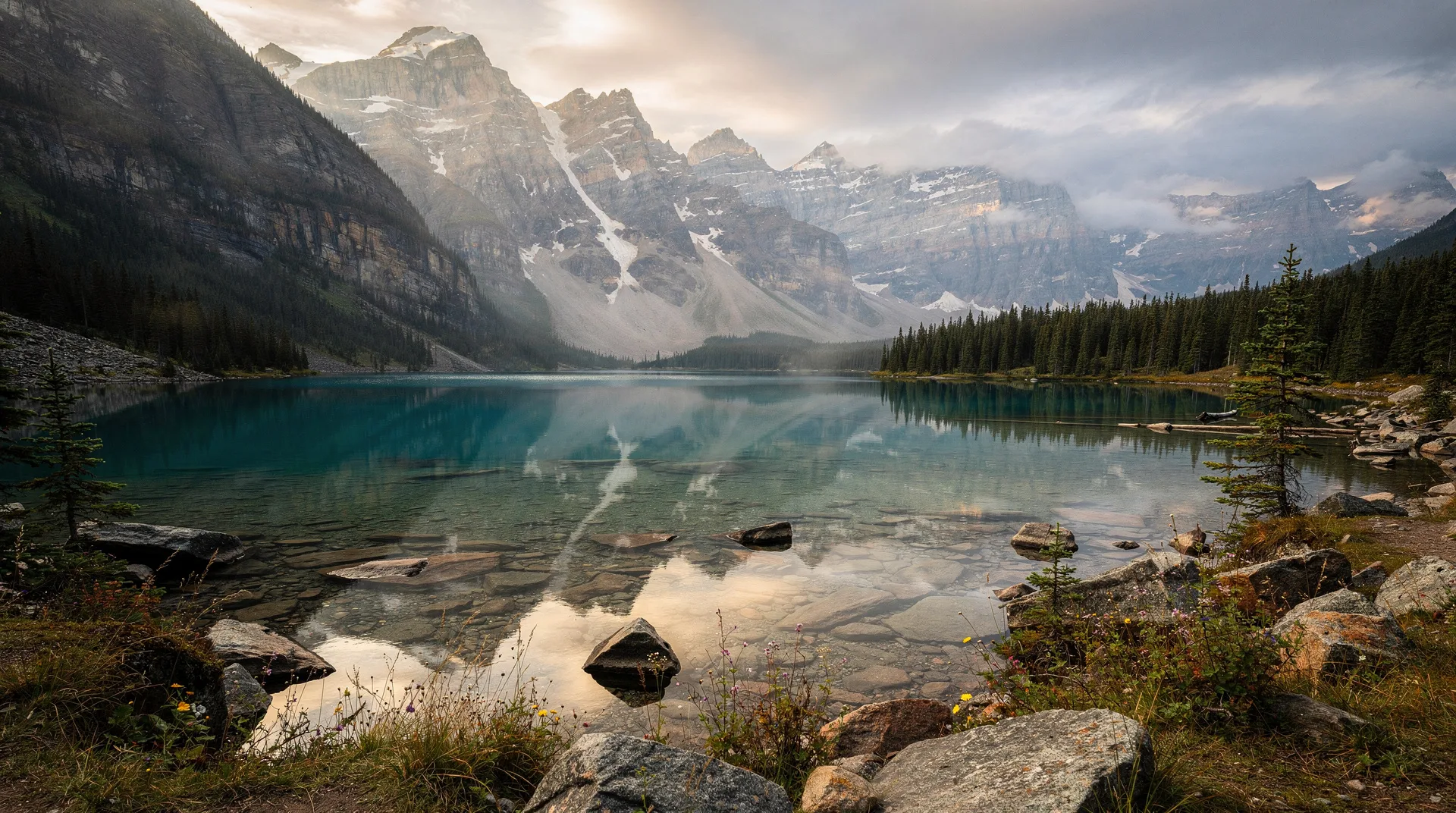
Tadoussac
Tadoussac is Quebec's whale watching capital: blue whales, belugas, and fin whales converge where the Saguenay fjord meets the St. Lawrence.
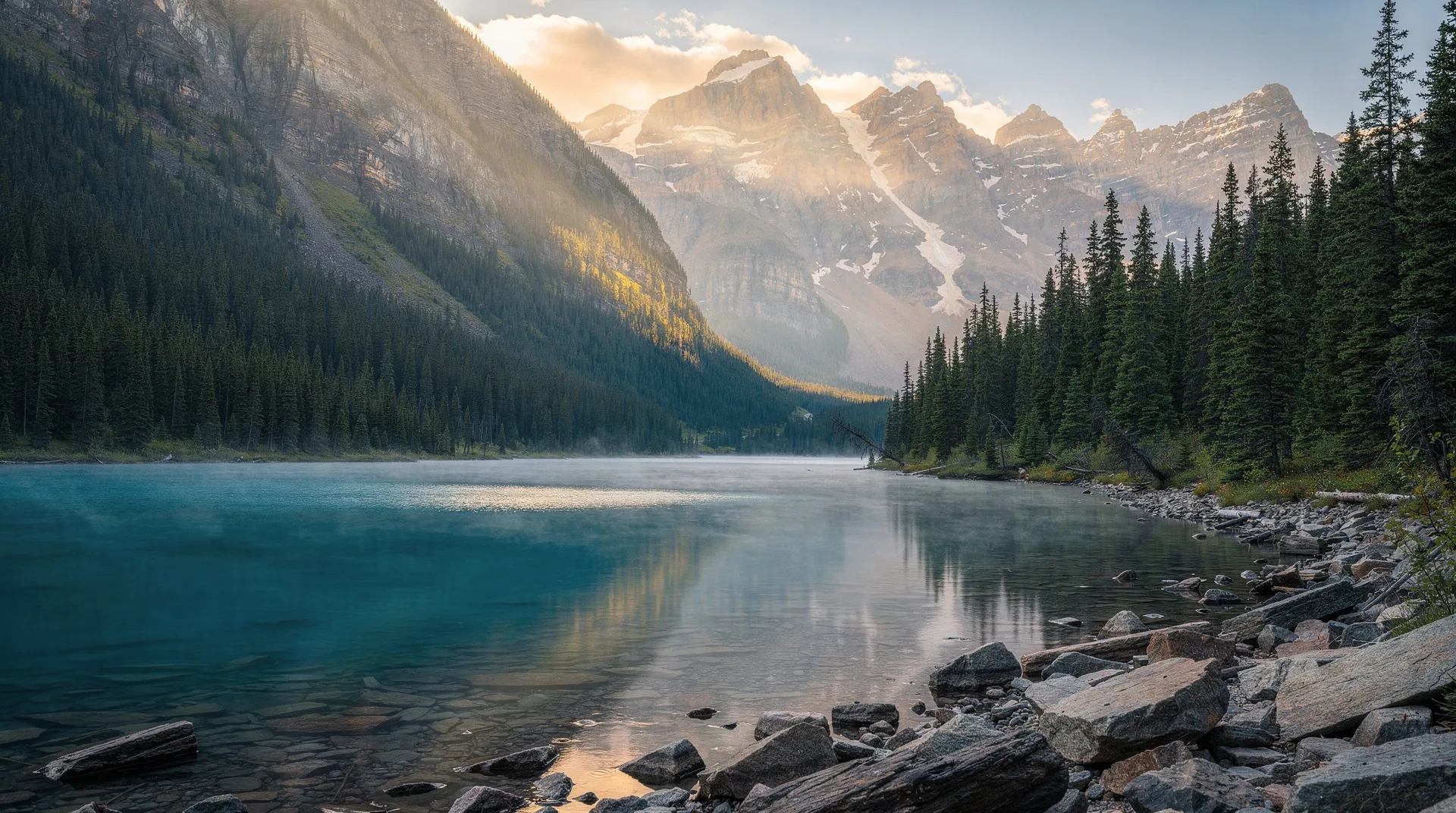
Côte-Nord (North Shore): Quebec's Final Frontier of Whales, Icebergs and Wilderness
Côte-Nord stretches 1,300 km along Quebec's north shore—blue whales, Mingan Archipelago monoliths, Anticosti Island
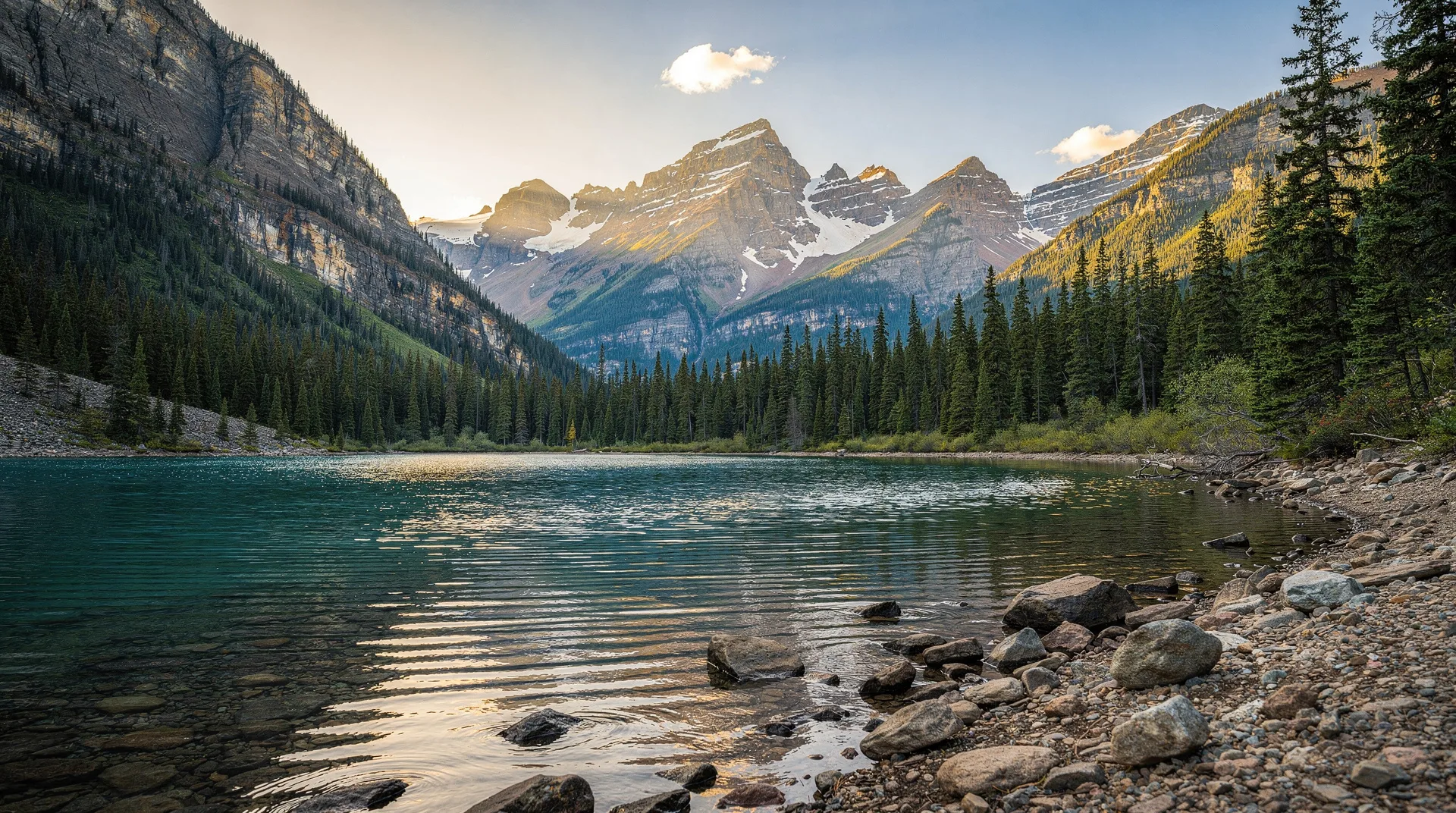
Saguenay–Lac-Saint-Jean
Saguenay–Lac-Saint-Jean enchants with a dramatic fjord, beluga whales, wild blueberries, and an intensely proud Québécois identity unlike anywhere else.
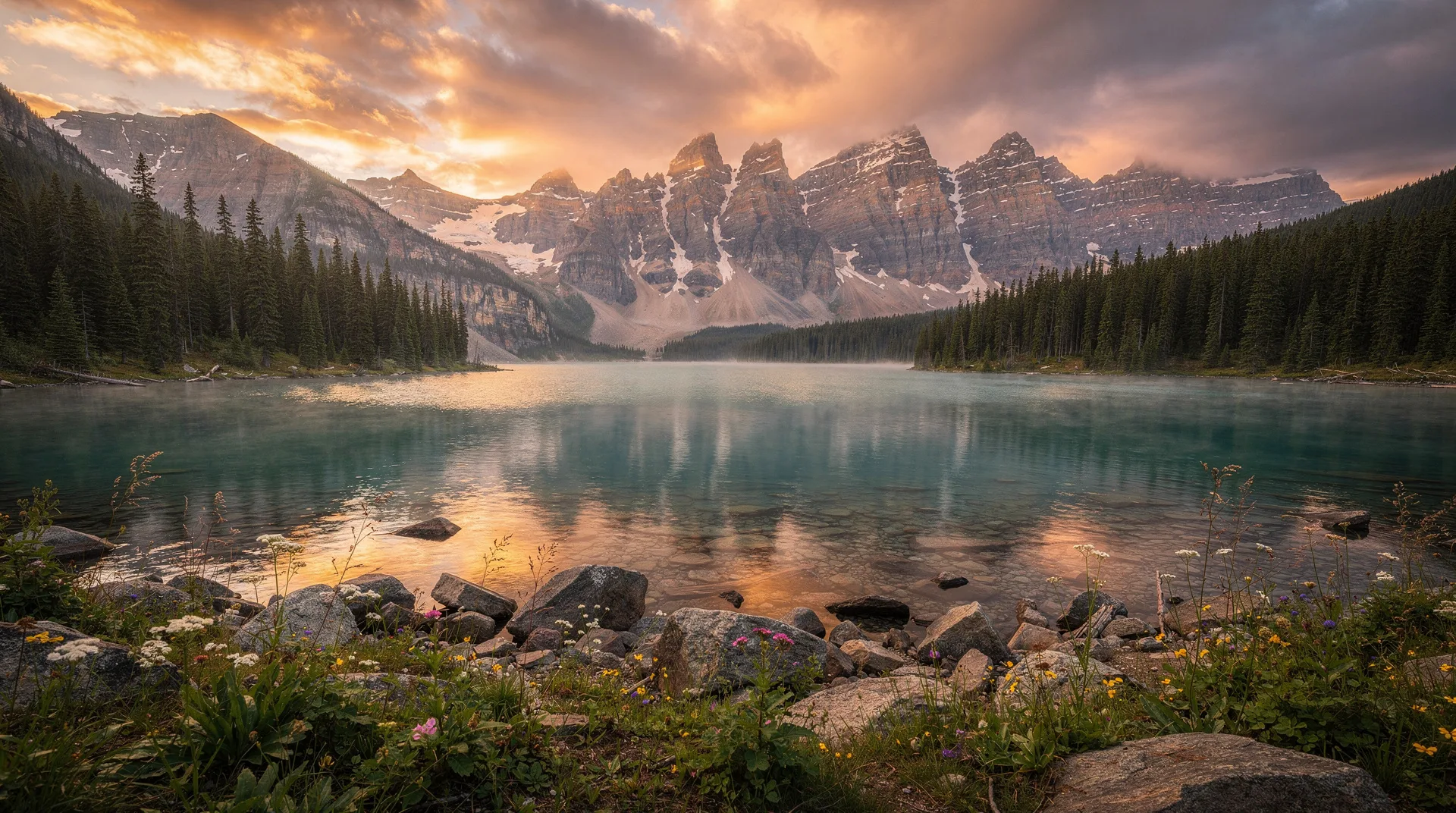
Bas-Saint-Laurent: Quebec's Hidden Scenic Route North of the St. Lawrence
Bas-Saint-Laurent is Quebec's most underrated road trip corridor—salt marshes, painted villages, the St
Gaspésie & the islands2
Gaspésie
Gaspésie rewards the drive with Percé Rock, Forillon National Park, moose in the highlands, and dramatic coastal scenery at the tip of Quebec's peninsula.
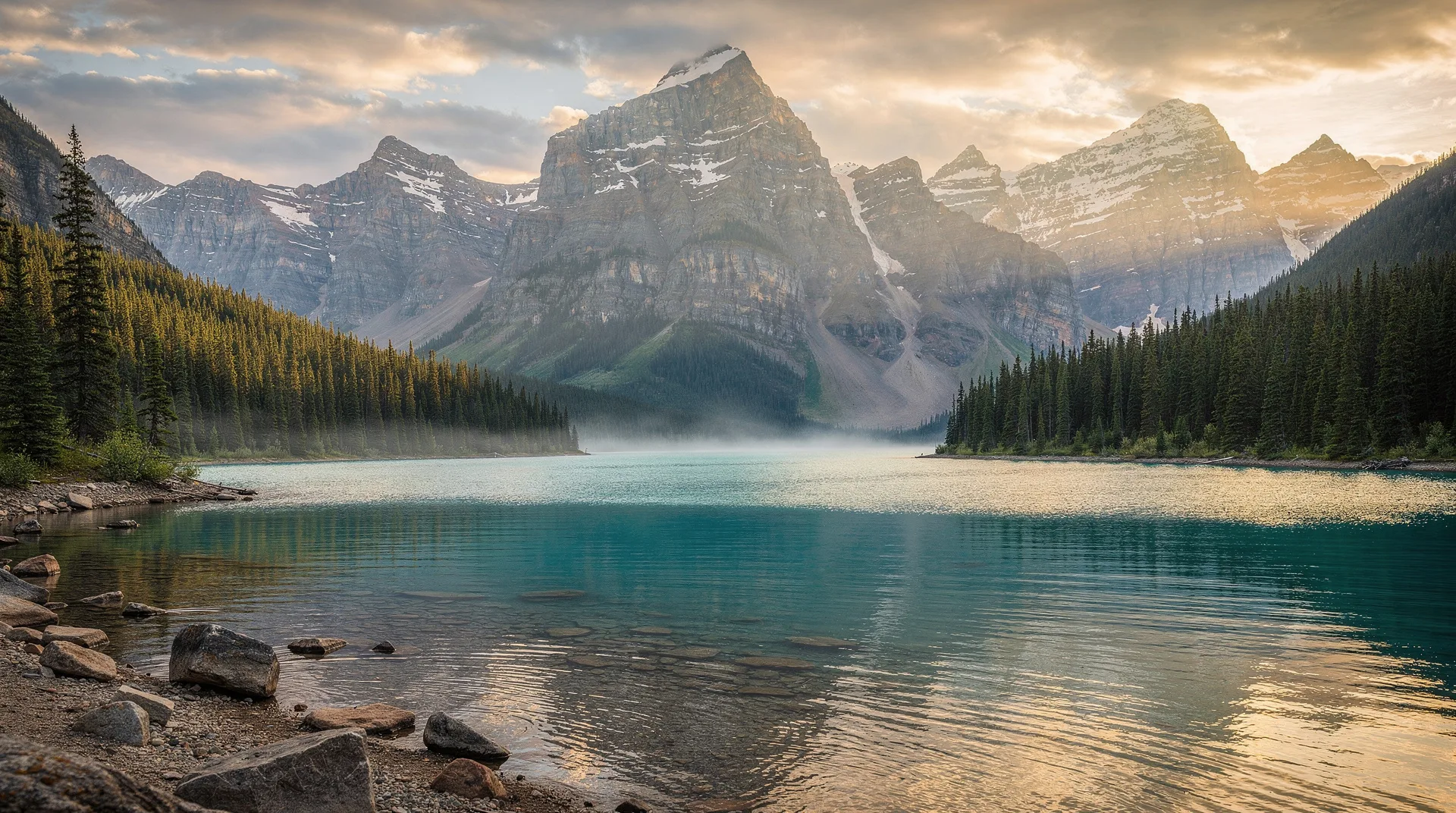
Îles de la Madeleine
Discover the Magdalen Islands: red sandstone cliffs, wild Atlantic beaches, lobster fishing villages, kitesurfing, and vibrant Acadian culture.