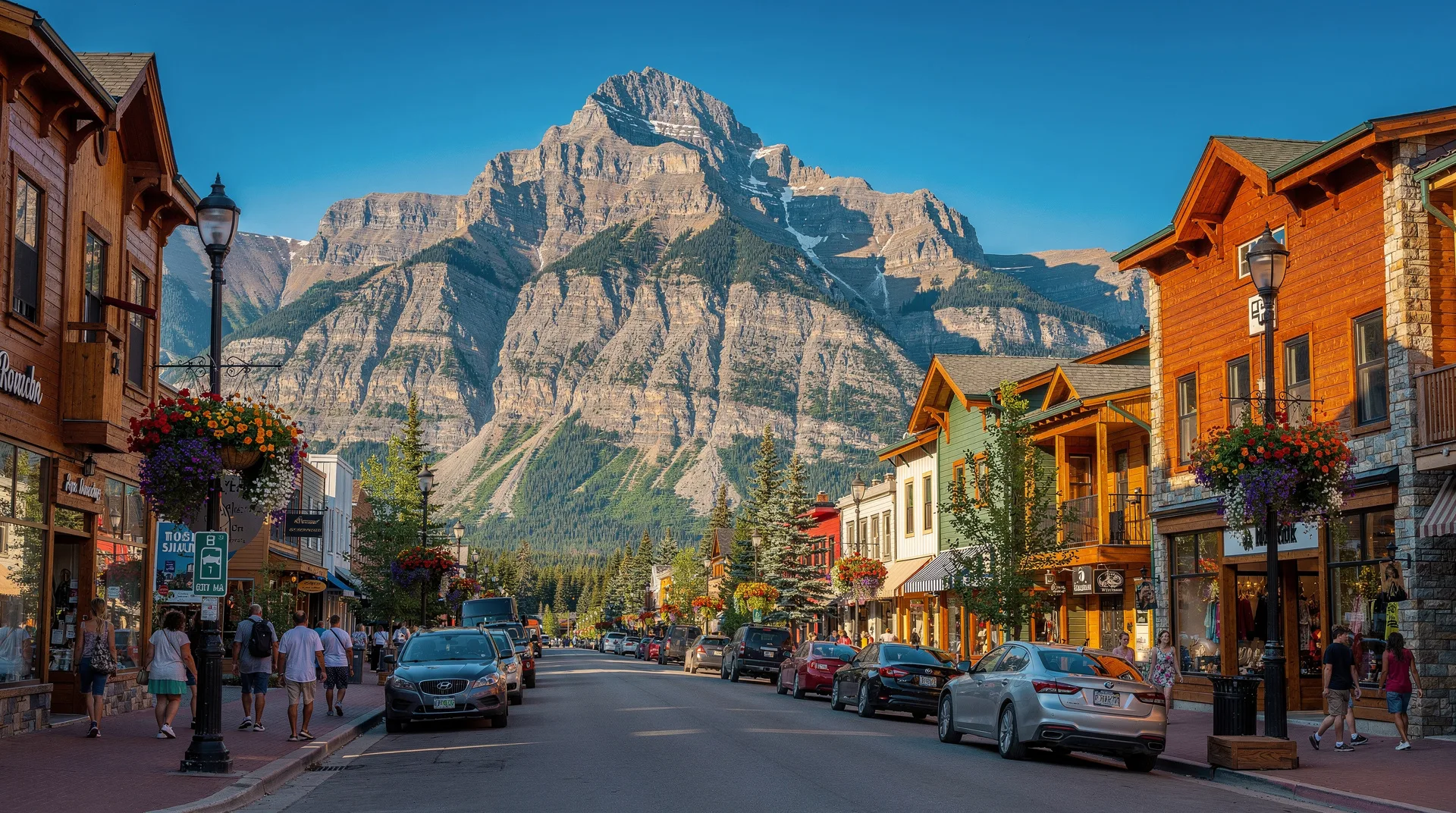
Quick facts
- Population
- 8,000 (town)
- Best time
- June to September / December to March
- Languages
- English
- Days needed
- 4-6 days
There are places in the world where the scenery is so extreme that it stops feeling real. Banff is one of them. Turquoise glacial lakes mirror the jagged peaks above them. Elk wander the streets of a mountain town at dusk. A gondola lifts you above the treeline into a world of wind-scoured alpine meadows and 360-degree panoramas. The Icefields Parkway — perhaps the most spectacular road in the world — begins here and stretches north through 230 kilometres of unbroken Rocky Mountain wilderness.
Banff National Park, established in 1885 as Canada’s first national park, receives over four million visitors a year. Understanding this helps calibrate expectations: this is not a hidden gem. But the park’s scale — 6,641 square kilometres of protected wilderness — ensures that solitude is always available to those willing to walk more than a kilometre from the main road.
| Where | Bow Valley, Alberta, inside Banff National Park |
| Cost | Parks Canada Discovery Pass required (around CAD 12.25/day per adult); accommodation from budget hostel to luxury lodge |
| Time needed | 4-6 days |
| Getting there | Fly into Calgary, then around 90 minutes by road (roughly 130 km) |
| Best time | June to September for hiking and lakes; December to March for skiing |
For the pass rules in detail, see the Banff park pass guide; for choosing when to go, the best time to visit Banff guide goes deeper month by month.
Why the Canadian Rockies centre on Banff
Banff’s position at the geographic and emotional heart of the Canadian Rockies is not accidental. The town sits at 1,383 metres elevation in the Bow Valley, surrounded on all sides by peaks that rise to over 3,000 metres. The Trans-Canada Highway and the railway both pass through here, and from this base the most celebrated landscapes of Banff National Park — Lake Louise, Moraine Lake, the Columbia Icefield — are within reach.
The town itself is surprisingly functional for a mountain resort. Banff Avenue has restaurants, gear shops, and accommodation ranging from hostels to luxury lodges. The hot springs have drawn visitors since the 1880s. And in winter, three ski resorts — Banff Sunshine, Lake Louise Ski Resort, and Mount Norquay — together form one of North America’s great ski destinations.
For travellers combining Banff with Jasper to the north, or connecting with Calgary to the east, the park serves as the centrepiece of any western Canada itinerary.
Top things to do in Banff
Lake Louise and Moraine Lake
Lake Louise needs to be seen to be fully believed. The glacially fed turquoise water backed by the Victoria Glacier and the castle-like Fairmont Chateau Lake Louise is one of the most photographed scenes in Canada. In summer, canoe rentals on the lake are available and the Plain of Six Glaciers tea house trail above the lake is a superb half-day hike.
Moraine Lake, 14 kilometres south of Lake Louise village, arguably surpasses even Lake Louise for sheer visual impact. The Valley of the Ten Peaks framing the impossibly blue water has appeared on the Canadian $20 bill and in countless tourism campaigns. Access is now managed via a Parks Canada shuttle from Lake Louise to reduce vehicle congestion — book your shuttle spot well in advance during summer.
Book the Lake Louise, Moraine Lake, gondola and hot springs day tourBanff Gondola
The Banff Gondola carries visitors from the base station on Mountain Avenue to the summit of Sulphur Mountain at 2,281 metres in eight minutes. The 360-degree views from the summit take in the Bow Valley, the town below, and a bristling horizon of Rocky Mountain peaks in every direction. The summit interpretive centre is well done, and the 1-kilometre boardwalk along the ridge to the Sanson Peak meteorological station reveals the high alpine environment without requiring a serious hike. The gondola operates year-round, and you can pre-book it as part of guided tours in Banff.
Cave and Basin National Historic Site
The Cave and Basin is where Banff National Park — and indeed Canada’s national parks system — was born. In 1883 three railway workers discovered the cave’s hot springs, eventually triggering a federal land reservation that became Banff National Park in 1885. The site now operates as a national historic site with interpretive exhibits on the park’s history and the remarkable geology of the hot springs. The warm, sulphur-scented water still seeps from the cave’s walls.
Banff Upper Hot Springs
Higher on Sulphur Mountain, the Banff Upper Hot Springs pool (36–40°C) is the place to soak after a day of hiking. The outdoor pool with mountain views above and around it is one of the more civilised ways to recover from the exertions of a day in the Rockies. The original 1932 bathhouse has been restored and operates as a heritage facility.
Johnston Canyon
The most visited trail in Banff National Park, Johnston Canyon follows a spectacular limestone canyon via steel-bolted catwalks fixed to the cliff walls. The Lower Falls are 1.1 kilometres from the trailhead. The Upper Falls are 2.7 kilometres. Beyond the Upper Falls, the trail continues to the Ink Pots — seven cold mineral springs that bubble up through the valley floor in shades of vivid blue-green. Go early in the morning to beat the crowds.
Icefields Parkway
The 230-kilometre highway north from Lake Louise to Jasper is one of the most spectacular drives in the world. Passing beneath 11 major glaciers, alongside emerald lakes and roaring waterfalls, through wildlife habitat where bears, wolves, and elk are regularly spotted, the Parkway takes a minimum of three hours to drive one-way but rewards a full day of stops. The Columbia Icefield — North America’s largest non-polar ice mass — sits at the halfway point and can be explored on foot or by Ice Explorer snowcoach.
Wildlife viewing in Banff
The Bow Valley corridor through Banff is one of the best places in Canada to see large mammals. Elk are almost guaranteed in the town itself at dawn and dusk. Black bears and grizzly bears are regularly spotted along roadsides from May through October. Bighorn sheep are common on the cliff faces above the road near the town. Mountain goats appear at higher elevations. The Vermilion Lakes road west of town is a reliable spot for beaver, great blue heron, and waterfowl.
Best areas in and around Banff
Banff Town is the main hub, with Banff Avenue as its commercial spine. Wolf Street and Bear Street run parallel and have become increasingly popular for restaurants and boutiques. The riverside area along the Bow River below the Banff Springs Hotel is lovely for walking.
Lake Louise Village is a small cluster of accommodation, a train station, and the gondola, 56 kilometres northwest of Banff Town. It serves as the base for access to Lake Louise, Moraine Lake, and the Lake Louise Ski Resort.
The Vermilion Lakes Area just west of Banff Town offers some of the park’s most accessible wildlife viewing and photography. Three shallow lakes with wetland habitat attract beaver, muskrat, and over 200 bird species.
The Bow Valley Parkway (Highway 1A) runs parallel to the Trans-Canada between Banff and Lake Louise and is the more scenic and wildlife-rich route. It is closed at night during key wildlife seasons to protect bears and wolves.
When to visit Banff
Summer (late June to September) is peak season and the most accessible period for hiking, canoeing, and seeing the lakes at their most vivid. Moraine Lake and Lake Louise are stunning from mid-June once the snow has melted from the access roads. July and August are extremely busy — accommodation books up months in advance and shuttle reservations for Moraine Lake are essential.
Fall (September to mid-October) is arguably the most beautiful season. Larches turn gold in late September and early October, most spectacularly at Larch Valley above Moraine Lake and around Lake O’Hara in neighbouring Yoho National Park. Crowds thin noticeably after Labour Day.
Winter (December to March) transforms Banff into a different kind of paradise. Three ski resorts offer excellent terrain. The Banff SnowDays festival in January fills the town with ice sculptures and winter activities. The lakes freeze solid and can be skated upon (conditions permitting). Wildlife is more visible against the snow.
Spring (April to mid-June) is the shoulder season. Snow still covers higher elevations, many hiking trails are inaccessible, and Moraine Lake Road typically doesn’t open until early June. However, prices are lower and the valley is beautiful. Bear viewing can be excellent in this period as animals emerge from hibernation.
Where to stay in Banff
Banff Town has the widest range of accommodation. The Fairmont Banff Springs Hotel — the “Castle in the Rockies” — is Canada’s most iconic mountain resort property, built in a Scottish Baronial style in 1888 and positioned dramatically on a hill above the confluence of the Bow and Spray rivers. A stay here is an experience in itself. The Rimrock Resort Hotel higher on Sulphur Mountain offers exceptional views and a more modern luxury experience.
For mid-range options, the Moose Hotel and Suites on Banff Avenue has rooftop hot tubs with mountain views and a central location. The Elk + Avenue Hotel is well-positioned and well-priced for those on a mid-range budget.
In Lake Louise, the Fairmont Chateau Lake Louise is one of the most romantic hotels in Canada, sitting directly on the shore of the lake. Book many months in advance for summer stays.
Food and drink in Banff
Banff punches above its weight for a town of 8,000 permanent residents, driven by the expectations of millions of international visitors.
The Maple Leaf Restaurant on Banff Avenue is the go-to for Alberta beef and elk medallions in an upscale setting. The bison short ribs and wild mushroom appetisers represent the Rocky Mountain cuisine approach — local ingredients elevated with skill.
Coyotes Southwestern Grill on Caribou Street takes a different approach with New Mexico-influenced flavours and consistently good execution. The green chili pork stew is a standout.
Eddie Burger + Bar on Bear Street represents the more casual end of the Banff dining spectrum — excellent burgers with Alberta beef, a strong beer selection, and the comfortable atmosphere of a proper pub.
Farm & Fire at the Elk + Avenue Hotel is a newer addition to the Banff dining scene, with wood-fired cooking and local Alberta ingredients in a contemporary setting.
For self-catering and picnic provisions, the Banff Ave Brewing Co. is a reliable craft beer producer with a busy taproom, and Nesters Market is the main grocery store for stocking up before backcountry trips.
Getting around Banff
Roam Transit is Banff’s local bus service, operating routes through the town, to the Banff Springs Hotel and hot springs, and during summer, an express service to Lake Louise village. The Roam service also connects to the Town of Canmore 25 kilometres east.
Driving is essentially mandatory for reaching Moraine Lake, Johnston Canyon, the Icefields Parkway, and most hiking trailheads. Car rental is available in Banff or can be collected in Calgary. The Trans-Canada Highway is well-maintained year-round, though winter tires and caution are essential between November and April.
Moraine Lake Shuttle is mandatory during summer (Parks Canada requirement) as private vehicles are no longer permitted on Moraine Lake Road during the peak season. Shuttles depart from Lake Louise Park and Ride and must be reserved in advance on the Parks Canada reservation system.
Banff vs Jasper vs Canmore: choosing a base
Many first-time visitors ask whether to base in Banff, push on to Jasper, or stay in nearby Canmore. Each has a different character worth understanding before booking.
| Base | Best for | Trade-off |
|---|---|---|
| Banff Town | First-timers, maximum sightseeing density, easy access to Lake Louise and Moraine Lake | Busiest town, highest accommodation prices in peak season |
| Canmore | Quieter evenings, local restaurant scene, still 25 minutes from Banff | Less immediate mountain-town atmosphere, more driving |
| Jasper | Fewer crowds, wilder scenery, better wildlife odds | Farther from Calgary, fewer dining and lodging options |
For a full comparison, the Banff vs Jasper guide and Banff vs Canmore guide break down the differences in detail, and travellers with kids should check the dedicated Banff with kids guide before planning a family itinerary.
Walking and biking work well within Banff Town, and the Legacy Trail connecting Banff and Canmore is a beautiful 26-kilometre paved trail through the valley.
Day trips from Banff
Jasper National Park to the north via the Icefields Parkway is the premier overnight excursion from Banff. The drive alone justifies the trip, and Jasper town has its own distinct character and set of attractions.
Yoho National Park to the west in British Columbia is a 45-minute drive from Banff and contains some of the Canadian Rockies’ most extraordinary scenery: Takakkaw Falls (one of Canada’s highest waterfalls), Emerald Lake, and the Natural Bridge. Day access to Lake O’Hara — a protected alpine jewel above the valley — requires advance lottery reservations.
Canmore is a 25-minute drive east and has become a sophisticated mountain town with excellent restaurants, a Saturday Farmers’ Market, and a more local, less commercial atmosphere than Banff. The Nordic Centre and its extensive trail network are popular with mountain bikers in summer and cross-country skiers in winter.
Calgary is 130 kilometres east — an easy 90-minute drive. The city’s Stampede rodeo festival in July is a world-class event and an interesting cultural contrast to the wilderness world of Banff.
Frequently asked questions about Banff
Do you need a Parks Canada pass to enter Banff?
Yes. A Parks Canada Discovery Pass is required for all visitors to Banff National Park. A daily adult pass costs CAD $12.25, a daily family/group pass costs CAD $24.50. An annual Discovery Pass covering all Parks Canada sites costs CAD $83.50 per adult or CAD $167.50 per family and represents excellent value if you are visiting multiple national parks. Purchase the pass at the park gates on the Trans-Canada or online in advance.
What is the best time to see Moraine Lake?
Moraine Lake Road typically opens in late May or early June when snow melts sufficiently. The lake is at its most vibrant blue colour in late June and July when glacial meltwater input is highest. The most spectacular photographs are taken in the early morning when the peaks are lit and the water is calm. Shuttle reservations for summer visits must be made through Parks Canada.
Are there bears in Banff National Park?
Yes — Banff is excellent bear habitat. Both black bears and grizzly bears are common in the park. You will see bear activity warning signs on many trails. Carry bear spray (available to rent or buy at gear shops in Banff) and make noise while hiking. Sightings from vehicles along roadsides are common from May through October.
Can you swim in Lake Louise or Moraine Lake?
Swimming is permitted but the water is glacially cold — typically 4–8°C even in summer. Most visitors dip their hands and take photographs rather than swim. The water clarity is remarkable. Canoes can be rented at both Lake Louise and Moraine Lake.
Is Banff worth visiting in winter?
Absolutely. Banff in winter is a different and arguably more magical experience than summer. The ski resorts are excellent, the snow-covered peaks are spectacular, the hot springs are particularly enjoyable in cold weather, and the town is far less crowded. The main drawback is that Moraine Lake and Lake Louise are partially frozen and the lake colours are muted. However, ice skating on frozen lakes and the winter light photography opportunities compensate generously.
How far is Banff from Calgary?
Calgary International Airport is approximately 130 kilometres east of Banff on the Trans-Canada Highway. The drive takes about 90 minutes in normal conditions. Shuttle services, including Brewster Express and Banff Airporter, run scheduled services between the airport and Banff town multiple times daily. Renting a car at Calgary Airport and driving yourself is the most flexible option.
What is the Icefields Parkway and is it worth driving?
The Icefields Parkway (Highway 93 North) is the 230-kilometre road connecting Lake Louise to Jasper through the heart of the Canadian Rockies. It is widely considered one of the most beautiful drives in the world, passing 11 major glaciers, dozens of lakes, waterfalls, and prime wildlife habitat. Allow a full day minimum, with stops at Bow Lake, Peyto Lake, the Columbia Icefield, Athabasca Falls, and Sunwapta Falls. It is absolutely worth driving for anyone in the area.
Can you visit Banff without a car?
Visiting without a car is possible but limiting. Roam Transit covers the town and some key sites, and shuttles reach Lake Louise. However, Johnston Canyon, the Icefields Parkway, many hiking trailheads, and most wildlife viewing areas are inaccessible without a vehicle or guided tour. Booking a guided tour that covers the key sights is a practical solution for car-free visitors.
Is Banff or Jasper better for a first Rockies trip?
Banff is the easier first choice — more infrastructure, shorter drive from Calgary, and a denser concentration of famous sights within a compact area. Jasper rewards travellers who already know they want quieter trails and better wildlife odds. See the Banff vs Jasper guide for a full breakdown, and consider combining both via the Icefields Parkway if time allows.