Waterton Lakes National Park guide: Alberta's peace park and prairie-mountain drama
What makes Waterton Lakes National Park unique?
Waterton Lakes is where the Alberta prairies meet the Rocky Mountains without foothills, creating a dramatic abrupt landscape. It forms an International Peace Park with Glacier National Park in Montana, shares a UNESCO World Heritage designation, and is famous for wildflowers, bear grass, the Crypt Lake trail, and reliable wildlife sightings.
The landscape transition at Waterton Lakes National Park is unlike anything else in the Rocky Mountain parks. Here, the mountains rise directly from the flat Alberta prairie without the gradual foothills transition that characterises the terrain around Banff and Jasper. One moment you are crossing wheat fields; the next, a wall of Precambrian rock rises 2,000 metres from the valley floor. The confrontation of these two ecosystems — grassland and mountain — in a single glance is Waterton’s defining drama, and it produces an environment more diverse and in some ways more visually arresting than its more famous neighbours.
Waterton Lakes National Park was established in 1895, making it Alberta’s oldest national park. In 1932 it was joined with Glacier National Park in Montana to form the world’s first International Peace Park — a recognition that the mountains and ecosystems do not respect the 49th parallel. The combined area received UNESCO World Heritage status in 1995. Today the Waterton-Glacier International Peace Park remains one of the world’s great cross-border conservation areas, though passage between the two parks requires formal border crossing.
The park covers 505 square kilometres — compact compared to Banff’s 6,641 square kilometres — but its biodiversity is extraordinary. The convergence of prairie, foothills, montane, subalpine, and alpine ecosystems within a small area creates conditions for an exceptional concentration of plant and animal species. Over 1,000 plant species have been recorded here, including the striking bear grass (Xerophyllum tenax) that covers the hillsides in brilliant white bloom every few years. Waterton is reliably excellent for wildflowers — the finest display in the Canadian Rockies.
| At a glance | |
|---|---|
| Where | Extreme southwest Alberta, around 3 hours’ drive south of Calgary |
| Park pass | Parks Canada day pass required (no national park in Canada, including Waterton, is free entry) |
| Time needed | 2 days for the essentials; 3 days for the Carthew-Alderson traverse plus wildlife time |
| Getting there | Self-drive only — no public transit; nearest airport is Calgary International |
| Best time | Late June to mid-July for peak wildflowers; September for colour and fewer crowds |
Where prairie meets mountain
The abrupt mountain front that defines Waterton is the result of the Lewis Overthrust — one of the largest-scale geological fault systems in North America. Ancient sedimentary rock layers (the Precambrian Belt Series, over 1.5 billion years old) were thrust more than 75 kilometres eastward over younger Cretaceous prairie sediments during a tectonic event roughly 80 million years ago. The result is a landscape where billion-year-old rock sits atop rock that formed 80 million years ago, and where the mountain-prairie boundary is sharp enough to walk across in a few steps.
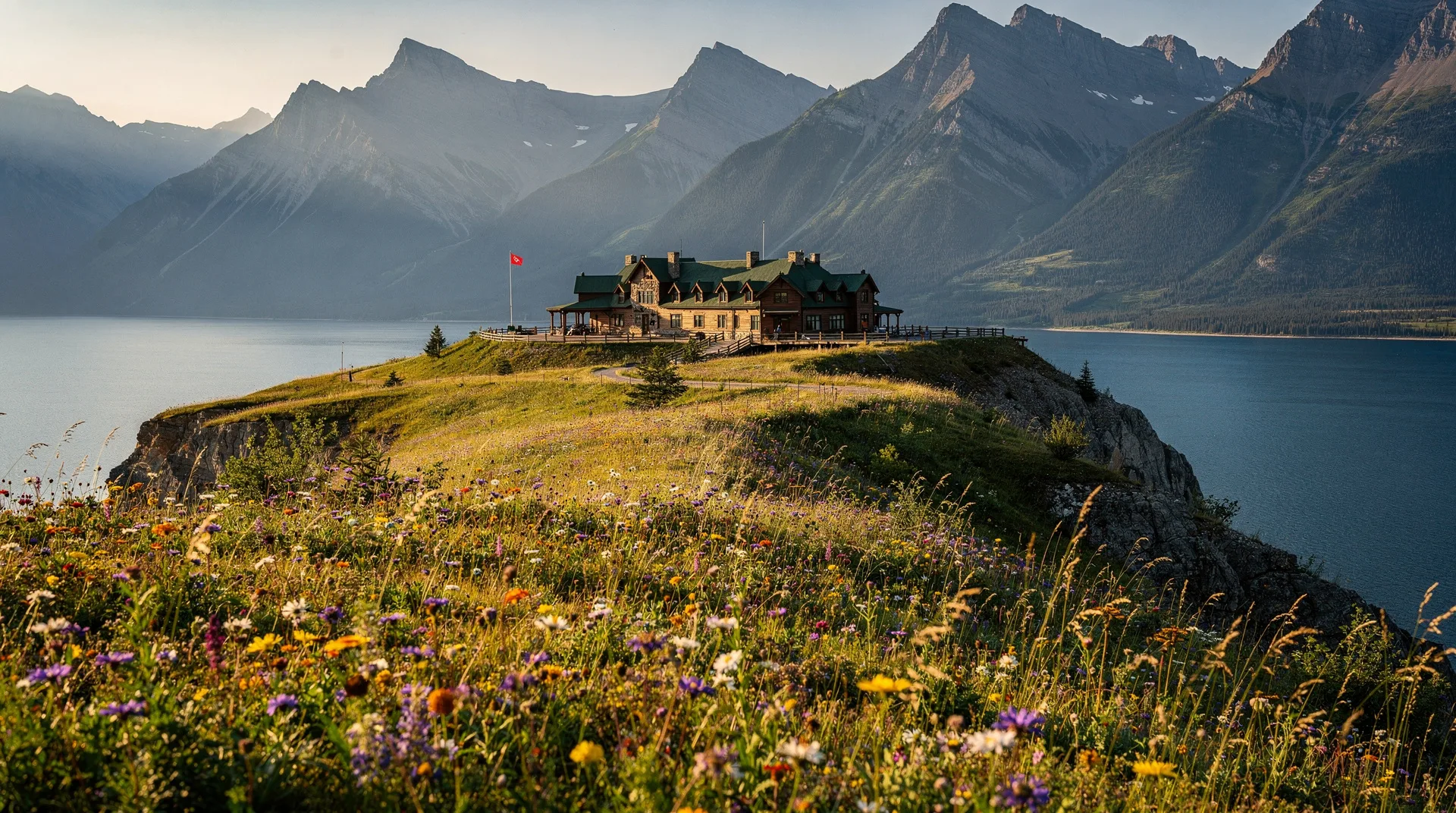
The lakes of Waterton — Upper, Middle, and Lower Waterton Lakes — are glacier-carved troughs that extend south across the US border. Upper Waterton Lake is the deepest lake in the Canadian Rockies at 148 metres, straddling the international boundary and providing the park’s most dramatic water scenery. The Prince of Wales Hotel, perched on a glacial bench above the lake with a direct view up the valley to the Montana mountains, provides the park’s most iconic image.
The town of Waterton Park, located within the park boundaries at the head of Upper Waterton Lake, is a small, charming community that operates seasonally from May to October. It provides accommodation, restaurants, and outfitter services within walking distance of trailheads and the lakeshore.
Top things to do in Waterton Lakes National Park
Hike the Crypt Lake Trail
The Crypt Lake Trail is routinely cited as one of the finest day hikes in Canada, combining boat access, a waterfall, a tunnel crawl, a chain-assisted cliff traverse, and a high alpine lake in a single spectacular 17-km return trip. The hike begins at the Crypt Landing boat dock on the east shore of Upper Waterton Lake — accessible by water taxi from the Waterton townsite — and climbs 750 metres through mixed forest, past Hellroaring Falls, to the base of the cliffs above Crypt Lake.
The final approach to the lake involves squeezing through a natural rock tunnel (12 metres long, torchlight helpful), emerging onto a chain-assisted cliff ledge with a sheer drop to the left, and arriving finally at the turquoise lake cupped in a cirque below the international border. The drama of the approach, the scale of the cliff scenery, and the utter wildness of the lake basin make this one of the most complete hiking experiences in the Rockies. Water taxi reservations must be made in advance; the service runs from late May to late September.
Explore southern Alberta guided tours from CalgaryWildflower meadow hikes
Waterton’s wildflower display is the finest in the Canadian Rockies. The combination of prairie grasses, montane meadows, and subalpine slopes produces a sequence of blooming from May (balsamroot sunflowers on the prairie) through June-July (paintbrush, lupine, bearberry on lower slopes) to late July-August (bear grass in bloom years, arnica, asters in the subalpine). The Blakiston Valley and the Carthew-Alderson trail pass through some of the most spectacular wildflower meadow terrain.
The bear grass bloom, which occurs approximately every 5-7 years when conditions are right, produces a spectacle unlike anything else in the Rockies — hillsides covered in tall white plumes above the blue-grey lupine. When a bear grass bloom year coincides with a Waterton visit, it is an extraordinary sight.
Take the boat tour on Upper Waterton Lake
The Waterton Shoreline Cruise operates a narrated boat tour from the Waterton townsite dock south along Upper Waterton Lake to the Goat Haunt, Montana Ranger Station and back. The tour passes beneath the Prince of Wales Hotel on its hillside bench, travels down the full length of the lake, and crosses the international border into the United States — passengers do not disembark in the US section. The views of the surrounding peaks reflected in the lake are outstanding.
Explore the Red Rock Canyon and Blakiston Valley
The Red Rock Canyon Parkway leads 13 kilometres from the townsite into the Blakiston Valley to Red Rock Canyon — a narrow gorge carved through Precambrian argillite (ancient mudstone) tinted brilliant red and green by iron and chlorite minerals. A short loop trail (700 m) descends to the canyon floor between the glowing walls. The Blakiston Valley further west provides excellent wildlife habitat and the trailhead for several longer hikes including the South Kootenay Pass trail into British Columbia.
Visit the Prince of Wales Hotel
The Prince of Wales Hotel (1927), a National Historic Site operated as a luxury hotel and accessible to non-guests for dining and afternoon tea, is one of the architectural gems of the Rocky Mountain parks. Its seven-storey Arts and Crafts structure commands a hillside bench above Upper Waterton Lake with a view that takes in the full valley south toward Montana. Even without staying, a visit for afternoon tea in the lobby — looking through the floor-to-ceiling windows at the lake and mountains — is a genuine Waterton experience.
Wildlife watching
Waterton’s combination of ecosystems produces exceptional wildlife diversity. Bears are common — both grizzly and black bears are regularly sighted throughout the park; the Akamina Parkway and the townsite periphery are particularly productive. Bighorn sheep come right into the townsite and are essentially habituated to human presence. Mule deer graze the prairie margins. Pronghorn — North America’s fastest land mammal, a prairie species — are found on the eastern grasslands near the park entrance. If you would rather have a guide spot the animals for you, browse Canada wildlife and nature tours before you go.
Best hikes and trails
Crypt Lake Trail — 17 km return, strenuous. Canada’s finest day hike. Boat access required; book water taxi in advance. 750 m elevation gain. Tunnel, chains, alpine lake.
Carthew-Alderson Trail — 20 km one way (shuttle), strenuous. The park’s finest long-distance day hike, crossing alpine passes and descending through wildflower meadows to Cameron Lake and the townsite. Requires a car shuttle or taxi.
Bear’s Hump Trail — 2.8 km return, moderate. Short, steep climb behind the visitor centre to a viewpoint directly above the townsite with panoramic views of the lake and prairies. Best introduction to the park’s landscape.
Bertha Lake Trail — 11.5 km return, moderate-strenuous. Climbs from the townsite through forest and past Bertha Falls to an alpine lake below impressive cliff faces.
Rowe Lakes Trail — 12.4 km return, moderate. Through wildflower meadows to a series of subalpine lakes. Excellent for bear grass in bloom years.
Blakiston Falls Trail — 4 km return, easy. Pleasant forest walk to the falls on Blakiston Creek. Accessible for families and beginners.
Akamina Ridge — 16 km loop, strenuous. High ridge traverse with exceptional views into British Columbia and Montana.
Wildlife you might see
Waterton has one of the highest concentrations of grizzly bears in the Rocky Mountain parks — the combination of prairie and mountain habitats provides exceptional foraging conditions from spring through fall. Bears are commonly sighted along the Akamina Parkway and in the Cameron Creek valley. Black bears are similarly abundant.
Bighorn sheep are essentially park residents in the townsite area — they graze the roadsides and occasionally wander between the buildings with complete indifference. Ewes and lambs are present year-round; rams descend from higher terrain in fall for the rut. Mule deer, white-tailed deer, and elk all inhabit the park. Pronghorn are found on the prairie grasslands near the park entrance — look for them on the open slopes east of the townsite.
Mountain lions (cougars) inhabit the park but are rarely seen. Wolverines have been confirmed in the park’s alpine zone. The prairie margin supports burrowing owls, ferruginous hawks, and other grassland species uncommon in the mountain parks.
The park was the location of the last confirmed grizzly bear-wolf territorial conflict study in Alberta — wolf packs and bears interact here in visible ways in the valley systems. A well-timed dawn drive into the Blakiston Valley provides the best opportunity for seeing both species.
Waterton vs Banff vs Jasper
Visitors weighing up which Rocky Mountain park to prioritise often ask how Waterton compares to its larger, more famous neighbours.
| Park | Character | Crowds | Best for |
|---|---|---|---|
| Waterton | Compact prairie-meets-mountain, walkable townsite | Light, even in July-August | Wildflowers, grizzly sightings, one intense day hike |
| Banff National Park | Classic glacial lakes, large-scale resort infrastructure | Very heavy in summer | Iconic scenery, variety of tours and activities |
| Jasper National Park | Wilder, quieter than Banff, big peaks | Moderate | Wildlife, remoteness, Icefields Parkway access |
For a side-by-side of the two giants, see our Banff vs Jasper comparison; for the BC side of the range, the BC Rockies vs Alberta Rockies guide is useful context. Waterton’s park pass works the same way as Banff’s — a Discovery Pass covers all three.
Photography and viewpoints
The Bear’s Hump viewpoint delivers the single best introductory photograph in the park — the townsite, Upper Waterton Lake, and the prairie stretching east all in one frame, best in the first two hours after sunrise before haze builds. The Prince of Wales Hotel is most photogenic from the lakeshore path below it, especially with evening light raking across its Arts and Crafts facade.
For wildflowers, the Blakiston Valley and the lower Carthew-Alderson slopes in late June offer the densest colour; arrive early, since afternoon wind is common on the exposed meadows. Red Rock Canyon’s mineral-stained walls photograph best in the flat light of an overcast morning, when the reds and greens don’t blow out in harsh sun. Wildlife photographers should budget extra time along the Akamina Parkway at dawn and dusk, when bears and bighorn sheep are most active, always shooting from a vehicle or maintaining the mandated distances.
If you’re travelling from outside Canada, confirm your entry requirements well before the trip, and review general bear safety practices if this is your first visit to bear country — Waterton’s grizzly density is among the highest in the Rockies.
Getting there
Waterton Lakes National Park is located in the extreme southwest corner of Alberta, 264 km south of Calgary and approximately 130 km south of the town of Pincher Creek. From Calgary, take Highway 2 south to Fort Macleod, then Highway 3 west to Pincher Creek, and Highway 6 south to the park entrance.
The drive from Calgary takes approximately 3 hours. Calgary International Airport is the nearest major airport. There is no public transit to Waterton; a car is required.
From Glacier National Park, Montana, the closest US border crossing to Waterton is at Carway/Peigan (Highway 2, 30 km east of the park) — open seasonally. Crossing from Glacier to Waterton requires leaving Glacier via the US side and re-entering Canada; there is no direct cross-border trail access without a border crossing.
Where to stay
Waterton Park townsite provides the only accommodation within the park, ranging from the historic Prince of Wales Hotel (luxury, June-September) to mid-range hotels, B&Bs, and the Waterton Lakes Lodge. Book well in advance for July and August — the townsite has limited capacity.
Camping: Parks Canada operates Townsite Campground (with hookups, walking distance to facilities), Belly River Campground (primitive, eastern park), and Crandell Lake Campground (forest setting, mid-park). Reservations through Parks Canada are strongly recommended.
Pincher Creek (50 km north) and Cardston (45 km northeast) offer additional accommodation, useful for those arriving in peak season when the townsite is full.
Best time to visit
Late June to mid-July is peak wildflower season. Paintbrush, lupine, and balsamroot are at their finest on the lower slopes; alpine flowers in the subalpine zone peak in July. The Crypt Lake water taxi and most park services are fully operational.
May sees the first wildflowers (balsamroot on the prairie slopes) and excellent wildlife activity. The park is not yet crowded. Some high trails may still have snow.
August is peak season with the warmest weather and all services operating. Book accommodation months in advance. Bears are highly active feeding on berry crops.
September brings cooler temperatures, no crowds after Labour Day, and spectacular golden aspen along the valley floors. Grizzly bears are intensely active before denning. The first snows can arrive at high elevations in late September.
Winter (October–April): The townsite is largely closed and snow covers the passes, but the park remains open for day use. Cross-country skiing, snowshoeing, and winter photography of the dramatic prairie-mountain interface are the main winter activities.
Practical info
Park entry fee (2026): Adult CA$12.25/day, family/group CA$24.50/day. Parks Canada Discovery Pass covers all national parks.
Water taxi (Crypt Lake): Waterton Shoreline Cruises operates the water taxi and lake tours. Book the Crypt Landing service in advance at watertonlakescruises.com; the hike is not possible without it. Runs late May to late September.
Wildlife distances: Grizzly bears, at least 100 metres; black bears, at least 100 metres; all large wildlife, at least 30 metres. Bear spray is strongly recommended for all trail hiking.
Wildfire history: The Kenow Wildfire of 2017 burned approximately 60% of the park, dramatically altering the landscape. Trail conditions and forest recovery vary across the park; check Parks Canada for current trail status.
Frequently asked questions about Waterton Lakes National Park guide: Alberta’s peace park and prairie-mountain drama
Is Waterton worth visiting if I’ve already been to Banff?
Absolutely. Waterton is a fundamentally different experience from Banff. The prairie-mountain interface creates a distinctive landscape found nowhere else in the Rockies. The wildflowers are superior to Banff’s. The wildlife — particularly the grizzly bear and bighorn sheep encounters near the townsite — is more accessible. The park’s intimacy (you can walk to most trailheads from the townsite) contrasts pleasantly with Banff’s scale. Many visitors consider Waterton one of Canada’s best-kept secrets.
What is the Lewis Overthrust?
The Lewis Overthrust is the geological fault system that placed ancient Precambrian rocks (1.5 billion years old, from what is now the Rocky Mountain core) directly on top of younger Cretaceous rocks (80 million years old, former prairie sediments). During a tectonic compression event approximately 80 million years ago, a massive slab of older rock was thrust 75-plus kilometres eastward over younger rock, creating the abrupt mountain-front scenery that defines Waterton. Signs interpreting the overthrust are visible along the Chief Mountain International Highway.
Can I cross into Glacier National Park on foot?
No. The international border between Waterton and Glacier National Parks is not open for informal foot crossings. Canadian and US citizens, as well as other nationalities, must cross at a formal border crossing point. The Crypt Lake Trail ends at the international boundary; the boat tour visits the US side at Goat Haunt but passengers do not disembark. Official park-to-park trail access was suspended in recent years; check current status with Parks Canada and US Customs and Border Protection before planning a cross-border hiking trip.
When does the bear grass bloom?
Bear grass (Xerophyllum tenax) blooms on a roughly 5-7 year cycle — individual plants bloom once and then revert to vegetative growth for several years. Because plants in a given area are not synchronized, some bear grass blooms in most years. A major synchronised bloom, when large hillsides are covered in white plumes simultaneously, occurs less predictably. Check with park staff each spring for current bloom predictions. The Carthew-Alderson Trail and the Rowe Lakes Trail pass through the best bear grass habitat.
How long should I spend in Waterton?
Two days is ideal for a first visit: one day for the Crypt Lake hike (full day), and one day for the Bear’s Hump, Blakiston Valley and Red Rock Canyon, Bear’s Hump, and a sunset from the Prince of Wales Hotel. Three days allows the Carthew-Alderson traverse and more relaxed wildlife watching. Waterton pairs naturally with a Banff National Park or Jasper National Park itinerary as the southern complement.
Is the park open year-round?
The park is open year-round, but the townsite operates seasonally from approximately May to October. Most accommodation, restaurants, and services are closed from late October to early May. The park roads, including the Red Rock Canyon Parkway, remain open for day use. The Akamina Parkway may close due to snow in winter. The visitor centre in the townsite is open daily from mid-May to mid-October.
Do I need a car to get around Waterton?
Yes. There is no public transit within the park or connecting it to nearby towns, and most trailheads and viewpoints are spread along park roads. A car is essential for anyone not staying entirely within walking distance of the townsite. If you’re arriving from outside Canada, double-check your entry requirements before booking flights and a rental car.
Is Waterton better than Banff for wildlife?
For reliable, close-range sightings, generally yes. Bighorn sheep graze through the townsite itself, and grizzly density in the park is among the highest in the Rockies. Banff has more wildlife overall given its larger area, but Waterton’s compact size concentrates encounters. See the Banff vs Jasper comparison for how the two larger parks stack up against each other.