Jasper National Park guide: dark skies, glaciers and mountain wilderness
What's special about Jasper National Park?
Jasper is Canada's largest Rocky Mountain national park and a UNESCO World Heritage Site. It is also one of the world's largest Dark Sky Preserves, making it exceptional for stargazing. The park offers solitude, dramatic scenery including Maligne Lake and Athabasca Glacier, and some of the best wildlife watching in Alberta.
Jasper National Park is the quiet counterpart to its more famous southern neighbour, Banff. At 10,878 square kilometres, Jasper is the largest park in the Canadian Rockies and one of the most significant protected wilderness areas in North America. Where Banff can feel like a sophisticated mountain resort, Jasper retains a rawness and sense of genuine remoteness. The town of Jasper is smaller and more low-key than Banff, and large stretches of the park see relatively few visitors despite their extraordinary beauty.
The park anchors the northern section of the UNESCO Canadian Rocky Mountain Parks World Heritage Site. To the south, the Icefields Parkway connects Jasper to Lake Louise and Banff National Park, creating a continuous protected corridor of over 240 kilometres of mountain scenery. Along this corridor lies the Columbia Icefield — one of the largest icefields in the Rocky Mountains — fed by snowfall and straddling the boundary between the two parks.
What truly distinguishes Jasper, beyond its size and scenery, is darkness. The park was designated one of the world’s largest Dark Sky Preserves in 2011, protecting a night sky largely free of light pollution. On a clear moonless night, the Milky Way is visible to the naked eye, arching over silhouetted peaks in a display that has reduced many visitors to silence.
At a glance
| Where | Alberta, Canadian Rockies, north of Banff along the Icefields Parkway |
| Cost | Parks Canada Discovery Pass required, around CAD $12.25/adult day pass or $83.50 annual |
| Time needed | 3-4 days minimum to see the highlights; a week for hiking and stargazing in depth |
| Getting there | 362 km / around 3.5 hours from Edmonton, or 232 km / 3-4 hours north from Banff via the Icefields Parkway |
| Best time | July-September for full trail and boat-tour access; September for fewer crowds |
Why Jasper stands apart from other mountain parks
The sense of scale in Jasper is different from any other mountain park in Canada. The valleys are wider, the horizons more open, and the transition from accessible viewpoint to genuine wilderness is faster. Drive twenty minutes from the townsite and you are in terrain where encounters with grizzly bears and wolves are not occasional occurrences but routine possibilities. The park has one of the densest wolf populations in the Canadian Rockies.
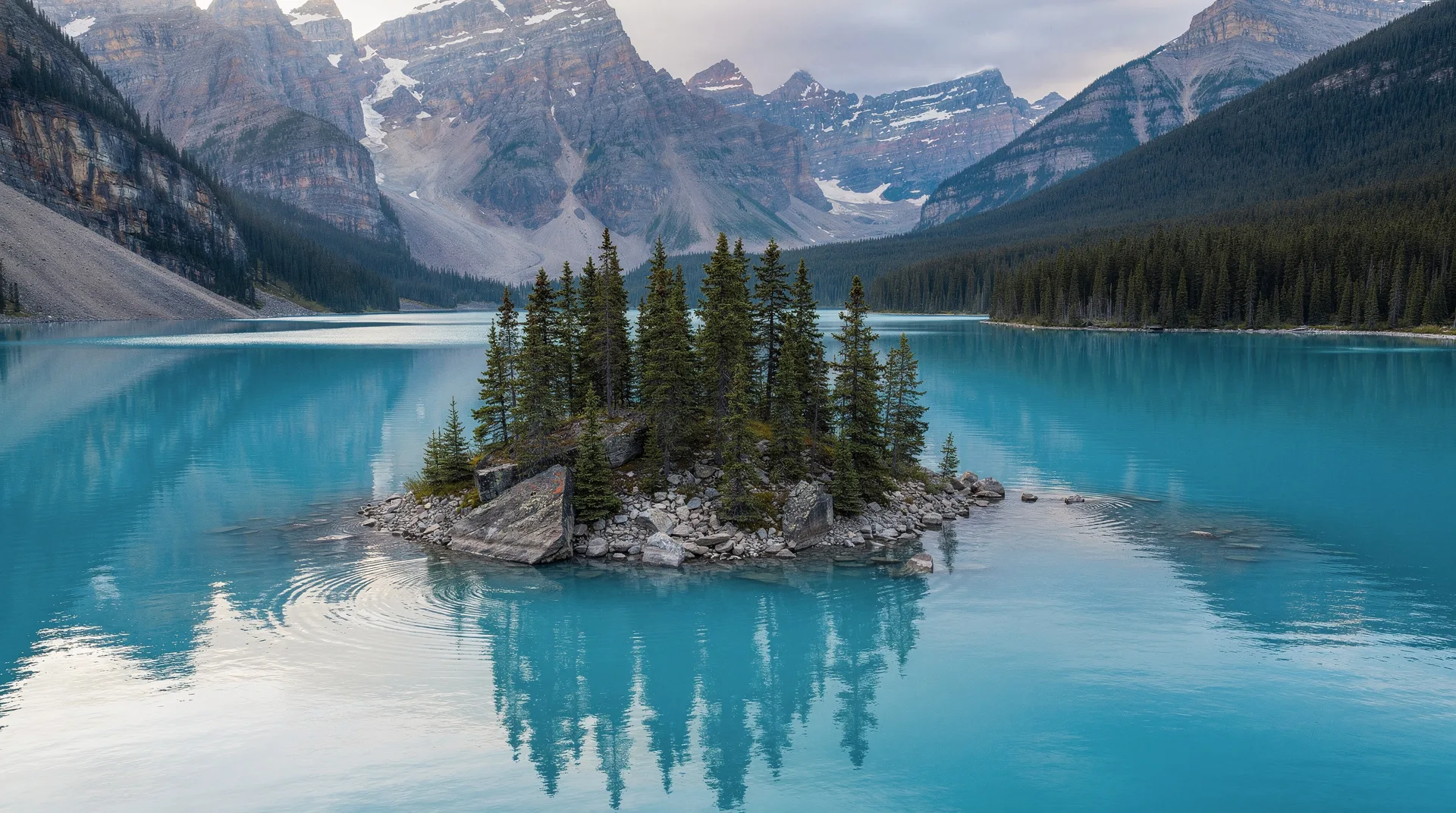
Maligne Canyon — at 50 metres deep, one of the deepest slot canyons in the Rockies — sits just 11 km from town. Maligne Lake, reached by a 48 km road through a wildlife-rich valley, is the largest naturally occurring lake in the Rockies and the second largest in the world at this altitude. Spirit Island, the tiny forested islet reflected in the lake’s turquoise water, is among the most photographed locations in Canada.
The park’s Indigenous history runs deep. The Beaver Lake Cree Nation, Stoney Nakoda, and Métis peoples have ancestral ties to these valleys. The name Jasper itself comes from Jasper Hawes, a fur-trade clerk who operated a supply cache in the area — a reminder that the Yellowhead Pass above the current townsite was a major route through the mountains long before the national park was established.
Top things to do in Jasper National Park
Explore Maligne Lake and Spirit Island
Maligne Lake is Jasper’s defining experience. The 22 km lake fills an elongated glacial basin surrounded by peaks above 3,000 metres, with the water taking on extraordinary shades of turquoise in mid-summer as meltwater from the Brazeau Icefield flows in. Spirit Island — a tiny forested islet near the lake’s midpoint — can only be reached by boat cruise. The 90-minute return cruise to Spirit Island is one of the most popular excursions in the Canadian Rockies; book well in advance for July and August visits.
The Maligne Lake Road passes through prime moose and wolf habitat in the Maligne Valley. Stop at Medicine Lake, a hydrologically bizarre body of water that drains entirely underground through sinkholes in autumn, leaving a valley floor of gravel and silt.
Book an 8-day Rockies tour including Jasper, Maligne Lake and BanffWalk on the Athabasca Glacier
The Athabasca Glacier is one of six principal outlet glaciers of the Columbia Icefield, and it is accessible to non-technical visitors with remarkable ease. A short interpretive trail from the Icefields Discovery Centre leads to the glacier’s toe. Walking tours on the glacier surface are available with Parks Canada — a guide leads small groups across the ice, pointing out crevasses, meltwater channels, and the striations left by advancing and retreating ice.
The Columbia Icefield Discovery Centre also offers the Ice Explorer, a massive all-terrain vehicle that drives onto the glacier for a 25-minute tour. For a more dramatic perspective, the Glacier Skywalk — a 430-metre glass-floored walkway cantilevered over the Sunwapta Valley 280 metres below — provides views across the glacier and valley unavailable from any trail.
The glacier has retreated over 1.5 km since 1870; marker posts along the access road show the ice margin at different dates. Seeing those markers in context makes the scale of glacial loss visceral in a way no textbook photograph can replicate.
Stargaze in the Dark Sky Preserve
Jasper’s designation as a Dark Sky Preserve is more than a marketing label. The park enforces strict lighting ordinances, and the result is a night sky that most people raised in or near cities have never experienced. From late August through October — when nights are longest and temperatures still manageable — the Milky Way is bright enough to read by (almost). The Andromeda Galaxy is visible to the naked eye. In good conditions, the northern lights appear several times a week.
Best stargazing spots include Lake Annette (close to the townsite, with mountain reflections in the lake), the Pyramid Lake area, and the Patricia Lake Circle. The Jasper Dark Sky Festival, held in late October, draws astronomers and photographers from across North America for a week of guided stargazing events, telescope sessions, and astrophotography workshops.
Hike to the base of Mount Edith Cavell
Mount Edith Cavell (3,363 m) is named for the British nurse executed by German forces in 1915, and it is one of the most visually commanding mountains in the park — a sheer north face of dark rock draped in hanging glaciers. The Edith Cavell Road (closed in winter) climbs 11 km from Athabasca Valley to a parking area at the mountain’s base.
The Path of the Glacier Trail (1.6 km return) is a short but astonishing walk through a landscape left bare by the Angel Glacier’s recent retreat. An interpretive trail explains the timeline of glacial change. The Cavell Meadows Trail (8 km loop, 380 m elevation gain) climbs through subalpine meadows to views of the entire north face and the remnants of the hanging glacier. In late July, the meadows are carpeted with wildflowers.
Maligne Canyon ice walk (winter)
In winter, the waterfalls of Maligne Canyon freeze into multi-storey ice columns, and the canyon floor — inaccessible in summer — becomes a walking route through a cathedral of ice. Guided ice walks descend into the canyon using ladders and ice-equipped footwear. The experience of standing between 50-metre walls of frozen waterfall with ice formations overhead is unlike anything available in Banff or any other mountain park.
Miette Hot Springs
Miette Hot Springs, at the end of a 17 km road off Highway 16, are the hottest natural hot springs in the Canadian Rockies, with water emerging at 54°C before being cooled to bathing temperature for the outdoor pools. The setting — a narrow valley of limestone cliffs above the Fiddle River — is dramatically different from the open mountain views of Banff’s Upper Hot Springs. A ruined bathhouse from the original 1910 pool complex adds historical texture.
Pyramid and Patricia Lakes
Pyramid and Patricia Lakes sit in a chain north of the Jasper townsite, backed by the sharp pyramid of Pyramid Mountain. Canoeing, kayaking, and paddleboarding are popular. Pyramid Island — connected to the shore by a footbridge — is a picnic spot with exceptional views. The Pyramid Lake Road is one of the best places to see elk near the townsite, particularly in the early morning.
Best viewpoints and photo spots
Maligne Lake and Spirit Island — The classic shot requires the Spirit Island boat cruise. Morning light falls on the surrounding peaks from around 8 am. The lake is at peak turquoise colour in July and August.
Mount Edith Cavell and Angel Glacier — From the Path of the Glacier trailhead, the Angel Glacier and north face fill the frame. The hanging glacier calves irregularly, and a lake of icebergs has formed at the glacier’s base.
Sunwapta Falls — A powerful two-stage waterfall on the Athabasca River, 55 km south of Jasper on the Icefields Parkway. The lower falls require a 1 km walk and are less visited. Golden hour light turns the spray gold.
Athabasca Falls — Wider and more powerful than Sunwapta Falls, 30 km south of Jasper. The short canyon the falls have carved through quartzite is a geological showcase. Multiple viewpoints on both sides of the gorge.
Pyramid Mountain at sunset — The sharp peak turns amber and red at sunset when viewed from Pyramid Lake. Combine with wildlife watching on the road.
Valley of the Five Lakes — Five interconnected lakes of different colours in a forested valley 10 km south of Jasper. Visit in the afternoon when the light hits the eastern slopes.
Hiking trails in Jasper National Park
Easy trails (under 6 km, minimal elevation gain)
Path of the Glacier, Mount Edith Cavell (1.6 km return, 40 m gain) — Through a recently deglaciated landscape to the toe of Angel Glacier. Among the most visually impactful short walks in the Rockies.
Valley of the Five Lakes (4.4 km loop, 80 m gain) — Forested loop trail connecting five small lakes of varying colours. Easy walking with significant wildlife potential.
Lake Annette Loop (2.4 km, flat) — Accessible path around the lake nearest the townsite. Excellent for birdwatching and evening light.
Athabasca Falls circuit (1 km, flat) — Multiple viewpoints of one of the most powerful waterfalls in the Rockies, with interpretive panels on glacial geology.
Moderate trails (6–20 km, 300–800 m elevation gain)
Cavell Meadows (8 km loop, 380 m gain) — From the Edith Cavell Road parking area through subalpine meadows with views of the Angel Glacier and mountain. Best wildflowers in late July.
Maligne Canyon (5.8 km return, 115 m gain) — The full canyon trail between the lower and upper parking areas. The canyon walls reach 50 metres at their deepest. Bring a headlamp for the narrow inner sections.
Opal Hills (8.2 km loop, 460 m gain) — Above Maligne Lake, with views over the entire lake and surrounding icefields. One of the best viewpoints in the park. Best accessed from the Maligne Lake parking area.
Saturday Night Lake Loop (21 km, 500 m gain) — A backcountry loop from the Marmot Basin road passing several alpine lakes. Good wildlife corridor with bear activity frequent. Permit required for overnight.
Difficult trails (20+ km or steep terrain)
Skyline Trail (44 km one way, 1,600 m cumulative gain) — One of the finest backpacking routes in Canada, traversing above the treeline for over 20 km. Backcountry permit required. Most hikers take 3 days. Mountain views are continuous; the section above the Shovel Pass is among the highest maintained trail in the Rockies.
The Notch on Mount Edith Cavell (14 km return, 1,200 m gain) — A scrambling route (not a maintained trail) to the col between Edith Cavell and Sorrow Peak. Exceptional views; route-finding ability required.
Fryatt Valley (24 km return, 740 m gain) — Remote valley south of the townsite with a dramatic cirque at the head. A long day hike or easy overnight. The Fryatt Hut at the valley head is a historic Alpine Club of Canada shelter.
Wildlife you might see
Jasper’s wildlife is both more abundant and less habituated to humans than in Banff, which means encounters can be more intense and more unpredictable. The park’s wolf population is the most studied in the world — the Jasper wolf packs have been subject to continuous research since the 1990s. Wolves are spotted on the Maligne Lake Road and the Icefields Parkway with reasonable regularity.
Grizzly bears emerge from dens in late March and are active throughout the warm months. The Maligne Lake Road and the area around Miette Hot Springs are productive. Always carry bear spray. Black bears are also common in the valley bottoms.
Elk are ubiquitous — the Jasper townsite golf course is notorious as an elk grazing area, and herds cross the main road near the townsite regularly. During the September rut, bull elk bugle through the night.
Moose are more commonly encountered in Jasper than in Banff. The Maligne Valley, Pyramid Lake Road, and Highway 16 corridor all produce regular sightings. Moose are solitary, large, and more dangerous than they appear — maintain 30 metres of distance.
Mountain caribou are present in the park’s northern ranges, though they are elusive and declining. Woodland caribou are a species of serious conservation concern across the boreal region.
Bighorn sheep are common on road cuts and at mineral licks along the Icefields Parkway. Mountain goats inhabit high cliff faces; the Whistlers Mountain above the gondola is a reliable viewing area.
Getting there and around
By car — Jasper town is 362 km west of Edmonton via Highway 16 (Yellowhead Highway), about 3.5 hours. From Banff, the Icefields Parkway (232 km north) takes 3–4 hours with stops.
By train — VIA Rail’s Canadian runs from Toronto to Vancouver stopping at Jasper three times weekly in each direction. The arrival at Jasper station — with the townsite’s peaks visible through the windows — is one of the great train arrivals in North America. The Rocky Mountaineer luxury train also serves Jasper.
By bus — Brewster/Pursuit operates coach service between Calgary, Banff, and Jasper. Sun Dog Tours runs shuttles between Jasper and Edmonton.
Book a one-way guided tour from Banff to Jasper along the Icefields ParkwayWithin the park — A car is effectively necessary for exploring beyond the townsite. Maligne Lake is 48 km from town; Mount Edith Cavell is 30 km. Jasper Shuttle operates services to Maligne Lake and some trailheads in summer. Cycling is possible within the townsite and on the Icefields Parkway, though the parkway shoulder is narrow in places.
Where to stay
Inside the park
Fairmont Jasper Park Lodge — The grande dame of Jasper accommodation occupies its own peninsula on Lake Beauvert, 5 km from the townsite. Luxury cabins and bungalows, a heated pool, golf course, and direct access to trails and canoeing. From around CAD 450 per night.
Whistlers Campground — The park’s largest campground with 781 sites including electrical hookups. Adjacent to the Jasper Tramway and wildlife corridors. Book through Parks Canada from January.
Wapiti Campground — Open year-round (rare for a mountain park campground), with electrical sites suitable for winter camping near the Athabasca River.
Wabasso Campground — A quieter riverside option south of the townsite near the Valley of the Five Lakes trailhead.
Jasper townsite
Crimson Jasper (formerly the Sawridge Inn) — Full-service hotel in the townsite with indoor pool. Mid-range at around CAD 200 per night.
Jasper Inn and Suites — Good value with kitchen suites; well-located for the townsite restaurants and shops. Around CAD 180 per night.
HI Jasper — A small hostel property near the station with dormitory and private rooms. From around CAD 45 per night.
Note on the 2023 Jasper wildfire — The Jasper wildfire of July 2023 destroyed approximately one-third of the townsite’s buildings. Reconstruction is ongoing. Check current accommodation availability through the Jasper tourism website, as the inventory of hotels and services continues to evolve through 2025–2026.
Best time to visit Jasper National Park
June and July bring wildflower blooms, full river flow for whitewater rafting on the Athabasca, and the reopening of high-elevation trails. The Maligne Lake Spirit Island boat cruises begin operating in mid-June. Crowds are significantly lower than in Banff.
August offers the peak summer experience. All trails are open, weather is warm, and the lake colours are at their most vivid. The Dark Sky Festival begins building its audience from late August.
September is exceptional. The larch trees in Cavell Meadows and along the Skyline Trail turn gold, elk rut begins, and the night skies lengthen. This is the best month for both hiking and stargazing.
October sees most facilities close but rewards visitors with near-empty trails, dramatic autumn light, and the highest aurora probability of the year. The Jasper Dark Sky Festival takes place in late October.
Winter (December–March) — The Jasper Tramway operates on weekends. Cross-country skiing at Whistlers and Valley of the Five Lakes is excellent. Maligne Canyon ice walks are available. The Marmot Basin ski area provides 86 runs on two mountains. Weather is cold, with temperatures commonly below -15°C, but the park is genuinely beautiful under snow.
Practical info for visiting Jasper
Park pass — Parks Canada Discovery Pass required for entry. Daily pass: CAD 12.25 per adult. Annual Discovery Pass: CAD 83.50 per adult or CAD 167.50 per family. Park gates on Highway 16 and the Icefields Parkway are staffed in summer; self-pay in winter.
Visitor Centre — The Jasper Visitor Centre in the townsite is open daily in summer, weekdays in shoulder season. Staff provide current trail conditions, wildlife alerts, and backcountry permit information.
Backcountry permits — Required for all overnight backcountry travel. Available from Parks Canada online or at the Jasper Visitor Centre. The Skyline Trail and other popular backcountry routes fill up on the reservation system quickly in the January booking window.
Emergency — Park Warden emergency line: 780-852-3100. Cell coverage in Jasper town is good; it is limited along most park roads and non-existent on backcountry trails. Carry a personal locator beacon (PLB) for remote hiking.
Altitude — Jasper town sits at 1,060 metres — lower than Banff. The surrounding trails climb to 2,200+ metres. Altitude effects are generally mild for most visitors.
Jasper versus Banff at a glance
| Jasper | Banff | |
|---|---|---|
| Size | 10,878 km² (largest in the Rockies) | Smaller, more developed |
| Crowds | Noticeably quieter | Busier, more shuttle-dependent |
| Signature draw | Dark Sky Preserve, wolves, Maligne Lake | Moraine Lake, Lake Louise, town amenities |
| Feel | Genuine wilderness, less polished | Sophisticated mountain resort |
For a deeper side-by-side, see Banff vs Jasper, and for the connecting drive, driving Banff to Jasper or the Icefields Parkway stops guide.
For hikers planning a trip, the full Jasper hikes overview breaks down trails by difficulty, and rafting the Athabasca is a strong warm-weather add-on. For the best single boat excursion, see the Maligne Lake boat tour guide. Those weighing seasons should also check best time to visit Jasper and Jasper in September for the shoulder-season case.
Frequently asked questions about Jasper National Park
How does Jasper compare to Banff for a visit?
Jasper is quieter, larger, and generally less developed than Banff. It has fewer iconic “photo stops” demanding shuttle reservations, but the experiences tend to feel more like genuine wilderness encounters. Banff excels at accessible, concentrated iconic scenery; Jasper is better for those wanting hiking, wildlife, stargazing, and a more remote mountain feel. The Icefields Parkway connects them, and many visitors combine both parks over a week.
When is the best time for stargazing in Jasper?
The darkest, longest nights are October through February. However, October combines reasonable temperatures (down to -5°C overnight) with excellent aurora probability and the Dark Sky Festival. August and September also offer superb stargazing with warmer overnight conditions. Visit on nights around the new moon for maximum darkness.
Is the Spirit Island boat cruise worth it?
Yes, for most visitors it is. The cruise is the only way to reach Spirit Island, and the view of the lake from midwater — surrounded by peaks, with the island in the foreground — is genuinely one of the best viewpoints in the Canadian Rockies. Book at least a week ahead for summer visits, several weeks ahead for July and August.
What happened to Jasper in the 2023 wildfire?
The Jasper wildfire of late July 2023 burned approximately 35,000 hectares and destroyed around one-third of the buildings in the townsite. The park itself — including major landmarks like Maligne Lake, Mount Edith Cavell, and the Icefields Parkway — was unaffected. The townsite is being rebuilt, and most visitor services have reopened, but accommodation capacity remains reduced from pre-2023 levels. Book lodging early.
Can you hike to Spirit Island?
No maintained trail reaches Spirit Island. The only access is by the Maligne Lake boat cruise, operated by Pursuit Collection (the Pursuit Company). Kayaking to the island is permitted but requires experience — the lake’s weather can deteriorate rapidly and water temperatures are dangerously cold.
What wildlife is most likely to be seen near Jasper town?
Elk are almost guaranteed around the townsite, golf course, and Pyramid Lake Road. Bighorn sheep are regularly seen near the Maligne Canyon entrance and along Highway 93A. Coyotes are common near the campgrounds. Bears, wolves, and moose are seen more often along the Maligne Lake Road than near the townsite itself.
How far is Jasper from Edmonton?
Jasper is 362 km west of Edmonton via Highway 16 (the Yellowhead Highway), a comfortable 3.5-hour drive. Edmonton International Airport is the closest major airport to Jasper for travellers arriving from eastern Canada or internationally without a connection through Calgary. Calgary is further (430 km) but well-connected by the scenic Icefields Parkway.
Is the Athabasca Glacier safe to visit?
The glacier’s toe, accessible via the interpretive trail from the Columbia Icefield Discovery Centre, is safe to visit with normal precautions. Never venture beyond the marked boundary onto the glacier without a guide — the glacier has crevasses, unstable ice, and meltwater channels. The guided walking tours and Ice Explorer rides are the safe options for getting onto the ice itself.
How many days do I need in Jasper?
Three to four days covers the core highlights — Maligne Lake, the Athabasca Glacier area, and one or two hikes. A week allows time for stargazing, a longer hike like the Bald Hills or Skyline Trail, and a more relaxed pace given the park’s size.
Is Jasper cheaper to visit than Banff?
Generally yes. Accommodation and dining in Jasper townsite tend to run somewhat lower than equivalent options in Banff or Lake Louise, and popular sights see smaller crowds, which can mean fewer paid shuttle or reservation requirements. Park pass costs are identical across all Parks Canada mountain parks.