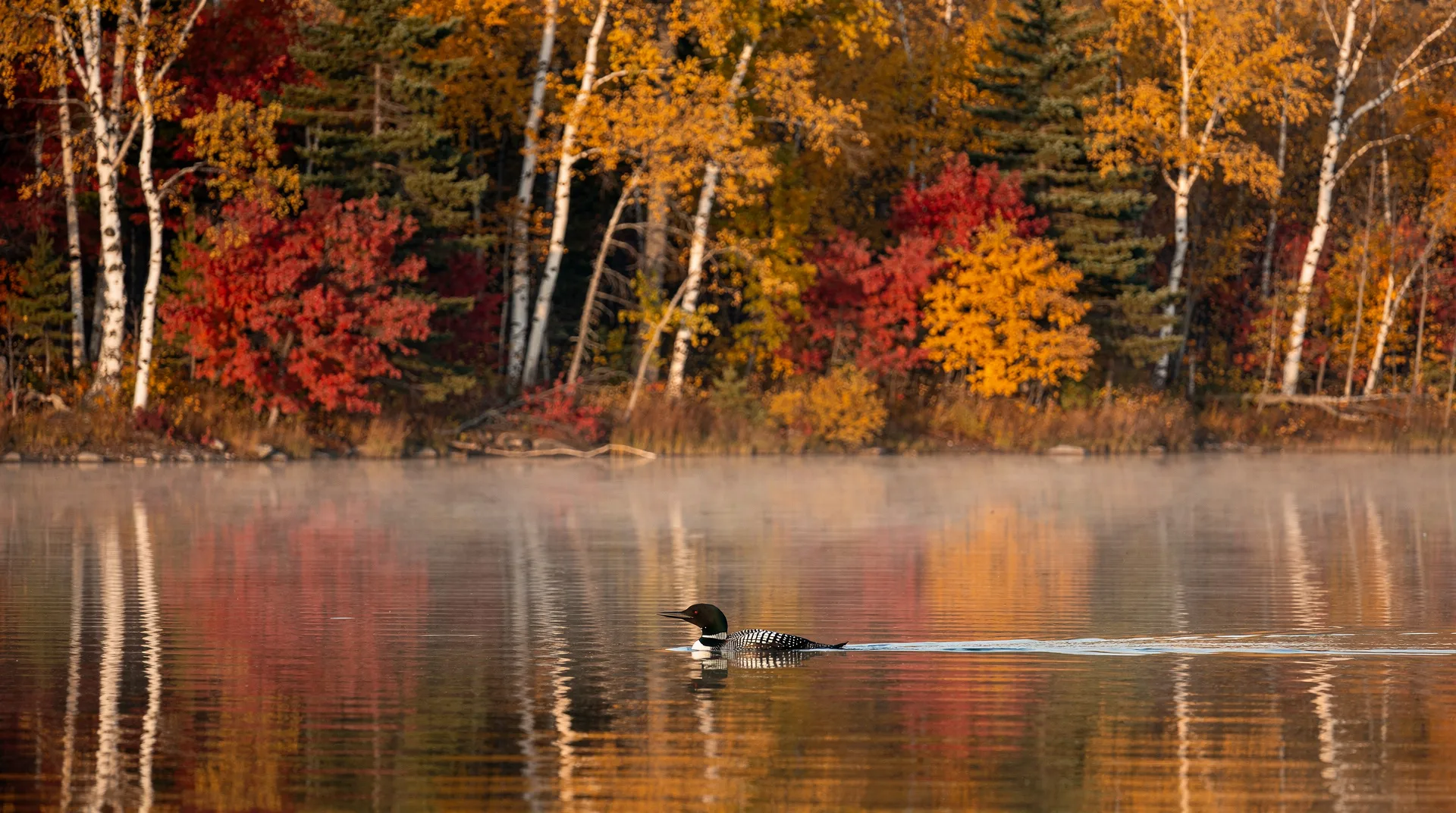
Canadian wildlife guide: bears, moose, caribou, eagles and where to see them
What wildlife can you see in Canada?
Canada hosts iconic wildlife including grizzly and black bears, polar bears, moose, elk, caribou, wolves, bald eagles, orcas, beluga whales, narwhal and over 450 bird species, spread across distinct regions with seasonal peaks.
| At a glance | |
|---|---|
| Where | Every region has signature wildlife — Rockies (elk, bear), BC coast (grizzly, orca), Arctic (polar bear, narwhal) |
| Cost | Self-drive viewing (Banff, Jasper) is essentially free beyond a park pass; specialised tours run from around CAD 100 to several thousand for expeditions |
| Time needed | A few hours for roadside wildlife; 3-7 days for a dedicated wildlife trip |
| Getting there | Most accessible spots reachable by car; Arctic and remote coastal viewing needs flights and organised tours |
| Best time | Varies hugely by species and region — see the seasonality table below |
Canada’s wildlife in one paragraph
Canada is one of the world’s great wildlife destinations, with vast wilderness supporting intact populations of species that have vanished elsewhere. The Rocky Mountains are dense with elk, bear, and mountain goats; BC’s coast supports grizzlies, black bears, orcas, and humpback whales; the Prairies have elk, bison, and endless birdlife; the Arctic has polar bears, beluga, narwhal, muskox, and caribou; the boreal forest carries moose, wolves, and lynx; and every Canadian region has its own seasonal highlights. This guide is your overview.
Bears: Canada’s iconic big wildlife
Canada hosts three bear species, each with distinct habitat, season, and viewing conditions.
Black bears
The most abundant Canadian bear (roughly 500,000 individuals), found in every province and territory except PEI. Despite the name, black bears range from true black through brown and cinnamon. Adults are typically 100-200 kg — significantly smaller than grizzlies.
Where to see: Virtually every forested area. Banff and Jasper have reliable black bear roadside sightings. Ontario’s Algonquin and BC’s Vancouver Island are especially dense with them.
Season: Active April-October (hibernate in winter). Spring (newly emerged with cubs) and fall (hyperphagia before denning) are peak viewing.
Safety: Black bears rarely attack but deserve respect. Make noise while hiking, carry bear spray, never leave food accessible.
Grizzly bears
Grizzly bears (a subspecies of brown bear) number about 25,000 in Canada, concentrated in BC, Alberta, Yukon, and NWT. Distinguished from black bears by a shoulder hump, dished face, and much larger size (adult males 180-360 kg).
Where to see:
- Khutzeymateen Grizzly Sanctuary (northern BC coast) — Canada’s premier grizzly viewing destination. Boat-based tours only; no land access.
- Bella Coola Valley (BC central coast) — Fall salmon-run bear viewing from platforms.
- Glendale Cove (BC central coast) — Boat-based viewing.
- Banff and Jasper — Grizzlies are seen in alpine meadows and along roads, though viewing is less reliable than in specialised viewing areas.
- Yukon — Strong populations in Kluane and remote areas.
Season: May-October. Peak salmon-run viewing September-October.
See grizzly bear viewing BC and the grizzly bear viewing guide.
Polar bears
The world’s largest bear (adult males 350-700 kg). About 65% of the world’s polar bears live in Canadian territory — primarily along the Arctic coast, Hudson Bay, and James Bay.
Where to see: Churchill, Manitoba is the most accessible polar bear destination in the world, with the famous tundra buggies. Polar bear-watching is effectively the entire October-November local economy. See polar bears in Churchill and polar bear tundra buggy.
Season: October-November (pre-sea-ice). Summer tours to floe edges in Nunavut also produce polar bear sightings.
Spirit bears (Kermode bears)
A rare white phase of the black bear, found only in BC’s Great Bear Rainforest. Seeing one is a genuine bucket-list experience requiring a specialised tour.
See Spirit Bear tours.
Moose and deer family
Moose — North America’s largest deer species (adult males 380-720 kg). Found across the boreal forest and mountain regions. Newfoundland has an exceptionally dense moose population (introduced in the 1900s, grown to extraordinary numbers). Also common in Algonquin, Jasper, and across the Yukon and NWT.
Elk (wapiti) — Found throughout the Canadian Rockies. Banff’s elk population is famous; the fall rut (September) is dramatic with bugling bulls. Also in Jasper, Prince Albert NP, and parts of BC.
Deer (white-tailed and mule) — Abundant across all of southern Canada.
Caribou — Three main populations: Boreal caribou (forested areas, threatened), Barren-ground caribou (massive migratory herds in the north), and mountain caribou (tiny remaining population, critically endangered).
- Migratory caribou — Best viewed on the Porcupine caribou herd migration across Yukon and NWT, though this requires expedition-level travel.
- Mountain caribou — Very difficult to see; populations are depleted.
Mountain goats and bighorn sheep — Characteristic of the Canadian Rockies. Excellent viewing from the Icefields Parkway and at specific overlooks.
Bison — Nearly extirpated in the 19th century but reintroduced to several areas. Elk Island National Park (near Edmonton) is the easiest place to reliably see plains bison. Wood Buffalo National Park (NWT/Alberta) protects the world’s largest wood bison population.
See wildlife watching Alberta and moose and caribou for detail.
Wolves
Approximately 60,000 wolves live in Canada. Seeing one in the wild is rare even for dedicated wildlife watchers.
Best chances:
- Algonquin Park — Famous for its public wolf howls in August, where rangers lead groups to hear wolves respond to howling.
- Yukon and NWT — Open terrain and large populations.
- Banff and Jasper — Occasional sightings on roads in winter, especially early morning.
Wolves are smart, shy, and actively avoid humans. Plan wolf-focused trips accepting that sightings are not guaranteed.
Bears and salmon runs
One of the best Canadian wildlife experiences is watching bears fish during BC salmon runs. Peak period is late August through October on rivers and streams across BC. Bears (both black and grizzly) congregate at prime fishing spots, providing exceptional viewing opportunities.
Prime destinations:
- Bella Coola Valley — Fall grizzly viewing on the Atnarko River
- Fish Creek (near Hyder, Alaska, accessible via BC) — Classic salmon-run bear viewing
- Mitchell River (south of Bella Coola) — Remote fly-in viewing
See salmon runs BC.
Whales
Canada’s three coasts all support world-class whale watching.
Pacific:
- Orcas (killer whales) — Resident populations around Vancouver Island, Johnstone Strait, and southern Gulf Islands. Peak season May-October.
- Humpback whales — Increasingly common along the BC coast during summer feeding season.
- Grey whales — Migration peaks along Tofino-Ucluelet in March-April.
Atlantic:
- Humpback, fin, minke — Peak August in the Bay of Fundy and Newfoundland. See whale watching Atlantic Canada.
- North Atlantic right whales — Critically endangered; sometimes seen in the Bay of Fundy.
St. Lawrence (Quebec):
- Blue whales — Some of the largest animals ever to live. Tadoussac-area peak July-September. See Quebec whale watching and blue whales Quebec.
- Beluga whales — Year-round resident population in the St. Lawrence estuary.
- Fin, minke, humpback — Abundant in summer.
Arctic:
- Beluga whales — Summer gatherings at Churchill on Hudson Bay (July-August). See beluga kayaking Churchill.
- Narwhal — Floe-edge tours in Nunavut (May-June). See narwhal viewing Nunavut.
- Bowhead — Rare sightings on Nunavut expeditions.
See the whale watching Canada overview.
Browse Canada wildlife tours and experiencesBirds
Canada has 470+ bird species with extraordinary birding opportunities.
Bald eagles — Abundant across BC and Atlantic Canada. Brackendale, BC (north of Vancouver) hosts the world’s largest winter bald eagle gathering (November-February).
Snowy owls — Arctic breeders that winter across southern Canada in irruption years.
Puffins — Atlantic colonies in Newfoundland (Witless Bay) and Quebec (Bonaventure Island). See puffin watching Newfoundland.
Snow geese — Massive staging flocks in Quebec and the Prairies during migration. See snow geese migration Quebec.
Gannets — Massive colony at Cape St. Mary’s Ecological Reserve (Newfoundland). See Cape St. Mary’s.
Whooping cranes — Extremely endangered; breeding ground is Wood Buffalo NP in Alberta/NWT.
Hummingbirds — Four species in Canada, with Anna’s and rufous hummingbirds common in BC.
See birding Canada.
Arctic wildlife
Muskox — Cold-adapted mammals in the Arctic. Best viewed on Nunavut and NWT expeditions.
Arctic foxes — Common around Churchill and Arctic coastal areas.
Walrus — Nunavut floe-edge expeditions; also coastal Nunavut summer gatherings.
Ringed seals — The main food source for polar bears; visible at Churchill and other Arctic sites.
Ethical wildlife viewing
Keep distance. Parks Canada recommends 30m from most wildlife, 100m from bears. Breaking these rules can invalidate insurance claims for wildlife injuries and can harass animals.
Do not feed wildlife. Feeding creates dependent, habituated animals who eventually are killed for human safety.
Stay in your vehicle for roadside wildlife. Rolling down the window is fine; getting out disrupts animals and creates dangerous interactions.
Use a proper camera lens. A 200-400mm lens lets you photograph effectively without getting too close.
Choose Parks Canada and BC Parks tours. These have well-developed wildlife viewing guidelines and protect both you and the animals.
Avoid drones. Drones are prohibited in all national parks and harass wildlife.
Respect closures. Trail closures in bear country are not optional.
Find Banff wildlife tours and experiencesBuilding a wildlife trip
Beginner (manageable, reliable sightings):
- Banff-Jasper summer: elk, black bear, bighorn sheep, mountain goats, occasional grizzly
- Algonquin Park in September: moose, black bears, wolves (howls)
- Vancouver Island summer: orcas, bald eagles
Intermediate:
- Churchill November polar bears + Churchill July belugas combination
- Bella Coola valley grizzly viewing
- Newfoundland summer: icebergs + whales + puffins + moose
Advanced:
- Nunavut floe-edge expedition: narwhal, polar bear, walrus
- Yukon Porcupine caribou migration
- Wood Buffalo NP wood bison
Seasonality summary
April-May: Bears emerging (especially from roads), grey whale migration, early wildflowers and birds returning, moose calving.
June: Caribou calving, bird nesting, baby animals everywhere.
July-August: Peak diversity everywhere. Beluga season at Churchill. Orca peak around Vancouver Island. Puffin colonies active.
September: Elk rut, bear hyperphagia before hibernation, salmon runs starting, migratory bird departures.
October-November: Polar bears at Churchill, fall salmon runs peak.
December-March: Bald eagles concentrating, snowy owls in irruption years, wolves occasionally visible on snow. Most species quiet.
Seasonality at a glance
| Month | Standout wildlife | Notes |
|---|---|---|
| April-May | Bears emerging, grey whale migration | Roads reopening in the Rockies; icebergs beginning off Newfoundland |
| June | Caribou calving, nesting birds | Best water levels for wildlife-adjacent paddling, see canoeing Algonquin |
| July-August | Peak diversity, belugas at Churchill, orcas near Vancouver Island | Busiest season everywhere; book tours ahead |
| September | Elk rut, salmon runs starting, bear hyperphagia | Widely considered the best all-round wildlife month |
| October-November | Polar bears at Churchill, peak salmon runs | Churchill season is short and books out early |
| December-March | Bald eagle gatherings, snowy owl irruptions | Quietest season for most mammals; strong for birding |
Realistic trip lengths and costs
Wildlife trips vary enormously in scope, from a free afternoon of roadside spotting to a five-figure Arctic expedition:
- Self-drive, one day (Banff/Jasper): essentially free beyond your park pass and rental car — elk, black bear, bighorn sheep are commonly seen from the Icefields Parkway and park roads. See icefields parkway stops.
- Guided half-day (whale watching, bear viewing platforms): typically CAD 100-250 per person.
- Multi-day specialised trip (Bella Coola grizzlies, Churchill polar bears): CAD 300-1,000 per day, often all-inclusive with lodging.
- Arctic expedition (Nunavut floe edge, narwhal, walrus): CAD 8,000-15,000 per trip — the top end of Canadian wildlife travel.
For a first Canadian wildlife trip on a normal travel budget, a Banff-Jasper itinerary or a fall visit to Algonquin Park delivers strong sightings without expedition-level spending.
Frequently asked questions about Canadian wildlife guide: bears, moose, caribou, eagles and where to see them
What is the best place in Canada for wildlife?
BC’s central coast (grizzlies, orcas, whales, bald eagles) offers the highest density of world-class wildlife in one region. Churchill, Manitoba, offers the most uniquely Canadian experiences (polar bears, beluga).
Are bear attacks common in Canada?
No — bear attacks are rare. Typically 1-3 bear-caused fatalities per year across all of Canada. Millions of visitors observe bears safely annually. Basic precautions dramatically reduce risk.
Do I need a guide for wildlife viewing?
For remote destinations (Nunavut, BC’s remote coast, wood bison range) yes. For accessible destinations (Banff, Jasper, Vancouver Island) no — self-directed wildlife viewing is straightforward.
What camera gear should I bring?
A DSLR or mirrorless with a 200-400mm lens is standard for wildlife photography. Smartphone photography works for roadside wildlife but is limited at distance.
Is it safe to hike in bear country?
Yes, with basic precautions: make noise, carry bear spray, travel in groups, avoid dawn/dusk in high-density areas, store food properly. See safety in Canada.
When is the best time for wildlife viewing?
September is often cited — peak activity across many species, shoulder season crowds, comfortable weather. July-August for maximum diversity; October-November for polar bears.
Can I see both grizzlies and polar bears on one trip?
Yes, but requires significant travel — fall grizzly viewing in BC (September) followed by Churchill polar bears (late October to November) is the classic pairing.
Are wildlife tours expensive?
Wide range. Banff-area wildlife viewing is inexpensive (you can see most species self-drive). Specialised BC bear tours run CAD $300-1,000 per day. Nunavut floe-edge expeditions run CAD $8,000-15,000 per trip.
What is the single best month for a Canadian wildlife trip?
September, if you can only pick one — the elk rut, salmon runs, and bear hyperphagia overlap with comfortable weather and thinning summer crowds across most regions.
Do I need travel insurance that covers wildlife encounters?
Standard travel insurance covers most incidents, but always check that outdoor/adventure activities are included if your trip involves backcountry hiking or remote expedition travel. See Canada travel insurance for details.