Where to see moose and caribou in Canada: national parks and wilderness routes
Where is the best place to see moose in Canada?
Algonquin Provincial Park in Ontario, Jasper National Park in Alberta, and the interior of Newfoundland have high moose densities and good access. Moose are most reliably seen at dawn and dusk near lakes, ponds, and roadside marshy areas from May through October. Guided canoe trips in Algonquin offer the highest probability of close encounters.
Two of Canada’s most iconic large mammals — the moose and the caribou — occupy very different ecological niches but share the distinction of being among the most sought-after wildlife sightings in the country. The moose, the world’s largest member of the deer family, is found across the boreal forest from Newfoundland to the Yukon, frequently visible at roadside wetlands and lakeshores. The caribou, with its elaborate antlers and famous mass migrations, represents one of the last great wildlife spectacles remaining on Earth, playing out annually across the tundra and boreal forest of northern Canada.
Understanding where and when to see these animals transforms a road trip into a genuine wildlife experience. Both species follow seasonal patterns — moose are most visible in spring when they graze on aquatic vegetation in shallow lakes, and in autumn when bulls move through the forest during rut; caribou migrations follow ancient routes that haven’t changed in thousands of years and can be predicted with remarkable accuracy. The key is knowing which population to target and which season puts you in the right place.
At a glance
| Where | Algonquin (Ontario), Newfoundland, Jasper for moose; Dempster Highway and the far north for caribou migrations |
| Cost | Free to drive and look in most parks (plus the park entry pass); guided canoe tours around CAD 80-120; Churchill tundra buggy trips are a much bigger spend (see below) |
| Time needed | A dawn or dusk drive/paddle (a few hours) for moose; a multi-day trip for barren-ground caribou migrations |
| Getting there | Self-drive for Algonquin, Newfoundland and Jasper; guided/charter access recommended for Dempster Highway, Churchill and the Torngats |
| Best time | May-June and Sept-Oct for moose; April-May and Sept-Nov for barren-ground caribou migrations |
Moose: Canada’s largest land mammal
Moose ecology and behaviour
An adult bull moose can stand 1.8 metres at the shoulder and weigh 700 kg. The species is built for deep snow and cold — the long legs that give it that improbable silhouette allow it to wade through snow that would immobilize a deer or elk, and to forage in ponds and lakes where aquatic vegetation is inaccessible to other ungulates. Moose are solitary outside the autumn rut, and the bulls’ annual antler cycle — grown fresh each year and shed in winter — produces racks spanning up to 1.8 metres.
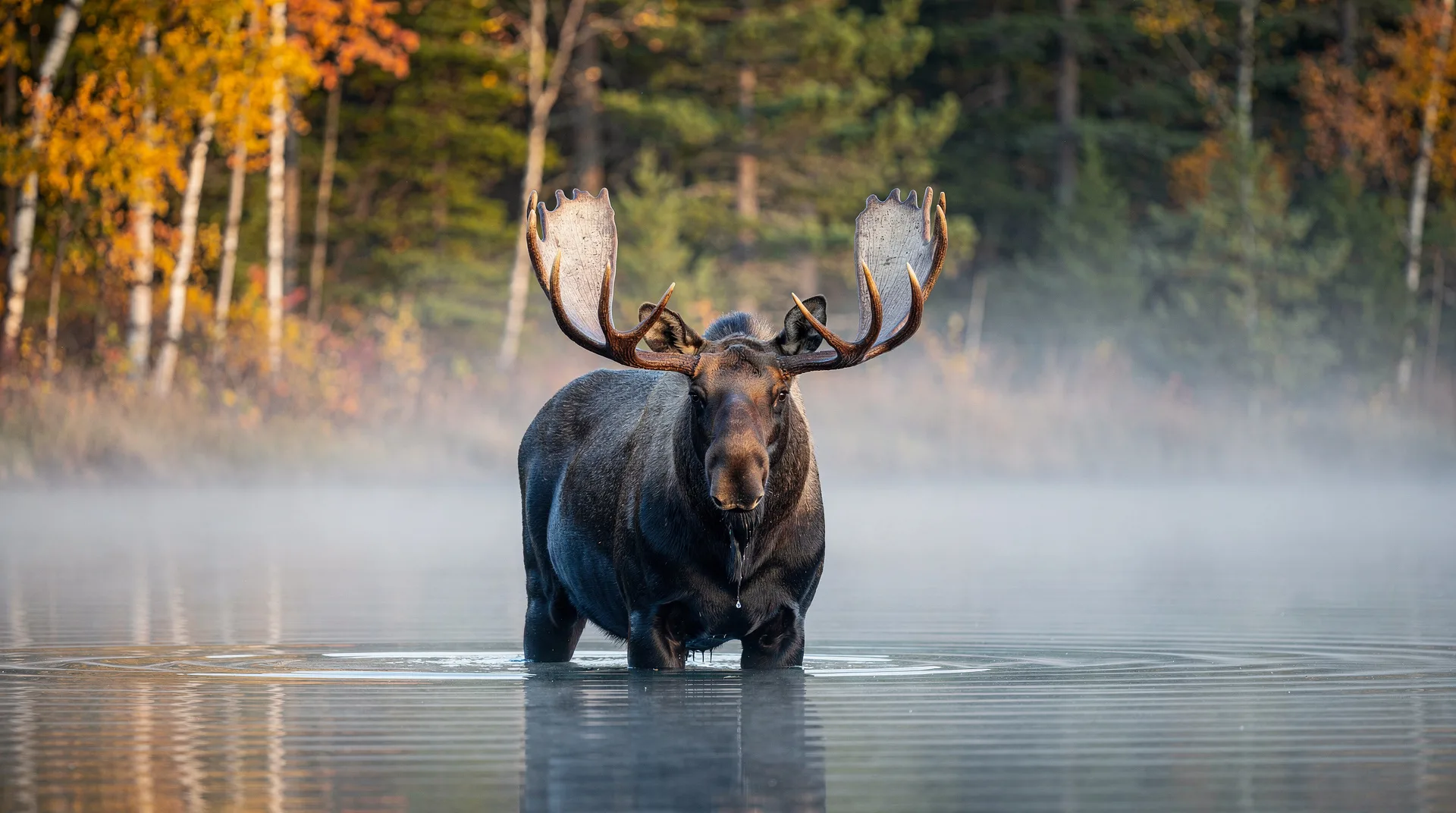
The best time to see moose is at the margin between water and land. They spend considerable time standing in ponds and lake shallows in spring and summer eating aquatic vegetation, which is rich in sodium and forms a critical dietary supplement. Dawn and dusk are peak activity times. In autumn (September–October), bulls are in rut — vocal, active, and less cautious than at other times of year.
Algonquin Provincial Park, Ontario
Algonquin is one of the most reliable locations in eastern Canada for moose sightings. The park’s lakes, rivers, and beaver ponds are used regularly by a moose population estimated in the hundreds. The Highway 60 corridor through the south edge of the park has a well-known “moose haunt” — a series of roadsides marked on visitor maps where moose are routinely seen at dawn.
Canoe camping in Algonquin’s interior is the most rewarding moose-watching format. Paddling the Oxtongue River or the Lake Opeongo system at dusk, you are likely to encounter moose standing in shallows within metres of the canoe. The park’s interior portage route system, accessible from various access points, puts visitors in moose habitat that receives no road traffic.
The best season is May through June for cow-calf pairs at beaver ponds, and late September through mid-October for the rut. See the Algonquin Provincial Park guide for comprehensive trip planning.
Newfoundland
Newfoundland has one of the highest moose densities on Earth — estimated at 120,000 animals on the island for a human population of approximately 520,000. This translates to moose-per-road-kilometre ratios that have created a very real car collision hazard (warning signs are not decorative) and equally good odds of sighting.
The Trans-Canada Highway across Newfoundland’s interior and the roadways of the Long Range Mountains near Gros Morne National Park are excellent for roadside moose. Gros Morne specifically — with its combination of fjords, boreal forest, and coastal meadows — is outstanding moose habitat and the park’s flat, wetland-adjacent walking trails regularly produce close encounters.
Terra Nova National Park in eastern Newfoundland also has high moose density within an accessible park setting. See the Terra Nova guide.
Jasper National Park, Alberta
Jasper has a well-established moose population concentrated in the lower elevation marshes, particularly around Cottonwood Slough near the townsite and along the Athabasca Valley. The Maligne Valley road is another reliable sighting corridor. Moose are present year-round in Jasper, with the Icefields Parkway between Jasper and Lake Louise also producing occasional sightings.
Other reliable moose locations
- Cape Breton Highlands, Nova Scotia: The Cabot Trail corridor and backcountry of Cape Breton Highlands National Park have good moose populations. See the Cabot Trail guide for more.
- Riding Mountain National Park, Manitoba: Prairie-forest transition zone with moose in the park’s northern boreal sections.
- Prince Albert National Park, Saskatchewan: Remote park with excellent moose habitat in the boreal forest zone.
- Yukon: Moose are present throughout and frequently seen roadside on the Alaska Highway and Klondike Highway.
Caribou: the great herds
Woodland caribou vs. barren-ground caribou
Canada has two distinct caribou forms with very different ecology and viewing characteristics.
Woodland caribou are a larger, more solitary forest-dwelling subspecies found across the boreal forest from Newfoundland to British Columbia. They live in smaller groups than their barren-ground relatives, use dense forest as predator cover, and don’t undergo spectacular mass migrations. Woodland caribou are present in many provincial and national parks but are rarely seen in large numbers — a sighting of a small group of 5–10 animals is a memorable event.
Barren-ground caribou are the migrants. They live on the tundra of Canada’s north and undertake annual migrations between their wintering grounds in the boreal treeline and their calving grounds on the open tundra, covering distances of 500–1,000 km each year. The Bathurst herd in the Northwest Territories, the Beverly herd straddling Manitoba and the territories, and the Porcupine herd in the Yukon and Alaska are among the largest remaining migratory herds. In good years, these migrations involve tens of thousands of animals moving through specific landscape corridors.
Best places to see woodland caribou
Gros Morne National Park, Newfoundland: Gros Morne’s upland plateaux harbour a remnant population of woodland caribou that are visible on the Long Range Traverses and the Tablelands area. The animals are difficult to predict but the remote, open terrain makes sighting easier when they are present.
Banff and Jasper National Parks: Both parks once had substantial woodland caribou populations; the current numbers are very low due to predation, habitat fragmentation, and human disturbance. Sightings are possible but unpredictable — ranger-led wildlife programs occasionally document fresh sign.
Caribou Mountains Wildland Park, Alberta: This remote 10,000 km² protected area in northern Alberta is one of the last strongholds for woodland caribou in the province. Access requires genuine backcountry commitment.
Riding Mountain National Park: Manitoba’s iconic park has a small woodland caribou population in its northern boreal section.
Best places to see barren-ground caribou migrations
Dempster Highway, Yukon/NWT: The Dempster Highway — the only Canadian all-season road crossing the Arctic Circle — is the classic caribou migration route drive. In late October through November (southward fall migration), and again in April through May (northward spring migration), caribou of the Porcupine herd may cross the highway in large numbers. Timing is highly variable — call ahead to the Dawson City and Eagle Plains visitor centres for current herd position reports.
Thelon Wildlife Sanctuary, NWT: The Thelon is the most important calving area for the Bathurst herd. This is wilderness expedition territory — accessed by fly-in or multi-week canoe trip — for serious wildlife travellers. June and July are the calving season, when herds gather on the open tundra in the largest concentrations.
Churchill, Manitoba: Churchill is famous for polar bears, but the area is also within the range of the Beverly and Qamanirjuaq herds. Caribou transit through the Churchill region in spring and fall, and guided tundra buggy and helicopter tours from Churchill occasionally encounter caribou in significant numbers alongside the other wildlife.
Book a Churchill tundra buggy day trip — potential sightings include caribou, polar bears, and arctic foxes.Torngat Mountains National Park, Labrador: The remote Torngats in northern Labrador protect the calving grounds of the George River herd — once the largest caribou herd on Earth with 800,000 animals, now dramatically reduced but beginning to recover. The park’s wilderness camp (the only accommodation in the park) is accessible by charter flight from Happy Valley-Goose Bay. This is one of the most remote national park experiences in Canada.
Find guided wilderness and wildlife tours across Canada on GetYourGuide for northern expeditions.
Best time of year for moose and caribou
Moose viewing calendar
May–June: Cows with newborn calves are visible at wetland edges and beaver ponds. Moose are concentrated near water for sodium-rich aquatic plants. Dawn and dusk are peak activity.
July–August: Moose continue using lakes and ponds. Less visible in midday heat, more active morning and evening.
September–October: The rut. Bulls are vocal (a deep moaning call), active, and sometimes aggressive. This is both the most exciting and the most caution-requiring moose-watching season.
Winter: Moose are visible in forests and near roads where plowing exposes salt; some operators offer snowshoe or ski-based moose tracking in Algonquin and other parks.
Caribou viewing calendar
April–May: Spring northward migration for barren-ground herds. Dempster Highway is the most accessible viewing route.
June: Calving on arctic tundra. Torngats, Thelon — expedition territory.
September–October: Rut in barren-ground herds, followed by southward migration. Dempster Highway, Churchill vicinity.
November: Peak southward migration crossing for Porcupine herd at Dempster Highway.
How to plan a wildlife trip
Self-drive: For moose, a self-drive road trip through Algonquin, Newfoundland, or the Jasper-Icefields Parkway corridor is very practical. Dawn and dusk drives along park roads with patient observation is the standard approach.
Guided: For caribou migrations, particularly in the north, guided expeditions are strongly advisable. The logistics of accessing Dempster Highway, Churchill, and especially the Torngats require planning and local knowledge. Charter flights, vehicle preparation for remote roads, and accommodation scarcity in the north all benefit from professional coordination.
Canoe trips: Guided canoe trips in Algonquin, the Thelon watershed, and Newfoundland’s interior rivers provide excellent moose and woodland caribou habitat access while being inherently quiet — critical for approaching wildlife.
Costs
Algonquin canoe camping (self-guided, per night): CAD 12–18 per person for interior camping permit Algonquin guided canoe day tour: CAD 80–120 per person Churchill tundra buggy day trip: CAD 600–800 per person Torngat Mountains national park guided stay (7 nights): CAD 5,000–8,000 per person all-inclusive Dempster Highway self-drive (gas, accommodation, permits): Budget CAD 300–500 per person per day for a 3-day trip
Safety around moose and caribou
Moose: A cow moose with a calf is the most dangerous large mammal encounter in Algonquin and similar parks. Moose are less predictable than bears and more likely to charge without provocation when protecting young. Give cows with calves a wide berth (minimum 30 metres) and never position yourself between a cow and her calf. A charging moose (rare but real) should be retreated from while keeping a tree between you and the animal.
Bull moose in rut: Bulls in September–October are unpredictable and occasionally charge vehicles. If a bull approaches your vehicle or canoe, keep your distance and do not attempt to get closer for photographs.
Caribou: Barren-ground caribou are not typically a safety concern. The main hazard is the remote terrain required to observe migrations — weather, river crossings, and distances from assistance are the risks.
Where to stay
Algonquin: Whitney on the east gate side; Huntsville to the west. Interior camping reservations through the Ontario Parks system. Book months ahead for summer weekends.
Newfoundland/Gros Morne: Rocky Harbour (the main Gros Morne gateway town) has several inns and motel options. Neddie’s Harbour Inn and Gros Morne Cabins are popular mid-range options.
Jasper: See the Banff vs Jasper guide for accommodation.
Churchill: A small town with limited but functional hotel options. Lazy Bear Lodge is the most wildlife-focused; Churchill also has several motel properties.
Combining with other wildlife and park trips
Moose and caribou trips pair naturally with other Canadian wildlife experiences. If you’re heading to Churchill, most visitors go primarily for polar bears and add caribou as a bonus; see our Churchill cost guide and how to get to Churchill for full logistics.
If your route includes the Rockies, pair moose-watching in Jasper with a broader wildlife-watching Alberta plan, and see the Banff vs Jasper guide for where to base yourself. For a Newfoundland-focused trip, the Gros Morne National Park guide covers moose and woodland caribou habitat in more depth alongside the park’s fjords and hiking.
Frequently asked questions about Where to see moose and caribou in Canada: national parks and wilderness routes
What is the best park for seeing moose in Ontario?
Algonquin Provincial Park is the standard answer for Ontario moose viewing. The interior lakes and beaver ponds accessed by canoe from Highway 60 access points give the highest probability of close encounters. Quetico Provincial Park in northwestern Ontario is wilder and less visited with equally good moose density.
Are there reindeer in Canada?
Reindeer are the same species as caribou — Rangifer tarandus. In North America, wild populations are called caribou; domesticated or semi-domesticated herds are called reindeer. Some First Nations and Inuit communities in the north manage small reindeer herds. Wild barren-ground caribou in Canada are the ecological equivalent of Scandinavian wild reindeer.
Can you hunt moose in Canada?
Yes. Moose hunting is legal across most of Canada in designated seasons with a valid hunting licence. National parks prohibit hunting; provincial parks have variable rules. Hunting seasons typically run in September–October. This guide focuses on wildlife watching, not hunting.
Why are caribou herds declining?
Most barren-ground caribou herds have declined significantly over the past 30 years. The George River herd dropped from 800,000 animals to approximately 8,000 before beginning to recover. Contributing factors include climate change (icing events that trap food beneath ice, altered snow conditions), predation patterns, industrial development in migration corridors, and possible natural cyclical fluctuations. The science is complex and actively studied.
Can you see moose from the road in Algonquin?
Yes. The Highway 60 corridor through Algonquin has designated “moose haunts” — marshy roadsides known for regular sightings. Dawn drives (first light to 8 am) along this corridor in May and June produce moose sightings on most days. The park provides a visitor map marking these areas.
How do you tell male and female moose apart?
Adult bulls have antlers from spring through winter (shed in February–March). In summer, the velvet-covered antlers are obvious. Cows have no antlers and are somewhat smaller. In spring, a cow accompanied by a large calf (born the previous year) and a very small new calf is one of the classic Algonquin wildlife sightings.