Wildlife watching in the Canadian Rockies: when & where
Where is the best place to see wildlife in Banff and Jasper?
The Bow Valley Parkway (Banff) and the Icefields Parkway are consistently productive for elk, bears, and bighorn sheep. Maligne Lake Road in Jasper is excellent for bears and moose. Dawn and dusk are the most active periods. Spring and fall offer the best sightings.
The Canadian Rockies support one of the most diverse large mammal communities accessible to general visitors anywhere in North America. Within Banff and Jasper national parks, species that have been extirpated from much of the continent — grizzly bears, wolves, wolverines, woodland caribou — still live in functioning predator-prey relationships across protected wilderness. The park boundaries are not a zoo; the wildlife is wild, the populations are under pressure from various sources, and encounters with large carnivores require respectful behaviour.
For visitors, this translates to wildlife watching that is genuinely exceptional by global standards. A morning drive on the Bow Valley Parkway in September, or a dusk stop on the Icefields Parkway in late May, can produce encounters with bears, wolves, and elk that most people in the world will never experience outside a game reserve.
At a glance
| Where | Bow Valley Parkway and Lake Minnewanka (Banff); Maligne Lake Road and the Icefields Parkway (Jasper) |
| Cost | Free once inside the park, but a Parks Canada park pass is required for entry |
| Time needed | A single dawn or dusk drive (2-3 hours) is enough for a first outing; a full day covers several routes |
| Getting there | Self-drive from Banff or Jasper; guided minibus tours also depart both towns |
| Best time | Dawn and dusk year-round; late May-June and September-October for the most concentrated activity |
The key species
Grizzly bear
The grizzly bear (Ursus arctos horribilis) is the iconic wildlife symbol of the Canadian Rockies and the species visitors most commonly cite as their primary wildlife goal. Banff National Park has an estimated population of 65–70 grizzlies; Jasper’s population is larger.
Appearance: Distinguished from black bears by the prominent shoulder hump (muscle mass), dish-shaped facial profile, and typically lighter colouration — buff, golden, or dark brown, often with lighter guard hairs giving a “grizzled” look. Black bears have no shoulder hump and a straighter facial profile.
Best viewing times: Spring (late April–June) when bears emerge from dens and feed in open avalanche slopes; autumn (September–October) during hyperphagia when bears feed intensively before hibernation.
Best locations:
- Bow Valley Parkway (Banff): Avalanche slopes visible from the road are prime spring bear habitat
- Lake Minnewanka area (Banff): Regular grizzly activity near this drainage
- Icefields Parkway: Numerous documented denning areas accessible from roadside viewpoints
- Maligne Lake Road (Jasper): One of the more reliable spring grizzly corridors in Jasper
Viewing ethics: A minimum 100-metre distance is legally required for all bears in national parks. Never approach closer. If viewing from a vehicle, turn off the engine and remain quiet. Do not stop on the road; use pullouts. “Bear jams” — clusters of vehicles stopped on the highway — are managed by Parks Canada wardens. Follow warden directions.
Black bear
More numerous than grizzlies and commonly encountered throughout both parks. Black bears in the Rockies are not always black — cinnamon and brown colour phases are common, which leads to regular misidentification as grizzlies. The key difference is the facial profile (straight, not dished) and the absence of a shoulder hump.
Best viewing times: Spring through fall, particularly when berry crops are producing (late summer/fall). Black bears often forage along roadsides in berry season.
Best locations: Bow Valley Parkway, Highway 93 (Icefields Parkway), Maligne Lake Road, Lake Louise area. Black bears are more edge-habitat adapted than grizzlies and appear at forest margins rather than open meadows.
Elk
Rocky Mountain elk (Cervus canadensis) are the most commonly encountered large mammal in both parks. Banff has a substantial urban-adapted elk population; elk in Banff townsite itself are regular — and can be dangerous during rut.
Rut season (September–October): Bull elk bugling in September is one of the iconic sounds of the Rockies autumn. Bulls chase cows through the townsite meadows, confront each other, and display at dawn and dusk. Wolves follow elk herds during rut. This is the most spectacular elk season.
Best locations: Vermilion Lakes (dawn and dusk), Bow Valley Parkway, Banff townsite meadows (October rut), Maligne Lake Road (Jasper).
Caution: Elk in rut are aggressive toward humans. Bull elk will charge without warning if approached during the rut period. Maintain a minimum 30-metre distance. Cows with calves are equally dangerous in spring. An elk encounter on foot requires the same calm retreat as a bear encounter.
Moose
Moose (Alces alces) are elusive in Banff due to human pressure on their preferred wetland habitat, but more common in Jasper. The largest member of the deer family, a bull moose is unmistakable — the palmate antlers, massive body, and long legs make them impossible to confuse with other species.
Best locations for moose: Maligne Valley (Jasper) including the lower Maligne Lake Road and Maligne Canyon area; Pocahontas area on Highway 16; wetland margins along the Icefields Parkway in Jasper. Moose are crepuscular — dawn and dusk are the most productive viewing times.
Wolf
Wolves (Canis lupus) are present in both parks but rarely seen. Pack territories are large and wolves are naturally wary. Sightings are most common in winter when wolves follow deer and elk onto the valley floors and may cross the highway.
Best chance of wolf sightings: Early morning or dusk drives on the Bow Valley Parkway or Icefields Parkway in winter (November–March). Pull to a stop when you see tracks or hear howling. Wolves are typically glimpsed rather than watched for extended periods.
Bighorn sheep
Bighorn sheep (Ovis canadensis) are among the most reliably visible wildlife in the Rockies because of their affinity for rocky road-cut terrain. Rams congregate in bachelor groups on cliff faces and road shoulder areas; ewes with lambs are visible in spring.
Best locations: Lake Minnewanka road near the beginning (Banff); the rocky sections of the Icefields Parkway near Saskatchewan Crossing; Miette Road (Jasper) — the bighorn sheep near Miette Hot Springs are among the most reliably close sheep in either park.
Mountain goat
Mountain goats (Oreamnos americanus) live at higher elevations than bighorns and are less commonly seen from roadsides. Exceptions include several lick sites — mineral outcrops where goats come to consume salts — that are visited predictably.
Best locations: The cliff faces above Cavell Meadows; the rocky terrain near Wilcox Pass; the cliff bands visible from the Icefields Parkway between Saskatchewan Crossing and the Columbia Icefield.
Woodland caribou
The Banff-Jasper caribou herds are listed as threatened under Canada’s Species at Risk Act. Populations are small and under significant pressure from predation, habitat disturbance, and climate change effects on snowpack. Sightings are rare and most commonly reported in the Wilcox Pass/Sunwapta area of Jasper.
Best locations at a glance
Bow Valley Parkway (Banff, Highway 1A)
The 48-km Bow Valley Parkway between Banff and Lake Louise is the single best wildlife driving route in Banff National Park. Dawn and dusk drives produce frequent bear, elk, coyote, and deer sightings. The parkway has a seasonal speed restriction (60 km/h) and is closed to traffic from 11 pm to 7 am in part of its length during some seasons to protect wildlife movement.
Icefields Parkway (Highways 93, 93N)
The 230-km highway between Lake Louise and Jasper is world-famous for both scenery and wildlife. Bear activity is documented at numerous points; stop at any viewpoint with fresh tracks or active vegetation. The Saskatchewan Crossing area (where the North Saskatchewan River meets the highway) and the Sunwapta Pass section are particularly productive.
Maligne Lake Road (Jasper)
The 48-km road from Jasper townsite to Maligne Lake passes through prime bear, moose, and elk habitat. Morning drives in spring and fall are the most productive.
Vermilion Lakes (Banff)
Three shallow lakes 5 km west of Banff townsite, accessible via a short loop road. Dawn visits produce elk, osprey, great blue herons, and occasional beaver. One of the best birding locations in the Rockies.
Book guided wildlife watching tours in Banff and JasperSeasonal wildlife calendar
| Season | Highlights |
|---|---|
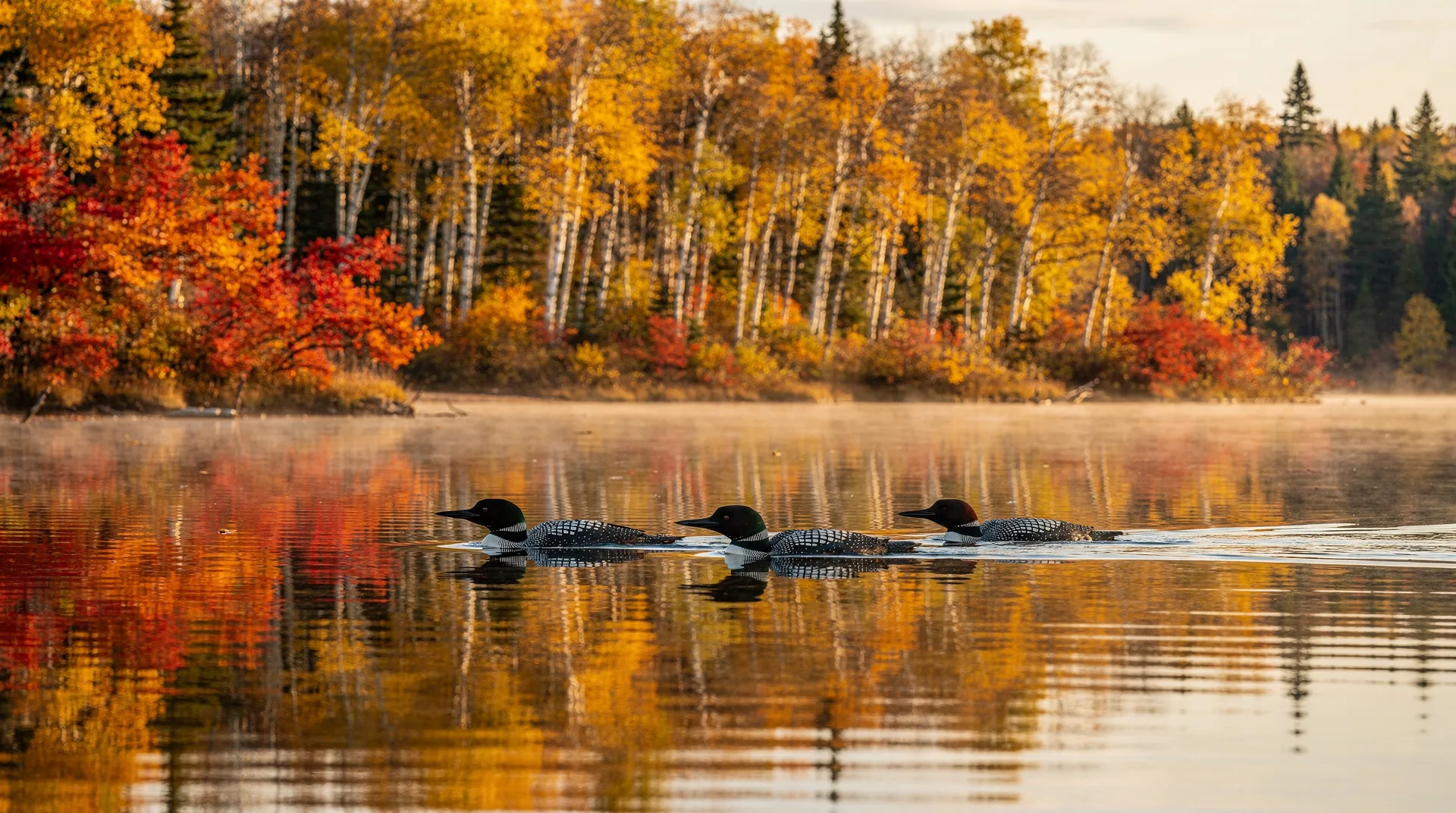
| April–May | Bear emergence; calving elk and deer; mating loons on lakes |
| June | Grizzly bears on green slopes; elk calves with mothers; wolf pup season |
| July–August | Peak wildlife activity; wildflower meadows with marmots and pikas; birds fledging |
| September | Elk rut (bugling); bears in hyperphagia; wolf activity following elk |
| October | Late-season bear activity; first snow on peaks; waterfowl migration |
| November–March | Wolves on valley floors; elk and deer on south-facing slopes; occasional moose |
Wildlife watching ethics
Distance requirements (Parks Canada):
- Bears and wolves: 100 metres minimum
- All other wildlife (elk, moose, deer, sheep, goats): 30 metres minimum
These are legal minimums, not targets. Keeping greater distance reduces stress to animals and produces better wildlife photography (animals behave naturally when unaware of observers).
Vehicle behaviour: Stop in designated pullouts, not on the road. Turn off the engine. Remain quiet. Do not honk to attract attention.
Feeding: Feeding any wildlife in a national park is illegal and carries significant fines. Food conditioning habituates animals to humans and road environments and typically results in the animal’s death. Never leave food in vehicles or accessible at campsites.
Photography: Do not approach wildlife for a better photo. A telephoto lens (200mm+ equivalent) allows excellent images from appropriate distances. The wildlife images that win awards are almost always taken from appropriate distances — not close-approach shots.
Planning a dedicated wildlife day
If wildlife is your primary goal rather than a bonus alongside scenery, treat it as its own day rather than an add-on to a sightseeing drive. Start before sunrise — the first hour of light is consistently the most productive window of the entire day, well before most visitors are on the road. Pack binoculars (a decent pair matters more than a long camera lens for actually spotting animals) and expect the pace to be slow: successful wildlife watching means driving well under the speed limit with windows down, scanning meadow edges and avalanche slopes rather than covering distance.
Combine a Bow Valley Parkway dawn drive with an evening return via the same route — animal activity shifts through the day as animals move between feeding and bedding areas, so the same stretch of road can look completely different at 6 am and 7 pm. Base yourself in Canmore or Banff town for the Bow Valley routes, or in Jasper itself for Maligne Lake Road and the Icefields Parkway’s northern half.
What a guided tour adds
Independent driving covers the basics well, but a guided wildlife tour — typically a small minibus departing Banff or Jasper before dawn — adds two things a self-drive can’t easily replicate: a guide in radio contact with other operators who share real-time animal locations, and someone who can identify tracks, scat, and distant movement that an untrained eye will simply drive past. For a first Rockies trip, or if bears specifically are the goal, a guided outing in the first day or two is worth the cost even if you plan to self-drive afterward.
Related guides
- Cavell Meadows hike — active grizzly habitat in Jasper
- Wilcox Pass hike — caribou habitat near the Columbia Icefield
- Skyline Trail Jasper — multi-day trail through prime wildlife country
- Stargazing in Jasper — after-dark wildlife activity in the dark sky preserve
- Bear watching in Canada — national overview of bear viewing locations
Frequently asked questions about Wildlife watching in the Canadian Rockies: when & where
What should I do if I encounter a bear on the trail?
Stay calm. Do not run. Make yourself known by speaking in a firm, calm voice. Back away slowly without turning your back on the bear. If a bear charges: stand your ground (most charges are bluffs), deploy bear spray when the bear is within 10 metres, and spray in a horizontal arc in front of the charging bear. If contact occurs with a grizzly, play dead (lie face down, protect your neck). If contact occurs with a black bear, fight back aggressively — black bear attacks require active defence.
What time of day is best for wildlife watching?
Dawn (the hour around sunrise) and dusk (the hour before dark) are by far the most productive periods. Large mammals — elk, bears, wolves, moose — are most active at low light. Midday wildlife activity drops significantly, especially in summer heat.
Is it safe to stop on the Icefields Parkway for wildlife?
Yes, if you use designated pullouts and do not stop on the active highway. The parkway has a 90 km/h speed limit in most sections; stopping on the road is dangerous. Pull completely off the pavement before observing or photographing.
Do I need a guide for wildlife watching?
No. Wildlife watching from vehicles on park roads is entirely self-guided. Guided wildlife tours — typically dawn or dusk minibus tours from Banff or Jasper — add expertise and local knowledge about current animal locations, and are particularly valuable for first-time visitors. But independent wildlife watching from vehicles is accessible, free (park entry required), and very productive with the right timing.
Can I see wildlife without a car?
To some extent. Vermilion Lakes near Banff townsite and parts of Jasper’s Pyramid Lake area are reachable on foot or by local shuttle and produce reliable elk, birdlife, and occasional bear sightings. But the Bow Valley Parkway, Maligne Lake Road, and the Icefields Parkway — the three most productive routes — genuinely require a vehicle or a guided tour to cover properly.