Birding in Canada: Point Pelee, Haida Gwaii, Churchill, and the best destinations
Where is the best birding in Canada?
Point Pelee National Park in Ontario is North America's premier spring warbler migration hotspot, with peak activity in May. Churchill, Manitoba offers spectacular arctic shorebird and seabird watching in summer. Haida Gwaii (Queen Charlotte Islands) in BC hosts massive seabird colonies and rare endemic subspecies. Each site specializes in different species groups and seasons.
Canada is one of the world’s great birding destinations. The country’s ecological diversity — ranging from temperate rainforest on the Pacific coast to arctic tundra in Nunavut, boreal forest across the continent’s middle, and Great Lakes woodland in the south — produces an extraordinary range of habitats, and the concentrated migrations that flow through Canada’s southern bottlenecks twice a year create events that draw birdwatchers from around the world. Over 680 species have been recorded in Canada, and the country’s sheer size means that regional birding is meaningfully different from one province to the next.
The three locations that generate the most international birding travel — Point Pelee, Churchill, and Haida Gwaii — each offer something categorically different. Point Pelee is about quantity and accessibility: hundreds of species in a small area during a brief spring window. Churchill is about the far north: nesting tundra species, snowy owls, arctic fox, and beluga whales in combination. Haida Gwaii is about scale and remoteness: seabird colonies numbering in the millions on islands most Canadians have never visited.
Understanding Canada’s birding calendar and matching it to the right destination is the key to making the most of a birding trip.
| At a glance | |
|---|---|
| Where | Point Pelee (Ontario), Churchill (Manitoba), Haida Gwaii (BC) — three very different regions |
| Cost | Point Pelee day pass around CAD 10.00; Churchill and Haida Gwaii trips run into the hundreds for flights and guiding |
| Time needed | A focused morning at Pelee; 3+ nights minimum at Churchill or Haida Gwaii |
| Getting there | Pelee is a short drive from Toronto/Windsor; Churchill and Haida Gwaii require a flight or, for Churchill, Via Rail |
| Best time | Mid-May (Pelee warblers), June-July (Churchill nesting shorebirds), June-August (Haida Gwaii seabirds) |
Regional birding seasons at a glance
| Destination | Peak season | Weather | Crowds |
|---|---|---|---|
| Point Pelee | Second-third week of May | Mild, changeable spring weather | Very busy, book lodging months ahead |
| Churchill | June-July (nesting), Oct-Nov (polar bears) | Cold even in summer, 0-15°C | Moderate, limited accommodation caps numbers |
| Haida Gwaii | June-August | Cool, rainy, Pacific maritime | Light, remoteness self-limits visitor numbers |
| Cape St. Mary’s | June-August | Cool, often foggy Atlantic weather | Light |
Point Pelee National Park: North America’s warbler capital
Why Point Pelee is unique
Point Pelee is a 20 km² national park at the southernmost tip of mainland Canada, jutting south into Lake Erie at approximately 42° N latitude — the same latitude as Rome and northern California. In May, this geography becomes a natural funnel. Millions of songbirds migrating north across Lake Erie from their wintering grounds in the Caribbean and Central America make landfall at Pelee’s tip after the overnight crossing. The combination of exhausted birds in dense vegetation and extremely high species diversity in a small area creates birding intensity that few places on the continent can match.
On a good May morning at the tip of Point Pelee, experienced observers routinely record 20–30 warbler species in a few hours, alongside thrushes, vireos, tanagers, grosbeaks, and hundreds of additional species in various states of migration. The peak of migration — typically the second and third weeks of May — produces what birders call “fallout” events when a weather system temporarily halts northward movement and birds accumulate in the Pelee woodlands in extraordinary numbers.
Key statistics: Over 390 bird species recorded in the park. The Pelee Christmas Bird Count regularly records more species than any other site in Canada. More rarities — birds recorded outside their normal range — have been found at Point Pelee than anywhere else in Canada.
What to see at Point Pelee
Warblers: Pelee’s primary attraction. Thirty-six warbler species have been recorded; 25–28 can realistically be seen in a peak May visit. Yellow, Magnolia, Chestnut-sided, Black-throated Blue, Blackburnian, Prothonotary, and Hooded are among the highlights.
Shorebirds: Late April through May and again July through September, various shorebird species use the beach areas and marshes. Dunlin, Semipalmated Sandpiper, and White-rumped Sandpiper are common; rarities appear regularly.
Raptors: Broad-winged Hawk migration peaks in the third week of May, with hundreds or thousands streaming north over the peninsula. Bald Eagles nest in the park.
Fall migration (August–October): Less intense than spring but still excellent, particularly for shorebirds and fall warblers. The monarch butterfly migration through Pelee in September is a separate spectacle.
Logistics for Point Pelee
How to get there: Point Pelee is near Leamington, Ontario, approximately 2.5 hours from Toronto and 3 hours from Detroit. The nearest airports are Windsor (30 minutes) and London, Ontario (1.5 hours).
When to go: The “Pelee week” of peak migration is typically May 10–20, though it varies by 1–2 weeks with weather patterns. The park tracks daily species lists on their website during migration.
Accommodation: Leamington has the widest range of motels and B&Bs. The park has no overnight camping but is open for day use. During peak migration week, Leamington accommodation fills — book 2–3 months ahead.
Park access: A national park day pass is required (CAD 10.00 per adult). During peak migration, the park runs a shuttle from a remote parking area to the tip — private vehicles cannot access the tip road during peak hours.
See the Point Pelee National Park guide for full visitor information beyond birding.
Churchill, Manitoba: subarctic wildlife crossroads
Churchill’s birding environment
Churchill sits on the west shore of Hudson Bay at 58° N latitude, where the boreal forest meets the arctic tundra. The ecological transition zone — called the Hudson Bay Lowlands — produces a concentration of nesting bird species that is extraordinary for its latitude and accessibility. Churchill is also the only accessible point on the North American mainland where birders can find tundra nesting species (including species that nest only on arctic/subarctic tundra) without a major wilderness expedition.
The Churchill area has recorded over 280 bird species, including around 50 that nest. It is most famous among birders for the spring and summer shorebird nesting season and for the snowy owl concentrations that sometimes develop in winter.
Key species at Churchill
Shorebirds: Nesting shorebirds at Churchill include Whimbrel, Hudsonian Godwit, Dunlin, Semipalmated Sandpiper, American Golden-Plover, Black-bellied Plover, and the world’s largest accessible colony of Stilt Sandpipers. Shorebird nesting is concentrated June through early July.
Raptors: Peregrine Falcon, Merlin, and Short-eared Owl nest or visit regularly. Rough-legged Hawk is common in the nesting season.
Arctic songbirds: Smith’s Longspur, Lapland Longspur, and Snow Bunting nest on the tundra. Spruce Grouse is found in the boreal areas.
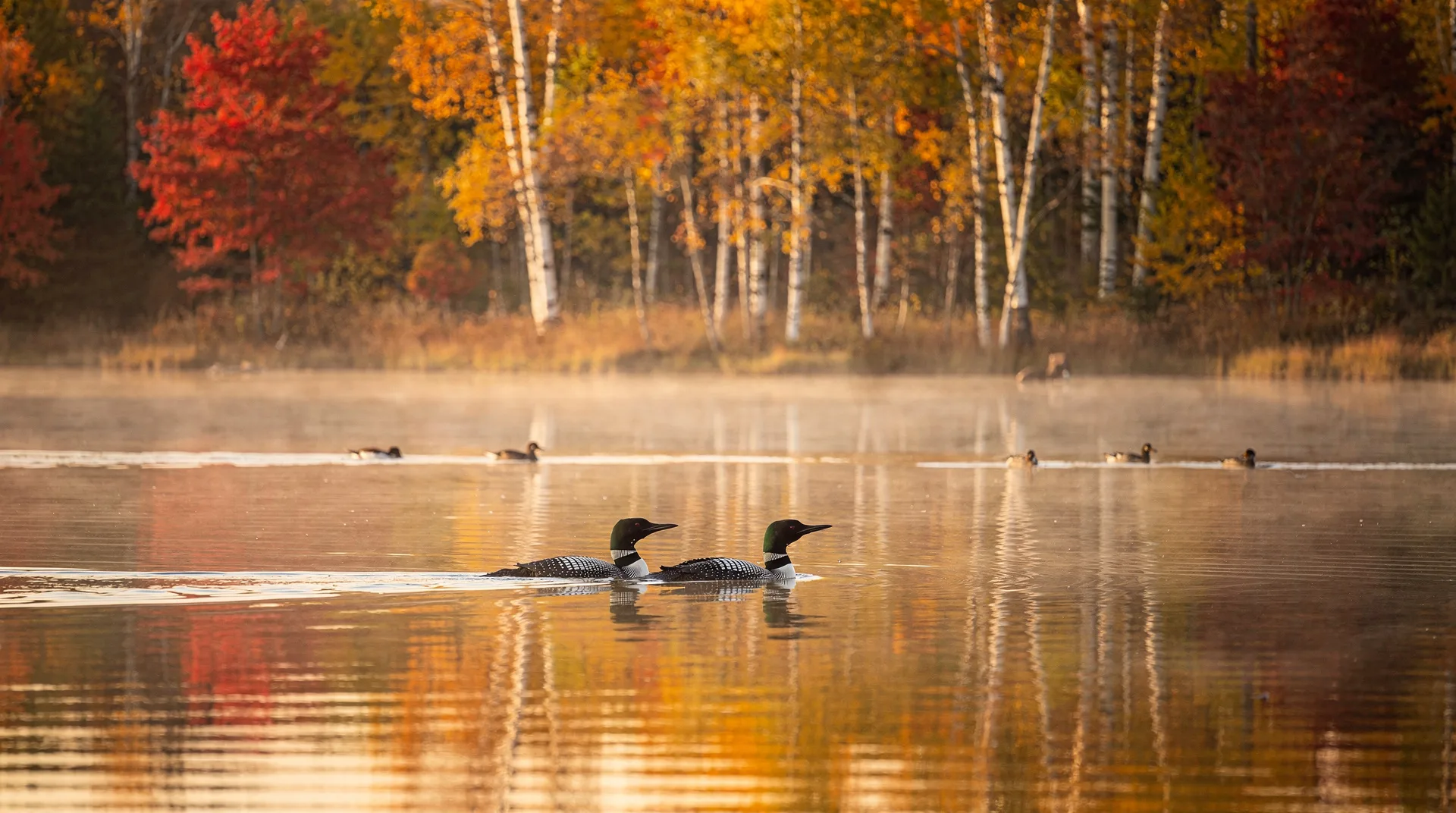
Waterbirds: Pacific Loon, Red-throated Loon, Arctic Tern, Bonaparte’s Gull, and various alcids are present on Hudson Bay.
Snowy Owls: Churchill is one of the most reliable locations in North America for snowy owls in years of high lemming population — the owls concentrate at Churchill’s grain elevator in winter feeding on the local rodent population.
Churchill birding season
May–June: Spring migration brings massive numbers of shorebirds and waterbirds through Churchill. The tundra begins nesting activity. The temperature is still cold (0–10°C) but days are long.
June–July: Peak nesting season. Shorebirds are most active and visible on breeding territories. Beluga whales arrive in Churchill River (a non-avian bonus that justifies the trip by itself).
July–September: Shorebird post-breeding migration begins in July. August and September are excellent for southbound shorebirds.
October–November: Polar bear season. Churchill is primarily visited for polar bears from late October through November, but birding continues, with interesting late-season species possible.
Book a Churchill tundra buggy day trip — excellent for birding, polar bear watching, and arctic wildlife.Churchill has no road access — it is reached by Via Rail from Winnipeg (a 2-night journey, scenic in its own right) or by air (Porter Airlines and others serve Churchill from Winnipeg). Accommodation in Churchill is limited; book well ahead.
Haida Gwaii: remote seabird colonies
What makes Haida Gwaii exceptional for birding
Haida Gwaii (formerly Queen Charlotte Islands) is an archipelago of 150+ islands off the north BC coast, accessible by ferry from Prince Rupert or by Air Canada flights from Vancouver. The islands have been isolated from the mainland long enough to develop distinct subspecies — the larger Haida race of the Steller’s Jay and distinctive subspecies of Northern Saw-whet Owl and Hairy Woodpecker are found nowhere else.
The primary birding draw is seabirds. Gwaii Haanas National Park Reserve, the southern portion of the archipelago, protects ancient Haida village sites alongside massive nesting colonies of Rhinoceros Auklet, Tufted Puffin, Ancient Murrelet, Cassin’s Auklet, Pelagic Cormorant, and Fork-tailed Storm-Petrel. The Ancient Murrelet colony on Reef Island is estimated at 30,000+ pairs — one of the largest in the world.
Other Haida Gwaii specialties: Peregrine Falcon (significant nesting population), Black Oystercatcher, Surfbird, and Wandering Tattler along the rocky shores. The forests have nesting Northern Goshawk and Merlin.
Accessing Haida Gwaii bird colonies
Most seabird colony access requires boat tours — the colonies are on small islands and access is by permit or with licensed tour operators. The Haida Gwaii Watchmen program manages access to Haida Gwaii’s southern islands within Gwaii Haanas. Kayak expeditions (10–14 days) are the classic way to explore the archipelago’s remote corners; shorter motorised boat tours from Sandspit or Queen Charlotte City provide access to key seabird sites in 2–5 days.
Best season: June through August for nesting seabird activity. Spring migration (April–May) adds additional species passing through.
Other top birding destinations in Canada
Cape St. Mary’s, Newfoundland
Cape St. Mary’s Ecological Reserve on the Avalon Peninsula of Newfoundland hosts approximately 25,000 pairs of Northern Gannet nesting on a dramatic sea stack accessible on foot from a visitor centre. The gannets nest within metres of the viewing rock. Razorbill, Thick-billed Murre, Common Murre, and Black-legged Kittiwake also nest on adjacent ledges. This is one of the most visually spectacular seabird colonies in North America and requires no boat travel.
Best time: June–August, with peak gannet activity in June–July.
Last Mountain Lake, Saskatchewan
Last Mountain Lake is the oldest bird sanctuary in North America, established in 1887. The lake is a major staging area for Sandhill Cranes — hundreds of thousands stop here in spring and fall migration, creating one of the most impressive mass wildlife gatherings in Canada. The Sandhill Crane concentration peaks in late October. Whooping Cranes (endangered; approximately 800 individuals remaining) also stop at Last Mountain Lake during migration.
Boundary Bay, BC
Boundary Bay, south of Vancouver near the US border, is the most important shorebird staging area on the Pacific coast of Canada. Millions of shorebirds stop here on both northward and southward migration. Western Sandpiper, Dunlin, and Semipalmated Plover are present in massive numbers from July through October. Short-eared Owls and Rough-legged Hawks concentrate in winter, hunting the shorebird flocks from the saltmarsh edge.
Oak Hammock Marsh, Manitoba
Oak Hammock Marsh north of Winnipeg is the most productive freshwater birding area on the Canadian prairies, managed specifically for waterfowl and shorebirds. Spring and fall migrations bring hundreds of thousands of ducks, geese, and shorebirds through the marsh. The interpretive centre is excellent and the site is accessible for all mobility levels.
Browse guided wildlife and nature tours across Canada on GetYourGuide.
Best birding guides and apps
ebird.org: The Cornell Lab of Ornithology’s global database shows you exactly what species have been recorded at any location and when. Checking Pelee’s recent checklists before your trip tells you what’s currently present. Essential planning tool.
Merlin Bird ID (Cornell Lab): Free phone app with photo identification, sound identification, and regional species lists. Identifies songs by microphone in the field. Transformed accessible birding.
Sibley’s Guide to Birds: The standard North American field guide, comprehensive and well-illustrated.
Regional guide services: All three primary destinations (Pelee, Churchill, Haida Gwaii) have local guide services offering morning and multi-day birding tours. Local guides accelerate species accumulation dramatically; worth hiring for at least one morning at each site.
Costs
Point Pelee national park day pass: CAD 10.00 per adult per day Guided birding walk at Point Pelee: CAD 45–80 per person per morning Churchill return flight from Winnipeg: CAD 400–700 per person Churchill guided tundra birding day: CAD 150–250 per person Haida Gwaii return flight from Vancouver: CAD 350–600 per person Haida Gwaii guided seabird boat tour: CAD 180–350 per person per day Cape St. Mary’s, Newfoundland: Free (operated by provincial parks)
What to bring for birding
- Binoculars (8x42 is the recommended general-purpose specification): CAD 200–1,200 depending on quality
- Phone with Merlin app installed and regional bird packages downloaded offline
- Field guide to Eastern or Western Birds of North America
- Notebook or birding app for keeping lists
- Layers appropriate to the region and season — Churchill in June is still cold
- Bug repellent for boreal and tundra environments (blackflies and mosquitoes are intense in June)
- Rain gear
- Sturdy walking footwear; rubber boots for wet marshes
Where to stay near key birding sites
Point Pelee: Leamington motels and B&Bs are the standard; book 2–3 months ahead for May migration. The town of Kingsville also has options.
Churchill: Limited options; Lazy Bear Lodge is the most nature-focused. Book 6+ months ahead for June–July and polar bear season.
Haida Gwaii: Queen Charlotte City (Daajing Giids) has small hotels and B&Bs. Premier Creek Lodging is well-regarded. The town is small — limited but functional options.
Cape St. Mary’s: Stay in Trepassey (closest town) or drive from St. John’s (3 hours). St. John’s has full hotel options.
For related wildlife experiences, see the polar bears Churchill guide, the bear watching guide, and the salmon run BC guide.
Combining birding with other wildlife and destinations
Birding trips rarely stand alone in Canada — the same regions that draw birders also reward broader wildlife and nature travel. Churchill visitors routinely add beluga whale watching in summer or extend into the Churchill polar bears experience in late October and November.
Haida Gwaii pairs naturally with wider exploration of British Columbia and the Great Bear Rainforest, where grizzly and black bear viewing complements the seabird colonies. Point Pelee sits within reach of Algonquin Park for a second, very different Ontario nature stop, and birders travelling through Atlantic Canada often combine Cape St. Mary’s with a stop in Bay of Fundy for tidal wildlife and coastal scenery.
If your trip has any flexibility, plan around a single primary destination and season rather than trying to chase all three flagship sites in one visit — Pelee, Churchill, and Haida Gwaii are thousands of kilometres apart and each has a narrow peak window.
Frequently asked questions about Birding in Canada: Point Pelee, Haida Gwaii, Churchill, and the best destinations
What is the best time to bird at Point Pelee?
The second and third weeks of May are the traditional peak for warbler migration at Pelee. The exact peak varies by 1–2 weeks with spring weather patterns. Early May brings early migrants (Yellow-rumped Warbler, Ruby-crowned Kinglet); late May brings the last late migrants and lingering individuals. The park tracks daily species lists on their website.
Do I need binoculars to enjoy birding at Pelee?
Binoculars are strongly recommended but not strictly required at Point Pelee’s tip in peak migration — birds are sometimes so numerous and unafraid that naked-eye observation is possible. For Haida Gwaii seabirds, Churchill tundra species, and most other locations, binoculars are essential.
Can I do a day trip to Churchill for birding?
Churchill is not practical as a day trip from anywhere — the only road-access alternative is Via Rail (2 nights from Winnipeg). Minimum useful stay for birding is 3 nights. Many birders combine Churchill with 5–7 days for wildlife programming and Beluga whale watching in addition to birds.
What is a Christmas Bird Count and can I participate?
Christmas Bird Counts are annual volunteer surveys run by Bird Studies Canada (Birds Canada) and the National Audubon Society in the US, typically from mid-December through early January. Any Canadian can participate by joining a local count team. Point Pelee and other southern Ontario counts are among the most species-rich in the country. Find your nearest count at birdscanada.org.
Are there birding festivals in Canada?
Yes. The Festival of Birds at Point Pelee runs in mid-May with guided walks, workshops, and species demonstrations. Godwit Days in Manitoba celebrates the Hudsonian Godwit migration. Various provincial Nature Centre events highlight local migration. Check each park’s website for current programming.
What is an endemic bird and does Canada have any?
An endemic species is found nowhere else on Earth. Canada has no fully endemic bird species (all Canadian breeding birds also occur elsewhere) but has endemic subspecies and isolated island populations like those on Haida Gwaii. The Red Crossbill also has a Newfoundland subspecies with a distinct bill form found only in the island’s forests.
Can I combine Point Pelee birding with other Ontario destinations?
Yes. Point Pelee is roughly 2.5 hours from Toronto, making it easy to combine with a broader southern Ontario trip. Many visitors pair a Pelee spring visit with time in Toronto itself or extend westward toward the Niagara region via the Toronto to Niagara Falls guide. Because Pelee’s peak window is short and specific, plan the rest of the itinerary around those dates rather than the reverse.
Is birding in Canada expensive?
It varies enormously by destination. Point Pelee is inexpensive — a park day pass plus a guided morning walk can be done for well under CAD 100. Churchill and Haida Gwaii are considerably more expensive because of the flights and remote logistics involved, with a multi-day trip commonly running into four figures once flights, lodging, and guiding are included.