Quick facts
- Population
- 1,000 (village)
- Best time
- June to September / December to March
- Languages
- English
- Days needed
- 2-3 days
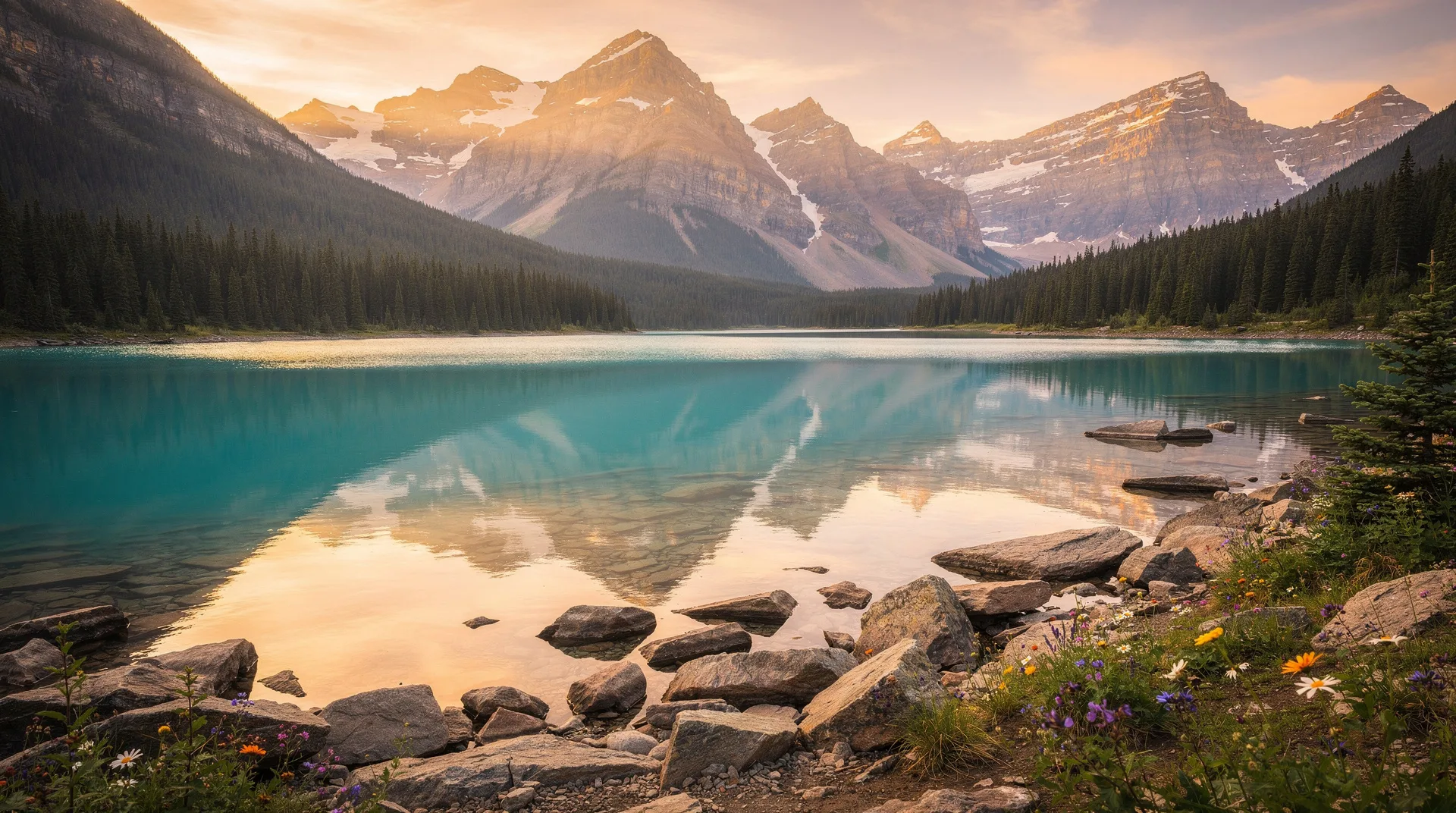
There is a moment, walking the last section of trail through the trees, when the colour registers before the water does. It is too blue — a blue that seems to belong to tropical seas, not a mountain lake in Alberta at 1,731 metres elevation. Then the full scene assembles itself: the Victoria Glacier descending between peaks at the far end, the stone face of the Chateau Lake Louise to the right, the flat mirror of the water still in the morning calm. Lake Louise is one of those places that earns every superlative deployed in its name.
The turquoise colour comes from glacial rock flour — fine particles of crushed rock suspended in the glacial meltwater — which scatters sunlight at wavelengths that produce the intense blue-green. It is most vivid in June and July when meltwater input is highest. It is also most crowded then. Understanding this trade-off is the key to planning a Lake Louise visit successfully.
| At a glance | |
|---|---|
| Where | Inside Banff National Park, 56 km northwest of Banff town |
| Park pass | Parks Canada day pass required, around CAD 12.25 per adult (Discovery Pass covers a year) — see the Banff park pass guide |
| Time needed | Around 2-3 days to cover the lakeshore, one hike and Moraine Lake without rushing |
| Getting there | Car, or Roam Transit / shuttle services from Banff and Calgary |
| Best time | Late June-September for the lakes at peak colour; December-March for skiing |
The jewel of Banff National Park
Lake Louise sits within Banff National Park — technically in the Lake Louise area, 56 kilometres northwest of Banff town on the Trans-Canada Highway. The lake and village together form a distinct destination within the broader Banff park experience, with their own accommodation, ski resort, and trailhead access.
The village of Lake Louise itself is small — a train station, a gondola, a cluster of accommodation, and the Samson Mall with its handful of restaurants and outfitters. The real destination is the lake 5 kilometres above, and Moraine Lake 14 kilometres further along. These two lakes, within easy driving distance of each other, are arguably the most photographed natural scenes in Canada.
For visitors on a broader Alberta itinerary or connecting Banff with Jasper via the Icefields Parkway, Lake Louise is a natural overnight stop that rewards one to two nights rather than a quick photo stop.
Top things to do in Lake Louise
Lake Louise lakeshore and hikes
The 2-kilometre lakeshore path around Lake Louise is accessible to everyone and delivers the full range of perspectives on the lake — from the promenade in front of the Chateau, to the western shore where the Chateau itself frames one end of the water, to the far end where the trail enters the forest and the glacier fills the full view above. Even in peak summer when the lakeshore crowds are at their densest, the far western end is usually quieter.
The Plain of Six Glaciers trail (8.4 kilometres one-way, 365 metres elevation gain) climbs above the lake via a moraine path to the historic Plain of Six Glaciers tea house, offering direct views of the Victoria Glacier and the high alpine environment above. The tea house serves simple food and is staffed from late June through early October.
The Big Beehive and Lake Agnes Tea House trail (3.4 kilometres one-way, 400 metres elevation gain) climbs directly above the lake to Lake Agnes — a smaller, higher mountain lake — and the historic stone tea house that has operated here since 1905. Continuing to the Big Beehive summit gives a birds-eye perspective on Lake Louise below.
Book the Lake Louise, Moraine Lake, gondola and hot springs day tourMoraine Lake
Fourteen kilometres south of Lake Louise village via Moraine Lake Road, Moraine Lake may be the single most visually striking lake in Canada. The Valley of the Ten Peaks — ten distinct summits in a semicircle above the water — frames a scene of impossible intensity. The lake’s colour, if anything, is even more vivid than Lake Louise. The rock pile at the lake’s northern end is the classic viewpoint and was once featured on the Canadian $20 bill.
Access to Moraine Lake is now managed via a Parks Canada reservation system — private vehicles are not permitted on Moraine Lake Road during peak season (late May to mid-October). Parks Canada shuttle tickets from the Lake Louise Park and Ride must be reserved in advance through the Parks Canada website. Book as early as possible — shuttle slots fill months ahead in summer.
Browse Moraine Lake guided tours and experiencesChateau Lake Louise and canoeing
The Fairmont Chateau Lake Louise sits directly on the lakeshore and has dominated the scene since its railway-era construction. Even non-guests should walk the grounds and the lakeshore promenade. The hotel’s afternoon tea in the Lakeview Lounge is expensive but delivers the most dramatic setting for the ritual in Canada. Canoe rentals on the lake are operated from the boathouse beside the Chateau — paddling across the turquoise water with the glacier at the far end is a singular experience.
Lake Louise Ski Resort
The Lake Louise Ski Resort is one of the largest ski areas in Canada — 4,200 acres of terrain across four mountain faces, accessed by gondola from the Lake Louise village. Elevation reach extends to 2,637 metres. The ski season runs from November to May. The combination of terrain variety, reliable snow, and the views over Lake Louise make this one of the three Banff area ski resorts (along with Banff Sunshine and Mount Norquay) that together form the SkiBig3 ski destination.
Lake Louise Gondola
Operating May through September, the Lake Louise Gondola lifts visitors to 2,088 metres on Mount Whitehorn — above the Lake Louise Ski Resort — with sweeping views over the lake, the Bow Valley, and the surrounding peaks. At the top, a network of easy walking trails accesses alpine meadows where grizzly bears are frequently spotted from a safe distance on the guided interpretive hikes available from the summit.
Icefields Parkway beginning
Lake Louise is the southern terminus of the Icefields Parkway (Highway 93 North). The first 30 kilometres north from Lake Louise, passing Hector Lake, Bow Lake, and cresting Bow Summit with its view of Peyto Lake below, represent the most concentrated spectacular scenery of the entire 230-kilometre road. Peyto Lake, seen from the Bow Summit viewpoint, is a wolf-shaped turquoise lake below a cirque glacier — another Canadian Rockies icon.
Best areas in the Lake Louise region
Lake Louise Lakeshore is the destination — the 5-kilometre access road from the village climbs to a parking area (massive and still inadequate in peak season) from which the promenade in front of the Chateau is a 5-minute walk.
Moraine Lake is the essential complement to Lake Louise — more isolated, even more intense in colour and setting, requiring advance shuttle reservations in summer.
Lake Louise Village serves as the service hub — Samson Mall has the Lake Louise Inn, Bill Peyto’s Café (the best budget option for meals), the Lake Louise Alpine Centre hostel, and several outfitters.
Bow Valley Parkway (Highway 1A) between Lake Louise and Banff is the scenic alternative to the Trans-Canada — slower, with better wildlife viewing, passing Johnston Canyon and historic railway heritage.
Food and drink at Lake Louise
Lake Louise is not particularly endowed with restaurant options outside the Chateau — the village mall has a handful of choices and the Chateau carries most of the upscale load.
The Post Hotel Dining Room is consistently the finest restaurant at Lake Louise — a Relais and Chateaux property that has maintained one of the most serious wine cellars in the Rockies for decades, with a kitchen to match. Expensive and exceptional.
Fairmont Chateau Lake Louise restaurants include the Fairview Restaurant (formal, dinner), the Walliser Stube (Swiss fondue and raclette, one of the most charming dining experiences in the Rockies), and the Lakeview Lounge (afternoon tea and casual meals with the full lake view).
Bill Peyto’s Café at the Lake Louise Alpine Centre does reliable, inexpensive cooking for hikers and budget travellers — the best value in the area by a significant margin.
Laggan’s Mountain Bakery in Samson Mall opens early for excellent baked goods, sandwiches, and coffee — the essential early morning fuel stop before hiking or a drive to Moraine Lake.
When to visit Lake Louise
Late June to early September is peak season and peak visual impact. The lake colour is most intense in June-July when glacial melt is highest. The hikes are accessible, the tea houses are open, canoes are available, and the full summer experience is possible. The trade-off: massive crowds. The parking lot fills before 7am on summer weekends. The Moraine Lake Road is closed to private vehicles. Shuttles require advance booking.
May and early June see the road opening and fewer crowds before the summer rush. Snow still covers higher trails and the lakes are less vivid, but the park is quiet and accommodation is more available.
Fall (September to mid-October) is local favourite season. The larch trees turn gold in late September — particularly at Larch Valley above Moraine Lake and around Lake O’Hara in adjacent Yoho National Park. The colour is spectacular and the crowds thin notably after Labour Day.
Winter (December to April) converts Lake Louise into a ski destination. The ski resort is one of the best in Canada. The lake itself freezes and an ice rink is maintained in front of the Chateau. The Ice Magic festival in January features ice sculpture competitions on the frozen lake.
Where to stay at Lake Louise
Fairmont Chateau Lake Louise is the pinnacle — a 540-room resort on the lakeshore with glacier views from many rooms and the most storied address in the Canadian Rockies. Summer rates are considerable (CAD $600-1,200+ per night). Book months in advance for July-August. The hotel is worth every dollar for the setting alone.
The Post Hotel in the village is a Relais and Chateaux property with an intimate, refined lodge aesthetic and the best restaurant at Lake Louise. Expensive but exceptional.
Lake Louise Inn in Samson Mall is the most accessible full-service option — functional, well-positioned, and considerably more affordable than the Chateau.
HI Lake Louise Alpine Centre is one of Canada’s best mountain hostels — a large, well-equipped facility with private rooms and dormitories.
Getting around Lake Louise
Shuttle service is mandatory for Moraine Lake in summer — Parks Canada’s shuttle from the Lake Louise Park and Ride replaces private vehicle access. The same park and ride provides parking for hikers accessing Lake Louise and connections to the Moraine Lake shuttle.
Car is needed for the Icefields Parkway, Johnston Canyon, and the full range of Banff National Park hiking trailheads.
Roam Transit connects Lake Louise village to Banff town and to major trailheads seasonally — useful for car-free visitors.
Cycling on the Bow Valley Parkway between Lake Louise and Banff is an exceptional one-way cycling experience with shuttle return available.
Day trips from Lake Louise
Banff town is 56 kilometres south — 45 minutes by car on the Trans-Canada. The combination of Banff’s hot springs, gondola, and restaurants with Lake Louise as a base works well. Most visitors choose Banff town as the base and Lake Louise as the day excursion, rather than the reverse.
Icefields Parkway to Jasper begins at Lake Louise — the full 230-kilometre drive to Jasper is the Canadian Rockies’ greatest road trip, passing Bow Lake, Peyto Lake, the Columbia Icefield, Athabasca Falls, and Sunwapta Falls.
Yoho National Park begins 25 kilometres west of Lake Louise on the BC border — Takakkaw Falls (one of Canada’s highest waterfalls, 384 metres), Emerald Lake, and the Natural Bridge are all within 45 minutes. Lake O’Hara, the most pristine alpine basin in the Rockies, requires advance lottery reservations.
Kootenay National Park is 90 minutes south via Highway 93 South — Paint Pots (mineral ochre springs), Marble Canyon, and Radium Hot Springs in a quieter park setting.
Practical tips for visiting Lake Louise
A Banff National Park pass is required for every vehicle entering the area, Chateau guests included — buy it online or at the highway gate before arriving. Drivers coming from Calgary should budget the full Calgary to Banff drive time plus another 45-50 minutes on to Lake Louise; the Roam Transit network is a workable car-free alternative for the Banff-Lake Louise leg, though it does not replace the mandatory Moraine Lake shuttle. Visitors deciding between the two big Rockies parks often compare Banff vs Jasper directly — Lake Louise itself only makes sense as part of a Banff-based trip, not a standalone stop.
For hikers wanting a fuller picture of the trail options above the lake, see the Lake Louise hikes overview, and for the debate over which of the two famous lakes to prioritise on a tight schedule, Lake Louise vs Moraine Lake breaks down the trade-offs in more detail than the summary above.
Frequently asked questions about Lake Louise
Why is Lake Louise so blue?
The turquoise colour comes from glacial rock flour — extremely fine silt particles produced by the grinding action of the Victoria Glacier on bedrock below. When this silt enters the lake via glacial meltwater, it remains suspended in the water and scatters sunlight at wavelengths that produce the vivid blue-green. The colour is most intense in June and July at peak melt.
How do you get to Moraine Lake?
In summer (typically late May to mid-October), private vehicles are not permitted on Moraine Lake Road. Parks Canada shuttle buses depart from the Lake Louise Park and Ride — shuttle passes must be reserved in advance through the Parks Canada website. Spots typically sell out months in advance for July and August dates. Alternative options are a Parks Canada-authorized shuttle from Banff, a commercial tour, or hiking or cycling the 14-kilometre road from the Lake Louise Park and Ride.
Is Lake Louise crowded?
Yes — extremely so in July and August. The main parking area fills before 7am on summer weekends. The lakeshore path is busy throughout the day. However, trails above the lake — Lake Agnes, the Big Beehive, the Plain of Six Glaciers — are notably less crowded after the first kilometre. Visiting early morning (arrive by 6-7am) gives the best experience with the least crowd competition. Fall (September, after Labour Day) reduces crowds significantly.
Can you canoe on Lake Louise?
Yes. Canoe rentals are available from the boathouse beside the Chateau Lake Louise from late June through early September, conditions permitting. The lake is calm on most mornings and paddling toward the glacier provides a completely different perspective from the lakeshore. Expect queues in peak summer.
How far is Lake Louise from Calgary?
Lake Louise village is 184 kilometres west of Calgary International Airport via the Trans-Canada Highway — approximately 2.5 hours under normal driving conditions. From Banff town, Lake Louise is 56 kilometres, approximately 45-50 minutes.
Is Lake O’Hara worth the effort to book?
Yes — Lake O’Hara is widely considered the most breathtaking alpine basin in the entire Canadian Rockies, with a network of trails above a turquoise lake surrounded by quartzite peaks. But access is strictly controlled: Parks Canada operates a lottery reservation system for the bus from the Yoho National Park highway gate (opens approximately 8 weeks in advance). Hiking in on the 13-kilometre access road is also possible but a long day. The reservation effort is worth it for those who prioritize the alpine backcountry experience.
Do I need a park pass for Lake Louise?
Yes. Lake Louise sits inside Banff National Park, so every vehicle needs a Parks Canada day pass (around CAD 11 per adult) or an annual Discovery Pass — there is no separate fee for the lake itself, but entry without a valid park pass is not permitted. See the Banff park pass guide for current pricing and where to buy one.