Quick facts
- Located in
- Banff National Park, 14 km from Lake Louise village
- Best time
- Late June to mid-October
- Getting there
- Parks Canada shuttle from Lake Louise Park and Ride (peak season)
- Days needed
- Half day minimum; full day with hiking
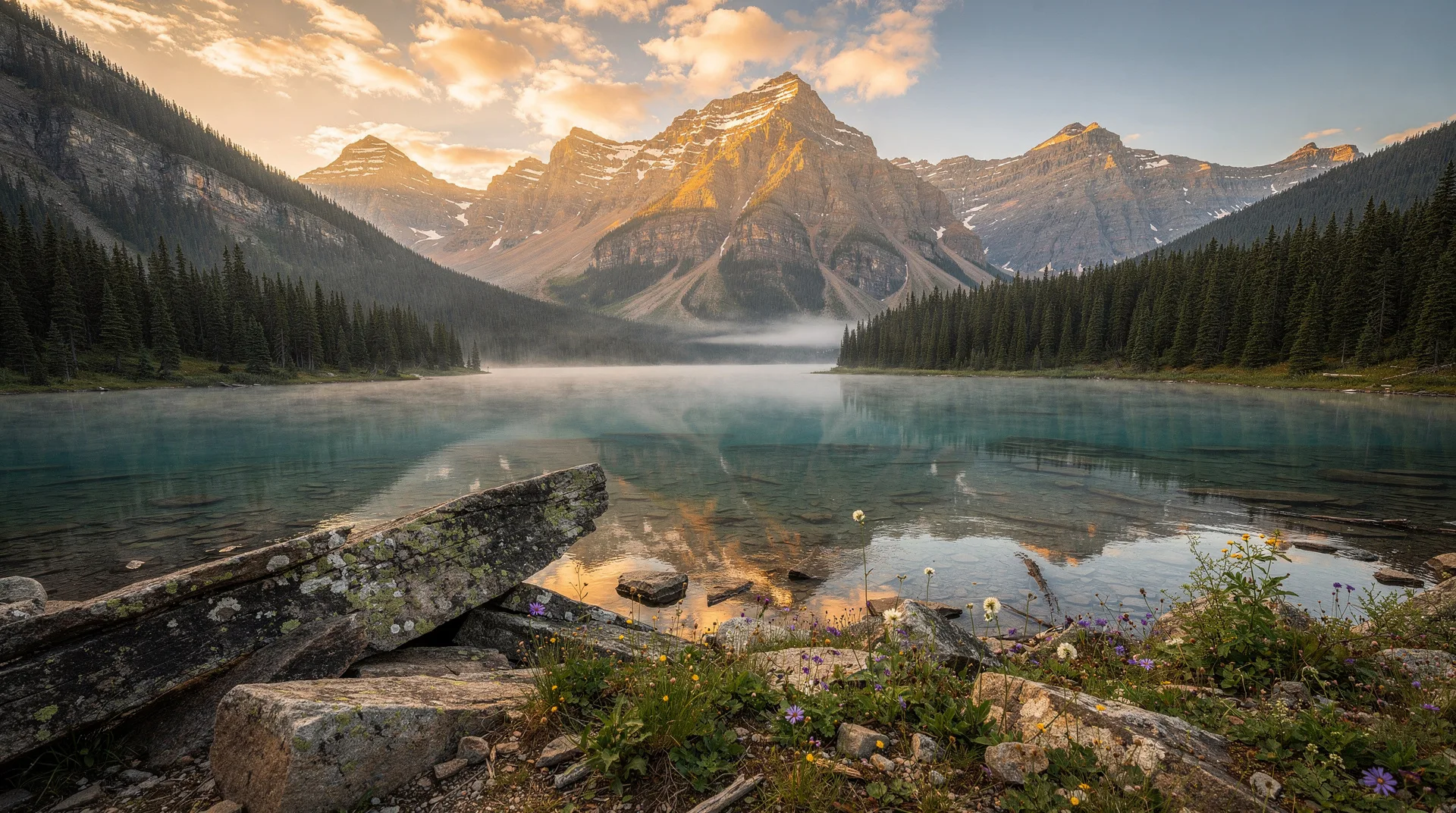
Moraine Lake sits in the Valley of the Ten Peaks in Banff National Park — a glacial lake of extraordinary colour backed by ten summits of the Wenkchemna Range, the scene that once appeared on the back of the Canadian twenty-dollar bill. It is, by most assessments, the most photographed landscape in Canada, and the most-cited answer when Canadians are asked which single image represents the country. It is also, in 2026, one of the most logistically complex sites to visit in the national park system.
This detailed guide covers everything that has changed, everything that remains the same, and everything you need to plan a successful Moraine Lake visit in 2026 — from shuttle booking to larch season timing to the hikes that use the lake as a trailhead.
| At a glance | |
|---|---|
| Where | Valley of the Ten Peaks, Banff National Park, 14 km from Lake Louise village |
| Cost | Shuttle around CAD $8 return, plus a Parks Canada park pass (day pass or Discovery Pass) is required to enter Banff National Park |
| Time needed | Half a day minimum; a full day with hiking or larch season |
| Getting there | Parks Canada shuttle from the Lake Louise Park and Ride, a commercial guided tour, or on foot/bicycle |
| Best time | Late June to mid-July for peak colour; late September for larch season |
The access situation in 2026
Private vehicles have been prohibited from Moraine Lake Road during peak season since 2023. As of 2026, the system remains in place with refinements:
Peak season restriction dates (2026): Approximately late May to mid-October (exact dates confirmed by Parks Canada each spring — check reservation.pc.gc.ca for the current year’s dates before planning).
How to get there:
- Parks Canada shuttle from the Lake Louise Park and Ride (at the Lake Louise Ski Resort base): The official route. Tickets cost approximately CAD $8 per person return and are sold exclusively through the Parks Canada reservation system at reservation.pc.gc.ca. Tickets for July and August go on sale in April and sell out within hours on popular dates.
- Commercial guided tour: Tour operators hold separate vehicle access allocations.
Booking a guided tour from Banff, Lake Louise, or Calgary guarantees access when shuttle tickets are gone — the most reliable backup option. 3. Walking or cycling: Moraine Lake Road is open to cyclists and hikers throughout the season. From Lake Louise village, the road is 14 km with significant elevation gain. Cycling takes 1-1.5 hours; walking takes 3-4 hours one-way. Fit cyclists find this a rewarding approach.
Before and after peak season: When road restrictions are not in force (typically before late May and after mid-October), private vehicles can drive directly to Moraine Lake. Early June visits (partial ice cover, intense quiet) and mid-October visits (larch season, private vehicle access) are among the most rewarding and least crowded times.
The practical reality: July and August shuttle tickets for Moraine Lake are among the most competitive outdoor reservations in Canada. Treat them like Taylor Swift tickets — book the moment the reservation window opens in April, have your Parks Canada account set up in advance, and have your credit card ready.
Browse Moraine Lake guided tours with guaranteed vehicle accessThe Rockpile viewpoint
The Rockpile is the defining viewpoint at Moraine Lake — a 20-metre scramble up the talus dam at the lake’s eastern end, accessed by a 0.8-km trail from the main parking area. The scramble takes 10 minutes; the view from the top is the twenty-dollar bill image: the lake’s full turquoise expanse, the Valley of the Ten Peaks filling the entire southern horizon.
Sunrise at the Rockpile is the most sought-after photography experience in the Canadian Rockies. The sequence: blue hour (30-45 minutes before sunrise, when peaks reflect in the lake with deep blue tones) → first light on the peaks (light catches the highest summits while the lake remains dark) → sunrise reaching the water (the reflection appears). In peak summer, 50-100 people may be on the Rockpile at sunrise. Arriving 60 minutes before sunrise gives a position on the platform.
Multiple levels: The Rockpile has several viewpoint heights — not all have the same view quality. Experiment with positions rather than crowding onto the highest point.
Understanding the colour
Moraine Lake’s colour — ranging from electric turquoise to deep emerald depending on conditions — is produced by glacial rock flour: fine mineral particles ground from bedrock by the glaciers above, carried into the lake by meltwater, and suspended in the water column where they scatter blue-green wavelengths.
When is the colour most intense? Late June through mid-July, when glacial melt is at maximum and rock flour concentration is highest. By August the colour begins moderating; by October it has shifted toward a cleaner blue-green rather than the vivid turquoise of early season.
Is the colour the same every year? No — it varies with snowpack (how much melt occurs), temperature (how fast melt happens), and weather. An unusually warm spring produces peak colour earlier; a cool summer extends it. The lake never looks bad, but the most extraordinary electric-turquoise shots come from peak melt conditions.
Overcast vs. sunny: The colour appears more saturated in overcast light (no reflective glare off the surface) but the surrounding peaks lose their detail. Direct sun produces peak photograph conditions with a polarising filter. Both are beautiful; they are different subjects.
Larch Valley and larch season
Late September to early October is Moraine Lake’s most beloved season — the larch trees in the valleys above the lake turn from green to brilliant gold, producing the alpine colour display that draws visitors from across Canada.
Larch Valley (reached by the Larch Valley trail from the Moraine Lake parking area) is the main destination — a hanging valley above Moraine Lake where alpine larch (the only deciduous conifer in the Canadian Rockies) turn gold and gold-orange in late September. Combined with the turquoise lake below and the possibility of early snow on the peaks, the colour display is genuinely extraordinary.
Peak timing: Typically the last 10 days of September, though it varies by year. A warm autumn delays the turn; early cold accelerates it. The Banff hiking communities (Facebook, Reddit) track peak larch dates in real time each season.
Road access in larch season: The Moraine Lake Road restriction period typically ends by mid-October. The last two weeks of September (peak larch) may still require the shuttle — confirm the restriction end date with Parks Canada for the current year. If the restriction has ended, private vehicle access is possible for larch season and creates a significant window of manageable crowds.
Hikes from Moraine Lake
Larch Valley and Sentinel Pass (11.5 km return, 720 m gain)
The most celebrated hike from Moraine Lake. The trail climbs through Larch Valley to Sentinel Pass (2,611 m) — the highest maintained trail pass in the Canadian Rockies. From the pass, the Valley of the Ten Peaks is behind you and Paradise Valley stretches ahead to the north. The descent into Paradise Valley is possible for those who have arranged transport at the other end.
In late September, the larch colour transforms this hike. The combination of gold larches, grey limestone, and early snow makes this a pilgrimage-level autumn experience. Start no later than 7am in larch season — the trail is extremely popular and shuttle access limits the crowd to some extent.
Consolation Lakes (5.8 km return, 65 m gain)
A gentler option — through boulder fields and forest to Lower and Upper Consolation Lakes. The contrast with Moraine Lake is striking: the Consolation Lakes are quieter and more enclosed, with a different quality of solitude. The boulder field crossing is enjoyable for children. Good option for families or those who want lake scenery without significant elevation gain.
Wenkchemna Pass (18.6 km return, 730 m gain)
The full valley traverse to the head of the Wenkchemna cirque and the pass at the valley’s end. A full-day commitment that delivers the most complete immersion in the Ten Peaks environment. The pass gives views into Kootenay National Park to the south. For fit hikers with a full day.
Book a guided Lake Louise and Moraine Lake day tour from BanffCanoeing on Moraine Lake
Canoe rentals are available at the Moraine Lake Lodge dock when the lake is ice-free (typically late June through early October). At approximately CAD $130 per hour, a canoe paddle on Moraine Lake — with the Valley of the Ten Peaks surrounding you and the water reflecting the peaks on calm mornings — is among the most exclusive experiences in the Canadian Rockies. Book early morning for calm water; afternoon winds can make paddling difficult.
Photography guide
Equipment: Wide-angle (14-24mm) for the Rockpile panorama; 50-100mm for peak and glacier detail; polarising filter for colour saturation on sunny days.
Blue hour (30-45 min before sunrise): The peaks begin to glow with cool blue-purple light; the lake reflects this. Long exposure (10-30 seconds) on a tripod captures this light quality. This is arguably more photogenic than sunrise itself and fewer photographers are present.
Sunrise: First light hits the highest Wenkchemna peaks, warming downward. When sunlight finally reaches the lake surface, the reflection of the peaks (if the water is calm) produces the image. Calm conditions are more common in early morning; afternoon winds often disturb the surface.
Midday: Harsh overhead light but the turquoise colour saturation is maximum. The lake is at its most vivid in direct sun with a polariser.
Golden hour (2 hours before sunset): The Ten Peaks receive warm evening light from the west; the lake beneath is in shade. An unusual and underused lighting scenario.
Moraine Lake through the season
| Period | Conditions | Crowds |
|---|---|---|
| Early June | Partial ice cover possible, quiet, private vehicle access before restrictions begin | Low |
| Late June-mid July | Peak turquoise colour, shuttle required, long daylight | Very high |
| August | Colour moderating toward blue-green, warm days, shuttle still required | Very high |
| Late September-early October | Larch Valley gold, cooler days, shuttle likely still required in the last two weeks | High, shifted toward hikers |
| Mid-October onward | Restriction typically lifted, private vehicle access returns, colder | Low to moderate |
Combining Moraine Lake with Lake Louise
The Parks Canada shuttle links Moraine Lake and Lake Louise from the same Park and Ride base. Most visitors combine both in a single day — 3+ hours at each lake is a minimum for a meaningful experience. The classic sequence is Moraine Lake at sunrise, Lake Louise mid-morning.
See our Lake Louise guide and the getting there guide for the complete logistics.
Where to stay near Moraine Lake
Moraine Lake Lodge is the only accommodation at the lake — historic wooden cabins on the lakeshore, typically $800-1,500+ per night in season. Guests have early morning lake access before shuttles begin. Books out months ahead.
Fairmont Chateau Lake Louise (14 km away, on Lake Louise): The alternative luxury base; access Moraine Lake by shuttle. See our Lake Louise where to stay guide for the full range of options.
Frequently asked questions for 2026
Can I drive to Moraine Lake in 2026?
During peak season (late May to approximately mid-October), no — private vehicles are prohibited on Moraine Lake Road. Access is by Parks Canada shuttle, commercial tour, or on foot/bicycle. Check Parks Canada for exact 2026 dates.
When do shuttle tickets go on sale?
Typically in April. High-demand dates (July weekends, especially Saturdays) sell out within hours of the reservation window opening. Have your Parks Canada account set up before April.
What if shuttle tickets are sold out?
Book a commercial guided tour — operators have their own vehicle access and these are available even when Parks Canada shuttles are gone.
Is Moraine Lake worth the effort in 2026?
Yes. The logistical complexity has not diminished the lake’s reality. Standing at the Rockpile viewpoint with the Valley of the Ten Peaks in front of you is one of those experiences that silences even practised travellers. The effort makes the arrival more rewarding, not less.
Do I need a national park pass in addition to the shuttle ticket?
Yes. The shuttle ticket only covers transport; every visitor to Banff National Park needs a valid Parks Canada day pass or annual Discovery Pass, checked separately at park gates and sometimes on the shuttle itself.
Can I visit Moraine Lake without hiking?
Yes. The Rockpile viewpoint is a short, well-maintained 0.8 km trail from the parking and shuttle drop-off, manageable for most fitness levels and worth the visit even without attempting the longer hikes.