Quick facts
- Best time
- June to September
- Days needed
- 2-3 days
- Languages
- English
- Getting there
- 2.5 hrs from Calgary via Lethbridge
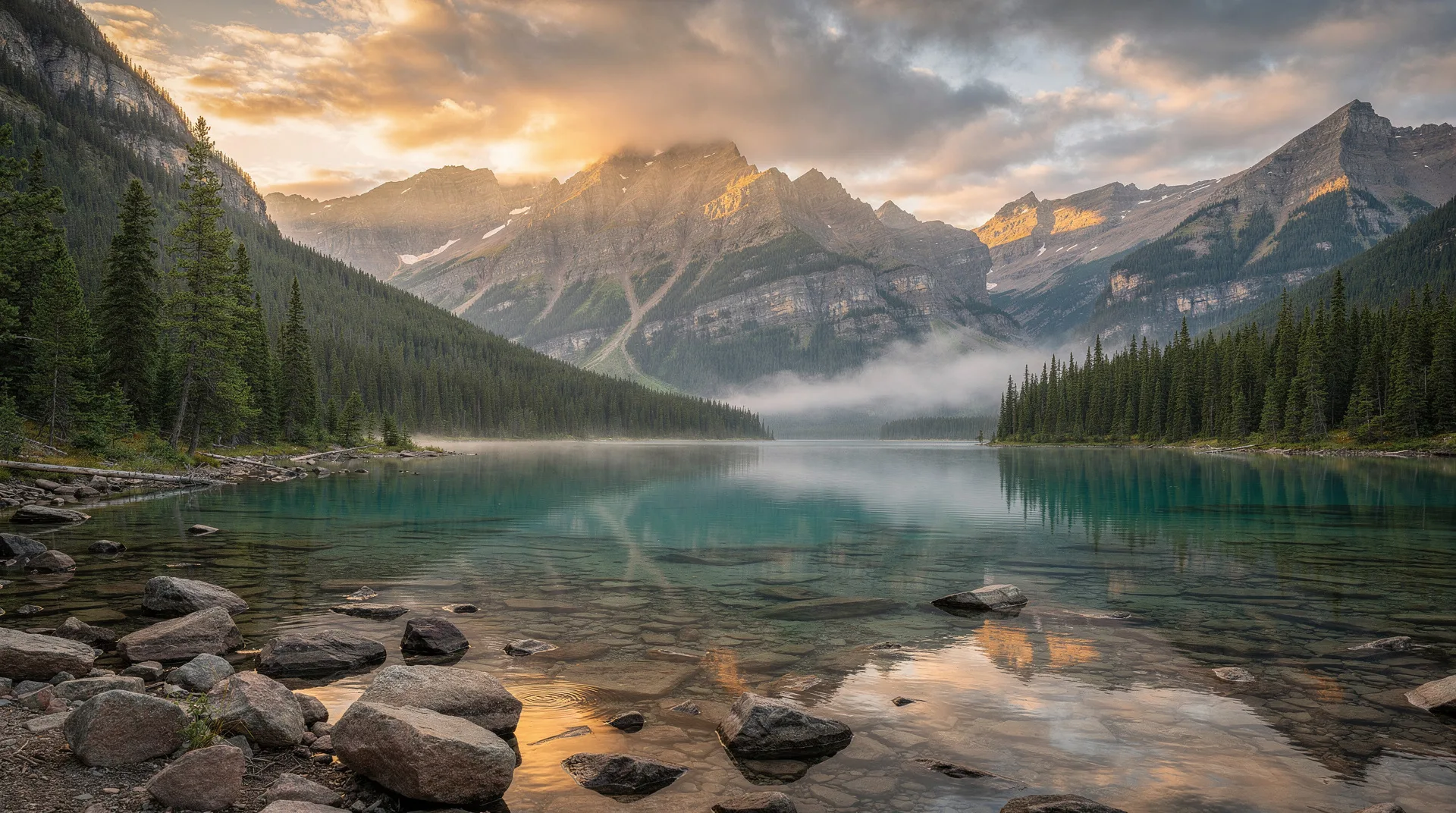
Where the Rocky Mountains meet the Great Plains, with a force and abruptness found nowhere else in the range, Waterton Lakes National Park occupies 525 square kilometres of southwestern Alberta that feels genuinely remote. Prairie grasslands run right to the base of the mountains here without the foothills transition that characterizes the landscape around Banff and Jasper. The result is a landscape of dramatic contrasts — wildflower meadows, turquoise glacier-fed lakes, and limestone peaks rising 2,000 metres directly from the flatlands.
Waterton is one of Canada’s less visited national parks relative to its quality — it receives about 500,000 visitors annually compared to four million at Banff. This relative quietness is one of its principal attractions. The trails are less crowded, the wildlife viewing is more rewarding (the park has some of the highest wildlife diversity in Alberta), and the small townsite of Waterton provides a more authentic national park community feel than the commercial atmosphere of Banff town.
| At a glance | |
|---|---|
| Where | Southwestern Alberta, on the US border with Glacier National Park, Montana |
| Cost | Parks Canada day pass or Discovery Pass required; boat/shuttle add-ons around CAD $30-70 per person |
| Time needed | Around 2-3 days |
| Getting there | Around 2.5 hours by car from Calgary via Lethbridge; no public transit |
| Best time | July-August for wildflowers and full trail access; June and September for fewer crowds |
An international peace park and UNESCO World Heritage Site
In 1932, Waterton Lakes National Park and Glacier National Park in Montana were combined to form the Waterton-Glacier International Peace Park — the first peace park in the world, commemorating the friendship between Canada and the United States. The two parks share a wilderness ecosystem across the 49th parallel, with wildlife, weather systems, and river drainages crossing the international border freely. The combined UNESCO World Heritage designation, granted in 1995, recognizes the exceptional natural values of the binational landscape.
This border-spanning character is unique in Canadian national parks. The lake cruise from the Waterton townsite to the Goat Haunt ranger station in Montana crosses the international boundary mid-lake, and hikers can walk between the two countries in the remote backcountry (with appropriate documentation). The Waterton-Glacier story is a genuine international conservation achievement.
Top things to do in Waterton
Hiking the Carthew-Alderson Trail
The Carthew-Alderson Trail is the park’s signature hike — an 18-kilometre one-way traverse from Cameron Lake at the road end to the Waterton townsite, passing through the high alpine zone via the Carthew Summit at 2,311 metres. The views from the summit encompass the Waterton valley below, the Chief Mountain massif to the south, and on clear days extend far into Glacier National Park in Montana. A park shuttle service connects the townsite to Cameron Lake, making the one-way traverse practical. The trail passes through some of the finest wildflower meadows in the Rockies in July.
Crypt Lake Trail
Crypt Lake is consistently rated among the best day hikes in Canada — a 17-kilometre return trail that requires a morning boat crossing from the Waterton townsite to the trailhead on the east side of Upper Waterton Lake. The trail climbs past four waterfalls, through a tunnel requiring hands-and-knees crawling, along a cliff ledge with an airy drop, to a mountain lake sitting in an almost perfectly circular bowl directly on the US border. The boat crossing adds to the adventure. Parks Canada runs the morning boat service from the townsite dock.
Explore guided tours of the Canadian Rockies from Calgary including WatertonWildlife viewing
Waterton has remarkably high wildlife density for a park its size. Grizzly bears, black bears, wolves, cougars, elk, white-tailed deer, mule deer, bighorn sheep, mountain goats, and moose are all present. The park’s position at the interface of mountain and prairie ecosystems means it supports both grassland and forest species simultaneously. Bears are frequently seen along the Red Rock Canyon Road in June and July. Bighorn sheep routinely walk through the townsite. The prairie dog colony in the park is one of the few remaining in Canada.
Cameron Lake and the Akamina Corridor
Cameron Lake at the end of the Akamina Parkway is one of the most accessible alpine lake experiences in the park — a 2.5-kilometre-long glacial lake at 1,660 metres, surrounded by old-growth forest of Engelmann spruce and subalpine fir. Canoe and rowboat rentals are available at the lakeside. Grizzly bears are regularly seen on the avalanche slopes above the south end of the lake, feeding on ground squirrels — which makes Cameron Lake one of the most reliable grizzly bear viewing locations in Alberta.
Red Rock Canyon
Red Rock Canyon at the end of the Red Rock Parkway is a narrow slot canyon cut through dramatically coloured argillite (an ancient mudstone that oxidized to vivid red and green) by Blakiston Creek. A 700-metre loop trail circles the canyon. The colour of the rock is extraordinary — the geological story explains that the sediments were laid down over a billion years ago in a shallow tropical sea. The drive up the parkway through the Blakiston Valley is itself wildlife-rich.
Prince of Wales Hotel
The Prince of Wales Hotel, perched on a promontory above Upper Waterton Lake with views down the length of the lake into Montana, is one of Canada’s most photographed heritage buildings — a 1927 timber-frame structure in the Swiss château style that dominates the Waterton townsite from above. High tea is served in the afternoons during summer, the lobby offers the best view in the park, and even if you are not staying there, walking up to the hotel terrace should be on every visitor’s itinerary.
Waterton townsite and the international lake cruise
The Waterton townsite is compact — a few streets of accommodation, restaurants, and shops surrounding the marina on Emerald Bay. The MV International lake cruise departs from the townsite dock and crosses Upper Waterton Lake to the Goat Haunt ranger station in Montana — a 45-minute crossing through the heart of the Waterton-Glacier wilderness. The cruise is a scenic highlight and one of the most unusual border experiences in North America.
Best areas in and around the park
Waterton Townsite is the only service centre in the park — the Prince of Wales Hotel above it, the marina and lake cruise dock at its edge, the main street with restaurants and gear shops. It is small enough to walk entirely in 20 minutes.
The Akamina Corridor (the road to Cameron Lake) provides access to the park’s most scenic short hike options and the best grizzly bear viewing habitat.
The Red Rock Corridor (the Red Rock Parkway) is the wildlife watching route — wolves, bears, and bighorn sheep are regularly encountered.
The International Boundary area in the backcountry is accessible only on foot and provides the most remote experience in the park.
When to visit
July and August are peak season — all facilities and park services are operating, wildflowers are at peak bloom in late June and July, and the full trail network is snow-free. The townsite is at its busiest, though even at peak the crowds are manageable compared to Banff.
June offers excellent conditions: wildflowers emerging, wildlife very active (cubs of the year are visible with bear families), and significantly fewer visitors. Some trails may have snow patches at higher elevations.
September is one of the finest months — golden aspen colour on the lower slopes, cool clear hiking weather, and the park almost to yourself after Labour Day.
The park is generally closed to visitors from October to late May — the townsite shuts down, and most park services cease. The park can be accessed in shoulder seasons but facilities are very limited.
Where to stay
Prince of Wales Hotel is the only option for those seeking a genuinely historic experience — the 1927 building is maintained in period style and the views from every window are exceptional. Book well in advance for summer weekends.
Waterton Glacier Suites in the townsite provides modern self-catering suites — the most comfortable option for families or those preferring contemporary accommodation.
Bear Mountain Motel is the budget-accessible option in the townsite — functional and well located for the marina and hiking access.
Camping within the park at Townsite Campground and several other sites is the preferred option for those seeking immersion in the park environment. Reservations through Parks Canada are essential for summer weekends.
Food and drink
The Lakeside Chophouse at the Prince of Wales Hotel provides the most scenic dining in the park — Alberta beef and Rocky Mountain cuisine in the heritage dining room above the lake. The Wiggly’s Gelato window on the main street provides a ritual post-hike gelato that has become a Waterton tradition.
Zum’s Eatery and Mercantile on the townsite’s main street serves hearty diner food and functions as the community gathering point. Grocery supplies for camping and self-catering should ideally be purchased in Cardston or Lethbridge before entering the park — options in the townsite are limited and expensive.
Getting around
Waterton Lakes National Park is 264 kilometres from Calgary — approximately 2.5 hours via Lethbridge and Cardston. There is no public transit to or within the park. A car is essential. Once in the townsite, the park’s main corridors (Akamina Parkway to Cameron Lake, Red Rock Parkway to Red Rock Canyon) are driveable paved roads. Cycling is permitted on park roads and is a pleasant way to explore the Blakiston Valley.
The park shuttle for the Carthew-Alderson Trail and the boat service for Crypt Lake trailhead are operated by commercial concessionaires and must be pre-booked in summer.
Waterton vs Banff at a glance
Waterton and Banff are often paired on a single Rockies trip, and knowing what each does best helps with planning time and expectations. If you are adding the Banff leg, you can compare guided tours in Banff before you fix your itinerary.
| Waterton Lakes | Banff | |
|---|---|---|
| Annual visitors | Around 500,000 | Around 4 million |
| Crowds in peak summer | Manageable | Very heavy |
| Signature scenery | Peaks rising straight from prairie | High alpine peaks and glacier lakes |
| Services and infrastructure | Small, limited townsite | Extensive, resort-scale |
| Wildlife density | Very high for park size | High but more dispersed |
Practical planning notes
Booking ahead matters more at Waterton than its modest visitor numbers might suggest, because the townsite has so little accommodation and the Crypt Lake boat and Carthew-Alderson shuttle both run limited daily capacity through commercial concessionaires. Reserve boat and shuttle seats as early as possible for a July or August visit, and treat the Parks Canada Discovery Pass as worthwhile if Waterton is part of a wider Canadian Rockies trip touching Banff or Jasper too.
Fuel and groceries are limited and pricier inside the park; stock up in Cardston or Lethbridge before driving in, particularly for a camping stay at Townsite Campground.
Day trips from Waterton
Glacier National Park, Montana (45 minutes to the US port of entry at Chief Mountain, seasonal) is the obvious companion destination — Going-to-the-Sun Road in Glacier is one of the most spectacular mountain drives in North America.
Head-Smashed-In Buffalo Jump (90 minutes north near Fort Macleod) is a UNESCO World Heritage Site interpreting the Blackfoot buffalo hunting tradition at a prehistoric jump site used for 5,500 years. The interpretive centre is one of the finest in Canada.
Lethbridge (1 hour north) is the nearest city, with the High Level Bridge (one of the longest railway trestles in North America) and the Galt Museum.
Frequently asked questions about Waterton Lakes
How does Waterton compare to Banff?
Waterton is smaller, quieter, and more wildlife-rich per unit of area than Banff. It lacks Banff’s commercial infrastructure but compensates with a more authentic wilderness experience and some of the finest day hiking in the Rockies. It is an excellent complement to a Banff itinerary rather than a competitor.
Is Waterton suitable for families with young children?
Yes. Cameron Lake, Red Rock Canyon, the townsite beaches, and the Prince of Wales Hotel tea are all family-accessible. Some of the signature hikes (Crypt Lake, Carthew-Alderson) require reasonable fitness but are not technically difficult.
Can I cross into Glacier National Park on foot?
The Goat Haunt lake cruise crosses the border and passengers can walk a short distance into the US side, but re-entry into Canada requires appropriate documentation. Backcountry hikers crossing the international boundary need a valid passport and must report to customs on return.
Are there bears in the townsite?
Black bears occasionally pass through the townsite, and grizzlies are present throughout the park. Bear activity near the townsite is managed by Parks Canada. Standard precautions — keeping a clean camp, storing food in bear-proof containers, carrying bear spray — are required in all areas.
Do I need to book the Crypt Lake boat in advance?
Yes. The Crypt Lake boat runs limited sailings per day through a commercial concessionaire, and it sells out on summer weekends. Book online or by phone as early as possible for a July or August hike.
How many days should I spend in Waterton?
Two to three days covers the highlights well: one day for Cameron Lake and Red Rock Canyon, one for a signature hike like Crypt Lake or Carthew-Alderson, and a half-day for the townsite, lake cruise, and Prince of Wales Hotel.