Quick facts
- Best time
- June to September / December to March
- Days needed
- 2-4 days
- Languages
- English
- Getting there
- 1 hr from Calgary, 30 min from Banff
Canmore occupies a privileged position in the Canadian Rockies — just outside the eastern boundary of Banff National Park, close enough to access the full range of Banff’s attractions without paying resort-town prices or navigating peak-season crowds. It is a mountain town of about 15,000 people that has become one of Alberta’s most desirable communities, drawing an unusual mix of outdoor athletes, artists, and remote workers attracted by the mountain setting and a quality of life that is harder to access in Banff or Lake Louise.
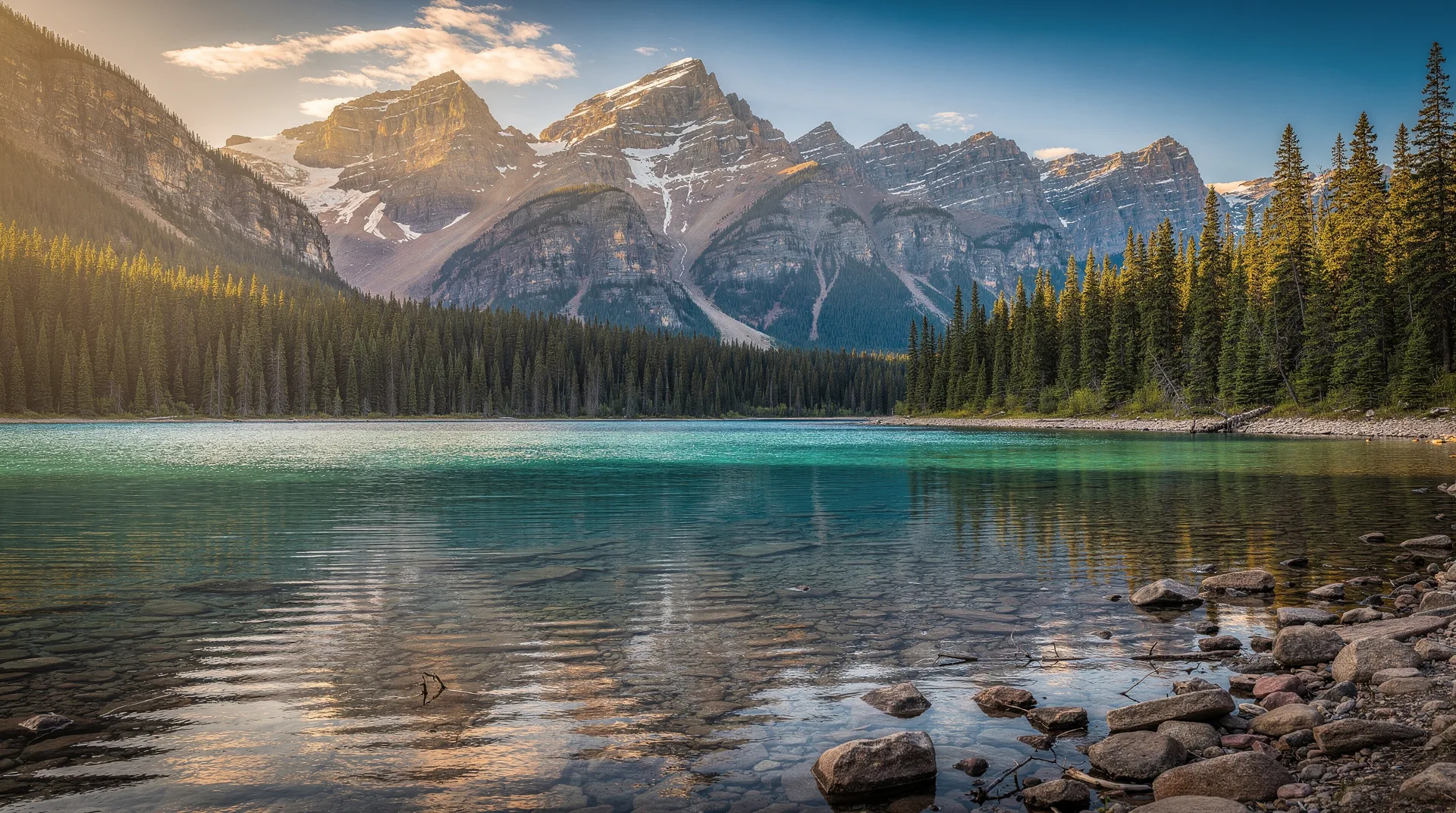
The setting is extraordinary. Canmore sits in the Bow Valley between the front ranges of the Rockies and is framed to the north and east by the Three Sisters — three distinct limestone peaks rising to over 2,900 metres that form one of the most photogenic mountain compositions in Alberta. The valley here is slightly wider than at Banff, which gives Canmore more light and a less enclosed feel, while still providing the full drama of jagged peaks.
| At a glance | |
|---|---|
| Where | Bow Valley, Alberta, just outside Banff National Park’s eastern boundary |
| Cost | Generally cheaper than Banff town; hotels roughly CAD 150-280/night in summer, lower off-season |
| Time needed | 2-4 days, more with day trips into the national park |
| Getting there | About 1 hour from Calgary International Airport (YYC), 30 minutes from Banff town |
| Best time | June-September for hiking; December-March for Nordic skiing; late September for larch season |
Gateway to the Canadian Rockies
The phrase “gateway to the Rockies” is usually marketing language. In Canmore’s case it is literally accurate. The Trans-Canada Highway enters Banff National Park exactly 26 kilometres west of Canmore, and virtually everything within the national park is within an hour’s drive. Canmore residents pay no park entry fee when driving through Banff — a significant financial advantage for those using the area as a base.
But reducing Canmore to a cheaper Banff alternative undersells it. The town has developed a strong independent identity: a vibrant arts community centred on the Canmore Arts District, a Nordic Centre that was built for the 1988 Calgary Olympics and remains one of the best cross-country skiing facilities in North America, a trail network that extends into the front ranges without the permit systems and shuttle requirements of the national park, and a restaurant scene that competes with anything in the park.
The wildlife corridors through the Bow Valley — maintained as functional habitat linkages between the national parks — mean that Canmore regularly has elk, deer, and occasionally bears moving through the residential neighbourhoods. The valley’s position as a wildlife corridor is one of the more interesting aspects of living and visiting here: large mammals use the underpasses beneath the Trans-Canada as part of their seasonal movements through the Rockies.
Top things to do in Canmore
Hiking the Three Sisters and Grassi Lakes
The Grassi Lakes Trail is the single most popular hike near Canmore — a 5.5-kilometre return trail gaining 360 metres to two impossibly green tarns below the Ha Ling Peak massif. The lakes are fed by snowmelt from the peaks above and sit in a cirque of grey limestone. An easy route and a more challenging direct route both reach the same destination. Rock climbers use the walls above the upper lake. Allow two to three hours return.
Ha Ling Peak above the lakes is a more demanding day hike — 780 metres of elevation gain over 7.4 kilometres return, reaching the summit at 2,407 metres. The views from the top encompass the entire Bow Valley from Canmore to Banff. This is the most iconic summit hike accessible from town.
Book a full-day Rockies tour including Banff and Lake Louise from CanmoreCanmore Nordic Centre Provincial Park
Built for the 1988 Winter Olympics cross-country skiing and biathlon events, the Canmore Nordic Centre now operates as a year-round facility. In winter, 65 kilometres of groomed trails through the valley provide some of the best Nordic skiing in Canada. In summer, the trail network becomes a mountain biking destination — the Olympic technical trails are rated among the finest in the province. Trail running is also extremely popular throughout the warmer months.
Wildlife watching in the Bow Valley
The Bow Valley Wildlife Corridor is a designated linkage zone where conservation organizations have spent decades negotiating habitat protection to allow large mammals to move between Banff National Park and the Ghost Wilderness Area. The wildlife underpasses beneath the Trans-Canada at Canmore are monitored by cameras and have recorded wolves, cougars, grizzly bears, elk, and deer. The Spray Lakes Road south of Canmore passes through excellent wildlife habitat. Early morning drives in May through October regularly produce elk sightings; black bears are seen throughout the summer along forest edges.
Mountain biking
Canmore has developed into one of Alberta’s premier mountain biking destinations. The Nordic Centre trails, accessible from town, include everything from beginner flow trails to technical expert lines. The Highline Trail above the south side of the valley is a more adventurous route with views of the Three Sisters and Bow Valley throughout. Several bike rental shops in town offer full-suspension trail bikes.
Arts and galleries
The Canmore Arts District, centred on 10th Street and the railway lands area, has a concentration of independent galleries, studios, and artist-run spaces unusual for a town of its size. The Canmore Museum in the old fire hall documents the town’s history as a coal mining community from the 1880s through to the mine closure in 1979. The Art Mine cooperative represents dozens of local artists working in the Rocky Mountain landscape tradition and beyond.
Day trips into Banff National Park
The national park’s major attractions — Lake Louise, Moraine Lake, Johnston Canyon, the Icefields Parkway, the Banff Gondola — are all accessible as day trips from Canmore. The 30-minute drive to Banff town along the Trans-Canada is among the most scenically rewarding commutes in the country.
Join a small-group Banff National Park day tour through Canmore and the RockiesCanmore Cave Tours
The Rat’s Nest Cave, accessed via a guided tour operated by Canmore Cave Tours, is the only commercial wild cave tour in the Canadian Rockies. The tour descends 90 metres into a natural cave system with stalactites, stalagmites, and fossil evidence of Pleistocene fauna. The standard tour takes about four hours; rappelling and more technical caving options are available for the adventurous.
Best areas in Canmore
Downtown / Main Street (8th Street) is the historic core — a compact strip of restaurants, cafes, outfitters, and galleries. The old railway station at the east end anchors the heritage district.
The Arts District around 10th Street and the railway lands has the highest concentration of galleries and independent creative businesses.
Benchlands is a residential neighbourhood above the valley floor that provides elevated views of the Three Sisters. Many of Canmore’s higher-end vacation rentals are located here.
South Canmore along the Bow River has a riverside path network and is the quietest part of the main town.
When to visit
June to September is hiking season — trails are generally snow-free from mid-June in the valley and from late June at higher elevations. July and August are the warmest and busiest months. Wildflowers peak in late June and early July.
September and October offer exceptional conditions: golden larch season (late September is the peak) brings colour to the mountainsides that rivals any autumn foliage in North America. Crowds thin after Labour Day.
December to March is Nordic skiing season at the Nordic Centre, and Canmore benefits from more reliable snow at elevation than Banff town. The frozen Bow River and frost-covered trees create a beautiful winter landscape.
Shoulder seasons (April–May, November) are the quietest and cheapest times, though trails may still be snow-covered in spring and weather can be unpredictable.
Where to stay
Malcolm Hotel is Canmore’s luxury landmark — a recently built grand hotel on the banks of Policeman’s Creek with mountain views, a spa, and a rooftop pool. Positioned to impress.
Solara Resort in the Silvertip area offers full condo-hotel suites with kitchen facilities and mountain views — well suited to families or those staying several days.
Paintbox Lodge is a smaller boutique property on the river in a converted heritage building — intimate, locally owned, and in the best location for walking the town.
Canmore Hotel on 8th Street is the budget-friendly option in the historic building that dates to 1890 — unpretentious, central, and considerably cheaper than resort properties.
Vacation rentals through Airbnb and VRBO are plentiful and often provide the best value for longer stays, particularly in the Benchlands and Three Sisters residential areas.
Food and drink
Canmore’s food scene punches above its weight. Tavern 1883 in the Malcolm Hotel serves a sophisticated Rocky Mountain menu in a room with Three Sisters views. The Sensory on 8th Street is consistently cited as one of the best fine dining tables in the Rockies — inventive modern Canadian cuisine in an intimate setting. Communitea is the beloved local café institution: strong coffee, sandwiches, and the social hub of downtown Canmore.
Rocky Mountain Bagel Co. has been feeding hikers their pre-trail breakfast since 1996. Crazyweed Kitchen on Railway Avenue is a long-standing favourite for globally influenced local ingredients. The Grizzly Paw Brewing Company downtown produces excellent ales and lagers — their seasonal patio beside Policeman’s Creek is one of the finest places for a post-hike pint in the Rockies.
Getting around
Canmore is 80 kilometres west of Calgary on the Trans-Canada Highway — approximately one hour’s drive. Calgary International Airport (YYC) is the gateway, with connections across Canada and internationally. Calgary itself is a viable day trip or stopover, and driving the Trans-Canada west through the foothills as the Rocky Mountain front ranges come into view is itself a worthwhile experience.
Within Canmore, a car is useful. The town itself is walkable between the main commercial areas, but reaching the Nordic Centre, the hiking trailheads, and the Bow Valley corridor requires wheels. Many visitors use Canmore as a car-based hub for exploring the broader Rockies region.
Day trips from Canmore
Banff National Park (30 minutes) is the obvious primary day trip — Banff town, Lake Louise, Moraine Lake, and the Icefields Parkway all within reach.
Kananaskis Country immediately south of Canmore is a vast provincial park system with less restricted access than the national park and excellent hiking, cycling, and wildlife viewing without the crowds or park fees.
Spray Lakes Reservoir south on the Spray Lakes Road passes through mountain valley scenery with wilderness camping and trout fishing.
Calgary (1 hour) for urban amenities, the Calgary Tower, the vibrant 17th Avenue restaurant strip, and the world-class collection at the Glenbow Museum.
Canmore vs Banff at a glance
| Canmore | Banff town | |
|---|---|---|
| Location | Just outside the national park boundary | Inside Banff National Park |
| Park pass needed | No, for staying in town | No for the town itself, but yes to drive further into the park |
| Accommodation cost | Generally lower | Generally higher, especially in peak season |
| Access to Lake Louise / Moraine Lake | 45-60 minutes | 45 minutes |
| Atmosphere | Working mountain town, more local feel | Resort town, busier and more polished |
See the dedicated Banff vs Canmore comparison guide for a fuller breakdown, and note that any drive into the park itself — even from a Canmore base — requires a valid Banff park pass.
For a longer trip, Canmore also works as the start of a wider Rockies loop: the Rockies 7-day itinerary and routes on to Jasper both use the Bow Valley as a natural first stop, and the climb up Ha Ling Peak is worth planning a full morning around if you only do one big hike from town.
Frequently asked questions about Canmore
Is Canmore better than staying in Banff?
Canmore offers lower accommodation prices, a more authentic small-town atmosphere, excellent local restaurants, and a trail network not subject to national park regulations. Banff offers the convenience of being inside the park boundary with closer access to Lake Louise, Moraine Lake, and the gondola. For most visitors planning a mix of day trips and independent hiking, Canmore is the better base.
Do I need a Banff National Park pass if I stay in Canmore?
Yes. If you drive into Banff National Park, you require a valid park entry permit. Day passes are available at park gates and online. Commercial vehicles and tour buses have their own permit arrangements.
Is Canmore safe for wildlife encounters?
The Bow Valley has active wildlife — elk, black bears, and occasionally grizzlies move through the valley year-round. Standard precautions apply: carry bear spray when hiking, make noise on trails, do not approach wildlife. Canmore’s wildlife management program provides good information locally.
When is golden larch season?
Larch trees in the Canadian Rockies turn brilliant gold in late September, typically peaking in the last 10 days of September. The Larch Valley above Moraine Lake and the Paradise Valley above Lake Louise are the most celebrated larch destinations, but larches also appear on slopes above Canmore. The larch season is brief and draws significant numbers of hikers — midweek visits and early starts are advisable.
Can I ski at Canmore?
Canmore itself is primarily a Nordic (cross-country) skiing destination. The Canmore Nordic Centre has 65 kilometres of groomed trails. For alpine (downhill) skiing, Banff Sunshine, Lake Louise Ski Resort, and Mount Norquay are 30–45 minutes west. Nakiska ski area in Kananaskis is 45 minutes southeast.
How many days should I spend in Canmore?
Two to four days works for most visitors: one day for a signature hike like Grassi Lakes or Ha Ling Peak, one or two days for excursions into Banff National Park, and a day for the Nordic Centre, mountain biking, or simply the town’s restaurants and galleries. Longer stays suit hikers wanting to explore beyond the most popular trails.