Quick facts
- Population
- 1.3 million (city)
- Best time
- June to September / July for Stampede
- Languages
- English
- Days needed
- 2-3 days
Calgary occupies a unique position in the Canadian imagination: a modern, prosperous, outward-looking city that has never entirely let go of its ranching and rodeo identity. The world’s largest outdoor rodeo, the Calgary Stampede, shuts down the city for ten days every July and transforms even the most polished financial district professionals into enthusiastic cowboy-hat wearers. It is genuine in a way that is difficult to manufacture, and it is spectacular.
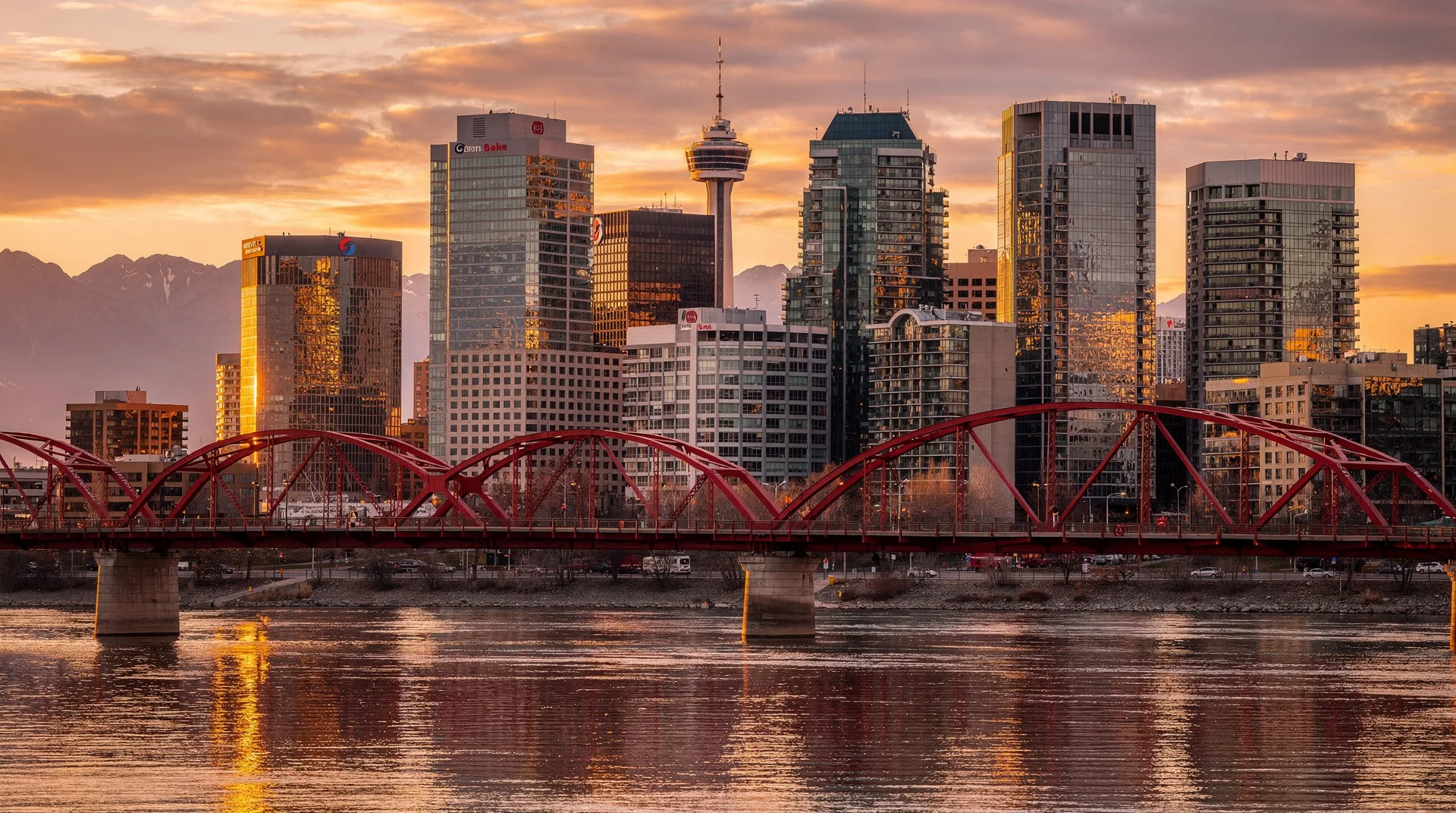
Beyond Stampede, Calgary is a sophisticated, well-funded city of 1.3 million with a strong arts scene, an exceptional new music museum, a network of river valley parks that would distinguish any metropolitan area, and one extraordinary asset no other major Canadian city possesses: the Canadian Rockies begin an hour to the west. From downtown Calgary on a clear day, you can see the peaks of Banff National Park lined up along the horizon. That proximity to the mountains colours everything about the city — its outdoor culture, its weekend patterns, its sense of possibility.
| At a glance | |
|---|---|
| Where | Southern Alberta, where the foothills meet the prairie, an hour east of the Rockies front ranges |
| Cost | Mid-range city — hotels roughly CAD 150-300/night outside Stampede, meals CAD 20-45 |
| Time needed | 2-3 days on its own, or 1-2 nights bookending a Rockies trip |
| Getting there | Calgary International Airport (YYC), or around 90 minutes by car from Banff |
| Best time | June-September for warm weather and Rockies day trips; July for the Stampede |
Calgary between the Rockies and the prairies
Calgary sits at the convergence of two landscape worlds. To the east and north, the flat Alberta prairies extend for hundreds of kilometres. To the west, the Front Ranges of the Rockies rise abruptly from the foothills. The city itself straddles the Bow River where it emerges from the mountains and begins its long eastward journey across the plains.
The downtown core is compact and walkable, centred on Stephen Avenue Walk — a pedestrian street of Victorian sandstone buildings and modern towers that gives Calgary its commercial identity. The Beltline to the south has become the city’s most dynamic residential and dining neighbourhood. Inglewood to the east, along the Bow, is the city’s creative and independent retail hub.
Calgary served as host city for the 1988 Winter Olympics, and the legacy infrastructure — the Olympic Oval, Canada Olympic Park with its ski jumps and luge track — remains functional and visible. More recently, the East Village redevelopment has transformed a formerly derelict area near the confluence of the Bow and Elbow rivers into one of the city’s most interesting neighbourhoods, anchored by the National Music Centre.
For visitors using Calgary as a base for Banff, Lake Louise, or Jasper, the city rewards one to two nights of exploration before or after the mountain experience.
Top things to do in Calgary
Calgary Stampede
For ten days every July — the second Friday through the following Sunday — Calgary surrenders entirely to its rodeo identity. The Stampede grounds host the world’s richest outdoor rodeo, with chuck wagon races, rodeo competitions across every traditional category, a massive midway, live music, and a grandstand show that features one of the most elaborate fireworks displays in Canada. Pancake breakfasts are served free across the city every morning by businesses and community groups. Hotel prices triple. The city is transformed.
Even for visitors not particularly interested in rodeo, the Stampede captures something essential about Alberta’s ranching heritage and the city’s relationship to its past. The Indigenous component — the Indian Village, celebrating the five First Nations who have participated since the early 20th century — is significant and carefully presented.
Book accommodation and Stampede tickets months in advance. July outside Stampede week is also excellent — the weather is typically warm and sunny, and the city is busy without the extreme crowds.
Studio Bell — National Music Centre
The most architecturally remarkable building in Calgary and one of the most interesting music museums in North America, Studio Bell opened in 2016 in the East Village neighbourhood. The building — five connected towers with a distinctive copper skin — houses the Canadian Music Hall of Fame, one of the world’s largest collections of musical instruments and artefacts, and multiple live performance and recording spaces. The Rolling Stones Mobile Studio is here. Interactive exhibits allow visitors to play instruments, record in professional studios, and explore the history of Canadian popular music from Joni Mitchell to Drake. Allow three to four hours.
Heritage Park Historical Village
On the shores of Glenmore Reservoir at the southern edge of the city, Heritage Park is the largest living history museum in Canada — a 27-hectare site recreating prairie life from the 1860s to the 1950s. Costumed interpreters staff the buildings, a steam train circles the park, the paddlewheel steamship SS Moyie departs from the dock, and the midway features an authentic early 20th-century amusement park. The attention to detail is extraordinary. Heritage Park is an ideal half-day for families and anyone interested in how the prairies were settled.
Prince’s Island Park
In the middle of the Bow River in downtown Calgary, Prince’s Island Park is the city’s most beloved green space — 20 hectares of urban parkland connected to both banks by footbridges. The park hosts the Calgary Folk Music Festival (July), Shakespeare in the Park (summer evenings), and the Festival of Lights (winter). The river pathway network here connects to over 900 kilometres of multi-use trails throughout the city.
Calgary Tower
The 190-metre Calgary Tower predates the Stampede Tower as the city’s most recognisable silhouette, and its observation deck — including a glass floor section directly above the street — provides a panorama of the Rockies to the west and the prairie to the east. The perspective on clear days, with the mountain range visible across the plains, is unusual and memorable.
Inglewood neighbourhood
Calgary’s oldest neighbourhood, east of downtown along the Bow River, is where the city’s independent retailers, galleries, and creative businesses have concentrated. Ninth Avenue SE is the main strip, with independent bookshops, vintage stores, specialty food shops, and Calgary’s best craft beer selection at establishments like Inglewood’s own breweries. The Inglewood Wildlands along the river is excellent birdwatching habitat.
Canada Olympic Park
The legacy of the 1988 Olympics is maintained as a year-round recreation and training facility 15 kilometres west of downtown. In winter: downhill skiing, snowboarding, and luge and bobsled experiences for thrill-seekers. In summer: the Olympic Oval speed skating track and a zipline operation. The museum of Olympic heritage on site is worth 90 minutes.
Best neighbourhoods in Calgary
Downtown / Stephen Avenue is the commercial core — glass towers, the Glenbow Museum, the CORE shopping centre, and the pedestrian stretch of Stephen Avenue with its heritage sandstone buildings.
Beltline immediately south of downtown is Calgary’s most urban and restaurant-dense neighbourhood. 17th Avenue SW (“the Red Mile”) is the main dining and nightlife strip, with dozens of restaurants and bars.
Kensington across the Bow River from downtown is a compact village of independent cafés, restaurants, and boutiques with a strong neighbourhood identity.
Inglewood is the creative hub — vintage, craft beer, independent retail, and the beginning of the Bow Habitat Station and Fish Creek.
East Village is the newest redeveloped neighbourhood, with Studio Bell, the Central Library, and riverfront parkland attracting residents and visitors alike. The Calgary Public Library building here is itself a remarkable piece of contemporary architecture.
Food and drink in Calgary
Calgary’s dining scene reflects both its oil wealth and its Alberta agricultural hinterland — excellent beef is a given, but the city’s international population has created a genuinely diverse food culture.
River Café on Prince’s Island is consistently cited as one of Canada’s best restaurants — a warm, lodge-like room with a menu built around Canadian ingredients: bison, foraged mushrooms, sustainable fish, and Alberta beef. The setting in the park with the river behind the windows is exceptional.
Charcut Roast House on Stephen Avenue pioneered Calgary’s whole-animal charcuterie and house-cured meat approach and remains one of the city’s essential tables.
Model Milk in the Beltline occupies a converted dairy and serves carefully sourced, seasonally driven dishes that have made it one of Calgary’s most popular neighbourhood restaurants.
Bridgette Bar on 17th Avenue does elevated pub food at a high level — great for groups, excellent cocktail program, and the most interesting bar snacks in the city.
For Alberta beef specifically, Caesar’s Steak House has served the classic Calgary steak experience since 1972, with the dark-panelled Old West atmosphere to match.
Alberta’s craft beer scene is strong; Village Brewing and Annex Ale Project represent the city’s better breweries.
When to visit Calgary
July is the obvious peak — Stampede transforms the city in the second week of the month. Outside Stampede week, July is warm, sunny, and the best time for Rockies day trips to Banff and Lake Louise.
June and August are excellent for combining city exploration with mountain access. June can still have cold snaps; August is reliably warm.
September and October offer pleasant conditions with fewer crowds, excellent fall colour in the river valleys, and the shoulder-season pricing advantage.
Winter (December to March) is cold but the proximity to ski resorts — Banff Sunshine, Lake Louise, Nakiska — makes Calgary a practical base for ski trips. Chinook winds can suddenly warm the city dramatically even mid-winter.
Spring (April to May) is variable and can be wet, but prices are low and the city is pleasant.
Where to stay in Calgary
The Fairmont Palliser on 9th Avenue SW is Calgary’s grande dame railway hotel, opened in 1914 and still the most elegant accommodation in the city centre. A meal in the Hawthorn dining room or a drink in the Rimrock lounge is worthwhile even for non-guests.
Hotel Arts on 12th Avenue in the Beltline is the city’s leading boutique hotel, with strong design sensibility, excellent art collection, and a good restaurant.
Alt Hotel Calgary near the CORE provides smart, well-designed accommodation at more accessible prices. The Marriott Downtown and Hyatt Regency cover the standard business and leisure hotel requirements efficiently.
Getting around Calgary
C-Train is Calgary’s light rail system — two lines covering the city east to west and north to south, and crucially, entirely free to ride within the downtown core zone. The Red Line and Blue Line cover most visitor priorities.
CTrain + walking handles most downtown, Beltline, and Saddledome area needs efficiently.
Car or rideshare is needed for Heritage Park, Canada Olympic Park, and most neighbourhood destinations beyond the C-Train network.
To the Rockies: a car is essentially necessary for Banff, Lake Louise, and Canmore. Shuttle services operate from Calgary hotels to Banff daily, and guided day tours are an excellent car-free option.
Calgary by season
| Month | Weather | Notes |
|---|---|---|
| Dec-Feb | Cold, often below -10°C, occasional chinook warm spells | Ski season at Banff Sunshine and Lake Louise; C-Train and downtown +15 network make the city manageable |
| Mar-May | Variable, warming through May | Shoulder season prices; mountain roads can still be icy into April |
| Jun-Aug | Warm, 20-27°C typical daytime | Peak season; Stampede in July drives up hotel rates sharply |
| Sep-Oct | Mild days, cool nights, fall colour in the river valleys | Best value window — good weather, thinner crowds, easier Rockies access |
| Nov | Cold and often grey | Quietest month; a practical time for a cheap city stopover without mountain plans |
Getting to the Rockies without your own car
Not every visitor wants to rent a car for the drive to Banff or Jasper, and Calgary is well set up for that. Scheduled shuttle vans run daily from the airport and downtown hotels to Banff and Lake Louise, typically taking 90 minutes to two hours depending on stops. Guided day tours cover the same ground with commentary and stops at viewpoints along the way — a reasonable option if the driving from Calgary to Banff logistics feel like more hassle than they’re worth for a short visit.
For a longer trip, renting a car in Calgary and following a route from Calgary toward Jasper via the Icefields Parkway is the classic way to see the range properly, with Kananaskis Country as a quieter, fee-free alternative to the national parks if time allows a detour south of the highway.
Day trips from Calgary
Banff National Park is the obvious day trip — 130 kilometres west on the Trans-Canada Highway, 90 minutes by car. A day trip from Calgary can cover Banff town, Lake Louise, and the beginning of the Icefields Parkway, but two days better serves the destination.
Book the Banff National Park small-group day tour from Calgary Book the Calgary, Banff, Canmore, and Jasper multi-day national parks tourCanmore is 100 kilometres west and 20 kilometres before Banff — a mountain town with a more local, less commercial character than Banff, excellent hiking, and a strong restaurant scene.
Drumheller is 140 kilometres northeast in the Alberta Badlands — a striking Mars-like landscape of hoodoos, coulees, and dinosaur fossil beds. The Royal Tyrrell Museum of Palaeontology is one of the world’s great dinosaur museums.
Kananaskis Country is a vast provincial park immediately west of Calgary — less famous than Banff but quieter, equally spectacular, and without the entry fees or crowds. An excellent option for hikers and mountain bikers.
Frequently asked questions about Calgary
When exactly is the Calgary Stampede?
The Calgary Stampede runs annually for 10 days beginning on the second Friday of July. In most years this places Stampede approximately July 11-20, though exact dates shift by a day or two each year. Check the official Stampede website for the current year’s dates.
Do you need a cowboy hat for the Stampede?
Not required, but wearing one is enthusiastically encouraged. Temporary hat shops and western wear stores open across the city in the days before Stampede begins. White straw hats are the traditional Stampede variant. The spirit of the event is participatory, and visitors who lean into the western theme have a significantly better time than those who approach it ironically.
Is Calgary worth visiting outside Stampede?
Very much so. Studio Bell alone justifies a visit, Heritage Park is one of Canada’s best museums, and the proximity to Banff and Kananaskis gives Calgary an outdoor recreation access that no other major Canadian city can match. The restaurant and bar scene is excellent. The city is modern, clean, and easy to navigate.
How far is Banff from Calgary?
Banff town is 128 kilometres west of Calgary on the Trans-Canada Highway (Highway 1) — approximately 90 minutes in normal driving conditions. The drive is straightforward and well-signed. Lake Louise is an additional 56 kilometres beyond Banff town.
What is a chinook and does it affect travel?
A chinook is a warm, dry wind that descends from the Rocky Mountains and can raise Calgary temperatures by 20°C or more within hours in winter. The chinook arch — a distinctive cloud formation above the mountains — announces the incoming warm air. Chinooks can melt snow quickly and make February feel briefly like spring. They are a quirk of Calgary’s geography and climate that locals cherish.
What airport serves Calgary?
Calgary International Airport (YYC) is the fifth-busiest airport in Canada, located about 17 kilometres northeast of downtown. Direct international service includes London, Frankfurt, Amsterdam, Tokyo, Hong Kong, and major US hubs. The airport is connected to downtown by the CTrain Blue Line.
Is Calgary a walkable city?
The downtown core and Beltline are highly walkable. The +15 network — an enclosed elevated pedestrian walkway system — connects 86 city blocks in the downtown core and is useful in winter. Beyond downtown, the city is spread out and car-dependent, though the C-Train and cycling pathways provide viable alternatives along the river valley and main corridors.
Should I stay in Calgary or Canmore for a Rockies trip?
It depends on how many nights you have. Calgary makes sense for the flight in and out and for a dedicated city stay, but once you’re focused on hiking and the mountains, Canmore shaves 30-40 minutes off each day’s drive to Banff and puts you closer to trailheads at a lower nightly rate than resort towns inside the park. Many visitors do one or two nights in Calgary bookending several nights in Canmore or Banff.
Is a rental car necessary in Calgary itself?
No — downtown, the Beltline and most C-Train-connected neighbourhoods work fine without one. A car (or rideshare) becomes useful for Heritage Park, Canada Olympic Park and any day trip toward the Rockies, Drumheller or Kananaskis, none of which are reachable by transit.