Quick facts
- Located in
- Banff National Park, 5 km northeast of Banff town
- Length
- 21 km — the longest lake in Banff National Park
- Best time
- May through October for boat cruises
- Days needed
- Half-day to full day
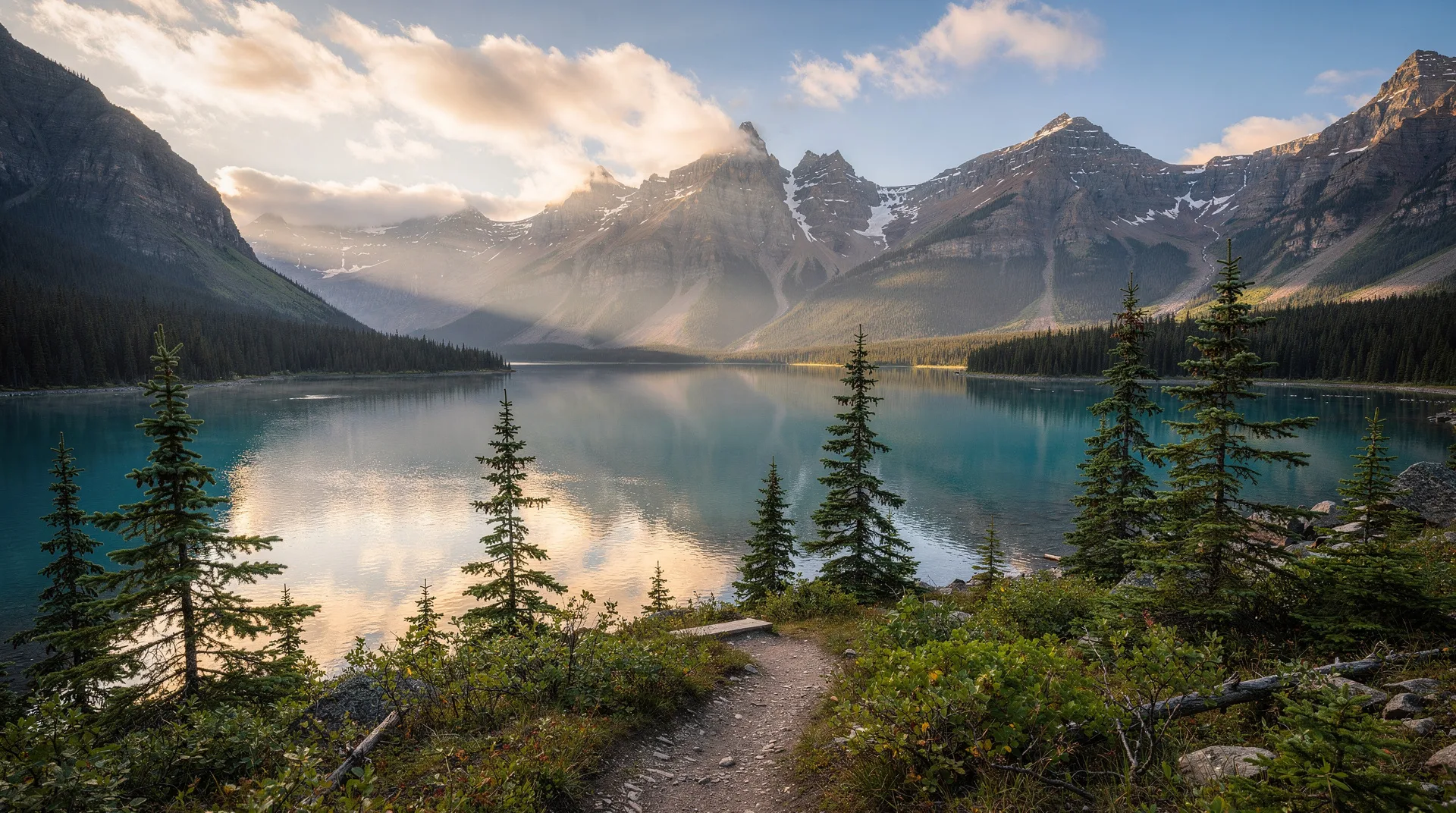
Lake Minnewanka is the largest lake in Banff National Park and the only one where motorboats are permitted — a combination that makes it Banff’s default lake experience for visitors who want to get on the water easily and see a stretch of wilderness shoreline impossible to reach on foot. It is a 15-minute drive from Banff town along the Lake Minnewanka Scenic Drive, making it one of the most accessible excursions in the park.
At 21 kilometres long and up to 142 metres deep, Minnewanka extends northeast from the accessible trailhead area deep into the Front Ranges and terminates near the Devil’s Gap — a dramatic cleft in the mountains that marks the boundary between Banff National Park and the Stoney Nakoda territory of the foothills. The lake’s Stoney name translates roughly as “Water of the Spirits,” reflecting the cultural importance of the lake to the First Nations who have used its shores for thousands of years.
| At a glance | |
|---|---|
| Where | Banff National Park, around 10 minutes / 5 km northeast of Banff town |
| Park pass | Parks Canada day pass required, around CAD 12.25 per adult (Discovery Pass covers a year) |
| Cost | Cruise tickets are separately priced (typically CAD 60-80 per adult), booked through Pursuit |
| Time needed | Half a day for the cruise and a short walk; a full day with hiking and the scenic drive loop |
| Getting there | Car recommended; Roam Transit occasionally covers a summer connection |
What to do at Lake Minnewanka
The Lake Minnewanka cruise
The cruise is the signature experience. Pursuit operates the interpretive boat tours several times daily from a dock at the main parking area, running from May through early October. The standard tour is approximately 60 minutes and covers the inhabited southern portion of the lake plus the approach to the Devil’s Gap. Extended tours of 90 minutes reach further into the less-visited northern arm.
The cruise is engaging even for visitors who dislike organised tours. The vessels are comfortable indoor-outdoor boats with glass walls and open upper decks. Interpretation covers the geology of the Front Ranges, the submerged village of Minnewanka Landing (more on that below), wildlife on the shore, and the cultural history of the lake. Bighorn sheep are routinely visible on the cliffs; bald eagles and osprey nest around the lake; black bears and elk appear occasionally on the shoreline.
Booking. Reserve ahead for summer months, particularly for the first morning and sunset tours. Last-minute walkup tickets are possible on less busy weekdays but not recommended in July and August.
The submerged town of Minnewanka Landing
One of the lake’s unique features is a literal underwater ghost town. Before the lake was dammed in 1912 and again in 1941, a small lakeside resort village called Minnewanka Landing sat on the original, shallower shoreline. The damming raised water levels significantly, submerging the village. Foundations, cabins, sidewalks, and artifacts remain visible 8-20 metres underwater — now a destination for technical scuba divers and a reference point on the interpretive cruise.
For non-divers, the history is a fascinating layer in the cruise narrative. For certified cold-water divers, Minnewanka is one of the most distinctive dive sites in Western Canada. Local operators in Banff offer guided dives in summer.
Hiking at Lake Minnewanka
Several hikes start from the lake’s main parking area:
Stewart Canyon (3 km return). A flat, easy trail along the lakeshore leading to a bridged crossing of Stewart Canyon, where the Cascade River enters the lake. Excellent for families and visitors with limited time. Approximately 45 minutes round trip.
Aylmer Lookout (24 km return). A strenuous full-day hike climbing to a historic fire lookout with commanding views over the lake and valley. Not for casual walkers; experienced hikers only. Bear closures are common in summer — check Parks Canada conditions.
Aylmer Pass (23 km return). Alpine pass hike with spectacular views; also subject to frequent bear closures.
C-Level Cirque (7.6 km return). Not directly on Minnewanka but starts from the same road; an old mining exploration site below Cascade Mountain with abandoned equipment and a scenic cirque basin.
Swimming and water activities
Lake Minnewanka water temperatures climb into the 10-14 degC range in August — swimmable briefly for hardy visitors, pleasant for splashing. A small beach area near the parking lot is the usual swim spot. Motorboats and private watercraft are permitted (with a self-certification permit for invasive species); rental motorboats and fishing boats are available at the day-use area.
Fishing. Lake Minnewanka supports lake trout, mountain whitefish, and rainbow trout populations. A National Park fishing license is required; the regulations are detailed and change periodically — check with Parks Canada before fishing.
The Lake Minnewanka Scenic Drive
The 22-kilometre scenic loop road connects the Lake Minnewanka parking area with Two Jack Lake, Johnson Lake, and the Banff Avenue exit. It is one of the best short scenic drives in the park, with multiple pullouts for wildlife spotting and photography. Two Jack Lake in particular offers an iconic reflection shot with Mount Rundle in the background. Johnson Lake is warmer (for Banff) and a popular summer swimming spot.
Lake Minnewanka vs other Banff lakes
| Lake | Best for | Access | Crowds |
|---|---|---|---|
| Lake Minnewanka | Boat cruise, wildlife, motorboats | Easy, 10 min from Banff | Moderate |
| Lake Louise | Iconic photo, hiking | Easy, 56 km from Banff | Very heavy in summer |
| Moraine Lake | Scenery, Valley of the Ten Peaks | Shuttle only in summer | Very heavy |
Anyone touring Banff National Park with limited time and a preference for open water over lakeshore photography should put Minnewanka ahead of a third stop at the more famous — and more crowded — lakes further west. A Banff National Park pass covers entry here just as it does at Lake Louise and Moraine Lake, so there’s no extra park fee for adding it to a multi-lake day.
Getting there
From Banff town, head east on Banff Avenue, cross the Trans-Canada Highway, and follow signs for Lake Minnewanka. The drive takes about 10 minutes. The parking area at the main day-use site is large but fills on summer afternoons — early starts or later visits work best.
No shuttle service connects to Lake Minnewanka directly in most seasons; check Roam Transit for current summer routes, which occasionally include a Minnewanka connection. See getting around Banff for current transit options.
Wildlife at Lake Minnewanka
The combination of open shoreline, cliffs, and access to the wider Front Ranges backcountry makes Minnewanka an exceptionally reliable wildlife location.
Bighorn sheep are permanently resident on the cliffs between the parking area and the Two Jack Lake turnoff. Rams, ewes, and lambs are regularly visible from the roadside. Keep a safe distance and never feed them.
Elk move through the area seasonally, particularly in the rut (September) when bulls bugle in the meadows.
Black bears and grizzlies are both present. Closures affecting the eastern hiking trails are common in summer when bears are feeding on buffaloberry in the valleys.
Bald eagles and osprey nest in mature trees along the shoreline. Watch for them on tall snags near the cruise departure dock.
Mountain goats are visible on the highest cliffs in some seasons — binoculars help.
Staying safe around wildlife and weather
Because the shoreline is so reliable for animals, a little discipline goes a long way. Give bighorn sheep and elk generous space, keep food sealed, and read the Canada wildlife safety guide before heading onto any trail. Bear closures are posted at trailheads and on the Parks Canada website, and they are taken seriously: a closed trail stays closed, however tempting the weather. Mountain weather also changes quickly, so a calm morning on the dock can turn windy by afternoon. Bring a layer even when the forecast looks settled, and treat the early cruise as the safest bet for smooth water.
Pairing Minnewanka with the rest of the park
Minnewanka works best as one piece of a wider plan rather than a stand-alone outing. Its short distance from town makes it an easy add-on to almost any Banff itinerary, and anyone with longer in the area can fold it into the five-day Banff plan on a day when the weather is unsettled higher up.
- For a lighter morning: pair the cruise with the Tunnel Mountain hike, a short outing that gives a broad view back over the valley.
- For hot springs and history: the Cave and Basin site and the Banff Upper Hot Springs make a relaxed afternoon after a morning on the water.
- For mountain views: the Banff Gondola and Sulphur Mountain offer a very different perspective from the one you get at lake level.
- For canyon scenery: Johnston Canyon sits along the same side of the valley and suits a separate half-day.
- With children: the cruise, the short Stewart Canyon walk and the roadside sheep are an easy combination, and the Banff with kids guide suggests further ideas.
If you are weighing where to base yourself, the Banff versus Canmore comparison explains how each town handles the short drive out here, and the wider Canadian Rockies overview shows how Minnewanka fits among the region’s headline stops. Travellers arriving from the airport can read about driving from Calgary to Banff before planning the first day, and those chasing quieter moments will find more ideas in the avoiding crowds in the Rockies article.
When the lake looks its best
Each season gives the lake a different character. Early summer brings long daylight and green shorelines, while autumn softens the light and thins the crowds, which is one reason the Banff in October guide is worth a look. The best time to visit Banff page compares the seasons in more detail. Whatever the month, the quiet hours at either end of the day reward anyone willing to start early or linger late, and the calm light on the water is often the memory visitors keep.
Planning a visit
Half-day version: Drive out from Banff (10 min), take the 60-minute cruise, walk to Stewart Canyon for an hour, return. Total time approximately 4 hours.
Full-day version: Add lunch at the cafe near the dock, a longer hike, time at Two Jack Lake for photography, and a swim at Johnson Lake. Plan 6-8 hours.
Summer peak weekdays are quieter than weekends. The first cruise of the day typically has the calmest water and best light. Sunset cruises are popular for photography but book up fast.
What to bring
- Layered clothing — the lake sits in an open valley and wind can be sharp even on sunny days
- Sunglasses and sun protection (reflection off the water is intense)
- Swimsuit and towel if you plan to swim
- Binoculars for wildlife spotting
- Camera — Minnewanka at sunrise or sunset is one of the finest photography locations in Banff
- Snacks and water if you plan to hike
Frequently asked questions about Lake Minnewanka: Cruises, Hiking & Swimming Guide
How long is the Lake Minnewanka cruise? The standard tour is approximately 60 minutes. Extended tours of 90 minutes are available with fewer daily departures.
Can I swim at Lake Minnewanka? Yes, though the water is cold — typical August temperatures are 10-14 degC. Most visitors find the beach area appropriate for brief swims.
Are private boats allowed? Yes, with a mandatory self-certification for aquatic invasive species. This is the only lake in Banff National Park where motorboats are permitted.
Is it worth it if I’ve done Lake Louise and Moraine Lake? Yes — Minnewanka is a fundamentally different experience. Open, long, larger-scale; better for wildlife; offers actual boat cruising rather than viewing. Combines well with the scenic drive loop.
Do I need a park pass to visit Lake Minnewanka? Yes. It sits inside Banff National Park, so a Parks Canada day pass or Discovery Pass is required for every vehicle entering, on top of any separate cruise ticket. See the Banff park pass guide for current prices.
Book the Lake Minnewanka cruise and Banff toursRelated pages
- Things to do in Banff — full activity list
- Banff day trips — how Minnewanka fits a day plan
- Canoeing on Rockies lakes — Moraine, Louise, Maligne, and more
- Wildlife watching in Alberta — species and timing
- Banff in summer — the peak season context
- Banff National Park pass guide — pricing and where to buy
- Lake Louise — the region’s other essential lake