Quick facts
- Located in
- Charlevoix, Quebec
- Best time
- Late June–September; caribou active year-round
- Getting there
- 1.5 hrs from Quebec City; 30 min north of Baie-Saint-Paul
- Days needed
- 1-2 days
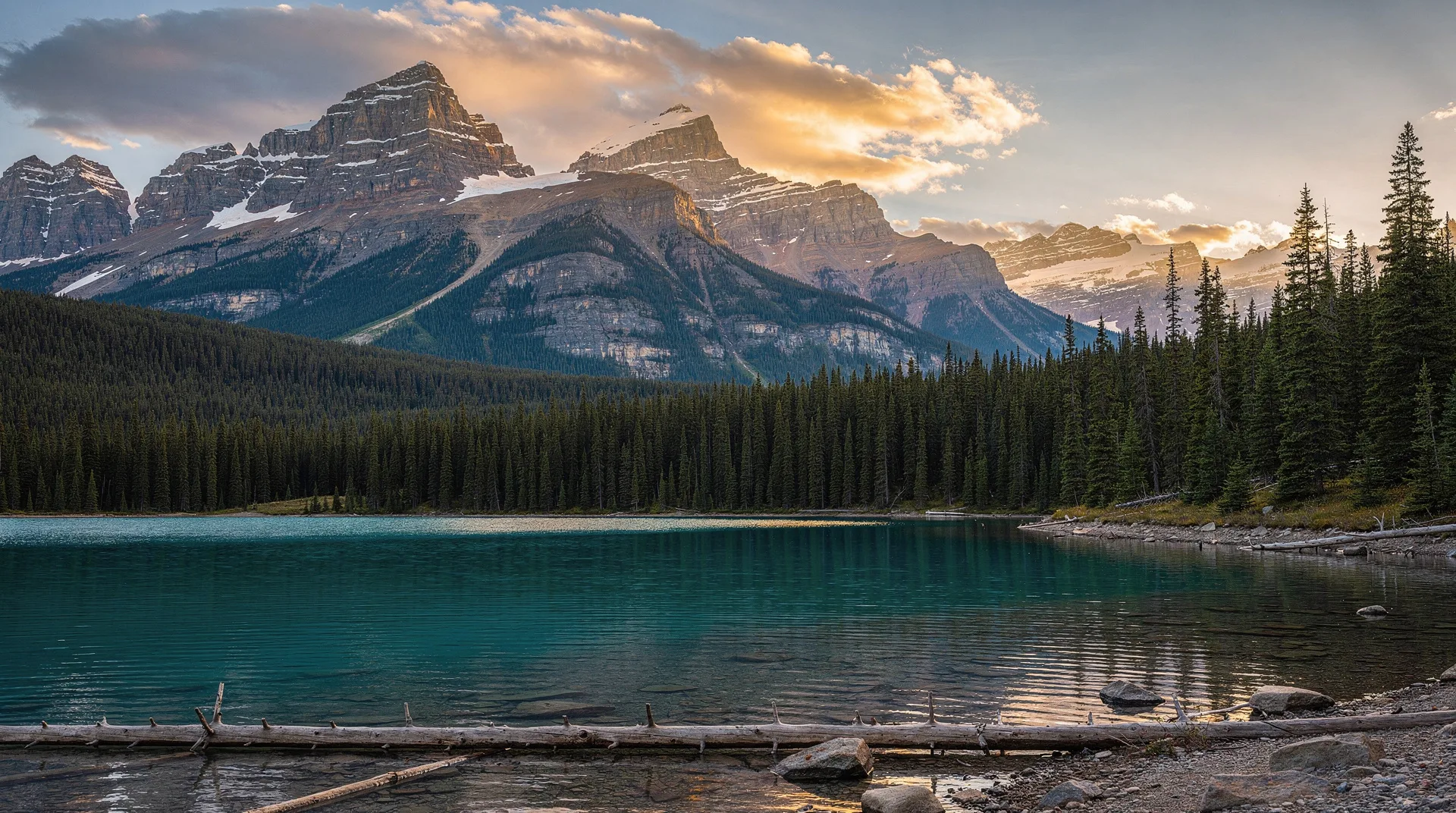
The first surprise of Parc National des Grands-Jardins is its landscape. Drive north from Baie-Saint-Paul through a tunnel of boreal forest — spruce, fir, birch — and the trees get progressively shorter and sparser until you emerge onto a plateau of open lichen barrens that looks more like Labrador than Charlevoix. This is a subarctic landscape: taiga, technically — the zone between the boreal forest below and the true tundra further north. At 900 metres above sea level, the plateau receives enough snow, wind, and cold to support plant communities that would not be out of place 500 kilometres further north.
| At a glance | |
|---|---|
| Where | 35 km north of Baie-Saint-Paul on Route 381, Charlevoix |
| Cost | Sépaq daily park entry fee applies; an annual national parks pass is worth it if visiting multiple Quebec parks |
| Time needed | Half a day for the plateau trails; 1-2 days with camping |
| Getting there | Car required — about 90 minutes from Quebec City |
| Best time | July-August for full trail access and caribou on the barrens; late September for autumn colour and rutting activity |
The reason this landscape exists at this latitude in Charlevoix involves geology, soil chemistry, and climate in combination. The plateau’s bedrock is hard Canadian Shield granite that produces thin, acidic soils poorly suited to forest growth. The elevation brings cold temperatures and heavy snowfall that persists into late spring. These conditions limit tree growth to stunted individuals and create vast carpets of lichen — particularly the reindeer lichen that gives the landscape its characteristic silver-grey colour and that provides the primary winter food source for the park’s woodland caribou.
Those caribou are the main reason to make the drive. A herd of approximately 100–140 individuals occupies the park and its surrounding territories, representing one of the southernmost wild caribou populations in eastern North America. They are visible year-round but most reliably encountered in summer on the open lichen barrens of the plateau, where the absence of forest makes spotting straightforward and the photographic opportunities are exceptional.
The woodland caribou of Grands-Jardins
The caribou of Parc National des Grands-Jardins occupy an ecological niche that requires the specific landscape combination the park protects: the open lichen barrens for winter feeding, the boreal forest edge for calving and summer ranging, and the isolation from the agricultural and developed land that surrounds the park. The population has been managed and studied continuously since the park’s establishment in 1981.
Summer is the easiest time to see the animals. The herds — usually small groups of five to twenty individuals rather than large aggregations — rest on the open lichen barrens during the day, where the exposed position allows them to detect predators. Early morning and late afternoon are the most active periods; midday in summer sees the animals relatively still.
The autumn rutting season in late September and October brings increased activity and the spectacular display of antlered bulls in competition. The calving period in late May and early June is when the animals are most vulnerable and some trail areas may have restricted access.
Wolves and black bears also occupy the park. Wolf sightings are uncommon but not rare — the predator-prey relationship between the wolf packs and the caribou herd is an important part of the park’s ecological management.
Book Quebec nature and wildlife tours on GetYourGuideTrails and hiking
The park trail network covers approximately 100 kilometres and ranges from short interpretive walks to multi-day backcountry routes. The most popular trails access the lichen barrens plateau where caribou sightings are most likely.
Sentier du mont du Lac des Cygnes
The flagship trail of Grands-Jardins climbs to 980 metres at the summit of Mont du Lac des Cygnes, the highest point in the park. The ascent covers 5.7 kilometres one-way with an elevation gain of about 400 metres from the trailhead. The upper section crosses the taiga plateau — tree cover diminishes gradually then disappears, replaced by lichen, sedge, and scattered krummholz (wind-stunted spruce trees barely a metre tall despite being decades old).
The summit views extend across the Charlevoix highlands in all directions and, on clear days, to the St. Lawrence River far below. The trail is rated moderate — it is not technically difficult but the exposure on the plateau means weather can change rapidly and warm layers are necessary even in July.
Sentier des Martres
A longer backcountry circuit that crosses between the plateau and the forest zones, with high probability of caribou encounters in the open sections. The trail covers approximately 22 kilometres in total and can be done as a long day hike or as a two-day route with overnight camping.
Lac des Cygnes and lake circuit trails
The park’s lake system — several cold, clear lakes at plateau level — has accessible trails for less demanding hiking. The Lac des Cygnes circuit (3.7 km) is a good introduction to the taiga landscape without the elevation commitment of the summit trails.
Camping and overnight facilities
The park has two main campground areas: one near the main entrance (Secteur Thomas-Fortin) and one deeper in the park near the lake system. Services include electrical and non-electrical sites, bathroom facilities, and fire rings. In summer, the park also offers ready-to-camp CARI-Tents — canvas tent structures on platforms near the lichen barrens, designed specifically to place visitors in caribou habitat.
Backcountry camping at designated sites requires advance permit booking through the Sépaq reservation system. Summer weekends fill quickly — booking at least two to three weeks ahead is advisable.
Seasons and wildlife calendar
June: Snow often persists on the plateau into early June. Access to higher trails may be limited. Calving season for caribou — observe distances carefully and do not approach animals with young.
July and August: Full trail access, warmest temperatures (though the plateau is always cooler than the valley — bring layers). Peak period for caribou on the lichen barrens. Black flies and mosquitoes are present, particularly near lake edges and in the forest sections.
September: Arguably the finest month. Autumn colour arrives early at elevation — the lichen barrens turn russet and gold, the forest below goes yellow and orange, and the caribou begin the rutting season with increased visible activity. The plateau in late September is visually extraordinary.
October: Full autumn colour, diminishing crowds. Some park facilities begin closing for the season. Snow can arrive on the plateau as early as mid-October.
Winter: The park is accessible for snowshoeing and cross-country skiing, with some facilities maintained. Caribou are present on the plateau but snow travel requires appropriate equipment.
What to bring
The lichen barrens of the plateau are fully exposed to wind and weather. Even in July, temperatures at 900 metres can drop to 10°C with wind chill, and afternoon thunderstorms develop without much warning in summer. Essential items regardless of season: wind-resistant layer, rain jacket, warm hat, and enough water for the full hike (the lakes are not treated and should not be drunk untreated).
Binoculars are worth carrying for caribou spotting — the open plateau allows long-distance sightings but the animals can be at 300–500 metres from the trail. A long lens for wildlife photography is rewarding if you have one.
Insect repellent is necessary from late June through August.
Getting there
From Baie-Saint-Paul, take Route 381 north. The park entrance is approximately 35 kilometres from the village — the drive climbs steadily through the boreal zone and the landscape transition becomes visible as you approach the plateau. From Quebec City, take Highway 138 east to Baie-Saint-Paul and then Route 381 north; total time is approximately 90 minutes.
There is no public transit to the park. A car is required. If you would rather not drive, you can look at guided tours in Quebec that include nature excursions.
Park fees: Daily park entry fees apply (Sépaq rates). An annual national parks pass provides good value for visitors planning multiple park visits across Quebec. Purchase online in advance or at the park entrance.
Seasonality at a glance
| Month | Weather | Crowds | Highlight |
|---|---|---|---|
| June | Snow may linger on the plateau; cool | Low | Caribou calving — keep distance |
| July-August | Warmest, but plateau is always cooler than the valley | Highest | Peak caribou sightings on the lichen barrens |
| September | Cool, early autumn colour at elevation | Moderate, thinning after Labour Day | Rutting season, best colour-and-wildlife combination |
| October | Cold, snow possible by mid-month | Low | Full autumn colour, facilities beginning to close |
| Winter | Cold, snow travel only | Low | Snowshoeing and cross-country skiing, caribou still present |
Grands-Jardins vs Hautes-Gorges
Charlevoix’s two national parks are often paired on a longer trip, but they suit different priorities. Grands-Jardins is about the open taiga plateau, wildlife (especially caribou), and moderate hiking with big sky views; Hautes-Gorges is about vertical scale — a 900-metre canyon best experienced by boat cruise plus a genuinely difficult summit hike. If you only have time for one, choose Grands-Jardins for wildlife and an easier day out, or Hautes-Gorges for the single most dramatic landscape in the region. With two days, they pair naturally as described in the 4-day Charlevoix itinerary.
Frequently asked questions about Parc National des Grands-Jardins
Is the caribou sighting guaranteed? No — sightings are common but not guaranteed. Early morning and late afternoon on the open lichen barrens in summer give the best odds.
Do I need a park pass reservation to just hike for the day? A Sépaq daily entry fee applies but day hiking generally doesn’t require advance reservation the way camping and backcountry sites do — though booking ahead is still wise for summer weekends.
Related pages
Parc National des Grands-Jardins is the northern anchor of Charlevoix and a natural companion to Parc National des Hautes-Gorges, which protects the valley immediately east of the plateau. The 4-day Charlevoix itinerary positions Grands-Jardins as a day-trip from Baie-Saint-Paul. For the full range of Charlevoix activities, the things to do guide covers all major experiences across the region.
The taiga landscape of Grands-Jardins is one of the most distinctive natural environments in southern Quebec — a genuinely subarctic experience within an hour and a half of Quebec City, accessed through a region better known for galleries and gourmet restaurants. That contrast is part of what makes Charlevoix exceptional as a destination.