Quick facts
- Located in
- Charlevoix, Quebec
- Best time
- June–October; peak July–September
- Getting there
- 40 min from La Malbaie; 2.5 hrs from Quebec City
- Days needed
- 1-2 days
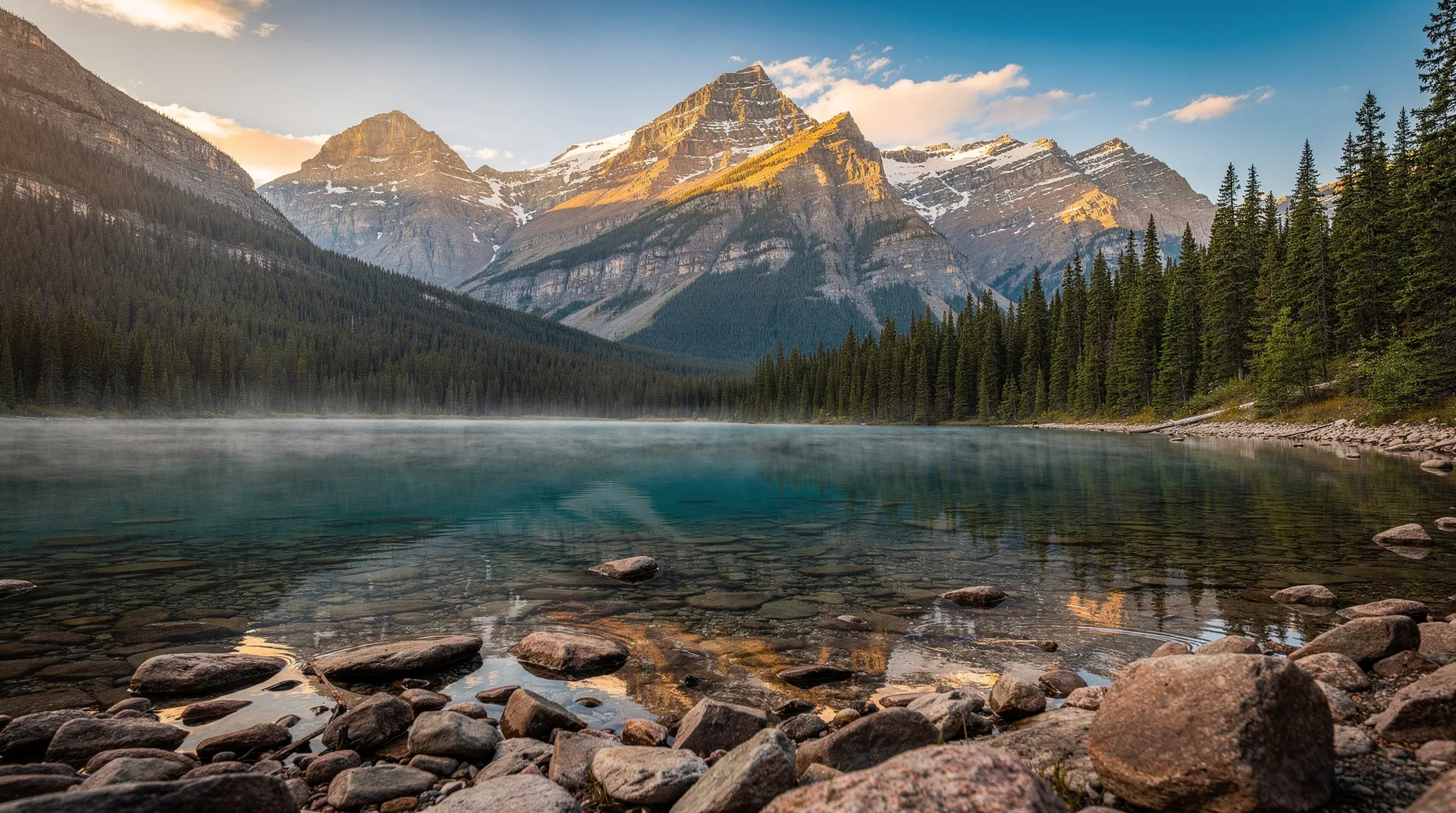
The canyon of the Rivière Malbaie is an anomaly in the Charlevoix landscape. Most of Charlevoix’s drama comes from the relationship between mountains and river — the scale of the landscape, the width of the St. Lawrence, the height of the highlands above the coastal settlements. But the Hautes-Gorges canyon is intimate and vertical: walls of Canadian Shield gneiss rising 900 metres from a valley floor only a few hundred metres wide, creating one of the deepest canyons east of the Rocky Mountains and an environment that functions as a compressed version of landscapes you would normally travel much further north or west to experience.
| At a glance | |
|---|---|
| Where | Near Saint-Aimé-des-Lacs, about 40 km / 40 min from La Malbaie |
| Cost | Sépaq daily park entry fee, plus a separate fee for the boat cruise |
| Time needed | Half a day for the boat cruise; a full day if adding a trail |
| Getting there | Car required — about 2.5 hours from Quebec City, 1 hour from Baie-Saint-Paul |
| Best time | Mid-June through September for the boat cruise and full trail access; late September for autumn canyon colour |
Parc National des Hautes-Gorges-de-la-Rivière-Malbaie was designated a UNESCO World Heritage Site as part of the Charlevoix Biosphere Reserve and protects the canyon and its surrounding forest. The park is reached from the village of Saint-Aimé-des-Lacs on the road system west of La Malbaie. The approach drive follows the Malbaie River as it cuts progressively deeper into the highland, the walls closing in from both sides, the river narrowing, the spruce forest growing taller and darker.
The deepest sections of the canyon are inaccessible without either the park’s boat cruise or a committed multi-day hiking traverse. Most visitors combine the boat tour with one of the accessible hiking trails to experience both the vertical scale of the canyon and the intimate forest landscape at river level.
The canyon boat cruise
The boat cruise on the Rivière Malbaie is the defining Hautes-Gorges experience and the most efficient way to comprehend the scale of the canyon. The flat-bottomed park boats depart from the dock at Secteur de l’Équerre and travel upstream through the deepest section of the gorge — a 30-kilometre round trip that covers territory unreachable on foot except with very significant hiking effort.
As the boat moves upstream, the walls rise progressively higher on both sides. The river reflects the cliff faces and the strip of sky above narrows. In the deepest section, the walls reach their maximum height of approximately 900 metres — measured from the river surface to the cliff rim — while the valley floor is barely 350 metres wide. The scale is difficult to calibrate without reference points; the spruce trees at the base of the walls look like grass from the boat.
The cruise takes approximately two hours and includes interpretation by park naturalists explaining the geology of the canyon, the history of the log drives that once used the river as a timber highway, and the ecology of the cliff faces — which support plant communities ranging from arctic-alpine species on the exposed upper faces to humid boreal vegetation in the shadowed lower walls.
Booking: The boat cruise operates from mid-June to mid-October and sells out most summer days. Advance booking through the Sépaq system is strongly recommended. The cruise does not operate in high water conditions or severe weather.
Book Quebec nature tours on GetYourGuideHiking trails
L’Acropole des Draveurs
This is the trail that defines Hautes-Gorges for serious hikers. The “draveurs” were the log drivers who guided timber down the Malbaie River during the era of industrial logging — men who worked the river and knew the canyon walls from below. The Acropole trail climbs those walls to the rim.
The trail is rated difficult and the statistics justify the rating: 8 kilometres round-trip with 755 metres of elevation gain. The ascent begins in dense boreal forest, passes through increasingly exposed rock faces with cable assists on the steepest sections, and emerges on the cliff rim for a viewpoint over the full depth of the canyon.
The view from the Acropole is one of the most dramatic in eastern Canada. You stand on the rim looking down 900 metres to the river, which from this height looks like a thin dark thread. The opposite wall — equally high, equally vertical — fills your field of view. The boat you took upstream looks, from up here, like a toy moving through a crack in the earth.
Allow 5–6 hours return for the full hike. Start early to avoid afternoon heat and to have time at the summit.
Les Rosiers trail
A 5.5-kilometre loop on the valley floor following the river through old-growth boreal forest. This is the accessible trail for visitors who want the canyon atmosphere without the elevation commitment. The trail passes through sections of forest that were never logged — trees of unusual age and diameter — and along stretches of the river where the canyon walls are visible rising to both sides.
The Les Rosiers trail is the best option for families with younger children and for visitors with limited hiking fitness who still want more than the boat experience.
Le Plateau trail
A longer route (approximately 12 km) that climbs to the plateau above the canyon and traverses the highland between the canyon rim and the surrounding forest. Less dramatic than the Acropole but more varied in terrain and landscape type.
Kayaking the gorge
Park-operated kayak rentals allow paddlers to explore the lower canyon sections independently. The flat water within the canyon — protected from wind by the walls — is manageable for intermediate paddlers, and the perspective from water level is fundamentally different from both the boat and the hiking trail.
Guided kayak tours are also available for visitors who prefer instruction and company, and you can compare guided tours in Quebec if you want a bookable outing. The guides are experienced in reading the canyon currents and know the areas where the reflections and the light make for the best photography.
Kayaking in the upper canyon sections requires experience and is subject to water level conditions. The park staff will advise on current conditions and appropriate route selection.
Camping and accommodation
The park campground at Secteur de l’Équerre offers a range of options from standard tent sites to serviced sites for camping vehicles. The park also operates a number of ready-to-camp canvas structures (oTENTik-style) for visitors who want the overnight park experience without equipment.
Backcountry camping shelters are available along the hiking routes deeper in the park. These require advance booking through Sépaq and are popular — reservations are necessary several weeks ahead for summer weekends.
The campground location at the canyon entrance means you can be on the boat dock or the trailhead within five minutes of waking up, which is a significant advantage for early-morning starts.
Practical information
Entry fees: Standard Sépaq daily park entry fees apply. Purchase in advance online or at the park entrance.
Boat cruise fees: Additional fee on top of park entry. Book well in advance, particularly for summer weekends.
Weather: The canyon creates its own microclimate. The valley floor can be cool and shaded even on warm summer days; the cliff faces in full sun can be hot. Rain in the narrow canyon is dramatic but manageable. The rim of the Acropole is fully exposed to wind and weather — conditions can change quickly.
What to bring: Sturdy footwear for hiking (the Acropole trail has steep rocky sections requiring grip), water for the full duration of the activity (the park has limited water sources on the trails), warm layer, rain jacket, sun protection for exposed canyon sections, and camera with as much optical zoom as you have.
Seasons
Late May–June: The park opens for the season but the boat cruise and some trails may have restricted access depending on water levels and snow in the upper sections.
July–August: Peak season. Full services, boat cruises, all trails open. The canyon is at its most lush and green. Book accommodation and boat cruise well in advance.
September: The prime month for the experienced traveller. Autumn colour arrives early in the canyon — the hardwood trees on the upper cliff faces turn red and orange while the valley floor remains green, creating extraordinary colour contrasts in the vertical landscape. The crowds thin significantly after Labour Day.
October: The canyon in full autumn colour is one of the most beautiful natural spectacles in Quebec. Some facilities begin closing mid-month. The boat cruise typically operates through the first two weeks of October.
Getting there
From La Malbaie, follow Route 138 west briefly, then turn north onto the road toward Saint-Aimé-des-Lacs and continue following signs to the park entrance. The drive is approximately 40 kilometres from La Malbaie and takes about 40 minutes.
From Quebec City, the fastest route follows Highway 138 east to La Malbaie and then the park access road — total time approximately 2.5 hours.
From Baie-Saint-Paul, the drive north and east via Saint-Aimé-des-Lacs takes about 1 hour.
There is no public transit to the park.
Boat cruise vs Acropole hike: which to choose
| Activity | Time | Effort | What you get |
|---|---|---|---|
| Boat cruise | ~2 hours | None — seated tour | The deepest canyon section, close-up cliff scale, naturalist commentary |
| Acropole des Draveurs hike | 5-6 hours return | Difficult — 755 m elevation gain | The rim-top view down the full 900 m depth of the canyon |
| Les Rosiers trail | 1-2 hours | Easy | Valley-floor old-growth forest and canyon walls from below |
| Kayaking | Flexible | Moderate, current-dependent | Water-level perspective, quiet and self-paced |
For most visitors with a single day, the boat cruise is the highest-value single activity — it reaches the deepest, most dramatic section of canyon that most trails can’t touch. Pair it with Les Rosiers if you want some walking without committing to the Acropole’s full effort, or with the Acropole itself if you’re an experienced hiker and have the full day.
Frequently asked questions about Parc National des Hautes-Gorges
Do I need to hike to see the canyon, or is the boat cruise enough? The boat cruise alone reaches the deepest, most dramatic section and is enough for most visitors; the Acropole des Draveurs hike adds a rim-top view but is a serious, difficult undertaking.
Is the boat cruise suitable for children? Yes — it’s a seated, roughly two-hour tour with no physical demands, making it more accessible than the trails for families.
Related pages
Parc National des Hautes-Gorges is the eastern landscape centrepiece of Charlevoix. Paired with Parc National des Grands-Jardins — the taiga plateau to the west — it represents the full range of Charlevoix’s inland natural character. La Malbaie is the nearest town for accommodation and services. The Charlevoix things to do guide integrates the canyon into the broader regional itinerary.
The Hautes-Gorges canyon is a genuinely world-class natural environment that most visitors from outside Quebec have never heard of. The scale is comparable to anything in the western national parks; the accessibility — two hours from Quebec City — is extraordinary. The boat cruise alone justifies the drive.