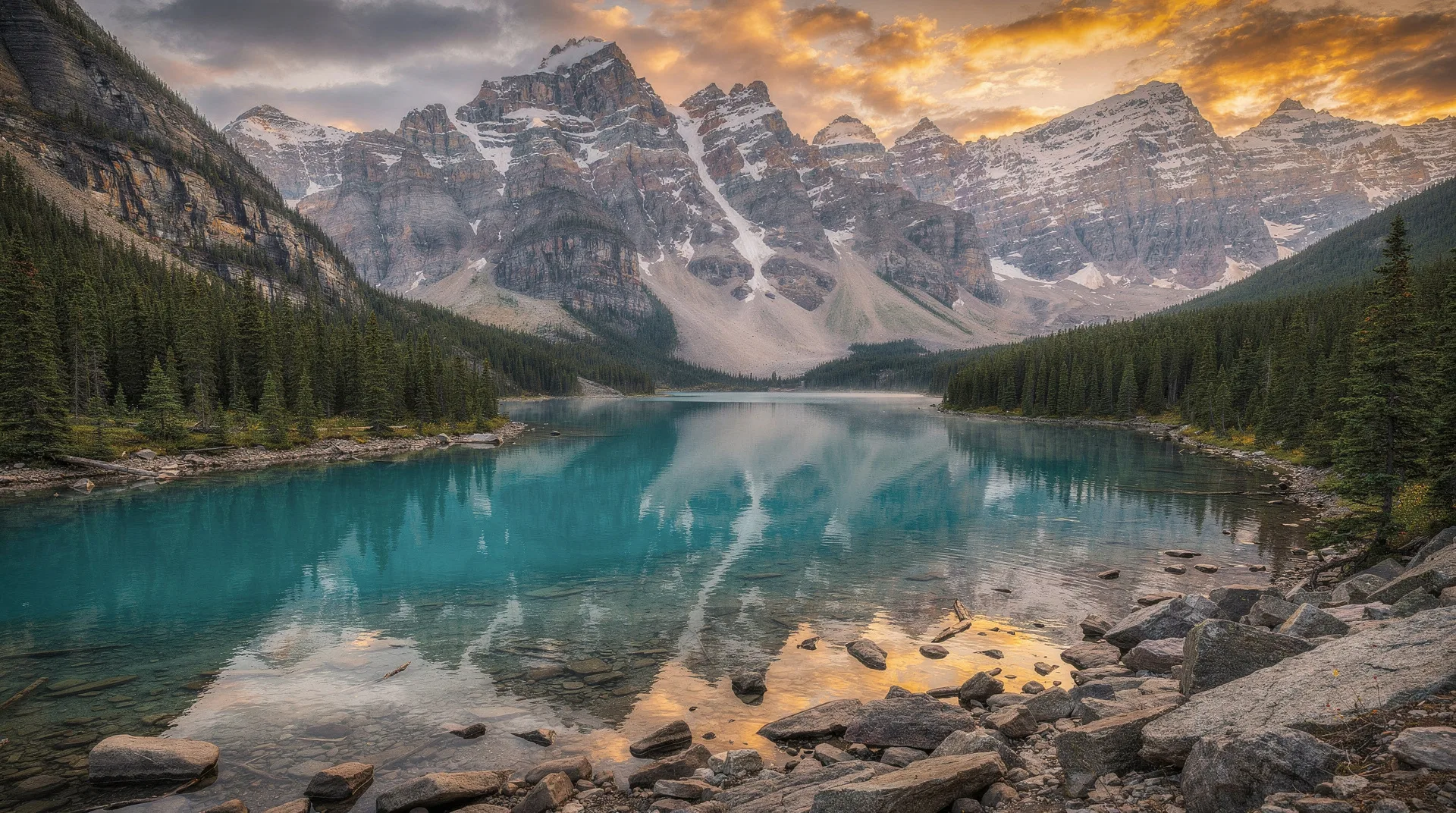
Quick facts
- Located in
- Saguenay Fjord, Quebec
- Best time
- Late June–September; peak July–August
- Getting there
- 30 min from Chicoutimi; 2 hrs from Tadoussac via south shore
- Days needed
- 2-4 days
The Saguenay Fjord is one of the southernmost true fjords in the world — a glacially carved trench 275 kilometres long and up to 270 metres deep, its walls rising from the dark water to form one of the most dramatic landscapes in eastern North America. Parc National du Fjord-du-Saguenay protects 326 kilometres of this fjord shoreline on both sides, from just south of Chicoutimi down to the confluence with the St. Lawrence at Tadoussac.
The park is not a conventional wilderness destination — it coexists with the roads, villages, and ferry crossings that make the fjord one of the most accessible spectacular landscapes in Canada. L’Anse-Saint-Jean, Sainte-Rose-du-Nord, and the various lookout points accessible by road are all within the park’s managed landscape. But the fjord’s scale — the depth of the water, the height of the walls, the cold dark quality of the light — is not diminished by its accessibility, and the park protects a wild margin of cliff, forest, and shoreline that rewards visitors who leave the main roads.
The Saguenay’s exceptional ecology stems from the same dynamics as Tadoussac at the fjord’s mouth: cold, deep, nutrient-rich water that supports a food web capable of sustaining the St. Lawrence beluga whale population year-round. The fjord’s own waters are partly saline — tidal influence extends well up the Saguenay — and the meeting of cold fjord water and river nutrients creates conditions that make the Saguenay one of the most significant marine environments in Quebec.
| At a glance | |
|---|---|
| Where | Saguenay Fjord, Quebec, from south of Chicoutimi down to the St. Lawrence confluence |
| Cost | A Sepaq day-use/park pass is required, typically around CAD 9-10 per adult per day |
| Time needed | A short visit can cover one viewpoint or trailhead; 2-4 days suits hiking, kayaking, and beluga watching properly |
| Getting there | Around 30 min from Chicoutimi to the nearest sectors; roughly 2 hrs from Tadoussac via the south shore |
| Best time | Late June through September, with peak beluga activity and full services in July-August |
Baie-Sainte-Marguerite: the best beluga viewing site
The most extraordinary feature of the park for wildlife watchers is Baie-Sainte-Marguerite, a shallow bay on the south shore of the fjord approximately 15 kilometres from the river mouth. This bay is a traditional resting site for the St. Lawrence beluga population — the shallow, calm water allows the animals to rest and socialise without the demands of deep-water feeding.
From the beach and the cliff viewpoints above the bay, beluga groups are visible most days from late June through September. The animals move in and out of the bay on tidal cycles; morning and evening tend to produce the largest congregations. Binoculars are helpful but the bay is not large — when the belugas are in residence, they are clearly visible from the shore without magnification.
The cliff viewpoint above the bay — reached via a short trail from the parking area — provides an elevated perspective on the animals and the fjord that is one of the finest beluga watching experiences available from land anywhere in Quebec. The combination of the white animals in the dark water of the fjord, with the cliff walls rising behind them, is visually remarkable.
Note: Baie-Sainte-Marguerite is the land-based counterpart to the boat tours at Tadoussac. Visitors who want guaranteed close encounters with whales should book boat tours; those who want the most immersive land-based experience should plan time at this bay. See the beluga viewing guide for ethical observation guidelines.
Book Quebec wildlife and fjord tours on GetYourGuideHiking trails
The park’s trail network covers both shores of the fjord and ranges from accessible coastal walks to demanding ridge traverses.
La Statue (south shore)
The most iconic viewpoint on the south shore is reached via a 4.5-kilometre trail from the village of L’Anse-Saint-Jean to a cliff-top viewpoint at 415 metres. The view from this point — down the fjord toward the St. Lawrence, with the river visible at the distant mouth and the cliff walls dropping to dark water below — is one of the great panoramas in Quebec.
Sentier du Cap-Trinité and Cap-Éternité (south shore)
Two massive cliff faces near L’Anse-Saint-Jean — Cap-Trinité and Cap-Éternité — rise more than 300 metres directly from the fjord water. The hiking trail along the cliff edge above them is strenuous and exposed, with sections requiring careful footing, but the views of the fjord from this elevation are unmatched. Cap-Trinité is topped by a three-part statue of the Virgin Mary, visible from the water below, that has become one of the most recognisable images of the Saguenay.
The Sentier des Caps traverses the cliff country between these two features and continues along the fjord wall — a multi-day route for experienced hikers.
North shore trails near Sainte-Rose-du-Nord
The north shore of the fjord near Sainte-Rose-du-Nord has a trail network with excellent elevated views across to the south shore. The shorter trails here are suitable for day visitors and families.
La Pointe-Noire (near Tadoussac)
At the southern tip of the park near Baie-Sainte-Catherine, the Pointe-Noire trail (3 km) reaches cliff viewpoints at the Saguenay mouth — an excellent location for watching the tidal currents at the confluence and for spotting marine mammals from land.
Sea kayaking the fjord
Sea kayaking in the Saguenay fjord is one of the great paddling experiences in Canada. The fjord’s waters are calm relative to the open St. Lawrence (protected from ocean swells by the fjord walls and the long fetch required to generate significant waves), the scenery is extraordinary, and the possibility of beluga encounters adds a dimension unavailable in most kayaking environments.
The fjord is cold and deep — cold-water immersion is a real risk and dry suits or wet suits are recommended for multi-day trips. Guided kayak tours operating from L’Anse-Saint-Jean and other fjord villages provide the appropriate equipment and knowledge of tidal patterns and weather. Solo or independent paddling requires significant sea kayaking experience and a comprehensive understanding of fjord conditions.
L’Anse-Saint-Jean is the primary base for kayak operations, with multiple outfitters offering half-day, full-day, and multi-day guided tours.
Sector Baie-Éternité has a kayak launch and park interpretation facilities. The paddle from here toward Cap-Trinité along the cliff base is one of the most dramatic short paddles on the fjord — the cliff walls tower above and the water is so clear that the cliff continues visibly below the surface.
Camping
The park operates several campground sectors spread along both shores of the fjord.
Secteur Baie-Éternité (south shore): The main camping area near L’Anse-Saint-Jean, with both serviced and non-serviced sites, a park visitor centre, and access to the Cap-Trinité and Cap-Éternité trails. This is the most visited sector.
Secteur Baie-Sainte-Marguerite (south shore): The sector nearest the beluga viewing site. Camping here allows early-morning and evening visits to the bay when beluga activity tends to be highest.
Secteur Sainte-Rose-du-Nord (north shore): Camping near the village of Sainte-Rose-du-Nord, with access to the north shore trail network.
Backcountry camping is available at designated sites along the longer trails. All camping requires advance reservation through the Sépaq system.
Book Canada national park and fjord tours on GetYourGuideThe fjord cruise
For visitors who want the fjord experience without hiking or kayaking, several cruise operators run excursions on the Saguenay between Chicoutimi and the river mouth. The cruise from L’Anse-Saint-Jean toward Cap-Trinité is particularly popular, passing the full height of the cliff faces from the water.
The cruise from the Chicoutimi end (the main Saguenay city) reaches further into the fjord and provides the urban-to-wilderness transition that characterises the Saguenay experience — the city is remarkably close to some of the wildest scenery in Quebec.
Getting there and around the park
The park has no single main entrance — multiple access points on both north and south shores connect to the village and trail network. The most important access points:
From Chicoutimi (north): Routes 170 and 172 follow the north and south shores respectively. The south shore (Route 170 toward L’Anse-Saint-Jean) accesses the major visitor infrastructure.
From Tadoussac (south): The south shore road (Route 172) follows the fjord from the river mouth north toward L’Anse-Saint-Jean. The drive itself is spectacular.
Ferry crossings: Two ferry crossings operate on the Saguenay — at Rivière-Éternité and at L’Anse-Saint-Jean — connecting the north and south shores for visitors who want to access both without driving around.
The Saguenay–Lac-Saint-Jean things to do guide integrates the fjord park into the broader regional itinerary.
Choosing between the north and south shore for a short visit
Visitors with only a day face a real choice, since the fjord’s two shores each specialise in something different.
| Shore | Best for | Access base |
|---|---|---|
| South shore (Baie-Éternité sector) | Cap-Trinité/Cap-Éternité cliff hiking, the main campground, kayak outfitters | L’Anse-Saint-Jean |
| South shore (Baie-Sainte-Marguerite) | Beluga watching from land | Reached via Route 172 south of L’Anse-Saint-Jean |
| North shore | Quieter cliff-top trails, elevated views across to the south wall | Sainte-Rose-du-Nord |
A single day with a car can combine both shores using the Rivière-Éternité to L’Anse-Saint-Jean ferry, but hikers wanting a serious trail (La Statue, Cap-Trinité) should plan to commit to the south shore for that day rather than splitting time.
Frequently asked questions about Parc National du Fjord-du-Saguenay
Do I need a park pass to visit Parc National du Fjord-du-Saguenay? Yes. Like all Sepaq/Parks-network sites, the fjord park requires a day-use pass, typically around CAD 9-10 per adult per day, payable at the sector entrances or in advance online.
Can I see belugas without taking a boat tour? Yes — Baie-Sainte-Marguerite inside the park is the best land-based beluga viewing site on the fjord, with a cliff-top viewpoint above the bay. It complements rather than replaces the closer encounters available on boat tours from Tadoussac.
Related pages
The Saguenay Fjord park is the natural centrepiece of the Saguenay–Lac-Saint-Jean region. L’Anse-Saint-Jean is the primary fjord village base. The beluga experience at Baie-Sainte-Catherine and Tadoussac extends the marine dimension south. The beluga viewing guide covers the full geography of St. Lawrence beluga encounters.