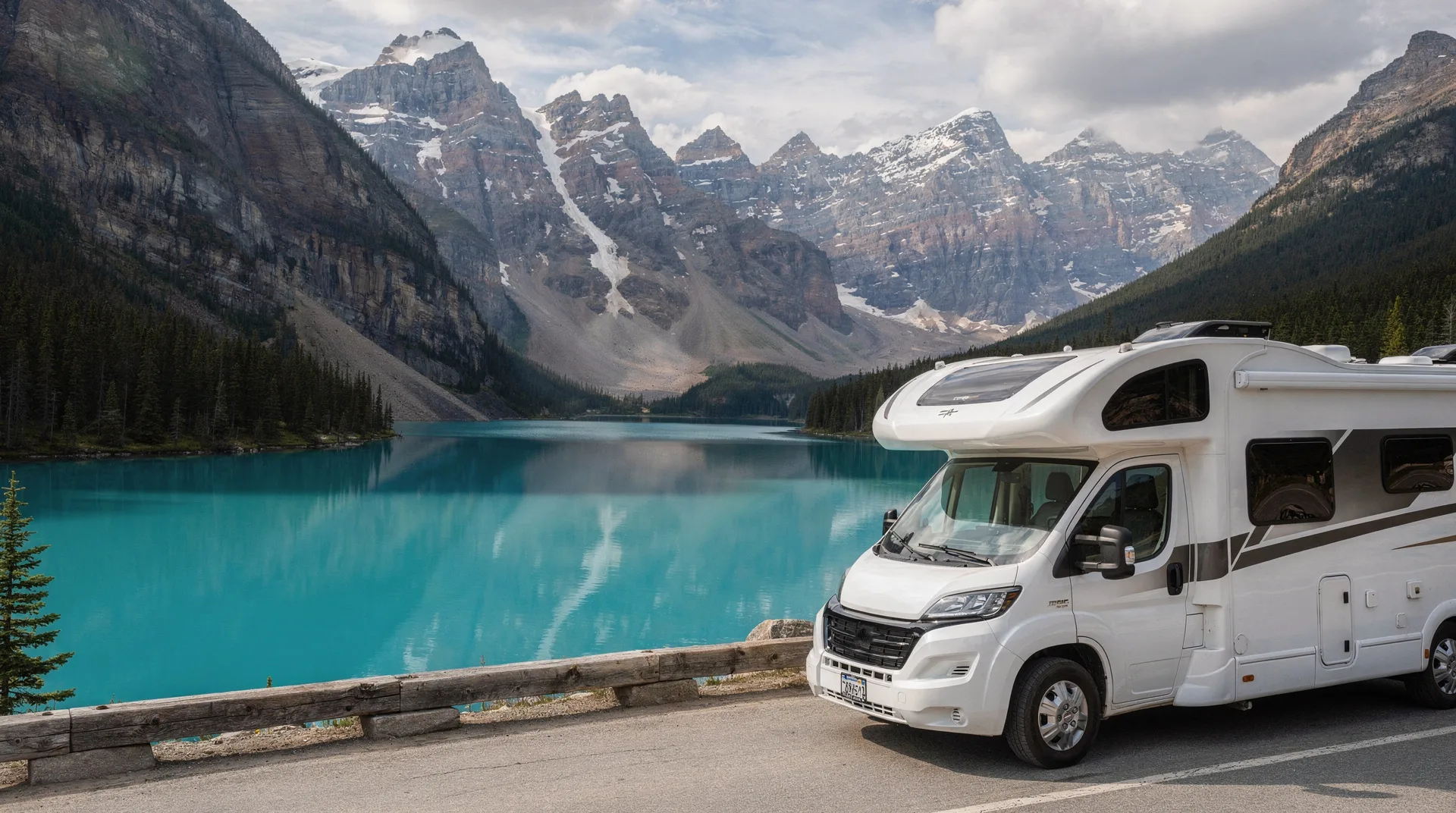
Best Hikes in Jasper National Park: Trail Guide
What are the best hikes in Jasper National Park?
For day hikes: Sulphur Skyline Trail for best viewpoint, Cavell Meadows for wildflowers and glacier views, Wilcox Pass for sweeping Icefields views, Old Fort Point for easy town-side views. For backpackers, the Skyline Trail (3-4 days) is the marquee route. Jasper's trails are generally longer and wilder than Banff's.
Jasper National Park covers 11,000 square kilometres — more than twice the area of Banff — with a fraction of the visitor density. The practical consequence for hikers is that Jasper’s trails tend to be longer, wilder, and less crowded than equivalent distances in Banff. A classic Jasper day hike covers 12-20 kilometres and carries you into terrain that feels genuinely remote; a classic Jasper backpack trip spans 3-6 days through sustained alpine country.
This guide covers the essential Jasper hikes by category and experience level, with links to detailed guides where they exist. For first-time visitors, pair these trails with Jasper things to do and Jasper in summer for broader planning context.
At a glance
| Where | Jasper National Park, Alberta |
| Cost | Parks Canada Discovery Pass required (day pass around CAD $12.25/adult); trails themselves are free |
| Time needed | 1-2 hours for short walks, a full day for moderate hikes, 3-4 days for the Skyline Trail |
| Getting there | A vehicle is needed for most trailheads; a handful near the townsite are walkable |
| Best time | Mid-July through mid-September for full trail access and wildflowers |
Short and easy hikes (under 5 km)
Old Fort Point Loop (3.5 km, 120 m gain)
The best easy hike in Jasper townsite. A steep but short climb from a trailhead on Old Fort Point Road leads to a broad plateau with panoramic views of Jasper town, the Athabasca River, Pyramid Mountain, and the Whistlers range. The loop takes 90 minutes to 2 hours at a moderate pace. Often bypassed by visitors racing to bigger objectives, it rewards anyone who wants a concentrated taste of the Jasper valley.
Maligne Canyon walk (varies, 2-8 km options)
Not a hike in the trailhead sense but an interpretive boardwalk walk through Maligne Canyon. Bridge crossings at the first, second, third, fourth, fifth, and sixth bridges mark increasing distances from the parking area. Most visitors walk to the second or third bridge and back (2-3 km return). The canyon is dramatic in both summer water flow and winter ice formation.
Pyramid Island loop (under 1 km)
A near-flat walk across the wooden footbridge to Pyramid Island and around it. More photo stop than hike but essential for first-time visitors.
Mina and Riley Lakes loop (8 km, 200 m gain)
A gentle forest loop connecting two small lakes near Jasper town. Strong wildlife habitat — moose and black bears both appear here seasonally. Family-friendly and a good half-day option.
Moderate day hikes (5-15 km)
Cavell Meadows (8 km, 370 m gain)
One of Jasper’s signature day hikes. The trail starts from Mount Edith Cavell’s day-use parking area, climbs through ancient subalpine forest, and emerges into wildflower meadows with stunning views of Angel Glacier hanging on the face of Edith Cavell. In early July the meadows carpet with paintbrush, glacier lilies, and white valerian; in August the flowers fade but blueberries ripen. See the full Cavell Meadows hike guide for details.
Path of the Glacier Trail (1.6 km, 100 m gain)
The companion short walk at Mount Edith Cavell. The trail wanders through the terminal moraine of the receding Ghost Glacier to a small turquoise lake containing floating icebergs calved from Angel Glacier above. A visual masterpiece in a short walk. Often combined with Cavell Meadows into a half-day at Edith Cavell.
Wilcox Pass (8 km return, 335 m gain)
Sits along the Icefields Parkway and offers arguably the single best viewpoint of the Columbia Icefield accessible without mountaineering skills. From the pass, you look directly across at Athabasca Glacier, the Dome Glacier, and the icefield neve above. Bighorn sheep are routinely visible on the ridge. See Wilcox Pass hike guide.
Sulphur Skyline Trail (8 km return, 700 m gain)
The most rewarding day hike accessible from Jasper’s east side, with 360-degree alpine panoramas from a true summit ridge at 2,050 metres. The trail leaves from near Miette Hot Springs, climbing steadily on switchbacks through pine forest before breaking into alpine meadow and the final ridge scramble. The view over the Fiddle and Sulphur valleys is exceptional. See Sulphur Skyline trail guide.
Valley of the Five Lakes (5 km loop, 30 m gain)
Five small, deeply coloured lakes in a gentle forest setting just off the Icefields Parkway south of Jasper. Each lake has a slightly different turquoise hue due to varying mineral content. A gentle, family-friendly loop that still feels immersive in Jasper’s wilderness.
Bald Hills (11 km return, 610 m gain)
A steep but rewarding climb from Maligne Lake to an alpine summit overlooking the lake and the surrounding ranges. The view down onto Maligne Lake from the Bald Hills summit is one of the most photographed in Jasper. See also the full Maligne Lake guide.
Strenuous day hikes (15+ km)
Cavell Meadows extension (12-14 km, 700+ m gain)
Beyond the standard Cavell Meadows loop, more ambitious hikers can continue up-slope into the high meadows approaching the base of Edith Cavell’s North Face. The views become increasingly dramatic with each 100 metres of additional elevation.
Bald Hills to Evelyn Pass (15+ km)
An extended version of the Bald Hills hike continuing along the ridge system toward Evelyn Pass. For strong hikers, a full day of alpine ridge walking with exceptional views throughout.
Brazeau Lake day approach (via Nigel Pass, 14+ km)
An underrated long day hike starting from the Icefields Parkway. Nigel Pass is a striking alpine pass with grizzly habitat; serious hikers can continue into the Brazeau Lake area on longer days. Primarily a backpacking area but achievable as a day out-and-back for strong parties.
Multi-day backpacking routes
The Skyline Trail (44 km, 3-4 days)
Jasper’s marquee backcountry route and one of the most celebrated alpine traverses in the Canadian Rockies. Approximately 25 of the 44 kilometres run above treeline, giving the route a sustained alpine character unmatched by comparable Banff routes. Reservations open through Parks Canada in January for the coming season; permits sell out rapidly for July and August weekends. See the full Skyline Trail backpacking guide.
The Tonquin Valley (multi-day, various loops)
A classic backpacking destination accessing the dramatic Ramparts — a wall of spires on the Alberta-BC border. Historically accessed via Astoria River or Maccarib Pass routes. Current trail conditions and access may be affected by post-wildfire recovery — check Parks Canada before committing.
Jonas Pass and Maligne Pass
Less-travelled passes in the high country between the Icefields Parkway and the Maligne Lake area. Serious backcountry terrain with minimal facilities; experienced backpackers only.
Hiking logistics for Jasper
Permits and reservations
Day hikes: A Parks Canada Discovery Pass is required to enter the park. No additional hiking permit needed.
Backpacking: Wilderness permits are required and must be reserved in advance through Parks Canada’s reservation system. Popular routes (Skyline Trail especially) fill months ahead. See Parks Canada reservation system.
Transport to trailheads
Most Jasper trailheads require a vehicle. A few accessible trails near town (Old Fort Point, Pyramid Island, Valley of the Five Lakes with some effort) are reachable without a car. For trailheads along the Icefields Parkway or at Edith Cavell, car access is effectively essential.
Wildlife safety
Jasper has significantly higher densities of black bears and grizzlies than most Canadian Rockies parks. Bear spray should be considered mandatory on any overnight hike and strongly recommended on any day hike above treeline. Travel in groups where possible; make noise consistently; store food properly at backcountry sites.
Wolves, cougars, moose, elk, and bighorn sheep are all present. Most wildlife encounters are brief and non-problematic if visitors follow established practices (distance, calm behaviour, no feeding).
Post-wildfire conditions
The 2024 Jasper wildfire impacted some trail corridors. Several trails near the townsite were temporarily closed for recovery work; some have reopened. Always check Parks Canada’s current trail conditions and closures before planning a hike.
Weather
Jasper’s weather is less stable than Banff’s because of its more northerly location and greater weather influence from the west. Afternoon thunderstorms are routine in summer. Snow at high elevations is possible any month of the year; June and September snow is common. Pack layers and weather protection for any alpine hike.
Season-by-season hiking in Jasper
June: Lower elevation trails (Old Fort Point, Valley of the Five Lakes, Cavell Meadows approach) are accessible. High-alpine terrain (Skyline Trail, Wilcox Pass) often still carries snow.
July: Peak wildflower season in alpine meadows (Cavell Meadows, Wilcox Pass). All trails generally accessible. Busy by Jasper standards, quiet by Banff standards.
August: Warmest month. Wildlife highly active. Some trails dust-dry. Wildfire smoke from BC or NWT can reduce visibility for multi-day periods.
September: Arguably the best month. Cool, stable weather; fewer visitors; fall colour on aspens; wildlife in the rut. Higher-elevation routes still accessible until late in the month.
October-November: Increasingly wintry conditions. Snowshoeing and winter walking replaces summer hiking.
December-April: Winter hiking on snowshoes or light mountaineering. Maligne Canyon ice walks (guided) are the signature winter activity. See Jasper in winter.
Comparing Jasper’s marquee day hikes
| Trail | Distance | Elevation gain | Best for |
|---|---|---|---|
| Old Fort Point Loop | 3.5 km | 120 m | Easiest big view, close to town |
| Cavell Meadows | 8 km | 370 m | Wildflowers, glacier views |
| Wilcox Pass | 8 km return | 335 m | Best Columbia Icefield viewpoint |
| Sulphur Skyline | 8 km return | 700 m | Widest 360-degree panorama |
| Bald Hills | 11 km return | 610 m | Maligne Lake overview |
Fuelling up and where to stay after a long day
Jasper townsite has limited but reliable options after a big trail day. For an overview of lodging near the trailheads and in town, see the full Jasper National Park guide, which covers accommodation from campgrounds to the Fairmont. If timing a hiking trip around shoulder season, Jasper in September covers the best month for cool hiking temperatures, fewer crowds, and the elk rut as a bonus.
Guided hiking options
For visitors who prefer guided experience, several operators offer day hikes and multi-day backpacking with certified guides. Benefits include wildlife spotting expertise, route and safety knowledge, and access to areas that might exceed a visitor’s comfort level solo. Browse Jasper guided hiking tours.
Frequently asked questions about Best Hikes in Jasper National Park: Trail Guide
Which is the best single hike in Jasper? For most visitors: Sulphur Skyline Trail. For wildflower hikers: Cavell Meadows. For Icefields Parkway visitors: Wilcox Pass. For backpackers: the Skyline Trail.
How do Jasper hikes compare to Banff hikes? Longer, quieter, more wildlife-rich, more committing. Banff’s iconic hikes (Lake Agnes, Plain of Six Glaciers, Sentinel Pass) are shorter and have lake-side settings; Jasper’s hikes tend to deliver more sustained alpine country.
Do I need a guide? No — Jasper’s trails are well-signposted. A guide becomes more useful for first-time backpackers, visitors uncomfortable with wildlife, or those wanting to maximise a short visit.
Is it safe to hike alone in Jasper? Solo hiking is widely practiced but requires additional caution — bear spray, route planning, notification to someone of your plans, consistent noise. Groups are safer for wildlife encounters.
When do wildflowers peak on Jasper trails? Late June through July, most reliably on Cavell Meadows and Wilcox Pass, though timing shifts a couple of weeks with snowpack each year.
Do I need a park pass just to hike? Yes — a Parks Canada Discovery Pass (day or annual) is required to enter Jasper National Park, including for day hikes with no other fees.
Book guided Jasper National Park hiking toursRelated pages
- Sulphur Skyline Trail — premier day hike
- Cavell Meadows hike — wildflower classic
- Wilcox Pass hike — Icefields Parkway viewpoint
- Skyline Trail (Jasper) — marquee backpacking route
- Jasper things to do — full activity overview
- Jasper in summer — peak season context
- Best hikes at Lake Louise — Banff equivalent