Skyline Trail backpacking guide (Jasper, 3–4 days)
How long is the Skyline Trail in Jasper?
The Skyline Trail in Jasper National Park is 44 km one-way, typically hiked north to south from Maligne Lake to Maligne Canyon in 3–4 days. The highest point is Shovel Pass at 2,540 m. Most of the trail runs above the treeline with continuous panoramic views.
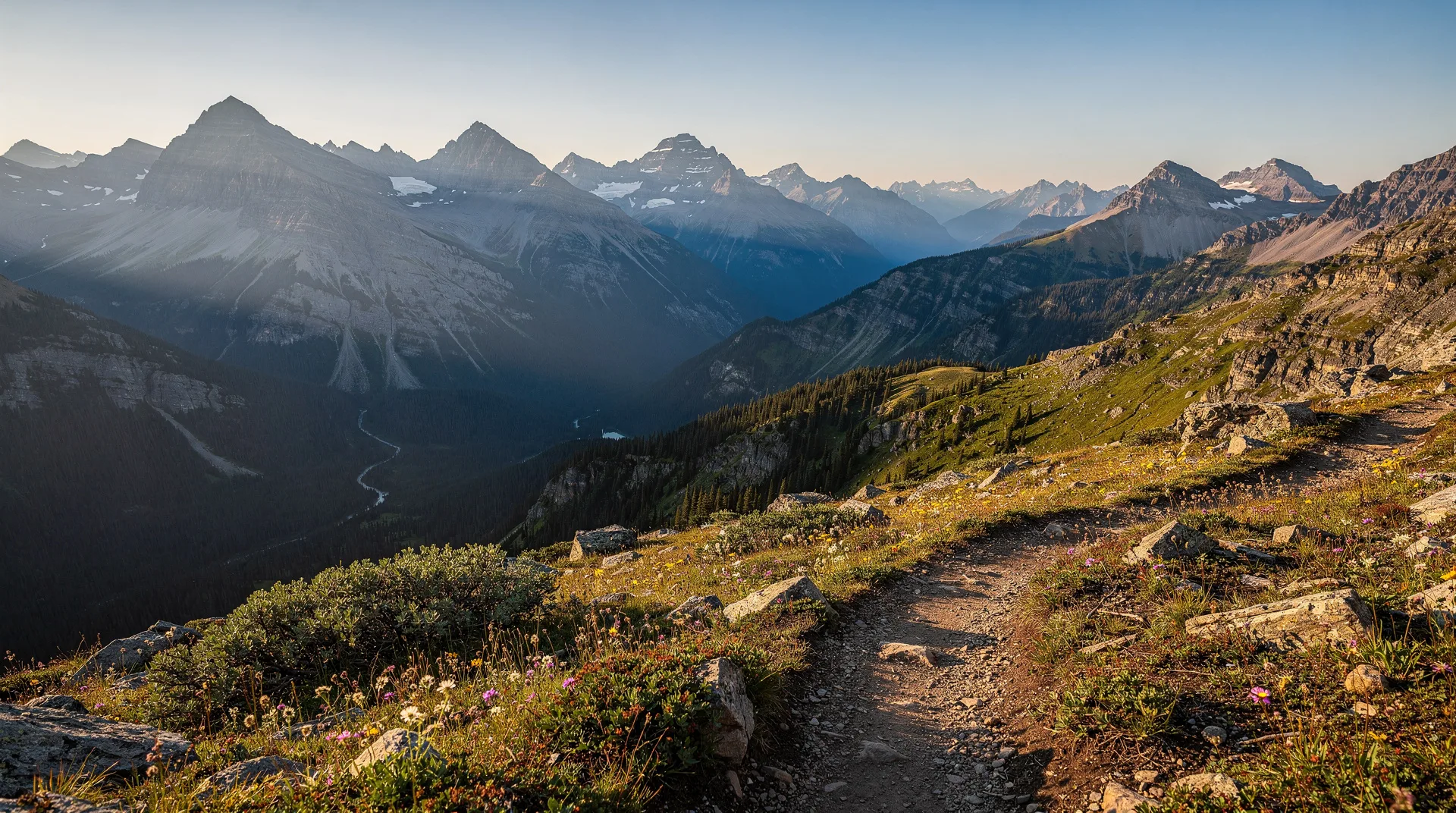
The Skyline Trail earns its name. For most of its 44 km from Maligne Lake to Maligne Canyon, the trail runs above the treeline — across open ridges, through high alpine meadows, and over passes that put you directly in the weather and the view. On a clear day, the panoramas from the Skyline stretch across dozens of named peaks in Jasper National Park. On a stormy day, you are fully in the clouds with no escape. This is not a trail for the unprepared, but for hikers with solid backcountry experience and appropriate gear, it is one of the finest multi-day routes in Canada.
The trail is frequently compared to the Plain of Six Glaciers or the West Coast Trail as a benchmark of Canadian hiking excellence. What sets it apart is the sustained nature of the alpine terrain — you do not climb to a viewpoint and descend; you stay at altitude for two consecutive days across the longest section, with the surrounding Rockies visible in every direction.
| At a glance | |
|---|---|
| Where | Jasper National Park, Alberta — Maligne Lake to Maligne Canyon |
| Cost | Around CAD $10-12 per person per night for backcountry permits, plus a Parks Canada park pass |
| Time needed | Around 3-4 days, 44 km one-way |
| Getting there | Shuttle or taxi from Jasper townsite to Maligne Lake trailhead; drive or shuttle back from Maligne Canyon |
| Best time | Late June to mid-September, with August the most weather-reliable window |
Route overview
Route: Maligne Lake to Maligne Canyon (north to south is strongly preferred — the prevailing wind is at your back and the most scenic sections come progressively) Total distance: 44 km one-way Duration: 3–4 days (3 days is achievable for fit hikers; 4 days is more comfortable and allows weather flexibility) Total elevation gain: Approximately 1,100 m Highest point: Shovel Pass, 2,540 m Trailhead: Maligne Lake Day Use Area (north); Maligne Canyon (south) Difficulty: Strenuous — sustained high-elevation terrain, weather exposure, and significant daily distances
Day-by-day itinerary (standard 3-night)
Day 1: Maligne Lake to Curator campsite (~20 km, ~720 m elevation gain)
The first day is the longest and most demanding, covering most of the trail’s major elevation gain. From Maligne Lake the trail climbs through forest before breaking above treeline near Little Shovel Pass (2,270 m). The views begin here and do not stop.
Shovel Pass (2,540 m) is the trail’s high point, reached mid-afternoon on day one for most hikers. The panorama from Shovel Pass is one of the most extraordinary in Jasper — peaks in every direction, Maligne Lake visible below, the ridge continuing south toward Curator. Allow 20–30 minutes here.
The descent from Shovel Pass to Curator campsite is 5 km across open meadow. Curator Lake sits below a cirque headwall; camping here is exposed and cold but spectacular.
Campsites day 1: Little Shovel (2,050 m — a shorter first day option) or Curator (2,100 m — full day one route). Most experienced hikers push to Curator; fitter parties or those wanting buffer time camp at Little Shovel.
Day 2: Curator campsite to Snowbowl (~10 km, rolling terrain)
The second day is the Skyline’s emotional centrepiece. The trail from Curator traverses the high ridge — the “skyline” itself — for most of the day, rarely dropping below 2,200 m. Views are continuous. On a clear day the route feels exposed and vast; on a stormy day the same terrain becomes technically demanding with wet, slippery rock and zero visibility in cloud.
The Notch (2,510 m) is the second high point, reached in the morning of day two. The descent from the Notch to Snowbowl campsite passes through more open meadow terrain.
Day 3: Snowbowl to Maligne Canyon (~14 km, gradual descent)
The final day descends progressively from alpine to subalpine to forest, finishing at Maligne Canyon. The upper section still offers views; the lower section through forest is pleasant but less dramatic. Most hikers reach Maligne Canyon in 4–5 hours from Snowbowl, making a mid-day finish achievable.
Campsites at a glance
| Campsite | Distance from north trailhead | Elevation | Notes |
|---|---|---|---|
| Little Shovel | ~15 km | 2,050 m | Shorter day 1 option, some tree shelter |
| Curator | ~20 km | 2,100 m | Exposed, cold, spectacular cirque setting |
| Snowbowl | ~30 km | lower alpine | Day 2 finish, more sheltered than Curator |
Training and pack weight
The Skyline punishes an unprepared body more than an unprepared kit list. Day 1 alone covers 20 km and 720 m of gain at altitude with a full pack — comparable to a strenuous day hike done back to back for three days running.
Training: in the weeks before the trip, build up to several 15+ km day hikes carrying a loaded pack (aim for the same weight you’ll carry on trail). Include some elevation gain in training hikes if possible — a treadmill incline or stair sessions work if hills aren’t accessible.
Pack weight: experienced Skyline hikers keep total pack weight under 12-14 kg for a 3-4 day trip. This means minimal food redundancy, a lightweight tent, and careful gear choices. Heavier packs are manageable but make the exposed ridge sections, especially in wind, noticeably harder.
Group pace: plan for the slowest hiker in the group when setting daily targets — the terrain does not forgive an overly ambitious schedule, and running out of daylight on the exposed ridge is a real risk.
Backcountry permits
Backcountry camping permits are mandatory for all nights on the Skyline Trail. Permits are booked through Parks Canada at reservation.pc.gc.ca.
Booking timeline: The reservation system opens in January for the coming summer season. Skyline Trail permits — particularly for July and August — sell out within hours of release. For September, availability is better but still limited. Set calendar reminders for the reservation opening date.
Campsite quota: Each campsite has a nightly quota. The Parks Canada system books specific campsites on specific nights — you cannot simply buy a general backcountry permit and choose where to camp. Book your itinerary in advance and be flexible with dates.
Cost: Backcountry camping permits cost approximately CAD $10–12 per person per night plus a reservation fee. Park entry fees apply separately.
Cancellations: Monitor the Parks Canada reservation system for cancellations, which appear throughout the season. Late-season dates (September) sometimes open up.
Practical information
Trailhead access and vehicle logistics
The Skyline is a one-way trail requiring a vehicle shuttle. Options:
- Leave a car at Maligne Canyon, shuttle to Maligne Lake start: Maligne Canyon is approximately 11 km from Jasper townsite on the Maligne Lake Road. Maligne Lake is 48 km further. Taxis and shuttles run this route from Jasper.
- Hire a private shuttle: Several Jasper-based outfitters offer hiker shuttle services between the two trailheads. Book in advance during peak season.
- Return journey from Jasper: If finishing at Maligne Canyon without a vehicle, taxis or the Maligne Lake Road shuttle can return you to Jasper townsite.
Best season
Late June to mid-July: Snow-free on most of the trail (some snow patches near Shovel Pass possible in June). Fewer hikers, cooler temperatures. Wildflowers at peak in the alpine meadows.
August: Peak season. Weather most settled. Permits most competitive. The most reliable window for consecutive dry days on the high ridges.
September: Quieter permits, stunning light, autumn tints in the valley. Weather window narrows — expect cold nights (below freezing possible at Curator and Snowbowl), potential early snow. The ridge in early September snow with clear skies is extraordinary but demands better gear.
Weather and preparedness
The Skyline is exposed terrain. On the high ridge between Shovel Pass and the Notch, there is no shelter if weather moves in. Lightning on the open ridge is a serious risk in thunderstorm season.
What experienced Skyline hikers carry:
- A reliable 3-season tent rated to -5°C (Curator and Snowbowl are cold; freestanding tents preferred given rocky ground)
- Sleeping bag rated to -5°C minimum (-10°C for September
- Full waterproof layers (rain jacket and trousers)
- Insulated mid-layer (puffy jacket) — mandatory even in July
- Wind layer for ridge sections
- Trekking poles (essential on the Shovel Pass descent and Notch section in wet conditions)
- Bear spray and bear canister or use campsite food storage boxes
- Water filter (Maligne Lake watershed is generally clean but filtration required)
- Headlamp, first aid kit, emergency bivouac bag
- Navigation: downloaded Gaia GPS map plus paper map backup
Water sources
Water is available from lakes, streams, and snowmelt throughout the trail. Filter or treat all water. The main campsite areas (Little Shovel, Curator, Snowbowl) have water accessible within a short distance of the camping areas. Carry a minimum 2-litre capacity — the ridge sections between camps can be dry in late season.
Wildlife on the Skyline
The Skyline Trail passes through prime habitat for:
- Grizzly bears — very active on the high meadows in summer and autumn. Bear spray mandatory. Make consistent noise in blind corners and where vegetation is dense.
- Caribou — the Brazeau caribou herd ranges across the Skyline area; sightings on the high ridges are possible, particularly in September
- Mountain goats — common on the rock faces near Shovel Pass and the Notch
- Hoary marmots and pikas — abundant on the talus sections, particularly vocal near Curator
- Golden eagles — regularly seen soaring above the ridges in late summer
Planning around the trail
The Skyline works best as one part of a longer Jasper stay rather than a standalone trip. If you are still deciding when to go, the best time to visit Jasper guide helps you match your dates to the weather window, and Jasper in September explains what the shoulder season feels like once the crowds thin and the nights turn cold.
Getting to the area is part of the plan too. Most visitors arrive by road, and the Banff to Jasper drive along the Icefields Parkway is a scenic way to reach the trailhead region. If you are building a wider trip around the hike, the Jasper 3-day itinerary and the Banff and Jasper 7-day itinerary show how to fit rest days and shorter outings around your backcountry nights. If you want to add other experiences to the trip, you can compare guided tours across Canada before you book.
Many hikers like to spend a day or two before the trail getting used to the altitude and checking gear. The area around Maligne Lake is a natural base for this, and the Jasper destination page covers where to stay and eat before and after you head into the backcountry. A short rest day after you finish, perhaps at Maligne Canyon, is a gentle way to stretch tired legs. Remember that carrying a Parks Canada Discovery Pass may suit you if you plan to visit several national parks on the same trip.
Guided options
If you want to experience the Skyline without managing your own logistics, several Jasper-based outfitters offer guided Skyline Trail trips. These range from partially guided (transport and permit handling, self-sufficient camping) to fully outfitted (guides, meals, camping equipment provided). Guided trips are particularly valuable for first-time backcountry travellers.
Browse guided Jasper hiking and backcountry experiencesRelated guides
- Jasper National Park guide — comprehensive Jasper logistics and planning
- Cavell Meadows hike — outstanding day hike from Jasper for non-backpackers
- Sulphur Skyline Trail — Jasper’s best day hike alternative
- Wildlife watching in Alberta — where and when to see the Rockies’ wildlife
- Miette Hot Springs — perfect post-trail recovery near Jasper
Frequently asked questions about Skyline Trail backpacking guide (Jasper, 3–4 days)
Is the Skyline Trail suitable for first-time backpackers?
The Skyline is not an ideal first backpacking trip. The sustained length (44 km), high elevation, weather exposure, and permit complexity make it better suited to hikers with at least a few nights of backcountry experience. Start with a 1–2 night Banff backcountry route and build up to the Skyline.
How fit do I need to be for the Skyline Trail?
Day 1 covers 20 km with 720 m elevation gain while carrying a full pack. This requires solid aerobic fitness. Hikers who can comfortably complete 15+ km day hikes with 500 m elevation gain are generally prepared. The weight of your pack matters significantly — experienced backpackers keep total pack weight under 12–14 kg.
Can I do the Skyline Trail south to north?
Technically yes, but north to south (Maligne Lake to Maligne Canyon) is strongly preferred. The elevation gain is more gradual going north-south, the most scenic sections build progressively, and the prevailing wind is at your back on the high ridge.
What happens if weather turns bad on the high ridge?
There is no shelter on the ridge between Shovel Pass and the Notch. If severe weather moves in, your options are to continue quickly to the next descent or backtrack to treeline. This is why the Skyline demands weather-appropriate gear and ideally 4 days of schedule rather than 3 — an extra day provides the flexibility to wait out a storm.
Should I do the Maligne Lake boat tour before or after the Skyline?
Either works, but many hikers do the Maligne Lake boat tour to Spirit Island the day before starting the Skyline, since it’s a good low-effort way to see the lake and acclimatize near the trailhead. For a broader look at Jasper’s day-hike options if the Skyline feels too ambitious this trip, see the Jasper hikes overview.
Is the Skyline Trail harder than the West Coast Trail?
The two are difficult to compare directly — the Skyline is shorter (44 km vs. roughly 75 km) but sustained at high altitude with weather exposure, while the West Coast Trail is longer, at lower elevation, with technical ladders, mud, and tidal timing. Both demand solid backcountry fitness; the Skyline’s main hazard is alpine weather, the West Coast Trail’s is technical terrain.