Quick facts
- Located in
- Jasper National Park
- Best time
- Late June to September
- Getting there
- 362 km from Edmonton Airport; 287 km from Banff
- Days needed
- 4-6 days
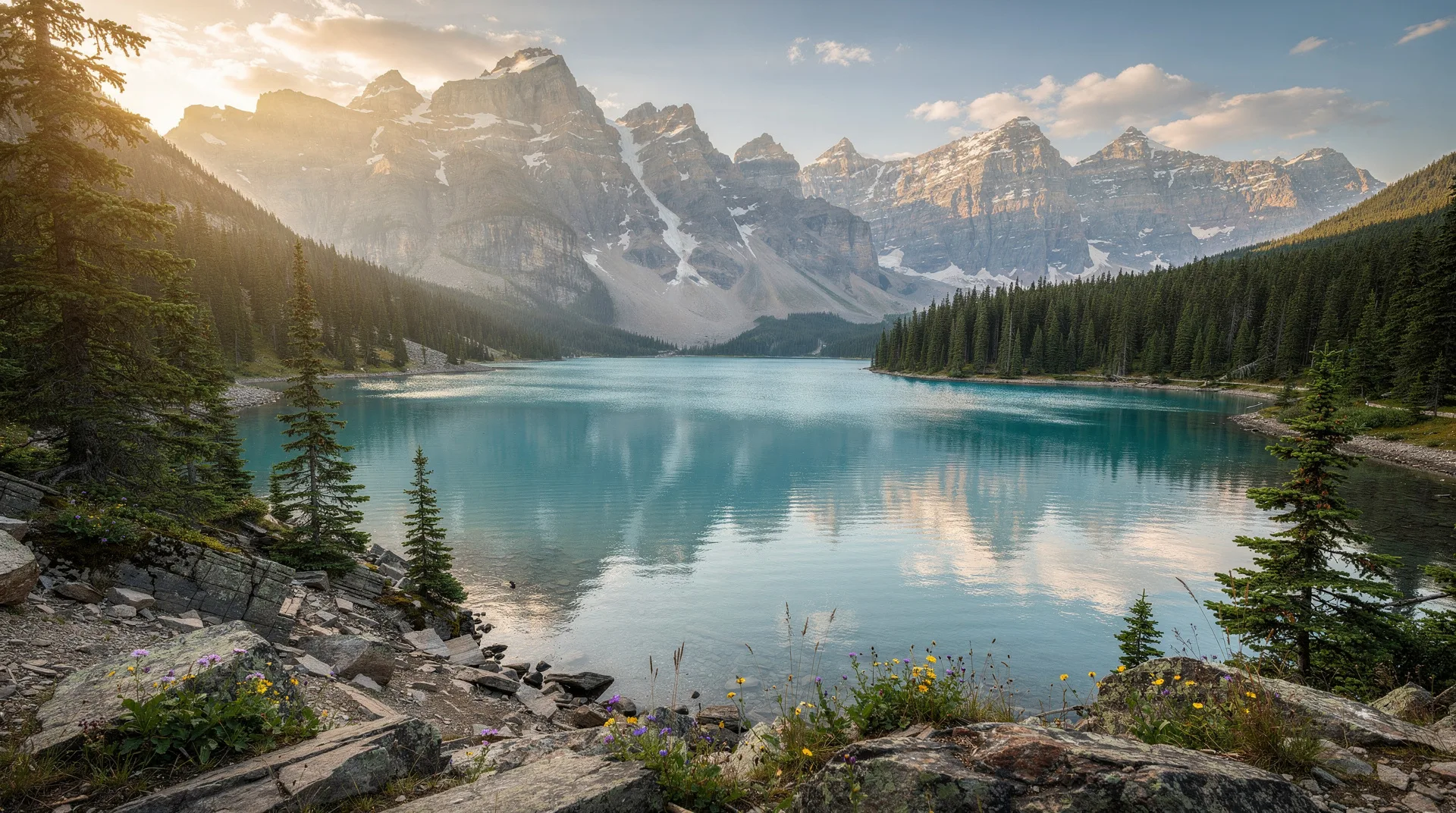
Jasper in summer is the version of the park that most visitors encounter — and for good reason. The days are long (17+ hours of light at the solstice), the Maligne Valley road is open, Maligne Lake boat cruises to Spirit Island are running, and the wildlife activity that defines the park’s character is at its most visible and accessible. The Bald Hills above Maligne Lake are covered in wildflowers from July onward. The Valley of the Five Lakes glows turquoise in the morning light. Elk calves follow their mothers through the Athabasca Valley meadows.
Jasper receives far fewer visitors in summer than Banff — roughly half the annual total — which means that many of the experiences that require military-grade early-morning logistics in Banff (parking, trailhead access, lake viewpoints) are more relaxed here. This is one of Jasper’s most significant practical advantages for the summer visitor.
Following the 2024 wildfire’s effects on some areas near the townsite, the park’s natural attractions are in excellent shape and have welcomed visitors through the summer season normally.
| At a glance | Detail |
|---|---|
| Where | Jasper National Park, Alberta, via the Icefields Parkway or Yellowhead Highway |
| Cost | Parks Canada Discovery Pass required (around CAD $12.25/adult/day); Maligne Lake boat cruise is a separate paid ticket |
| Time needed | 4-6 days for hiking, lakes, and wildlife at a relaxed pace |
| Getting there | around 362 km from Edmonton, around 287 km from Banff |
| Best time | late June to September; July-August for peak wildflowers, September for larches and elk rut |
Month-by-month: what summer looks like in Jasper
| Month | Conditions | Crowds |
|---|---|---|
| June | valley trails open, higher trails may still hold snow, strong wildflowers | moderate, building toward peak |
| July | full trail network open, warmest days, thunderstorm risk above treeline | busy, especially Maligne Lake weekends |
| August | peak wildflowers fading, still warm and busy | busiest month |
| September | elk rut, larches turning gold, cooler and clearer | thinning noticeably after Labour Day |
June in Jasper: early summer conditions
Late June is generally when Jasper reaches its full summer operational capacity. The Maligne Valley road opens, the Maligne Lake boat cruises begin their season, the SkyTram resumes extended hours, and the higher trails become progressively clear of snow.
In early June, some higher-elevation trails (Bald Hills, Cavell Meadows, Skyline Trail) may still carry significant snowpack. The valley-floor trails — Valley of the Five Lakes, Athabasca Falls, Maligne Canyon — are accessible from May onward.
June is also one of the most rewarding months for wildflowers in the valley meadows, before the July heat brings them past peak. The Athabasca River flats south of town in early June, with the surrounding peaks still carrying winter snow and the valley floor alive with new green growth, is one of the most beautiful landscapes in the park.
July and August: peak summer
July and August are Jasper’s high season, though the contrast with Banff’s peak is noticeable. The Maligne Lake parking lot fills early on summer weekends, but the sense of overcrowding that characterises peak-season Banff is absent. Hiking trails are busy but rarely jammed. The Icefields Parkway has heavy summer traffic but not the gridlock that the Trans-Canada west of Calgary sees in July.
What to do in July and August
Maligne Lake boat cruise to Spirit Island: The summer highlight for many visitors. Guided boat cruises depart from the dock at the north end of the lake multiple times daily, travelling 14 kilometres down the lake to Spirit Island — the tiny forested island that is the most photographed location in the park. The cruise takes approximately 90 minutes return and provides views of the lake’s full length and the surrounding peaks that are impossible to appreciate from the shore.
Book the cruise in advance — it fills throughout July and August, and walk-up availability is limited on busy days.
Bald Hills trail: The best day hike from Maligne Lake, climbing 5.7 kilometres (one-way) from the lake’s shoreline through larch forest to open alpine terrain above the treeline. The views from the Bald Hills across Maligne Lake and the Maligne Range are extraordinary — the lake stretching its full 22-kilometre length into the distance, the surrounding peaks reflected in its milky turquoise water. July sees the first wildflowers on the open slopes; late September turns the larch forest golden.
Kayaking and canoeing: Pyramid Lake and Patricia Lake (7 kilometres from town) rent kayaks, canoes, and paddleboards throughout summer. The calm morning hours are ideal for paddling — the lakes are mirror-flat before the afternoon winds arrive. The view of Pyramid Mountain reflected in the still surface of Pyramid Lake on a calm early morning is one of the finer summer images in Jasper.
Athabasca Falls: In July, when snowmelt from the Columbia Icefield is at its peak, the Athabasca Falls carries its maximum volume — the experience is noticeably more powerful than a September visit. The spray reaches the viewing platforms, the sound is significant, and the churning of the quartzite gorge floor is fully visible.
Book a Jasper summer hiking tour or Maligne Lake experienceBest summer hikes in Jasper
Jasper’s trail network covers terrain for all ability levels, and summer is when the full range opens. These are the recommended hikes by difficulty:
Easy (under 8 km, minimal elevation)
Valley of the Five Lakes (4.6 km loop): The best easy hike in the park — a gentle circuit past five small glacial lakes of varying turquoise intensity. The trail passes through forest and open rocky terrain, with excellent views of the lakes from above. Accessible from the Icefields Parkway 8 kilometres south of town. Allow 1.5–2 hours.
Maligne Canyon to the upper bridges (7.4 km return): Following the canyon trail to the sixth bridge and back is a consistently rewarding walk that reveals the full depth and drama of the limestone gorge. Allow 2–2.5 hours.
Old Fort Point loop (3.5 km loop): From the edge of Jasper town, this short trail climbs a rocky knoll above the Athabasca-Miette confluence with excellent views of the town and valley. An ideal evening walk.
Lac Beauvert loop (3.8 km loop): Around the lake at the Fairmont Jasper Park Lodge, with wildlife (elk on the grounds, loons on the lake) and mountain views. Access via the JPL grounds.
Moderate (8-15 km, 200-500m elevation gain)
Bald Hills (11.4 km return, 480m gain): The premier day hike from Maligne Lake, described above. Start early — the parking lot fills quickly on summer weekends.
Sulphur Skyline (8 km return, 700m gain): Above the Miette Hot Springs, 61 kilometres northeast of town, this trail climbs steeply to a ridgeline with views down the Miette and Athabasca valleys. One of Jasper’s finest viewpoint hikes. Rewarding yourself with a soak in the Miette Hot Springs afterward is the obvious plan.
Cavell Meadows (8 km loop, 380m gain): Above the historic Mount Edith Cavell chalet at the end of Edith Cavell Road (not suitable for large vehicles), the Cavell Meadows trail passes through wildflower meadows below the Angel Glacier. In July, the glacial lake below the glacier often has small icebergs calved from the glacier above — an extraordinary sight.
Whistlers Summit trail (1.3 km from the SkyTram upper station, steep): From the upper SkyTram terminal at 2,277 metres, the trail continues to the true summit at 2,466 metres through alpine tundra. Takes 45 minutes upward; the views are exceptional.
Challenging (multi-day or 15+ km, 500m+ gain)
Skyline Trail (44 km, 3-4 days): Jasper’s signature multi-day route, running along the high ridge above the Athabasca Valley between the Maligne Lake area and Jasper town. Consistently above treeline for 30 of its 44 kilometres, with views that have few equals in the Canadian Rockies. Parks Canada backcountry permit required; allocate well in advance.
Tonquin Valley (17 km one-way): One of the great wilderness hikes in the Rockies, leading to Amethyst Lake and the Ramparts peaks. Backcountry permit and advance planning required.
Fryatt Valley (22 km return, 600m gain): A less-travelled alternative to the Tonquin, leading to a remote alpine valley with its own distinctive character. Full-day commitment for experienced hikers.
Wildlife in summer: what to see and where
Summer wildlife is the most varied of any season. The combination of the valley’s productivity and the alpine terrain’s accessibility creates a range of habitats that support multiple large mammal species simultaneously. If you would rather have a guide spot animals for you, compare guided tours across Canada that include Rockies wildlife outings.
Elk calves (June): Newborn calves appear in June, typically accompanied by highly protective cows. Keep a respectful distance — cow elk with calves can be aggressive. The meadows along the Athabasca River and near the townsite are the most reliable viewing locations.
Bears (June to October): Both black bears and grizzly bears are active throughout summer. The berry fields on the slopes above the treeline (accessible from higher elevation trailheads) hold grizzlies from late July onward as bear berries and huckleberries ripen. The highway shoulders on the Icefields Parkway south of town are productive viewing areas for grizzly activity on roadside slopes.
Wolves (year-round, but June is good): Wolf pack territories cover the Athabasca Valley, and June — before the thick summer vegetation obscures sightlines — offers reasonable viewing. The dawn drive on the Icefields Parkway south of town is the standard approach.
Moose: Summer is reliable for moose in the wetland areas around the Athabasca River north and east of town. The Pocahontas area (45 km northeast on the Yellowhead) and the Maligne Lake road are good moose corridors.
Birds: The Jasper summer bird list is extensive. The Maligne Valley road between Jasper town and the lake passes through exceptional bird habitat — look for American dippers in the creek, common loons on the lakes, osprey over the Maligne River, and multiple warbler species in the forest edges.
Cycling in summer Jasper
The trail network around Jasper town includes designated cycling routes that are excellent on summer days.
The Athabasca River trail from Jasper town south along the river is the main cycling corridor — flat, paved, and covering several kilometres through good wildlife habitat.
The Valley of the Five Lakes trail allows bikes; cycling the short distance from the Icefields Parkway parking area to the lakes is an easy addition to a cycling day.
The Maligne Road: The 45-kilometre road to Maligne Lake is open to cyclists and provides a significant (if vehicle-sharing) cycling experience through excellent wildlife habitat.
Bike rentals are available in Jasper town.
Combining Jasper with the Icefields Parkway
Most summer visitors link Jasper with the Banff end of the Rockies along the Icefields Parkway. If you are driving south, the Athabasca Glacier and the Columbia Icefield and Discovery Centre are the natural stops, roughly an hour and a half to two hours from Jasper townsite without stops. Allow a full day if you want to add a glacier visit, since parking and tour queues build by late morning in July and August. Fuel and services are limited along the parkway, so fill the tank before leaving town.
September in Jasper: the best month
Many experienced visitors rate September as the best month in Jasper, and the arguments are compelling. The elk rut begins in mid-September, filling the Athabasca Valley with the bugling calls of bull elk competing for females — one of the most viscerally exciting wildlife sounds available in Canada. The larch trees at higher elevations (Bald Hills, Cavell Meadows) turn gold in late September. The dark sky conditions begin improving as nights lengthen. And the crowds that characterise July and August thin noticeably after Labour Day (the first Monday in September).
The combination of rut activity, larch colour, improving stargazing, and thinner crowds makes September a genuine Jasper highlight.
Practical summer notes
Accommodation: Book several months in advance for July and August. Given post-wildfire accommodation capacity constraints, early booking is more important than in pre-2024 years.
Maligne Lake parking: The parking lot at the lake fills by 9am on summer weekend days. Arrive before 8am or use the Maligne Adventure Centre shuttle from town.
Bear spray: Mandatory for all backcountry and many frontcountry trails. Available to rent or buy in Jasper town.
Parks Canada pass: Required for all park visitors. Buy at the gate or in advance.
Weather: Summer temperatures in the valley are typically 18–25°C during the day. Afternoon thunderstorms are common above treeline. Start high-elevation hikes early.
Trail permits: Overnight backcountry travel requires a permit from Parks Canada. Reserve online well in advance for the Skyline Trail and Tonquin Valley.
Packing and preparation for summer hiking
Planning a longer Rockies trip? Jasper pairs well with Bow Lake and a few days in Banff in summer, and the Alberta overview helps you place the whole route.
Layer for temperature swings: valley mornings can start near 5-10°C even in July, warming to 20-25°C by afternoon, with a sharp drop again once you climb toward treeline. Afternoon thunderstorms are common on exposed alpine trails like the Bald Hills or Skyline Trail, so aim to be off high ridgelines by early afternoon. Bear spray is required carrying, not optional, on backcountry and many frontcountry trails, and is available to rent or buy in town if you’re flying in. For trip planning beyond the trails, the getting to Jasper guide covers the Icefields Parkway drive that most summer visitors use to arrive.
Frequently asked questions about Jasper in Summer
Is July or September better for visiting Jasper? July has the longest days, warmest weather, and full trail access, but also the biggest crowds at Maligne Lake. September trades some warmth for thinner crowds, the elk rut, and golden larches — many repeat visitors rate it the best month overall.
Do I need to book the Maligne Lake boat cruise in advance? Yes, especially for July and August. Walk-up availability is limited on busy summer days, and the cruise to Spirit Island is the main reason most visitors make the 50-kilometre drive to the lake.
Related pages
- Best things to do in Jasper — full activity overview
- Jasper wildlife watching — the complete wildlife guide
- Where to stay in Jasper — summer accommodation
- Getting to Jasper — transport options
- Jasper dark sky stargazing — the evening complement to summer days
- Banff in summer — the southern Rockies in the warm season