Quick facts
- Located in
- Banff National Park
- Best time
- June to September; December to March
- Getting there
- 130 km east of Calgary Airport
- Days needed
- 4-6 days
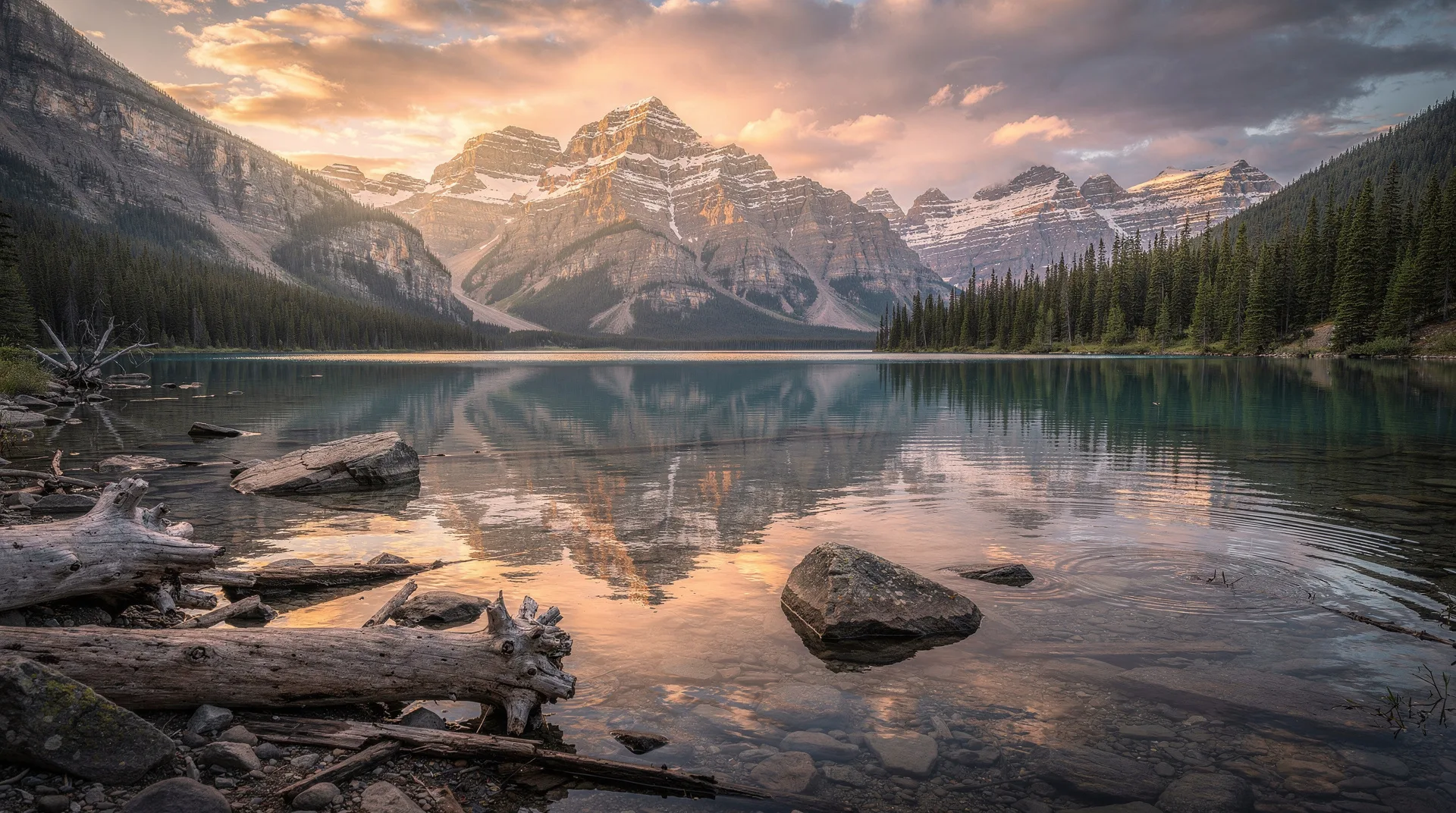
Banff National Park contains some of the most extraordinary scenery in North America, and the list of things to fill your days here is correspondingly long. The challenge is not finding things to do but choosing among them — turquoise glacial lakes, a gondola to alpine summits, limestone canyon catwalks, hot springs pools with mountain panoramas, world-class ski terrain, and one of the finest wildlife-watching corridors on the continent. This guide works through the essential experiences and the lesser-known ones, organised to help you plan a visit that matches your pace and interests.
A Parks Canada Discovery Pass is required for all activities within the park. Purchase one at the park gate on the Trans-Canada Highway or in advance through Parks Canada’s website — the annual pass covering all national parks is excellent value if you plan to visit multiple parks.
| At a glance | |
|---|---|
| Where | Banff National Park, Alberta, around 130 km west of Calgary |
| Cost | Parks Canada day pass around CAD $12.25/adult, or the CAD $83.50 annual Discovery Pass |
| Time needed | 4-6 days to cover the main sights at a reasonable pace |
| Getting there | Fly into Calgary and drive around 90 minutes, or use a shuttle from Calgary |
| Best time | June to September for lakes and hiking; December to March for skiing |
The must-see lakes: Lake Louise and Moraine Lake
No visit to Banff is complete without the lakes, and the two that define the park’s visual identity are Lake Louise and Moraine Lake.
Lake Louise sits at 1,731 metres in a glacial cirque backed by the Victoria Glacier and ringed by peaks that exceed 3,000 metres. The water is fed by glacial meltwater and carries suspended rock flour — finely ground particles from glacial erosion — that gives it the extraordinary turquoise-to-emerald colour that photographs struggle to fully capture. The Fairmont Chateau Lake Louise occupies the lake’s eastern shore and has been receiving guests since 1890.
From the lakeshore, two trails depart into the surrounding alpine environment. The Plain of Six Glaciers trail (13.6 kilometres round trip) climbs along the lake’s northern shore and ascends to a teahouse perched in the high alpine, with views of the glaciers that feed the lake. The Lake Agnes trail (7.4 kilometres round trip) climbs through forest to a smaller tarn and another historic teahouse — one of the finest easy-to-moderate hikes in the Rockies.
Canoe rentals are available on Lake Louise in summer for a gentler perspective on the scenery.
Moraine Lake, 14 kilometres south of Lake Louise village, is smaller but many visitors consider it the more dramatic of the two. The Valley of the Ten Peaks — ten distinct summits arranged in a sweeping arc above the lake’s western end — forms a backdrop that appeared on the reverse of the 1969 Canadian $20 bill and has become one of the most reproduced images in Canadian geography. The colour of the water, an intense aquamarine, is at its most vivid in late June and July.
Access to Moraine Lake has changed significantly. Private vehicles are no longer permitted on Moraine Lake Road during the peak summer season (late May to mid-October). Parks Canada requires visitors to arrive by shuttle from the Lake Louise Park and Ride, by Parks Canada–permitted shuttle from Banff or Lake Louise, or on foot or bicycle via the 9-kilometre road. Shuttle reservations must be made well in advance through the Parks Canada reservation system — spots fill within minutes of opening.
Book a guided Lake Louise and Moraine Lake day tour from BanffThe Banff Gondola and Sulphur Mountain
The Banff Gondola departs from a base station on Mountain Avenue south of Banff town and carries passengers to the summit of Sulphur Mountain at 2,281 metres in approximately eight minutes. The ascent reveals a panorama that expands progressively — from the Bow Valley floor to a 360-degree view of the surrounding peaks, the town of Banff reduced to a miniature in the valley below, and on clear days a horizon of mountain ridges extending south to the US border and north toward the Columbia Icefield.
The summit experience extends beyond the gondola arrival. A 1-kilometre boardwalk along the ridge connects the main terminal to the Sanson Peak Meteorological Station, a small stone structure that housed a weather observer for over 30 years in the early 20th century. The boardwalk passes through true alpine tundra — windswept, rocky, and covered in low-growing plants adapted to the extreme conditions — giving walkers a sense of the high mountain environment without requiring serious hiking fitness.
The summit interpretive centre covers the park’s geological history and the ecology of the alpine zone. The gondola operates year-round; winter visits, when the valley is snow-covered and the town’s lights begin to illuminate the early dark, offer a different but equally compelling version of the view.
Combine the gondola with a soak at the Banff Upper Hot Springs immediately below the gondola base station. The outdoor pool (36–40°C) backed by mountain views is a natural recovery for any day of walking.
Johnston Canyon
Johnston Canyon is Banff’s most visited trail, and the combination of accessibility and visual spectacle makes that popularity entirely understandable. The trail follows Johnston Creek through a narrow limestone canyon via steel catwalks bolted directly into the cliff walls — a construction feat from the 1920s that remains impressive — at a height above the rushing water that is both dramatic and, in places, slightly vertiginous.
The Lower Falls (1.1 kilometres from the trailhead) are a single powerful cascade dropping into a turquoise-blue pool within the canyon walls. The Upper Falls (2.7 kilometres) are taller and arguably more impressive, accessible through a short tunnel blasted through the rock. Beyond the Upper Falls, the canyon opens into a wider valley and the trail continues to the Ink Pots — seven cold mineral springs that bubble up through the valley floor in vivid green-blue hues, the colour produced by bacteria and minerals interacting with the spring water. The full return trip to the Ink Pots is 11.8 kilometres.
Go early. The Johnston Canyon trailhead is busy from 8am onwards in summer and the parking area fills well before noon. Arriving before 7:30am gives a genuinely different experience — quieter, better light for photography, and the cooling canyon air at its most pleasant.
In winter, Johnston Canyon freezes partially, and guided ice walk tours take visitors up the canyon to see the frozen falls and ice formations. This is one of the best winter activities in the park.
The Icefields Parkway
The highway north from Lake Louise to Jasper — 230 kilometres of mountain wilderness — is not strictly a Banff activity, but any list of things to do in the Banff area that excludes it is incomplete. The Parkway begins at the junction of the Trans-Canada and Highway 93 North at Lake Louise, and within the first 40 kilometres it delivers a landscape of glaciers, turquoise lakes, and high alpine terrain.
Key stops on the southern (Banff) section of the Parkway include:
Bow Lake (40 kilometres north of Lake Louise): A large, pale-turquoise lake fed directly by the Bow Glacier. The historic Num-Ti-Jah Lodge sits on the north shore. The Bow Glacier Falls trail (4.6 kilometres return) leads to a hanging waterfall below the glacier.
Peyto Lake viewpoint (44 kilometres north of Lake Louise): Arguable the best viewpoint on the Parkway — a short walk from a parking area leads to a platform overlooking a wolf-shaped lake of extraordinary blue-green colour in a U-shaped glacial valley.
Columbia Icefield (at the Banff-Jasper boundary): North America’s largest non-polar ice mass, accessible by Ice Explorer snowcoach onto the Athabasca Glacier or on foot to the glacier’s edge from the Icefield Centre. The Columbia Icefield Skywalk — a glass-floored platform cantilevered 280 metres above the Sunwapta Valley — is nearby.
Wildlife watching
The Bow Valley corridor running through Banff is among the most productive wildlife-watching environments in North America accessible without hiking deep into wilderness. Knowing where and when to look transforms casual driving into memorable encounters.
Elk are the easiest large mammal to see in the park. A herd of around 200 elk lives in and around Banff town year-round. Dawn and dusk are the best times — the open areas along the Bow River, the Fenlands trail loop, and the golf course grounds are reliable spots. During the September-October rut, bull elk are vocal (their bugling calls carry across the valley) and highly visible as they compete for females.
Black bears and grizzly bears are both present in the park from late April through October. Grizzlies are more commonly seen along the Bow Valley Parkway (Highway 1A), particularly in berry season from July to September. Black bears are more widespread. When a bear is visible from the roadside, a “bear jam” of stopped vehicles typically marks the spot.
Bighorn sheep are a year-round presence on the rocky terrain between the Trans-Canada and town. The cliffy terrain near the Banff townsite on the south side of the highway is almost always occupied by at least a small group.
Mountain goats appear at higher elevations — the terrain above the gondola summit and around the Lake Louise ski area — and can be seen from below with binoculars.
Wolves are present but rarely seen. The Bow Valley Parkway, particularly at dawn in winter, offers the best chance of a wolf sighting.
The Vermilion Lakes road west of town, running alongside three shallow wetland lakes, is excellent for beaver (active at dusk), muskrats, great blue herons, and waterfowl.
Skiing and winter sports
Three ski resorts within the Banff area together form one of North America’s great ski destinations, collectively marketed as the Ski Big 3.
Banff Sunshine Village (18 kilometres west of Banff town) sits at 1,660 to 2,730 metres elevation and receives exceptional snowfall from Pacific weather systems. The resort has 145 runs and some of the best tree skiing in the Canadian Rockies. It is the only Rockies resort with ski-in/ski-out slope-side accommodation at the base of the mountain.
Lake Louise Ski Resort (56 kilometres northwest of Banff) is the largest of the three resorts with 4,200 acres of terrain, 145 runs, and the iconic mountain scenery of the lake below. It receives consistent cold, dry snow and is regarded by many as the finest all-round ski experience in Alberta.
Mount Norquay (7 kilometres from Banff town) is the smallest resort but the closest to town, with excellent grooming and a more relaxed, local atmosphere. The resort’s night skiing and tubing park are popular family activities.
Beyond skiing, winter Banff offers ice skating on the outdoor rink at the Fairmont Banff Springs Hotel (and on the frozen lakes when conditions allow), snowshoeing on dozens of trails, and dog sledding experiences in the surrounding wilderness. If you are combining Banff with other provinces, you can compare guided tours across Canada before you book.
Hiking beyond the main trails
For visitors who want to hike beyond Johnston Canyon and the Lake Louise teahouse trails, Banff offers a spectrum of options from easy valley walks to serious alpine ascents.
The Tunnel Mountain Summit (2.3 kilometres one-way, 300 metres elevation gain): The accessible summit hike from town, with good views of the Bow Valley and Banff Springs Hotel.
Larch Valley above Moraine Lake (5.8 kilometres one-way, 373 metres elevation gain): Accessible in late September, this trail leads through open terrain to a high valley ringed by ancient larch trees that turn gold in autumn — one of the most photographed autumn landscapes in Canada.
Sentinel Pass (continuation beyond Larch Valley to 2,611 metres): One of the highest trail-accessible passes in the park, with views of the Valley of the Ten Peaks from above.
Cory Pass (13.3 kilometres circuit, 920 metres elevation gain): A more demanding day hike from the Banff end of the Bow Valley Parkway, with serious elevation and spectacular limestone ridge walking.
Castle Mountain (7 kilometres one-way, 520 metres elevation gain): A prominent landmark between Banff and Lake Louise on the Bow Valley Parkway, with a well-graded trail to an impressive summit viewpoint.
Cave and Basin National Historic Site
The Cave and Basin is not just a Banff attraction but the origin of Canada’s entire national parks system. In 1883, three Canadian Pacific Railway labourers descended into a cave above the hot springs that seeped from the hillside and discovered the sulphur-scented warm water below. Their report eventually triggered a federal land reserve in 1885 that became Banff National Park.
The site today operates as a national historic site with exhibits on the park’s founding, the history of the hot springs, and the remarkably resilient biology of the spring ecosystem — including a small population of the endangered Banff Springs snail, found nowhere else on earth. The warm, sulphur-smelling water still seeps from the cave walls into the original bath chamber. Entry is inexpensive and the interpretive content is genuinely engaging.
Practical tips for Banff visitors
Parks Canada pass: Required for all park visitors. Buy at the gate or in advance. The daily pass is CAD $12.25/adult; the annual Discovery Pass (CAD $83.50/adult) pays off quickly.
Accommodation: Book months in advance for summer, particularly July and August. The park’s popularity means last-minute accommodation in peak season is expensive and scarce.
Shuttle reservations: Moraine Lake and Lake Louise Park and Ride shuttles must be reserved through Parks Canada in advance. Spots open in the spring and go quickly.
Bear safety: Carry bear spray (available to rent or buy in town) on all backcountry and many frontcountry trails. Make noise when hiking in groups. Store food in bear-proof containers at all campgrounds.
Roam Transit: The local bus service covers Banff town, the Springs Hotel, and offers summer services to Lake Louise. It’s a practical option for getting around the town core without driving.
Altitude: Banff sits at 1,383 metres and many activities take you to 2,000–2,700 metres. Allow a day of gentle activity to acclimatise if arriving from sea level, particularly before strenuous hikes.
A sample first-timer’s plan
For visitors with around five days, spreading the headline experiences across the trip avoids trying to cram everything into the first exhausting day.
| Day | Focus |
|---|---|
| 1 | Arrive, Banff Gondola and Upper Hot Springs, easy townsite walk |
| 2 | Lake Louise and Moraine Lake shuttle, Lake Agnes Tea House hike |
| 3 | Johnston Canyon early morning, Bow Valley Parkway wildlife drive |
| 4 | Icefields Parkway day trip to the Columbia Icefield |
| 5 | Flex day — a longer hike, Cave and Basin, or a second attempt at anything weather cancelled |
This is only a starting point; the full 3-day Banff itinerary, 5-day Banff itinerary, and Banff-Jasper 7-day itinerary all lay out more detailed day-by-day plans, including one built for families.
Frequently asked questions about Best Things to Do in Banff
How many days do I need in Banff? Four to six days covers the main sights without feeling rushed; a week or more allows time for both the lakes and serious hiking or skiing.
Do I need a car to see the main sights? Not strictly — Roam Transit and shuttles reach the biggest draws — but a car adds flexibility for early starts and less-visited trailheads. See getting around Banff without a car for the transit-only approach.
Related destinations
- Banff day trips — Jasper, Yoho, Canmore and more within reach
- Getting around Banff without a car — Roam Transit, shuttles, and cycling
- Banff in winter — skiing, ice walks, and winter wildlife
- Best restaurants in Banff — where to eat after a day on the trails
- Where to stay in Banff — hotels, cabins, and campgrounds
- Jasper National Park — the wilder, quieter neighbour to the north
Planning your Banff days
The diversity of experiences in Banff means that a well-planned visit can satisfy completely different interests simultaneously. A family with young children can spend a morning at Johnston Canyon and an afternoon at the Upper Hot Springs with very little logistical effort. A pair of serious hikers can chain together a week of routes from valley-bottom wildflower meadows to exposed alpine ridgelines. A winter visitor can ski three different resorts on three consecutive days, each with its own character.
The park’s infrastructure — shuttle systems, interpretive centres, well-marked trails — handles the logistics of getting people to these experiences effectively. What Banff asks of its visitors is an openness to its scale, and the willingness to occasionally step beyond the roadside viewpoints into the actual landscape. Even a short walk from the parking area changes the quality of the experience profoundly. The turquoise water of Moraine Lake from the Rockpile trail is qualitatively different from the same view glimpsed from a passing vehicle.
Four to six days gives a first-time visitor time to absorb the main sites at a human pace without feeling rushed. Return visitors, many of them regulars who come back year after year, typically spend that time in the quieter corners — trails they haven’t walked, seasons they haven’t seen, the shifting of light on peaks they know by heart.