Canoeing on Rockies lakes: Moraine, Louise, Maligne
Can you canoe on Lake Louise and Moraine Lake?
Yes. Both Lake Louise and Moraine Lake have canoe rentals at the lakeside boathouses, operated by Fairmont Hotels. Rates are approximately CAD $120–$140 per hour. Rentals are first-come, first-served in summer; expect queues at peak times. No prior paddling experience required.
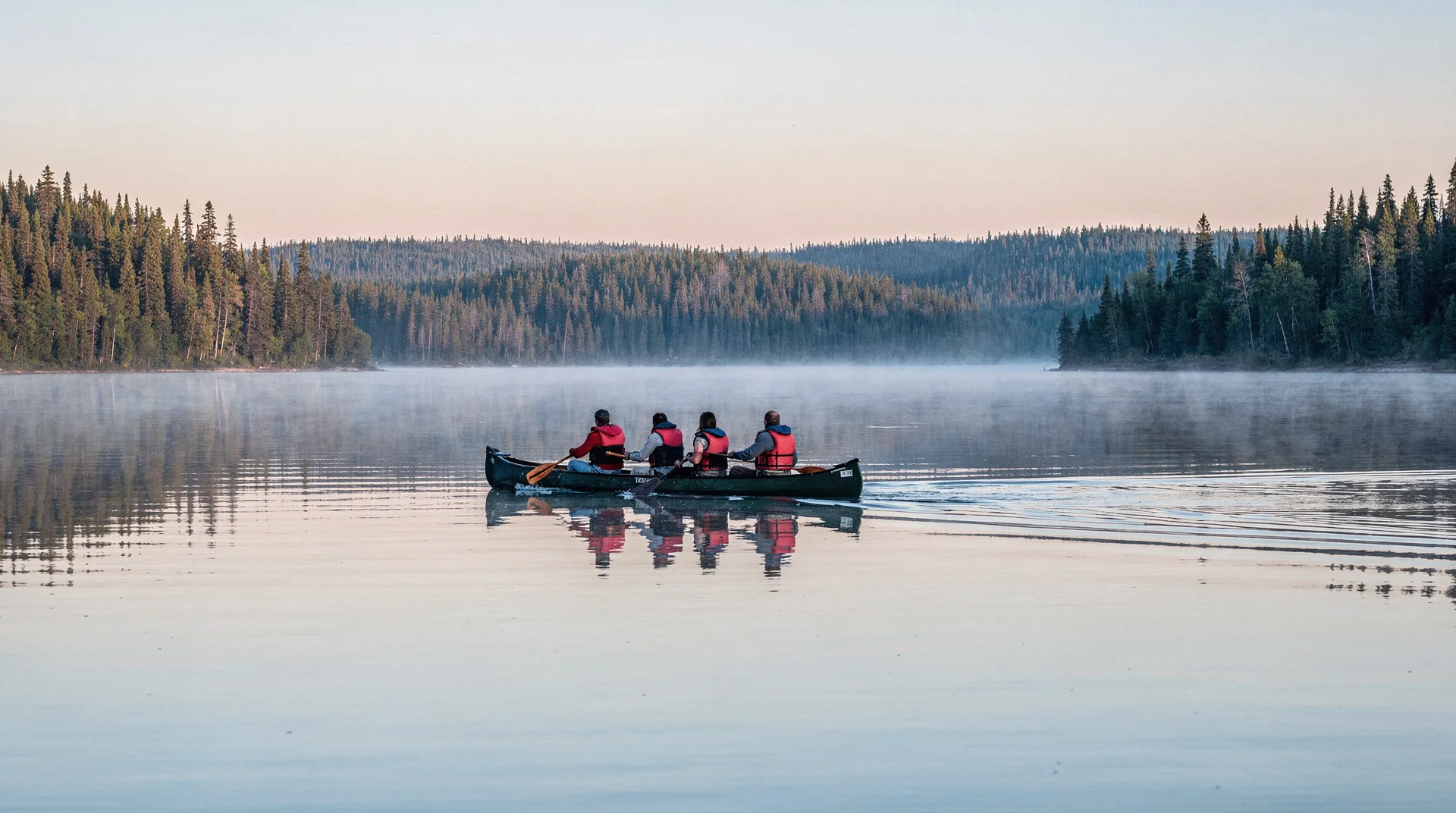
Paddling a canoe on the turquoise water of Lake Louise or Moraine Lake is one of those experiences that appears in virtually every “iconic Canadian things to do” list — and unlike many such lists, this one holds up in person. The colour of glacial lakes in the Canadian Rockies is a product of light interacting with glacial rock flour suspended in cold water, and from the water surface the effect is even more vivid than from the shore. Surrounded by limestone peaks rising hundreds of metres from the waterline, the experience of paddling these lakes is one of the finest and most distinctively Canadian activities available to summer visitors.
Three lakes in the Alberta Rockies stand out as premier canoeing destinations: Moraine Lake and Lake Louise in Banff National Park, and Maligne Lake in Jasper. Each has its own character, rental infrastructure, and practical logistics.
| Where | Cost | Time needed | Best time | |
|---|---|---|---|---|
| Moraine Lake | Banff National Park (shuttle access only) | around CAD $140/hour canoe | 1-2 hours on the water | early morning, June-Sept |
| Lake Louise | Banff National Park, next to the Fairmont | around CAD $120-$140/hour | 1-2 hours on the water | before 9 am, June-Sept |
| Maligne Lake | Jasper National Park | around CAD $55-$65/hour | 2+ hours to feel worthwhile | June-Sept, mornings |
A Parks Canada park pass (day pass or Discovery Pass) is required for Banff and Jasper regardless of whether you rent a canoe.
Moraine Lake
Moraine Lake may be the most iconic canoe-on-turquoise-water experience in Canada. The lake sits in the Valley of the Ten Peaks — ten 3,000-metre summits arranged in a horseshoe around the lake’s western and southern shores — and the view from a canoe in the centre of the lake toward those peaks on a calm morning is one that appears on more Canadian tourism images than almost any other scene in the country.
Canoe rental: The Moraine Lake Lodge boathouse operates canoe and kayak rentals at the lake. Rates are approximately CAD $140 per hour for a canoe (two paddlers) or CAD $120 per hour for a kayak. Life jackets (PFDs) are included with rental.
Hours: Boathouse typically opens at 8 am. Early morning is the optimal time — calm water, best light direction, and first access before the day-tripper queue builds.
Access logistics: Moraine Lake Road is closed to private vehicles during peak season. You must arrive by Parks Canada shuttle (book at reservation.pc.gc.ca), commercial shuttle, or bicycle. The shuttle system is the main logistical challenge — booking in advance is essential, particularly if you want an early morning canoe rental.
Paddling the lake: Moraine Lake is approximately 1.5 km long and 500 m wide — a manageable size for casual paddlers. The lake is cold (glacial fed; water temperature rarely exceeds 10°C) and wind can build through the afternoon as valley thermals develop. Morning paddling in calm conditions is strongly preferred. The far end of the lake, toward the talus cone that dams the valley, provides the best views of the Ten Peaks.
Experience required: None. Canoes are stable and the lake is calm in morning conditions. Paddle instruction is available from the boathouse staff.
Lake Louise
Lake Louise canoeing operates from the boathouse adjacent to the Fairmont Chateau Lake Louise. The setting is different in character from Moraine Lake — you are paddling toward the Victoria Glacier at the far end of the lake, with the Chateau and hotel infrastructure visible from the water. It is beautiful, but the scale is slightly less remote-feeling than Moraine due to the proximity of the hotel.
Canoe rental: Fairmont Hotels operates the Lake Louise boathouse. Rates are similar to Moraine Lake (approximately CAD $120–$140 per hour). Life jackets included.
Hours and access: The boathouse opens at 8 am. Lake Louise has mandatory shuttle periods similar to Moraine Lake during peak season. The parking area fills completely by 9 am — shuttle or early arrival required.
Paddling the lake: Lake Louise is approximately 2.4 km long — slightly larger than Moraine Lake, with Victoria Glacier directly ahead as you paddle from the boathouse. The ice-blue colour of the lake from water level is remarkable. The far end of the lake, closest to the glacier, is the most dramatic position.
Note on glacial lake risks: Lake Louise and Moraine Lake are fed by glacial meltwater. Water temperature is extremely cold year-round. If a capsized paddler enters the water, cold shock and rapid incapacitation are genuine risks. Wear the provided life jacket at all times. Do not lean dramatically over the canoe side in the middle of the lake.
Maligne Lake (Jasper)
Maligne Lake in Jasper National Park is Canada’s second-largest natural lake entirely within a national park, at 22 km long. Canoeing on Maligne Lake is a fundamentally different experience from the small-lake paddling at Louise and Moraine — here the scale is immense, the wilderness character is pronounced, and the famous destination of Spirit Island sits 14 km from the public access area.
Canoe rental: Maligne Lake Adventures (the concessionaire at the lake) offers canoe, kayak, and stand-up paddleboard rentals from the boathouse near the day use area. Rates are approximately CAD $55–$65 per hour for a canoe.
Day trips from the boathouse: Most paddlers explore the southern portion of the lake near the access area — the 3–4 km of shoreline immediately accessible without camping permits. The lake is wide enough to feel genuinely expansive and the surrounding peaks (the Queen Elizabeth Ranges) are dramatic.
Spirit Island by canoe: The famous Spirit Island, reached by the Maligne Lake boat tour, is 14 km from the boathouse — a serious paddling commitment (28 km return) requiring multiple days with backcountry camping permits and significant paddling fitness. The vast majority of visitors reach Spirit Island via the boat tour, not by canoe.
Camping and multi-day paddling: Backcountry campsites on Maligne Lake are bookable through Parks Canada. Multi-day canoe camping on Maligne Lake, with camping on the undeveloped shorelines, is an extraordinary wilderness experience for experienced paddlers. The lake is exposed to wind — afternoon whitecapping is common — and backcountry paddling here requires solid canoe skills, self-rescue ability, and weather judgment.
Book Jasper guided paddling and lake experiencesOther canoeing lakes in Alberta
Vermilion Lakes (Banff)
Three shallow lakes immediately west of Banff townsite that are accessible for canoeing (bring your own canoe; no formal rental). The lakes are elk and waterfowl habitat — birding from a canoe here is excellent. Mount Rundle’s reflection in the calm early-morning water is one of the most photographed scenes in Banff. Accessible year-round; no fees beyond park entry.
Two Jack Lake (Banff)
A small lake on the road to Lake Minnewanka, with a campground and calm water suitable for casual paddling. Less crowded than the main tourist lakes. Canoe and kayak rentals are available during summer from a concessionaire at the lakeshore.
Emerald Lake (Yoho National Park)
Just across the Alberta-BC border in Yoho National Park, Emerald Lake is a canoe rental destination (operated by Emerald Lake Lodge) with spectacular mountain scenery and vivid green water similar to the Banff lakes. Quieter than Louise and Moraine; the drive from Banff takes about 45 minutes.
Which lake should you choose?
If you only have time for one, the choice comes down to what kind of experience you want. Moraine Lake delivers the single most photographed view in the Rockies but demands the most logistics (mandatory shuttle, early start). Lake Louise is the easiest to combine with a broader Banff National Park day, since the boathouse sits right next to the village and the hikes above the lake. Maligne Lake, an hour from Jasper townsite, is the best choice for travellers who want a wilder, less crowded paddling experience and don’t mind the extra driving — it also pairs naturally with a longer stay built around the Canadian Rockies 10-day itinerary.
Budget-conscious paddlers should note that Maligne Lake’s rental rates run roughly half those at Moraine or Louise, which matters if you want two or three hours on the water rather than a quick loop near the dock. None of the three lakes require you to book a guided experience — self-rental with the boathouse staff’s basic instruction is standard and sufficient for first-timers.
Rockies canoeing versus other Canadian paddling
The Rockies experience is about scenery from small, ice-cold, mountain-ringed lakes rather than long-distance wilderness travel. Paddlers who want multi-day backcountry canoe routes through interconnected lake systems are usually better served in Ontario — see our canoeing routes in Ontario and the classic Algonquin canoe tripping guide for that different style of trip.
If you’re weighing where in the country to build a paddling trip around, our Canadian Rockies guide and Rockies 7-day itinerary cover how canoeing fits into a broader mountain trip, and helicopter tours in the Rockies is a popular add-on for the same trip if you want an aerial view of the same lakes you just paddled.
Practical tips for canoeing on Rockies lakes
Wind and timing
Morning canoeing (8 am – 11 am) gives the best combination of calm water, good light, and coolest temperatures. Afternoon thermals in the Bow Valley and mountain valleys create wind that can build quickly to whitecap conditions on larger lakes. Do not be caught on open water in high wind — it is dangerous and exhausting.
Cold water safety
All Rockies lakes are glacially fed and extremely cold. Cold water shock can incapacitate even strong swimmers within minutes of immersion. The rules for all Rockies canoeing:
- Wear the provided PFD at all times (mandatory, non-negotiable)
- Do not lean out of the canoe dramatically in deep water
- If you capsize, stay with the canoe — it floats and a swamped canoe is easier to locate and rescue than a swimmer
- Signal for help immediately if in trouble — shout, wave, use any signaling device
Photography from the water
A canoe is one of the finest photography platforms on these lakes — low angle, directly on the water, no crowds in frame. A waterproof camera bag is worth bringing; getting water in camera equipment on a glacial lake is not a recoverable situation. Early morning light (first 2 hours after sunrise) provides the most dramatic colour rendition on the water surface.
Related guides
- Moraine Lake guide — comprehensive guide to Moraine Lake including access logistics
- Lake Louise hikes overview — what to do on land at Lake Louise
- Maligne Lake boat tour — the guided boat cruise to Spirit Island
- Wildlife watching in Alberta — Vermilion Lakes is a prime wildlife viewing area
- Banff National Park guide — comprehensive Banff planning
Frequently asked questions about Canoeing on Rockies lakes: Moraine, Louise, Maligne
Do I need prior paddling experience to canoe on Moraine Lake or Lake Louise?
No. Both lakes are calm in morning conditions, the canoes are stable recreational models (not performance canoes), and the rental staff provide basic instruction. The main skills required — forward stroke, turning strokes, maintaining direction — can be learned in 10 minutes. If this is your first time in a canoe, stay close to shore initially until you feel comfortable.
How early should I arrive for canoe rentals?
At Moraine Lake, aim to be on the first available shuttle (typically before 8 am) and proceed directly to the boathouse. At Lake Louise, arrive before 8 am. In both cases, first-come queues form early on summer weekends. Midweek visits are significantly less competitive.
Is canoeing available in fall?
Canoe rentals at the boathouses typically operate from June through mid-October, when the access roads and facilities are open. Moraine Lake Road closes earlier than the Lake Louise access. The fall canoeing season — particularly October, when the autumn light is extraordinary and crowds are smaller — can be beautiful but check current operation dates with the specific operator.
Can I bring my own canoe?
Yes, you can bring your own canoe to most Rockies lakes that have water access. However, the mandatory shuttle systems for Moraine Lake and (during peak periods) Lake Louise make transporting your own boat logistically complex. Self-launched canoes are more practical at Vermilion Lakes, Two Jack Lake, and Maligne Lake, where conventional vehicle access is available.
Is Maligne Lake or Moraine Lake better for canoeing?
They suit different priorities. Moraine Lake wins on scenery-per-minute — the Valley of the Ten Peaks view is unmatched — but requires the mandatory shuttle and the busiest queues. Maligne Lake costs roughly half as much per hour, has a much calmer atmosphere, and is easier to reach by car, but the view, while beautiful, is less iconic. First-time visitors with limited time usually choose Moraine or Louise; repeat visitors and paddlers who dislike crowds often prefer Maligne.
Do I need a park pass to canoe on these lakes?
Yes. Moraine Lake and Lake Louise are inside Banff National Park and Maligne Lake is inside Jasper National Park — both require a Parks Canada day pass or Discovery Pass for entry, separate from the canoe rental fee itself.
Explore Banff and Jasper outdoor activity tours