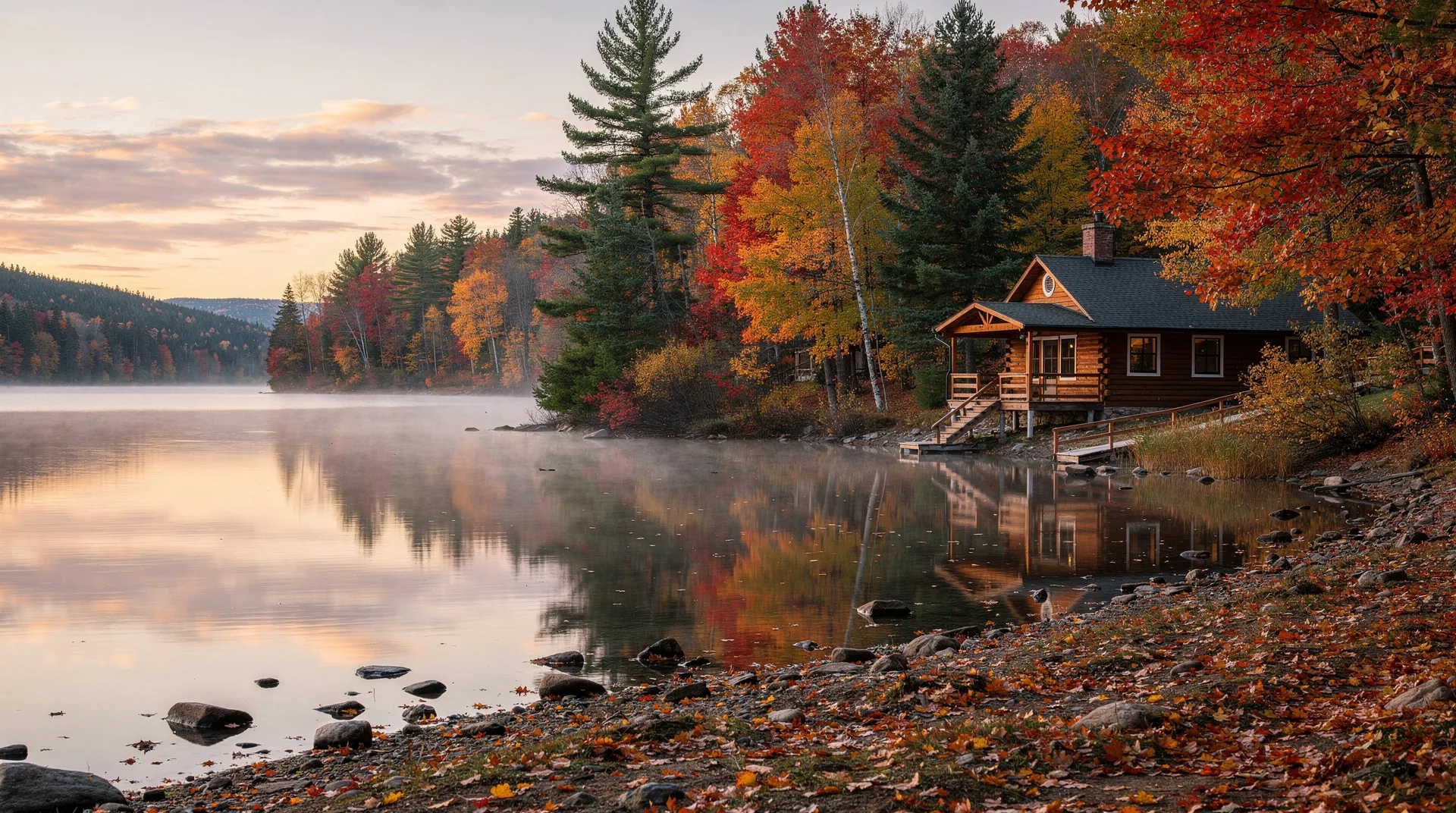
Northern Ontario Road Trip: 10-Day Thunder Bay to Sault Ste. Marie
The Lake Superior shore between Thunder Bay and Sault Ste. Marie is one of the great road drives in North America — 700 kilometres of Trans-Canada Highway following the world’s largest freshwater lake, with minimal development, dramatic granite and quartzite cliffs, and a sense of scale and isolation that surprises most visitors who have not previously driven it.
This 10-day itinerary uses this corridor as its spine and builds outward from it, adding the key destinations that reward the time investment of coming this far north: Sleeping Giant Provincial Park, Fort William Historical Park, the Agawa Canyon Tour Train, Lake Superior Provincial Park, Killarney Provincial Park, and Manitoulin Island. The direction runs west to east — arriving in Thunder Bay (typically by air, as the drive from Toronto alone would consume two days) and ending in Sault Ste. Marie, from which you can fly home, continue south by road, or take the Agawa Canyon Train before departing.
This is an active itinerary — it includes significant hiking, the possibility of a canoe day, and long driving days between destinations. It is not a camping-required itinerary; all nights are in hotels or lodges, though upgrading to backcountry camping where noted adds depth to the experience for those equipped to do so.
At a glance
| Category | Details |
|---|---|
| Where | Thunder Bay to Sault Ste. Marie, northern Ontario, along Lake Superior |
| Cost | Around CAD 3,500–4,500 total for two, moderate/hotel-based (see budget below) |
| Time needed | 10 days minimum; 12–14 days for the Toronto-by-car variant |
| Getting there | Fly into Thunder Bay Airport (YQT); fly or drive out from Sault Ste. Marie |
| Best time | Late June to early October; September is optimal for colour and crowds |
| Car required | Yes, for the entire route |
Day-by-day summary
| Day | Focus | Overnight |
|---|---|---|
| 1 | Arrival, Terry Fox Lookout | Thunder Bay |
| 2 | Fort William Historical Park, waterfront | Thunder Bay |
| 3 | Sleeping Giant Provincial Park hike | Thunder Bay |
| 4 | Trans-Canada drive east: Ouimet Canyon, Nipigon, White River | White River |
| 5 | Wawa, Michipicoten Bay, Agawa Rock Pictographs | Wawa / Lake Superior PP |
| 6 | Lake Superior Provincial Park hiking | Wawa / Lake Superior PP |
| 7 | Sault Ste. Marie arrival, Soo Locks Boat Tour | Sault Ste. Marie |
| 8 | Agawa Canyon Tour Train | Sault Ste. Marie |
| 9 | Killarney Provincial Park day visit | Sault Ste. Marie / Killarney |
| 10 | Manitoulin Island, ferry or drive south | Return / depart |
Day 1: Arrival in Thunder Bay
Fly into Thunder Bay Airport (YQT) with direct connections from Toronto, Winnipeg, and several Ontario cities. Pick up your rental car — a reliable vehicle is essential for a northern Ontario road trip — and spend the afternoon orienting to the city.
Afternoon: Drive to the Terry Fox Memorial and Lookout on the Trans-Canada east of the city centre. The memorial site and the view over the harbour toward the Sleeping Giant are the best single introduction to Thunder Bay’s landscape and emotional geography. Allow an hour.
Evening: Dinner at Hoito Restaurant on Bay Street — Finnish-Canadian cooking in the Finnish Labour Temple, an authentic community institution that has been feeding Thunder Bay since 1918. The mojakka stew and Finnish pancakes are the right meal to begin a northern Ontario road trip.
Stay: Thunder Bay downtown (Prince Arthur Waterfront Hotel or Delta Hotels Waterfront).
Day 2: Fort William Historical Park and the harbour
Morning: Full day at Fort William Historical Park — plan 4–5 hours. The living-history reconstruction of the 1816 North West Company fur trade headquarters is one of the finest museums in northern Ontario. Walk the full site: the Great Hall, the voyageur workshops, the Indigenous encampment, the fur press, and the canoe workshop where birchbark canoes are built using period techniques. The interpreters are genuinely knowledgeable and the scale of the reconstruction earns serious time.
Afternoon: Return to the city centre for the Thunder Bay Art Gallery on the waterfront (strong First Nations art collection) and a walk on the Victoriaville Pier with views over the harbour to the Sleeping Giant across the bay.
Evening: Dinner at Caribou Restaurant and Wine Bar for the best contemporary dining in Thunder Bay.
Stay: Thunder Bay (second night).
Day 3: Sleeping Giant Provincial Park
This is the physical day of the trip. Drive 60 kilometres east of Thunder Bay on Highway 11/17 to Sleeping Giant Provincial Park.
Morning/Afternoon: Top of the Giant Trail — the park’s signature hike, climbing through boreal forest to the mesa plateau that forms the “head” and “torso” of the Sleeping Giant silhouette. The trail is 24 km return with approximately 300 metres of elevation gain — a full day for most hikers. The summit plateau views over Lake Superior and the Thunder Bay harbour are among the finest in Ontario.
For those preferring a shorter hike: the Sea Lion Trail (5 km return) leads to a distinctive sea stack rock formation standing in Lake Superior, with open lake views from the headland.
Evening: Return to Thunder Bay and the departure logistics for tomorrow’s drive east.
Stay: Thunder Bay (third night).
Day 4: Thunder Bay to White River — Trans-Canada east
The Trans-Canada drive east along Lake Superior begins. This is a 400-kilometre driving day with several worthwhile stops — plan on 7–8 hours of total time including stops.
Stop 1 — Ouimet Canyon Provincial Park (east of Thunder Bay, 50 km): A dramatic canyon 150 metres wide and 100 metres deep in the Canadian Shield, with lookout platforms above the cliff edge. The canyon floor is cold enough to support arctic plants. Allow 1.5 hours.
Stop 2 — Nipigon (100 km east of Thunder Bay): The town where the Trans-Canada crosses the Nipigon River and where the world-record rainbow trout was caught in 1915. The bridge over the river is a remarkable early concrete structure. Stop for coffee and fuel.
Stop 3 — Lake Superior viewpoints: The highway runs close to the lake shore through this section. Pull out at several of the informal viewpoints where the lake is visible below the highway — the scale of the lake and the grey-blue horizon at Lake Superior are genuinely dramatic experiences.
Evening: White River — a small Trans-Canada town known as the birthplace of Winnie, the real bear that inspired A.A. Milne’s Winnie-the-Pooh. The Winnie the Pooh statue in the roadside park tells the story of Lieutenant Harry Colebourn, who purchased a black bear cub in White River in 1914 and named her Winnipeg. Basic motel accommodation in town.
Stay: White River (motels on the Trans-Canada).
Day 5: White River to Wawa — Agawa and the Superior shore
Another driving day with the scale of the lake building progressively.
Stop — Wawa: The town of Wawa is the quintessential northern Ontario Trans-Canada town — the giant Canada goose statue is one of the most photographed roadside landmarks in northern Ontario. Fuel, coffee, and brief stop; the goose photo is the required documentation. Wawa has better services than White River and makes a good alternative stopping point if Day 4’s drive feels too long.
Stop — Michipicoten Bay: A short detour from the highway delivers you to a long Lake Superior bay with a beach, the Michipicoten River estuary, and views that feel genuinely oceanic despite being freshwater. The light on Lake Superior in the afternoon from here — the particular blue-grey of the deep lake under a northern sky — is the photograph that defines the Superior shore.
Afternoon: Begin Lake Superior Provincial Park (reached about 170 km south of Wawa on Highway 17). If arriving before 4 pm, hike the Agawa Rock Pictographs trail — a challenging shoreline scramble to Ojibwe rock paintings on a cliff face that are among the oldest accessible rock art sites in Ontario. The trail is rated difficult; wear proper footwear and check conditions at the park gate.
Stay: Wawa or Lake Superior Provincial Park campgrounds (Agawa Bay) — depending on preference for camping vs motel.
Day 6: Lake Superior Provincial Park
A full day in the park — one of Ontario’s most spectacular provincial parks and significantly undervisited compared to Algonquin.
Morning: Orphan Lake Trail (8 km loop, 3–4 hours) — the park’s finest hiking route, crossing through mixed forest with Canadian Shield viewpoints and descending to a remote Lake Superior beach that can only be reached on foot. The beach at Orphan Lake has the cold, clear, wild quality of a Superior shore that car access never provides.
Afternoon: Katherine Cove day-use area for lunch on the Lake Superior shore. The cove’s clear water and sheltered position make it the best swimming spot in the park, though Superior water temperatures (14–17°C in July) require adjustment.
If time permits: the Nokomis Trail (10 km, accessible from the Frater turnoff) climbs to a fire tower with panoramic views over the park interior.
Stay: Lake Superior Provincial Park campgrounds or return to Wawa for motel accommodation.
Day 7: Sault Ste. Marie arrival and the Soo
Drive 100 kilometres south on Highway 17 from Lake Superior Provincial Park to Sault Ste. Marie (90 minutes).
Afternoon: Soo Locks Boat Tour (3 hours) — one of the most distinctive experiences on the northern Ontario itinerary. The tour takes your boat through the Canadian lock on the St. Mary’s River, rising and falling with the 6-metre elevation differential, with close-up views of the lock mechanism. In summer, the tours sometimes run alongside large Great Lakes freighters. Book in advance as tours can fill in summer.
Evening: Walk the Sault Ste. Marie waterfront and dinner at Giovanni’s Ristorante on Queen Street — the most reliable dinner in the Soo.
Stay: Sault Ste. Marie (Delta Hotels Waterfront recommended).
Day 8: Agawa Canyon Tour Train
This is the day most northern Ontario visitors remember longest.
6:30 am: Arrive at the Agawa Canyon Tour Train station in Sault Ste. Marie for boarding. The train departs at approximately 8:00 am; arrive early for seat selection.
All day: The Agawa Canyon Tour Train to the canyon and back. See the Agawa Canyon guide for full details on the route, canyon stop, and what to bring. In late September, this day occurs during peak fall colour and is one of the finest single-day experiences available in Ontario.
Key moments: the Montreal River Trestle crossing (40-metre height, nearly 500 metres long), the canyon descent, the two-hour stop with falls walks and the 300-step canyon rim staircase, and the return journey through the Algoma wilderness in afternoon light.
Evening: Return to the Soo around 5:30–6:00 pm. Recovery dinner and an early night.
Stay: Sault Ste. Marie (second night).
Day 9: Killarney Provincial Park day visit
Drive 150 kilometres south of Sault Ste. Marie on Highway 17 and then Highway 637 to Killarney Provincial Park.
Morning/Afternoon: Chikanishing Trail (3.5 km, 2 hours) along the Georgian Bay shoreline — the most accessible introduction to Killarney’s distinctive landscape: windswept pine, exposed granite headlands, and the open bay. Then rent a canoe or kayak at the park gate for 2–3 hours on George Lake — the water clarity in Killarney’s lakes is immediately apparent from the water surface.
If the group is hiking-inclined and reasonably fit: Granite Ridge Trail (2–3 hours return) for the accessible introduction to the La Cloche quartzite ridgeline above the park gate area.
Evening: Return toward Sault Ste. Marie or continue south toward Espanola for an overnight option.
Stay: Killarney Mountain Lodge (if book well in advance) or return to Sault Ste. Marie for the third night.
Day 10: Manitoulin Island — the return
The final day takes the Chi-Cheemaun ferry from Tobermory back to the mainland if your itinerary ends in southern Ontario, or a drive via the Little Current bridge and south through the Bruce Peninsula.
From the Soo: drive south via Highway 17 to Espanola, then Highway 6 south across the swing bridge to Manitoulin Island. This adds 2–3 hours but delivers the island experience.
Morning on Manitoulin: Drive the island to Providence Bay (best sand beach on the island, south shore), then to Kagawong (the prettiest village, with its small falls and harbour). The island deserves more time than a half-day, but even a half-day gives the essential sense of what makes Manitoulin unlike any other Ontario destination.
Afternoon: South Baymouth and the Chi-Cheemaun ferry to Tobermory (2-hour crossing, reservation essential) — or continue south via Little Current and Highway 6 to the Ontario mainland. From Tobermory, the Bruce Peninsula and Highway 10 or 26 south return to the Greater Toronto area in approximately 4 hours.
Or: fly home from Sault Ste. Marie Airport (skip Day 10’s road section and depart from the Soo).
Browse outdoor experiences across Canada for your northern Ontario tripPractical planning
Getting to Thunder Bay: Most visitors fly to Thunder Bay Airport (YQT) from Toronto Pearson (Air Canada, Porter, WestJet — 1.5 hours). Flying saves the two-day drive from Toronto along the TransCanada and is strongly recommended for a 10-day itinerary.
Vehicle: A comfortable, fuel-efficient car with recent servicing is adequate. Four-wheel drive is not required for this itinerary in summer and fall. Fill fuel frequently — distances between gas stations can be 80–120 km on some sections.
Accommodation: Book all accommodation before departing. In July and August, hotels in Thunder Bay and Sault Ste. Marie and campsites in Sleeping Giant and Lake Superior Provincial Parks fill significantly. The Delta Hotels in both Thunder Bay and Sault Ste. Marie are the most reliable full-service options.
Agawa Canyon Train: Book as early as possible, particularly for September fall colour dates. The train’s website handles reservations directly; popular September weekends sell out months in advance.
Chi-Cheemaun ferry: Reserve online through Ontario Northland well in advance for summer and fall.
Budget: This is rated moderate because the accommodation is primarily hotels rather than camping. A 10-night itinerary with two people sharing a hotel room, dining out twice daily, the Agawa Canyon Train, and the ferry, plus fuel for the driving, comes to approximately CAD 3,500–4,500 total for two people. Camping substitutions reduce this substantially.
Find Ontario tours and experiences for before or after your road tripWhat to pack for this itinerary
Clothing: Layers are essential. Northern Ontario weather in summer ranges from warm (25°C) to cold (10°C) within a single day, particularly near Lake Superior and Georgian Bay. Bring a waterproof rain jacket (used almost every day on the Superior corridor), a fleece or warm mid-layer, and comfortable walking shoes with ankle support for the Sleeping Giant and La Cloche trails. Hiking boots are advisable for the full Sleeping Giant summit trail.
Footwear: The Sleeping Giant trails and the Killarney Granite Ridge Trail involve uneven granite terrain that requires closed-toe shoes at minimum. Proper hiking boots with ankle support make both trails significantly more comfortable and safer. Sandals or casual shoes are inadequate.
Navigation and communication: Download offline maps covering the full route before departing Thunder Bay — cell coverage on the Trans-Canada between Nipigon and Wawa is intermittent and unreliable. A GPS app (Maps.me, AllTrails, or Google Maps offline) with offline maps saved provides navigation without cell service. The Agawa Canyon area north of the Soo has no cell coverage at all.
Food for long driving days: The Trans-Canada between Wawa and Nipigon has no fast-food chains and limited restaurant options. Carrying food for the long driving day (Day 4 particularly) avoids the scramble for acceptable food in Wawa or White River, where options are basic.
Insect repellent: Black flies in June and early July and mosquitoes throughout the summer are present in all the woodland and shoreline areas of this itinerary. DEET-based repellent is the most effective. The Sleeping Giant trails and Killarney can be uncomfortable without adequate repellent in peak season.
Seasonal considerations for this itinerary
June: The black fly period (late May to mid-June) affects comfort on hiking trails. By late June, black flies have subsided but mosquitoes remain. All major attractions are operational from late June, and accommodation is more available than in July-August.
July and August: Peak season — maximum daylight (Thunder Bay has approximately 17 hours of daylight in late June), warmest temperatures, all services fully operational. Book all accommodation before departing.
September: The optimal month for this itinerary. The Agawa Canyon fall colours peak in late September — synchronize Day 8 with this period for the definitive experience. Crowds thin significantly, accommodation is more available, and the weather is typically stable and clear. The Sleeping Giant and Killarney trails are beautiful in fall colour.
Early October: Most services continue through early October. The ferry (Chi-Cheemaun) runs into mid-October. Fall colour in the Superior region and on the Niagara Escarpment at Killarney is potentially at peak in the first week of October. A bold choice that rewards with colour and solitude.
Alternative: the eastward approach
This itinerary can run in reverse — arriving by air into Sault Ste. Marie, taking the Agawa Canyon Train on Day 2, and driving west to Thunder Bay for the final three days. The advantage: the Agawa Canyon Train is done at the start while energy is highest. The disadvantage: flying into the Soo and renting a car (smaller airport, fewer rental options) is slightly less convenient than Thunder Bay.
A third option begins in Toronto by car — driving north through Sudbury and Espanola, crossing to Manitoulin Island on Day 1, continuing to the Soo via the island and bridge, and then running the full 10-day itinerary west to Thunder Bay before flying home. This extends total travel to 12–14 days but includes the full geographic range of northern Ontario.
Fuel, cell coverage, and driving realities
Northern Ontario driving is unlike anywhere else covered on this site, and it deserves its own section beyond the packing notes above. The Trans-Canada between Thunder Bay and Sault Ste. Marie is a single two-lane highway for most of its length — there is no alternative route if it is closed for weather or an accident, and closures do happen, particularly in shoulder season. Gas stations thin out considerably between Wawa and Nipigon; treat a half-full tank as the point to start looking for fuel rather than the point to worry. Logging trucks and RVs share the road, and passing lanes are infrequent, so build in more time than the raw driving distance suggests, especially on Day 4’s 400-kilometre stretch.
Wildlife on the road is a real hazard, not a scenic detail — moose in particular are most active at dawn and dusk and a moose-vehicle collision at highway speed is dangerous. Reduce speed in low light and near marshy pull-offs where moose often feed. For drivers coming from the Rockies side of the country, the comparison in the Canadian Rockies vs American Rockies guide is not directly relevant here, but the general Canada driving distances logic in the BC driving distances guide gives a useful sense of how Canadian highway distances compare to what visitors from smaller countries expect.
Why this route beats a shorter northern Ontario visit
A shorter visit — say, three or four days based only in Sault Ste. Marie for the Agawa Canyon Train — misses the scale that makes this corridor worthwhile. Sleeping Giant and Lake Superior Provincial Park are both destinations that reward a full day each, and neither is reachable as a side trip from the Soo. Travellers weighing whether to extend a broader Ontario 10-day itinerary north instead of doing this route separately should note that the two do not overlap in destinations and are better treated as two different trips to Ontario rather than one combined loop — the driving distances involved make combining them into a single two-week trip exhausting rather than efficient.
Frequently asked questions about Northern Ontario Road Trip
Do I need a 4x4 or high-clearance vehicle for this route? No. The entire itinerary follows paved provincial highways (the Trans-Canada and Highway 6/637), and a standard rental car is adequate in summer and fall. Four-wheel drive becomes useful only if attempting this route in winter, which is not recommended given seasonal closures at some park facilities.
Can this itinerary be done without a rental car, using VIA Rail or bus? Not practically. VIA Rail’s Canadian train does pass through this corridor but on a fixed schedule that does not align with visiting Sleeping Giant, Lake Superior Provincial Park, and Killarney as day trips. A rental car from Thunder Bay is effectively required.
Related guides
- Northern Ontario complete travel guide
- Thunder Bay: Sleeping Giant and travel guide
- Sault Ste. Marie travel guide
- Agawa Canyon Tour Train guide
- Manitoulin Island travel guide
- Killarney Provincial Park guide
- Ontario travel guide
- Ontario 10-day itinerary for the southern and eastern Ontario counterpart trip
Northern Ontario rewards the traveller who commits the time. The 10-day structure allows each major destination its proper share of attention without the frustration of rushing a landscape that does not reward rushing. The Lake Superior shore, the canyon, the island, the white quartzite ridges of Killarney — each is its own experience, but together they constitute a portrait of Ontario that most Ontarians have never seen.