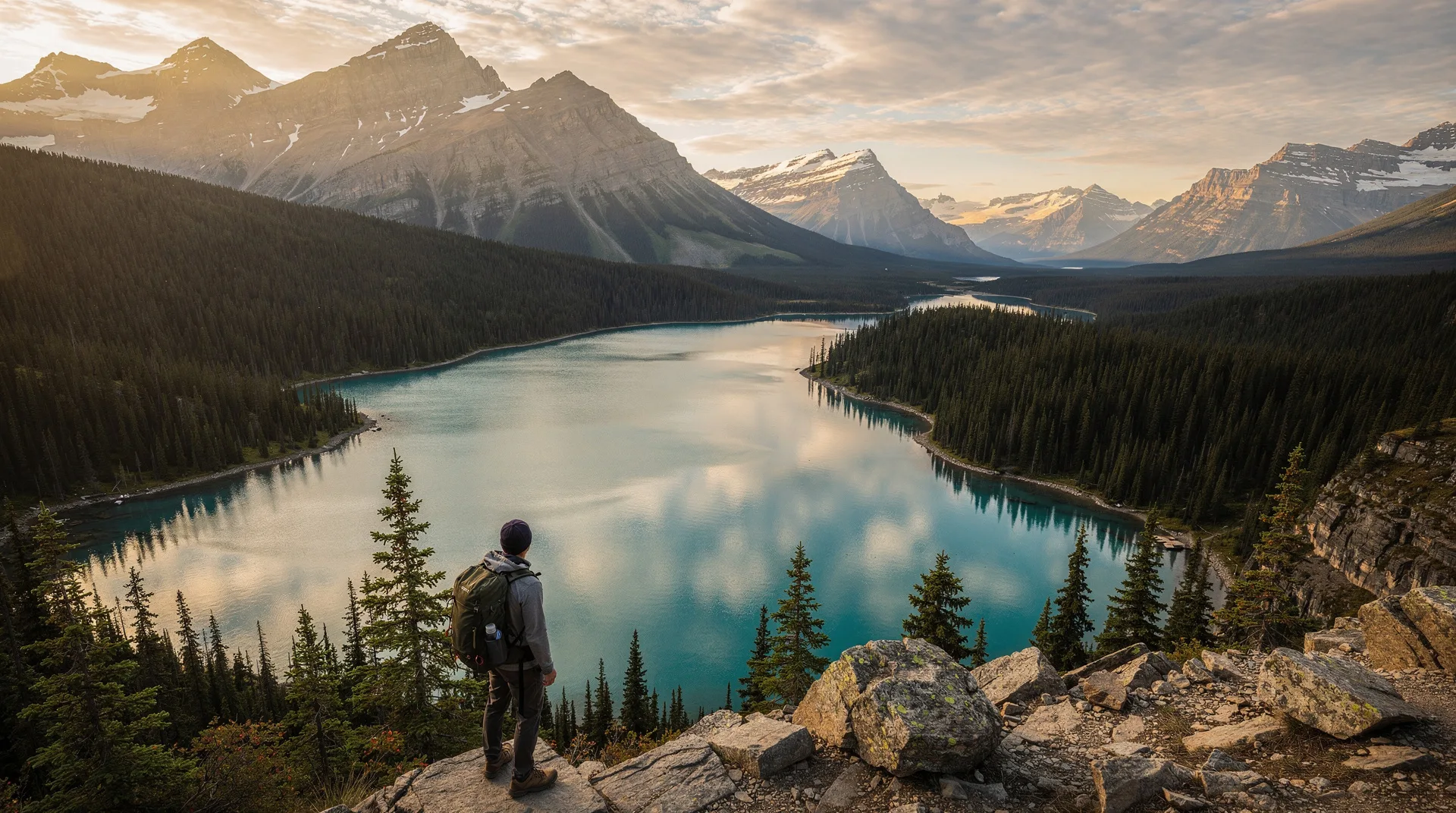
Quick facts
- Size
- 2,766 km² (world's largest freshwater island)
- Best time
- June to September; August for Wikwemikong Pow-wow
- Days needed
- 2-4 days
- Access
- Bridge from Little Current; ferry from Tobermory (summer)
- Languages
- English; Ojibwe and Odawa in First Nations communities
Manitoulin Island holds a geographic distinction that invites the obvious question: what does it mean to be the largest freshwater island in the world? The answer, on the island itself, is that it means being a place where distance, water, and the slow pace of island life combine to create an atmosphere found nowhere else in Ontario. The island is 2,766 square kilometres of limestone bedrock, mixed forest, inland lakes, and farmland sitting in northern Lake Huron, connected to the mainland by a swing bridge at Little Current in the north and by a seasonal car ferry from Tobermory on the Bruce Peninsula in the south.
The statistics are genuinely remarkable. Manitoulin Island contains over 100 inland lakes — including Lake Manitou, one of the world’s largest lakes within an island, which itself contains islands. The island’s highest point, Kagawong Hill, rises 350 metres above sea level. The coastline, including all bays and inlets, runs to over 450 kilometres. The population is approximately 13,000 permanent residents, a significant proportion of whom belong to the six First Nations communities that have been the island’s principal inhabitants for millennia.
Manitoulin is the traditional homeland of the Ojibwe (Anishinaabe) and Odawa peoples. More than any other comparable destination in Ontario, the island’s cultural identity is shaped by its Indigenous heritage — a living culture that persists in the Wikwemikong Unceded Territory, in the seasonal powwows, in the language programs and community institutions of the First Nations communities, and in the artwork and craft traditions that are visible throughout the island.
| At a glance | |
|---|---|
| Where | Northern Ontario, in Lake Huron’s North Channel; bridge from Little Current, seasonal ferry from Tobermory |
| Getting there | Highway 6 via Espanola from Sudbury; or the Chi-Cheemaun ferry from Tobermory (around 2 hours, reservation recommended) |
| Ferry cost | Around CAD 40-45 per vehicle plus per-passenger fare (check Ontario Northland for current rates) |
| Time needed | 2-4 days to see the island properly; a rushed day trip is possible via the bridge only |
| Best time | Late June to early September for full services and the Wikwemikong Pow-Wow; September for cycling and fall colour |
Getting to Manitoulin Island
The Little Current bridge
The Swing Bridge at Little Current is the primary year-round access route — the single connection to the mainland via Highway 6 south from Espanola (which connects to Sudbury and the Trans-Canada). The swing bridge opens on the hour to allow marine traffic to pass through the North Channel, so crossing times are aligned with the hour. Little Current itself is the island’s commercial hub: the largest town (population around 1,500), with grocery stores, restaurants, fuel, and the services needed for the island visit.
The Chi-Cheemaun ferry from Tobermory
The MS Chi-Cheemaun (“big canoe” in Ojibwe) operates a seasonal ferry service between Tobermory on the Bruce Peninsula and South Baymouth on the south shore of Manitoulin Island. The crossing takes approximately two hours and is one of the more pleasant ways to approach the island — the open Lake Huron crossing, the appearance of the limestone island shoreline, and the arrival at South Baymouth give the journey a proper sense of arrival that the bridge cannot provide.
The ferry runs from late April through mid-October (frequency varies by season) and carries vehicles as well as foot passengers. Reservations are strongly recommended for summer weekends — the ferry fills, and being turned away from the last sailing is a significant inconvenience when you are on a peninsula with limited alternatives. Book through Ontario Northland.
First Nations culture and Wikwemikong
Wikwemikong Unceded Territory
The eastern third of Manitoulin Island comprises the Wikwemikong Unceded Territory — a First Nations community that has never signed a treaty surrendering the land to the Crown. This distinction makes Wikwemikong technically and legally different from most First Nations reserves in Ontario, and the community maintains a strong cultural and political identity that reflects this status.
The village of Wikwemikong is not a tourism destination in the conventional sense — it is a living community — but visitors are welcomed at the annual Wikwemikong Cultural Festival and Pow-Wow, held each August long weekend (usually the first weekend of August). This is one of the largest powwows in Ontario: traditional singing and drumming, competitive dancing in full regalia, craft vendors, and food that reflect the Anishinaabe traditions of the island. Visitors are welcome and the event is one of the most culturally significant experiences available anywhere in northern Ontario.
The Ojibwe Cultural Foundation in M’Chigeeng (West Bay) operates a cultural centre and gallery with permanent and rotating exhibitions on Anishinaabe history, art, and language. The gallery shop sells authentic Indigenous artwork, beadwork, and crafts directly supporting the artists.
Other First Nations communities
Manitoulin has six First Nations communities: Wiikwemkoong (Wikwemikong), M’Chigeeng, Sheshegwaning, Zhiibaahaasing, Aundeck Omni Kaning, and Sagamok. Each has its own governance and character. Visitors should treat these communities with the same respect they would any Indigenous territory — being mindful of private property, not photographing ceremonies or individuals without permission, and engaging with cultural events as a guest.
Lakes, swimming, and paddling
Lake Manitou and the inland lakes
Lake Manitou — on the island’s interior — is one of the most unusual freshwater lakes in Ontario: a lake within an island, within Lake Huron. It is large enough (104 km²) to have its own islands, and its water is clear and relatively warm in summer. The fishing for walleye, northern pike, and lake trout is excellent. Boat rentals and fishing guides operate from the lake’s access points.
The island’s other inland lakes — Lake Kagawong, Mindemoya Lake, and dozens of smaller lakes — provide excellent canoe and kayak territory in relatively sheltered conditions. The lack of powerboat traffic on many of the smaller lakes makes them ideal for paddling.
Providence Bay on the south shore has the best sand beach on the island — a long sweep of fine sand on Lake Huron with clear water and a gradual depth that makes it excellent for families with children. The annual Providence Bay Fair (August) is a traditional agricultural fair that has been running since the 19th century and is one of Manitoulin’s most characteristically unhurried community events.
Kayaking the North Channel
The North Channel between Manitoulin Island and the Ontario mainland is a sheltered inland sea between the island’s north shore and the granite cliffs of the mainland. It is considered one of the finest cruising and kayaking waterways in the Great Lakes — protected from the open-lake weather of Lake Huron while offering hundreds of kilometres of island and cove exploration.
Sea kayaking in the North Channel is suitable for intermediate and experienced paddlers. The distances between communities are manageable, the scenery alternates between granite mainland cliffs and the limestone island shoreline, and the marine wildlife (loons, herons, otters, the occasional black bear swimming between islands) is abundant. If you would rather paddle with a guide, you can compare guided tours across Ontario before you go.
Hiking and cycling
Cup and Saucer Trail
The Cup and Saucer Trail north of Mindemoya is Manitoulin’s signature hike — a route along the Niagara Escarpment as it crosses the island, climbing to viewpoints above the North Channel and the surrounding island landscape. The trail name comes from a distinctive rock formation visible from the escarpment edge.
The main loop (approximately 8 km) takes 3–4 hours. The Adventure Route adds a more challenging section with a metal handhold ladder descent through a crack in the escarpment face — optional but memorable. The views from the top — over the island’s interior and the North Channel — are the best panoramic vistas available on Manitoulin.
Cycling on Manitoulin
Manitoulin is one of the better cycling destinations in northern Ontario — the island is flat to rolling (the escarpment areas excepted), the roads are quiet, the distances between communities are manageable on a day’s cycling, and the island atmosphere suits the pace of travel by bicycle in a way that cars cannot quite match.
The island has no designated cycling lanes, but the county roads carry little traffic outside of summer holiday weekends. A typical cycling day from Little Current to Mindemoya and back (approximately 70 km with some elevation) is manageable for a fit leisure cyclist and passes through the island’s agricultural and lake landscape at the right speed to appreciate it.
Bicycle rentals are available at a few operators in Little Current and Mindemoya; bringing your own bike on the Chi-Cheemaun ferry is possible with advance booking.
Small towns and communities
Little Current is the island’s commercial hub and the natural starting point for a visit. The main street has grocery stores, restaurants, outfitters, and the arts and crafts galleries that serve the island’s artisan community. The Swing Bridge viewpoint above the North Channel provides context for the island’s unique position between the freshwater sea to the north and the open lake to the south.
Gore Bay on the northwest shore is a charming small harbour town with a Saturday farmers’ market (summer), the Western Manitoulin Museum in the former jail building, and a cluster of galleries and studios. The harbour is accessible for pleasure boats and provides a quieter alternative to Little Current for a base.
Kagawong, set on a bay of Lake Kagawong where the Kagawong River drops over a small falls into the bay, is the most picturesque village on the island — population under 300, a heritage church, a waterfall accessible from the road, and an atmosphere of profound rural quietness.
Mindemoya (the island’s geographical centre) is the service centre for the island’s interior, with grocery stores, gas, and the access point for Cup and Saucer Trail parking.
Where to stay
Manitoulin Island hotels and motels are concentrated in Little Current and Gore Bay. The Manitoulin Hotel and Conference Centre in Little Current is the most reliable full-service option. Several smaller motels and resorts operate on the lake shores, often closing after Thanksgiving.
Cottage and cabin rentals are the most rewarding way to experience Manitoulin — a private cabin on Lake Manitou or the North Channel, with a canoe at the dock, provides the island experience in full. Advance booking is important for July and August.
Camping: Municipal campgrounds operate in several communities. The Killarney Provincial Park on the mainland opposite Manitoulin’s north shore provides a full provincial park experience within reach of an island day visit.
When to visit
July and August are peak season — the ferry from Tobermory operates on full schedule, all visitor services are open, and the island has its full summer population. The Wikwemikong Pow-Wow in early August is the single most compelling reason to visit at a specific date.
June offers quiet access to all the island’s natural attractions with significantly fewer visitors. The ferry runs less frequently in June.
September is excellent for cycling, hiking, and the beginning of fall colours on the island’s mixed forest. Quieter than summer with full access.
October to April: Most visitor services close after Thanksgiving (mid-October). The island in winter is accessible by the bridge and is genuinely quiet — a different experience than the summer visit.
Browse outdoor and cultural experiences across CanadaPractical tips
Ferry reservations: Book the Chi-Cheemaun well in advance for summer weekends — the ferry fills and cannot accommodate walk-on vehicles without a reservation. The Ontario Northland website handles bookings.
Fuel and supplies: Fuel up and stock up in Little Current before heading to the island’s west end or Wikwemikong, as services become sparse. Grocery stores exist in Little Current and Mindemoya but are limited in range.
Cell coverage: Coverage is good in Little Current, Mindemoya, and Gore Bay. Wikwemikong and the more remote parts of the island have gaps. Download offline maps before heading out.
Photography and ceremonies: At powwow events, follow the specific instructions of the emcee regarding photography. Not all ceremonies are open to cameras, and respect for this is non-negotiable.
Haweater Weekend and island community life
Haweater Weekend is held in Little Current on the August long weekend — a community festival centred on island life traditions. The name “haweater” refers to the haw berry, the fruit of the hawthorn tree that grows across Manitoulin and has become a term of pride for island residents. The festival includes live music, a parade, a demolition derby, agricultural displays, and the general warmth of a small-town fair serving its own community.
The timing coincides with the Wikwemikong Pow-Wow the same weekend, making the August long weekend the most active and culturally layered time on the island.
The island’s geology and limestone character
Manitoulin Island is underlain by Silurian limestone — the same ancient sedimentary rock that forms the Niagara Escarpment and the Bruce Peninsula to the south. This geology gives the island a different character from the Canadian Shield terrain of the mainland: the rock is pale and flat-bedded, the terrain gentler, and the soil supports plant communities distinct from the Shield’s thin, acidic soils.
The Niagara Escarpment continues across Manitoulin — the same ridge visible at Niagara Falls and Blue Mountain near Collingwood runs along the island’s interior. The Cup and Saucer Trail follows this escarpment edge, which delivers views from above the island’s flat interior to the North Channel and the distant mainland cliffs.
Alvar habitat — open limestone grasslands with rare plant communities including several orchid species and hart’s tongue fern — exists at the island’s southwest corner. These habitats are fragile. Walking on alvar vegetation causes lasting damage; stick to marked trails when in these areas.
Art and craft traditions
Manitoulin’s Indigenous community has produced several nationally significant artists. The Woodland School of painting — originated by Norval Morrisseau and characterized by bold outlines, biomorphic forms, and Ojibwe iconography — has practitioners on the island, represented through the Ojibwe Cultural Foundation gallery in M’Chigeeng.
Beadwork, quillwork, basket weaving, and carved stone — traditional Anishinaabe craft forms — are sold through the Foundation’s gallery and at events including the Wikwemikong Pow-Wow. Purchasing directly from Indigenous artists at these venues ensures the economic benefit flows to the community.
Fishing
Lake Manitou holds excellent walleye, northern pike, and lake trout — a productive fishery less pressured than more accessible mainland lakes. Boat rentals and guided fishing trips are available from lake access points. North Channel perch fishing from the docks in Little Current is an unpretentious and productive activity for visitors of all ages. Ontario fishing licences are required — available online or from bait shops in Little Current.
Suggested two- and three-day plans
A two-day visit works well entering via the bridge at Little Current: day one covers Little Current itself, the Cup and Saucer Trail hike, and a stop in Kagawong for the falls; day two heads to Providence Bay for the beach and on to Gore Bay before returning. A three-day visit adds a full day around Lake Manitou or a paddle in the North Channel, and allows time to visit the Ojibwe Cultural Foundation gallery in M’Chigeeng without rushing. Travellers arriving by the Chi-Cheemaun ferry from Tobermory naturally start at South Baymouth and work north, which pairs well with a Bruce Peninsula visit on the same trip.
For those combining Manitoulin with a wider Northern Ontario loop, see the Northern Ontario 10-day road trip itinerary, which threads the island in alongside Sault Ste. Marie and Sudbury.
Frequently asked questions about Manitoulin Island
Do I need a reservation for the Chi-Cheemaun ferry?
Reservations are strongly recommended, especially for summer weekends, when the ferry regularly fills with vehicles. Foot passengers have more flexibility, but anyone bringing a car should book ahead through Ontario Northland rather than risk being turned away from the last sailing of the day.
Is Manitoulin Island worth visiting without a car?
It’s difficult. Distances between Little Current, the Cup and Saucer Trail, Providence Bay and Gore Bay are too long for walking or casual cycling to cover the whole island, and public transit is essentially nonexistent. Cyclists with touring experience can manage a multi-day visit, but most visitors need a vehicle.
Related guides
- Northern Ontario complete travel guide
- Northern Ontario 10-day road trip
- Killarney Provincial Park: canoeing and hiking
- Sault Ste. Marie travel guide
- Ontario travel guide
Manitoulin Island is the Ontario destination that requires the most patience to reward the visitor properly. Nothing about the island is designed for quick consumption — the distances are real, the pace is genuine, and the First Nations culture that gives the island its deepest layer of meaning is not a performance for tourism. Those who arrive with time and curiosity find an island that is quietly extraordinary.