Quick facts
- Distance from Toronto
- 4 hrs by car (via Sudbury)
- Best time
- June to October; late September for fall colours
- Days needed
- 2-7 days (day trip to multi-day canoe trip)
- Permits required
- Interior camping permits via Ontario Parks
- No road access
- Interior accessed by canoe or hiking only
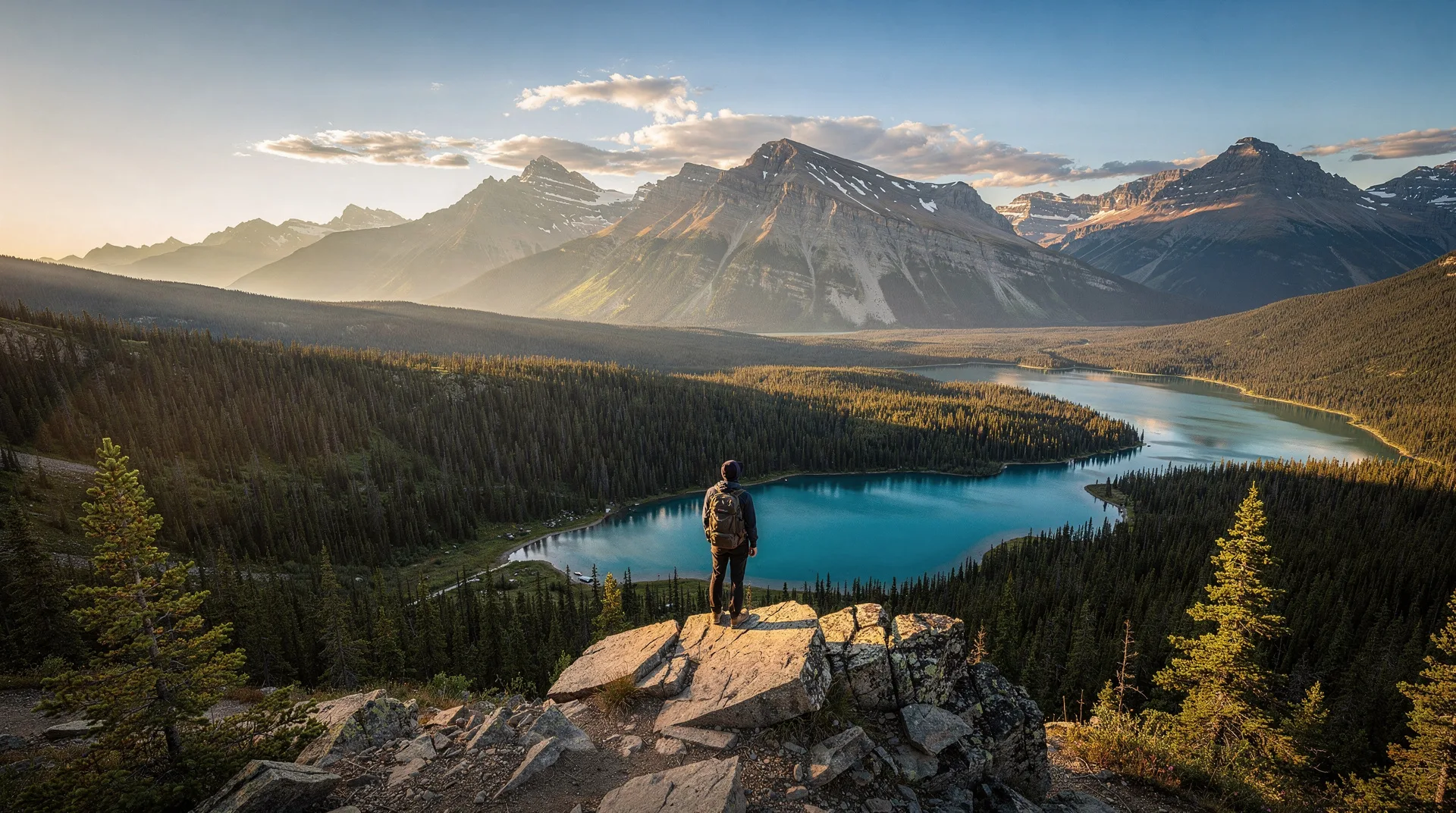
Killarney Provincial Park is one of the secrets that Ontario keeps poorly. Among serious canoeists and wilderness hikers, the park is well-known and deeply respected — the white quartzite ridges of the La Cloche Mountains, the remarkably clear lakes, and the Georgian Bay shoreline combine in a landscape so distinctive that A.Y. Jackson and other Group of Seven painters returned here repeatedly throughout their careers. Among general visitors, the park is far less known than Algonquin, despite offering scenery that many find more dramatic.
The park sits on the north shore of Georgian Bay, approximately 90 kilometres west of Sudbury and 450 kilometres from Toronto. The road access ends at the park gate — there are no roads into the interior. All access to Killarney’s lakes and ridges is by canoe or on foot, which means the park’s 645 square kilometres are shared among a fraction of the visitors that Algonquin attracts. The silence in the interior is genuine and sustained.
The geological foundation of Killarney is unusual. The La Cloche Mountains are ancient quartzite ridges — the eroded remnants of peaks that were once as high as the Himalayas, worn down over a billion years to pale, almost white ridgelines. The contrast of the white quartzite against the dark green boreal forest and the intensely blue lake water (Killarney’s lakes are extraordinarily clear and low in nutrients, giving them a blue quality unusual in Ontario freshwater) makes the visual landscape immediately distinctive from any other provincial park in the province.
| At a glance | |
|---|---|
| Where | North shore of Georgian Bay, around 90 km west of Sudbury |
| Cost | Ontario Parks vehicle permit required; backcountry camping needs a separate interior permit |
| Time needed | Day trip possible for the shoreline trails; 2-7 days for canoeing or the Silhouette Trail |
| Getting there | Car essential; around 4-4.5 hrs from Toronto |
| Best time | Late June-September for full access; late September for fall colour on the quartzite ridges |
La Cloche Silhouette Trail: Ontario’s great long route
The La Cloche Silhouette Trail is a 100-kilometre loop trail that crosses the full width of the park, climbing the white quartzite ridges multiple times and passing through a landscape that varies from deep boreal forest to exposed quartzite above treeline. The complete loop requires 7–10 days for most hikers at a manageable pace, with Ontario Parks backcountry camping permits required at designated sites along the route.
The trail was created by hiking clubs in the 1960s and remains one of the more demanding multi-day hikes in Ontario — not because of technical difficulty, but because of the cumulative elevation gain across the quartzite ridges and the isolation that requires complete self-sufficiency. Emergency evacuation from the interior is not quick. Hikers should carry more than enough food, treat all water, and carry adequate navigation tools (paper maps of the park, ideally supplemented by GPS).
The most spectacular sections of the trail are the exposed ridgeline walks above Baic Finn Lake and in the Silver Peak area, where the white quartzite opens to views over Georgian Bay and the lake-scattered park interior that no single photograph adequately captures.
Day hikers and short-trip hikers: A 2-3 day section of the Silhouette Trail — walking in, camping one or two nights, and walking out — provides the essential Killarney ridge experience without the full loop commitment. The park gate parking area is the standard starting point; planning a 30–40 km section with one or two nights is realistic for fit hikers with experience.
Canoeing in Killarney
Killarney’s canoe route network covers most of the park’s lake system, with portages connecting lakes that range from accessible day-paddling distances to multi-day interior expeditions. The park has approximately 130 designated backcountry campsites, most on lake shores, bookable through Ontario Parks’s reservation system.
The most popular canoe routes begin at the George Lake or Bell Lake access points and move through a series of clear lakes — George, Freeland, Balsam, OSA, and the particularly striking Killarney Lake — toward the interior. The portages are well marked and maintained, and distances between lakes are generally manageable for canoeists with basic experience.
What makes Killarney’s lakes distinctive
The water clarity in Killarney’s interior lakes is exceptional even by northern Ontario standards. Several lakes — particularly OSA Lake, named after the Ontario Society of Artists whose members camped here regularly — have visibility to depths of 10 metres or more. The blue-green colour of the water in direct sunlight, against the white quartzite shores and the dark forest above, is the definitive Killarney colour palette.
The water clarity is partly a function of the quartzite geology: the low-nutrient rock produces very little algae bloom, and the relative lack of agricultural runoff (the park is surrounded by protected and Crown land) keeps the water chemistry clean. Swimming in Killarney’s lakes is among the finest freshwater swimming in Ontario, though the water is cold even in summer — 16–18°C in July for deeper lakes.
Multi-day canoe trip planning
A typical 5–7 day Killarney canoe trip:
- Day 1: Arrive at George Lake parking area, paddle and portage to a first-night campsite 2–3 lakes in
- Days 2–5: Explore the interior lake system with daily paddling and portaging; reach the more remote OSA Lake area mid-trip
- Day 6: Begin the return route
- Day 7: Exit to George Lake and vehicles
Canoe rentals are available at the park gate area and at Killarney Mountain Lodge, which also offers guided canoe trips for visitors who want the experience without the planning burden. Canoe rental with a guide is an excellent option for first-time backcountry visitors.
Equipment requirements for backcountry Killarney trips: tent rated for wind (the ridgeline campsites are exposed), sleeping bag rated to at least -5°C, stove and fuel, bear canister or hang system for food storage, and a water filtration system. Black bears are common in the park and food storage protocols are strictly enforced.
Day access: what to do without going into the backcountry
Killarney can be appreciated on a single day visit without a backcountry permit, though the full experience requires overnight commitment.
Cranberry Bog Trail: A short interpretive loop (less than 1 hour) from the park gate area passing through bog and mixed forest — a good orientation to the park’s ecology without significant time investment.
Granite Ridge Trail: A short but steep trail (2–3 hours return) climbing to an exposed quartzite ridge with views over the park gate area and George Lake. This is the accessible introduction to the quartzite ridge experience for day visitors.
Chikanishing Trail: A 3.5 km loop along the Georgian Bay shoreline at the southern edge of the park, passing through Georgian Bay’s distinctive windswept pine and granite headland landscape. The trail’s access point is on Highway 637 before the main park gate. This is the best single day-use trail in the park for the visual combination of shoreline, Georgian Bay water, and woodland.
Kayaking George Lake: Day-use kayak and canoe rentals are available at the park gate for paddling George Lake — a large, clear lake within the accessible section of the park. The lake provides an introduction to Killarney water quality and shoreline without requiring a portage.
Wildlife
Killarney’s wildlife reflects the park’s position at the interface of the boreal and mixed-forest ecozones.
Eastern wolves: Killarney is one of a small number of Ontario parks where eastern wolves — a species distinct from the grey wolf and the coyote, and currently listed as a species of special concern — are present. Wolf howls are sometimes audible from campsites in the interior, particularly in late summer. The park’s remote character and lack of road access makes it better wolf habitat than the more heavily visited Algonquin.
Moose: Present throughout the park interior, most commonly seen at dawn and dusk around lake margins and boggy areas. A moose emerging from a Killarney lake in the early morning is among the more impressive wildlife encounters available in Ontario.
Loons: Common on all interior lakes. The red-throated call at night is the sound that defines a Killarney camping trip.
Osprey and bald eagles: Both nest along the Georgian Bay shoreline and fish the interior lakes. Their presence is a reliable indicator of fish population health.
Killarney Mountain Lodge: the comfortable base
Killarney Mountain Lodge, located just outside the park boundary in the village of Killarney, is the primary accommodation option for visitors who want comfortable lodging with immediate access to the park. The lodge offers cabin and lodge-style rooms, canoe and kayak rentals, guided canoe trips into the park, and a restaurant that handles the return from backcountry trips with well-earned meals.
The lodge has operated since 1950 and maintains a culture of outdoor expertise — the staff can advise on current trail conditions, weather, and route planning in a way that the Ontario Parks gate staff cannot. For a first Killarney visit, booking through the lodge is a reliable way to ensure the trip is well prepared.
When to visit
Late June to mid-September: The primary season. Lake temperatures are at their highest (though still cold), all trails are passable, and backcountry campsite availability is greatest.
Late September to mid-October: Fall colour season. The white quartzite ridges against the turning maple and birch forest produce fall colour photography that is specifically Killarney — no other park in Ontario offers this combination of pale rock and autumn colour. Backcountry traffic drops significantly after Labour Day.
May and early June: The lakes are accessible but cold, black flies are significant, and some campsite facilities may not be fully open. An off-season choice for experienced backcountry users who want solitude.
October to May: The park closes to interior camping after Thanksgiving (mid-October). Winter access for day use only.
Getting there
From Toronto: Highway 400 north to Highway 69 north, then Highway 17 west past Sudbury, then Highway 637 south to Killarney — approximately 4.5 hours total. The final 60-kilometre stretch on Highway 637 from Highway 17 passes through boreal forest and provides a genuine transition into the park’s landscape.
From Sudbury: Highway 17 west and Highway 637 south — approximately 90 minutes.
Parking: The main park gate on George Lake has a large parking area. Parking is included with the daily or seasonal Ontario Parks vehicle permit.
Browse outdoor wilderness experiences across CanadaPractical tips
Campsite reservations: Ontario Parks backcountry permits for Killarney should be booked as early as possible — the reservation window opens in January for the coming season, and popular mid-summer dates fill within hours of opening.
Wind: Georgian Bay is known for strong and sudden winds. Canoeists should check weather forecasts before paddling exposed sections of the lake system, and be prepared to wait out wind in a sheltered bay rather than crossing in conditions beyond their ability.
No road access to the interior: This is not a park where you drive between campsites. Once in, you are in. Plan your food, water treatment, and emergency supplies with the assumption that you are 100% self-sufficient for the duration of your trip.
Fire bans: Killarney implements fire bans during dry periods. A lightweight stove is essential equipment regardless; an open fire should never be the primary cooking method in a backcountry context.
The Group of Seven and Killarney
The La Cloche Mountains and the Georgian Bay shoreline visible from Killarney’s ridges are among the most painted landscapes in Canadian art. Lawren Harris, whose work with the Group of Seven produced some of the most recognized Canadian paintings of the 20th century, returned repeatedly to the La Cloche region in the 1920s. His painting “Lake Superior” series and several La Cloche works draw directly on the visual landscape of white quartzite ridges, dark lake water, and the simplified light of the northern Canadian Shield that Killarney provides better than anywhere else in the near north.
A.Y. Jackson and Frank Johnston also painted in the Algoma and Killarney region, and the paintings they produced — sold as posters and reproduced in Canadian art books — are partly responsible for the popular image of what “Canada” looks like in its northern form: austere, beautiful, and emptied of human presence.
The Arts and Letters Club of Toronto organized sketching trips to the La Cloche area in the 1930s that included many of the artists associated with the Group of Seven. The Killarney Mountain Lodge maintains a history of its own connection to these visits.
Understanding this art history does not require studying paintings before visiting — but visitors who have seen Harris’s La Cloche canvases will find the view from the Silhouette Trail ridgeline immediately familiar, as though they are standing inside a painting.
Fishing in Killarney
Killarney’s clear lakes support walleye, smallmouth and largemouth bass, northern pike, and in some of the deeper interior lakes, lake trout. The water’s low-nutrient quality (which produces the remarkable clarity) also means lower fish density than more productive lakes — Killarney is not a fishery that rewards high expectations for catch volume, but the quality of the setting compensates for any shortfall in numbers.
Fishing in the park interior requires an Ontario recreational fishing licence (available online or from Canadian Tire). All gear must be carried in by portage. The permit system for backcountry camping includes specific lake zone designations, and the park gate can advise on which lakes currently hold good populations of target species.
Catch-and-release is strongly encouraged in Killarney’s fragile lake ecosystems. The low-nutrient chemistry that makes the lakes clear also means slow recovery from harvest pressure.
The village of Killarney
The village of Killarney — not the park, but the small community just outside the park boundary — is one of the more charming small communities on the Georgian Bay shore. The village sits at the mouth of a harbour sheltered between the park’s rocky peninsulas and the open bay, and the combination of working fishing boats, the Killarney Mountain Lodge dock, and the granite bay shore gives it a character that is specifically northern Georgian Bay.
Sportsman’s Inn in the village is a family-run motel and restaurant that has served Killarney visitors for decades — simple accommodation and straightforward food in a setting that communicates exactly where you are.
The village’s proximity to both the park and to the Georgian Bay island boat tour departures makes it worth a brief stop even for visitors who are not staying overnight.
Georgian Bay boat tours from Killarney
Several outfitters in the Killarney area offer powerboat and pontoon tours of the inner Georgian Bay shoreline and the offshore islands near the park — a way to see the park’s dramatic bay-facing cliffs and island-dotted shoreline from the water without the full canoe-tour commitment. If you would rather book a guided outing ahead of time, you can compare guided outdoor tours in Canada.
The combination of a morning on the La Cloche ridges (Granite Ridge Trail or a section of the Silhouette Trail) and an afternoon boat tour of the bay from Killarney village provides a complete one-day overview of what makes the park’s landscape distinctive from both land and water perspectives.
Access to the North Channel
The North Channel — the sheltered waterway between Manitoulin Island and the Ontario mainland — is visible from the upper sections of the La Cloche ridge trails on clear days. Manitoulin Island is 40 kilometres north of Killarney across the North Channel, and the combination of a Killarney park visit with a Manitoulin Island visit via Little Current works well as a two-destination trip in the northern Georgian Bay area.
The drive from Killarney village to Little Current on Manitoulin Island takes approximately 2 hours via Espanola.
Killarney vs Algonquin: which park to choose
Both are canoe-and-hiking parks within driving range of Toronto, but they suit different priorities.
| Killarney | Algonquin | |
|---|---|---|
| Landscape | White quartzite ridges, exceptionally clear blue lakes | Rolling hardwood forest, more varied lake sizes |
| Crowds | Much quieter; no road access to interior | Busier, especially on Highway 60 corridor |
| Access | Canoe or foot only beyond the gate | Some lakes and trails reachable directly by car |
| Best for | Serious canoeists, photographers, solitude seekers | First-time backcountry trippers, families wanting easier access |
Travellers with limited time and no backcountry experience often do better starting in Algonquin, which has more car-accessible day-use options; those prioritising scenery and quiet over convenience should make the extra drive to Killarney. See canoeing in Algonquin for a comparison of route difficulty.
Frequently asked questions about Killarney Provincial Park
Do I need a permit to camp in Killarney’s backcountry?
Yes. Ontario Parks requires an interior camping permit for all backcountry campsites, bookable through the Ontario Parks reservation system. The window for the following season opens each January, and popular summer dates fill quickly.
Is Killarney better than Algonquin?
Neither is objectively better — Killarney offers quieter, more dramatic quartzite-and-lake scenery with no road access to the interior, while Algonquin offers easier car access and more infrastructure for first-time backcountry visitors. Experienced canoeists and photographers often prefer Killarney; families new to backcountry travel often find Algonquin more approachable.
Related guides
- Northern Ontario complete travel guide
- Northern Ontario 10-day road trip
- Manitoulin Island travel guide
- Sault Ste. Marie travel guide
- Ontario travel guide
- Algonquin Provincial Park
Killarney is the park that rewards preparation and punishes underestimation. The white quartzite ridges rising above the blue lake water and the boreal forest below them are one of the most visually distinctive landscapes in Ontario — but the park keeps them behind a portage and a hiking boot requirement. The effort is precisely what ensures that the interior remains as quiet as it is, and quiet is what Killarney does best.