Quebec in October: Peak Fall Foliage, Cranberry Harvest and Snow Geese
Is October a good time to visit Quebec?
October is one of Quebec's finest months. Fall foliage peaks in the first two weeks across Charlevoix, Mauricie, and the Laurentians. Cranberry harvests turn the bogs red in the Lanaudière region, and hundreds of thousands of snow geese stage along the St. Lawrence. Crowds are a fraction of summer levels and hotel rates drop sharply.
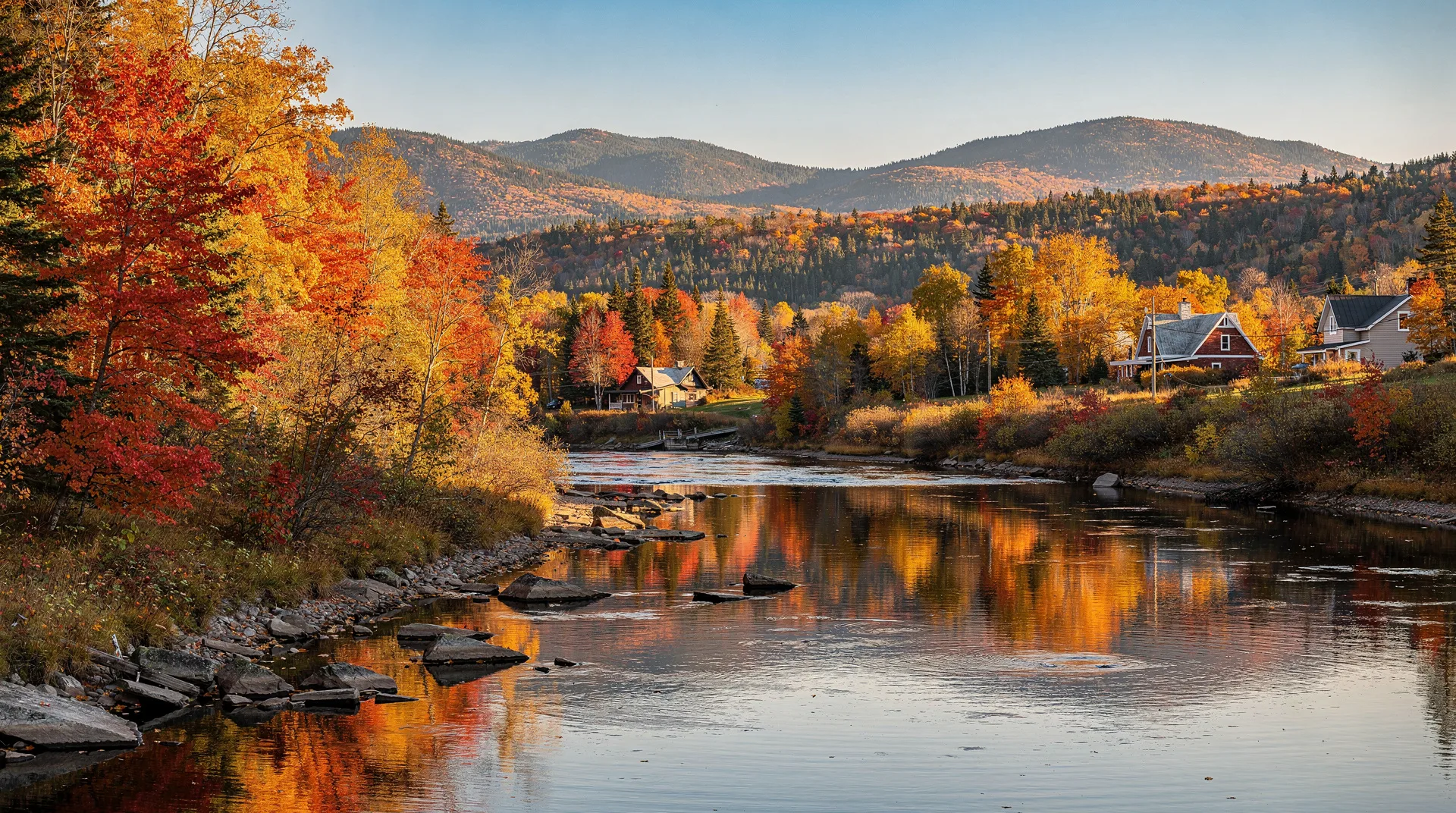
October arrives in Quebec like a painter who has been given a limitless palette. The hardwood forests — sugar maple, yellow birch, trembling aspen — ignite in reds, oranges, and golds that seem too vivid to be real. The St. Lawrence lowers into its autumn mood, the air carries a sharp clarity that summer never quite manages, and the province’s distinctive French-speaking culture settles into a slower, warmer rhythm as harvest season reaches its crescendo.
For visitors who have the flexibility to travel outside the July-August peak, October in Quebec offers a genuinely exceptional experience. This guide covers the timing, the locations, and the specific events that make the month worth planning around.
| At a glance | |
|---|---|
| Where | Charlevoix, Mauricie, Laurentians, Eastern Townships, Quebec City, Lanaudière |
| Cost | hotel rates roughly 20-30% below summer peak, except Thanksgiving weekend |
| Time needed | a long weekend for one region; a week for foliage plus cranberry harvest and geese |
| Getting there | fly into Montreal (YUL) or Quebec City (YQB); a rental car is close to essential for the rural regions |
| Best time | first two weeks of October for the broadest foliage peak |
Fall foliage in October: timing and where to go
Quebec’s fall foliage season is one of the most spectacular in North America. The province’s vast coverage of sugar maple — the leaf that appears on the Canadian flag — produces a colour display of unusual intensity. Understanding when the peak occurs and where to position yourself is the most important planning decision for an October trip.
The colour calendar: north to south, early to late
Foliage follows temperature, and temperature in Quebec follows elevation and latitude. This gives October travellers a predictable colour calendar:
Late September to early October: The Laurentians north of Montreal (Mont-Tremblant, Saint-Sauveur corridor) and the regions of Charlevoix and Saguenay–Lac-Saint-Jean hit peak colour first. If you are travelling in the last week of September or the very first days of October, position yourself in these northern zones.
First two weeks of October: The sweet spot for most visitors. The Eastern Townships (Cantons-de-l’Est) southeast of Montreal peak in this window, along with the Mauricie region and the Quebec City surroundings. The Plains of Abraham in Quebec City take on a golden tone that frames the 17th-century architecture magnificently.
Mid to late October: The Montérégie flatlands and the lower St. Lawrence valley are still showing colour, but much of the province’s interior has peaked. Late October offers bare-branch views and a more austere autumn beauty. Montreal’s island maples — particularly in Mont-Royal Park — hold their colour well into mid-October.
For real-time colour reports, Quebec’s provincial parks system (Sépaq) publishes weekly foliage updates that are reliably accurate.
Best viewing routes
Route des Hauts-Plateaux, Charlevoix: Highway 138 following the St. Lawrence from Quebec City northeast toward Baie-Saint-Paul is arguably the finest fall drive in the province. The road winds along cliffs above the river as the hillside forests turn, with the broad St. Lawrence providing a dramatic backdrop. The village of Baie-Saint-Paul itself — an artists’ colony for more than a century — is worth an afternoon regardless of the foliage season.
Parc national de la Mauricie: Located midway between Montreal and Quebec City, Mauricie is one of Quebec’s most accessible national parks and one of its finest for fall colour. The park’s interior lakes — Lac Wapizagonke is the showpiece — reflect the surrounding hillsides in perfect mirror images on calm October mornings. Canoe rentals are available through mid-October. See our Mauricie national park guide for trail and paddling details.
Mont-Tremblant and the Laurentians: The pedestrian village at the base of Mont-Tremblant resort is framed by some of Quebec’s most photogenic foliage. The gondola to the summit provides panoramic views over the Laurentian plateau in full colour. The road from Saint-Jérôme north through Saint-Sauveur and Sainte-Adèle passes through a near-continuous corridor of maples.
The Eastern Townships loop: Highway 10 east from Montreal, then south through Bromont, Knowlton, and Sutton before looping back through Sherbrooke — this circuit covers the rolling farmland and vineyard country of the Cantons-de-l’Est at its autumn best. The region’s covered bridges and white-steepled churches add a pastoral quality that feels distinctly different from the wilder northern foliage regions.
Book a Montreal fall foliage day tour to the Laurentians or Eastern TownshipsCranberry harvest in the Lanaudière region
One of October’s most photogenic and underrated experiences is the cranberry harvest in Quebec’s Lanaudière region, approximately 90 minutes north of Montreal. Quebec is the largest cranberry-producing province in Canada, and the Lanaudière bogs reach their peak harvest colour in early to mid-October.
How the harvest works
Cranberries are harvested using the wet-harvest method: the bogs are flooded and the berries — which float — are corralled into dense red masses that cover the water surface. Seen from above or from the bog’s edge, a flooded cranberry field in full harvest is an extraordinary sight: an undulating carpet of deep crimson berries stretching to the treeline.
Several farms in the region welcome visitors during harvest season, typically running from late September through mid-October depending on the year’s growing conditions. The Centre de la Cranberry in Saint-Louis-de-Blandford offers public harvest viewing and sells fresh cranberries directly. Some farms allow visitors to don waders and enter the flooded bogs — a uniquely tactile experience.
Practical logistics
The Lanaudière cranberry region is best visited by car as farms are spread across rural areas between the towns of Berthierville, Lanoraie, and Saint-Thomas. Allow a full day from Montreal: drive north to the bogs in the morning, visit one or two farms, then return via Joliette (the regional capital, with good restaurants) or continue north to Rawdon for fall foliage walks.
The harvest timing varies by two to three weeks depending on the growing season. Contact the regional tourism office (Tourisme Lanaudière) in September for that year’s harvest forecast before finalising dates.
Snow geese migration along the St. Lawrence
The snow geese migration is one of Quebec’s most underappreciated wildlife spectacles. Twice a year — spring and fall — hundreds of thousands of greater snow geese funnel along the St. Lawrence River corridor in a migration that has been called one of the most dramatic bird concentrations in North America.
The October migration
The fall migration through Quebec typically begins in late September and runs through October. The birds move south from their Arctic breeding grounds on Baffin Island and Bylot Island, staging in enormous flocks along the south shore of the St. Lawrence before continuing toward the Atlantic coast wintering grounds in Virginia and the Carolinas.
The numbers are staggering. A single staging area can hold 200,000 to 500,000 birds simultaneously. When the flock rises — triggered by a disturbance or a change in wind — the sky fills with white wings and the sound carries for kilometres.
Best viewing locations
Cap-Tourmente National Wildlife Area: Located 45 kilometres northeast of Quebec City on the north shore of the St. Lawrence, Cap-Tourmente is the primary staging area for the greater snow goose population. The tidal flats provide ideal feeding conditions (the geese feed on bulrush roots), and the reserve’s observation platforms put visitors within close viewing distance of truly massive concentrations. Environment Canada manages the reserve and provides excellent interpretive facilities. October mornings — particularly in the first two weeks — offer the best combination of bird numbers and activity.
Baie-du-Febvre (Baie-Saint-François): On the south shore of the St. Lawrence between Montreal and Quebec City, this shallow bay attracts comparable numbers of geese and offers a different viewing perspective. The flat agricultural fields around the bay are also used for feeding, meaning geese can be seen in the surrounding farmland as well as on the water.
Book a Quebec City nature and wildlife day excursion along the St. LawrenceOctober weather in Quebec
October weather in Quebec divides sharply between the first and second halves of the month.
| Region | Early October highs | Late October highs | Precipitation |
|---|---|---|---|
| Montreal | 12–16°C | 5–10°C | Rain likely; occasional early snow late month |
| Quebec City | 10–14°C | 3–8°C | Mix of sun and rain; frost at night |
| Charlevoix | 8–13°C | 2–7°C | Fog possible on river; cold nights |
| Laurentians | 8–12°C | 1–6°C | Early snow possible at higher elevations |
| Eastern Townships | 10–15°C | 4–9°C | Generally drier than Quebec City corridor |
The key practical point: early October (first two weeks) offers comfortable daytime temperatures for outdoor activity. By late October, evenings are cold, and the higher-elevation regions can see their first snow. A warm mid-layer, waterproof outer jacket, and warm hat cover the full October range.
Events and festivals in October
Festival des couleurs, Mont-Tremblant: One of Quebec’s most popular fall events, running weekends through early October. Music, local food, and artisan markets in the pedestrian village at the base of the ski mountain.
Fête des vendanges Magog-Orford, Eastern Townships: Quebec’s largest wine harvest festival, held in Magog in late September and early October. The region’s growing number of vineyards (over 140 in the province) produce creditable whites and ice wines.
Grande Foire de la Citrouille, Île d’Orléans: The island in the St. Lawrence just downstream from Quebec City celebrates harvest season with a pumpkin festival in early October. Île d’Orléans itself — an agricultural island famous for strawberries, maple syrup, and cheeses — is worth a half-day at any time in fall.
Nuits d’Afrique autumn edition (Montreal): The world music festival extends its season with autumn programming in October, bringing live performances to Montreal’s club circuit.
Practical tips for October in Quebec
Book accommodation early for peak weekends: The Thanksgiving long weekend (second Monday of October) is the single busiest weekend in the Laurentians and Eastern Townships. Mont-Tremblant fills completely. If you are targeting early-October foliage peak, book at least six to eight weeks ahead.
Morning light is essential for photography: Fall colour photographs best in the two hours after sunrise and the hour before sunset. The midday light flattens the colours. Plan driving routes to position yourself near viewpoints at these times.
Maple syrup at the source: October is not maple season (that runs late March to April), but many sugar shacks in the Laurentians and Beauce region are open year-round for educational visits. See our Quebec sugar season guide for details on the spring experience.
Whale watching transitions: October is still technically within the whale watching season on the St. Lawrence in the Tadoussac area, but numbers begin to decrease as September transitions to October. Early October offers the last good chances; by mid-October most operators have concluded the season. See our Quebec whale season guide for full timing information.
Driving conditions: Quebec’s winter tire law comes into force on December 1, so October driving does not require snow tires. However, late October can bring early snow particularly in the Laurentians and Charlevoix highlands — carry an ice scraper and check road conditions via Quebec’s 511 service before departing on any highland route.
Where to stay in October
Quebec City: The Old City hotels (Fairmont Le Château Frontenac being the landmark option; boutique alternatives include Auberge Saint-Antoine and Hôtel 71) are well-positioned for walks through the historic district in fall colour. Rates in October are typically 20–30% below summer peak.
Charlevoix: Baie-Saint-Paul has excellent boutique accommodation including La Maison Otis. Closer to the whale watching area, Tadoussac’s historic Hôtel Tadoussac is worth considering for an early October stay before the season fully closes.
Laurentians: Mont-Tremblant’s pedestrian village has a wide range of hotel and condo accommodation. The Fairmont Tremblant remains the area’s most elegant option; the Hôtel Quintessence on Lac Tremblant is smaller and more intimate.
Montreal: For a city base from which to day-trip to the Eastern Townships or Laurentians, Montreal’s Plateau-Mont-Royal neighbourhood has excellent boutique hotels and the city’s best independent restaurant scene.
Is October worth building a trip around?
October rewards visitors who want the strongest combination of scenery, wildlife and food culture in Quebec’s calendar, all at below-peak prices — the trade-off is cooler, more variable weather than July or August and a genuine need to book ahead for the Thanksgiving long weekend. For a shorter, foliage-only trip, our 7-day Quebec itinerary or the Charlevoix 4-day escape both work well built around the first two weeks of the month.
Related guides
- Where to see Quebec fall foliage: Charlevoix, Mauricie and Laurentians week by week
- Quebec whale season: month-by-month guide to the St. Lawrence
- 7 days in Quebec: Montreal, Quebec City and a day in Charlevoix
- Charlevoix 4-day foodie escape
- Quebec in fall (broader overview)
- Quebec fall itinerary, 7 days
Frequently asked questions about Quebec in October: Peak Fall Foliage, Cranberry Harvest and Snow Geese
When exactly does fall colour peak in Quebec?
Peak colour in Quebec varies by region and by year. As a general guide: the Laurentians and Charlevoix peak in late September to the first week of October; Quebec City and Mauricie peak in the first two weeks of October; and the Eastern Townships and Montreal surroundings peak in mid-October. The provincial parks system publishes weekly foliage reports starting in mid-September. Track these rather than relying on fixed dates, as the peak can shift by one to two weeks in any given year.
Are there any geese viewing tours from Quebec City?
Cap-Tourmente is 45 kilometres from Quebec City and fully accessible by rental car. Several tour operators in the city offer guided half-day excursions to the wildlife area during migration season in both spring and fall. The reserve itself provides excellent self-guided viewing infrastructure, and the interpretive centre explains the migration biology clearly. Early morning visits (the reserve opens at dawn during peak migration) offer the most dramatic activity.
Can I combine fall foliage and whale watching in one October trip?
Early October (the first week, ideally) gives the best chance of combining both. The Charlevoix and Tadoussac area delivers coastal fall foliage on the drive northeast from Quebec City, and whale watching season in Tadoussac typically runs through late September and into early October depending on the year. By mid-October, most whale watching operators have concluded their season. A 7-day Quebec itinerary built around Quebec City, Charlevoix, and Tadoussac covers both experiences at the optimal window.
Is the cranberry harvest in Lanaudière worth a day trip from Montreal?
Yes, for visitors who enjoy a distinctive photo opportunity and don’t mind a rural drive. The flooded bogs turning crimson are unlike anything else on a typical Quebec itinerary, and Saint-Louis-de-Blandford’s Centre de la Cranberry offers reliable public viewing. Pair it with a stop in Joliette or Rawdon to make a full day of it, as covered above.