4 Days in Charlevoix: The Perfect Quebec Foodie Escape
Overview
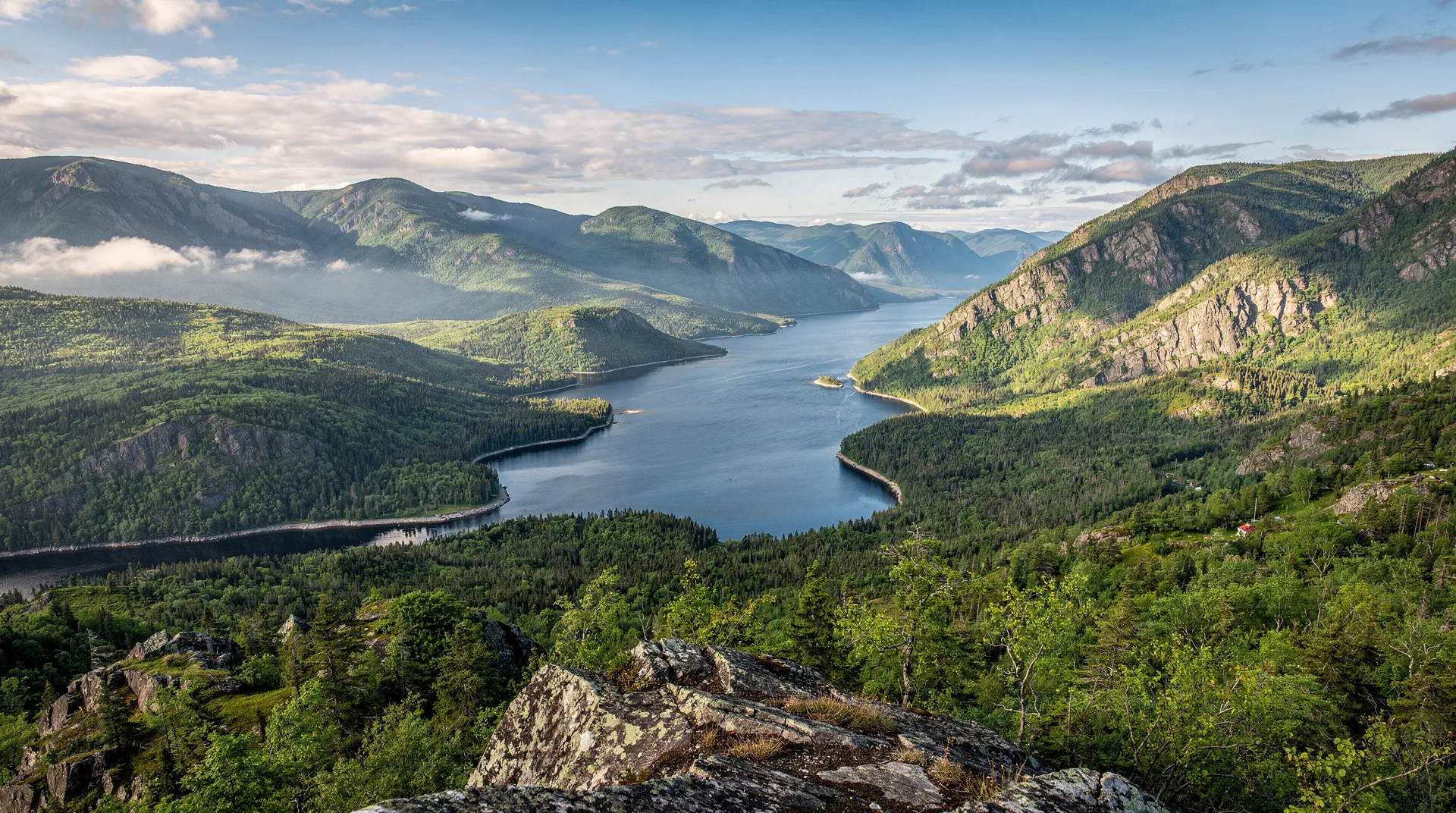
Charlevoix is Quebec’s most complete food destination. The region — occupying a meteor impact crater on the north shore of the St. Lawrence, approximately 100 kilometres northeast of Quebec City — has developed one of the most coherent local food systems in Canada: lamb from the hillside farms, cheese from the small fromageries, strawberries and heritage vegetables from the coastal plateaux, and a restaurant scene concentrated in Baie-Saint-Paul that rivals much larger cities.
This four-day itinerary treats Charlevoix as the destination rather than a day trip. It includes the coastal drive on Route 362, a day excursion to Tadoussac for whale watching, a proper visit to the fromageries and cheese producers, and enough time to simply be in one of Quebec’s most beautiful landscapes. It suits couples, friends travelling together, and anyone who travels for food, scenery, and the pleasure of slowing down.
A car is essential. All the interesting places in Charlevoix are spread across the crater landscape; public transport covers only the main towns. The distances are short — the Charlevoix circuit from Baie-Saint-Paul to Tadoussac and back is approximately 200 kilometres — but the roads reward slow driving.
At a glance
Where: Baie-Saint-Paul, La Malbaie and Tadoussac, on Quebec’s north shore roughly 100-200 km northeast of Quebec City Cost: around CAD $1,080-4,050 per person depending on comfort level (see budget table below) Time needed: 4 days is enough for the core loop; add a day for a Tadoussac overnight or the Gaspésie extension Getting there: rental car from Quebec City (about 1.5 hours to Baie-Saint-Paul); no car-free option covers the region properly Best time: July-August for full services and whale watching, late September to early October for fall colour, winter for Le Massif skiing
Day-by-day summary
| Day | Location | Theme |
|---|---|---|
| 1 | Baie-Saint-Paul | Arrival, galleries, first dinner in Charlevoix |
| 2 | Route 362 coastal drive and La Malbaie | The scenic loop, fromageries, Manoir Richelieu |
| 3 | Tadoussac whale watching | Full day on the St. Lawrence, Saguenay Fjord |
| 4 | Baie-Saint-Paul and cheese shopping | Slow morning, cheese, departure |
Day 1: Baie-Saint-Paul — arrival and the artistic soul of Charlevoix
Baie-Saint-Paul is 100 kilometres northeast of Quebec City on Route 138. The drive — through the dramatic descent into the crater landscape, with the first view of the St. Lawrence and the surrounding hills — takes approximately 1.5 hours. The moment the road crests the edge of the ancient impact crater and drops into the valley below Baie-Saint-Paul is one of the finest arriving moments in Quebec travel.
The town has been an artists’ colony since the 19th century — painters, printmakers, and ceramicists have been drawn here by the landscape for over a hundred years. This heritage shows in the density of galleries concentrated along Rue Saint-Jean-Baptiste and the surrounding streets. The Musée d’art contemporain de Baie-Saint-Paul is the institutional anchor, with a permanent collection focused on Quebec contemporary art and particularly the Charlevoix landscape tradition.
Afternoon: Walk the historic core and browse the galleries without agenda. The Galerie Bernard Chaudron (handcrafted pewter objects, a Charlevoix speciality) and the Centre d’art de Baie-Saint-Paul are both worth time. The view from the Route 362 belvedere above the town — looking over the crater valley toward the St. Lawrence — is essential for orienting yourself in the landscape.
Where to stay: La Muse (a boutique hotel and gallery in one, with excellent breakfasts and a garden terrace — the ideal Charlevoix base), or the Hôtel Le Germain Charlevoix (the region’s most design-forward hotel, built into a heritage farm building on the edge of town, with a notable breakfast spread). For a more budget-conscious option, Auberge La Maison Otis in the town centre is comfortable and well-positioned.
First dinner in Charlevoix: Reserve a table at Le Saint-Pub for the first night — a Baie-Saint-Paul institution with a strong local beer programme and menu built around Charlevoix ingredients. The poutine with local cheese curds (from Fromagerie du Presbytère) is the version against which all others should be measured. For a slightly more formal introduction to Charlevoix cooking, La Cuisine restaurant has a longer-running reputation for quality.
Day 2: Route 362, the fromageries, and La Malbaie
This is the day to drive Route 362 — the coastal road that runs 40 kilometres from Baie-Saint-Paul northeast to La Malbaie, hugging the clifftop above the St. Lawrence and passing through some of the most beautiful rural landscape in Quebec.
Morning — cheese and farm visits:
Begin the morning with a visit to Fromagerie du Presbytère in Clermont (approximately 25 kilometres from Baie-Saint-Paul inland on Route 138). This is one of Quebec’s most celebrated small-scale fromageries — producers of Le Migneron de Charlevoix (a washed-rind semi-soft cheese that is perhaps the most famous Charlevoix cheese), Victor et Berthold, and several other seasonal cheeses. The shop is open to visitors and sells the full range alongside other regional products. Tastings are available; buy generously, as these cheeses are not easily found outside the region. If you prefer a guide to handle the route, you can browse guided tours in Charlevoix.
La Maison d’affinage Maurice Dufour in Baie-Saint-Paul (on the Route 362 side road toward Les Éboulements) produces the equally celebrated Migneron alternative — two competing producers of essentially similar cheese styles is a Charlevoix gift to food travellers.
Late morning — the Route 362 coastal drive:
Take Route 362 east from Baie-Saint-Paul. The road climbs above the town and immediately opens onto panoramic views over the St. Lawrence. The sequence of villages and viewpoints en route — Les Éboulements (elevated views over the crater interior), Saint-Joseph-de-la-Rive (a riverside village with a traditional paper mill and the ferry to Île aux Coudres), Île aux Coudres itself (optional detour by ferry for a 26-kilometre island circuit) — makes for a natural half-day at an exploratory pace.
Île aux Coudres detour (optional): The small island in the St. Lawrence, accessible by free ferry from Saint-Joseph-de-la-Rive (15 minutes), has its own cider house (Cidrerie et Verger Pedneault, with apple varieties grown here for over a century), traditional windmills, and a relaxed atmosphere that rewards a three-to-four-hour visit.
Afternoon — La Malbaie and the Manoir Richelieu:
La Malbaie, the largest town in Charlevoix, has a commanding position above the river with the clifftop Manoir Richelieu as its centrepiece. The Manoir — a dramatic Norman château built in 1929, the current building replacing an earlier resort — is worth visiting even without staying: the terrace bar above the river is one of Charlevoix’s finest vantage points, particularly in late afternoon light.
The Casino de Charlevoix (within the Manoir complex) is one of Quebec’s government-operated casinos — not an essential stop, but notable for its setting.
Dinner in La Malbaie or on the way back: Chez Truchon in Saint-Hilarion is worth the slight detour inland — a small farmhouse restaurant serving a regularly changing menu based entirely on local producers. Reserve in advance; it seats approximately 20 covers and fills quickly in summer. Alternatively, the Manoir Richelieu’s dining room provides the most formal Charlevoix experience.
Day 3: Tadoussac — whale watching and the Saguenay Fjord
Drive northeast from Baie-Saint-Paul on Route 138 toward Tadoussac — approximately 90 kilometres, 1.5 hours. The road passes through La Malbaie and continues into the eastern Charlevoix, growing wilder as it approaches the Saguenay.
The free car ferry at Baie-Sainte-Catherine (a 10-minute crossing at the mouth of the Saguenay Fjord) is a moment worth savouring — the fjord mouth here is dramatic, with cliffs rising steeply on both sides, and the tidal mixing of fjord and river water creates surface turbulence visible from the deck.
Tadoussac: The village, established as a trading post in 1600 (the oldest permanent European trading post in North America north of Florida), sits on a small bay at the confluence of the Saguenay and St. Lawrence. The old Chapelle de Tadoussac (a tiny wooden chapel built in 1747, the oldest wooden church in Canada) and the Hudson’s Bay trading post replica provide historical anchors.
Whale watching departure: Book a morning cruise (departing 9am or 10am) from either Croisières AML (large vessel, 2 to 3 hours) or one of the smaller zodiac operators. The morning calm often produces better whale photography conditions than afternoon departures with higher wind. From June through September, blue whales, fin whales, minkes, and belugas are all potentially present within the marine park boundaries.
See our Quebec whale season guide for species timing detail and what to wear.
Afternoon — Saguenay Fjord exploration:
After the whale watching return, drive back across the ferry and into the Parc national du Fjord-du-Saguenay. The road along the fjord’s south bank (from Baie-Sainte-Catherine west toward L’Anse-Saint-Jean) provides dramatic cliff-top views into the 900-metre-deep fjord. The beluga viewing from the Pointe-Noire Parks Canada facility (approximately 3 kilometres from the ferry landing) often produces close encounters from shore — belugas pass through this point regularly on tidal rhythms, and the elevated viewing platform is excellent.
Return to Baie-Saint-Paul by early evening (approximately 2 hours from Tadoussac). Dinner back in Baie-Saint-Paul at your preferred restaurant from Day 1, or try Café des Artistes for a more casual evening.
Book a Tadoussac whale watching cruise or Saguenay Fjord excursionDay 4: Slow morning, cheese shopping, and departure
The final morning in Charlevoix is for everything left undone and the pleasure of not rushing.
Morning at the market: The Marché de solidarité régionale in Baie-Saint-Paul (open Saturday mornings; check current schedule for weekday options) assembles local producers selling directly — cheese, honey, preserves, charcuterie, and seasonal produce. This is the ideal place to stock up for the drive home.
Last walks: If the morning is clear, the trail at Cap-aux-Oies (Route 362 between Baie-Saint-Paul and Les Éboulements) provides a 3.5-kilometre walk above the river cliffs with consistently excellent views. The 45-minute walk is the best farewell to Charlevoix’s landscape.
Return logistics: Quebec City is 100 kilometres southwest on Route 138 — approximately 1.5 hours. For visitors heading to Montreal, allow 3.5 to 4 hours from Baie-Saint-Paul (Route 138 southwest to Quebec City, then Highway 40 west). Both airports are accessible as same-day returns from Charlevoix with comfortable timing.
What to bring home from Charlevoix:
- Le Migneron de Charlevoix or Cru du Clocher from the fromageries (vacuum-sealed for travel)
- Charlevoix lamb sausages (if driving directly home)
- Cidrerie Pedneault apple cider (available at the Île aux Coudres cider house or food shops in Baie-Saint-Paul)
- Local honey from the Miellerie du Havre producers
- Ceramics or prints from the Baie-Saint-Paul galleries
Budget breakdown
Per person, two people sharing, Canadian dollars.
| Category | Budget (CAD) | Moderate (CAD) | Comfort (CAD) |
|---|---|---|---|
| Accommodation (4 nights) | 400–550 | 700–1,000 | 1,200–1,800 |
| Food and drink | 250–350 | 450–650 | 700–1,100 |
| Car rental and fuel (4 days) | 300–400 | 450–600 | 600–800 |
| Whale watching cruise | 80–100 | 80–100 | 100–150 |
| Activities and admissions | 50–80 | 80–130 | 130–200 |
| Total per person | ~1,080–1,480 | ~1,760–2,480 | ~2,730–4,050 |
The Charlevoix ferry to Île aux Coudres is free. Forillon (if adding the Gaspésie extension) carries its own park admission.
Booking tips
La Muse and Hôtel Le Germain Charlevoix both book out for summer weekends significantly in advance. If targeting July or early August, book two to three months ahead. Fall colour weekends (first two weeks of October) also require advance booking.
Chez Truchon in Saint-Hilarion should be reserved as soon as the trip dates are confirmed — the small dining room fills completely for any summer weekend service.
Whale watching in Tadoussac in July and August: book the cruise before arriving in the region. Same-day bookings are often unavailable in peak season.
Variations
Combine with 7-day Quebec itinerary: Charlevoix fits naturally as the “day trip” extension in the 7-day Quebec itinerary, which compresses it to a single day from Quebec City. This 4-day version gives the region the time it deserves.
Extend to Tadoussac overnight: Staying one night in Tadoussac rather than returning to Baie-Saint-Paul allows an early morning walk to the beluga-frequented waters at Cap-de-Bon-Désir (Les Bergeronnes, 20 kilometres northeast) and a second whale watching departure if the first was foggy or wildlife-limited.
Fall foliage version: Charlevoix in late September and early October — when the hillsides above the St. Lawrence turn in the province’s earliest and most dramatic fall colour — is the most spectacular version of this itinerary. See the Quebec fall foliage guide for timing. The food experience is identical; the landscape is transformed.
Winter version: Le Massif ski mountain (northeast of Baie-Saint-Paul) opens in late November and runs through March. Charlevoix in winter — skiing in the morning, Manoir Richelieu spa in the afternoon, dinner at a Baie-Saint-Paul restaurant — is one of Quebec’s finest winter short-break combinations. The whale watching is unavailable, but the Saguenay Fjord in winter snow is extraordinary.
Getting to Charlevoix and getting around
Most visitors arrive via Quebec City (Jean Lesage International Airport or VIA Rail), then rent a car for the drive northeast on Route 138. There is no practical car-free way to see the fromageries, Route 362 villages, or Tadoussac on this itinerary’s timeline — public transit in the region is limited to a couple of daily intercity buses between the main towns. If you’re combining Charlevoix with a longer Quebec trip, see the Quebec 7-day itinerary or the Montreal to Quebec City guide for the wider routing.
Whale watching in Tadoussac depends on season — see the Quebec whale watching complete guide for month-by-month species detail beyond the summary already linked above. For a broader look at Quebec’s food identity beyond Charlevoix cheese and lamb, the Quebec food deep dive and Quebec maple season guide are useful companions if your trip extends into sugar shack season (roughly March-April).
Closing
Four days in Charlevoix is long enough to settle into the rhythm of the region rather than sampling it on the run. The food — the cheese above all, but also the lamb, the cider, the vegetables grown on high-altitude farms with a short, intense growing season — is genuinely world-class. The landscape is unforgettable. And the combination of quality and quiet — excellent restaurants, beautiful rooms, dramatic scenery, and none of the crowd pressure of Quebec City or Montreal in peak season — makes Charlevoix the kind of destination that inspires return trips before the first one is over.
For a longer exploration of everything the province has to offer, see the 14-day Quebec grand tour that extends from Montreal through Charlevoix all the way to the Gaspésie Peninsula.
Frequently asked questions about 4 Days in Charlevoix
Do I need a car to visit Charlevoix?
Yes. Public transit between the fromageries, Route 362 villages, and Tadoussac is limited to a couple of daily intercity buses at best. A rental car from Quebec City is the practical way to see this itinerary as described.
Is Charlevoix worth visiting outside whale watching season?
Yes — the fromageries, Route 362 drive, and Baie-Saint-Paul galleries operate year-round, and Charlevoix in winter (skiing at Le Massif, the Manoir Richelieu spa, snow on the Saguenay Fjord) is one of Quebec’s best winter short breaks. Only the Tadoussac whale watching cruises are seasonal (roughly May-October).