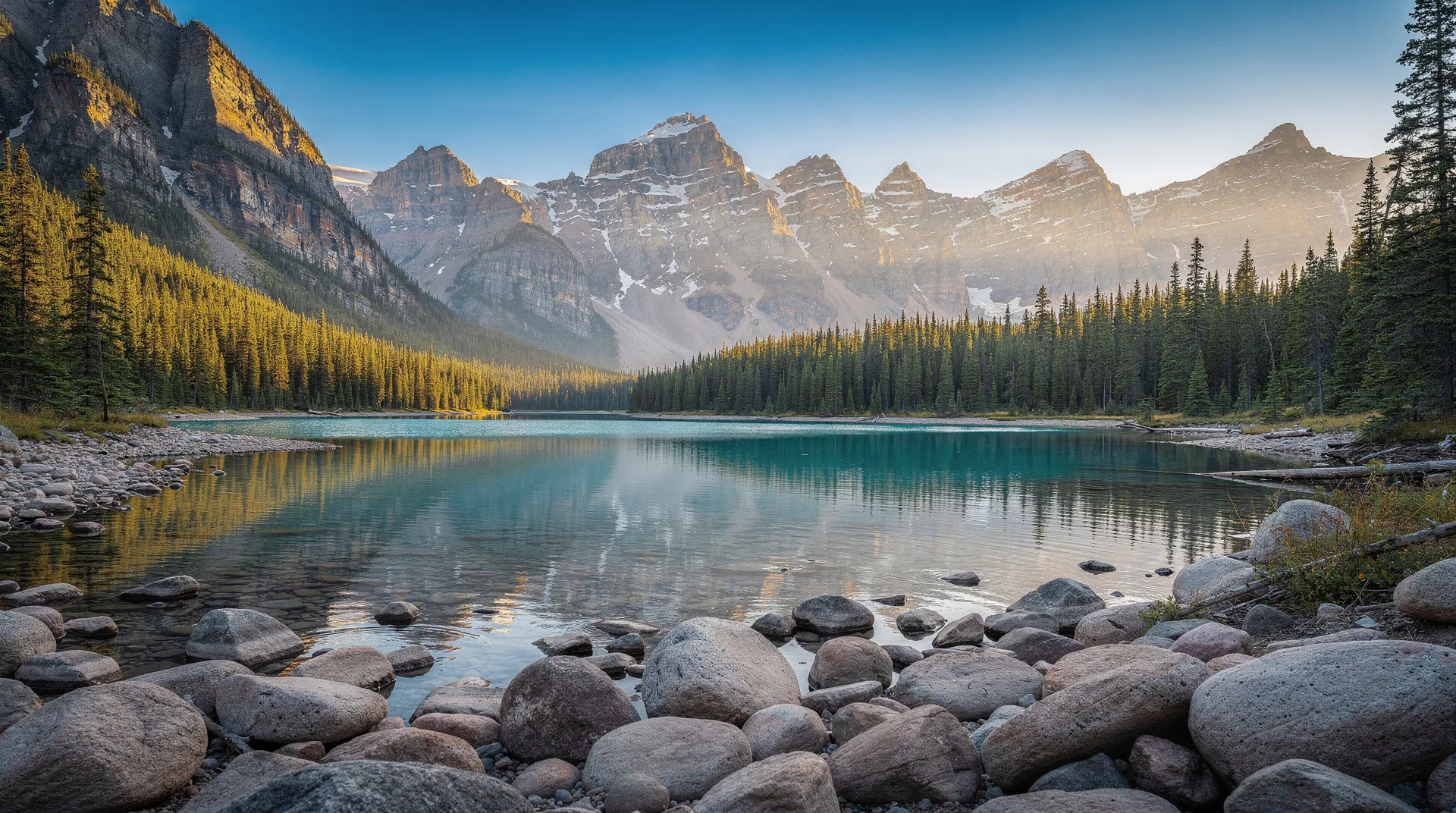
Quick facts
- Located in
- Mauricie, Quebec
- Best time
- Jun–Sep (canoeing/hiking) or Dec–Mar (winter camping)
- Getting there
- 150 km NE of Montreal; 130 km W of Quebec City via Hwy 40
- Days needed
- 2-5 days
Mauricie is the Quebec region that visitors skip on their way between Montreal and Quebec City, which is precisely why it is worth stopping for. The region occupies the middle ground — literally and figuratively — between Quebec’s two major cities, and its combination of industrial heritage, wilderness canoeing, and the layered history of Trois-Rivières gives it a character that is entirely distinct from either the Laurentians to the west or Charlevoix to the east.
The St. Maurice River — the Rivière Saint-Maurice — is Mauricie’s defining geographic feature. The river drains a watershed that extends 400 kilometres north into the boreal forest, and the towns and the history of the region are organised around its course. Trois-Rivières, at the river’s mouth where it meets the St. Lawrence, grew as a fur-trade post and became one of the most important industrial cities in 19th-century Quebec.
Shawinigan, 50 kilometres upstream, is where the harnessing of the Saint-Maurice’s hydroelectric power transformed both the river and Quebec’s industrial economy in the early 20th century. Further north still, the Parc National de la Mauricie preserves a section of the Laurentian Shield plateau where the river’s upper tributaries connect a network of lakes that is among the finest canoe-camping country in eastern Canada.
The region’s underdog status in Quebec tourism is partly a product of geography — it sits between more famous destinations — and partly a product of its own history. The industrial towns of Trois-Rivières and Shawinigan were not designed for tourism, and the transition from industrial city to cultural destination has been incomplete but genuinely interesting. For travellers who prefer depth over shine, Mauricie delivers consistently.
| At a glance | |
|---|---|
| Where | Between Montreal and Quebec City, along the Saint-Maurice River |
| Getting there | Highway 40; around 150 km / 1.5 hrs from Montreal, around 130 km / 1.5 hrs from Quebec City |
| Cost | Sépaq day-use/camping fees apply in the national park; Trois-Rivières and Shawinigan sights are mostly modest paid admissions |
| Time needed | 2-5 days depending on whether you add canoe camping |
| Best time | Late June to September for canoeing and hiking; December to March for winter camping and skiing |
Trois-Rivières: The Gateway City
Trois-Rivières is the urban anchor of Mauricie and one of the most historically significant cities in Quebec. Founded in 1634, it was the second permanent European settlement in what is now Canada, and its position at the confluence of the Saint-Maurice and the St. Lawrence made it one of the most important commercial points in New France. The historic old town, rebuilt after a devastating fire in 1908, retains a coherent streetscape of early 20th-century stone commercial buildings that gives it more architectural character than most Quebec cities its size.
The city has remade itself around culture and tourism over the past two decades, investing in museum infrastructure, a renovated waterfront, and a dining scene that reflects the culinary expectations of the Quebec City and Montreal visitors passing through. The Musée québécois de culture populaire — culture museum — and the Musée des Ursulines in the historic convent complex are the primary cultural institutions, but the broader historic quarter rewards extended walking.
The National Park: Canoe Country
Parc National de la Mauricie is the heart of the region’s outdoor life and one of the finest national parks in eastern Canada. The park’s 536 square kilometres protect a section of the Laurentian Shield plateau where the forest is still ancient enough to contain yellow birch and sugar maple trees hundreds of years old, and where the network of lakes is connected by portage routes that allow canoe campers to spend a week paddling without retracing their route.
The park’s loon population is one of the densest in Quebec — the animals’ calls define the sound of a summer evening on the interior lakes in a way that nothing else competes with. Moose, black bear, white-tailed deer, and beaver are commonly sighted. The fishing is excellent: walleye, pike, brook trout, and lake trout in the deeper lakes provide reliable sport for anglers with provincial licences.
Winter transforms the park into a cross-country skiing destination, with groomed trails and the option of overnight stays in heated refuges for those who want to engage with the Mauricien winter on its own demanding terms.
Book Quebec outdoor adventures and day trips from Montreal on GetYourGuideShawinigan and the Energy Heritage
Shawinigan grew from nothing to an industrial city in the span of a decade at the turn of the 20th century, powered by the hydroelectric potential of the Shawinigan Falls on the Saint-Maurice. The Shawinigan Water and Power Company — later Hydro-Québec’s predecessor — built the first large hydroelectric generating station in North America here in 1899, and the industrial complex that grew around it included aluminum smelters, chemical plants, and the paper mills that made Shawinigan one of Quebec’s wealthiest industrial communities.
The Cité de l’Énergie museum complex preserves this history — and actively dramatises it — on the site of the original power station. The observation tower offers views over the river and the industrial landscape; guided tours explain the technical and social history of Quebec’s hydroelectric development. The story of how Quebec harnessed its rivers is told with particular effectiveness at the place where it began.
Lac Sacacomie and the Wilderness Lodges
Lac Sacacomie represents the wilderness tourism dimension of Mauricie — a remote lake in the boreal forest north of the national park, accessible by a 30-kilometre forest road and providing the kind of isolation and natural beauty that is increasingly difficult to find within a few hours of major urban centres.
The Hôtel Sacacomie on the lake shore has built an international reputation as a wilderness lodge experience — a full-service hotel in a remote lake setting, attracting guests from Montreal and Quebec City who want genuine wilderness without forgoing comfort. The combination of canoeing, fishing, hiking, and wildlife observation around the lake with the lodge’s food and accommodation makes for a distinctly Mauricien experience.
When to Visit Mauricie
Late May to early June: Ice-out on the lakes. Fishing season opens for most species. The boreal forest greens rapidly. Black flies are active — insect repellent is non-negotiable.
July and August: Peak summer. Canoeing, camping, and swimming in the national park. Trois-Rivières’ Festival international de poésie (October) and other cultural events animate the city. The park campgrounds and canoe route campsites fill on weekends — Sépaq reservations are essential.
September and October: Fall colour in the maple forest of the national park is exceptional — among the best in Quebec for a wilderness colour experience. The mosquitoes and black flies are gone. Temperatures are cool and comfortable for hiking and paddling. The canoe routes are less crowded than in summer.
December to March: Winter camping, snowshoeing, and cross-country skiing in the national park. Ice fishing on the interior lakes. Trois-Rivières’ winter festivals including the famous Grand Prix de Trois-Rivières (summer) — check the specific event calendar for winter programming.
Getting Around Mauricie
A car is essential for exploring the region. Trois-Rivières is accessible by bus from Montreal and Quebec City, but the national park, Shawinigan, and Lac Sacacomie require a vehicle. Highway 40 connects Montreal (150 km) and Quebec City (130 km) to Trois-Rivières efficiently. From Trois-Rivières, Highway 55 north follows the Saint-Maurice River to Shawinigan and connects to the national park access roads.
Where to Eat and Stay
Trois-Rivières has the region’s best dining and accommodation infrastructure — several good hotel properties in the historic downtown and a restaurant scene that has been elevated by the cultural tourism investment of the past decade. For the national park, the Sépaq campgrounds are the primary accommodation; the park also operates rental chalets and ready-to-camp shelters.
Lac Sacacomie is anchored by the Hôtel Sacacomie, one of Quebec’s most acclaimed wilderness lodge experiences. Shawinigan has standard hotel accommodation and good access to both the Cité de l’Énergie and the national park’s southern sectors.
Book Quebec City and Saint Lawrence region tours on GetYourGuidePlanning a Mauricie Itinerary
A two-day introduction: day one in Trois-Rivières — historic quarter, waterfront, museum, and a good dinner — then day two in the national park with a day canoe and a hike. A three-day extension adds Shawinigan’s Cité de l’Énergie. A five-day wilderness trip builds around canoe camping in the national park with a night at Lac Sacacomie. Any of these fit comfortably within a Montreal-to-Quebec City road trip, using Mauricie as the overnight stop and regional exploration base between the two cities.
For deeper exploration of specific Mauricie destinations, see Trois-Rivières, Parc National de la Mauricie, Shawinigan et Cité de l’Énergie, and Lac Sacacomie.
How Mauricie compares to the Laurentians and Charlevoix
Travellers deciding where to base a Quebec countryside trip often weigh Mauricie against the Laurentians (closer to Montreal, more developed resort infrastructure around Mont-Tremblant) or Charlevoix (dramatic St. Lawrence coastal scenery, further from both cities). Mauricie’s advantage is genuine midpoint convenience combined with a national park that rewards multi-day canoe trips more than either alternative — see the Laurentians vs Eastern Townships guide for a broader regional comparison if choosing between Quebec’s countryside regions.
Practical planning notes
Sépaq (the provincial parks authority) manages reservations for Parc National de la Mauricie’s campgrounds, canoe-camping sites, and rental chalets — book well ahead for July and August weekends, when the popular interior lake sites sell out. Cell coverage inside the park is unreliable; download maps and let someone know your canoe route plan before heading into the interior. A Quebec national parks overview is useful for comparing Sépaq pass options if visiting more than one park on the same trip.
Frequently asked questions about Mauricie
Is Mauricie worth visiting if I’m short on time between Montreal and Quebec City?
Even a half-day stop is worthwhile — a walk through Trois-Rivières’ historic quarter or a short paddle in the national park’s Lac Monroe sector gives a real taste of the region. For the full experience, budget at least two days.
Do I need a canoe-camping permit for the national park?
Yes — all overnight canoe-camping sites and interior campsites in Parc National de la Mauricie require a Sépaq reservation and the standard park day-use fee is charged in addition to camping fees. Book through the Sépaq reservation system, ideally months ahead for peak summer weekends.