Canada in spring: cherry blossoms, whale arrivals and what to expect
Is Canada a good place to visit in spring?
Yes, if you choose the right region. April in Vancouver and Victoria brings cherry blossoms and mild weather; May is sugar shack season in Quebec; June sees icebergs in Newfoundland and the return of whales across all three coasts.
| At a glance | |
|---|---|
| Where | Region-dependent: BC (April), Quebec (March–April), Newfoundland/Atlantic (May–June) |
| Cost | Around 30–50% below summer accommodation rates |
| Time needed | 5–7 days per region; spring is not ideal for a single coast-to-coast trip |
| Getting there | Fly into Vancouver, Montreal/Quebec City, or St. John’s depending on which spring experience you want |
| Best time | Early April for cherry blossoms, late April for sugar shacks, late May–June for icebergs and whales |
Why spring is Canada’s most variable season
Canadian spring is not a single experience — it is a three-month transition that plays out completely differently across the country. In Vancouver cherry blossoms are peaking in early April; in Quebec lakes are still frozen. By early May Quebec sugar shacks are winding down and BC is into full wildflower season. By June whales have returned to all three coasts and the north is finally accessible.
Spring rewards travellers who understand the regional calendar and pick the right place for the right week. It can also produce some of the best travel value of the year — shoulder-season rates, minimal crowds, and experiences (cherry blossoms, sugar season, iceberg alley) that are genuinely seasonal.
When does spring actually arrive in Canada?
Vancouver and Victoria, BC: Spring starts in late February with plum and early cherry blossoms. April is the peak — full cherry bloom, mild temperatures (10-15°C), and outdoor activity resuming. May brings wildflowers and the beginning of whale-watching season.
Southern Ontario and Quebec: Mud season from mid-March to late April — snowmelt, flooded trails, grey landscapes. Late April to early May sees tulip displays (Ottawa), sugar shacks ending, and first green appearing. Mid-May onwards feels genuinely spring-like.
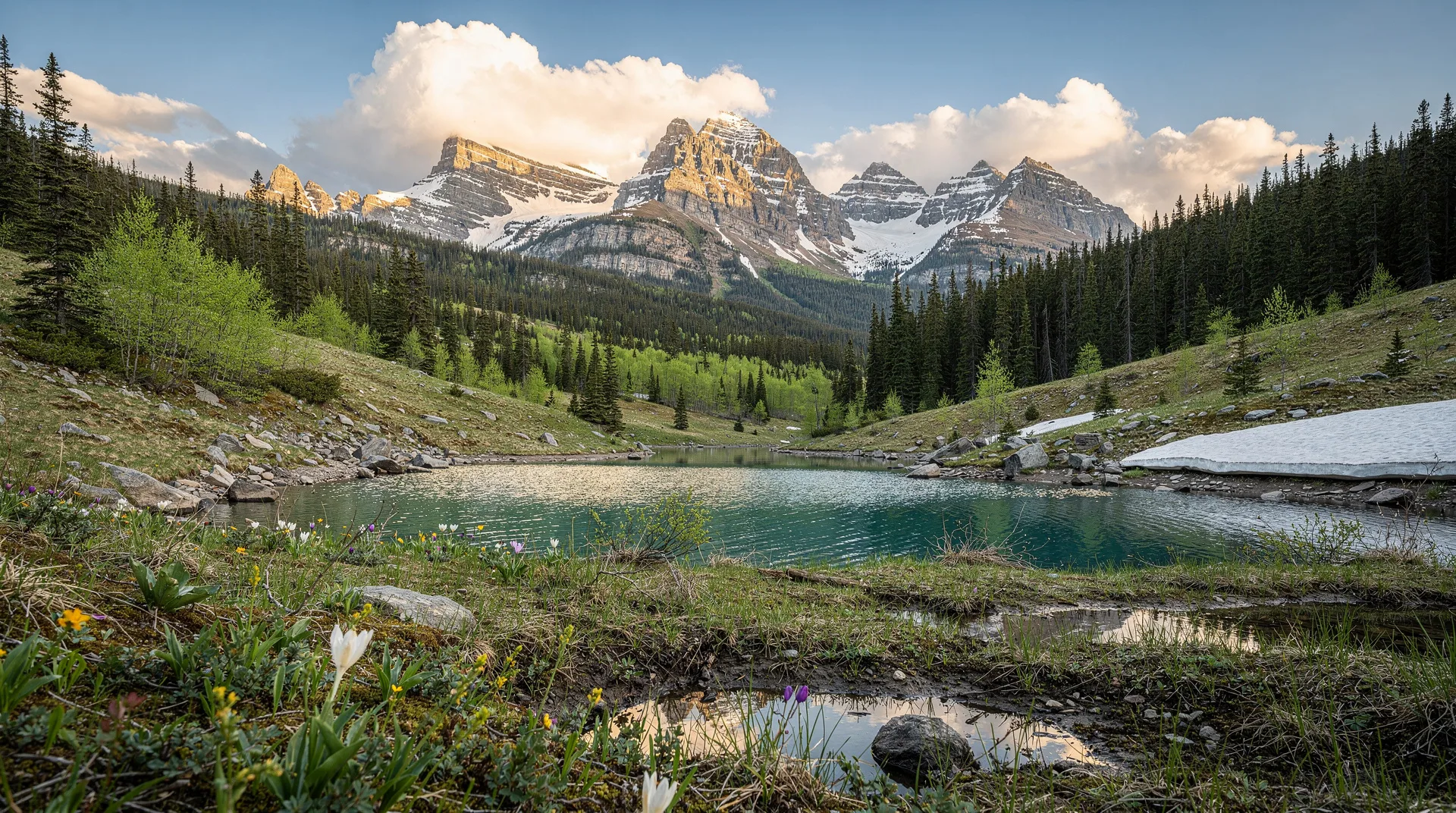
Canadian Rockies: Winter persists into April at elevation. Canyon ice walks end in late March. May sees valley bottoms opening but alpine trails remain snowbound until late June or early July. Bears emerge from hibernation in late April.
Atlantic Canada: Spring arrives late — full bloom of apple blossoms in Annapolis Valley in late May. June is when the region really opens up. Icebergs begin arriving along Newfoundland’s Iceberg Alley in late May.
The North: Spring is brief and wet, running May-June. Ice breakup on rivers is dramatic. Dempster Highway access resumes in June.
Signature spring experiences
Cherry blossoms in Vancouver and Victoria
Vancouver has over 43,000 ornamental cherry trees and celebrates the Vancouver Cherry Blossom Festival in late March and April. Peak bloom typically falls in the first two weeks of April, with the Queen Elizabeth Park and Van Dusen Botanical Garden among the best viewing locations. Victoria’s milder climate pushes bloom slightly earlier.
See the cherry blossoms BC guide for neighbourhood-by-neighbourhood timing.
Tulip Festival in Ottawa
The Canadian Tulip Festival (early to mid May) is a legacy of the Dutch royal family’s wartime refuge in Ottawa. Over one million tulips bloom across Commissioners Park and the Rideau Canal area — Ottawa’s defining spring event and a worthy overlap with Parliament Hill and the National Gallery.
Sugar shack season in Quebec
Cabanes à sucre run from late February to mid-April when maple sap is flowing. A traditional sugar shack meal — pea soup, ham, sausages, baked beans, pickled eggs, maple-glazed pork, sugar pie, and maple taffy on snow — is the quintessential Quebec spring experience. See sugar shacks Quebec and cabane à sucre guide.
Whale arrivals on three coasts
Spring is when whales return after winter absence:
- BC coast: Grey whale migration peaks along Tofino-Ucluelet in March-April. The Pacific Rim Whale Festival celebrates the return.
- St. Lawrence, Quebec: First belugas visible by late April, larger whales (minke, fin, humpback) return to Tadoussac by early June.
- Bay of Fundy and Newfoundland: Whales return from May onwards, with peak numbers in June-July.
See whale watching Canada for region-by-region timing.
Iceberg Alley, Newfoundland
Arctic icebergs drift down the Labrador Current and along Newfoundland’s east coast between late April and July. Peak viewing is late May through mid-June, when icebergs are abundant and coastal weather is improving. Best viewed from Twillingate, St. Anthony, and the Bonavista Peninsula. See iceberg viewing Newfoundland.
Bear emergence in the Rockies
Grizzlies and black bears emerge from hibernation in late April and May, often seen along roadsides feeding on early vegetation (dandelions, young grass). Banff, Kananaskis, and Jasper all offer high probability of spring bear sightings from the car. See wildlife watching Alberta.
Browse Vancouver spring tours and blossom experiencesWeather realities by month
March: Transitional. -10 to +5°C in central Canada, 5-12°C in Vancouver and Victoria. Melting snow, muddy trails inland.
April: 0-12°C in central Canada, 10-16°C in Vancouver. Rapidly warming. Cherry blossoms west, tulips appearing east.
May: 8-18°C across the southern country, 15-22°C in Vancouver and Toronto. Genuine spring weather. Pollen season begins. Bugs return to wilderness areas.
June (early): 15-25°C across the south. Full spring into early summer. Days lengthening significantly toward solstice.
Rain is common in all spring months. Layered clothing is essential.
Spring vs summer vs fall: which season fits your trip?
| Factor | Spring (Mar–Jun) | Summer (Jun–Aug) | Fall (Sep–Oct) |
|---|---|---|---|
| Prices | Lowest of the year, 30–50% below peak | Highest of the year | 15–25% below peak |
| Signature experiences | Cherry blossoms, sugar shacks, icebergs, whale arrivals | Festivals, full national-park access | Golden larches, fall colour |
| Weather risk | Highest — mud, rain, lingering snow at elevation | Lowest — most reliable | Moderate — early snow possible in the mountains by late season |
| Access | Many high-elevation trails and northern roads still closed | Everything open | Most things open, closures beginning late in the season |
| Best for | Budget travellers chasing a specific seasonal event | First-time visitors wanting guaranteed access everywhere | Hikers and photographers who can be flexible on dates |
See Canada in summer and best time to visit Canada for the full-year comparison.
Where to go in spring
For cherry blossoms and mild weather — BC
Spend 5-7 days in and around Vancouver and Victoria in April. Combine cherry blossoms with Stanley Park, Granville Island, Butchart Gardens, and early whale-watching season in Tofino.
For sugar shacks and French-Canadian culture — Quebec
March-April in Montreal and Quebec City. Multiple sugar shack day trips are easy to arrange. Combine with old Quebec walking, museum visits, and cabane à sucre lunches.
For tulips and heritage — Ottawa
Early to mid May. Ottawa Tulip Festival, Parliament Hill, Rideau Canal (snow-free, walkable), National Gallery, Canadian Museum of History. Pleasant city weather.
For icebergs and whales — Newfoundland
Late May through June. Iceberg Alley viewing combined with East Coast Trail hiking, St. John’s culture, and Gros Morne National Park (lower access until June).
For bear viewing — Canadian Rockies
Mid-May through early June. Shoulder season rates, bears visible from roads, hiking on valley-bottom trails. Avoid high alpine (still snowbound).
Avoid in spring
Northern Quebec, Yukon (mud season, bugs returning, some roads still closed), and high alpine Rockies before late June.
Find Montreal spring experiences and sugar shack toursPractical spring planning
Value season. April-May sees the lowest tourist prices of the year at most destinations. Hotel rates often run 30-50% below summer peak.
Gear for mud and rain. Waterproof shoes, waterproof jacket, and quick-dry pants are essential — especially for hiking outside BC.
Check what’s open. Many mountain trails, national-park amenities, and northern roads are still closed in April and May. Verify with Parks Canada and provincial agencies before travel.
Bugs. Black flies arrive in late May in Ontario and Quebec wilderness. Early spring (April) is largely bug-free.
Road conditions. Potholes are a serious spring hazard on rural Canadian roads. Drive carefully.
A suggested spring itinerary
Vancouver spring week (7 days, early April):
- Days 1-3: Vancouver — cherry blossoms, Stanley Park, Granville Island
- Day 4: Day trip to Whistler
- Days 5-7: Victoria and the Saanich Peninsula — Butchart Gardens, gardens, Inner Harbour
Quebec spring week (7 days, late March–early April):
- Days 1-3: Montreal — sugar shack day trip, Old Montreal, Mile End
- Days 4-6: Quebec City — Old Quebec, Île d’Orléans sugar shacks, Montmorency Falls
- Day 7: Charlevoix or Trois-Rivières en route back
Frequently asked questions about Canada in spring: cherry blossoms, whale arrivals and what to expect
Is spring a good time to visit Canada?
For specific experiences — cherry blossoms, sugar season, icebergs, whale arrivals, shoulder-season value — yes. For a general “see Canada” trip, summer or fall remain stronger.
What is the weather like in Canada in April?
Highly regional. Vancouver 10-15°C and sunny; Toronto 5-12°C and showery; Banff 0-10°C with lingering snow; Newfoundland still cold (0-8°C). Layers essential.
Can I see northern lights in spring?
Yes — March is an excellent aurora month in Yukon and NWT, with clear skies and slightly milder temperatures than mid-winter. April becomes less reliable as nights shorten.
Are Canadian national parks open in spring?
Parks themselves are open year-round; services, visitor centres, and high-elevation trails open progressively from mid-May through July. Verify specific trails and campgrounds before travel.
Is spring cheaper than summer?
Yes — typically 30-50% cheaper on accommodation, sometimes more on flights. Shoulder-season pricing is one of spring’s main advantages.
Is May a good month for the Canadian Rockies?
Late May is good for valley-bottom attractions (Lake Louise shoreline, Banff town, wildlife viewing) but most high alpine trails remain snowbound. For full Rockies access wait until late June.
Where are the cherry blossoms in Canada?
Primarily Vancouver and Victoria, BC, with peak bloom typically in the first two weeks of April. Some cherry blossoms also appear in Toronto’s High Park (late April to early May) but at a much smaller scale.
Is spring a good time to see the Canadian Rockies?
Only partially. Valley-bottom attractions around Banff and Lake Louise are accessible from mid-May, but most high alpine trails stay snowbound until late June or July. Bear activity also increases as animals emerge from hibernation, so trail safety awareness matters more than in summer. For full Rockies access, wait for summer.
What should I pack for a Canada spring trip?
Waterproof shoes or boots, a waterproof jacket, quick-dry layers, and a warm mid-layer for cool mornings and mountain regions. Conditions swing widely by region and week, so layering is more important than in any other season. See the full packing list guide.