Quick facts
- Best time
- December to March (ski) or July to September (summer)
- Days needed
- 2-4 days
- Languages
- French and English
- Getting there
- 1.5 hrs from Montreal
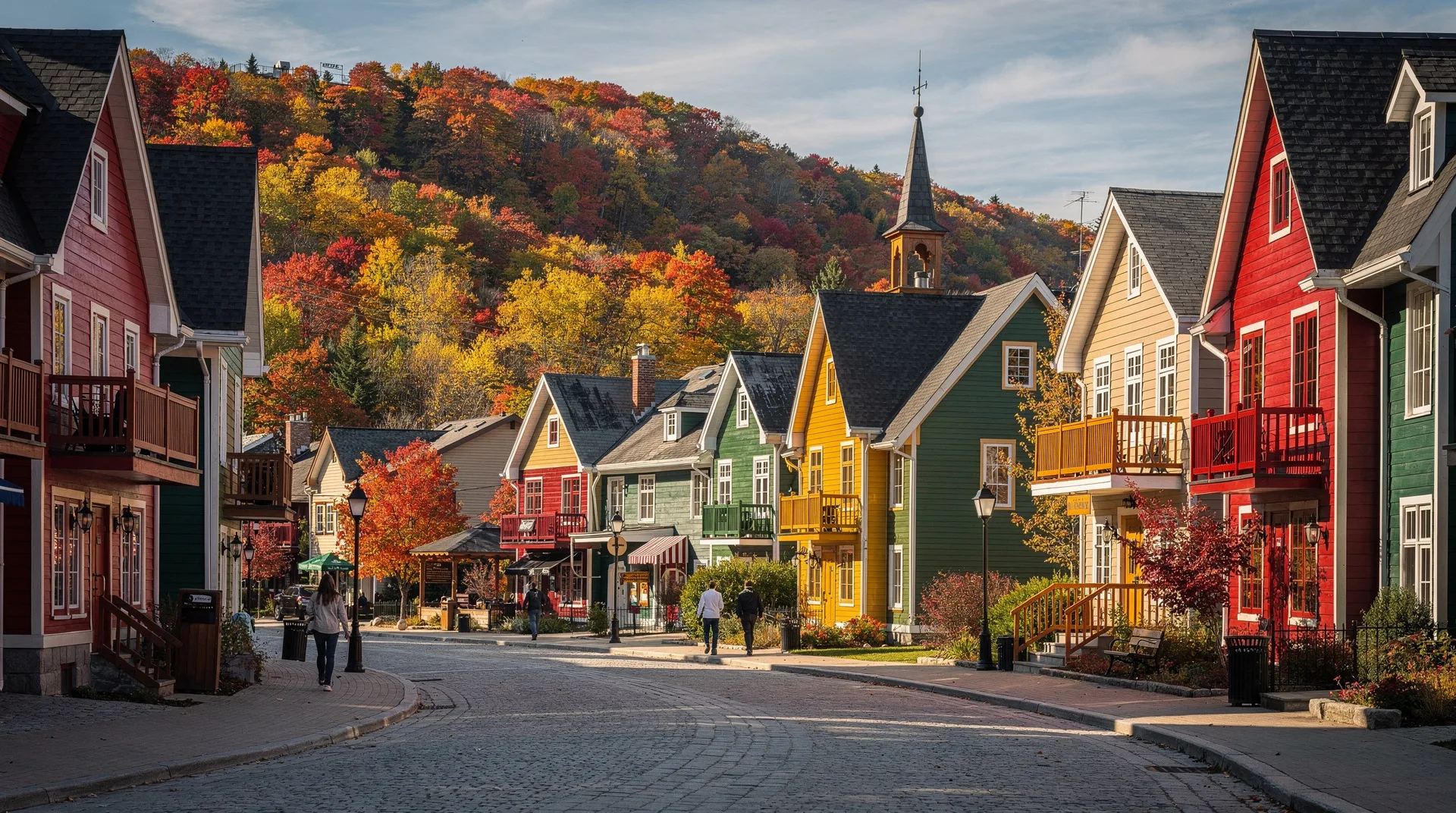
Mont-Tremblant is Quebec’s signature resort destination — a pedestrian village at the base of a 615-metre mountain in the Laurentians that has been developed over the past three decades into one of the finest ski resort villages in North America. The village’s European aesthetic, designed in the manner of a Quebecois mountain town with brightly coloured buildings climbing a hillside above a frozen lake, is artificial in the sense that it was conceived and built as a resort community, but is genuinely charming in the result. On a February morning when fresh snow has fallen overnight and the ski mountain is lit in low winter sun, Mont-Tremblant delivers on every promise its marketing makes.
But ski resort is only part of the story. The broader Mont-Tremblant region — the Laurentian Mountains stretching north of Montreal — is one of Quebec’s most beloved outdoor recreation landscapes in all seasons. The national park that surrounds the resort encompasses 1,510 square kilometres of Laurentian Shield lakes and forest. In summer, the mountain becomes a mountain biking destination, the lake fills with paddleboards and sailing boats, the hiking trails open, and the village restaurants fill with cyclists and walkers as readily as skiers.
| At a glance | |
|---|---|
| Where | Laurentians, Quebec, around 140 km / 1.5 hrs north of Montreal |
| Cost | Lift tickets typically run around CAD 100-150/day in peak season; national park day-use fee is separate |
| Time needed | 2-4 days, more for a full ski week |
| Getting there | Autoroute 15 north by car; Limocar bus from Montreal’s Berri-UQAM terminal |
| Best time | December-March for skiing; July-September for hiking, biking and lake activities; October for fall colour |
The Laurentian Shield and its resort village
The Laurentians are ancient mountains — eroded to gentle rounded peaks and lake-filled valleys by glaciers over millions of years. They are not dramatic in the manner of the Rockies, but they have a different kind of beauty: soft forested hills, clear cold lakes, quiet rivers, and a French Canadian rural culture that predates the tourism industry by several centuries.
The ski resort itself — Tremblant ski resort, operated by Intrawest and then Alterra Mountain Company — has 96 runs on 645 hectares, a vertical drop of 645 metres, and a village complex at the base that is entirely pedestrian-friendly. The resort has been designed with considerable care: the village square, the church building (actually a hotel), the cafes and restaurants spread across multiple levels connected by outdoor staircases, and the gondola that lifts skiers and sight-seers from the village to the summit.
The town of Mont-Tremblant itself, separate from the resort village, is 5 kilometres away — a working Quebecois town with a market, local restaurants, and the older French-Canadian identity that preexists the resort.
Top things to do in Mont-Tremblant
Skiing and snowboarding
The ski mountain at Tremblant has 96 runs across four faces — the south side (facing the village, catching afternoon sun), the north side (shadowed and powder-retaining), and the two edges. The terrain suits intermediate skiers best, with a solid range of expert terrain and several groomed beginner areas near the base. The gondola from the village base runs to the summit in approximately 12 minutes.
The resort has invested heavily in snowmaking — over 1,000 snowguns cover most of the mountain, ensuring reliable coverage from mid-November through April in most years. Early season (November–December) and late season (March–April) offer the best deals on lodging and lift tickets. Christmas and February school break weeks are peak demand periods.
Browse Montreal and Quebec tours with access to the Laurentians and Mont-TremblantParc National du Mont-Tremblant
The national park surrounding the resort is one of Quebec’s oldest and largest — 1,510 square kilometres of Laurentian lake country with 400 lakes, the headwaters of several rivers, and an ecosystem that supports moose, black bears, wolves, and the full range of boreal forest species. The park is accessed from the Diable sector (nearest the resort) or the Saint-Donat sector to the south.
In summer, the park offers exceptional canoeing and kayaking — multi-day canoe routes crossing multiple lakes via portages in the Quebecois paddling tradition. The Lac Monroe and Lac Chat routes are accessible to beginners. Hiking trails cover the park’s interior, with the summit of Mont du Diable (elevation 933 metres) providing panoramic views. Wildlife watching is rewarding throughout the summer and fall — moose are frequently seen at lake edges at dawn.
Mountain biking in summer
When the snow melts, Tremblant’s ski trails become an increasingly developed mountain biking network. The gondola carries bikes to the summit and riders descend on purpose-built trails ranging from easy flow trails to technical expert lines. Over 100 kilometres of trail in the ski area and the adjacent national park make Tremblant one of Quebec’s premier mountain biking destinations. Bike rentals are available at the resort.
The pedestrian village
The resort village is worth exploring on its own terms as an architectural and urban design exercise. Walking from the lake level through the village square, past the restaurants and boutiques, up the staircases to the higher levels, and then to the gondola base — the gradual reveal of the mountain above and the lake below is well orchestrated. In winter, outdoor firepits burn throughout the village and live entertainment on the village square provides the apres-ski atmosphere. In summer, the same spaces become street festival venues and café terraces.
Lac Tremblant and outdoor water activities
Lac Tremblant stretches 16 kilometres south from the resort village — a classic Laurentian lake of deep cold water and forested shores. In summer, canoe and kayak rentals, stand-up paddleboarding, and sailing are available from the beach at the resort base. A scenic cruise on the lake is available for those preferring a passive option. If you would rather have a guide handle the logistics, you can compare guided tours in Mont-Tremblant and book ahead in peak season.
Fall colour and autumn hiking
The Laurentian fall colour season — typically peaking in the first two weeks of October — transforms the forested hills around Mont-Tremblant into a spectacular display of maple, birch, and aspen colour. The gondola to the summit provides an easy elevated viewpoint over the colour. Hiking in the national park during fall colour season, with the lake reflecting the reds and golds, is among the most beautiful experiences in Quebec.
Best areas in Mont-Tremblant
The pedestrian resort village at the ski mountain base is where most visitors spend their time — accommodation, restaurants, shops, and direct lift access.
Place Saint-Bernard at the base of the gondola is the social hub — the central square with performance space, outdoor firepits, and the best people-watching position.
Lac Tremblant beach below the resort provides summer water access and is a scenic boardwalk for walking year-round.
Mont-Tremblant town (5 km from the resort) has a local market, bakeries, and cheaper accommodation options for budget-conscious visitors.
When to visit
December to March is ski season — the mountain is at its operational best from mid-January through mid-March when snowpack is deepest. Christmas week and February school break are the most crowded and most expensive periods.
July to September offers the full summer activity menu — mountain biking, hiking, canoeing, lake swimming. July is warm and active; August is peak summer; September brings the beginning of fall colour and significantly fewer people.
October is fall colour peak — one of the most visually spectacular months in the Laurentians.
November and May are quiet transition months — the ski mountain is not yet operating or has just closed, summer activities have not yet started. Prices are low and the town is quiet.
Where to stay
Fairmont Tremblant is the flagship property — a grande dame château-style hotel at the village base with full resort amenities, direct ski-in/ski-out access, and a complete spa. Expensive but impeccably positioned.
Hotel Quintessence on Lac Tremblant is the boutique luxury alternative — 30 rooms on the lake shore, away from the resort bustle, with exceptional views and one of the best restaurants in the region.
Le Grand Lodge on Lac Ouimet offers a full lodge experience at more accessible prices — chalet-style suites with fireplace and kitchenette.
Condo-hotel units within the village (managed by Tremblant Corporation) provide the best value for families or groups of multiple nights — full kitchen, living space, and ski storage.
Food and drink
The resort village has an impressive range for a ski resort. Aux Truffes is the most acclaimed fine dining restaurant — French cuisine with Quebec ingredients. Restaurant La Savoie is an excellent Quebecois traditional restaurant with tourtiere and poutine alongside French Alpine dishes like raclette and fondue. La Forge Bar and Grill at the base of the gondola is the standard apres-ski gathering point with consistent pub food and a lively terrace.
Quebec poutine (fries, cheese curds, and gravy) is available throughout the resort and is mandatory on cold days. Quebecois maple products — maple taffy, maple butter, and maple-cured meats — appear at every specialty food shop in the village.
Getting around
Mont-Tremblant resort is 140 kilometres north of Montreal via Autoroute 15 north — approximately 1.5 hours by car. Limocar bus service connects Montreal’s Berri-UQAM bus terminal to Mont-Tremblant town. The resort operates shuttles between town and the ski village. Within the ski village, everything is on foot.
A car is recommended for those who want access to the national park, the town of Mont-Tremblant, or the broader Laurentians.
Planning your trip around Tremblant
If the drive is what worries you, the Montreal to Mont-Tremblant guide walks through the route and the alternatives to driving yourself. Skiers who want more detail on the mountain itself will find it in the Mont-Tremblant skiing guide, which goes deeper than the overview above.
For winter visits, the Quebec in winter guide helps you decide what to pack and how to spend the non-skiing hours, and Quebec winter activities covers options such as snowshoeing and sleigh rides that pair well with a ski trip. In October, the Quebec fall foliage guide shows how the Laurentians compare with other colour regions.
Tremblant also fits comfortably into a longer trip. The Quebec 7-day itinerary and the Quebec winter 7-day itinerary both show how to combine a few mountain days with time in the cities, and the Quebec City vs Montreal guide can help you choose where to base the rest of your stay.
Day trips from Mont-Tremblant
Saint-Jovite / Mont-Tremblant town (5 minutes) for the local market, boulangeries, and a less tourist-oriented view of Laurentian life.
Saint-Sauveur (1 hour south) is a lively Laurentian village with its own ski area, an excellent Saturday market, and a concentration of outlet shopping.
Parc national de la Rouge-Matawin (45 minutes east) offers wilderness canoeing in a less visited but excellent paddling landscape.
Montreal (1.5 hours south) as a full urban day or evening out.
How Tremblant compares to other Quebec ski options
Skiers weighing options within reach of Montreal often compare Tremblant to Mont-Sainte-Anne near Quebec City, or to the smaller village-style hills scattered through the wider Laurentians closer to the city.
Tremblant offers the most complete pedestrian village experience and the most reliable snowmaking of the three; Mont-Sainte-Anne has a longer vertical and is closer to Quebec City for travellers based there. See the Mont-Tremblant vs Mont-Sainte-Anne comparison guide for a detailed breakdown, and the BC ski resorts guide for how Tremblant stacks up against western Canada on snow depth and terrain size.
Frequently asked questions about Mont-Tremblant
Is Mont-Tremblant suitable for beginner skiers?
Yes — the resort has well-developed beginner terrain at the mountain base, ski school programmes, and gentle groomed runs. The green and easy blue runs are concentrated on the south face near the village, making them convenient for beginners.
Does Mont-Tremblant close in summer?
No. The resort operates year-round as a summer destination. The gondola runs for sightseeing and mountain biking access. The village, restaurants, beach, and national park are all active from late May through October.
Is French required to visit Mont-Tremblant?
The resort is designed to be accessible in English, and most resort workers are bilingual. The town of Mont-Tremblant is more French-first, as are most Laurentian villages. Making an effort with basic French is appreciated and increases the warmth of local interactions.
How does Tremblant compare to Western Canada ski resorts?
Tremblant has reliable snow through snowmaking but typically less natural snowfall than Whistler or the BC interior resorts. The mountain is more compact than western giants. What it offers uniquely is accessibility from a major city (Montreal), a genuinely charming pedestrian village, and the distinct Quebecois cultural atmosphere that no western resort replicates.
Can I visit Mont-Tremblant without skiing?
Yes — the resort operates as a genuine four-season destination. Summer brings mountain biking, hiking, canoeing on Lac Tremblant, and a full calendar of village events; the gondola runs for sightseeing even outside ski season. October’s fall colour is arguably as popular a reason to visit as winter skiing.