Quick facts
- Best time
- June–October (wine harvest Sep–Oct)
- Days needed
- 2-4 days
- Languages
- French (primary), English widely spoken
- Distance from Montreal
- 80–120 km southeast
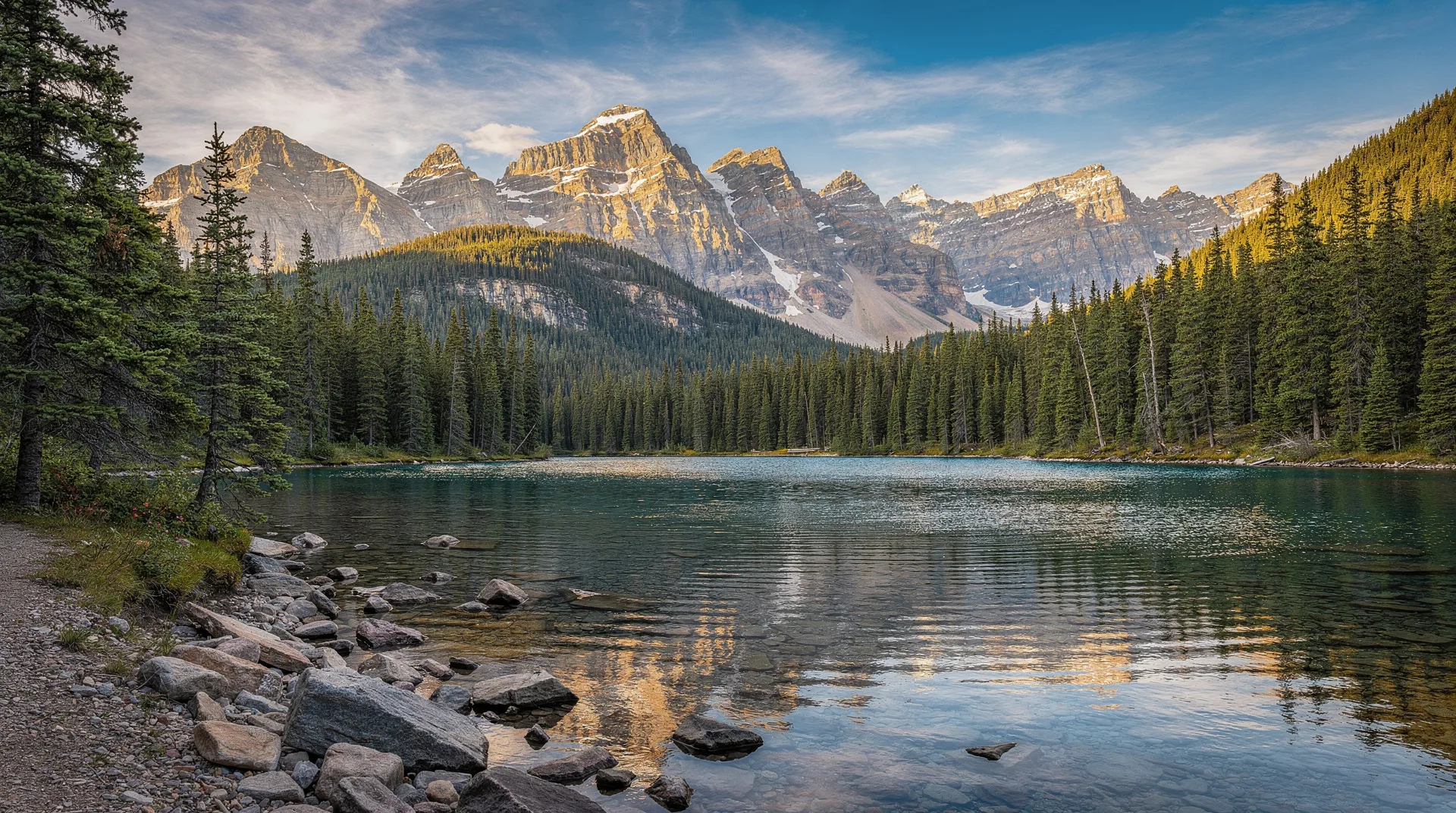
The Eastern Townships — Cantons-de-l’Est in French, though both names are in common use — occupy the rolling hill country of southern Quebec between Montreal and the Vermont border, a landscape that manages to feel simultaneously Quebecois and New England without being entirely either. The hills are the northernmost extension of the Appalachian range, worn down to gentler forms than Vermont’s Green Mountains but still sufficiently elevated to support ski resorts and to colour dramatically in autumn. The valleys between them hold the region’s vineyards, apple orchards, artisan fromageries, and the lake system centred on the elongated blue expanse of Memphrémagog.
This is a region shaped by two distinct settler traditions. The English-speaking United Empire Loyalists who arrived after the American Revolution founded the original townships — hence the English place names: Sutton, Brome, Stanstead, Farnham — and their architectural legacy survives in the red-brick Anglican churches and Federal-style farmhouses that dot the roadsides. The French-speaking population that arrived later eventually became dominant, producing the bilingual, culturally layered character that defines the Eastern Townships today. English is more widely spoken here than almost anywhere else in rural Quebec, which makes the region particularly accessible to anglophone visitors without reducing any of its Quebecois character.
| At a glance | |
|---|---|
| Where | Southern Quebec, around 80-120km southeast of Montreal |
| Cost | Wine tastings typically CAD 5-15; ski day passes around CAD 60-90 |
| Time needed | Around 2-4 days |
| Getting there | Self-drive from Montreal via Highway 10; some bus service to Sherbrooke and Magog |
| Best time | September-October for harvest and fall colour; summer for lakes and cycling |
Top things to do in the Eastern Townships
Wine and cider touring
The Eastern Townships is the heart of Quebec wine production, with around 60 vineyards concentrated particularly in the Dunham corridor southwest of Magog and in the hills around Farnham and Sutton. The Appalachian latitude (45th parallel) and the moderating influence of the lake system create a microclimate that allows cold-hardy hybrid grape varieties — Marquette, Frontenac, Vidal, Seyval Blanc — to ripen reliably, producing wines that are genuinely interesting rather than merely brave.
Route des Vins, the official wine route, links the vineyards of the Dunham area in a circuit that takes roughly a half-day by car or a full day by bicycle. The vineyards at Vignoble de l’Orpailleur (one of the oldest, established 1982, with an excellent restaurant and wine museum), Vignoble Les Pervenches, and Vignoble Clos Saragnat are among the most visited, but the smaller estates often have the most interesting wines and the most personal tastings.
Apple orchards and cideries complement the vineyards: the Eastern Townships produces Quebec’s best artisan ciders, including ice ciders — the concentrated, dessert-style cider made from apples frozen on the tree — that are now internationally recognized. La Face Cachée de la Pomme in Hemmingford and Domaine Pinnacle near Frelighsburg are the landmark producers.
Browse wine tours and Eastern Townships day trips from Montreal on GetYourGuideArtisan cheese and the food circuit
The Eastern Townships has a concentration of artisan fromageries — artisan cheese producers — that is exceptional by Canadian standards. Quebec’s raw-milk cheese tradition, protected by its own provincial regulations, produces some of the most characterful aged cheeses in the country, and the Eastern Townships is at its centre.
Fromagerie La Station in Compton produces Comtomme, Alfred le Fermier, and Raclette de Compton — cheeses that appear on the best restaurant tables in Montreal. Fromagerie Polyethnique in Sainte-Edwidge makes washed-rind cheeses with a strong European character. Fromagerie du Presbytere in Sainte-Elizabeth-de-Warwick makes Louis d’Or, consistently ranked among Canada’s best cheeses.
A dedicated cheese circuit through the region, combined with stops at local bakeries and charcuteries, can be assembled into a self-guided food tour. The Parcours Gourmand de Sherbrooke, an annual autumn food event, opens the doors of the region’s producers for tastings and demonstrations.
Cycling around Magog and Memphrémagog
The lakeside town of Magog, on the northern tip of Lac Memphrémagog, is the Eastern Townships’ most enjoyable cycling base. The lake stretches 48 kilometres into Vermont, and the shoreline roads on both sides offer relatively flat cycling with constant lake views. The Route Verte cycling network passes through Magog and connects the town to the wider regional trail system.
The circuit around the Abbaye Saint-Benoît-du-Lac — cycling along the west shore of Memphrémagog to the abbey and back — is the classic half-day ride. The Benedictine abbey, perched on a hill above the lake with views south toward Vermont, is architecturally striking (a medieval-influenced design by Dom Paul Bellot, begun 1941) and the monks produce apple cider, cheese, and chocolates sold at the abbey shop. Monastic chant services are open to visitors.
For mountain biking, the hills above Sutton and Bromont provide excellent trail networks — Bromont in particular has invested heavily in bike infrastructure, with a gondola-accessed trail system that operates in summer alongside the ski area.
Ski Bromont and Sutton in winter
The Eastern Townships’ ski resorts lack the vertical of Mont-Tremblant but compensate with proximity to Montreal and a loyal regional following. Bromont (140 kilometres from Montreal) is particularly strong for families — a manageable mountain with excellent snowmaking and a consistent snow record, plus the only night skiing in the region, operating until 10pm on weekends. The town of Bromont below the mountain is walkable and has a developed restaurant scene.
Mont Sutton has a different character — smaller, more old-fashioned in the best sense, with a larger proportion of gladed (tree-skiing) terrain proportional to its total area than most eastern resorts. The Sutton ski culture is relaxed and local in a way that the Mont-Tremblant experience is not, and the après-ski centres on a handful of excellent village restaurants rather than a resort village complex.
Owl’s Head on Lac Memphrémagog is a third option — quiet, scenic, with remarkable views over the lake from the upper runs, and proportionally the least crowded of the three.
Sutton village and the Appalachian Trail
The village of Sutton has the most concentrated and walkable quality of life of any Eastern Townships community — a single main street of independent shops, cafés, and galleries that operates year-round. The architecture mixes Loyalist-era buildings with Quebec farmhouse adaptations, and the village has attracted a creative population of artists, writers, and craftspeople who maintain studios and workshops in the surrounding countryside.
The International Appalachian Trail passes through the Eastern Townships, with a significant section accessible via Mount Sutton and the Pinnacle. Day hiking on the trails above Sutton reaches the Pinnacle summit (952 metres) with views extending into Vermont and New Hampshire on clear days — a remarkably open panorama for what is technically rolling hill country.
When to visit the Eastern Townships
September and October represent the Eastern Townships at its most compelling. The wine harvest is underway through September; the apple picking and cider production follow in October. Fall colour on the Appalachian hills peaks in late September to mid-October, turning the vineyards and orchards into a particularly rich composition of gold, red, and orange. The temperatures are comfortable (10–18°C days), the light is exceptional, and the tourist crowds are smaller than summer.
July and August are lake season: Magog’s waterfront comes alive, the region’s outdoor dining terraces are full, and cycling, kayaking, and vineyard visits are all at peak operation. Weekends can feel crowded near Magog and Bromont; midweek visits are significantly calmer.
December to March is ski season at Bromont, Sutton, and Owl’s Head. The townships’ proximity to Montreal makes them busy on weekends — arriving Friday afternoon or Saturday morning early is advisable. January weekdays offer the best combination of reliable snow and manageable crowds.
May and June are quiet but rewarding: asparagus and strawberry season in the farmlands, the vineyards emerging from their winter protection, and accommodation at its most affordable.
Where to stay in the Eastern Townships
Magog is the central base for a lake-and-wine itinerary. Several hotels and auberges on or near the waterfront provide easy access to the lake cycling routes and the Abbaye. The Manoir des Sables (now Estérel Resort property) in Orford is a full-service resort with golf and spa. Auberge Orford offers more modest lake-country accommodation.
Sutton has a handful of auberges and B&Bs in and around the village, including the long-established Auberge Schweizer above the mountain, which has been hosting skiers since the 1950s. The ambience is mountain-lodge rather than resort-luxury.
Bromont has accommodation centred on the ski area — the Château Bromont is a reliable full-service hotel with ski-in/ski-out access and a prominent spa.
For the full Eastern Townships experience, renting a private farmhouse or country cottage for a week allows time to explore the wine routes, fromageries, and villages at the slower pace the region rewards.
Getting there and around
From Montreal: The Eastern Townships are the most accessible Quebec wine country from Montreal — Dunham’s vineyards are 80 kilometres southeast via Highway 10 and Route 202, and Magog is 110 kilometres by Highway 10 East. The drive through the Townships’ farm country on Routes 202, 215, and 243 is as enjoyable as the destinations.
By car: Essential for the wine route and fromagerie circuit, which requires moving between small producers on rural roads. Magog village itself is walkable, and Sutton’s main street is compact enough to explore on foot.
By bus: Orléans Express runs regular service from Montreal to Sherbrooke with stops in Magog, making day-trip access possible without a car — though the wine routes and cheese producers are not practical without wheels.
Day trips from the Eastern Townships
Sherbrooke, the regional capital (50 kilometres east of Magog), is the largest city in the region with a good museum (Musée des beaux-arts de Sherbrooke), a historic downtown, and the Bishop’s University campus in Lennoxville — one of the few anglophone universities in Quebec.
Vermont border crossings at Stanstead/Derby Line and Frelighsburg allow easy access to Vermont’s own wine and cider country, the town of Burlington (1.5 hours south of the border), and the outlet shopping of St. Johnsbury and Burlington. The crossing at Stanstead is notable for the bisected town — the main street literally straddles the international border, and the Haskell Free Library and Opera House sits with its entrance in Vermont and its books in Quebec.
Mont Orford National Park, just north of Magog, offers hiking to the summit of Mont Orford (853 metres) and lake swimming at Lac Stukely in summer. The park is excellent for a half-day of easy hiking within the larger Eastern Townships itinerary.
Going deeper on wine, cider and cheese
If the vineyards are the main reason for your trip, the Eastern Townships Route des Vins guide goes through the circuit in more detail than this overview can. Cider drinkers will want to read about Quebec ice cider before choosing which orchards to visit, and anyone building a trip around fromageries will find the Quebec cheese trail a useful companion for planning stops between villages.
In spring, the same farmland takes on a different personality during sugar shack season, when many producers in the hills welcome visitors for maple-based meals. It is a good reason to consider the region outside the usual harvest window.
Combining the Townships with the rest of Quebec
The Townships fit neatly into a longer trip. Many travellers start with a few days in Montreal, spend a weekend in wine country, and then continue toward Quebec City. A broader 7-day Quebec itinerary shows how a countryside stop like this one can sit between the two cities without feeling rushed. Once you reach the provincial capital, you can book Quebec City day tours to fill your last days.
For autumn visitors, the guide to where to see Quebec fall foliage helps compare the Townships with other regions, and those who want a wilder, more coastal contrast afterwards can look at Charlevoix. If your French is limited, the guide to speaking French in Quebec offers practical reassurance before you set out on the back roads.
Practical tips
The wine route requires a driver: The Route des Vins circuit covers enough wineries to make cycling practical but drinking and driving incompatible. Either assign a designated driver, hire a guide, or join an organized wine tour from Montreal (several operators run day trips). E-bikes make the vineyard circuit between Dunham and Frelighsburg manageable and popular.
French language: The Eastern Townships are more bilingual than most of rural Quebec, but French remains the dominant language of daily life. In Magog, Sutton, and the ski resorts, English is widely understood; on back roads between wineries and fromageries, French is more necessary. Basic French competence is rewarded.
Accommodation books quickly: Autumn harvest weekends (late September and October) and ski holiday weekends (Christmas, February break) fill months in advance. Midweek visits to the wine country in September offer the same landscape and open cellars with far more room to breathe.
Cash and credit: Most vineyards, fromageries, and larger auberges accept credit cards. Small farm operations and some artisan producers may prefer cash or Interac debit (the Canadian bank card system). Keep some cash for farmers’ markets and roadside stands.
Building a two-day wine and cheese weekend
A workable two-day plan starts in Dunham, the densest cluster of vineyards, with a morning at Vignoble de l’Orpailleur followed by two or three smaller estates chosen for whichever grape variety interests you — the hybrid varietals here vary more estate to estate than in more established wine regions, so tasting broadly pays off. Break for lunch at a vineyard restaurant rather than driving back into a town, then spend the afternoon at a fromagerie or two on the way toward Sutton or Magog for the night.
The second day is better spent around Lac Memphrémagog: the Abbaye Saint-Benoît-du-Lac circuit by bike or car in the morning, then Magog’s waterfront and a final round of tastings or a cidery stop on the drive back to Montreal. Travellers with only a single day should skip the full circuit and pick one village — Dunham for wine, Sutton for village atmosphere — rather than trying to see everything and spending the day driving between stops.
Eastern Townships vs the Laurentians
Quebec travellers deciding between Montreal’s two closest countryside escapes usually weigh the Eastern Townships against the Laurentians. The Laurentians, anchored by Mont-Tremblant, have higher mountains, a bigger ski resort, and a more purpose-built resort-village feel. The Eastern Townships trade that scale for wine, cheese, and a more agricultural, lower-key character — better for a food-and-wine weekend than for serious vertical skiing. See the Laurentians vs Eastern Townships guide for a fuller comparison, or the Montreal to Eastern Townships guide for drive-time planning.
Are the Eastern Townships worth visiting?
For anyone spending time in Montreal and open to a short drive, the Eastern Townships are among the best day-trip or weekend extensions in eastern Canada. The wine country is genuinely good and increasingly sophisticated; the artisan food production — cheeses, ciders, maple products, charcuterie — is among the most interesting in Quebec; and the bilingual cultural mix gives the region a character distinct from both francophone Quebec and anglophone Canada. Come in fall harvest season if you can manage only one visit: the combination of colour, open cellars, and crisp Appalachian air makes it an experience that justifies the whole trip.
Frequently asked questions about the Eastern Townships
How is the Eastern Townships different from the Laurentians?
The Laurentians, centred on Mont-Tremblant, offer bigger mountains and a resort-village atmosphere geared toward skiing. The Eastern Townships are gentler hill country focused on wine, artisan cheese, lakes, and a more agricultural pace — a better fit for a food-and-wine weekend than for serious skiing.
Do I need a car to visit the Eastern Townships?
Yes, for the wine route and fromagerie circuit, which involve moving between small rural producers. Orleans Express buses reach Magog and Sherbrooke from Montreal, but a car is essential for anything beyond the village centres.