Quick facts
- Size
- 1,556 km² along Lake Superior's east coast
- Location
- Between Sault Ste. Marie and Wawa
- Best for
- Road trips, coastal hikes, fall colour
- Days needed
- 2-4 days
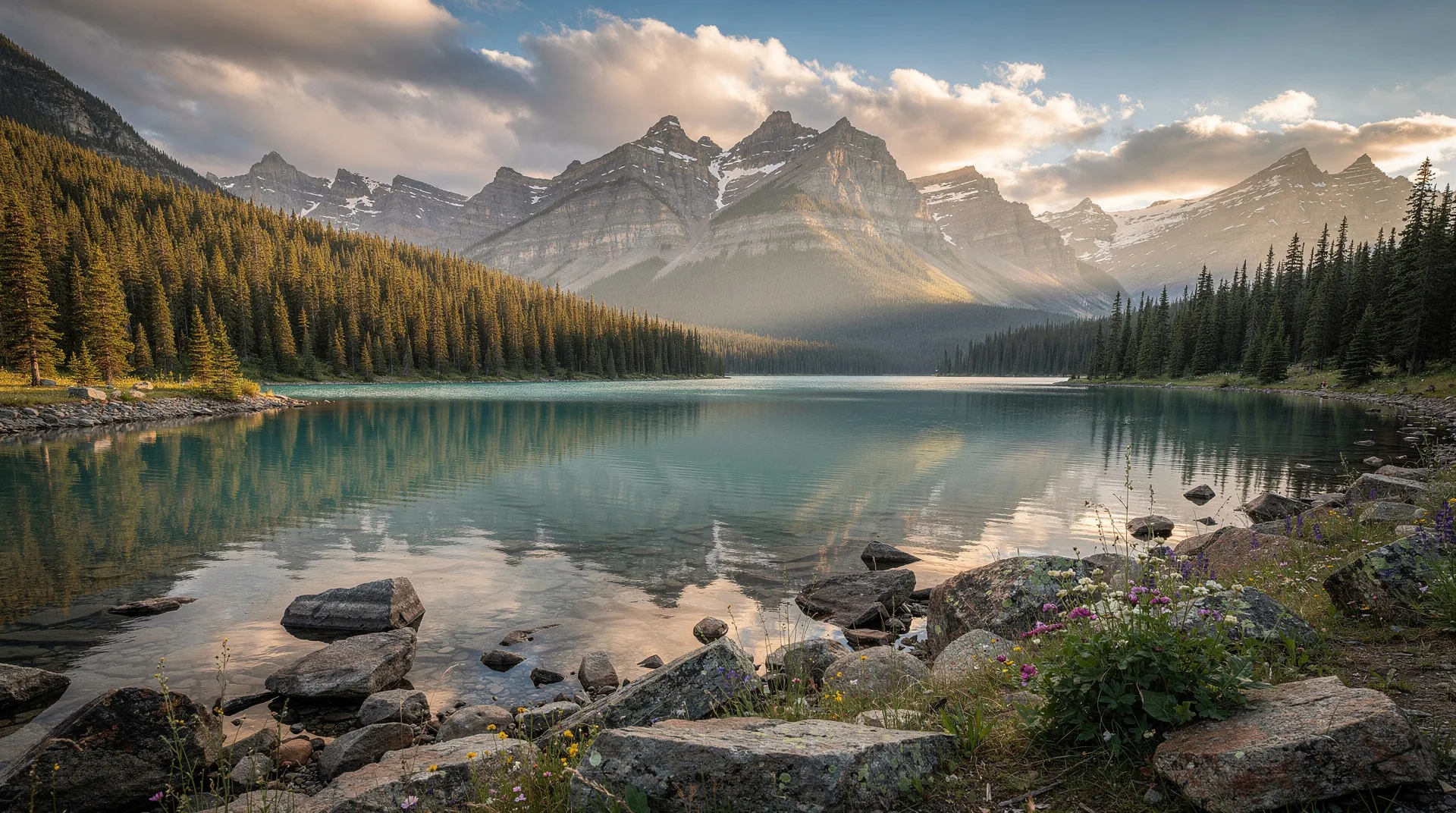
Lake Superior Provincial Park is one of Ontario’s most scenic parks and arguably its most cinematic — 1,556 square kilometres of rugged Canadian Shield coastline, backcountry lakes, and boreal forest along the eastern shore of the largest Great Lake. The Trans-Canada Highway (Highway 17) cuts directly through the park for 80 kilometres, making it simultaneously accessible and remote: you drive through some of the most spectacular coastal scenery in North America without needing to leave the highway.
The park contains the famous Agawa rock pictographs (ancient Indigenous paintings on a cliff face above the water), Old Woman Bay (a high-walled crescent cove considered one of the finest beaches on Lake Superior), the challenging Coastal Trail (65 km along the shore), and some of the best car camping and backcountry paddling in Northern Ontario. For Trans-Canada Highway road-trippers, Lake Superior Provincial Park is the single most memorable stop between Toronto and Winnipeg.
This guide covers the main sights, the key hikes, how to plan the drive, and when to visit. For related guides, see Sault Ste. Marie (the southern gateway), Agawa Canyon, and the Northern Ontario guide.
| At a glance | |
|---|---|
| Where | Highway 17, between Sault Ste. Marie and Wawa, Ontario |
| Cost | Ontario Parks day-use fee applies, typically around CAD 12-16 per vehicle |
| Time needed | 2-4 days for the highlights; a drive-through visit with a few stops is possible in a day |
| Getting there | Car essential — the Trans-Canada Highway runs through the park |
| Best time | Late June through early October; peak fall colour late September to early October |
The geography and what makes the park distinctive
Lake Superior is the deepest and coldest of the Great Lakes — 406 metres deep in places, with mid-summer surface temperatures that rarely exceed 10-12°C. The eastern shore where the park sits has been carved by Ice Age glaciers and subsequent weathering into a landscape of granite headlands, pink-sand coves, offshore stacks, and cliff-lined bays. Unlike most of the Canadian Shield, this section has topographic drama — hills rise 300+ metres above the lake, and the coastal views from the highway pullouts rival Cape Breton or the Gaspé.
The park’s boreal forest — spruce, balsam fir, birch, and maple — is the transition zone between southern hardwood and northern boreal, which means the fall colour is exceptional. Peak colour runs from late September to early October.
Key stops along the park
Driving south to north along Highway 17:
Agawa Bay (southern entrance): Large campground, visitor centre, and the main sand beach at the park’s southern end. The visitor centre has excellent interpretive exhibits on the park’s geology, ecology, and Indigenous history.
Agawa Rock Pictographs: A short walk from the highway leads down to a granite cliff face on the water’s edge where Ojibwe artists painted over 100 pictographs 150 to 400 years ago. The paintings depict canoes, serpents, a horned Mishipeshu (the underwater lynx spirit), and other figures. The approach requires scrambling over wet rocks at the lake’s edge — treacherous in rough weather. In calm conditions, the experience of reaching the paintings by water’s edge with the immense Superior stretching out beyond them is extraordinary. Allow 45 minutes to an hour.
Katherine Cove: A small pink-sand cove with turquoise water and a backdrop of rounded granite hills. One of the most photographed spots on Lake Superior. Easy five-minute walk from the parking area.
Old Woman Bay: A crescent-shaped bay with a 200-metre cliff face at its northern end that forms the profile of an old woman’s face (hence the name). Sand beach; cold swimming; easy access directly from the highway. The Nokomis Trail here is a moderate 5 km loop with spectacular bay views.
Sand River: The Sand River drains into Lake Superior here through a series of waterfalls and pools. The Pinguisibi Trail (3 km return) follows the river past multiple rapids and falls. Easy-to-moderate family hike.
Gargantua Harbour and Warp Bay: On the western side of the park, reached by a 14-km rough gravel road. Gargantua Harbour is a protected natural harbour with dramatic cliffs; Warp Bay is a wilderness beach at the end of a 12 km hike from Gargantua. This is the park’s most remote section accessible without a major backcountry trip.
Coastal Trail
The Coastal Trail is the park’s signature hike — 65 kilometres along the coast from Agawa Bay in the south to Chalfant Cove in the north. The full trail is a serious 5-7 day backpack with rough terrain, beach walking, creek crossings, and exposed sections. Day hikers can access shorter sections from several trailheads:
- Agawa Bay to Sinclair Cove (6 km one way): Southern section; moderate terrain.
- Katherine Cove to Sand River (4 km): Central section with some of the best coastal views.
- Old Woman Bay to Bald Head River (7 km one way): Northern section; dramatic cliff sections.
The Coastal Trail experiences rapid weather changes — Lake Superior fog can move in within an hour and coastal sections become genuinely dangerous in wind. Plan conservatively.
Other hikes
Towab Trail: 24 km out-and-back to Agawa Falls, a 25-metre waterfall on the Agawa River. Serious day hike or overnight backpack.
Orphan Lake Trail: 8 km loop through boreal forest to Orphan Lake and a Lake Superior beach. Moderate; one of the best day hikes in the park.
Pinguisibi Trail: 3 km return along Sand River. Family-friendly.
Awausee Trail: 10 km loop with panoramic Lake Superior views. Moderate-to-challenging.
Nokomis Trail (Old Woman Bay): 5 km loop. Moderate.
Packing and preparing for the coast
Weather on the lake rarely matches the weather inland, so pack as if the day could turn on you. Layers matter more than any single piece of gear: a windproof shell, a warm mid-layer, and sturdy footwear with good grip for wet granite. The packing list covers the general kit, and the best hikes in Canada guide helps put these trails in context against other classics. Bring more water and snacks than a short walk seems to require, because services are thin once you leave the highway towns.
Wildlife is part of the setting here. The wildlife safety guide explains how to store food, keep a respectful distance, and make noise on forest trails. Insects can be intense in early summer, so repellent and a head net are worth having if you plan to hike in June.
How the park compares with other Ontario choices
Travellers often wonder whether to spend their time here or farther south. Algonquin Provincial Park is closer to Toronto and better suited to canoe trips and short stays, while Killarney offers white quartzite ridges and clear lakes. Lake Superior Provincial Park is the one to choose when you want big-water coastline, a long road-trip rhythm, and a sense of distance. The blog comparison of Lake Superior and Lake Ontario explores how different the two shores feel.
Camping
Agawa Bay Campground: 145 sites, electrical hookups available; large central campground with beach access. Book through Ontario Parks’ reservation system months ahead for July and August.
Crescent Lake Campground: 42 sites, more rustic, no hookups; inland setting.
Rabbit Blanket Lake Campground: 56 sites, no hookups; the most peaceful of the three drive-in campgrounds.
Backcountry: Paddle-in and hike-in campsites along the Coastal Trail and on interior lakes. Permits required.
Trans-Canada Highway context
The 80-kilometre stretch through the park is part of a longer scenic drive. From Sault Ste. Marie at the south to Wawa (the town just north of the park), the full 230-kilometre drive typically takes 3.5-4 hours without stops but should be budgeted at 6-8 hours to allow for pull-offs, short hikes, and photography. The fuel situation requires planning: services are limited inside the park, with gas stations at Pancake Bay (south of the park), Montreal River Harbour (midway), and Wawa (north of the park). If you would rather leave the driving to someone else, guided tours in Ontario can cover parts of the region.
Paddling
Anyone new to the sport should read the Ontario canoeing routes guide first, since sheltered inland lakes are a far better introduction than the open coast. Lake Superior kayaking within the park is for experienced paddlers only — the water is cold (10°C), conditions change rapidly, and rescue is slow. Several interior lakes offer gentler paddling: Orphan Lake, Mijinemungshing Lake, and Crescent Lake all have canoe rentals or launches.
Weather and seasonal planning
June: Blackflies are serious; cool; few crowds; good for hardy hikers.
July-August: The busiest period; warmest temperatures (20-25°C daytime); coldest Lake Superior water is still under 15°C; some smoke haze possible from forest fires.
September: The sweet spot — cooler temperatures, fewer bugs, lighter crowds, early fall colour starting.
Late September to early October: Peak fall colour; genuinely cold nights (near freezing); most memorable visiting window.
Late October to late May: Highway 17 remains open year-round but park facilities closed; winter conditions require full preparation.
Getting there
From Sault Ste. Marie: 1.5 hours north on Highway 17 to the southern entrance at Agawa Bay.
From Toronto: 9 hours via Highway 400 to Parry Sound, then Highway 69/400 to Sudbury, then Highway 17 to Sault Ste. Marie and north to the park. Most visitors break the drive in Sudbury or Sault Ste. Marie.
From Thunder Bay: 7 hours south-east via Highway 17. The section east of Wawa is part of the classic Lake Superior Circle Route.
Planning the drive in practice
A rental car is the simplest way to cover this route, and the car rental guide explains what to check before you book a one-way trip. Build slack into every day: the best moments here are unplanned, like a quiet cove you did not expect or a fog bank rolling off the lake that turns a familiar view into something new. Many travellers stay a night in Sudbury on the way north and slow down for the park itself. If you are weaving this stop into a longer route, the Ontario 10-day itinerary shows how it fits with the rest of the province.
For camping etiquette, fire rules, and leave-no-trace habits, the Canadian camping rules guide is a useful companion before you pitch a tent.
Fees and permits
Ontario Parks charges a day-use vehicle fee (typically CAD 12-16) at the park entrances, separate from any camping reservation. Backcountry paddlers and Coastal Trail overnighters need a backcountry camping permit on top of the day-use fee. Buy online through the Ontario Parks reservation system or at the gate kiosks — cash and card are both usually accepted at staffed entrances in peak season.
For travellers planning the wider trip, the Ontario provincial parks guide covers how this park compares to Algonquin and other Ontario options, and the Ontario fall colours guide helps time a visit around the late-September peak. Anyone road-tripping in summer more broadly should check the Canada in summer guide for national travel-season context.
Combining with other destinations
Lake Superior Provincial Park pairs naturally with:
- Sault Ste. Marie — the southern gateway city
- Agawa Canyon — the train tour from Sault Ste. Marie
- Pukaskwa National Park — two hours north, the wilder sibling
- Thunder Bay — the far northwestern anchor
Related guides
- Sault Ste. Marie destination guide
- Agawa Canyon train tour
- Northern Ontario guide
- Northern Ontario 10-day itinerary
- Thunder Bay
- Pukaskwa National Park
Frequently asked questions about Lake Superior Provincial Park
Is Lake Superior Provincial Park free to enter?
No. Ontario Parks charges a day-use vehicle fee, typically CAD 12-16, at the park’s entrance kiosks. Camping and backcountry permits are booked and paid separately through the Ontario Parks reservation system.
How long should I spend at Lake Superior Provincial Park?
A driver simply passing through on the Trans-Canada Highway can see the main pullouts — Agawa Rock, Katherine Cove, Old Woman Bay — in half a day. To actually hike, camp, and experience the Coastal Trail sections properly, plan 2-4 days, and budget more for backcountry paddling or a multi-day Coastal Trail backpack.