Bay of Fundy loop: 7-day NB road trip itinerary
Overview
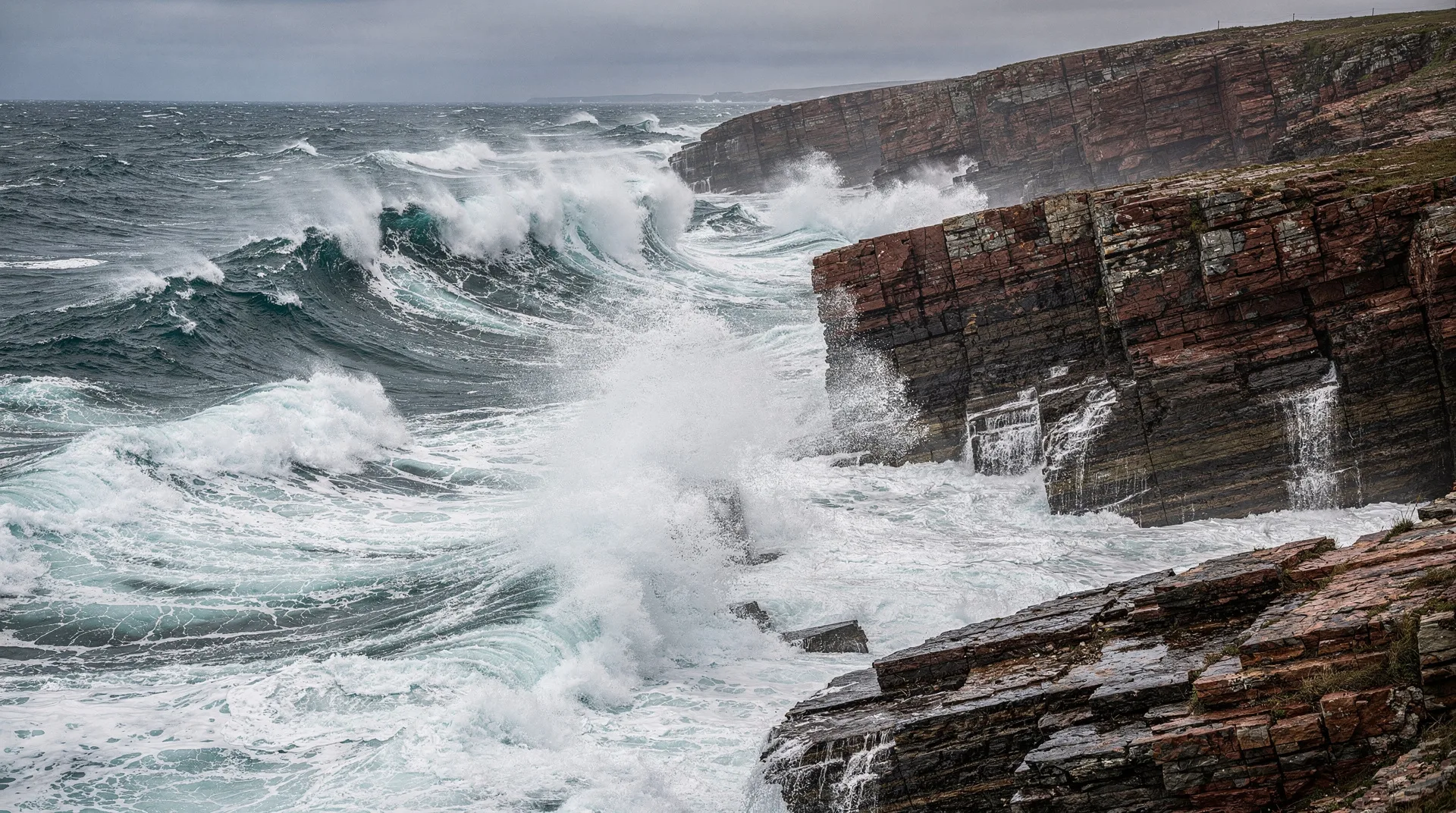
The Bay of Fundy demands a dedicated itinerary. The world’s highest tides create such a variety of extraordinary experiences — walking the ocean floor among 15-metre Flower Pot formations, riding inflatable rafts through tidal bore rapids, watching right whales feed in the outer bay, hiking Fundy’s dramatic cliff coastline — that a circuit of both the Nova Scotia and New Brunswick shores is the right way to experience it.
This 7-day loop departs from Moncton (the most accessible gateway) and circles the Bay of Fundy’s New Brunswick shore, crossing to the Nova Scotia side for whale watching, and returning via the Confederation Bridge or the Wood Islands ferry from PEI.
| Day | Destination | Approx. drive |
|---|---|---|
| 1 | Moncton: tidal bore, city | Arrival |
| 2 | Hopewell Rocks + Fundy National Park | 40-80 km |
| 3 | Fundy National Park hiking | In-park |
| 4 | St. Andrews-by-the-Sea | 220 km / 2.5 hrs |
| 5 | Grand Manan Island | Ferry from Blacks Harbour |
| 6 | Brier Island / Digby (whale watching) | Return ferry + 2.5 hrs |
| 7 | Return to Moncton or Halifax | Various |
Best season: July through September. August is the single best month for right whale encounters and maximum whale numbers. July for warmest conditions and all services.
At a glance
Start/end: Moncton Airport (YQM) or Halifax Stanfield (YHZ)
Car required: Yes
Total driving: Approximately 800 km plus ferry crossings
Budget range: CAD $2,000–$3,200 per person excluding flights
Day 1: Moncton
Moncton (population ~175,000) is the commercial and administrative heart of French-speaking New Brunswick and the practical base for Bay of Fundy exploration. The city is completely bilingual; French is as common as English on the street.
Bore Park and the tidal bore
The Petitcodiac River, which flows through Moncton, experiences one of the most visible tidal bores in eastern Canada. The bore — the wave of tidal water reversing the river’s flow — arrives at Bore Park (on the riverbank downtown) at predictable times posted in advance online. The bore height varies with the tidal range; during large tides, it is a visible wave of 0.5-1 metre.
The Bore Park area has been recently redeveloped as a pleasant riverside space. The tidal bore arrival is free to watch and gives an excellent introduction to the tidal phenomenon you’ll be experiencing throughout the week.
Resurgo Place
Resurgo Place is Moncton’s main history museum, with good exhibits on the city’s history as a bilingual hub, its railway heritage, and its Acadian cultural context. Worth 1.5-2 hours.
Magnetic Hill
The Magnetic Hill attraction north of the city creates an optical illusion in which vehicles appear to roll uphill when placed in neutral on a particular slope. The scientific explanation (a downhill road appearing to slope upward due to the surrounding landscape) doesn’t diminish the initial experience. A 15-minute stop.
Moncton dining
Moncton has an improving restaurant scene. The Little Louis’ Oyster Bar downtown has excellent PEI oysters and local seafood. Catch Up Fine Food and Café is a reliable contemporary choice. The Acadian restaurant scene — rappie pie, fricot (an Acadian chicken and vegetable stew), ployes (buckwheat pancakes) — is best explored in communities along the Acadian Coast north of Moncton.
Browse New Brunswick and Bay of Fundy toursDay 2: Hopewell Rocks and the Bay of Fundy shore
Drive 40 km south of Moncton on Route 114 to Hopewell Rocks Provincial Park.
Hopewell Rocks: the ocean floor walk
The defining Bay of Fundy experience. The Flower Pot sea stack formations at Hopewell Rocks are accessible on foot at low tide — you descend stairways to the ocean floor and walk among formations that will be beneath 12 metres of seawater within six hours.
Critical preparation: Check the tide schedule at hopewellrocks.ca before leaving Moncton. Arrive 1-2 hours before low tide for maximum time on the ocean floor. See our Hopewell Rocks guide for full timing advice.
Allow 2-3 hours for the ocean floor walk and the clifftop trail. The clifftop trail provides the iconic aerial perspective on the formations.
Fundy National Park
Drive 40 km south on Route 114 from Hopewell Rocks to Alma, NB — the entrance to Fundy National Park. The park covers 206 km² of Acadian highland and coastal terrain with 120 km of hiking trails.
In Alma, the sticky buns from the Alma Bakery have achieved something close to national fame — buy one immediately on arrival.
The Dickson Falls trail (3.2 km loop) is an accessible and beautiful gorge walk that requires no special planning or preparation. The Coastal Trail along the Fundy shore provides dramatic cliff walking with tidal views. See the park’s current tide schedule to time a walk on the tidal flats.
Spend the night at Alma or in the park campground.
Day 3: Fundy National Park hiking
A full day in the park for those who want to hike.
Coppermine Trail (9.7 km loop)
The Coppermine Trail is the park’s best multi-day hiking option (also excellent as a day hike). It runs from the park’s main campground through old-growth Acadian forest and along the Fundy coast with several dramatic viewpoints over the bay. The loop is moderate in difficulty and rewarding throughout.
Point Wolfe
The Point Wolfe area, accessible by a short drive from the main campground, has a covered bridge (one of only two remaining in NB national parks), a beach accessible at low tide, and excellent woodland walking. The red sandstone cliffs at Point Wolfe are beautiful in morning or evening light.
Matthews Head Trail (4.5 km return)
A coastal headland trail with dramatic views over the bay. Seals are occasionally visible in the waters below. The trail is accessible and well-maintained.
Fundy Trail Parkway
Just east of the park (accessed separately via Route 915), the Fundy Trail Parkway is a recently developed multi-use trail system along an otherwise inaccessible section of the Fundy coast. The main trail to Big Salmon River (10 km one way) passes through dramatic coastal scenery rarely seen by visitors. Day-use fee applies.
Day 4: St. Andrews-by-the-Sea
Drive approximately 220 km from Alma to St. Andrews via Sussex and Sussex-Fundy Byway — about 2.5 hours.
St. Andrews
St. Andrews-by-the-Sea is a Victorian resort town of extraordinary charm, established in 1783 by Loyalist settlers and developed as a summer resort for Canada’s wealthy in the late 19th century. The Algonquin Resort (a massive Tudor Revival hotel dominating the hill above town, opened 1889, recently refurbished) is the architectural centrepiece.
The downtown grid of heritage homes, independent shops, and excellent restaurants is one of the most pleasant small-town streetscapes in Atlantic Canada. The Kingsbrae Garden (27 acres of formal and naturalistic gardens overlooking Passamaquoddy Bay) is excellent.
Whale watching from St. Andrews
Several operators run whale watching tours from the Town Wharf into the outer Bay of Fundy — humpbacks, finbacks, and minkes are regularly encountered. The outer bay waters around St. Andrews are productive; Grand Manan (the next day) reaches into richer waters but St. Andrews is more accessible.
See our Bay of Fundy whale watching guide for species comparison and tour details.
Day 5: Grand Manan Island
Drive 85 km from St. Andrews to Blacks Harbour (about 1 hour), then take the ferry to Grand Manan — a 90-minute crossing. Ferries run several times daily in summer; check the schedule ahead and consider booking in busy periods.
Grand Manan
Grand Manan is one of the most remote and rewarding destinations in New Brunswick — a fishing island 28 km into the outer bay, with dramatic coastal scenery, excellent birding (the island sits on a major migration flyway), and whale watching waters that are among the most productive in the western North Atlantic.
Grand Manan whale watching
The waters around Grand Manan are critical habitat for North Atlantic right whales — one of the world’s most endangered large mammals, with approximately 350 individuals remaining globally. Grand Manan Whale & Seabird Research Station runs tours combining whale watching with genuine research: guests participate in photo-identification of individual right and humpback whales.
August is the peak month for right whale encounters. See our complete Atlantic Canada whale watching guide for detail on species and seasonality.
The island itself
Beyond whale watching, Grand Manan rewards exploration: the Dark Harbour area on the western coast, where dulse (dried seaweed, a traditional Atlantic Canadian snack) is harvested from the rocks, is unique. The Seven Days Work Formation at Whale Cove — an exposed sequence of Cambrian-era basalt flows — is extraordinary geology in an accessible coastal setting.
Overnight on Grand Manan (Compass Rose Heritage Inn or Marathon Inn are reliable; accommodation is limited and should be booked ahead).
Day 6: Return to mainland — Brier Island whale watching
Take the morning ferry back to Blacks Harbour and drive approximately 2.5 hours north into Nova Scotia via the Trans-Canada, turning south at Aulac for the Digby/Annapolis direction.
Drive the length of Digby Neck (Route 101 south from Digby, then the peninsula road) to Brier Island — two short ferry crossings (Tiverton to Long Island, Freeport to Brier Island). Brier Island is the closest Nova Scotia point to the productive outer bay feeding grounds and one of the best whale watching bases in the province.
Brier Island Whale & Seabird Cruises runs 3-4 hour tours combining humpback, finback, and right whale watching with seabird observation (shearwaters, storm petrels, gannets in impressive numbers in summer). The knowledgeable naturalist guides make this one of the most educational whale watching operations in Atlantic Canada.
Return to Digby in the evening (or stay on Brier Island for the night — limited accommodation available).
Browse Nova Scotia tours and Bay of Fundy experiencesDay 7: Return to Moncton or Halifax
From Digby, options:
- The Digby–Saint John ferry (2.5 hours, Bay Ferries, seasonal) crosses the bay directly to Saint John, NB — a scenic, time-efficient return to the New Brunswick side. Saint John is 2 hours from Moncton or 3 hours from the Confederation Bridge to PEI.
- Drive around via Amherst — approximately 3.5-4 hours to Moncton.
- Halifax: Digby is only 200 km from Halifax (2.5 hours) — an excellent option for those flying home from Halifax.
Budget guide
| Category | Budget/person | Moderate/person |
|---|---|---|
| Accommodation (6 nights) | CAD $720 | CAD $1,100 |
| Food | CAD $450 | CAD $650 |
| Car rental + fuel | CAD $350 | CAD $450 |
| Ferries (Grand Manan, Brier Island, optional Digby-SJ) | CAD $100 | CAD $100 |
| Whale watching + park/attraction entry | CAD $200 | CAD $350 |
| Total (excl. flights) | ~$1,820 | ~$2,650 |
Practical tips
Hopewell Rocks timing: Non-negotiable — check the tide schedule before leaving Moncton on Day 2. The ocean floor walk is only possible around low tide.
Grand Manan ferry: The ferry from Blacks Harbour to Grand Manan does not take reservations; arrive early in peak season (especially weekends) to ensure you get on.
Right whale season: August is the most productive month for right whale encounters at Grand Manan. July is good but right whales are less consistently present.
Brier Island accommodation: Very limited. If staying on Brier Island, book Westport accommodation (the Brier Island Lodge or local B&Bs) weeks in advance in summer.
Understanding the tides
The Bay of Fundy’s tidal range — up to 16 metres near the head of the bay at Burntcoat Head, Nova Scotia — is the result of the bay’s specific shape and depth resonating with the natural rhythm of the tide, amplifying the swing far beyond anywhere else on earth. Twice a day, roughly 160 billion tonnes of water move in and out of the bay.
This is the single fact that shapes every day of this itinerary: Hopewell Rocks is only walkable near low tide, whale watching boats time their departures around slack tide, and the tidal bore in Moncton is really the bay’s rhythm made visible on a river. Tide tables are published well ahead online for every stop; check them the night before rather than relying on memory of the previous day’s schedule, since the timing shifts by roughly 50 minutes daily.
Driving and renting a car for the loop
A car is not optional for this itinerary — public transport along the Fundy shore is minimal and the ferries to Grand Manan and Brier Island only make sense with a vehicle (or as a foot passenger combined with island taxis, which is workable but limits flexibility). Most visitors rent from Moncton or Halifax airport; see our Canada car rental guide for what to expect on price and insurance. Roads are in good condition throughout, though Digby Neck’s peninsula road narrows considerably — drive attentively, especially around the ferry queues.
Packing and safety notes
Layers matter more here than almost anywhere else in Atlantic Canada: fog rolls in off the bay with little warning, and boat decks are consistently cooler than shore temperature even in August. A windproof outer layer, closed shoes for the Hopewell Rocks ocean floor (it is uneven and can be slick), and motion-sickness precautions for the whale watching legs are all worth packing.
Tipping on whale watching tours and at restaurants follows standard Canadian norms — see our tipping in Canada guide if this is your first visit. Fundy National Park’s trails are generally low-risk, but bears are present in the region; a quick read of our Canada wildlife safety guide is worthwhile before hiking Coppermine or the Coastal Trail.
Variations
Add tidal bore rafting: From Moncton, add a morning tidal bore rafting excursion on the Shubenacadie River (60 km from Moncton toward Truro, NS) before heading to Hopewell Rocks. See our tidal bore rafting guide. This makes for a long Day 2 but is the ultimate tidal experience.
Shorten to 5 days: Drop Grand Manan and Brier Island; focus on Hopewell Rocks, Fundy National Park, and St. Andrews with whale watching.
Frequently asked questions about Bay of Fundy loop: 7-day NB road trip itinerary
Is the Bay of Fundy worth a dedicated 7-day trip?
Unequivocally yes for the right traveller — one who wants immersive wildlife, dramatic natural phenomena, and genuine wilderness. If you only have one week in Atlantic Canada and want maximum geographic variety, the broader Nova Scotia circuit (7-day Atlantic Canada itinerary) covers more ground.
Can I see right whales on every tour?
No — right whale encounters are not guaranteed on any tour. Grand Manan in August gives the best probability. When right whales are present, most tours will prioritise the encounter.
Do I need to be experienced for whale watching tours?
No experience required. Tours range from calm enclosed-vessel tours accessible to all to more active zodiac options. Choose based on your comfort with open-boat conditions.
Is a Parks Canada pass required for this loop?
Yes for Fundy National Park — a day pass or a Discovery Pass covers entry; the park is not free. The Fundy Trail Parkway charges its own separate day-use fee. Neither Hopewell Rocks (a New Brunswick provincial park) nor the whale watching tours are covered by a Parks Canada pass.
Can this loop be done without a car?
Not comfortably. Bus service along the Fundy shore is sparse and the Grand Manan and Brier Island legs really need a vehicle. See our Canada car rental guide before booking flights.