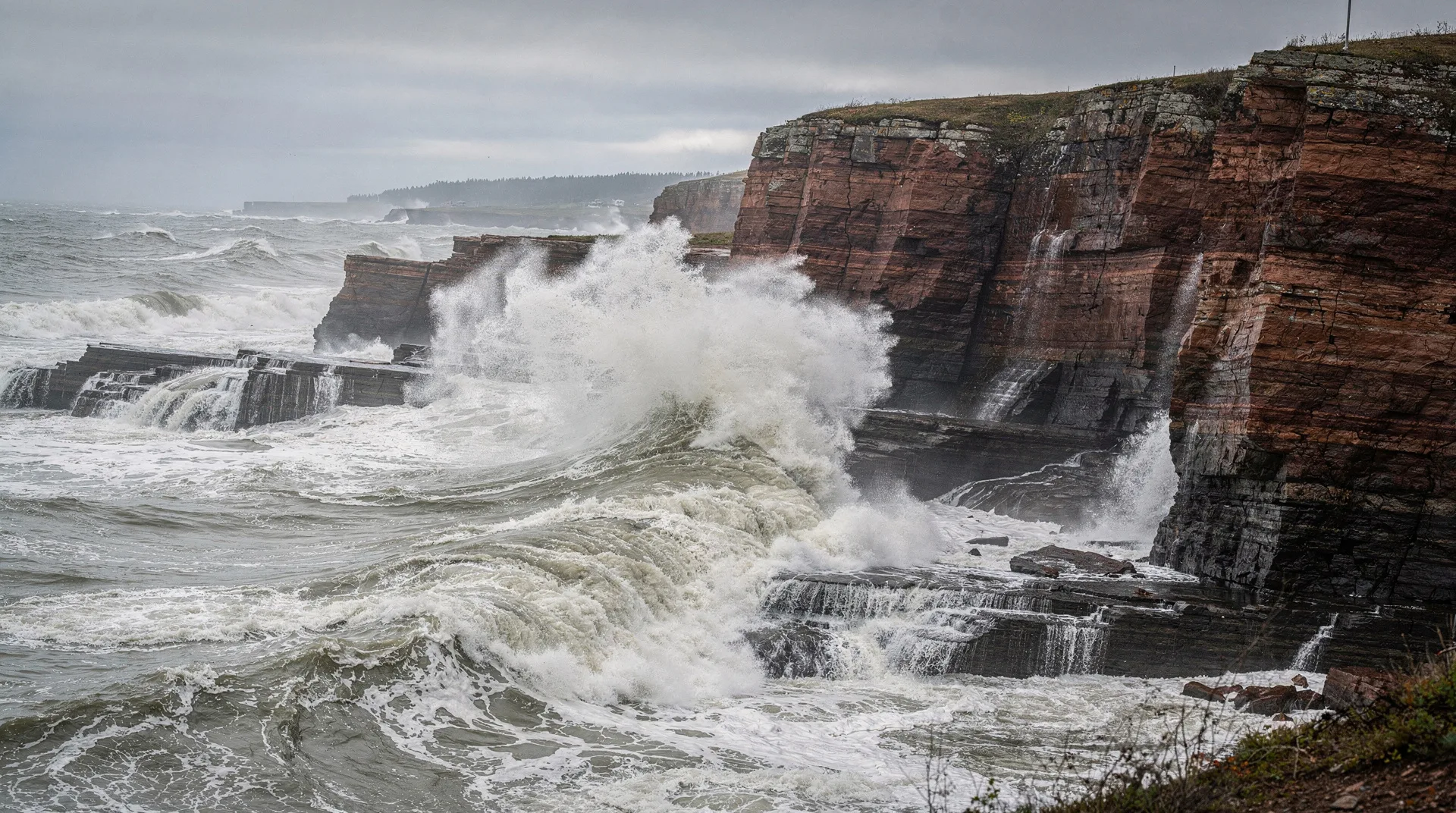
Fundy tidal bore rafting: Moncton's wildest ride
What is tidal bore rafting in Moncton?
Tidal bore rafting on the Shubenacadie River uses the incoming Bay of Fundy tidal bore — the wave of water that surges up the river as the tide comes in — to create a wild whitewater experience. Zodiac rafts ride the tidal wave and the rapids it creates as it meets the river current. Tours operate from South Maitland, NS, about 60 km from Moncton.
| At a glance | |
|---|---|
| Where | South Maitland, Nova Scotia, on the Shubenacadie River, around 60 km from Moncton and 90 km from Halifax |
| Cost | Around CAD $50-75 per adult, equipment included |
| Time needed | 2.5-3.5 hours total including transfer, briefing and time on the water |
| Getting there | Own car, rideshare, or an operator shuttle from Moncton/Halifax — no public transit to the put-in |
| Best time | July-August for the biggest tides; tours run on tide schedules year-round in season |
The Bay of Fundy’s tidal cycle does not politely announce itself. It arrives as a wave — a wall of brown water rolling up the Shubenacadie River against the current, lifting everything in its path, and then receding to leave a landscape of mudflats, stranded fish, and exhilarated humans in rubber suits. The tidal bore is one of the great natural spectacles of eastern Canada, and tidal bore rafting — riding inflatable zodiacs directly into the wave and the rapids it creates — is one of the most genuinely wild outdoor experiences on the East Coast.
This guide covers exactly what tidal bore rafting involves, how to book it, what to expect on the water, and how to combine it with other Bay of Fundy experiences.
What is the tidal bore?
A tidal bore is a wave that forms in a river estuary when the incoming tidal surge is strong enough to reverse the river’s flow. As the Bay of Fundy tide comes in, it pushes water up several rivers draining into the upper bay, including the Shubenacadie River in Nova Scotia. The result is a visible wave — the bore — that travels upstream at 5-10 km/h against the direction of the river’s flow.
The Shubenacadie tidal bore is one of the most predictable and dramatic in eastern North America. The extreme tidal range of the upper Bay of Fundy (regularly 13-14 metres at Maitland) means the incoming tide generates a bore of genuine energy. As the bore travels up the river and is joined by the increasing flood tide, it creates a series of standing waves, whirlpools, and rapids where the incoming tidal water meets bends in the river channel.
These are the rapids that tidal bore rafting exploits. Zodiac rafts — the same type of inflatable craft used for whitewater river rafting — are launched into the river just before the bore arrives, then ride the wave and surf the rapids created in its wake.
The tidal bore rafting experience
What happens on the water
Tour operators typically launch rafts into the river about 20 minutes before the bore arrives. During this waiting period, the river is still flowing outward toward the bay — low tide conditions, often with exposed mud banks on either side.
Then the bore appears upstream: a line of brown water moving against the current, anywhere from a small ripple (on lower tidal range days) to a 0.5-1 metre wave (on larger range days). The raft is pointed toward the bore, and then the bore hits.
What follows depends heavily on tidal range and river conditions on that particular day:
On a big tide day: The bore itself is a significant wave; the raft may be surfed on the face of the bore, thrown sideways, or temporarily swamped. As the tide floods in behind the bore, the river level rises rapidly and standing waves form at bends and constrictions. The guide navigates these rapids — surfing, spinning, and occasionally intentionally overturning the raft in the brown, muddy water.
On a moderate tide day: A smaller bore and less dramatic rapids, but still a memorable and genuinely active experience. The ride still gets wet; mud is still everywhere.
What everyone agrees on: You will be covered in brown Shubenacadie River mud. Guaranteed. This is not metaphorical — the river’s sediment creates a mud bath effect in the rapids, and coming off the water with a face full of red-brown mud is the universal experience. This is enthusiastically embraced by most participants; the mud bath photographs are among the best souvenirs of any Atlantic Canada trip.
Duration and format
Typical tours run 2.5-3.5 hours including the drive to and from the put-in location, pre-tour briefing, time on the water, and post-tour clean-up. The time actively on the water (from launch to takeout) is typically 1.5-2 hours.
Guides provide all necessary equipment: drysuits or wetsuits, life jackets, helmets (for higher-energy tours), and rubber footwear. You will be submerged — do not wear clothing you care about underneath the provided equipment.
Where and how to book
Location
Tidal bore rafting on the Shubenacadie River operates primarily from South Maitland, Nova Scotia, approximately 60 km from Moncton (about 50 minutes’ drive) and 80 km from Truro, NS. Despite the Moncton address many operators use in their marketing, the actual put-in is in Nova Scotia — an important detail for routing.
Main operators
Shubenacadie River Runners and Tidal Bore Rafting Park are the two principal operators on the Shubenacadie, both based near South Maitland. Both have good safety records and experienced guides; the experience is broadly similar between them. Shubenacadie River Runners tends to offer higher-energy guides and is often recommended for those wanting the most dynamic experience. The Tidal Bore Rafting Park has a larger support facility (showers, changing rooms, restaurant) and is slightly more family-oriented.
Check both operators’ current schedules and compare available tour times for your desired date before booking, as the tours operate on tidal schedules that change daily.
Browse Nova Scotia adventure experiences and Bay of Fundy toursBooking
Book online at least several days in advance in peak season (July-August). Tour times are determined by tide schedules and vary daily; the operator’s website will show available times for your date. Tours only run on incoming tides of sufficient size — certain tide combinations don’t generate productive rapids, and operators cancel or reschedule on days with very small tidal range.
Tours typically run twice daily (morning and afternoon/evening) on good tide days, and the specific times shift approximately 50 minutes later each day following the lunar tidal cycle.
Who can participate
Minimum age: Most operators set a minimum age of 8-10 years, with some family-oriented tours accommodating younger children on lower-energy days. Check with your operator.
Physical requirements: No rafting experience is required. You must be able to hold onto the raft straps firmly during active rapids and re-enter the raft if capsized. Participants must be able to swim. The guide will demonstrate the safety procedures before launch.
Health restrictions: Tidal bore rafting involves sudden impacts, being fully submerged, and physical exertion. Participants with significant heart conditions, back or neck injuries, or recent surgery should consult a physician and discuss with the operator before booking.
Weight: Rafts have maximum weight limits per seat; check with your operator if this may be a concern.
What to wear
This is one activity where following the operator’s instructions on clothing is non-negotiable:
Wear: Synthetic base layers (moisture-wicking, not cotton), athletic shorts or old synthetic pants, old athletic shoes (not sandals) that can get completely submerged. Leave the GoreTex jacket home — you’ll be wearing a drysuit or wetsuit provided by the operator.
Do not wear: Cotton clothing against the skin (takes forever to dry and chills you), valued clothing of any kind, jewellery, contact lenses if avoidable.
Leave in your car: Wallets, phones, cameras, loose items of any kind. The operator will have a secure bag storage system, but waterproof phone cases are common among participants; ask the operator about camera/phone policies.
Bring: A change of clothes and footwear, a towel, sun protection (the river can be sunny), and cash or card for the post-rafting drink you will want.
The mud bath: an embrace, not an apology
The Shubenacadie River carries an extraordinary load of suspended red-brown sediment stirred up by the tidal action in the upper bay. This is not dirty water in a harmful sense — it is estuary mud, essentially clean mineral sediment — but it covers everything. By the end of a tidal bore rafting tour, your face, hair, and any exposed skin will be coated with red-brown mud that needs vigorous washing.
Operators provide outdoor rinse stations (cold water) and some have shower facilities. Bring old clothes to change into post-rinse; your drysuit/wetsuit equipment will be collected by the operator.
The mud is, enthusiastically, part of the experience. The group mud photograph at the end of the tour is a rite.
Combining tidal bore rafting with other Bay of Fundy experiences
Tidal bore rafting pairs naturally with other Bay of Fundy tidal experiences:
Hopewell Rocks: The ocean floor walk at Hopewell Rocks is the visual expression of the tidal phenomenon; tidal bore rafting is the kinetic one. Combining both gives a complete sense of the Bay of Fundy’s tidal scale. See our Hopewell Rocks guide for the ocean floor walk experience.
Whale watching: The Bay of Fundy’s whale watching at Brier Island or Grand Manan can be combined with a Moncton-area base — see our Bay of Fundy whale watching guide.
The 7-day Bay of Fundy loop itinerary builds all of these experiences into a coherent road trip circuit.
Choosing a base: Many visitors sleep in Moncton because it is the closest sizeable city on the New Brunswick side, while others prefer Halifax for its restaurants and museums. Either works, as long as you check the day’s tour time before planning anything else. For a wider look at the region, the Bay of Fundy destination page and the Hopewell Rocks destination page show what sits along the same coast.
Planning the weather side of things: Conditions on the water change with the season, so it is worth reading the Atlantic Canada weather guide before you fix dates. If you are linking the Maritime provinces by car, driving Atlantic Canada explains what to expect on the road, and the Nova Scotia vs New Brunswick comparison helps you decide where to spend the rest of your days.
Browse Bay of Fundy tours and Atlantic Canada adventure experiencesBuilding a longer Bay of Fundy trip
Tidal bore rafting is a half-day activity, so most visitors pair it with more of the Bay of Fundy. Across the border in New Brunswick, Fundy National Park covers the same tidal phenomenon from a hiking and coastal-walk angle, with Dickson Falls and 120 km of trails. Nova Scotia’s own whale watching season overlaps with the summer rafting window — see the whale watching in Canada guide for options beyond the Bay of Fundy specifically. If you’re planning transport for the wider trip, the getting around Canada guide covers car rental logistics for the Maritimes, where a vehicle is close to essential.
Practical information
From Moncton: Drive west on Trans-Canada (Highway 1/104) to Truro direction, then take the Route 236 exit toward South Maitland. Total driving is about 50-60 minutes each way. Allow time for the drive in your planning.
From Halifax: South Maitland is about 90 km from Halifax (about 1 hour). A day trip from Halifax combining tidal bore rafting with a Fundy drive is entirely practical.
Cost: Tours typically cost CAD $50-75 per adult, including all equipment.
Photography: The action on the water is difficult to photograph yourself (you’ll be holding the raft straps). Most operators have photographers on shore who take action shots; ask about photo packages. A GoPro or similar action camera mounted to your helmet is an excellent option — ask your operator about mounting points.
Frequently asked questions about Fundy tidal bore rafting: Moncton’s wildest ride
Is tidal bore rafting dangerous?
It has real risks — this is genuine whitewater activity. The operators are safety-certified and use appropriate equipment; follow all guide instructions and the experience is well within the safety margin of comparable adventure activities. The river is cold and murky; guides are trained in swift-water rescue. The activity is NOT appropriate for non-swimmers.
What if the tide is small and the bore isn’t very dramatic?
Operators monitor tidal predictions and will tell you whether the day’s tide is likely to produce good rapids. On days with smaller tides, the experience is less dramatic but still memorable. If a tour is significantly underpowered by conditions, reputable operators may offer rescheduling.
Can I keep my phone dry?
A waterproof phone case is a good option for those who want to capture photos/video. Discuss with your operator before the tour — some will show you how to safely manage a phone during the experience. Do not bring an unprotected phone on the water.
How cold is the water?
The Shubenacadie estuary water temperature varies by season. In July-August, water temperatures are 15-20°C — cold but survivable. In June and September, colder. Operators provide drysuits or wetsuits appropriate to conditions.
Is tidal bore rafting suitable for a first-time visitor to the Bay of Fundy?
Yes, though it works best as one part of a wider visit rather than the whole trip. Many first-timers combine a morning at Fundy National Park or Hopewell Rocks with an afternoon rafting tour, since both run on the same tidal schedule and are within a couple of hours’ drive of each other.
How far in advance should I book?
Book at least a few days ahead in July-August, since tour times are fixed by the tide schedule and popular slots sell out. Outside peak summer, booking a day or two ahead is usually enough.