Quick facts
- Size
- 15,000 km² — a Great Lake within a Great Lake
- Islands
- 30,000+ (UNESCO Biosphere)
- Main access
- Parry Sound, Tobermory, Midland, Killarney
- From Toronto
- 2.5-4 hours by car
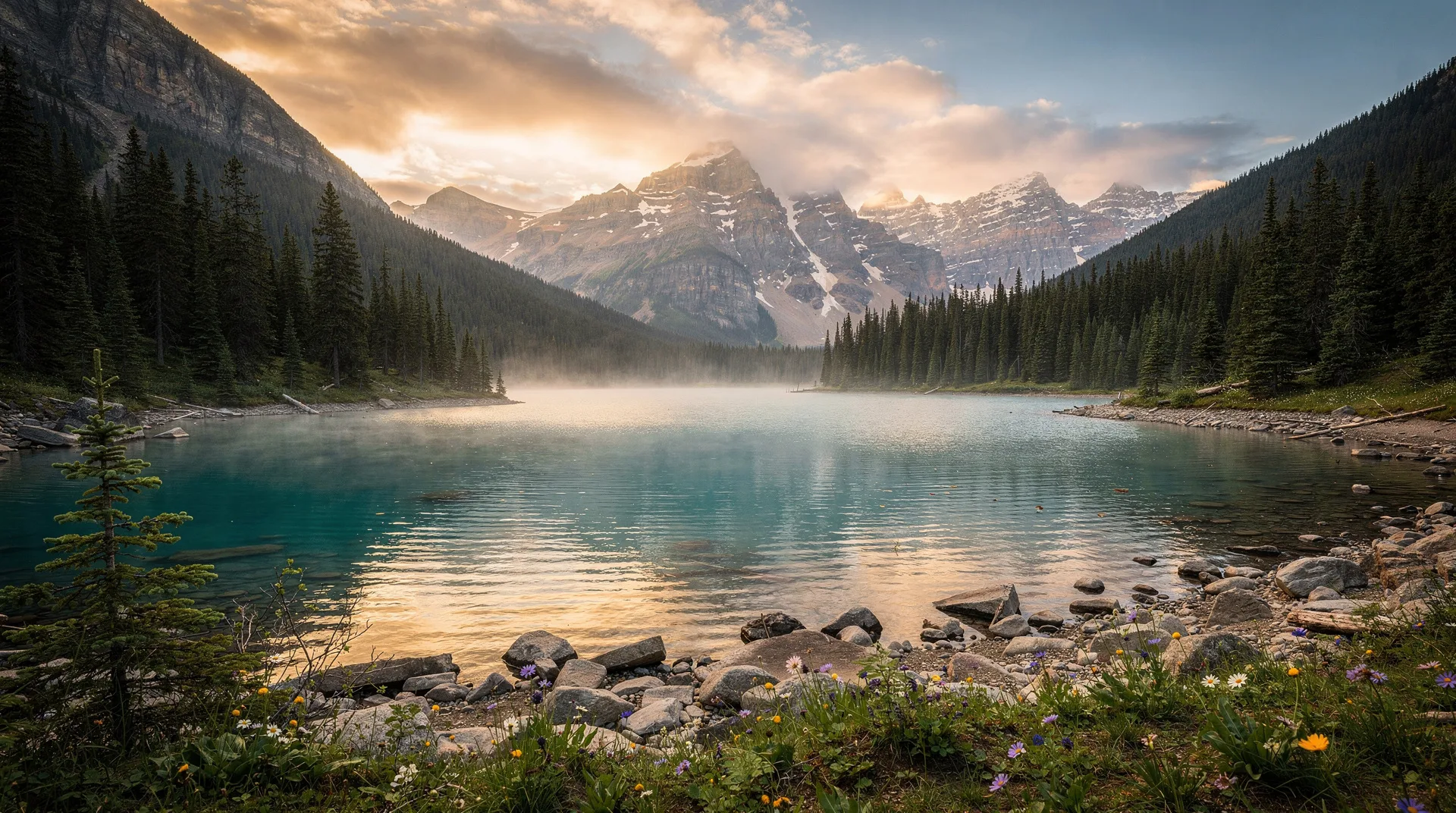
Georgian Bay is Ontario’s most spectacular stretch of shoreline — a 15,000-square-kilometre body of water large enough to qualify as its own Great Lake if it were not geographically attached to Lake Huron, with 30,000 islands along its eastern shore and a wind-sculpted landscape of pink granite, wind-twisted white pines, and clear deep water that has been the subject of Canadian art for over a century. The Group of Seven painters came here specifically to paint — Tom Thomson, Arthur Lismer, A.Y.
Jackson, and Lawren Harris all produced some of their most important canvases along this coast. The UNESCO Georgian Bay Biosphere Reserve recognises the eastern shore from Port Severn to Killarney as one of the most ecologically distinctive freshwater environments in North America. For visitors, Georgian Bay is harder to plan than a single destination — it is a coastline, not a town — but spectacularly rewarding once you understand the geography.
This guide covers the main sub-regions, the best ways to experience the bay, where to base yourself, and how to get there. For related destinations, see Parry Sound (coming), Tobermory, and Killarney.
| At a glance | |
|---|---|
| Where | Ontario, between the Bruce Peninsula and Killarney, 2.5-5 hours north of Toronto |
| Cost | Mid-range — 30,000 Islands cruise around CAD 35-45; multi-day kayak trips around CAD 200-400/person/day all-inclusive |
| Time needed | 3-7 days depending on how many sub-regions you cover |
| Getting there | Self-drive is essential; Highway 400 from Toronto is the main route |
| Best time | July-August for warm water and full operations; September for fewer crowds and early colour |
The geography
Georgian Bay is formed as a massive inlet of Lake Huron, separated from the main lake body by the Bruce Peninsula (south shore) and Manitoulin Island (north shore). The eastern shore — from Port Severn near Muskoka north to Killarney — is the classic 30,000 Islands coast, a labyrinth of pink Canadian Shield granite islands ranging from barely-rocks to permanent fishing camps and multi-million-dollar cottages. The western shore, along the Bruce Peninsula, is geologically different — the Niagara Escarpment continues here, producing limestone cliffs, turquoise water, and the unique caves and caverns at Tobermory.
The bay is effectively divided into four regions for visitors:
- South Georgian Bay: Collingwood, Blue Mountain, Wasaga Beach, Penetanguishene, Midland
- Eastern shore / 30,000 Islands: Honey Harbour, Parry Sound, Pointe au Baril, Byng Inlet
- Northern shore: Killarney, French River, Manitoulin Island
- Western shore / Bruce Peninsula: Tobermory, Wiarton, Owen Sound, Lion’s Head
30,000 Islands and the UNESCO Biosphere
The eastern shore is the Georgian Bay of popular imagination — the one the Group of Seven painted. The islands here were sculpted by retreating glaciers, leaving an archipelago of smooth pink granite, stunted white pines growing directly out of rock fissures, and clear deep water. The UNESCO Georgian Bay Biosphere Reserve covers 347,000 hectares and is Canada’s largest UNESCO Biosphere.
How to see it: The islands are only accessible by boat. Options include:
- 30,000 Islands cruise from Parry Sound: The Island Queen runs 3-hour cruises through the islands from downtown Parry Sound (June-October). Essential first-visit experience.
- Sea kayaking: Half-day, full-day, and multi-day tours from Parry Sound, Pointe au Baril, and Honey Harbour with operators including White Squall and Georgian Bay Kayak.
- Water taxi: Several operators offer island drop-offs for day trips, picnics, or fishing.
- Small cruise ship: Kawartha Voyageur (Ontario Waterway Cruises) runs multi-day shoreline cruises.
Best entry points: Parry Sound (most options, direct Highway 400 access from Toronto); Pointe au Baril (more remote, closer to the most dramatic islands); Honey Harbour (closest to Toronto, access to Beausoleil Island).
Parry Sound
Parry Sound is the main service town on the eastern shore — a working fishing and forestry town of 6,000 people that serves as the base for most 30,000 Islands access. The deep-water harbour was used in the late 19th century as a lumber port; the legacy infrastructure (including the CPR trestle towering over the town) gives Parry Sound more visual character than most Canadian towns its size.
Things to do: 30,000 Islands cruise; Stockey Centre for the Performing Arts (concerts by world-class classical musicians in a small hall); Bobby Orr Hall of Fame (the hockey great grew up here); swimming at Waubuno Beach. If you prefer a set itinerary, you can compare guided tours in Ontario before you travel.
Where to stay: Best Western Parry Sound; Charles Inn (Parry Sound’s heritage boutique); several small motels and cottage rentals.
Tobermory and the Bruce Peninsula
At the northern tip of the Bruce Peninsula, Tobermory sits on a remarkable Georgian Bay inlet with turquoise water and limestone cliffs at Fathom Five National Marine Park. The highlights:
- Flowerpot Island: Named for two massive limestone sea stacks off the island’s coast; accessed by boat tour from Tobermory harbour (50-minute cruise each way); light hiking on the island itself.
- Bruce Peninsula National Park: The Grotto — a dramatic cave-and-cove at Indian Head Cove — is one of the most photographed natural features in Ontario. See the Bruce Peninsula guide for detail.
- MS Chi-Cheemaun ferry: Connects Tobermory to South Baymouth on Manitoulin Island (2 hours); the main northern Lake Huron connection.
Killarney and the north shore
At the far northern end of Georgian Bay, Killarney sits at the edge of Killarney Provincial Park — the white-quartzite La Cloche Mountains, the crystal-clear blue Georgian Bay water, and the most visually distinctive park in Ontario. Killarney village is tiny (400 people); the Killarney Mountain Lodge is the main accommodation.
For details on canoeing, hiking, and the park itself, see Killarney Provincial Park.
South Georgian Bay (Collingwood and around)
The south-facing coast from Collingwood to Midland is the accessible-from-Toronto end — 2 to 2.5 hours from the city, developed into a year-round recreation zone. Blue Mountain is the main ski resort and summer adventure hub; Wasaga Beach claims the title of world’s longest freshwater beach (14 km); Thornbury, Meaford, and Collingwood form a food-and-wine corridor along the coast.
Sea kayaking
Georgian Bay is one of the world’s premier sea kayaking destinations. The archipelago makes protected and challenging paddling both available, the water is clear, wildlife encounters (bald eagles, loons, black bears on the mainland) are regular, and navigation between islands is relatively straightforward.
Recommended operators:
- White Squall Paddling Centre (Nobel, near Parry Sound): The best-equipped and most experienced outfitter in the region.
- Georgian Bay Kayak (Parry Sound): Good for introductory tours.
- Thirty Thousand Islands Cruises (Parry Sound): Kayak rentals and drop-offs.
Multi-day trips with guide and outfitter typically run CAD $200-400 per person per day all-inclusive. Self-outfitted trips require experience and reliable weather reading — Georgian Bay can go from glass to 1.5-metre waves within an hour when fronts pass.
Indigenous culture
Georgian Bay is the traditional territory of the Anishinaabeg peoples, particularly the Ojibwe. Several communities along the bay offer cultural experiences:
- Wasauksing First Nation (near Parry Sound): Cultural tours by request.
- Wiikwemkoong Unceded Territory (Manitoulin Island): The largest unceded First Nations territory in Canada, with cultural tours, a summer powwow (early August), and authentic Indigenous restaurants.
- Shawanaga First Nation (eastern shore): Cultural interpretation centre.
Seasonality at a glance
| Month | Water/weather | Crowds |
|---|---|---|
| June | Cool water, blackflies in some areas | Light |
| July-August | Warm water, all operators running | Peak |
| September | Warm water, early colour | Moderate, best value |
| October | Cold water, peak fall colour | Light (land-based visitors) |
| Nov-April | Frozen, most tourism closed | Minimal (except Blue Mountain skiing) |
Comparing Georgian Bay to nearby Ontario cottage country
Visitors cross-shopping Georgian Bay against other Ontario nature escapes often consider Muskoka, which is more developed and closer to Toronto but lacks the open-water scale of the 30,000 Islands, or Algonquin Park, which trades boating and beaches for interior canoe-tripping and denser wilderness.
Manitoulin Island, reached from Tobermory by the Chi-Cheemaun ferry, extends a Georgian Bay trip further north into Anishinaabe cultural territory and quieter landscapes. Families weighing a shorter trip sometimes look at the Toronto to Blue Mountain route as a lower-commitment version of the south shore. For a broader look at how to sequence Ontario’s cottage country regions, the Ontario cottage country guide is a useful companion to this page.
Practical planning notes
Fuel and cell coverage thin out quickly once you leave the main highway corridors — Pointe au Baril and the more remote eastern-shore access points have limited services, so filling the tank in Parry Sound before heading further out is sensible. Weather on open water changes fast: Georgian Bay’s reputation for sudden squalls is well earned, and self-outfitted paddlers should always check the marine forecast before setting out, not just the land forecast. Boat tours and ferries (the Island Queen and the MS Chi-Cheemaun) run to a published seasonal schedule that starts and stops abruptly around the shoulder months, so confirming dates directly with the operator before building a trip around them avoids disappointment.
Getting there and around
From Toronto: Parry Sound is 2.5 hours via Highway 400 (direct). Tobermory is 4 hours via Highway 400 and Highway 6. Killarney is 5 hours via Highway 400 and Highway 69/400.
By train: Via Rail’s Canadian route stops at Parry Sound (not convenient for most visitors).
By air: No commercial service close to the eastern shore. Sudbury airport serves the northern end.
Rental car: Essential for most visits. Georgian Bay is not a car-free destination.
When to visit
- June: Warmer; blackfly season (serious in some areas); fewer crowds.
- July-August: Peak season; warm water; all operators running.
- September: The best month — fewer crowds, warm water, early fall colour starting.
- October: Fall colours peak; most water-based operators winding down.
- November-April: Georgian Bay freezes; most tourism shuts down except for Blue Mountain skiing.
Related guides
- Parry Sound destination page for the main town guide
- Killarney Provincial Park for the northern end
- Bruce Peninsula for the western shore
- Blue Mountain for the south shore ski/summer hub
- Wasaga Beach for the south shore beaches
- Manitoulin Island for the north shore ferry connection
Frequently asked questions about Georgian Bay
Can you visit Georgian Bay without a boat? Yes, to a point — the shore towns (Parry Sound, Tobermory, Collingwood, Killarney) and beaches like Wasaga Beach are all reachable by car, and cruises like the Island Queen let you see the islands without your own boat. But independently exploring the 30,000 Islands archipelago requires a boat or kayak.
Is Georgian Bay good for a weekend trip from Toronto? Parry Sound or the south shore around Collingwood work well for a weekend, being 2-2.5 hours from Toronto. Tobermory and Killarney are further (4-5 hours) and reward a longer stay rather than a rushed weekend.