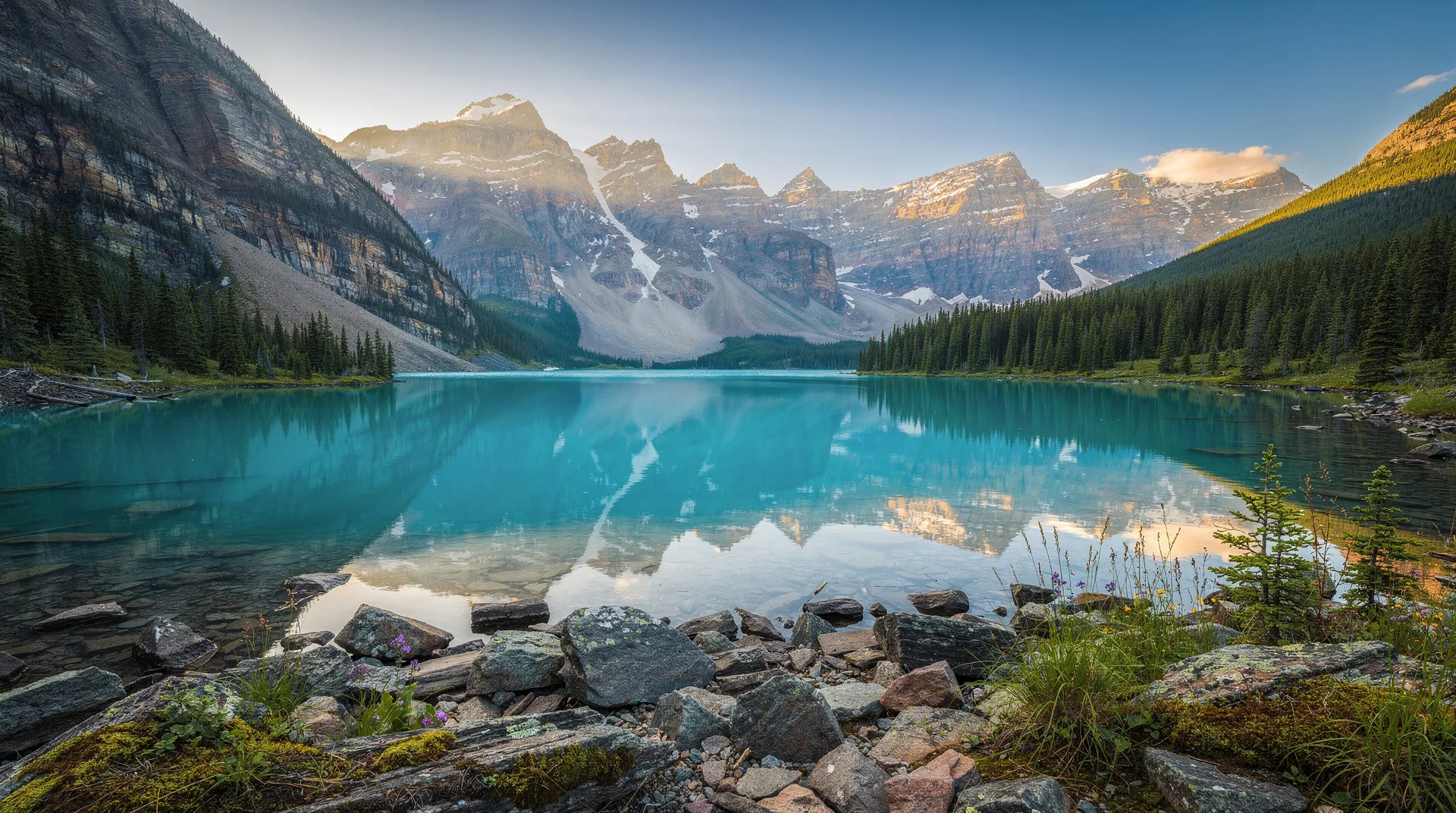
Quick facts
- Duration
- 3 days / 2 nights
- Distance from Montreal
- 90 minutes to Magog
- Best season
- May to late October
- Transport
- Rental car essential
- Budget estimate
- CAD 220–380/day per person
Three days is the right length for the Eastern Townships. Any less and you sacrifice either the wine country or the lake country; any more and the rhythm starts to slacken. This itinerary runs as a loop from Montreal, hitting the wine route of Brome-Missisquoi on day one, anchoring around Lake Memphrémagog and North Hatley on day two, and returning through Mont-Orford and a final loop on day three.
The Townships are intentionally slow country. Driving distances are short (longest legs are under an hour), and the reward is in lingering — at a vineyard patio, at a village café, at a lakeside dock. For a fuller regional overview see the Eastern Townships region guide.
| At a glance | |
|---|---|
| Route | Loop from Montreal via Dunham wine country, Sutton, Lake Memphrémagog and Magog |
| Driving | Longest single leg under an hour; total loop distance around 250 km |
| Cost | Roughly CAD 220-380/day per person including a mid-range hotel or B&B and meals |
| Vehicle | A rental car is essential — the route has no practical transit link |
| Best season | May to late October for full patios and vineyards; October for foliage and harvest |
Itinerary at a glance
| Day | Focus | Overnight |
|---|---|---|
| 1 | Dunham wine country, ice cider producers, drive to Sutton | Sutton |
| 2 | Mont Sutton hike, Saint-Benoît-du-Lac abbey, North Hatley | North Hatley (Lake Massawippi) |
| 3 | Parc national du Mont-Orford, lunch in Magog, scenic drive south of the lake | Return to Montreal |
Day 1: Montreal to Dunham wine country
Leave Montreal mid-morning — no earlier than 9:30 is necessary. The Townships are 90 minutes away and nothing opens before 11am. Take Autoroute 10 east to exit 68 (Cowansville) and head south on Route 202 toward Dunham.
Mid-morning: first stop at Vignoble de l’Orpailleur in Dunham — Quebec’s oldest commercial vineyard (founded 1982) and still one of its best. Free self-guided walk through the vines; the tasting room opens at 10am. The house specialty is the “Orpailleur” white (frontenac blanc grape); allow 45 minutes for tasting and a walk.
Lunch in Dunham village or push 10 minutes south to Frelighsburg — the most photogenic village on the wine route, with a heritage covered bridge and two excellent cafés.
Afternoon: continue along the Route des Vins — a circular itinerary through 22 wineries in the Brome-Missisquoi region. Pick 2–3 more stops based on interest:
- Domaine Pinnacle (Frelighsburg): the producer that effectively put ice cider on the map. Tasting plus orchard walk.
- Vignoble Les Pervenches: biodynamic, small-batch; the “Couchant” is consistently one of Quebec’s best whites.
- Union Libre cidre & vin: both cider and wine; the most innovative producer on the route.
Early evening: drive 40 minutes east to Sutton for dinner and the night. Sutton village has European-feeling architecture, excellent restaurants (Tomifobia Nature Trails, À la Mijoteuse), and dozens of boutique B&Bs.
Overnight in Sutton.
Day 1 field notes
Wineries in the Townships are mostly family-scale operations, and tasting rooms often close earlier than visitors expect, commonly around 5pm and sometimes sooner outside peak season. Plan to be at your last stop by mid-afternoon. Tastings are usually priced per flight, typically in the range of a few dollars to roughly CAD 15 or 20 depending on the number of pours, and many producers credit the fee if you buy a bottle.
Bring a cooler bag or a soft-sided insulated tote. Between ice cider, cheese, honey and preserves, most travelers leave with more than planned, and a trunk in July heat is hard on both wine and cheese. Many producers will also sell you a picnic board to eat on the grounds, which often makes a better lunch than a restaurant stop and keeps the day moving.
If you arrive in Sutton with energy to spare, a short evening walk through the village streets is a pleasant way to settle in, and it helps you scout where you want to eat the next night or have a coffee the next morning.
Book Eastern Townships tours on GetYourGuideDay 2: Sutton, Lake Memphrémagog and North Hatley
Start slow. Sutton’s Saturday market (if visiting in season) runs 9am–1pm at the village core.
Morning: hike Mont Sutton. The PAAS Plein Air Sutton trail network covers 80 km of routes; the Round-Top loop (10 km, 5 hours) is the full commitment, but the shorter La Dos-d’Orignal (5 km, 2.5 hours) delivers similar views with less elevation. Summer chairlift runs weekends for those preferring a ride up. Summit cost: hiking pass $12 or chairlift $25.
Lunch back in Sutton village, or pack a picnic from the Saturday market.
Afternoon: drive 50 minutes east to Abbaye Saint-Benoît-du-Lac on Lake Memphrémagog. The Benedictine monastery was founded in 1912 and the monks still produce cheese (the “Bleu Bénédictin” and “Moine” are nationally famous) and ice cider. The church hosts vespers daily at 5pm with the monks’ Gregorian chant — extraordinary to witness. The on-site shop sells the cheeses plus ciders.
Late afternoon: drive 30 minutes south to North Hatley on Lake Massawippi. The village is the prettiest on this lake and has the strongest concentration of heritage architecture in the Townships — the result of a 19th-century American summer-colony legacy. Walk the waterfront, visit the galleries on Main Street.
Dinner and overnight at Manoir Hovey — the landmark heritage hotel and Relais & Châteaux property on Lake Massawippi (budget well above standard) — or at one of several more affordable B&Bs in the village.
Day 2 field notes
Mountain weather changes quickly. Even on a warm summer morning the summit of Mont Sutton can be cooler and windier than the village, so carry a light layer and a rain shell, and wear proper footwear because the trails can stay muddy and rooty for days after rain. Bring more water than seems necessary; there is little to buy once you leave the base area.
The abbey is a working monastery, not a museum. Dress modestly, keep your voice low, and check the posted schedule for the offices before you commit to a timetable, since service times can shift on feast days and holidays. Photography inside the church is generally discouraged, so treat it as a moment to simply listen. The shop is the practical reason to arrive a little early: popular cheeses can sell out late in the day, especially on summer weekends.
If you want a break from driving and have the time, Lake Massawippi is good for a quiet swim or a rental paddleboard or kayak in July and August, with public access points near the village. Water temperatures stay cool into early summer, so test before planning on a long swim.
Day 3: Mont-Orford and return via Magog
Morning: drive 30 minutes northwest to Parc national du Mont-Orford. Hike one of the park’s classic trails — Mont-Giroux (4 km return, 2 hours) if you want a moderate summit, or Pic-de-l’Ours (3 km return, 1.5 hours) for quicker views. For a no-hike option, the Ski Mont-Orford gondola runs weekends in summer/fall ($28 adult).
Lunch in Magog on Lake Memphrémagog — the region’s largest town and a natural lunch stop. The waterfront promenade, the Rue Principale terraces, and the Saturday summer market all concentrate here.
Afternoon: drive Route 247 south along the east shore of Lake Memphrémagog — one of the most scenic short drives in Quebec. Stop in Georgeville (ferry dock and heritage village) and continue to Fitch Bay. Turn around at the US border (Stanstead) or cross into the village of Derby Line, Vermont, if you have passports and time.
Return to Magog, then north on Autoroute 10 toward Montreal. Total return drive: 90 minutes.
Optional add-on: before heading home, detour 20 minutes to Bromont for the Musée du Chocolat and the Magasin de la Chocolaterie — one of Quebec’s better chocolate makers.
Arrive Montreal by 6–7pm.
Day 3 field notes
Sunday afternoon traffic on Autoroute 10 toward Montreal can be slow in summer and heavy during the October foliage weekends, particularly near the Montreal-area bridges. Leaving Magog by about 3pm usually keeps you ahead of the worst of it, while a later departure can add a noticeable chunk of time to the 90 minute baseline.
If you have the energy for a bigger town on the way out, Sherbrooke sits at the eastern end of the region and works well as a longer lunch stop or a replacement for the Georgeville drive, with a university-town food scene, a riverside setting and a more urban feel than the villages you have been visiting. It adds driving time, so choose it instead of, not on top of, the lake road.
Crossing into Vermont requires valid passports and enough time to deal with border lines on the way back. Check current entry requirements before you go, and if the line looks long, skip the detour; the Quebec side of the lake is lovely enough to fill the afternoon.
Practical tips for the weekend
Booking: reserve accommodation 2–3 months ahead for summer weekends and October foliage. Sutton, North Hatley, and the Route des Vins B&Bs sell out first.
Reservations: Manoir Hovey and most North Hatley restaurants require bookings. Vineyard tastings don’t generally need reservations mid-week but do on weekends in October.
Drinking and driving: the wine route crosses multiple municipalities; designate a driver or book a guided wine tour. Several local operators run full-day van tours from Magog or Knowlton, and you can compare guided tours across Canada before choosing.
Seasonal adjustments:
- Spring (April–May): sugar shacks open — substitute Day 1 with a cabane à sucre experience.
- Fall (October): add or extend to include foliage-specific viewpoints.
- Winter (December–March): replace Sutton hike with Mont-Orford or Owl’s Head skiing; replace North Hatley lake activities with spa treatments at Strøm Spa Nordique.
Alternative 2-day version: if only two days, skip Mont Sutton and focus on wine country Day 1 + Magog/North Hatley Day 2.
What to pack: comfortable walking shoes, a light jacket for evenings even in summer, a refillable water bottle, a cooler bag for purchases, and some cash for farm stands and small markets, although most places accept cards. Cell coverage can be patchy in the hills around Sutton and the park, so download offline maps before you leave Montreal.
Language: the Townships are largely French-speaking with a significant English-speaking heritage community, and service in English is common in villages like North Hatley and Sutton. A few words of French, such as a simple bonjour at the door, are always appreciated.
Pairing it with a longer trip: this loop works well as the first leg of a bigger Quebec journey. From the Townships you can continue northeast and join the Bas-Saint-Laurent road trip from Quebec City in reverse, or add a few days of river and mountain scenery after a weekend of vineyards. Allow extra driving time and book lodging for each stop in advance during summer and fall.
Making the most of a short weekend
Because the driving legs are short, the main risk with this itinerary is over-scheduling rather than under-scheduling. Building in slack — an extra hour at a vineyard patio, a slower lunch in Magog — tends to produce a better trip than trying to squeeze in every winery on the Route des Vins. Travellers with a car and more flexibility can extend the loop by a day using the Sutton village guide for a second night, adding a proper ski or hiking day without changing the rest of the plan.
Frequently asked questions about Eastern Townships weekend
Do I need a car for this Eastern Townships weekend? Yes. There is no practical rail or bus link between the wine route, Sutton, North Hatley and Magog, and the itinerary depends on short drives between villages.
Is this itinerary doable without a car using tours? Partially — several operators run full-day guided wine-route van tours from Magog or Knowlton, which cover Day 1 without driving, but Days 2 and 3 as written still assume a rental car.