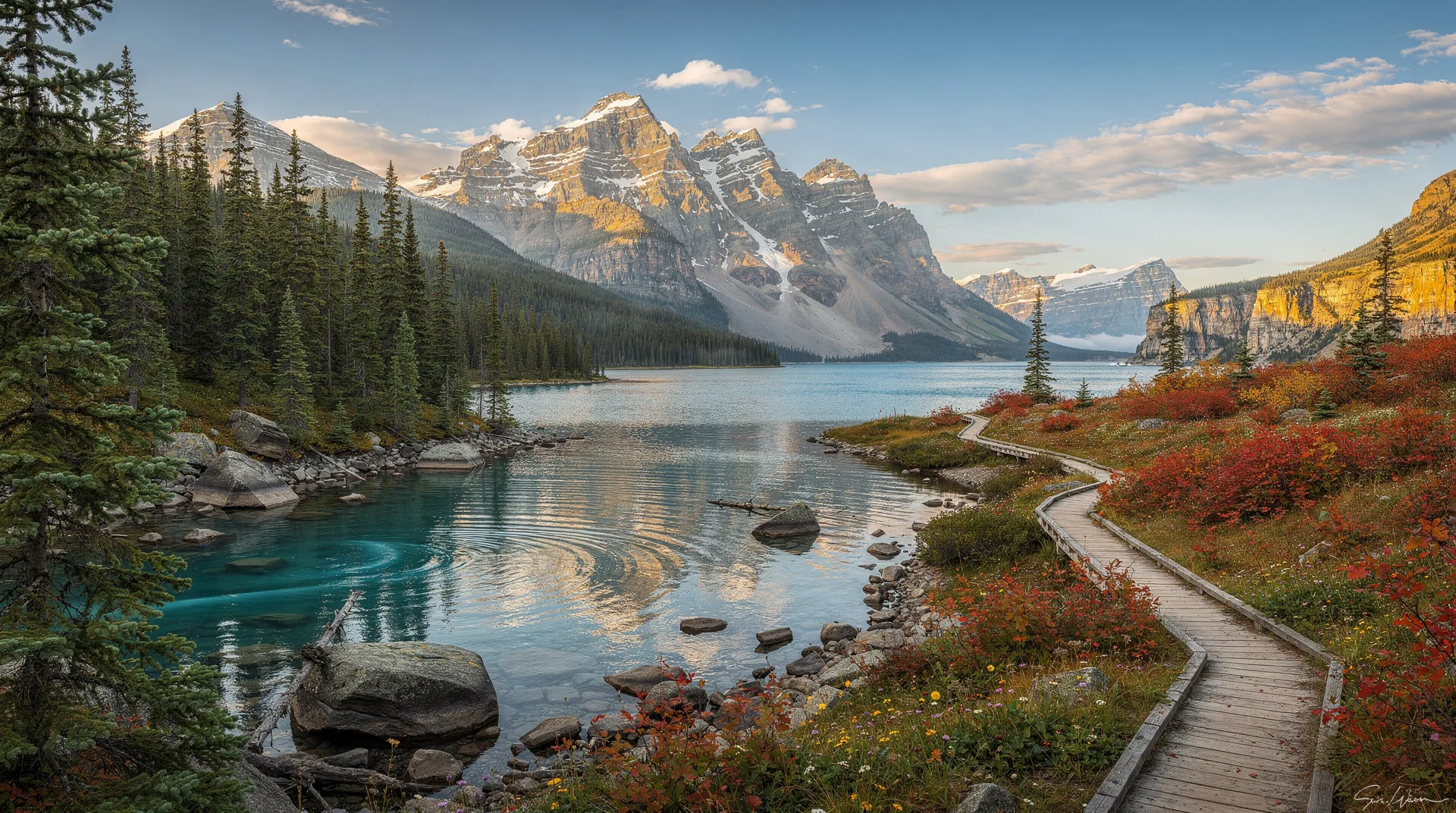
2 Weeks in British Columbia: The Grand Circuit Itinerary
Overview
Fourteen days is enough time to go deep into British Columbia without feeling rushed. This grand circuit begins in Vancouver, drives north to Whistler, crosses to Vancouver Island for Tofino and Victoria, returns to the mainland via the Gulf Islands, and then heads inland to the Okanagan Valley — BC’s wine and orchard country — before closing the loop back to Vancouver through the Fraser Valley.
The result is a 2,100-kilometre circuit that encompasses coastal mountains, old-growth rainforest, Pacific surf beaches, a Victorian harbour city, island archipelagos, and the warm, dry wine country of the interior — five climatically and culturally distinct zones within a single province. This is one of Canada’s great self-drive holidays.
At a glance
| Days | Region | Highlights |
|---|---|---|
| 1–2 | Vancouver | Stanley Park, MOA, North Shore mountains |
| 3–4 | Whistler | Sea-to-Sky Highway, Peak 2 Peak Gondola |
| 5 | Horseshoe Bay ferry → Nanaimo | Island arrival |
| 6 | Nanaimo → Tofino | Cathedral Grove, Long Beach |
| 7–8 | Tofino | Surfing, Clayoquot Sound, wildlife |
| 9 | Tofino → Victoria | Pacific Rim, island drive |
| 10 | Victoria | Butchart Gardens, Royal BC Museum |
| 11 | Victoria → Gulf Islands → Mainland | Island ferry, Salt Spring or Galiano |
| 12–13 | Okanagan Valley | Kelowna, wine touring, Okanagan Lake |
| 14 | Okanagan → Vancouver | Coquihalla Highway return |
Best months: June through September for the full circuit. May and October work with minor adjustments to Tofino (surf is great) and Okanagan (harvest season in September is exceptional).
Start/end: YVR, Vancouver International Airport.
Day-by-day
Days 1–2: Vancouver
Vancouver demands two days rather than one — the city’s size, its neighbourhood variety, and its natural setting all justify the time.
Day 1: The Stanley Park seawall (8.8 kilometres, 2–3 hours on foot) is the essential first day in Vancouver: old-growth forest and coastline, the totem poles at Brockton Point, views from Prospect Point over the Lions Gate Bridge and Howe Sound. Cross to Granville Island by False Creek ferry for lunch at the Public Market. Dinner in Gastown.
Day 2: The Museum of Anthropology at UBC is mandatory. The Great Hall’s collection of Northwest Coast First Nations monumental art is one of the finest in the world and provides essential cultural context for BC’s Indigenous heritage. Afternoon on the North Shore — Capilano Suspension Bridge or the free Lynn Canyon alternative — and the Grouse Mountain gondola for sunset views over the city. Pick up your rental car today for tomorrow’s drive.
Browse Vancouver day tours and activitiesDays 3–4: Whistler
Day 3: Drive the Sea-to-Sky Highway north from Vancouver (Highway 99, 2 hours to Whistler). The road clings to cliffs above Howe Sound before climbing into the mountains past Squamish. Stops: Shannon Falls (84m, 5 minutes from the car), the Stawamus Chief granite face in Squamish, and optionally the Sea to Sky Gondola for summit views. Arrive in Whistler by early afternoon.
Day 4: The Peak 2 Peak Gondola is the centrepiece: a 4.4-kilometre cable span connecting Whistler and Blackcomb summits, 436 metres above the valley floor. In summer, hike the alpine meadows above the gondola stations — wildflowers from late June, ptarmigan and marmot on the higher slopes. The Squamish Lil’wat Cultural Centre in the village is worth two hours. Dinner at Araxi.
Day 5: Ferry to Vancouver Island
Drive from Whistler to Horseshoe Bay (1.5 hours). Take BC Ferries to Departure Bay, Nanaimo (1 hour 40 minutes). Spend the afternoon in Nanaimo — the Old City Quarter, the Bastion historical site, and the harbour boardwalk are all worth time. Stay the night in Nanaimo.
Day 6: Across the island to Tofino
Leave early. Drive north on the Island Highway to Parksville, then west on Highway 4. Stop at Cathedral Grove in MacMillan Provincial Park — old-growth Douglas firs up to 800 years old and 75 metres tall, accessible from a five-minute walk from the parking area. Continue through the mountains and down to the coast, entering Pacific Rim National Park Reserve before Tofino. Walk Long Beach before checking in.
Days 7–8: Tofino
Two days in Tofino at the pace the place demands.
Day 7: Morning surf lesson at Cox Bay (surf schools provide all equipment; no experience required). Afternoon sea kayaking in Clayoquot Sound — a UNESCO Biosphere Reserve and the largest intact temperate rainforest system in North America. Watch for black bears foraging at the tide line, sea otters floating on kelp beds, and bald eagles overhead.
Day 8: Early morning wildlife boat tour — grey whales, black bears, sea otters, and seabirds are all reliably present in summer. Afternoon on the Rainforest Trail near Long Beach and the Tonquin Trail behind town. If the weather cooperates, a floatplane to Hot Springs Cove (natural geothermal pools on a remote headland) is the day trip of a lifetime.
Browse Tofino tours and Vancouver Island experiencesDay 9: Tofino to Victoria
Drive south across the island (4 hours). The Cowichan Valley on the southern Island Highway is BC’s culinary heartland — farm stands, cideries, and small wineries line the road through Duncan and Cobble Hill. Stop if the harvest timing aligns (late summer through October).
Arrive in Victoria by late afternoon. Walk the Inner Harbour — the Fairmont Empress, the Parliament Buildings, the harbour activity — and have dinner in the Old Town district.
Day 10: Victoria
Victoria rewards a full day of deliberate slowness.
Morning: Taxi or bus to Butchart Gardens — 22 hectares of formal gardens in a former limestone quarry, with the Sunken Garden, Italian Garden, Japanese Garden, and Rose Garden all world-class. Go early to beat the crowds.
Afternoon: The Royal BC Museum in the city centre — the First Peoples galleries are exceptional, with a reconstructed longhouse, button blanket collection, and extensive ceremonial regalia. The natural history section is one of the best in Canada.
Evening: Whale watching tour from the Inner Harbour (orcas and humpbacks are regularly sighted from May–October) or simply dinner in the Old Town.
Day 11: Gulf Islands transit
Take a morning BC Ferries sailing from Swartz Bay that routes through the Gulf Islands — specifically Salt Spring Island or Galiano Island. Spend 3–4 hours on Salt Spring (the Ganges Saturday Market is one of BC’s best artisan markets; the island also has small wineries, studios, and a genuinely pleasant harbour town) before taking a connecting sailing back to Tsawwassen on the mainland.
Drive from Tsawwassen east to Hope at the mouth of the Fraser Canyon (1.5 hours), then north on Highway 5 (the Coquihalla) to Merritt, and east on Highway 97C to Kelowna in the Okanagan (total from Vancouver approximately 4 hours). Stay the night in Kelowna.
Days 12–13: Okanagan Valley
The Okanagan is BC’s wine country — a hot, dry valley running 180 kilometres north–south, flanked by mountains, centred on Okanagan Lake, and dotted with more than 200 wineries. The contrast with the rainforest coast you have just left is dramatic: the hills are brown, the air is warm and dry, and the light has the quality of southern France.
Day 12: Explore the Naramata Bench south of Kelowna — a concentration of boutique wineries on a hillside bench above Okanagan Lake. Self-drive wine touring works well here; the roads are quiet and the wineries are within cycling distance of each other. Mission Hill Family Estate (the most architecturally dramatic winery in BC), Quails’ Gate, and Burrowing Owl are all worth visiting. Lunch at one of the winery restaurants — the farm-to-table cooking matches the wine quality.
Day 13: Take the ferry across Okanagan Lake to the west side, or drive south to Osoyoos near the US border — the northernmost desert in Canada, where cactus and sagebrush grow alongside vineyards. The Osoyoos Desert Centre explains the rare Okanagan pocket desert ecosystem. Drive back north through Oliver (the self-proclaimed Wine Capital of Canada) stopping at wineries en route. Evening back in Kelowna.
Activities beyond wine: Kayaking and paddleboarding on Okanagan Lake; cycling the Kettle Valley Rail Trail (a converted railway grade through dramatic landscape); the Myra Canyon trestles section of the KVR (a series of heritage railway trestles across a mountain canyon, accessible on foot or bike).
Day 14: Okanagan → Vancouver
Drive from Kelowna west on Highway 97C to Merritt, then south on the Coquihalla Highway (Highway 5) to Hope and west on Highway 1 to Vancouver — approximately 4 hours on excellent highway through dramatic mountain scenery. The Coquihalla climbs to 1,244 metres at the summit and descends through the Fraser Canyon — impressive in any season, stunning in autumn.
Return your rental car and connect to YVR for your departure flight, or stay a final night in Vancouver.
Budget breakdown
Costs per person, two people sharing, in Canadian dollars:
| Category | Budget (CAD) | Moderate (CAD) | Comfort (CAD) |
|---|---|---|---|
| Accommodation (14 nights) | 1,500–2,000 | 2,800–3,800 | 5,000–7,000 |
| Food and drink | 750–1,000 | 1,300–1,800 | 2,200–3,000 |
| Rental car (14 days) | 700–950 | 950–1,300 | 1,300–1,800 |
| BC Ferries (3 crossings, vehicle) | 250–320 | 250–320 | 250–320 |
| Activities (gondola, surf, kayak, wine tours) | 400–600 | 700–1,000 | 1,200–2,000 |
| Total | ~3,600–4,870 | ~6,000–8,220 | ~9,950–14,120 |
Booking tips
- BC Ferries vehicle reservations: Book as early as possible for July–August sailings. Three crossings in this itinerary; none are optional
- Tofino accommodation: The most constrained accommodation supply in BC for its tourism demand — book 3 months ahead for summer
- Okanagan wineries: Most do not require reservations for tastings, but the popular restaurant wineries (Mission Hill, Quails’ Gate) need advance booking for lunch
- Whistler gondola: Buy online to avoid queues in summer
- Car rental: One-way fees apply if returning to a different city. The loop itinerary returns to Vancouver, which avoids this
Variations
Drop the Okanagan: If 14 days feels like too much driving, cut Days 12–13 and spend extra nights in Tofino or add a night on Salt Spring Island. The core BC coast circuit is deeply satisfying without the inland detour.
Add the Kootenays: Extending past the Okanagan east into the Kootenays (Nelson, Kaslo, the Slocan Valley) adds 2–3 days and a genuinely distinctive region — a mountain arts community with hot springs, heritage architecture, and excellent cycling.
Start in Whistler: Flying into Whistler or renting a car there allows you to skip the Vancouver urban section and spend more time in wilderness. Drive south to Horseshoe Bay from Whistler and take the ferry to Vancouver Island.
Coast versus interior: what actually changes
The single biggest adjustment this itinerary asks of travellers is the climate switch between the coast (Days 1–11) and the Okanagan (Days 12–14). It is worth planning for deliberately rather than being caught out by it.
| Factor | Coast (Vancouver–Tofino–Victoria–Gulf Islands) | Okanagan (Kelowna–Naramata–Osoyoos) |
|---|---|---|
| Climate | Temperate rainforest, frequent light rain even in summer | Semi-arid, hot and dry, near-desert around Osoyoos |
| Pack for | Layers, a light rain shell, waterproof footwear for trails | Sun protection, warm-weather clothing, refillable water |
| Driving style | Winding coastal highways, ferry-dependent schedule | Open valley roads, straightforward self-drive |
| Signature activity | Surfing, kayaking, old-growth forest walks | Wine touring, lake swimming, cycling |
| Pace | Slower — tied to ferry sailing times | Faster — no ferries, flexible daily schedule |
Travellers who only have patience for one half often ask which to cut; see the Variations section below for how the itinerary handles that.
Related guides
- 7-day BC itinerary
- 10-day BC extended Pacific loop
- Okanagan wine country: 5-day itinerary
- BC driving distances and times
- Car rental in BC
- Which Gulf Island should you visit?
- Best time to visit BC
- Okanagan wine country in depth
Frequently asked questions about 2 Weeks in British Columbia
Is 14 days too long for British Columbia, or will it feel padded? For travellers who want both the coast and the Okanagan properly, 14 days is well-used rather than padded — every region on this itinerary gets at least two nights, which is the minimum for it to feel unrushed rather than a drive-through.
Can this itinerary be done without a car for part of it? Vancouver’s first two days work well without a car (SkyTrain and walking cover the city), but every subsequent leg — Whistler, the island crossing, Tofino, the Gulf Islands, and the Okanagan — genuinely requires a vehicle; there is no practical transit alternative for the full loop.
Two weeks in British Columbia is, for most visitors, the trip they will plan their return around. The variety — rainforest coast to mountain resort to vineyard valley to island archipelago — within a single province is extraordinary by any standard.