Quick facts
- Best time
- July to September (surf/sun) or Nov to Feb (storms)
- Days needed
- 3-5 days
- Languages
- English
- Getting there
- 5 hrs drive from Victoria or fly into Tofino Ucluelet Airport
| At a glance | |
|---|---|
| Where | Far west coast of Vancouver Island, BC, within Pacific Rim National Park Reserve |
| Cost | A Parks Canada day pass or Discovery Pass is required for Pacific Rim beaches and trails; town itself is free to walk |
| Time needed | 3-5 days |
| Getting there | Around 5 hrs drive from Victoria via Highway 4, or fly into Tofino-Ucluelet Airport |
| Best time | July-September for surf and sun; November-February for storm watching |
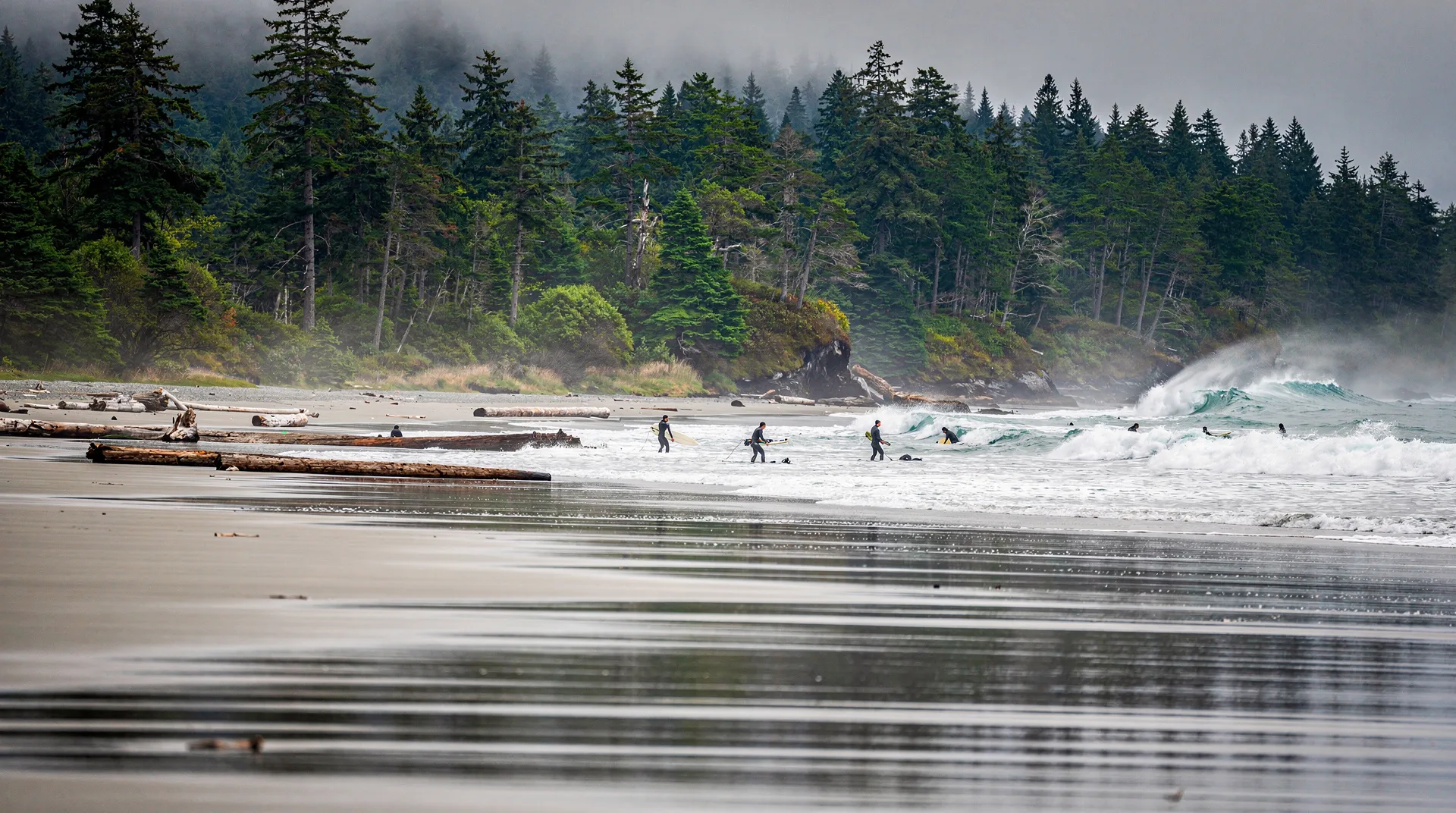
At the far western edge of Vancouver Island, where the Pacific Ocean meets a wall of old-growth rainforest, Tofino occupies a narrow peninsula that has become one of the most compelling destinations in Canada. It is a small town — fewer than 2,000 permanent residents — that punches well above its weight in terms of natural drama, culinary sophistication, and the kind of raw coastal scenery that makes you question why you ever live anywhere else.
Tofino sits within Pacific Rim National Park Reserve, one of British Columbia’s most visited protected areas, and on the traditional territory of the Tla-o-qui-aht First Nation. The town itself is the launching point for everything: surfing Long Beach, bear watching in Clayoquot Sound, kayaking to hot springs, and standing in the rain watching 10-metre winter swells roll in from Japan.
Why the Pacific Rim draws surfers and storm chasers
The geography that makes Tofino extraordinary is simple: there is nothing between here and Japan. The North Pacific swell rolls uninterrupted across thousands of kilometres of open ocean before breaking on the beaches of Pacific Rim National Park. Long Beach, an 11-kilometre arc of hard sand backed by dunes and rainforest, is the result — one of the best surf beaches in Canada and arguably the most scenically spectacular.
This same geography creates Tofino’s famous storm season. Between November and February, powerful winter storms drive massive surf onto the coast. Hotels and lodges fill with storm watchers who come to stand on the sea stack viewpoints at Cox Bay and Radar Hill, watching walls of white water explode against headlands in what has become a genuine Canadian travel phenomenon. The Wickaninnish Inn pioneered the storm watching concept in the 1990s, and the local hospitality industry has built a secondary peak season around it.
Tofino is also a gateway to Clayoquot Sound, a UNESCO biosphere reserve of islands, inlets, and old-growth forest that stretches north from town. This is bear country, wolf country, whale country — a temperate rainforest ecosystem largely unchanged since the Ice Age.
Top things to do in Tofino
Surf Long Beach
Long Beach is the central beach in Pacific Rim National Park and the most accessible surf break in the Tofino area. The wave quality ranges from gentle beach breaks suitable for beginners to more serious peaks for experienced surfers, depending on swell size and tide. Several surf schools operate from the beach and from Tofino town, offering lessons for complete beginners. Equipment rentals — boards, wetsuits — are widely available. Even if you have no intention of surfing, walking Long Beach at low tide with a 10-metre swell running is one of the great free experiences in Canadian travel.
Browse Vancouver Island surf lessons and Pacific Rim guided experiencesBear watching in Clayoquot Sound
The estuaries and tidal flats around Tofino provide some of the best black bear habitat on the BC coast. Bears emerge to feed on sedge grass and shellfish in spring, and move to salmon-spawning streams in autumn. Multiple wildlife boat tour operators run guided bear watching excursions into the inlets of Clayoquot Sound, with success rates that are among the highest for any wildlife tour in Canada. Wolf sightings on beaches are also increasingly reported. The tours typically run in the early morning or evening when bears are most active. You can compare wildlife tours in British Columbia before choosing a departure.
Hot Springs Cove
Accessible only by water taxi or floatplane, Hot Springs Cove in Maquinna Marine Provincial Park is one of the most rewarding half-day excursions from Tofino. The hot springs emerge from the rock at 50°C and cascade down a series of natural pools to the ocean — the lower pools, cooled by tidal mixing, are warm enough to soak in comfortably. The boat trip through the inlets of Clayoquot Sound passes through old-growth forest and frequently encounters sea otters, harbour porpoises, and bald eagles.
Kayaking and stand-up paddleboarding
The protected waters of Clayoquot Sound — away from the open Pacific — are excellent for sea kayaking. Multi-day guided kayaking expeditions explore the sound’s network of islands and inlets, with camping on remote beaches. For something less strenuous, stand-up paddleboarding on the calm waters of Tofino Inlet or Chesterman Beach lagoon at low tide is a popular activity. Rental shops in town offer half-day and full-day equipment packages.
Storm watching
The formalized storm watching experience in Tofino is more refined than it sounds. The top hotels — the Wickaninnish Inn in particular, but also several others on Cox Bay and Chesterman Beach — position their rooms, lounges, and restaurants to face the open Pacific. During major storm events, the waves at the Wick’s headland viewpoints reach extraordinary heights. The ritual involves a dry warm room, a hot drink, and one of the most elemental natural spectacles available in Canada. November through January are the best months.
Whale watching
Pacific grey whales migrate along the BC coast from their Mexican winter calving grounds to their Alaskan summer feeding grounds between March and May, passing directly through the waters off Tofino. Up to 20,000 grey whales make this migration, and the Tofino Whale Festival in March celebrates the passage. Humpback whales are present in summer. Whale watching boat tours depart from the main dock throughout the season.
Rainforest hiking
The old-growth rainforest of Pacific Rim National Park is among the few remaining intact temperate rainforest ecosystems in the world. Several accessible trails enter the forest: the Rainforest Trail is a 1-kilometre loop boardwalk through genuine old-growth, with western red cedars over 800 years old. The Schooner Cove Trail (2.2 km) connects to an isolated beach. The Gold Mine Trail near Tofino leads through second-growth and old-growth to a small beach and the remnants of a 19th-century gold rush attempt.
Best areas in and around Tofino
Tofino town itself sits at the tip of the Esowista Peninsula — a small grid of streets with galleries, coffee shops, and seafood restaurants. The main wharf is the departure point for boat tours. The residential streets behind the main strip have a pleasingly ungentrified quality given the town’s tourism prominence.
Chesterman Beach, a 15-minute walk or short drive south of town, is a beautiful double beach connected at low tide. The Wickaninnish Inn anchors the north end. This beach is popular with surfers and walkers and has a more residential feel than Long Beach.
Cox Bay, farther south, is the most consistent surf break and has become something of a surfers’ neighbourhood, with rentals and lessons clustered here.
Long Beach / Pacific Rim National Park occupies the area between the two park entry points and contains the main park information centre and the best-maintained facilities.
When to visit
July and August are the warmest and driest months — relatively, as the BC rainforest climate means some rain is always possible. Beach weather is most reliable, and the ocean temperature climbs to its annual high of around 14°C (a wetsuit is still advisable for swimming).
September and October offer the best of all worlds: swell picks up for better surf, crowds thin out, and the forest takes on autumnal colour. This is arguably the best overall time to visit.
November to February is storm season — dramatic, atmospheric, and genuinely exciting for those who come prepared. Book accommodation with ocean views and fireplace. Prices drop significantly from summer peaks.
March to May brings whale migration, the Whale Festival in March, and the first good spring surf. Accommodation is generally available without advance booking.
Where to stay
The Wickaninnish Inn on Chesterman Beach is one of the finest resort hotels in Canada — a property that has defined what storm watching means and earned its reputation through architecture, service, and food that match the extraordinary location. The Ancient Cedars Spa is a destination in its own right.
Pacific Sands Beach Resort on Cox Bay offers beachfront suites and cabins at a more accessible price point — well positioned for surf access.
Long Beach Lodge Resort on Cox Bay has a cedar longhouse feel and a great ocean-facing restaurant. More affordable than the Wickaninnish but comparable in atmosphere.
Middle Beach Lodge near MacKenzie Beach is a quieter adults-preferred property with cabins at the forest edge.
For budget travellers, Tofino Hostel and several self-contained cabin rentals around town offer significant savings over the beachfront resorts.
Food and drink
Tofino’s culinary scene vastly outperforms expectations for a small remote town. The Pointe Restaurant at the Wickaninnish Inn is the flagship — a circular room above the ocean rocks serving Pacific Northwest cuisine with local seafood at the centre. The Wolf in the Fog on Main Street is a Michelin-recognised destination restaurant where chef Nick Nutting has built one of the most talked-about menus on the Island.
More casually, Rhino Coffee House is the local institution for breakfast and coffee. SoBo (Sophisticated Bohemian) on Olsen Road is beloved for its tacos, chowder, and relaxed approach to Pacific seafood. Common Loaf Bake Shop sells sourdough and pastries to a queue of surfers every morning. The Shelter Restaurant downtown does consistent Pacific seafood in a warm lodge atmosphere.
Local ingredients worth seeking out: Dungeness crab, fresh-caught salmon and halibut, Vancouver Island oysters, and the surprisingly good selection of BC wines and local craft beers.
Getting around
Tofino is at the end of Highway 4, which crosses Vancouver Island from Port Alberni. The drive from Victoria takes approximately five hours; from Vancouver it requires a ferry crossing to Nanaimo (BC Ferries from Tsawwassen) plus the mountain crossing. Many visitors fly into Tofino Ucluelet Airport or take a floatplane from Vancouver Harbour, which takes 40 minutes and is a memorable experience in its own right.
Within Tofino, a car is useful but not essential in summer when a local shuttle service connects town, Long Beach, and Cox Bay. Many visitors cycle between town and the beaches on the flat peninsula road. Boat tours and water taxis depart from the main wharf for destinations within Clayoquot Sound.
Day trips from Tofino
Ucluelet (40 minutes south) is Tofino’s quieter neighbour — a working fishing town with a spectacular clifftop walking trail (the Wild Pacific Trail) and significantly lower prices for accommodation and food. The drive between the two towns, with Pacific Rim National Park in the middle, makes for a full day’s itinerary.
Meares Island is a short water taxi from town and contains some of the most accessible old-growth rainforest in BC — the Big Tree Trail boardwalk passes cedars and Sitka spruce of genuinely staggering dimensions.
Vargas Island by kayak or water taxi offers wilderness beaches, camping, and grey whale habitat in season.
Tofino Brewery and the Pacific Rim Highway south to Port Alberni gives a sense of the broader landscape — the winding road through old-growth valleys and over the Sutton Pass is beautiful in autumn.
Tofino vs Ucluelet: choosing a base
| Tofino | Ucluelet | |
|---|---|---|
| Price level | Higher — resort-driven | Lower, often 20-30% less for comparable rooms |
| Atmosphere | Polished, surf-and-storm-watching town | Working fishing town, quieter evenings |
| Best beaches | Long Beach, Chesterman, Cox Bay | Wild Pacific Trail, Big Beach |
| Best for | First-timers wanting the classic experience, surf schools, storm-watching hotels | Budget travellers, hikers, those avoiding crowds |
| Distance apart | — | 40 minutes by road, both flank Pacific Rim National Park |
Many visitors base in one town and day-trip to the other; a guide comparing the two in more depth is at Tofino vs Ucluelet.
Practical tips for a first Tofino trip
Cell coverage is patchy outside the town core, and Wi-Fi at remote lodges can be slow — download offline maps before heading out on Highway 4. Fuel up in Port Alberni or before leaving town; gas stations in Tofino itself are limited and pricier than on the mainland. Bear and cougar sightings do occur on trails around Clayoquot Sound, so standard wildlife precautions (making noise, storing food, keeping dogs leashed) apply even on short walks. If you want a guided introduction, surfing lessons in Tofino are the most popular first activity for visitors of any skill level, and pairing a surf morning with a Hot Springs Cove boat trip in the afternoon is a realistic one-day combination for fitter travellers.
Frequently asked questions about Tofino
Do I need to know how to surf to enjoy Tofino?
Not at all. Surfing is the most visible activity in town but the destination works equally well for non-surfers. Bear watching, whale watching, hiking, hot springs, storm watching, and simply walking the beaches are all independent of surfing. That said, taking a beginner lesson is accessible to most people in reasonable fitness.
Is Tofino expensive?
Yes — Tofino is one of the pricier destinations in BC, especially in July and August when beachfront accommodation is in high demand. Visiting in September or October, or during storm season, offers the same landscape at significantly lower prices. Eating at cafes rather than resort restaurants reduces costs considerably.
How cold is the ocean?
Surface water temperature peaks at around 14–16°C in August — cool but swimmable for brief dips, and comfortable with a 3mm wetsuit for surfing. By comparison, the Pacific off California runs warmer, but the waves at Tofino are larger and more consistent. Wetsuits are standard attire for any time in the water.
Can I see bears safely?
Yes. The guided boat-based bear watching tours operate at a safe distance from bears on tidal flats. Bears in the Clayoquot Sound area are habituated to boat traffic and generally ignore the presence of vessels at appropriate distance. Walking alone in forested areas requires standard bear country precautions — noise-making, bear spray, and awareness of terrain.
What is the Tofino Whale Festival?
The Pacific Rim Whale Festival runs for several weeks each March and April, coinciding with the peak of the grey whale migration past the coast. Events include guided whale watching tours, educational programmes, and local food and cultural activities. It is one of the best times to visit for wildlife viewing combined with the shoulder-season atmosphere.
Is the drive to Tofino difficult?
Highway 4 from Port Alberni crosses the Vancouver Island mountain spine — the road is paved throughout but includes tight curves, steep grades, and limited passing opportunities. It is not difficult to drive, but it requires attention and is slow at 60–80 km/h in mountain sections. Budget 2.5 to 3 hours from Nanaimo. Check road conditions in winter.
Should I book accommodation well in advance?
Yes, for July and August especially. The best rooms at properties like the Wickaninnish Inn and Pacific Sands sell out months in advance in peak season. Storm watching season (November through January) is also increasingly popular and fills at the premium lodges. Shoulder season (May–June, September–October) offers more flexibility.
Is Tofino or Ucluelet the better base?
It depends on budget and pace. Tofino has the stronger restaurant scene, the storm-watching hotels, and easier access to Long Beach and Cox Bay surf breaks. Ucluelet is quieter, generally cheaper, and closer to the Wild Pacific Trail. Many visitors split a trip between the two, since they are only around 40 minutes apart by road.
Do I need a park pass to visit the beaches?
Yes. Long Beach and most of the trails and beaches within Pacific Rim National Park Reserve require a valid Parks Canada day pass or Discovery Pass, purchased at the park information centre or online in advance. Tofino town itself does not require a pass.