Quick facts
- Size
- 32,134 km² (largest Pacific island)
- Best time
- June–Sept (sun); Nov–Mar (surf/storms)
- Languages
- English
- Days needed
- 5-10 days
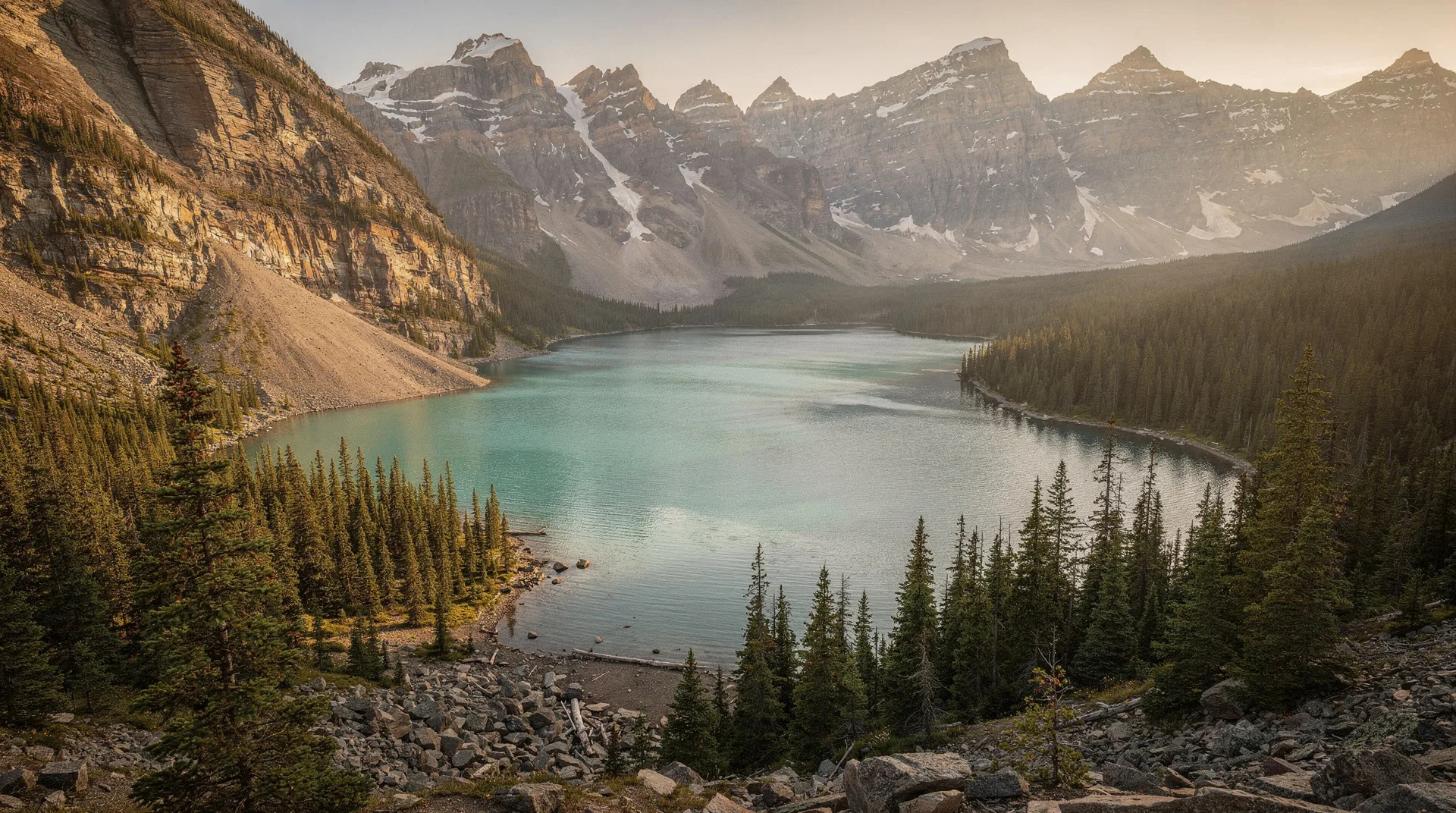
Vancouver Island is the largest island on North America’s Pacific coast — 460 kilometres long and wide enough that its western and eastern shores feel like different worlds. The eastern coast, sheltered by the mainland, has the warm beaches, marinas, and agricultural valleys of Nanaimo, Parksville, and the Cowichan. The western coast faces the open Pacific directly, with no land between its surf breaks and Japan — and that exposure gives Tofino and Ucluelet their dramatic, rain-soaked, storm-lashed identity that draws travellers from across Canada and around the world.
Between those coasts lies a mountainous spine of old-growth forest, including some of the largest temperate rainforest trees on earth — Sitka spruce, western red cedar, and Douglas fir that have stood for a thousand years or more. The island holds more endangered old-growth than anywhere else in Canada, and the ongoing tension between logging interests and conservation efforts gives its wilderness a charged, urgent quality. Walking beneath a thousand-year-old cedar in Cathedral Grove is an experience that recalibrates your sense of time.
Victoria, the provincial capital, anchors the island’s southern tip. Nanaimo is the ferry hub and jumping-off point. Parksville and Qualicum Beach are the island’s family resort coast. Ucluelet and Tofino are the twin towns of the wild west coast, separated by a 10-minute drive along Pacific Rim National Park Reserve. Together, these destinations make Vancouver Island one of the most complete wilderness and culture travel experiences in North America.
| Where | Off the BC mainland, reached by BC Ferries or seaplane; Victoria anchors the south, Tofino and Ucluelet the west coast |
| Cost | Budget around CAD $100-150/day (mid-range hotel, car, meals); a ferry crossing runs roughly CAD $20-25 per adult plus CAD $60-70 per vehicle |
| Time needed | 5-10 days for the Victoria-to-Tofino arc; 2+ weeks to add the Gulf Islands and north island |
| Getting there | BC Ferries from Tsawwassen or Horseshoe Bay (around 90-100 minutes); Harbour Air seaplane Vancouver-Victoria in about 35 minutes |
| Best time | June to September for warm weather island-wide; November to March for Tofino storm watching |
Top things to do on Vancouver Island
Surfing and storm watching at Tofino
Tofino is Canada’s surf capital. The beaches of Long Beach within Pacific Rim National Park Reserve — Cox Bay, Chesterman Beach, Long Beach itself — receive consistent Pacific swells year-round, with the most powerful surf arriving November through March when the storms that generate it are also visible from shore. Winter storm watching from a hot tub or a hotel deck while waves crash on the rocks below has become as popular an activity as summer surfing.
Summer brings warmer water (though still cold by most standards — 12-15°C, wetsuit required), lighter winds, and more moderate swell that is appropriate for beginner surfers. Several Tofino surf schools run daily lessons from May through October. The instructors are patient, the beaches are vast, and the forested backdrop makes standing up on a wave here a more theatrical moment than at most surf breaks.
Beyond surfing, Tofino offers sea kayaking through the Clayoquot Sound, a UNESCO Biosphere Reserve of islands, inlets, and old-growth that extends north from town. Bear-watching tours run to the Kennedy River estuary and other locations where black bears forage for salmon in late summer. Winter whale watching is also productive — grey whales migrate through in March and April in large numbers.
Browse Tofino surf lessons, kayaking, and Vancouver Island toursWhale watching from Victoria and the southern island
The waters around southern Vancouver Island rank among the world’s best orca habitat. The Southern Resident orca — J, K, and L pods, totalling around 70 individuals — use the Haro Strait and waters off Victoria as their primary summer feeding ground. Resident orca are fish-eaters, and the returning Chinook salmon runs that follow the island’s coast draw them in reliable concentrations from June through September.
Multiple operators depart from Victoria’s Inner Harbour with both rigid-inflatable Zodiacs and larger tour vessels. The experience of watching a family of orca surfacing, spy-hopping, and travelling through the blue-green water of the strait with the Olympic Mountains in the background is one Canada does not repeat anywhere else. Humpback whales, now recovered to substantial numbers in BC waters, are increasingly common sightings alongside minkes and Dall’s porpoise.
Hiking in Cathedral Grove and old-growth forests
MacMillan Provincial Park, 13 kilometres east of Port Alberni on Highway 4, contains Cathedral Grove — one of the most accessible stands of ancient Douglas fir in the province. Trees over 800 years old and 75 metres tall line the short walking loops on both sides of the highway. This is not wilderness hiking — the loops take 20-30 minutes — but the scale and age of the trees make it one of the most genuinely affecting short walks in Canada.
More serious old-growth hiking lies within Pacific Rim National Park Reserve, where the West Coast Trail is one of Canada’s iconic long-distance routes: a 75-kilometre route along the island’s wild southwest coast that takes 6-8 days and requires permits, experience, and preparation. The easier Rainforest Trail loops near the Long Beach Unit provide old-growth atmosphere in one-hour walks accessible to everyone.
Whale watching and marine wildlife from Ucluelet
Ucluelet, the smaller, less touristic twin to Tofino at the south end of Pacific Rim National Park, is a working fishing village with an excellent aquarium and access to some of the best whale watching on the west coast. Grey whale migrations bring hundreds of animals past the Wild Pacific Trail — a spectacular cliff-top walking path with views of wave-pounded headlands and rocks covered in sea lions — in March and April.
The Amphitrite Point Lighthouse at the end of the Wild Pacific Trail is the best free whale-watching viewpoint on the island during migration. Bring binoculars; the grey whales often pass quite close to shore, feeding in the kelp beds.
Beaches and warmth: Parksville and Qualicum Beach
The central-east coast between Nanaimo and Campbell River has the island’s warmest weather and the most genuinely swimmable beaches. Rathtrevor Beach Provincial Park near Parksville has tidal flats that extend 1.5 kilometres at low tide, warming the returning water to temperatures that actually permit swimming — unusual on the BC coast. The beach fair in August, sandcastle competition in July, and family resort character of Parksville make this coast the island’s family destination of choice.
Qualicum Beach, just north, has a charming 1930s resort-town aesthetic: a short main street, cedar-shingle buildings, and a beach backed by an old-growth walkway. Less commercial than Parksville, it appeals to those looking for quieter seaside walking.
Nanaimo: gateway and destination
Nanaimo is not primarily a tourist destination, but it has more going for it than its reputation as a ferry terminus suggests. The Old City Quarter has legitimate character — a cluster of Victorian buildings housing breweries, coffee shops, and restaurants that punches above a city of 100,000. The Nanaimo Bar Trail celebrates the city’s claim on the famous layered chocolate square with self-guided bakery tours. The Newcastle Island Provincial Marine Park, accessible by a 10-minute ferry from downtown, is a car-free island of old-growth trails and beaches that almost nobody outside BC knows about.
Tofino or Ucluelet: which base fits your trip
Both towns sit on the same 10-minute stretch of Highway 4 within Pacific Rim National Park Reserve, but they suit different travellers. For a fuller breakdown see the Tofino vs Ucluelet guide.
| Tofino | Ucluelet | |
|---|---|---|
| Vibe | Polished, surf-culture, more restaurants | Working fishing village, quieter |
| Best for | First-timers, surf lessons, storm-watching resorts | Budget stays, the Wild Pacific Trail, fewer crowds |
| Whale watching | Excellent, more operators | Excellent, closer to grey whale migration route |
| Accommodation cost | Higher (resort-heavy) | Generally lower |
| Park pass needed | Yes — Pacific Rim National Park Reserve requires a Parks Canada day pass or Discovery Pass | Yes, same pass |
Note that a Parks Canada pass is required to enter Pacific Rim National Park Reserve itself — the beaches and trails inside the park boundary (Long Beach, Rainforest Trail, the West Coast Trail) are not free, even though the towns themselves are.
When to visit Vancouver Island
Summer (June to September) is the island-wide peak season. Tofino and the west coast deliver warm days, light winds, and accessible surfing. Victoria and the east coast offer genuine warmth. Whale watching is most productive from July through September. The island is at maximum tourism intensity in July and August — accommodation should be booked months ahead, particularly for Tofino.
Spring (March to May) is outstanding for grey whale migration along the west coast (peak: mid-March to mid-April, with the Pacific Rim Whale Festival marking the event). The east coast parks begin to open, wildflowers appear, and the crowd pressure has not yet built. Tofino in April offers a transition: storms becoming less frequent, swell still present, and prices below summer peaks.
Fall (September to October) extends summer conditions on the east coast and is prime time for bear watching (salmon are in the rivers), mushroom foraging, and the spectacular red-and-gold colour on the island’s deciduous slopes. The West Coast Trail remains open through late September.
Winter (November to February) is storm season on the west coast — and deliberately so for many visitors. The Tofino resort hotels market Storm Watching packages: a comfortable room, wood fire, hot tub, and windows facing the incoming Pacific swell and spray. It is a particular and genuine pleasure. Whale watching continues for grey whales (southbound migration in November-December). The east coast and Victoria are mild and largely quiet.
Where to stay on Vancouver Island
The island’s accommodation options span the full range and vary significantly by location.
Tofino has some of BC’s most distinctive accommodation: Wickaninnish Inn on Chesterman Beach is Canada’s pre-eminent storm-watching resort, with rooms facing the open Pacific and restaurant menus built around west coast seafood. Long Beach Lodge Resort offers a more accessible luxury option with beach access. The town itself has a range of independent hotels, guesthouses, and hostels for different budgets.
Victoria covers all bases from the Fairmont Empress at the top to HI Victoria Hostel at the bottom, with a strong mid-range boutique hotel scene in the Inner Harbour and Old Town areas.
Parksville and the east coast are dominated by family resort properties — Tigh-Na-Mara Resort is the classic choice, a beachside property with a mineral spa — and a large number of RV parks and campgrounds.
Ucluelet is smaller and less developed than Tofino for accommodation. Black Rock Oceanfront Resort is the premium option, perched on the rocks above the Wild Pacific Trail. A number of more affordable guesthouses and the Ucluelet Campground fill out the range.
Getting there and around
From Vancouver: BC Ferries operates from Tsawwassen (south of Vancouver) to Swartz Bay (north of Victoria) and from Horseshoe Bay to Nanaimo’s Departure Bay. The Tsawwassen-Swartz Bay route takes 95 minutes through the Gulf Islands; Horseshoe Bay to Departure Bay takes about the same. Book vehicle reservations in advance for summer sailings. Harbour Air seaplanes connect Vancouver Harbour to Victoria Inner Harbour in 35 minutes.
On the island: A car is essential for anything beyond Victoria. The island’s main highway (Highway 1/Highway 19) runs the east coast from Victoria to Port Hardy. Highway 4 is the only paved route to the west coast (Tofino and Ucluelet), crossing the island via Port Alberni — about 3 hours from Nanaimo. There is no paved road connecting the north island’s west coast.
Internal connections: BC Ferries’ inter-island services connect Port McNeill and Port Hardy to the Discovery Islands, Alert Bay (for outstanding Kwakwaka’wakw cultural sites), and the start of the Inside Passage to Prince Rupert.
Browse Victoria tours and Gulf Island day trip experiencesDay trips and island extensions
A logical itinerary pairs Victoria (2-3 nights) with the west coast via Highway 1 north and then Highway 4 west (3-4 nights in Tofino or Ucluelet), with Parksville or Nanaimo as a mid-island stop. Campbell River and the northern island add whale-watching on the Johnstone Strait — the Robson Bight Ecological Reserve, accessible only by boat, is the world’s best orca rubbing beach site.
The Gulf Islands — Salt Spring, Galiano, Pender, Mayne — are accessible by BC Ferries from Swartz Bay and offer a quieter, more intimate version of the island life. Salt Spring’s Saturday market in Ganges is one of the best farmers markets in BC.
Practical tips for Vancouver Island
Car reservations: BC Ferries vehicle reservations are mandatory in summer, not optional. Book online as soon as you have your travel dates. Walk-on passengers can almost always board, but vehicles wait.
Tofino road: Highway 4 to the west coast is 2.5 hours from Nanaimo and has no services for extended stretches. Fill up in Port Alberni before continuing west.
Wildlife encounters: Black bears are common along roadsides, particularly near salmon streams in late summer. Keep food in locked vehicles and follow park regulations.
Surf schools: Beginner surfers should use Tofino’s established surf schools — Surf Sister, Pacific Surf School — for their first sessions. The ocean conditions at Cox Bay and Chesterman Beach change rapidly.
West Coast Trail permits: The WCT requires registration and a permit. The Parks Canada reservation system opens in January for the summer season. The trail is physically demanding and only appropriate for experienced hikers with proper gear.
Is Vancouver Island worth the trip?
Vancouver Island is, by almost any measure, one of the finest travel destinations in North America. It combines the cultural interest of Victoria, the wild-coast drama of Tofino, old-growth forests of rare scale and age, exceptional marine wildlife, and a warmth and accessibility that makes it manageable for families and demanding enough to satisfy serious outdoor travellers. It is a place that most visitors leave already planning their return — and they usually do come back.
For visitors to British Columbia, Vancouver Island is not a side trip. It is a destination in its own right that could absorb two weeks without repetition. Five to seven days covers the essential arc from Victoria to the west coast with time to actually experience both. That is the minimum to do it justice.
Frequently asked questions about Vancouver Island
Is Pacific Rim National Park Reserve free to visit?
No. A Parks Canada day pass or annual Discovery Pass is required for anyone stopping within the park boundary, including the Long Beach Unit and trailheads for the West Coast Trail. The towns of Tofino and Ucluelet themselves are free to walk around.
How many days do you need on Vancouver Island?
Five to ten days covers the core arc of Victoria, the mid-island coast around Parksville and Nanaimo, and two to three nights in Tofino or Ucluelet. Two weeks allows time for the Gulf Islands or the north island without feeling rushed.