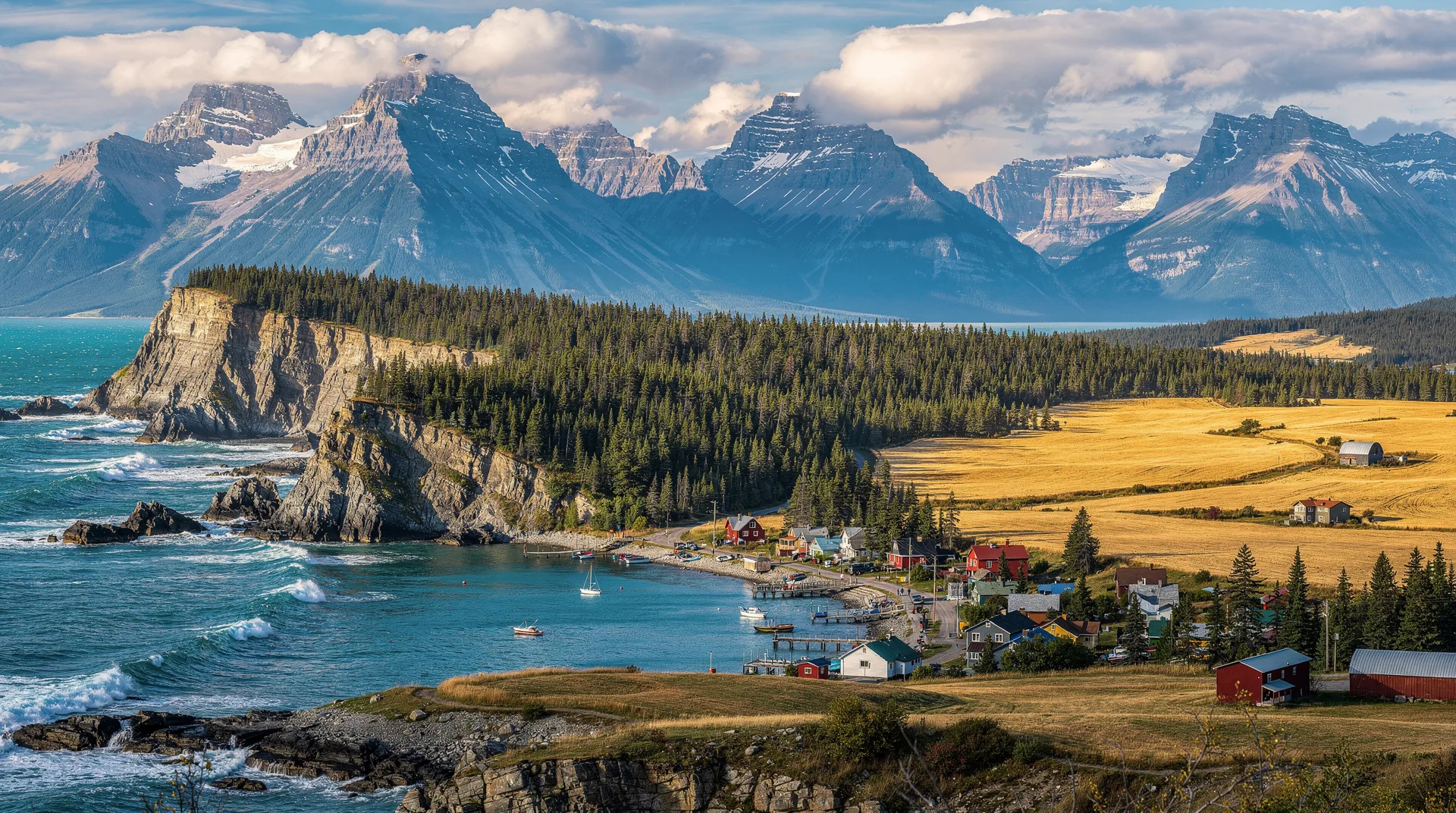
14-day Atlantic Canada road trip: full East Coast loop
Overview
Two weeks across Atlantic Canada is enough to experience all four provinces and their defining highlights without feeling rushed. This itinerary covers Nova Scotia’s capital and its most beautiful towns, the Cabot Trail’s 300 km of dramatic coastal driving, PEI’s lobster suppers and red-sand beaches, the Bay of Fundy’s extraordinary tidal theatre, and either a Newfoundland leg or a deeper exploration of a single region depending on your priorities.
The routing is a loop from Halifax — pick up a car at the airport, drive a circuit of Nova Scotia and New Brunswick with a ferry crossing to PEI, and consider a Marine Atlantic ferry crossing to Newfoundland for the second week.
| Days | Destination | Approx. drive |
|---|---|---|
| 1-2 | Halifax, NS | Arrival |
| 3 | Lunenburg | 100 km / 1.25 hrs |
| 4-6 | Cape Breton / Cabot Trail | 290 km / 3.5 hrs |
| 7-8 | Prince Edward Island | 280 km + Confederation Bridge |
| 9 | Moncton, NB | 170 km from Charlottetown |
| 10-11 | Bay of Fundy | 40-150 km various |
| 12-14 | St. John’s, NL (optional) | Marine Atlantic ferry or fly |
Best season: June through September. July-August for maximum activity; September for colour and fewer crowds.
At a glance
Start/end: Halifax Stanfield International Airport (YHZ)
Car required: Yes
Total driving (without Newfoundland leg): Approximately 1,200 km
Budget range: CAD $3,500–$5,500 per person excluding flights
Days 1-2: Halifax
Halifax is the commercial, cultural, and culinary capital of Atlantic Canada — a walkable harbour city with excellent seafood, a vibrant pub scene, and a remarkable density of history.
The waterfront
Begin on the 4-km waterfront boardwalk. The Historic Properties buildings, the working harbour, and the Canadian Museum of Immigration at Pier 21 (2-3 hours) are the essential starting points. Pier 21 is one of Canada’s finest museums: the stories of the immigrants who entered Canada through this terminal between 1928 and 1971 are movingly told.
Citadel Hill
The star-shaped hilltop fortification built between 1828 and 1856 provides the best views in Halifax — across the harbour and out toward the Atlantic. The noon cannon fires at 12:00 daily; the boom carries across the city with authority.
The Titanic connection
Halifax’s connection to the 1912 Titanic disaster is more direct than most visitors realise — the city’s cable ships recovered 306 victims from the North Atlantic, and 150 are buried in Halifax cemeteries. The Maritime Museum of the Atlantic holds the world’s largest collection of wooden Titanic artifacts. See our Titanic Halifax guide for the full story.
Day 2 options
A day trip to Peggy’s Cove (75 km southwest, 1 hour) via the Lighthouse Route is the most scenic half-day extension from Halifax. The lighthouse on smooth granite above the Atlantic surf is one of the most photographed places in Canada — arrive early for the best experience.
Browse Halifax tours and Nova Scotia experiencesDay 3: Lunenburg
Drive 100 km southwest on Highway 103 to Lunenburg — 90 minutes.
The UNESCO Old Town of Lunenburg is one of the most consistently beautiful townscapes in Canada: a waterfront of colourful wooden buildings on a grid plan laid out in 1753, climbing a hill above a working harbour. The Fisheries Museum of the Atlantic on the waterfront is the best Canadian museum of its kind.
Return to Halifax for the night, or continue toward Cape Breton with an overnight stop en route (Antigonish or New Glasgow are practical).
Days 4-6: Cape Breton Island and the Cabot Trail
Drive from Halifax to Cape Breton Island — approximately 290 km to the Cabot Trail entrance, about 3.5 hours.
The Cabot Trail is a 298-km loop around the northern tip of Cape Breton through Cape Breton Highlands National Park, consistently rated one of the world’s great coastal drives. Drive clockwise from Baddeck.
Day 4: Western section — Margaree Harbour, Cheticamp (excellent Acadian village with good restaurants and the Les Trois Pignons museum), and into the national park. The Skyline Trail hike (9.3 km loop) to a 430-metre headland above the Gulf of St. Lawrence is the park’s signature experience. Pilot whales are frequently visible far below.
Day 5: Continue around the northern tip (Cape North, with an optional gravel road to Meat Cove for the adventurous), and down the eastern coast through Ingonish. Consider a whale watching tour from Pleasant Bay — pilot whales in substantial pods are reliably present in summer.
Day 6: Explore Baddeck, the Cabot Trail base town — the Alexander Graham Bell National Historic Site (excellent, underrated museum) and the Bras d’Or Lake waterfront. Drive to the Canso Causeway for the return to mainland Nova Scotia.
Browse Cape Breton tours and Cabot Trail experiencesDays 7-8: Prince Edward Island
From the mainland Nova Scotia side, drive to the Confederation Bridge (Trans-Canada west toward Amherst, then Route 16 to the bridge) — about 280 km from Baddeck, 3.5 hours.
The 12.9-km Confederation Bridge spans the Northumberland Strait between New Brunswick and PEI — the crossing itself is memorable. Pay the toll on exit from PEI (approximately CAD $50 per vehicle), not on entry.
Day 7: Charlottetown. The provincial capital is a charming small city with Victoria Downtown’s well-preserved Victorian architecture, Province House (where Canadian Confederation was negotiated in 1864), and excellent seafood restaurants. If the Confederation Centre of the Arts is running the Anne of Green Gables musical during your visit, it is worth attending — running every summer since 1965.
Day 8: North shore beaches and Green Gables. Drive north to Cavendish (35 km) for Green Gables Heritage Place and the stunning beaches of Prince Edward Island National Park. July-August water temperatures hit 20°C — genuinely warm enough for swimming. The combination of red sandstone, blue water, and dunes is distinctive. Evening: a lobster supper at New Glasgow or St. Ann’s — an all-inclusive community hall dinner centered on a freshly boiled whole lobster with unlimited chowder, fresh bread, and dessert. See our PEI lobster supper guide for venue details.
Book Charlottetown and PEI toursDay 9: Moncton, New Brunswick
Cross back to mainland (the Wood Islands to Caribou, NS ferry is a scenic alternative to the bridge — 75 minutes, runs May-December) and drive to Moncton — about 170 km from Charlottetown, 2 hours.
Moncton is a bilingual city and the Bay of Fundy hub. The Magnetic Hill attraction is a worthy quick stop. Evening: explore Moncton’s Resurgo Place museum (excellent local history) or the waterfront Bore Park where the tidal bore arrives twice daily to reverse the Petitcodiac River.
Days 10-11: Bay of Fundy
Day 10: Hopewell Rocks. Drive 40 km south on Route 114 to Hopewell Rocks Provincial Park. Time your arrival around low tide — the ocean floor walk among the Flower Pot formations is one of the most distinctive experiences in Atlantic Canada. Check the tide schedule at hopewellrocks.ca before leaving Moncton. See our Hopewell Rocks guide.
Alternatively: tidal bore rafting on the Shubenacadie River (near South Maitland, NS, about 60 km from Moncton). Riding the incoming tidal bore on inflatable zodiacs through the rapids it creates is one of the most exhilarating things you can do in New Brunswick. See our tidal bore rafting guide.
Day 11: Fundy National Park and Alma, NB. Drive the remaining Fundy coast through Fundy National Park — 120 km of hiking trails, dramatic coastline, and the excellent Alma Bakery’s legendary sticky buns. Return to Moncton in the evening.
Days 12-14: Newfoundland (optional)
Option A — Fly to St. John’s: A 2-night stay in St. John’s allows the Witless Bay puffin and whale watching tour (South America’s largest Atlantic puffin colony combined with reliable humpback whale encounters), a Screech-In ceremony on George Street, Signal Hill, and the remarkable colours and culture of the city. Fly return Moncton-St. John’s or Halifax-St. John’s.
Option B — Deeper Nova Scotia: Stay in Nova Scotia, driving south from Halifax along the Lighthouse Route to Shelburne, Yarmouth, and the Annapolis Valley. The Valley wine trail, Annapolis Royal (one of Canada’s oldest settlements), and the tidal bore at Windsor round out a strong Nova Scotia extension.
The 14-day East Coast road trip itinerary offers a different routing that incorporates more of the coastline.
Budget guide
| Category | Budget/person | Moderate/person |
|---|---|---|
| Accommodation (13 nights) | CAD $1,200 | CAD $1,800 |
| Food | CAD $700 | CAD $1,000 |
| Car rental + fuel | CAD $500 | CAD $700 |
| Ferry (PEI bridge) | CAD $25 | CAD $25 |
| Activities & park passes | CAD $250 | CAD $500 |
| Total (excl. flights) | ~$2,700 | ~$4,000 |
Practical tips
Booking accommodation: Cape Breton (Baddeck, Ingonish, Cheticamp) and PEI fill early in July-August. Book 4-6 weeks ahead; 2-3 months for peak weekends.
Lobster season: Check PEI lobster season dates — spring (mid-May to late June) and fall (August to mid-October). The community hall lobster suppers only operate during active lobster season.
Marine Atlantic ferry: If adding Newfoundland by ferry, see our Marine Atlantic ferry guide for booking, timing, and cabin recommendations. The overnight ferry from North Sydney, NS to Port aux Basques, NL is a good option.
Weather: Pack layers and waterproof outerwear. Atlantic Canada weather is highly variable. The Cabot Trail in fog is still beautiful; the Bay of Fundy in rain creates its own drama.
Variations
Add PEI depth: Spend 3 nights on PEI instead of 2 — add the Kings Landing area in the east, the West Point Lighthouse and north shore western beaches, and a full day on the Island’s Confederation Trail cycling route.
Shorten to 10 days: Eliminate the Lunenburg day and compress the Bay of Fundy to a single day, keeping Cape Breton and PEI intact. The 10-day version runs Halifax-Cape Breton-PEI-Moncton-Hopewell Rocks — see the full 10-day Atlantic Canada itinerary for the detailed version of that route.
Packing and weather notes
Two weeks in Atlantic Canada means encountering a genuine range of weather, from warm sunny days on PEI’s beaches to fog and drizzle on the Cabot Trail highlands. Layers and a waterproof shell matter more than any single “right” jacket. If the Newfoundland leg is included, pack for noticeably cooler and windier conditions than the mainland provinces — St. John’s weather can differ sharply from Halifax on the same day. See the Atlantic Canada weather guide for month-by-month detail.
Choosing between the Newfoundland extension and deeper Nova Scotia
This is the central decision of the 14-day version. Newfoundland — even just St. John’s, Signal Hill, and a puffin tour — delivers a genuinely different character from the mainland provinces: starker landscapes, a distinct accent and culture, and wildlife encounters (puffins, humpbacks, icebergs in late spring) not available elsewhere on the route. The tradeoff is two flights and a compressed 2-night stay that only scratches the surface of the island.
The deeper Nova Scotia alternative — the Lighthouse Route to Shelburne and Yarmouth, then the Annapolis Valley wine trail — keeps the trip entirely road-based and adds meaningful depth to a province most visitors only see in part. Neither option is wrong; it depends on whether Newfoundland itself is a bucket-list destination or a “maybe next trip” for you. For travellers who know Newfoundland is the priority, a dedicated future trip using the Newfoundland 7-day itinerary does the island far more justice than a 3-day bolt-on.
Frequently asked questions about 14-day Atlantic Canada road trip: full East Coast loop
Is 14 days enough to see all of Atlantic Canada?
A dedicated 14-day trip covers Nova Scotia, PEI, and New Brunswick thoroughly. Newfoundland is a full trip in itself; adding a 2-3 night Newfoundland segment gives a taste of the island but doesn’t do it justice. Consider a separate Newfoundland trip if the island draws you.
What’s the most important thing to book in advance?
Cape Breton accommodation (Keltic Lodge at Ingonish and the Inverary in Baddeck fill first), PEI lobster supper reservations in peak season, and the Western Brook Pond boat tour in Gros Morne if you add a Newfoundland extension.
Can I do the whole trip without camping?
Yes — all accommodation in this itinerary is hotel, inn, or B&B based. Camping is available at all national parks along the route for those who prefer it.
Do I need a national park pass for this itinerary?
Yes if you’re visiting Cape Breton Highlands National Park (part of the Cabot Trail route) or, on the Newfoundland extension, Gros Morne National Park. A Parks Canada Discovery Pass (an annual pass, around CAD $83.50 per adult) covers entry to both and pays for itself after about 7 days of park entry fees.
Is 14 days too long for Atlantic Canada without Newfoundland?
Not at all — the deeper Nova Scotia alternative (Lighthouse Route, Annapolis Valley wine trail, extra time in Cape Breton and on PEI) uses the extra days well. It suits travellers who prefer thoroughness in fewer places over covering the maximum number of provinces.