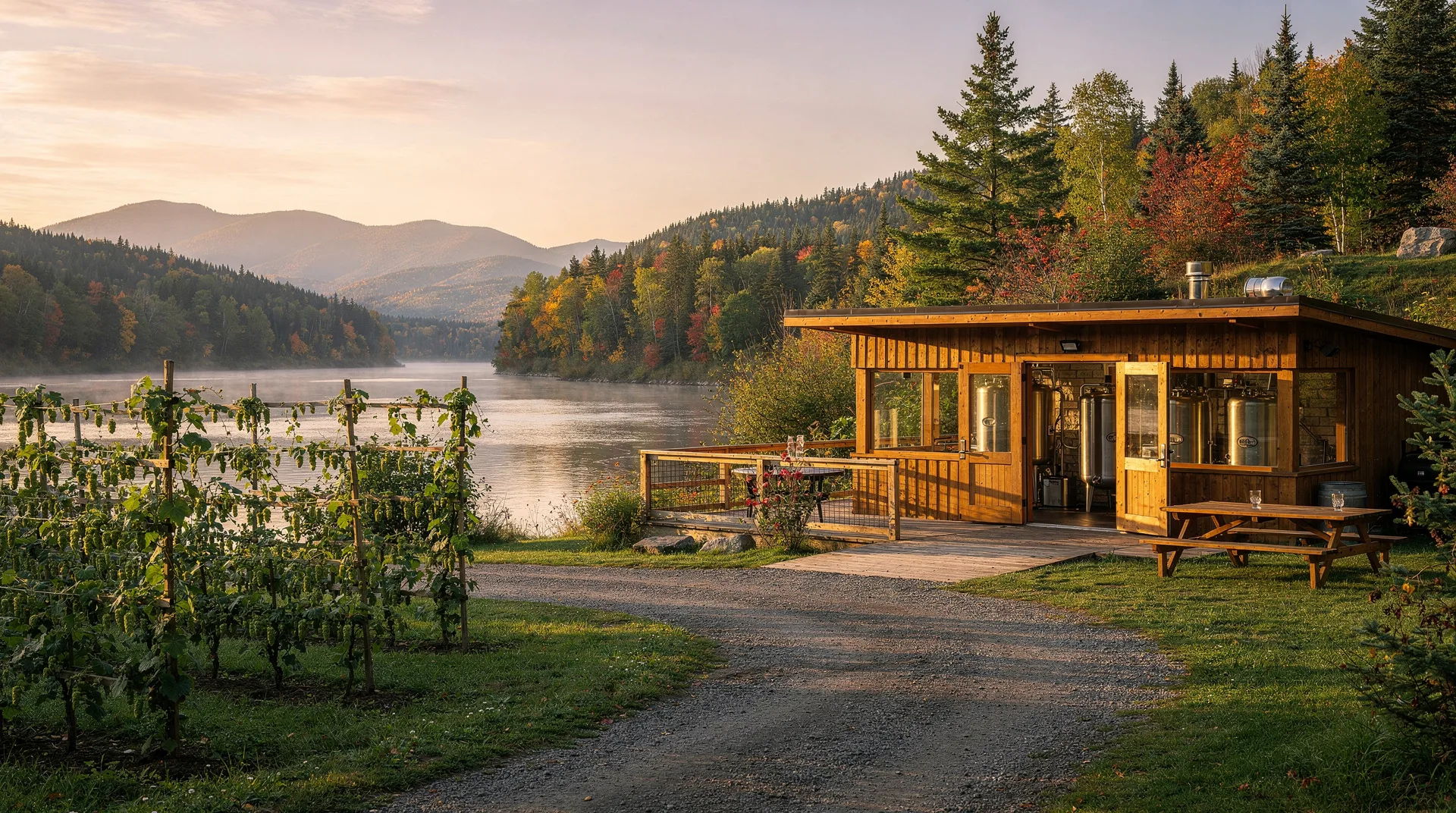
Quebec's microbrewery culture: best breweries by region
Where are the best microbreweries in Quebec?
Quebec has over 250 microbreweries — more per capita than any other province. Montreal's Mile-Ex and Rosemont neighbourhoods, Quebec City's Saint-Roch, and Saguenay's craft scene are the main hubs.
| At a glance | |
|---|---|
| Where | Montreal (Mile-Ex, Rosemont), Quebec City (Saint-Roch), plus Eastern Townships, Laurentians and Saguenay-Lac-Saint-Jean |
| Cost | Pints typically around $7-9; flights around $12-18 |
| Time needed | An afternoon or evening per neighbourhood; a full day to combine two or three taprooms in one region |
| Getting there | Montreal and Quebec City taprooms are walkable/transit-accessible; regional breweries generally need a car |
| Best time | Year-round — taprooms are indoor, though patio season (roughly May-September) adds outdoor seating |
Quebec’s brewing revolution
Quebec has more microbreweries per capita than any other province in Canada, and its craft brewing culture is among the most developed and diverse in North America. The province had almost no craft breweries in the 1980s; by the mid-2000s it had dozens; by the mid-2020s it has over 250 licensed microbreweries and brew-pubs, with new ones opening regularly across the province from Gaspésie to the Laurentians.
The brewing revolution here was shaped by several converging forces. Quebec’s French cultural heritage created an appreciation for fermented beverages that the Anglo-Canadian temperance tradition had partially suppressed. The Beaus brewery in Vankleek Hill, Ontario, and neighbouring province craft beer communities provided early models. But Quebec’s specific contribution was an enthusiasm for experimentation — unusual adjuncts, foraged local ingredients, Quebec maple syrup and ice cider barrel-aging — that has produced a regional brewing identity quite distinct from the West Coast styles that dominate craft beer in British Columbia.
This guide maps Quebec’s microbrewery culture by region, names the essential producers, describes the styles and flagship beers worth seeking, and explains how to plan a brewery-focused visit. For the province’s other fermented tradition, see the Quebec ice cider guide.
Montreal: the brewing capital
Montreal is the centre of Quebec’s craft beer scene, and the city’s neighbourhood-level brewery culture has developed to a point where it rivals Portland, Denver, and Copenhagen as a craft beer destination.
Mile-Ex and Rosemont
The industrial neighbourhoods north of the Plateau have become the heart of Montreal’s brewery culture, with production facilities offering taprooms that function as neighbourhood gathering places.
Brasserie Dunham (Mile-Ex taproom location, with main brewery in Dunham, Eastern Townships): One of Quebec’s most celebrated craft breweries, known for barrel-aged beers, sophisticated sours, and the Dunham Saison — a benchmark Quebec saison that has influenced a generation of Quebec brewers. The Montreal taproom serves the full range; the main facility in Dunham is worth the trip for serious beer tourists.
Dieu du Ciel! (Plateau-Mont-Royal, with production brewery in Saint-Jérôme): One of the first and most important Quebec microbreweries. Their flagship Peche Mortel (Imperial Coffee Stout) has cult status in North American craft beer circles — rich, intensely coffee-forward, 9.5% ABV, and produced with Montréal coffee roaster collaboration. Rosée d’Hibiscus (hibiscus wheat ale, pink, floral, summer essential) and Aphrodisiaque (chocolate-vanilla stout) are both extraordinary.
Espace Public Brasserie (Rosemont): Award-winning producers focused on Belgian-inspired ales and lagers brewed with precision and creativity. Their Lambicus-style beers aged in oak are exceptional.
Mâlette and Brasserie Harricana in the same district offer further diversity in styles and taproom environments.
Old Montreal and Downtown
Le Saint-Bock (Latin Quarter): Not a production brewery but one of Montreal’s great beer bars, with 36 rotating taps of Quebec and international craft beer. An essential stop for surveying the breadth of Quebec brewing in one location.
Auberge Saint-Gabriel in Old Montreal serves a rotating selection of Quebec craft beers alongside its restaurant menu — a way to discover regional producers while eating in one of the city’s most historic buildings.
Book a Montreal food and drink tour on GetYourGuideEast Montreal and beyond
Brasserie Sutton (produces from Eastern Townships but distributes widely in Montreal) and Microbrasserie du Lac Saint-Jean are both available in Montreal bottle shops and bars, giving access to regional Quebec brewing without leaving the city.
Quebec City’s craft scene
Quebec City’s craft beer scene is smaller than Montreal’s but has developed with intensity and quality in the Saint-Roch and Limoilou neighbourhoods outside the Old Town.
La Barberie (Saint-Roch): One of Quebec City’s founding craft breweries, established in 1997. La Barberie operates as a cooperative and serves an enormous rotating selection of styles — always 15 or more beers on tap — in a neighbourhood taproom that feels genuinely local rather than tourist-oriented. Their barrel-aged beers and sour ales have become benchmarks.
Noctuelle (Saint-Roch): A newer production brewery and taproom known for technically excellent lagers, pilsners, and kölsch-style beers in a region that has historically favoured ales. Their Czech-influenced pils is one of the better lagers produced anywhere in eastern Canada.
Microbrasserie Archibald (Lac-Beauport, near Quebec City): A large, established brewery in the ski resort country north of the city. The taproom is enormous and family-oriented; the beer selection is broad and approachable, emphasising drinkable seasonal ales. Their honey wheat ale and their seasonal winter spiced beer are both popular. Worth the 20-minute drive from Quebec City.
Les Bières de la Nouvelle-France (Saint-Alexis-des-Monts, Mauricie region): One of Quebec’s most interesting producers from a conceptual standpoint — the brewery incorporates local foraged ingredients (pine buds, wild herbs, fiddleheads) into many of its beers. The Ecume de Mer (sea foam ale) and the Ambrée des Cavernes (cave-aged amber) are distinctive Quebec expressions.
Explore Quebec City and region with a guided tourSaguenay–Lac-Saint-Jean
The Saguenay region — two hours north of Quebec City — has developed a craft beer scene that reflects the region’s cultural distinctiveness and fierce local pride. Saguenay produces some of the most interesting beer in Quebec and is a natural addition to a Saguenay fjord kayaking trip or broader visit to the Saguenay–Lac-Saint-Jean region.
Microbrasserie du Lac Saint-Jean (Alma): The anchor brewery of the region, producing a range that includes the well-known Cheval Blanc series (a reference to the classic Montreal bar that helped launch Quebec’s first microbrewery era) and seasonal specialties that incorporate local blueberries — the region’s most celebrated agricultural product.
Brasserie La Chouape (Saint-Félicien): Focuses on Belgian-inspired ales and is known particularly for its Tripel — a golden, high-ABV Belgian-style ale with floral and fruity aromatics. A worthy stop when visiting the Saint-Félicien Zoo.
Brasserie du Presbytère (Sainte-Anne-de-la-Pérade): Produces some of the most technically sophisticated beers in the Mauricie and surrounding region. Their Noire de Sils (black IPA) and barrel-aged Belgian quads have attracted national attention.
Laurentians and Lanaudière
The Laurentian ski country north of Montreal is served by a growing number of brewery taprooms that operate year-round and benefit from the resort-town clientele.
Microbrasserie Saint-Arnould (Mont-Tremblant): One of the Laurentians’ best-established craft breweries, operating from Mont-Tremblant village. Their Blonde du Nord and seasonal winter warmer are designed for après-ski consumption and succeed admirably at it.
Brasserie Les Voisins (Sainte-Adèle): A newer addition to the Laurentians scene, producing clean, well-crafted ales and lagers in a taproom that has become a local gathering place.
Brasserie Ras-l’Bock (Joliette, Lanaudière): Known for producing some of the best wheat beers in Quebec — Bavarian-influenced hefeweizens and witbiers alongside Belgian-inspired ales. The region’s festival culture (Joliette hosts a major music festival) creates a natural audience.
Eastern Townships
The Eastern Townships — southeast of Montreal, bordering Vermont and New Hampshire — combine Quebec’s farm culture with New England-influenced brewing traditions, producing a distinctive regional style.
Brasserie Dunham (Dunham): The main production facility of one of Quebec’s most celebrated craft breweries. The taproom in Dunham serves the full range of their production — barrel-aged sours, saisons, IPAs, and seasonal specialties — in a setting that embodies the Eastern Townships’ mix of rural charm and artisanal sophistication. Worth a dedicated trip.
Microbrasserie Memphré (Magog): Named for the legendary lake monster of Lac Memphrémagog, this Magog-based brewery produces approachable, food-friendly beers in a lakeside setting. The location alone makes it worth a stop if visiting the area.
Brasserie Siboire (Sherbrooke and Drummondville): The largest Eastern Townships craft brewery, with multiple taproom locations. Siboire’s beers are excellent, particularly their hop-forward IPAs and their fruit sours. The Sherbrooke location is the most atmospheric.
Brewery-hopping by city: what a realistic day looks like
Montreal’s Mile-Ex and Rosemont taprooms sit close enough together to walk or Bixi between three or four in an afternoon; a realistic circuit is Dieu du Ciel! for the flagship stouts, then a short ride to Espace Public or Harricana, finishing with a beer-bar stop at Le Saint-Bock to taste producers you haven’t reached yet.
In Quebec City, Saint-Roch is compact enough to cover La Barberie and Noctuelle on foot in an evening, with Archibald as a 20-minute detour for visitors with a car who want the larger, family-oriented taproom. Pair either city’s brewery crawl with a broader day out — best tours in Montreal and best tours in Quebec City both cover ways to fill the rest of the day around a taproom-focused evening.
When to go
Quebec’s taprooms operate year-round, so a brewery visit isn’t season-dependent the way many outdoor Quebec activities are. That said, patio season (roughly May through September) adds outdoor seating at most Montreal and Quebec City locations, and a beer-focused day pairs naturally with Quebec in summer planning. Winter visitors doing Igloofest in Montreal will find craft beer tents built into the event — a good low-effort way to sample regional producers without a dedicated brewery crawl.
Quebec brewing styles: what to order
Quebec’s craft brewers work across all international styles but have developed particular strengths in certain areas:
Saison: The French farmhouse ale style has been enthusiastically adopted by Quebec brewers, and the province produces some of North America’s best saisons — dry, aromatic, slightly sour, highly drinkable. Brasserie Dunham’s Dunham Saison and Dieu du Ciel!‘s seasonal saisons are benchmarks.
Barrel-aged stouts: The province’s enthusiasm for dark, rich, complex beer has produced an exceptional barrel-aged stout tradition. Peche Mortel from Dieu du Ciel! is the reference point, but dozens of Quebec breweries now produce competitive aged dark beers.
Maple and local ingredient beers: Many Quebec breweries incorporate local maple syrup, maple sugar, Quebec honey, local wild herbs, and foraged ingredients. Results vary from excellent to gimmicky; the best examples are genuinely interesting expressions of local terroir.
Fruit sours and wild ales: Quebec’s proximity to abundant local fruit (blueberries, cranberries, apples, strawberries) has encouraged a fruit sour tradition. Saguenay blueberry beers and Eastern Townships apple ales are highlights.
Lagers: A more recent development, but Quebec brewers have begun producing some excellent Czech and German-influenced lagers that balance the province’s traditional enthusiasm for ales.
Practical notes for beer tourism
SAQ and dépanneurs: Quebec’s alcohol retail system differs from other provinces. Beer can be purchased in grocery stores, dépanneurs (convenience stores), and specialty beer shops (bières et vins) rather than being restricted to government stores. This makes finding Quebec craft beer easier than in some provinces.
Bring-your-own: Quebec has long allowed BYOB (apportez votre vin) at restaurants without liquor licences, with a small corkage fee. Some restaurants extend this to craft beer; ask when making reservations.
Brewery tours: Most Quebec microbreweries do not offer formal facility tours as a regular scheduled activity. The taproom is the visitor experience. A few larger operations (Unibroue in Chambly, Archibald in Lac-Beauport) have offered tours historically; check their websites for current scheduling.
Festivals: Montréal en Lumière (February) includes beer and food events. Les Fêtes de la Nouvelle-France in Quebec City (August) features Quebec craft beer pours. The Festival Bières et Saveurs in Chambly (September) is the province’s most focused craft beer festival.
Driving considerations: Quebec’s road network between brewery regions requires a car; plan designated drivers or limit tasting portions if driving between multiple stops. Many Laurentian and Eastern Townships taprooms are happy to pour tasters rather than full pints.
Montreal vs Quebec City: which scene fits your trip
| Montreal | Quebec City | |
|---|---|---|
| Scale | Dozens of taprooms across several neighbourhoods | Smaller, concentrated mainly in Saint-Roch |
| Character | Neighbourhood taprooms, wide range of styles | Cooperative and independent, strong lager tradition |
| Best for | A dedicated brewery-crawl day or evening | Pairing one or two stops with Old Town sightseeing |
| Getting around | Metro and Bixi between neighbourhoods | Walkable within Saint-Roch; car for Archibald |
Frequently asked questions about Quebec’s microbrewery culture
Do Quebec microbreweries serve food? Most taprooms serve some food — snacks, charcuterie boards, occasionally a small kitchen menu — but few are full restaurants. Auberge Saint-Gabriel and similar beer-and-restaurant hybrids are the exception rather than the rule; plan to eat separately if you want a proper meal.
Can I buy Quebec craft beer to take home? Yes. Dépanneurs, grocery stores and specialty beer shops across the province sell bottled and canned craft beer, and most breweries sell their own bottles and cans directly from the taproom — often the freshest stock available.
Related pages
- Quebec ice cider: the invention, producers and tastings
- Quebec food deep-dive: tourtière, poutine and the full culinary canon
- Laurentians vs Eastern Townships: which Quebec region for you?
- Sea kayaking the Saguenay Fjord: operators, seasons and routes
- Saguenay–Lac-Saint-Jean destinations
- Montreal destinations