Quebec ice cider: the invention, the producers, the tastings
What is Quebec ice cider and where is it made?
Ice cider (cidre de glace) is Quebec's original contribution to world beverage culture — a concentrated, sweet cider made from apples frozen either before or after pressing. The Montérégie and Eastern Townships produce most of Quebec's ice cider.
Quebec’s original contribution to world beverage culture
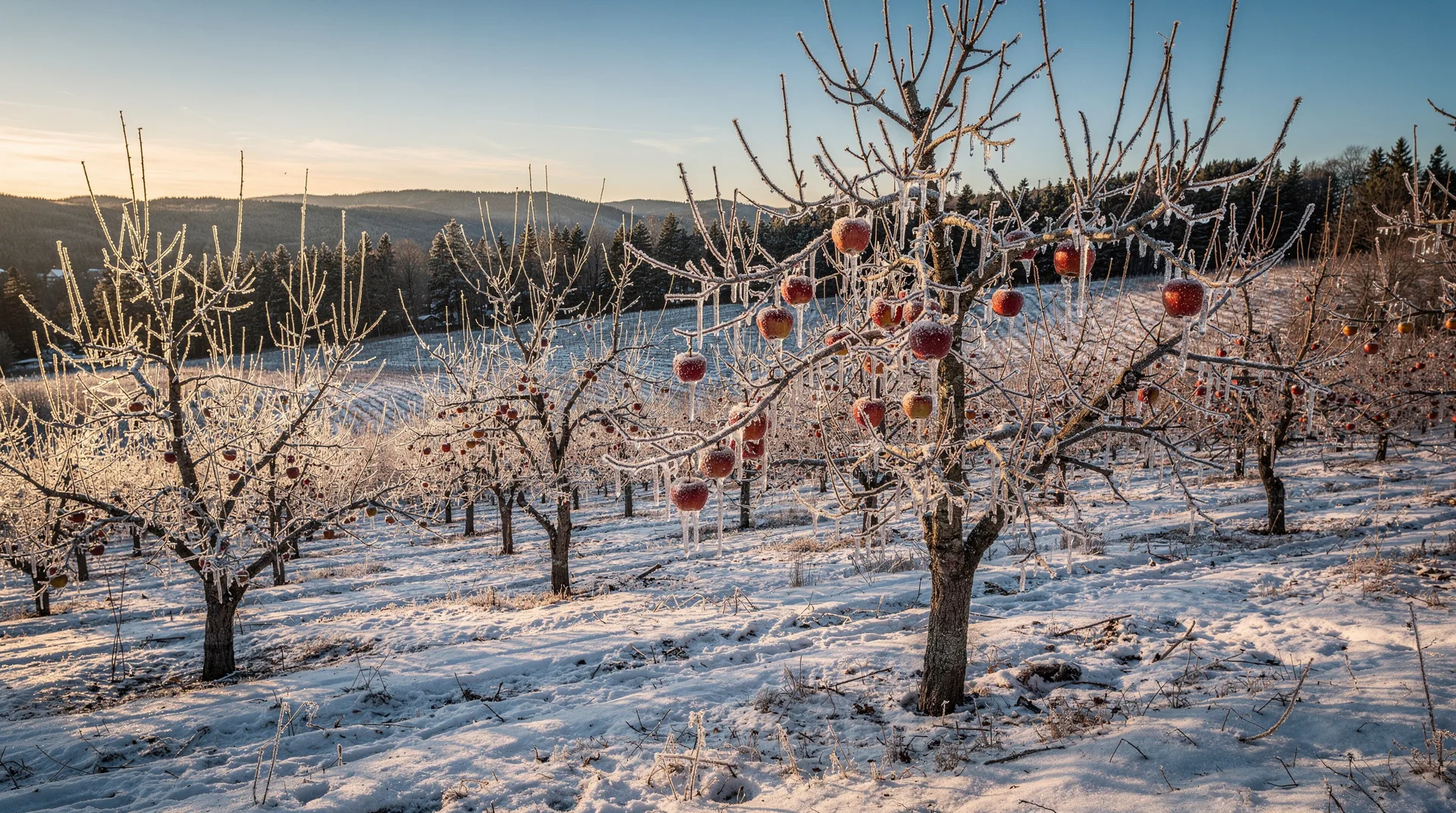
In 1990, Christian Barthomeuf — a Quebec cider producer living in the Dunham area of the Eastern Townships — produced the world’s first intentional cidre de glace: a concentrated, sweet, complex cider made from apples that had been frozen naturally by the Quebec winter. He had been making wine and cider in Quebec for years, but the idea of applying the ice wine concept to apples, taking advantage of Quebec’s consistently cold winters, was entirely original. Within a decade, dozens of Quebec orchardists had adopted the technique, and by the 2010s, cidre de glace had earned protected geographical indication status — it can only be called “Québec ice cider” if produced entirely in Quebec from Quebec apples.
The result is one of the world’s most distinctive artisanal beverages — amber, intensely aromatic, viscous, and sweet without being cloying, with a complex interplay of apple, caramel, honey, and spice notes that no other cider style approaches. It has become Quebec’s most significant original contribution to world food and beverage culture, more distinctive and more exportable than poutine (which requires fresh cheese curds to be authentic), and a genuine source of provincial pride.
This guide covers the production methods, the best producers, how to taste ice cider intelligently, what to pair it with (including Quebec cheeses — a natural match), and how to plan a cidery-focused visit to Quebec’s apple country.
At a glance
| Where | Montérégie apple belt (Rougemont, Hemmingford) and Eastern Townships (Dunham, Frelighsburg), 60-90 minutes from Montreal |
| Cost | A 375ml bottle typically runs around CAD $25-45 depending on producer and aging; tasting room visits are often free or a small fee applied to purchase |
| Time needed | A half-day for one or two cideries; a full day to combine cideries with pick-your-own orchards and a meal |
| Getting there | A rental car is the practical option; most cideries have limited or no transit access |
| Best time | September-October (harvest and fresh pressing) for atmosphere; the finished ice cider itself is sold and enjoyed year-round |
How ice cider is made
There are two methods of producing ice cider, and both are legitimate:
Cryoconcentration (pre-pressing)
In this method, whole apples are left outdoors through the Quebec winter and allowed to freeze naturally. The freezing concentrates sugars, acids, and flavour compounds in the apple’s tissues. The apples are then pressed while still partially frozen; the juice that flows is already concentrated and sweet. A typical starting sugar concentration might be 35–45 degrees Brix (compared to 12–16 Brix for normal apple juice). This juice is then fermented slowly, typically stopping fermentation at 7–12% alcohol while retaining substantial residual sugar.
The cryoconcentration method is considered more artisanal and is associated with the original Barthomeuf technique. It requires space to store large quantities of apples outdoors through winter and is more weather-dependent.
Cryoextraction (post-pressing)
In this method, normal apple juice is pressed in fall and then frozen in large tanks or outdoors in winter temperatures. As the juice freezes, the water crystallises first, leaving a concentrated liquid core. This concentrated juice is drained off and fermented. The method gives the producer more control over concentration levels and is used by many larger operations.
The finished products of both methods are legally identical as “cidre de glace” if they meet Quebec’s regulated standards (minimum 130g/L residual sugar, 7–13% ABV, made in Quebec from Quebec apples). In practice, cryoconcentration tends to produce slightly more complex results; cryoextraction more consistent ones.
Appearance, aroma, and flavour
A well-made cidre de glace is amber to deep gold in colour, with a viscosity noticeably greater than regular cider — it flows slowly from the bottle and coats the glass. The aroma is intensely apple-forward with notes of caramel, dried fruit, honey, and sometimes vanilla or toasted oak if the producer uses barrel aging. The flavour is sweet but balanced — the high acidity of Quebec apples prevents the sweetness from becoming cloying — with a long finish that develops into apple peel, caramel, and spice. The alcohol is present but not dominant; the best examples taste like a wine at 10% rather than a spirit.
Cryoconcentration vs cryoextraction at a glance
| Cryoconcentration | Cryoextraction | |
|---|---|---|
| When apples freeze | Before pressing, outdoors on the tree or in storage | After pressing, as juice in tanks |
| Producer control | Lower — weather-dependent | Higher — more consistent |
| Typical character | More complex, more artisanal | More consistent, still very good |
| Associated producers | Michel Jodoin, Verger Lamarche | Many larger operations, including La Face Cachée de la Pomme |
The main producing regions
Montérégie
The region immediately south of Montreal — the Richelieu Valley, the Rougemont and Saint-Paul-d’Abbotsford apple belt — is Quebec’s most productive apple-growing area and the heartland of ice cider production.
Cidrerie Michel Jodoin (Rougemont): One of Quebec’s most celebrated cideries and a pioneer of the ice cider movement. Michel Jodoin’s estate-grown cidres de glace are considered benchmarks — particularly the Cuvée de Minuit aged in oak barrels. The ciderie also offers tasting visits and is one of the most professionally set-up visitor experiences in Quebec’s cider industry.
Domaine Pinnacle (Frelighsburg): Another founding producer of Quebec ice cider, known particularly for their aged reserve expression — cidre de glace aged in bourbon barrels, which adds vanilla and caramel complexity to the concentrated apple character. Pinnacle exports internationally and is one of the easiest Quebec ice ciders to find outside the province.
Verger Lamarche (Sainte-Cécile-de-Milton): A family orchard producing ice cider in the traditional cryoconcentration style — apples left on the tree or stored outdoors through winter, pressed while frozen. The result is intensely aromatic and complex.
Eastern Townships
The Eastern Townships share Quebec’s apple country with Montérégie and have their own concentration of cideries, several of which also produce excellent regular ciders and even cider spirits.
Brasserie Dunham has collaborated with Eastern Townships cideries on cider-barrel-aged beers — a cross-pollination between the region’s two artisanal beverage traditions.
Cidrerie La Face Cachée de la Pomme (Hemmingford): One of the largest and most export-oriented Quebec ice cider producers. Their Neige brand (named for the snow method of freezing) was instrumental in introducing international audiences to Quebec cidre de glace. The Neige Original, Neige Première, and limited-edition barrel-aged versions are all available at the ciderie’s tasting room.
Domaine Acer (Auclair, Bas-Saint-Laurent): Not technically Eastern Townships but deserves mention — this cidery produces exceptional spirits and eau-de-vie de pomme alongside their ice ciders, and represents the way Quebec’s artisanal fruit producers have developed entirely new product categories.
Book a Montreal day trip or regional Quebec food tourHow to taste ice cider
Serving temperature: Serve cold — 8–10°C. Ice cider should not be served warm; the sweetness becomes clumsy. A brief chill in the refrigerator after opening (if not storing chilled) is sufficient.
Glassware: A small white wine glass or a dessert wine glass is ideal. The glass shape concentrates the aroma; a wide-mouthed glass allows it to dissipate.
Pour size: Ice cider is a dessert-weight beverage — high sugar, moderate alcohol. A pour of 60–90ml is standard for tasting; even the most enthusiastic drinkers rarely manage more than 120ml as a dessert course. It is not a session beverage.
Assessment: Observe the colour (amber to deep gold, lighter with cryoextraction, darker with cryoconcentration) and viscosity (it should sheet the glass). On the nose, look for fresh apple, dried apple, caramel, honey, and any oak or spice if barrel-aged. On the palate, assess the balance between sweetness and acidity, the complexity of the apple character, and the finish length.
Pairing: Ice cider is one of Quebec’s greatest food pairings, and it pairs with remarkable versatility:
- Quebec washed-rind cheeses (Migneron de Charlevoix, Victor & Berthold): The sweetness of the cider cuts through the richness of the cheese; the apple character complements it
- Foie gras: The classic Sauternes pairing logic applies — sweet, acidic, complex against rich, fatty, savoury
- Pouding chômeur: Ice cider alongside Quebec’s maple dessert is an intense, sweet pairing that Quebec chefs have embraced
- Dark chocolate: The acidity in ice cider bridges the bitterness of good dark chocolate beautifully
- Blue cheese (Ermite from Saint-Benoît-du-Lac): The sweetness of ice cider against the salt and sharpness of blue cheese is one of the best cheese pairings available
Where to buy ice cider
SAQ (Société des alcools du Québec): Quebec’s government wine and spirits retailer carries a selection of ice ciders, though not always the full ranges of individual producers. The SAQ website allows you to search by product and check store inventory.
Directly from cideries: Buying at the cidery tasting room gives access to the full range, including limited-edition and barrel-aged expressions that do not reach retail. Many cideries are only an hour or two from Montreal or Quebec City.
Jean-Talon and Atwater Markets, Montreal: The food markets carry a selection of Quebec cidres de glace, typically from major producers. See the Quebec food markets guide for market detail.
Épiceries fines and specialty food shops: Many specialty food stores in Montreal and Quebec City carry a rotating selection of Quebec ice ciders. The SAQ Dépôt locations in major cities have the broadest selection.
Airports: The Montreal-Trudeau and Quebec City Jean Lesage airports both have SAQ outlets in the departures area that carry Quebec ice cider — a practical last-minute option.
Browse Quebec City regional and food tours on GetYourGuideThe ice cider visit as a day trip
From Montreal to Montérégie apple country
The apple belt south of Montreal — Rougemont, Hemmingford, Frelighsburg — is 60–90 minutes from central Montreal. A day trip in autumn (September and October, when harvest is underway and fresh cider is being pressed alongside the ice cider production) combines cidery visits with pick-your-own apple orchards, on-site bakeries, and apple pastry. This is one of Quebec’s most popular fall day trips and one of its most rewarding food tourism experiences.
From Montreal to Eastern Townships
Add cidery visits to an Eastern Townships itinerary — the region’s cideries cluster near Dunham and Sutton, alongside the fromageries covered in the Quebec cheese trail guide. A two-day circuit combining cheese and cider produces a near-comprehensive picture of Eastern Quebec’s artisanal food and beverage production.
Regulations and protected status
Quebec ice cider is one of the few Canadian food products with a formal geographical indication. To be labelled “cidre de glace du Québec,” a product must:
- Be made entirely in Quebec
- Use only Quebec-grown apples
- Achieve a minimum residual sugar of 130g/L
- Have an alcohol content of 7–13% ABV
- Be made by either cryoconcentration or cryoextraction method
This regulation protects producers from competition from lower-quality imitation products using concentrated juice or added sugars. When buying Quebec ice cider, the designation “cidre de glace du Québec” on the label is your guarantee of authenticity.
Building an ice cider day trip
The single most efficient way to understand Quebec ice cider is a half-day loop through two or three producers in the same cluster — Rougemont and its neighbours in Montérégie, or Dunham and Frelighsburg in the Eastern Townships — rather than driving across regions in one day. Most tasting rooms are informal: expect a small flight of 3-5 ciders, an explanation of the production method, and a shop where you can buy directly. Pair the visit with lunch at a nearby cidery restaurant or orchard café where available, since many of the larger operations (Domaine Pinnacle, La Face Cachée de la Pomme) have food service built around the apple harvest.
If ice cider is part of a broader Quebec food trip, it slots naturally alongside the Quebec cheese trail guide — many cideries and fromageries cluster in the same Eastern Townships towns — or a wider look at the Laurentians vs Eastern Townships guide when deciding which region to prioritise.
Frequently asked questions about Quebec ice cider
Is Quebec ice cider the same as ice wine?
No. Both use a similar freeze-concentration principle, but ice wine is made from grapes (most famously in Ontario’s Niagara region) while ice cider is made from apples, and Quebec’s version is a distinct, protected product with its own regulated production standards.
How long does an open bottle of ice cider keep?
Once opened, refrigerate it and expect good quality for roughly 2-3 weeks, similar to a dessert wine — the sugar content helps it keep longer than a dry wine, but it will gradually lose aromatic freshness.
Related pages
- Quebec cheese trail: artisan cheese tour by region
- Quebec food markets: Jean-Talon, Atwater and Old Port Quebec City
- Cranberry harvest tourism Quebec: when Centre-du-Québec’s fields turn red
- Laurentians vs Eastern Townships: which Quebec region for you?
- Quebec microbreweries: best breweries by region
- Montreal destinations