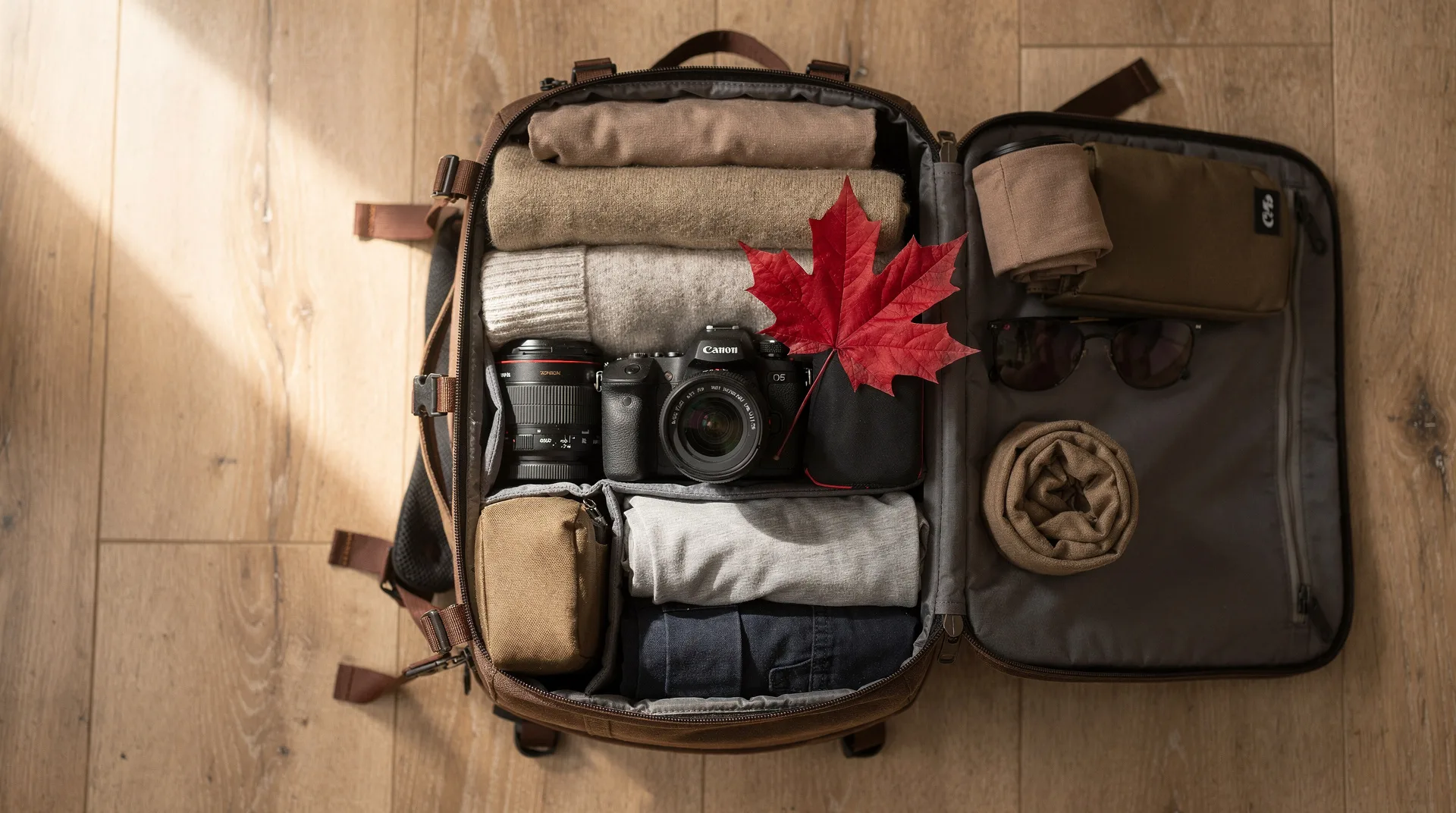
Canada packing list: what to bring by season
What should I pack for a trip to Canada?
Layers are the most important principle regardless of season. Canada has extreme temperature swings — even in summer, evenings in the Rockies can be cold. Pack a waterproof outer shell, merino base layers, and comfortable walking shoes for any trip.
Packing for Canada is not as simple as it looks. The country spans six time zones, three coastlines, arctic tundra, temperate rainforests, and Prairie flatlands. What works in Vancouver in April is useless in Quebec City in January. What you need for a week in Banff in July is completely different from what you need for a Toronto city break in October.
This guide gives you a practical, tested packing list for every season and travel style — no filler, no padding, just what you actually need.
The one rule that applies to every Canada trip
Before the lists: Canada is a country of layering. Temperature swings of 15–20°C within a single day are common in the mountains and on the Prairies. A warm morning in Vancouver can turn into a cold, wet afternoon by 2pm. A sunny hike in Banff can end in a thunderstorm.
The solution is always the same: a moisture-wicking base layer, a mid-layer for warmth, and a windproof and waterproof outer shell. This system works in every season. It’s lighter than packing for one extreme, and it handles everything Canada throws at you.
What to pack for summer (June–August)
Summer is the most visited season and the most deceptive packing challenge. Cities like Toronto and Montreal can hit 35°C with high humidity. But hike above 2,000m in the Rockies and you’ll feel genuine cold even in late July.
Clothing for summer
- Lightweight t-shirts and shirts (3–4, breathable fabric)
- One pair of lightweight long trousers or convertible trousers
- Shorts (2 pairs — one for hiking, one casual)
- Light mid-layer fleece or softshell jacket
- Waterproof, packable rain jacket (non-negotiable for BC and mountain regions)
- Light down jacket or vest (for mountain evenings and higher elevations)
- Comfortable walking shoes — trail runners work better than heavy hiking boots for most trips
- Sandals or flip-flops for cities and beaches
- Sun hat and sunglasses (UV is intense at altitude)
- Swimwear (lakes, ocean, hotel pools — you will use it)
- Light scarf (useful on cold overnight buses and trains)
Gear for summer
- Daypack (25–30L) for day hikes and excursions
- Reusable water bottle (at least 1L) — Canada has excellent tap water everywhere
- Sunscreen SPF 50+ (expensive in tourist areas — bring from home)
- Insect repellent (essential in northern Canada, lakes region, and any forested area)
- Lightweight trekking poles (optional but useful for serious hikes)
- Dry bag or pack cover (for kayaking, whale watching tours, and rainy hikes)
Summer is also the season for Banff and the Rockies. If you’re hiking there, add micro-spikes if you’re planning glacier walks, and a bear canister or bear spray if you’re camping (required in some areas).
What to pack for winter (December–February)
Canada in winter is a genuine cold weather experience. This is not European mild-winter cold. Montreal and Quebec City regularly see -20°C. The Prairies and northern regions can hit -40°C with wind chill. Even Vancouver, Canada’s warmest major city, can feel brutal on a wet, windy January evening.
Clothing for winter
- Thermal base layers (top and bottom) — merino wool is worth the investment; it stays warm even when damp and doesn’t smell
- Fleece mid-layer or insulated sweater
- Heavyweight insulated down or synthetic jacket rated to at least -20°C if you’re going to Quebec, Ontario, or the Prairies
- Windproof and waterproof shell (over your insulated jacket in extreme cold)
- Insulated, waterproof boots (rated to -30°C for serious cold destinations)
- Warm wool or fleece socks (2 pairs minimum per day in very cold conditions)
- Thermal leggings or wool-lined trousers
- Waterproof snow pants (for skiing, snowshoeing, or any outdoor activity)
- Warm hat covering the ears
- Neck gaiter or balaclava (critical at -20°C and below)
- Waterproof, insulated gloves — bring liners too
- Wool or cashmere sweaters (2–3 for city wear)
- Scarf
Winter gear essentials
- Hand warmers (chemical disposable packs — lifesavers on cold tours)
- Lip balm with SPF (cold wind destroys lips)
- Moisturiser (heated indoor air is extremely drying)
- Crampons or ice cleats that slip over boots (cities in winter can be very icy)
- Ski goggles if skiing or snowshoeing in bright conditions
Winter is the time for northern lights viewing in the Yukon and exploring ice hotels in Quebec. Both require serious cold-weather preparation. See our guide to Canada in January and February for region-specific packing advice.
Yukon aurora borealis night tour — book ahead for winter datesWhat to pack for spring (March–May)
Spring is Canada’s most variable season and arguably the trickiest to pack for. March in most of Canada is still winter. April sees dramatic swings — Vancouver has cherry blossoms while Quebec is still slushy. May brings genuine warmth to cities while mountain trails remain snowbound.
Spring clothing
- All three layers (base, mid, outer) as above — you will use all of them
- Waterproof boots with some ankle support (snow melt makes trails very muddy)
- Lighter down jacket (a medium-weight one works; you don’t need the full winter parka by May)
- T-shirts and a couple of light long-sleeve shirts for warmer days
- Rain jacket (spring is wet almost everywhere)
- Lightweight trousers — avoid jeans, which are miserable when wet
- Gloves and hat for cold snaps in April and early May
Spring is excellent for maple sugar season in Quebec and the Ottawa tulip festival in May. Pack for cold mornings and mild afternoons, because that’s exactly what you’ll get.
What to pack for autumn (September–November)
Autumn is many travellers’ favourite season — the fall colours in Algonquin Park, the Rockies, and Quebec’s Eastern Townships are spectacular. September is often warm, October is crisp and colourful, and November turns cold fast.
Autumn clothing
- Mid-weight down or synthetic jacket (not full winter weight for September–October)
- Waterproof outer shell
- Fleece or wool sweaters (2–3)
- Long trousers (jeans are fine in autumn, unlike spring)
- Warm hat and gloves (October onwards)
- Comfortable walking shoes plus a waterproof option
- Scarf
September in the Rockies still requires cold-weather layers for hiking. By late October, winter gear starts becoming relevant in most of the country.
Packing for specific activities
Hiking and trekking
If hiking is a central part of your trip — especially in Banff or Jasper — your gear list needs to be more specific:
- Proper hiking boots or trail runners with ankle support
- Trekking poles
- Daypack with hydration system or water bottle
- Emergency whistle and basic first aid kit
- Bear spray (mandatory in some parks — can be rented locally)
- Headlamp with fresh batteries
- High-SPF sunscreen and lip balm
- Emergency foil blanket
- Trail snacks and a packed lunch (limited services on many trails)
- Offline maps downloaded (cell coverage is limited in national parks)
Skiing and snowboarding
- Technical ski or snowboard base layers (different from everyday thermals)
- Ski socks (wool, not cotton)
- Ski jacket and ski pants (can be rented at most resorts)
- Goggles
- Helmet (rental available, but bringing your own is more hygienic)
- Neck gaiter or balaclava
- Waterproof gloves rated for skiing
- Boot bags for carrying ski boots
Whistler in BC is Canada’s premier ski destination. Equipment rental is widely available, so you don’t need to pack everything if you’re flying in.
Full-day Whistler tour from Vancouver — transport and local guide includedWildlife watching
For polar bear viewing in Churchill or whale watching in BC:
- Warm layers regardless of season (boats and tundra vehicles are cold even in October)
- Binoculars
- Camera with zoom lens
- Waterproof bag or case for camera and phone
- Seasickness medication if going on a boat
Documents and essentials: the non-clothing checklist
- Passport (valid for at least six months beyond your travel dates)
- eTA or visitor visa (applied for in advance at canada.ca — see our visa requirements guide)
- Travel insurance documents (printed and digital copies)
- Credit card with no foreign transaction fees
- Some Canadian cash (CAD $100–200) for markets, tips, and rural areas
- Unlocked phone or eSIM (see our eSIM and internet guide)
- Power adapter (Canada uses the same Type A/B plugs as the US — no adapter needed for most visitors, but voltage may differ)
- Portable phone charger/power bank
- Prescription medications with original packaging plus a doctor’s letter
- Copies of key documents in email or cloud storage
What you don’t need to pack
Just as important as what to bring: what to leave at home.
Heavy hiking boots — unless you’re doing multi-day backpacking, trail runners are lighter, dry faster, and handle most Canadian trails well.
Bulky towels — all hotels, hostels, and most Airbnbs provide towels. Even budget hostels include them.
Hair dryer — provided at virtually every accommodation in Canada.
Umbrellas — a rain jacket with a hood is far more practical. Umbrellas get destroyed by Canadian wind in seconds.
Multiple pairs of jeans — heavy, slow to dry, and uncomfortable when wet. One pair of jeans maximum; use quick-dry trousers for outdoor activities.
Currency from home — foreign currency is rarely accepted in Canada. CAD cash or Visa/Mastercard is all you need. See our Canadian currency and tipping guide.
Packing tips by traveller type
Solo backpackers: go carry-on only if you can. A 40–45L pack is enough for 2–3 weeks if you pack the layering system properly. Doing laundry every 5–7 days is easy and cheap at laundromats.
Families with children: pack children’s medications and pain relief (expensive in Canada), UV-protective swimwear for summer, and child-sized insulation for winter. See our family trip planning guide for more.
City travellers: you need less than you think. Smart casual dress is appropriate almost everywhere in Canadian cities. Formal events are the exception.
Road trippers: keep a “car bag” with easy-access snacks, a blanket, and an emergency kit (cables, jumper cables, basic tools — especially important in winter). See our RV and camper van guide if you’re planning a road trip.
Photography focused travellers: Canada’s light is extraordinary — especially in the Rockies at golden hour. A lightweight tripod, UV filter, and polarising filter make a real difference. Pack a laptop or portable hard drive for storing images.
Frequently asked questions about Canada packing list: what to bring by season
Do I need a travel adaptor for Canada?
Canada uses Type A and Type B outlets (same as the USA) at 120V/60Hz. Visitors from Europe and Australia will need both a plug adapter and possibly a voltage converter for some appliances. UK visitors need a plug adapter but most modern electronics (phones, laptops) handle the voltage difference automatically.
How much luggage can I bring on domestic flights?
Domestic airlines in Canada are strict about baggage. Air Canada and WestJet typically allow one carry-on and one personal item included; checked bags are usually CAD $30–35 each way as an add-on. Budget airlines like Flair and Lynx are more restrictive. Check individual airline policies before packing. See our domestic flights guide for more.
Can I buy outdoor gear in Canada?
Yes — Mountain Equipment Company (MEC) is an excellent outdoor retailer with stores in major cities. Sport Chek, Atmosphere, and local outdoor shops are also well-stocked. However, prices are high, so it’s better to bring key items from home rather than plan to buy them in Canada.
Is there anything I shouldn’t bring into Canada?
Certain foods, plants, and animal products are restricted. Fresh fruit, vegetables, meat, and dairy are often subject to declaration at the border. Cannabis is legal in Canada but cannot be transported across international borders. Firearms have strict import rules. Check the Canada Border Services Agency website for current restrictions.
What should I pack for the Canadian Rockies specifically?
Even in July: a warm mid-layer, a packable down jacket, and a rain shell. Temperatures at Lake Louise and Moraine Lake can feel genuinely cold at altitude, and afternoon thunderstorms are common. Sunscreen and sunglasses are also essential — UV intensity is much higher at 1,600m+ elevation.
Can I rent outdoor gear in Canada?
Yes, widely. Banff, Jasper, Vancouver, and Whistler all have excellent outdoor gear rental shops. Ski equipment, snowshoes, kayaks, bear spray, trekking poles, and camping gear can all be rented locally, which may make more sense than checking bulky items on a flight.
How should I pack for a multi-region Canada trip?
If you’re moving from, say, Vancouver to Quebec in a single trip, pack your layering system and let context determine which layers you actually use. A medium-weight down jacket, a fleece, a rain shell, and a couple of base layers will cover a remarkably wide range of Canadian weather. The key is flexibility over specialisation.